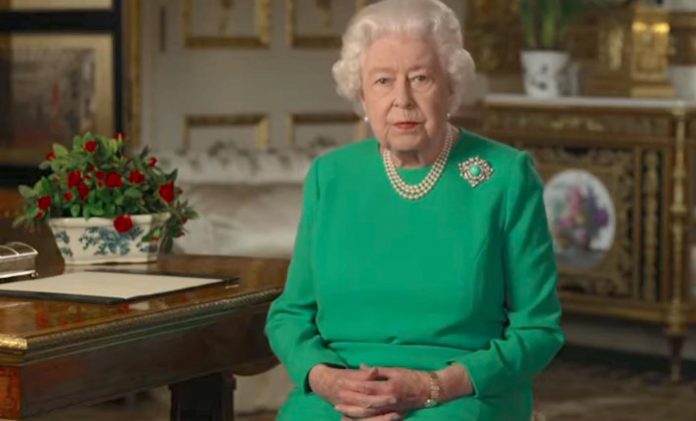
In a rare televised address to the citizens of the UK and the world, Her Majesty Queen Elizabeth II offered an encouraging message of support in the face of the novel coronavirus outbreaks.
Although the Queen usually only addresses the nation at Christmas time or for newly-elected Parliaments, Her Majesty recorded a speech earlier this week that called for global unity amidst the uncertainty of the pandemic.
In addition to using the video to thank National Health System (NHS) teams working tirelessly to contain the virus, the Queen also recalled recording a similar speech that was broadcasted worldwide during World War II at the height of the blitz.
“It reminds me of the very first broadcast I made in 1940, helped by my sister,” said the monarch, who had only been 14 years old at the time of the historic broadcast. “We as children spoke from here at Windsor to children who had been evacuated from their homes and sent away for their safety.
“Today, once again, many will feel a painful sense of separation from their loved ones—but now, as then, we know deep down that it is the right thing to do.
“While we have faced challenges before, this one is different,” she continued. “This time, we join with all nations across the globe in a common endeavor: using the great advances of science and our instinctive compassion to heal. We will succeed and that success will belong to every one of us.”
(WATCH the inspiring speech below)
This is just one of many positive stories and updates that are coming out of the COVID-19 news coverage this week. For more uplifting coverage on the outbreaks, click here.
Be Sure And Share The Heartening Video With Your Friends On Social Media…
Quote of the Day: “Life’s challenges are not supposed to paralyze you, they’re supposed to help you discover who you are.” – Bernice Johnson Reagon
Photo: by Satyam HCR – public domain
With a new inspirational quote every day, atop the perfect photo—collected and archived on our Quote of the Day page—why not bookmark GNN.org for a daily uplift?
If you’re feeling lonely during these weeks of self-isolation, we can still look back fondly on simpler times and remember that social distancing is only temporary.
For instance, this video that was shared by Nick Sasfy on Facebook back in 2018 captures the moment that his young son Jude wanted to bid a very fond farewell to all of the strangers who were lounging on the grass at an outdoor event in Atlanta, Georgia.
He and his wife Stephanie had just told Jude that it was time to go “bye-bye” when the toddler insisted on hugging every bystander goodbye.
Needless to say, the strangers were delighted.
Though it may have delayed the family’s departure for some time, who could say no to that adorable little face? Plus, the video footage of the toddler’s sweet endeavor ended up racking up over 40 million views on Facebook.
(WATCH the video below) – Photo by Nick Sasfy
Be Sure And Share This Cute Clip With Your Friends On Social Media
Solar panel driveways may soon be powering all our households with clean electricity thanks to this Budapest-based startup.
For the last five years, Platio Solar has been developing new ways of implementing solar technology into urban spaces—and one of their latest developments is a residential solar paneled driveway made out of recycled plastic bottles.
According to a video that was published by the company last week, the solar system is the first to generate power from the pavement of a residential household.
Each “Platio Solar Paver” is made from 400 polyethylene terephthalate (PET) bottles—one of the most common forms of consumer plastic. Compressed into pavers, the material becomes more durable than concrete while still being non-slip and sustainable.
The system can either be used to generate electricity for a residential household or power an electric car. According to the company’s website, a 20-square-meter (215-square-foot) Platio driveway system has the capacity to cover the yearly energy consumption of an average household.
The company is now offering resell opportunities and installation quotes for their driveway systems available in brown, blue, red, and green designs.
(WATCH the demonstration video below)
Power Up With Positivity By Sharing The Good News With Your Friends On Social Media…
16-year-old TJ Kim may not have his driver’s license yet, but he has been flying planes all over Virginia in order to deliver medical supplies to rural hospitals fighting the novel coronavirus.
The teen, who is a sophomore at Landon School in Bethesda, Maryland, was inspired to embark on his delivery missions after his classes were canceled as a result of COVID-19.
Without school or lacrosse to occupy his time, he turned his focus on his flying lessons.
According to The Associated Press, Kim and his family then launched their Operation SOS (Supplies Over Skies) project as a means of keeping busy during the shutdowns while simultaneously serving others in need by delivering supplies to rural hospitals.
When Kim first asked his flight instructor, Dave Powell, to use their flying lessons as delivery runs for Virginia hospitals, the pilot was awestruck.
“For TJ to be more concerned with the needs of others in his melancholy state just reiterated to me how amazing this young man is,” Powell told The AP.
Since the young man delivered his first batch of medical gowns, masks, sanitizer, and shoe covers to a 25-bed hospital in Luray on March 27th, he has continued to go on weekly flights to other critical access hospitals—and the healthcare workers have greatly appreciated the support.
This is just one of many positive stories and updates that are coming out of the COVID-19 news coverage this week. For more uplifting coverage on the outbreaks, click here.
(WATCH the interview below) – Feature photo by Thomas Kim
Fly This Inspiring Story Over To Your Friends By Sharing It To Social Media…
It’s not uncommon for movie mogul Tyler Perry to make national headlines for his good deeds—and this week, he is being praised by social media users around the world after he was revealed to be an anonymous benefactor for senior shoppers.
As thousands of elderly citizens browsed the aisles of supermarkets in New Orleans and Atlanta, Georgia, they were stunned to hear that their groceries had been paid for by the “Atlanta Angel”.
The unidentified do-gooder had picked up the tab for every shopper participating in the senior shopping hour at 44 Kroger locations and 29 Winn-Dixies.
Although the donor’s identity had initially been kept a secret, supermarket management later confirmed that it was Tyler Perry.
“Senior and higher-risk Kroger shoppers in metro Atlanta did receive a nice surprise at the register this morning when they learned Tyler Perry had paid their grocery tab in full,” said Felix Turner, the Atlanta spokesman for Kroger.
“We would like to join our customers in thanking Mr. Perry for his kindness and generosity during this unprecedented pandemic,” Turner continued. “It was truly a pleasure to see our customers fill with joy and gratitude as the news spread throughout 44 stores across metro Atlanta.”
This is just one of many positive stories and updates that are coming out of the COVID-19 news coverage this week. For more uplifting coverage on the outbreaks, click here.
(WATCH the news coverage below) – Feature photo by Tyler Perry, 2018
Be Sure And Share This Inspiring Example Of Celebrity Kindness With Your Friends On Social Media…
Quote of the Day: “Your attitude, not your aptitude, will determine your altitude.” Zig Ziglar
Photo: by Clem Onojeghuo – public domain
With a new inspirational quote every day, atop the perfect photo—collected and archived on our Quote of the Day page—why not bookmark GNN.org for a daily uplift?
The Lesson: If you have been stressing out amidst the chaos of quarantine, then you may need to listen to this podcast about FFTs (“’effing first times!”)—that is, how hard it is to be new at things, from small incidents to global pandemics. When we have no relevant experience or expertise, the vulnerability, uncertainty, and fear of these firsts can be overwhelming—but showing up and pushing ourselves past the awkward, learner stage is how we get braver.
Notable Excerpt: “This pandemic experience is a massive experiment in collective vulnerability. We can be our worst selves when we’re afraid, or our very best, bravest selves. In the context of fear and vulnerability, there is often very little in between because when we are uncertain and afraid our default is self-protection. We don’t have to be scary when we’re scared. Let’s choose awkward, brave, and kind. And let’s choose each other.”
The Speaker: Dr. Brené Brown is a research professor at the University of Houston where she holds the Huffington Foundation – Brené Brown Endowed Chair at The Graduate College of Social Work. Brown has and continues to break down the complex topics concerning human nature such as shame, empathy, courage, and vulnerability. Her TED talk, “The Power of Vulnerability”, garnered over 45 million views as one of the top five most viewed TED talks worldwide.
Podcast: “Unlocking Us” is Dr. Brown’s brand-new signature podcast. She uses it as a space to host such notable guests as Alicia Keys and David Kessler, who join her in “conversations that unlock the deeply human part of who we are, so that we can live, love, parent, and lead with more courage and heart.”
Representative file photo by Witches Falls Cottages, CC
Regular tub bathing is linked to a lower risk of death from heart disease and stroke—and the higher the “dose,” the better it seems to be for cardiovascular health, with a daily hot bath seemingly more protective than taking a bath once or twice a week.
According to the long-term study published online in the journal Heart last month, having a bath is associated with good sleep quality and better self-rated health, but it’s not clear what its long-term impact might be on cardiovascular disease risk, including heart attack, sudden cardiac death, and stroke.
The health benefits of taking hot baths are similar to those experienced by Finnish adults who regularly sauna bathe—although additional research has also found that sauna bathing can positively affect everything from neurocognitive diseases and mental health disorders to skin diseases, arthritis, headaches, flu, and even overall mortality.
To explore the benefits of hot baths further, the researchers drew on participants in The Japan Public Health Center based Study Cohort 1, a population based tracking study of more than 61,000 middle-aged adults (45 to 59 years).
At the start of the study in 1990, some 43,000 participants completed a detailed questionnaire on their bathing habits and potentially influential factors: lifestyle, to include exercise, diet, alcohol intake, weight (BMI); average sleep duration; and medical history and current medicines use.
Each participant was monitored until death or completion of the study at the end of December 2009, whichever came first, with the final analysis based on 30,076 people.
During the monitoring period, 2,097 cases of cardiovascular disease occurred: 275 heart attacks; 53 sudden cardiac deaths; and 1,769 strokes.
After taking account of potentially influential factors, analysis of the data showed that compared with a once or twice weekly bath or no bath at all, a daily hot bath was associated with a 28% lower overall risk of cardiovascular disease, and a 26% lower overall risk of stroke.
The frequency of tub bathing wasn’t associated with a heightened risk of sudden cardiac death, or with a particular type of stroke, called subarachnoid haemorrhage (bleed into the space surrounding the brain).
Further analysis of preferred water temperature indicated 26% lower and 35% lower risks of overall cardiovascular disease for warm and hot water, respectively. But no significant associations emerged for overall stroke risk and water temperature.
After excluding those participants who developed cardiovascular disease within 5 or 10 years of the start of the study, the associations found weren’t quite as strong, but nevertheless still remained statistically significant.
This is an observational study, and as such, can’t establish cause, added to which changes in bathing frequency weren’t tracked during the monitoring period. The typical style of Japanese bathing also includes immersion to shoulder height, and this may be a critical factor.
But, say the researchers, previously published research has pointed to a link between heat exposure and cardiovascular disease prevention: this is because the effects of heat on the body are not dissimilar to those of exercise.
“We found that frequent tub bathing was significantly associated with a lower risk of hypertension, suggesting that a beneficial effect of tub bathing on risk of [cardiovascular disease] may in part be due to a reduced risk of developing hypertension,” write the researchers.
They acknowledge that taking a hot bath is not without its risk, particularly if the temperature is too high, a point that is taken up by Dr. Andrew Felix Burden in a linked editorial.
A talented farmer has created his own heartwarming tribute to the British National Health System (NHS) by using his tractor to plough a giant rainbow into one of his fields.
33-year-old Jack Pantall used an aerial drone camera connected to his phone in order to map out the huge image of the NHS logo and the “Stay Safe” rainbow in appreciation for Britain’s healthcare workers battling the COVID-19 outbreaks.
The massive image measures in at 60 meters (196 feet) tall and 152 meters (500 feet) wide on his farm near Staunton-on-Wye in Herefordshire.
Pantall also managed to capture drone footage of himself creating the masterpiece, which took just 16 minutes to complete.
The dad-of-two said he wanted to show his support for all of the NHS heroes—particularly since his 31-year-old brother Harry is a paramedic and his sister-in-law works as a doctor.
“I had one field left I could use before my spring planting finished so I decided to do it as soon as a I could,” said Pantall. “My brother and I had been thinking about it and we saw some other people showing their appreciation in different ways. He said, ‘yeah why not let’s do it’.
Jack Pantall (L) with brother Harry (R) who’s a paramedic. SWNS.
“Someone else in Exeter had done #NHS into some corn so we were thinking of something more original. My brother suggested putting the Stay Safe rainbow over the top. We decided to give it a go and the worst-case scenario was that it wouldn’t come out right.
“Thankfully, however, it did. It turned out beautifully.
“My drone connects to my phone so I was watching my phone screen … to see how it was coming out while I was doing it,” Pantall recalled. “So the video you’re watching is how I was able to draw it.
“I was driving around trying to get it done in a hurry because the drone battery only lasts about 20 minutes and I had to be relatively quick on it,” he added. “I managed to complete it in about 16 minutes, which was just in time, really.”
The rainbow has become a symbol of support for people wanting to show solidarity with health workers on the front lines of the novel coronavirus pandemic.
SWNS
“My gesture was just something we thought that we could do down at the field. It’s just us showing a small amount of appreciation,” says Pantall. “At the very least it brings a smile to people’s faces and makes them know we are thinking of them.”
In addition to broadcasting his message of support to NHS workers, Pantall has also set up a JustGiving page to support hospital staffers—and he hopes his stunt can help raise money and spirits.
“The NHS workers are the main ones we must thank because they’re right in amongst it,” said Pantall. “It was all just to say a massive thank you to them.
“We’ve got various friends who live next to us who are all nurses, resuscitation nurses, so they are in the mix of it. It’s a small contribution and they were ecstatic over it.
“It really makes you feel good when they know there are people out there appreciating them. You never know someone is appreciating you until someone says.”
This is just one of many positive stories and updates that are coming out of the COVID-19 news coverage this week. For more uplifting coverage on the outbreaks, click here.
(WATCH the time-lapse video below)
Plow Up Some Positivity By Sharing This Sweet Story To Social Media…
Conservationists are rejoicing over a newly-reported silver lining to the COVID-19 shutdowns—after 13 years of playing hard to get, these two giant pandas have finally mated.
Although Le Le and Ying Ying have been roommates at the Ocean Park Zoo in Hong Kong since 2007, the two pandas have never felt compelled to answer the call of the wild even though their resulting reproduction would help to preserve their vulnerable species.
In addition to female giant pandas having a “mating season” of just 24 to 72 hours of fertility per year, the bears reportedly have a notoriously non-existent libido.
So when Le Le and Ying Ying finally got intimate earlier this week, zookeepers were thrilled.
“Since Ying Ying and Le Le’s arrival in Hong Kong in 2007 and attempts at natural mating since 2010, they unfortunately have yet to succeed until this year upon years of trial and learning,” said Ocean Park Director of Zoological Operations Michael Boos. “The successful natural mating process today is extremely exciting for all of us, as the chance of pregnancy via natural mating is higher than by artificial insemination.”
Considering how Ocean Park has been closed to the public since January 26th as a means of curbing the spread of the novel coronavirus, Le Le and Ying Ying may have just needed some privacy from the usual slew of visitors in order to kindle a romance.
Regardless of their motivation, zookeepers will be monitoring Ying Ying closely over the course of the next year to see if she was successfully impregnated with a cub.
Photo by Ocean Park
Multiply The Good By Sharing The Exciting News With Your Friends On Social Media…
Jack Dorsey, the founder of Twitter and the Square payment platform, has announced that he is donating $1 billion to COVID-19 response and relief efforts.
The financial commitment, which represents a whopping 28% of Dorsey’s net worth, will reportedly be funded by the tech entrepreneur’s Square shares.
Dorsey wrote in a Twitter post that he now plans on selling his Square equity since he currently owns more shares in Square than Twitter, and he hopes to reduce the impact of the donation by selling them over an extended period of time.
As the funds are distributed to various relief efforts through the Start Small Foundation, Dorsey plans to offer full transparency of his donations by tracking them through a public Google document.
“I’m moving $1B of my Square equity (~28% of my wealth) to [Start Small] LLC to fund global COVID-19 relief. After we disarm this pandemic, the focus will shift to girl’s health and education, and UBI,” wrote Dorsey.
“Why pull just from Square and not Twitter? Simply: I own a lot more Square. And I’ll need to pace the sales over some time. The impact this money will have should benefit both companies over the long-term because it’s helping the people we want to serve,” he continued.
“Why now? The needs are increasingly urgent, and I want to see the impact in my lifetime. I hope this inspires others to do something similar. Life is too short, so let’s do everything we can today to help people now.”
In addition to Dorsey’s donation being one of the most impressive contributions towards novel coronavirus relief efforts to date, Deadline reports that it may be the largest private donation to a global cause since CNN founder Ted Turner committed $1 billion towards the creation of the United Nations Foundation in 1997.
This is just one of many positive stories and updates that are coming out of the COVID-19 news coverage this week. For more uplifting coverage on the outbreaks, click here.
Why UBI and girl’s health and education? I believe they represent the best long-term solutions to the existential problems facing the world. UBI is a great idea needing experimentation. Girl’s health and education is critical to balance: https://t.co/dC3dU6hvxB
Why now? The needs are increasingly urgent, and I want to see the impact in my lifetime. I hope this inspires others to do something similar. Life is too short, so let’s do everything we can today to help people now. ✌🏼
Quote of the Day: “It’s not the load that breaks you down, it’s the way you carry it.” – Lou Holtz
Photo: by J E W E L M I T CH E L L – public domain
With a new inspirational quote every day, atop the perfect photo—collected and archived on our Quote of the Day page—why not bookmark GNN.org for a daily uplift?
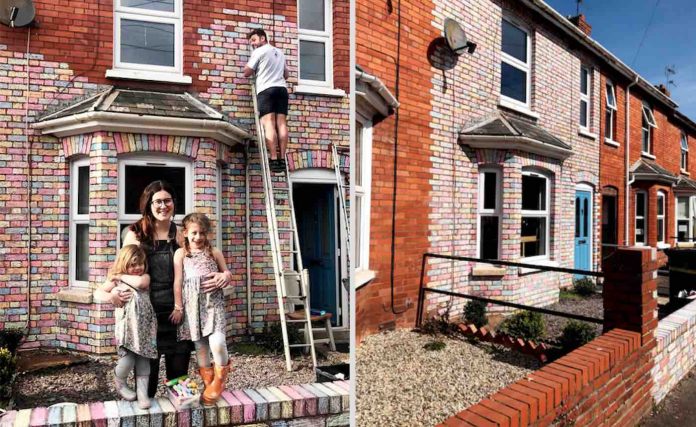
As a means of cheering up their neighbors in lockdown, this English family spent six hours coloring in every brick of their home with chalk to create a “rainbow house”.
The Taylor family from Wellington, Somerset used dozens of sticks of jumbo chalk in order to decorate the front wall of their red-brick terraced house.
26-year-old mother Fern Taylor started the labor of love with her daughters, Arabella and Matilda. Her partner, Marco DeFazio, then used a step-ladder to finish the mission.
SWNS
“We took inspiration from another post we saw on Facebook where they had done half the house, and originally that’s what I was going to do,” said Fern.
“But my partner said we couldn’t stop there and got the ladder out and said he’d do the rest.
“We used jumbo chalks, and it took us about six hours. We probably started with about 40 [sticks],” continued Fern. “The girls really enjoyed it. Matilda is two and didn’t quite understand, but she did help a bit.
SWNS
“Arabella is four and was a keen helper. She helped for a good half an hour and then they sat and played and watched mummy and daddy finish.
“The amount of people who have stopped and smiled, or asked to take photos, has really cheered up. It’s so sweet,” she added. “People have slowed down while driving past. We even had an ambulance stop and say they loved it.”
This is just one of many positive stories and updates that are coming out of the COVID-19 news coverage this week. For more uplifting coverage on the outbreaks, click here.
SWNS
Be Sure And Share This Sweet Story Of Community Kindness With Your Friends On Social Media…
This week’s news headlines from around the world have brought together another batch of COVID-19 updates that are both positive and noteworthy.
For starters, the number of novel coronavirus deaths in Spain dropped for the fourth consecutive day in a row, which has inspired hope that the nation is now past the peak of their outbreak—especially since the decline marked the lowest recorded number of deaths in a two week curve.
Other European nations have reported some hopeful trends of their own.
In France, the number of COVID-19 fatalities and new daily cases fell by more than 50% over the weekend, according to datasets from Worldometer.
Italy, which has been one of the hardest-hit countries in Europe, has now recorded three straight days of decline in new cases. Additional datasets from Worldometer show that yesterday marked the lowest number of new cases since March 17th—roughly half of the nation’s peak number of new cases which was recorded on March 21st. After several consecutive days of decline, April 5th also marked the lowest number of Italian deaths since March 19th.
Meanwhile, less than two weeks after New Zealand enacted strict nationwide lockdowns, the nation reports that they have not only flattened their curve of cases, they have “squashed it”.
On the US front, New York Governor Andrew Cuomo says that the number of deaths statewide fell for the first time and remained stable for two days, raising hopes for a flattened curve. New hospital admissions also fell across the state from 1,427 on April 2nd to 358 on April 5th, according to Market Watch.
Although national responders are still anxiously anticipating new problems posed by the pandemic during the coming weeks, the nation’s most influential statistical model has predicted that there may be fewer shortages of medical equipment—and fewer deaths—than we may have previously thought.
While authorities remain vigilant in the face of cautious optimism, weather reports are showing positive environmental progress as well.
Following similar reports in China and the US, air pollution is continuing to plummet in countries with social restrictions, such as the UK and India. In New Delhi alone—which has some of the worst air pollution in the world—airborne particulates plunged by 71% in just one week.
Particle pollution in major UK cities have also dropped by as much as one-third—and the rates are expected to fall even further as lockdowns continue.
“These are big changes—pollution levels are the equivalent at the moment of a holiday, say an Easter Sunday,” Professor James Lee from York University and the National Centre for Atmospheric Science told The Guardian about the data.
“And I think we will see an even starker drop off when the weather changes.”
This is just one of many positive stories and updates that are coming out of the COVID-19 news coverage this week. For more uplifting coverage on the outbreaks, click here.
Be Sure And Share The Encouraging News With Your Friends On Social Media…
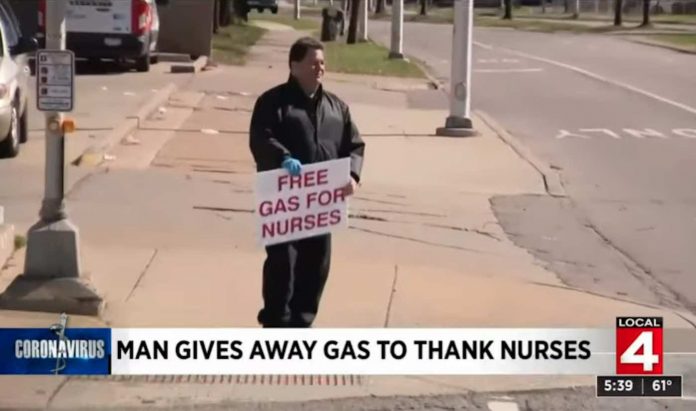
A compassionate Michigan man is being praised for using his savings to buy gas for nurses fighting the novel coronavirus outbreaks.
Last week, Allen Marshall stood on the corner of the Exxon gas station near the Detroit Medical Center holding a sign that read: “Free Gas for Nurses”.
Marshall ended up spending $900 of his own money to fill the tanks of between 50 to 80 vehicles that belonged to medical workers on the hospital’s front lines.
Although Marshall had originally been saving the money to buy himself a knife-sharpening tool, he felt inspired to do something nice for the local hospital staffers after dropping his wife—who is an essential worker—off at her shift with Blue Cross Blue Shield.
“I just love them and I want them to know that,” he told WDIV in the interview below.
After he ran out of money, Marshall continued to stand at the intersection with a new sign that simply read: “Thank You for All You Do!”
However, the story of Marshall’s good deed does not end there; a woman who was identified only as Alana caught word of Marshall’s labor of love and contributed another $200 of her own money to his cause.
This is just one of many positive stories and updates that are coming out of the COVID-19 news coverage this week. For more uplifting coverage on the outbreaks, click here.
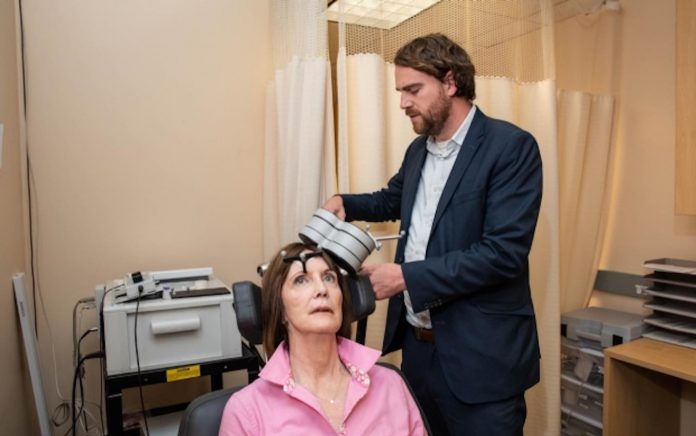
Deirdre Lehman, who suffered from depression, with Nolan Williams, who oversaw a clinical trial of a potential treatment that uses transcranial magnetic stimulation. In this photo, Williams and Lehman demonstrate how a patient is positioned and the equipment is used during the treatment. Photo by Steve Fisch / Stanford University.
A new form of magnetic brain stimulation rapidly relieved symptoms of severe depression in 90% of participants in a small study conducted by researchers at the Stanford University School of Medicine.
The researchers are conducting a larger, double-blinded trial in which half the participants are receiving fake treatment. The researchers are optimistic the second trial will prove to be similarly effective in treating people whose condition hasn’t improved with medication, talk therapy, or other forms of electromagnetic stimulation.
The treatment is called Stanford Accelerated Intelligent Neuromodulation Therapy—or SAINT. It is a form of transcranial magnetic stimulation, which is approved by the Food and Drug Administration for treatment of depression. The researchers reported that the therapy improves on current FDA-approved protocols by increasing the number of magnetic pulses, speeding up the pace of the treatment, and targeting the pulses according to each individual’s neurocircuitry.
Before undergoing the therapy, all 21 study participants were severely depressed, according to several diagnostic tests for depression. Afterward, 19 of them scored within the non-depressed range. Although all of the participants had suicidal thoughts before the therapy, none of them reported having suicidal thoughts after treatment. All 21 participants had previously not experienced improvements with medications, FDA-approved transcranial magnetic stimulation or electroconvulsive therapy.
The only side effects of the new therapy were fatigue and some discomfort during treatment, the study reported. The results were published yesterday on April 6th in the American Journal of Psychiatry.
“There’s never been a therapy for treatment-resistant depression that’s broken 55% remission rates in open-label testing,” said Nolan Williams, assistant professor of psychiatry and behavioral sciences and a senior author of the study. “Electroconvulsive therapy is thought to be the gold standard, but it has only an average 48% remission rate in treatment-resistant depression. No one expected these kinds of results.”
Calming the brain chatter
When 60-year-old Deirdre Lehman woke up the morning of June 30th, 2018, she said she was hit by “a tsunami of darkness.” Lehman had struggled with bipolar disorder all her adult life, but with medications and psychotherapy, her mood had been stable for 15 years.
“There was a constant chattering in my brain: It was my own voice talking about depression, agony, hopelessness,” she said. “I told my husband, ‘I’m going down and I’m heading toward suicide.’ There seemed to be no other option.”
Lehman’s psychiatrist had heard of the SAINT study and referred her to Stanford. After researchers pinpointed the spot in her brain that would benefit from stimulation, Lehman underwent the therapy.
“By the third round, the chatter started to ease,” she said. “By lunch, I could look my husband in the eye. With each session, the chatter got less and less until it was completely quiet.
“That was the most peace there’s been in my brain since I was 16 and started down the path to bipolar disorder.”
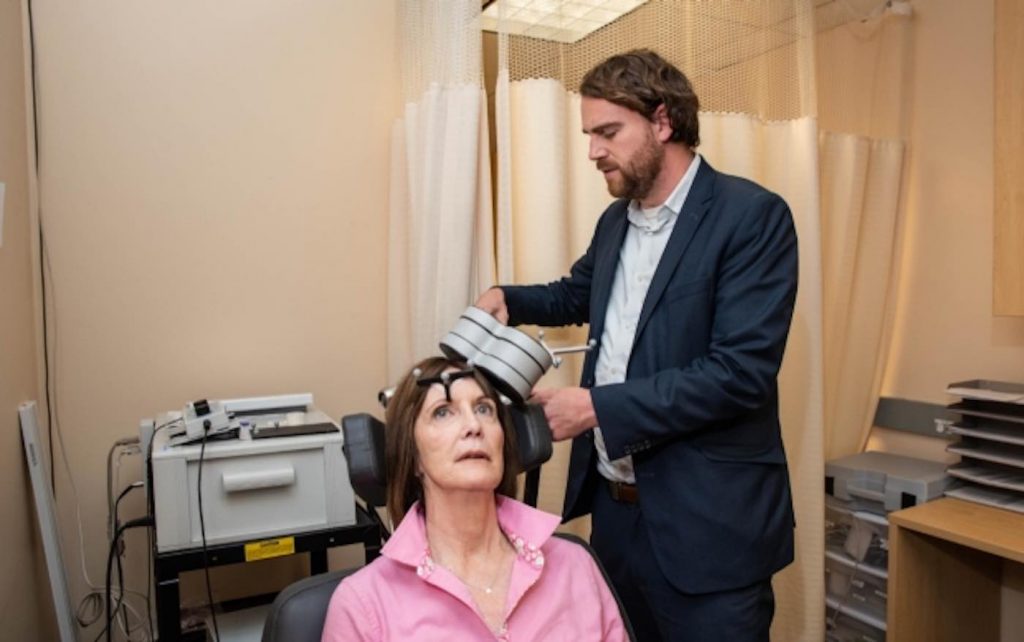
In transcranial magnetic stimulation, electric currents from a magnetic coil placed on the scalp excite a region of the brain implicated in depression. The treatment, as approved by the FDA, requires six weeks of once-daily sessions. Only about half of patients who undergo this treatment improve, and only about a third experience remission from depression.
Stanford researchers hypothesized that some modifications to transcranial magnetic stimulation could improve its effectiveness. Studies had suggested that a stronger dose, of 1,800 pulses per session instead of 600, would be more effective. The researchers were cautiously optimistic of the safety of the treatment, as that dose of stimulation had been used without harm in other forms of brain stimulation for neurological disorders, such as Parkinson’s disease.
Other studies suggested that accelerating the treatment would help relieve patients’ depression more rapidly. With SAINT, study participants underwent 10 sessions per day of 10-minute treatments, with 50-minute breaks in between. After a day of therapy, Lehman’s mood score indicated she was no longer depressed; it took up to five days for other participants. On average, three days of the therapy were enough for participants to have relief from depression.
“The less treatment-resistant participants are, the longer the treatment lasts,” said postdoctoral scholar Eleanor Cole, a lead author of the study.
Strengthening a weak connection
The researchers also conjectured that targeting the stimulation more precisely would improve the treatment’s effectiveness. In transcranial magnetic stimulation, the treatment is aimed at the location where most people’s dorsolateral prefrontal cortex lies. This region regulates executive functions, such as selecting appropriate memories and inhibiting inappropriate responses.
For SAINT, the researchers used magnetic-resonance imaging of brain activity to locate not only the dorsolateral prefrontal cortex, but a particular subregion within it. They pinpointed the subregion in each participant that has a relationship with the subgenual cingulate, a part of brain that is overactive in people experiencing depression.
In people who are depressed, the connection between the two regions is weak, and the subgenual cingulate becomes overactive, said Keith Sudheimer, clinical assistant professor of psychiatry and a senior author of the study. Stimulating the subregion of the dorsolateral prefrontal cortex reduces activity in the subgenual cingulate, he said.
To test safety, the researchers evaluated the participants’ cognitive function before and after treatment. They found no negative side effects; in fact, they discovered that the participants’ ability to switch between mental tasks and to solve problems had improved—a typical outcome for people who are no longer depressed.
One month after the therapy, 60% of participants were still in remission from depression. Follow-up studies are underway to determine the duration of the antidepressant effects.
The researchers plan to study the effectiveness of SAINT on other conditions, such as obsessive-compulsive disorder, addiction, and autism spectrum disorders.
Deirdre Lehman, who suffered from depression, with Nolan Williams, who oversaw a clinical trial of a potential treatment that uses transcranial magnetic stimulation. In this photo, Williams and Lehman demonstrate how a patient is positioned and the equipment is used during the treatment. Photo by Steve Fisch / Stanford University.
‘Resilient and stable’
The depression Lehman woke up to almost two years ago was the worst episode she had ever experienced. Today, she said, she is happy and calm.
Since undergoing SAINT treatment, she has completed a bachelor’s degree at the University of California-Santa Barbara; she had dropped out as a young woman when her bipolar symptoms overwhelmed her studies.
“I used to cry over the slightest thing,” she said. “But when bad things happen now, I’m just resilient and stable. I’m in a much more peaceful state of mind, able to enjoy the positive things in life with the energy to get things done.”
Since seniors have been shown to be particularly susceptible to the risks of COVID-19, nursing homes all over the world are taking extra care to keep their elderly residents safe in isolation.
With few activities to keep them occupied, the old Texan residents from The Enclave at Round Rock Senior Living have been waiting out the quarantine in boredom.
Luckily, Hollywood A-lister and Texas native Matthew McConaughey offered to help keep them entertained earlier this week.
Although The Enclave residents have been trying to get McConaughey to visit their nursing home for several months now, the actor respected the rules of social distancing by hosting some rousing games of bingo over a video livestream.
With his wife and kids watching in delight, McConaughey called out the numbers to the seniors on the conference call until one of the residents got a bingo. As a prize for winning the game, the senior would get to ask McConaughey a question about himself.
Needless to say, the games were a rousing success.
“Our team members can’t interact with the residents the way we normally do, so we have been doing everything possible to uplift them virtually,” senior home sales director Molly Davis told KEYE News. “This was a wish come true!
“The residents absolutely loved seeing Matthew and his family and enjoyed hearing him talk about what he’s doing to get through this crisis. It gave them hope and was the boost that they needed to get through this lonely, challenging time.”
Other social media users have taken pleasure in the virtual bingo games as well; since The Enclave published videos of the games to Facebook on Sunday, they have been viewed more than 100,000 times.
“During a time when we are all working to make lemonade out of lemons, we are so humbled that Matthew took the time to play our favorite game with us,” wrote the nursing home. “As Matthew would say, let’s turn this red light into a green light!”
This is just one of many positive stories and updates that are coming out of the COVID-19 news coverage this week. For more uplifting coverage on the outbreaks, click here.
Alright, Alright, Alright—Be Sure And Share This Sweet Story With Your Friends On Social Media…
Quote of the Day: “Flowers always make people better, happier, and more helpful; they are sunshine, food and medicine to the mind.” – Luther Burbank
Photo: by krystina rogers – public domain, cropped
With a new inspirational quote every day, atop the perfect photo—collected and archived on our Quote of the Day page—why not bookmark GNN.org for a daily uplift?
This college student has been going above and beyond the call of duty to protect people who are deaf or hard of hearing from risking exposure to COVID-19.
Since the world has been struggling to cope with N95 face mask shortages, 21-year-old Ashley Lawrence has been troubled by how the face masks might prevent people with hearing disabilities from communicating.
Because American Sign Language (ASL) speakers rely heavily on lip-reading for grammar, face masks could obscure up to half of a person’s message.
Lawrence, who studies education for the deaf and hard of hearing at Eastern Kentucky University, has been conducting her schooling at home due to the novel coronavirus outbreaks—so she resolved to use her free time in quarantine to make face masks for sign language speakers.
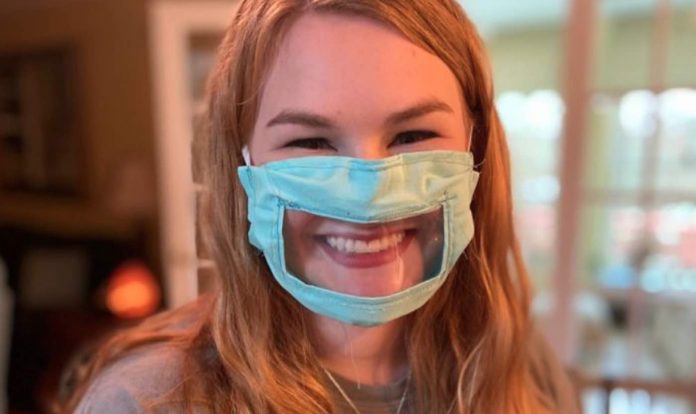
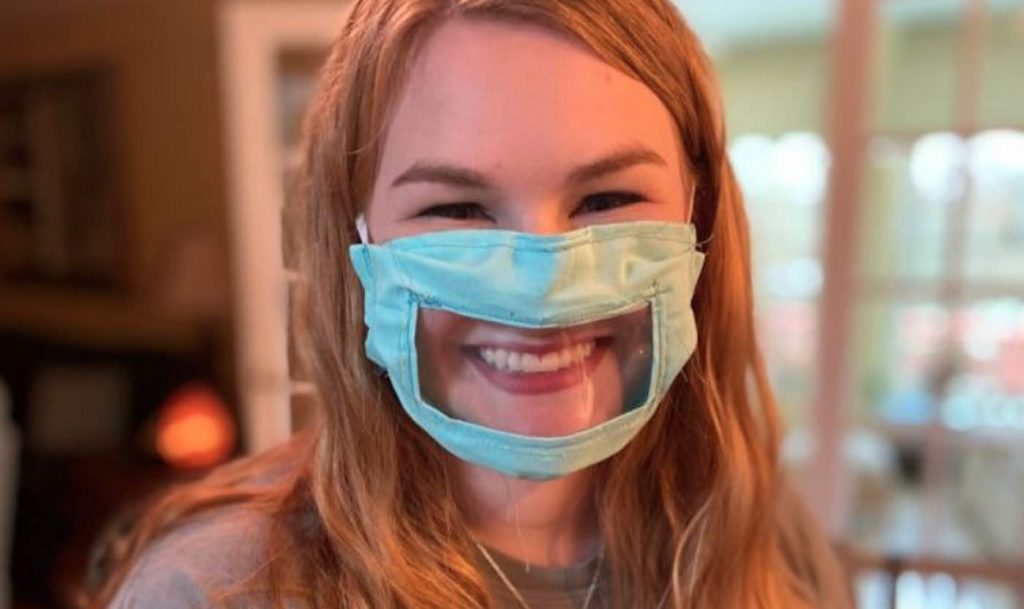
With the help of her mother, Lawrence began sewing face masks with plastic windows over the wearer’s mouth so that ASL speakers could still use lip-reading for communication.
Over the course of the last few weeks, Lawrence has been shipping the masks to dozens of hospitals and deaf individuals for free. She launched a GoFundMe campaign to raise funds for shipping, handling, and materials, but she deactivated the crowdfunding page after she reached her goal of $3,300 in just two days.
Although Lawrence had originally recruited a team of volunteers to make the masks for deaf people in her home community of Woodford County, Kentucky, the determined college student is now working to launch an official Facebook page and website for her newly-dubbed DHH Mask Project as a means of meeting demand for the masks.
Furthermore, Lawrence plans on posting a YouTube DIY instructional video for making the masks by the end of this week. Until then, people can request a set of free masks from Lawrence by emailing her at [email protected].
This is just one of many positive stories and updates that are coming out of the COVID-19 news coverage this week. For more uplifting coverage on the outbreaks, click here.
(WATCH the news coverage below)
Help Your Friends Hear About The Inspiring Initiative By Sharing This To Social Media…