Quote of the Day: “Each of us chooses, by our ways of attending to things, the universe we inhabit and the people we encounter.” – William James
Photo: by Hernán Piñera, CC license on Flickr – cropped
With a new inspirational quote every day, atop the perfect photo—collected and archived on our Quotes page—why not bookmark GNN.org for a daily uplift?
In my professional work as a scientist, I have spent a lot of time in meetings. There were meetings that were very well-organized and productive while there were others that regrettably were not.
It was during these disorganized meetings that my mind would begin to wander. I found myself estimating the average salary in the room and the resulting cost of this meeting depending on its length—and then I sighed about the waste of money.
While focusing on money was an “amusing” diversion, it was not satisfying and didn’t last long. My mind continued to wander during these unproductive assemblies and I began to think about heartbeats. I remembered that for most mammals, heart rate was inversely proportional to longevity; that is, research shows that across species, the faster the heart rate, the shorter the life span. For example, the heart rate of a mouse versus an elephant as compared to their respective lifespans.
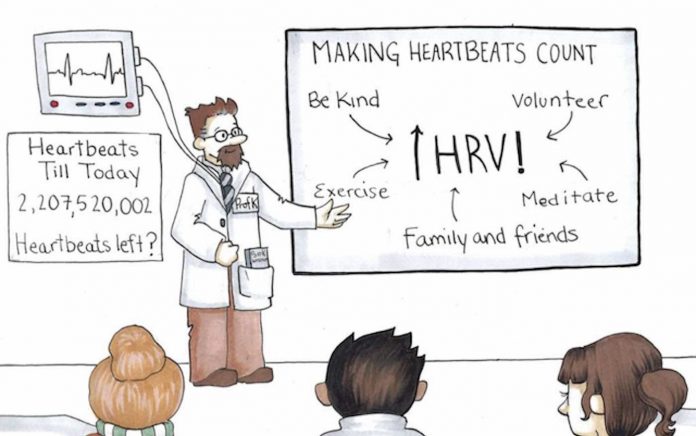
That led to a more personal consideration: if my average heart rate was around 70 beats per minute, sitting in that room for an hour cost me 4,200 heartbeats.
That’s when this epiphany sank in; I was spending a very precious resource doing something without substantive meaning. Heartbeats are a personal metronome that nature gave all of us to mark time—so I realized that I had to spend my heartbeats more wisely.
The heart is an amazing organ. If you think about it, we are walking around with a pump that circulates our entire blood volume approximately once every minute at rest (for an adult, roughly 5 liters). It works on demand; that is, it adjusts itself to our body’s needs. If we are exercising, bleeding, sweating, etc., our heart rate changes to keep providing blood flow to the rest of the body, especially the brain. It also adjusts how much force it will exert to meet those needs. An amazing variable demand-responsive pump.
In addition to exercise, stressors like anxiety or fear affect heart rate. These increase heart rate—a consequence of the shift between two major balancing aspects of the autonomic nervous system: sympathetic and parasympathetic, which respectively increase or decrease heart rate. This balance also affects something called “heart rate variability” (HRV). That variation is the time between beats. It turns out that lower variation in the time between beats is associated with worse health. People who have less variability have greater risk of death. Diabetes, heart failure, and stress are all major causes of decreased heart rate variability, which make sense as they all have increased risk of death.
A way of thinking about HRV is the beat of a drum. A drummer can strike the drum exactly once per second for a total of 60 beats in that minute so that there is little or no variation between beats. Or the drummer can vary that—making it slightly quicker and slightly slower so that although there were 60 beats in that minute, the time between each beat varied more.
HRV is higher in younger people and progressively declines with age. Some consider it a test of aging; and while psychological stress and different diseases decrease HRV, breathing—particularly slow breathing—increases it. Many forms of meditation increase HRV, including compassion meditation. That is, extending kindness and compassion to others through thoughts has a beneficial physiologic effect.
From ancient times, the heart was recognized as the center of emotion. Poetic expressions like “he wears his heart on his sleeve,” “follow your heart,” or ”a broken heart” point to how symptoms—such as what a person feels around the physical heart—probably reflected manifestation of different emotions like love and anxiety. In this model, the brain is the dominant feature telling the heart what it is perceiving. Yet the physiology is much more complex; it turns out that the heart has its own nervous system and provides feedback to the brain that can affect feelings as well as strategic thinking.
The heart also is affected by oxytocin—which is known as “the love hormone”. Released in response to different (particularly prosocial) stimuli like hugs or massage, oxytocin also directly affects the heart and cardiovascular system. In response to oxytocin, the heart in turn releases another hormone called atrial natriuretic peptide that can lower blood pressure. Oxytocin appears to lower blood pressure and heart rate through other mechanisms, too; a physiologic way of saying that love is good for the heart.
Each heartbeat, therefore, is a reflection of a lot of complex interactions between our mental and physical states—and how our heart beats, in turn, affects how we feel. Beyond being a pump, each heartbeat is an important part of appreciating and living life. We feel love, suffering, sadness, joy, and amazement through it. We place our hand over it when expressing emotion or making a pledge. All because the heart allows us to feel the wonders of being alive.
Yet it is easy to forget about how precious each heartbeat is and take its continuous operation for granted. What if we changed that? How could we honor the gift of each heartbeat to attain greater meaning? It might show itself as gratitude for being alive and drive the focused pursuit of doing good with the limited number of heartbeats that we each have. And with my newfound respect for heartbeats, it is not just mine that matter—I also needed to respect everyone else’s.
After I realized the significance of heartbeats, I changed how I ran meetings; I would prepare extensively so that everyone would find the meeting productive, emphasizing a culture of listening to each other and openly seeking the truth. The result was really positive, likely because they found meaning through doing good work that honored their own heartbeats. Kindness here was motivated by the significance of heartbeats.
Of course, there are many other ways to honor heartbeats, not just through meetings. We honor heartbeats when we take care of ourselves (rest, exercise, eat well, etc) and we take care of others (family, friends, coworkers, and strangers).
Additionally, this does not mean that we should not watch a silly movie or do something that might be viewed as goofing off (that’s actually relaxing). It simply means that we should be more conscious of our heartbeats so that, overall, we spend them wisely.
Go ahead—feel your own heart. Marvel at what you have been given. And then decide what you want to do to make the most of them. Their yours to make a meaningful life with.
Be Sure And Share The Insight With Your Friends On Social Media…
Of all the things you could think to do in New Jersey, seeing the world’s largest functioning model train set meandering around its own museum probably doesn’t immediately come to mind. But, it’s thanks to a man who isn’t even an enthusiast that this glorious creation was saved from ruin.
Bruce Williams Zaccagnino, a resident of Flemington, New Jersey, spent 18 years creating the technological marvel in a building now called Northlandz—but the winding tracks and breathtaking miniature scenery through which the toy train rambled eventually fell into disrepair as the price of maintaining it inside its large building became too high for a man who was essentially just an extraordinarily passionate hobbyist.
A large warehouse such as Northlandz is necessary if you want to build a model train setup with more than 8 miles of track. Zaccagnino continued to imagine more and more artistic scenery, which led him to expand the basement 5 times.
The little trains start their journey from a depot, fix onto a track through a functioning and amazing turnstile, and then run through model America. They pass over bridges spanning canyons and dusty gorges, along scenic riverways, by industrial mining pits and exquisitely detailed villages, and through tunnels carved through miniature mountains. (See the video below…)
Zaccagnino began to open the basement twice a year to tours at the suggestions of his friends, allowing him to share his incredible Wonka-like creativity and imagination with others. In 1996, he made Northlandz a year-round attraction.
At that point the train exhibit included 1,200 buildings and 100 trains. The museum also included a historic American Doll collection and a 2,000-pipe organ. However, such a large building created a substantial overhead—too large for Zaccagnino, even after opening it to the public, and the project had to be abandoned.
Demolition Discovery
Businessman Tariq Sohail is the new owner of Northlandz after he purchased it from of Zaccagnino last November when he was looking for additional warehouse space.
Sohail runs a distribution business and was told by the former owner that he could “demolish what was inside”.
“But, when we saw it, we said, ‘No way we could demolish this’,” Sohail told My Central Jersey. “What this guy built is amazing.”
“Bruce was running it by himself so there was a lot of wear and tear—it looked like a ghost house. We wanted to preserve it so it was here for the people.”
Spurred on by the amazing place, Sohail invested a quarter-million dollars into renovation, repairing lights, flooring, and much of the train scenery—so the miniature world could once again delight audiences throughout the year.
The renovations have also included a gift shop and private event space, with plans for a movie theater, climbing walls, and model train set classes for kids slated for the near future.
“Every single person has commented on how clean it now is and how they can see a lot more with our new lights,” said Sohail. “They like how there are more trains and the scenes aren’t damaged anymore. Plus, they love how there is space for them to sit and eat and also host birthday parties and other events.”
(WATCH the news coverage below) – Photo by My Central Jersey
Train Your Friends To Enjoy The Bright Side—Share This Sweet Story On Social Media…
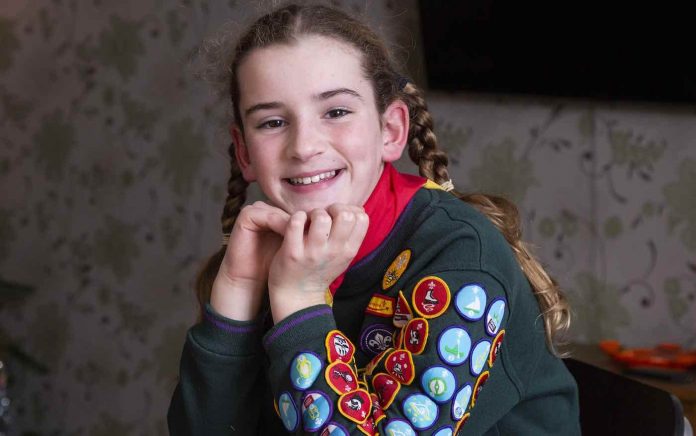
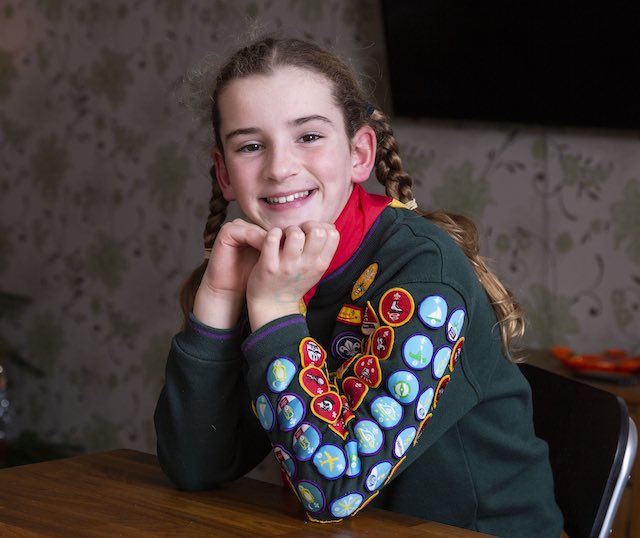
A 10-year-old Girl Scout has become one of the first in the United Kingdom to get every single Beaver and Cub Scout activity badge.
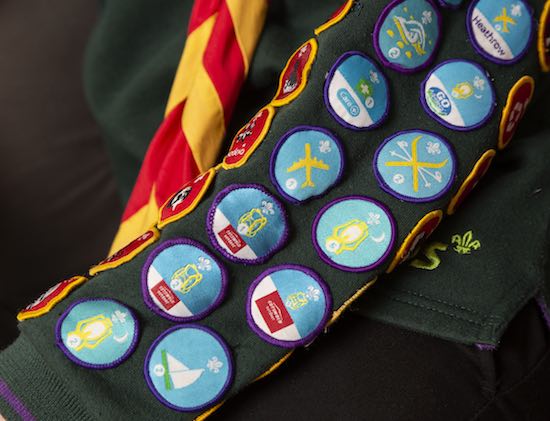
Willow Woolhouse completed every activity badge possible while she was in the Beavers, and last week, she received her final Cub achievement—but, getting all 57 badges was far from easy.
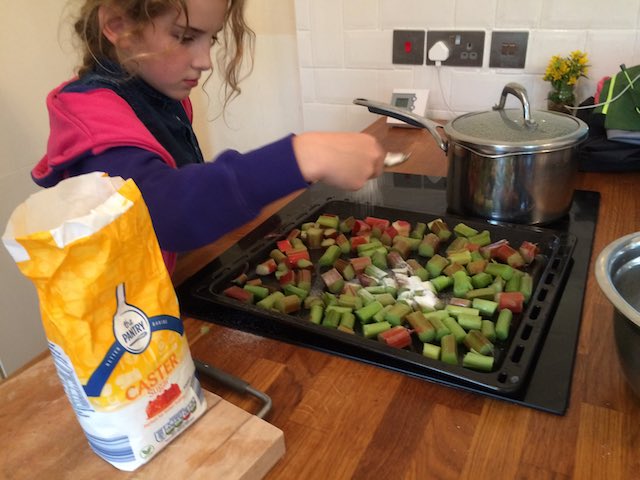
She had to learn to horse ride, become proficient in Morse code, teach herself to cook the perfect omelette, and master the martial art of Tang Soo Do.
School prefect Willow also had to impress her scout leader with her stargazing skills and make her own bird box to get her DIY badge.
The only girl in her cub pack, Willow picked up her final badge last week—a photography patch—awarded for her series of snaps of her proud mum 42-year-old Beth Shaw.
Willow is one of very few girls in history to get every Beaver and Cub activity badge—Rebecca Hooper, at 10-years-old, accomplished the same feat in 2009, but it was at a time when there were fewer cub badges available.
SWNS
Cub “sixer” Willow, who is set to move up to the Scouts this season, already has her sights set firmly on achieving all 62 badges there as well.
“I feel really happy about getting them all. When I look back on my life I can’t picture myself not being a cub or a beaver,” said Willow, from Stockport, Greater Manchester. “It’s just that friendship with everyone there that’s really got me.”
Willow joined the 3rd Bramhall Beavers when she was 5 years old because she lives opposite the scout hut with mum Beth, and scientist teacher dad Robert, 39.
It took her three years to get all 20 Beavers activity badges she could achieve—plus the Chief Scout Bronze award.
SWNS
She gained her first—and favorite—badge for cooking after mastering a series of culinary skills, which included being able to make an omelette for her mom.
“It was the first time I’d used a frying pan. Since then though, eggs are my speciality and I’ve even invented some original recipes,” says Willow.
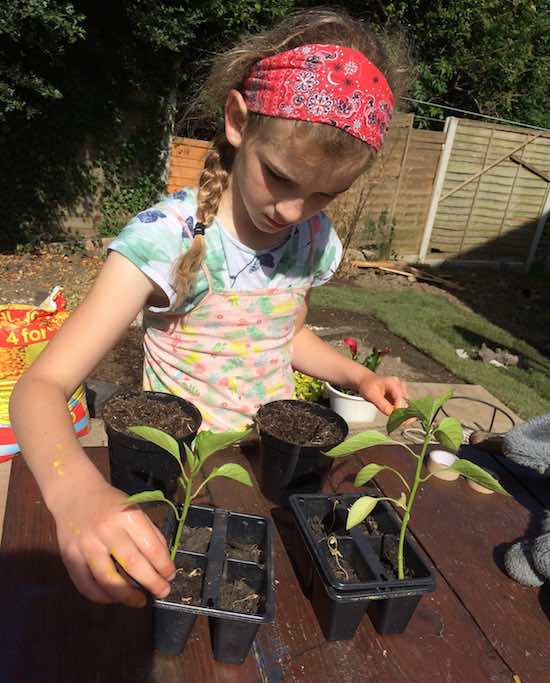
She then got 19 more, including ones for cycling, disability awareness, and collecting. Some were completed at her weekly session, and others were finished at school or home, although all of them were documented with photographs to submit to her leaders.
Willow graduated to Cubs at age 8, and began to work through all 37 available badges.
SWNS
Her favorite was fire safety, which involved an exciting visit to the local station. However, she only recently realized she’d got all available badges.
“Because it was so long ago that I started beavers and I was so young,” says Willow. “My mum probably told me I had all my beaver badges, but I’m not the type of person who remembers that kind of thing.
“Of course, I will be involved with scouts when I am an adult, even though I have ambitions to be a cosmologist,” she added.
She got into star gazing thanks to a scout badge, which prompted her to get a telescope for her birthday—but despite all the badges, it’s the friendship that keeps Willow going back to her weekly club.
SWNS
She wrote a novel called “Survival Girls” about her pals’ camp adventures, which she hopes will be published one day.
“I’m really pleased and proud of her, because these badges are quite difficult to get,” said her proud mum Beth, an operations manager who volunteers with the pack. “And she never doesn’t want to do them. She’s so enthusiastic about putting the work in to get them.
“Sometimes you can submit school work in order to achieve them—sometimes you have to put a lot of new effort into it,” she added. “One of the harder ones she had to learn how to horse ride—but she did it. For her communications badge, she needed to learn morse code. They all have to put in a lot of effort.
“At school, they say she’s very interesting to talk to. She’s got a lot of different aspects to her. She doesn’t play on computer games, and she’s not into TV. She knows about the outdoors and nature and DIY though!
SWNS
“Her leaders have given her so much support and guidance,” she added. “They are fantastic role models.”
A spokesman for The Scout Association said: “Well done Willow—it’s a real achievement to develop all the skills required to achieve all the Beaver Scout Badges and the Cub Scout Badges. To achieve this feat, Willow must have shown grit, determination, and resilience.
“She joins an exclusive and very small group of other Cub Scouts who have gained all their badges and in doing so have develop the skills they will need to make their way in life,” they added. “We are very proud of Willow and of the volunteer Leaders from 3rd Bramhall Cubs that have supported her on her journey. Well done.”
Be Sure And Share The Exciting News With Your Friends On Social Media…
Nine years ago, an earthquake and tsunami off the coast of Japan caused one of the most significant nuclear disasters in human history in the area around the Fukushima Daiichi nuclear power plant, where the resulting reactor meltdown led to the evacuation of 150,000 individuals.
Now, the local government has vowed to restructure the grid of the north western prefecture to use entirely renewable energy sources by 2040. Fukushima is the third largest administrative district in the country, and uniquely includes a variety of energy resources like prime spots for solar and wind farms, and also opportunities for geothermal power as well.
Working to achieve these ambitious goals, Fukushima Prefecture signed a memorandum of understanding in the field of renewables with the Ministry of Environment for the German state of North-Rhine Westphalia, the largest energy-producing state in Germany—and Europe as well—in August of 2017.
North-Rhine Westphalia has doubled their renewable energy infrastructure over the last 15 years—growing it to deliver 9% of total energy production.
Since 2012, however, Fukushima has tripled its renewable energy production, with solar, wind, water, thermal, and biofuel resources totaling 1,500 megawatts of electricity, delivering a contribution of nearly 18% of Japan’s total yearly energy consumption.
Additionally, 300 billion yen ($2.75 billion) for the project has already been fronted by sponsors such as the state-owned Japan Development Bank and Mizuho Bank. The funding will be used to construct 11 solar farms and 10 wind farms over the next 4 years. The new projects also include biomass plants, geothermal stations, even fleets of sea-going windmills.
The proposed new grid, spanning 80 kilometers, would reach the Tokyo metropolitan area and contribute 600 megawatts of electricity, replacing much of the power which, up until recently, the city had received from the pair of Fukushima atomic energy plants.
Beyond moving away from its robust infrastructure and dependence on atomic energy, Japan is also the third largest importer of coal and natural gas, and a massive change in energy independence would help Japan reach its ambitious goals set forth in the recent UN climate change panel in Madrid last month.
The country’s Prime Minister, Shinzo Abe, irrespective of the Fukushima Prefecture’s own energy objectives, is targeting 24% total energy from renewables nationally by 2030.
Power Up With Positivity By Sharing The Good News With Your Friends On Social Media — File photo by Tokyo Electric Power Co., TEPCO, CC
Please visit my facebook page, http://www.facebook.com/SomewhereInLife
Quote of the Day: “How long after you are gone will ripples remain as evidence that you were cast into the pool of life?” – Grant M. Bright (unconfirmed)
Photo: by 白士-李, CC license on Flickr – cropped
With a new inspirational quote every day, atop the perfect photo—collected and archived on our Quotes page—why not bookmark GNN.org for a daily uplift?
Rather than shredding up your food waste and sending it into the sewers with a garbage disposal system in your kitchen, this contraption collects all of your dinner scraps for composting.
Composting is a sure way to combat climate change while also relieving additional burden on local landfills and using valuable nutrients to nourish the earth. However, handling smelly old food scraps might deter some people from composting at home.
The Sepura is a new kind of garbage disposal that can attach to any kitchen drain so homeowners can flush all of their food down the sink. The food is then collected into a sealed, scent-proof container that can hold up to four weeks of waste before it needs to be emptied.
Since the Sepura also eliminates the problem of garbage disposal blades becoming dulled over time, users can dump pretty much any kind of solid food down the sink so long as it fits through the drain hole.
The contraption, which was designed by Canadian engineering company Anvy Technologies, is being hailed as “the only sustainable food waste disposing device available” which can be permitted in any municipality.
According to Engadget, the Sepura is slated to go on sale this fall for $340.
Pass On The Positivity To Your Friends By Sharing The News To Social Media…
After nearly 20,000 entries, 50 images have made it to the finals and are now being voted on for the “World’s Best photo of #Freedom2020”.
“To give free” by Swe Tun depicting a farmer and his son in Myanmar.
The winner, who will also win a prize of $1,000, will be selected by January 23rd.
“Untitled” by Agora user Brodsla depicting a woman at Lempuyang Temple in Bali.
One of the images named “Free Jump” by Shibasish Saha, shows a child jumping in the air after throwing a traditional umbrella above themselves in India.
“Free jump” by Shibasish Saha in North Bengal, India.
“I was shooting a buddhist school when I saw this little child returning home from school,” said the photographer. “The child was so happy that he threw his umbrella and jumped all of a sudden … [so for the contest], I wanted to relate that the childish mind has no boundary and can express one feeling freely.”
“Happy High Jump” by Aung Thu Ya in MyaTheinTan Pagoda, Saggaing, Myanmar also focuses on the joy of a child for the contest theme.
Agora has a community of more than 3.5 million users from 193 countries where people create, vote, and curate the best images made worldwide.
“Breaking Free” by Tom Bridges.
“Agora is built between all: we want to empower people all over the world, because we believe that every point of view is important,” said Octavi Royo, Agora’s CEO and co-founder. “We’re creating a global democratic system where everyone can create, vote and enjoy the best creations of Humanity.”
Despite having different languages, cultures, and gun laws, homicide rates across much of the world have been falling since the 90s—and those rates are continuing their positive trajectories into 2020.
Between 1990 and 2015, the number of homicides per 100,000 people fell by 46%, with countries in Oceania experiencing a 22% drop over the same period, and 36% in Asia.
Asia and Western Europe, where one is already the least likely to become a victim of a homicidal act, saw the most significant decreases over that period of time.
Homicide in Eastern Europe also fell by 18% over that time period, which is remarkable when you remember the Soviet Union collapsed with the Berlin Wall just a year before this period began, and many East European countries were facing governmental collapses, war, and economic depressions, and even genocide throughout the 90s.
According to crime statistics released by the FBI in September, large cities that had experienced an uptick in murders during 2015-2016 had fewer killings in 2018. In Chicago, the murder rate declined substantially, by 14 percent, and in Baltimore by 9 percent. in cities with populations of more than a million people, it fell by an average of 8.5 percent in 2018.
The less than optimistic news in the UK was reversed during 2019.
According to BBC, the majority of UK police forces saw a fall in homicides compared with 2018 which was the highest year of the decade. This includes reported homicides in West Yorkshire, Merseyside, Greater Manchester, the West Midlands, West Mercia, Devon and Cornwall, Sussex and Cheshire.
Scottish police said homicides fell by 11% from the previous year, including in Glasgow. 2016-2017 was the second lowest year on record, a triumph in a 15-year downward trend for the Scottish city.
Growing up in Glasgow, there were places “you absolutely didn’t venture,” Humza Yousaf, Scotland’s justice secretary, told The Washington Post. “[Now]… there’s not a place in Glasgow that I wouldn’t go to”.
Multiply The Good By Sharing The Positive News With Your Friends On Social Media – File photo by Vvillamon, CC
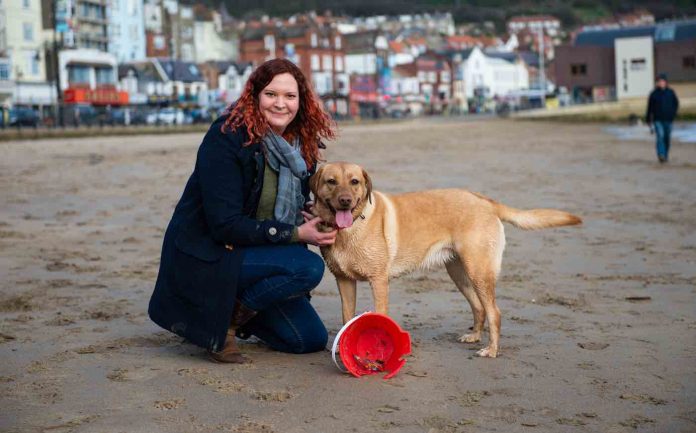
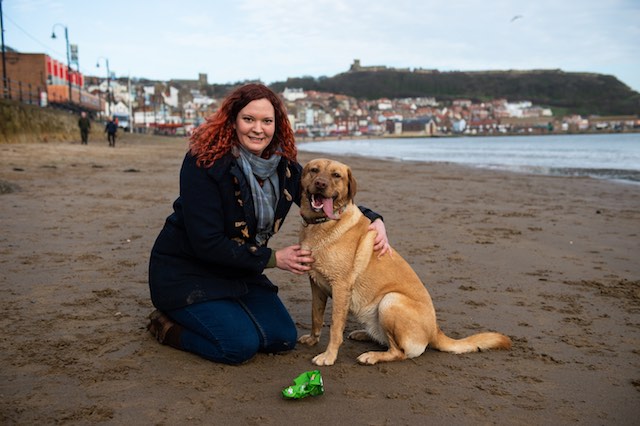
This 2-year-old pooch has been doggedly helping her owner pick up trash from their local English beach—and together, they have collected hundreds of pounds of garbage.
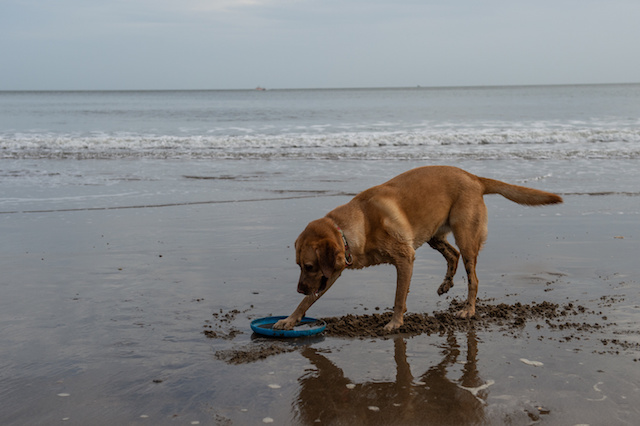
As a puppy, Molly the Labrador retriever would always find pieces of trash to play with—which inspired her owner Fliss Cater to turn the pup’s habit into a good cause by encouraging her to deposit all the garbage into a trash bag.
“I’ve had Molly since she was just nine weeks old and she’s always loved picking up plastic bottles,” says Cater. “Labradors are quite inquisitive and energetic so I was lucky that she immediately had a knack for it.
“We’ll pick up hundreds of items every single day, and I’ve had to upgrade from small bags to massive bin liners,” she added. “She loves it so much she doesn’t ask for treats when she finds something, all she wants is a ‘good girl Molly’ and she’s a happy dog.”
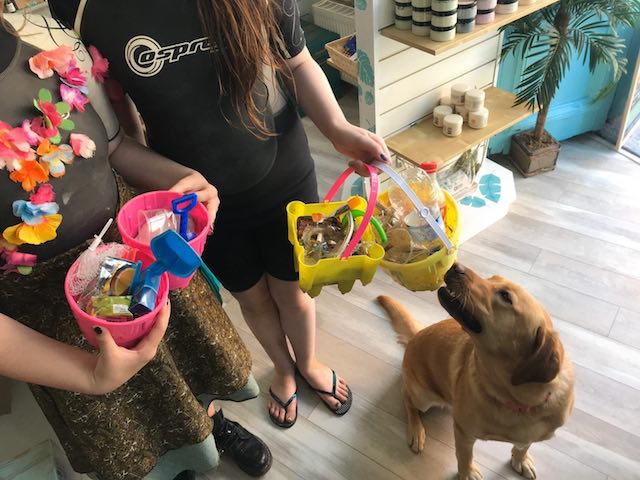
When Cater moved to Scarborough, North Yorkshire to open a bath and skincare shop in 2017, she says she couldn’t believe how much litter she was left “senselessly” on the nearby beach.
She was shocked and appalled by the “unavoidable” amount of litter she found while taking Molly for walks along the coastline.
“If you live by the beach and enjoy it, I think it’s our responsibility to keep it clean,” says Cater. “In the summer it was impossible to avoid the litter—it was just everywhere.”
After just a few months of training, however, Molly and her owner began collecting all of the ropes, discarded toys, and plastic bottles.
SWNS
“I taught her different commands to keep her safe, because there’ll be things on the beach that could harm her,” says Cater. “There are needles and sharp objects or just things you wouldn’t expect, so I wouldn’t let her go and pick anything up on her own.
“As a puppy, she picked up a dead animal once or twice, but I told her off and put on my angriest voice and she’s never done it since.
“She’s such a good girl and she’s never had any issues unless she spots a tennis ball—tennis balls take precedence over everything.
Cater says she never leaves the house without stuffing her bag with bin liners and plastic gloves because she knows Molly will always find something.
SWNS
“We always pick litter when we go on walks, no matter what … I can’t take credit for her great work, she’s the best dog and it’s really just the way she is.”
Their daily walks have since made Molly somewhat of a celebrity among the beach-goers, too.
“She still doesn’t know the difference between an empty discarded bottle and a bottle that is still full which has led to some interesting situations. She’ll sometimes come back to me with a full bottle and I’ll look across the beach and there’ll be a confused person wondering why this dog has just stolen their drink.
“Her intentions are good though, and she’s just trying to do the right thing,” says Cater. “Thankfully no one ever gets angry because she’s so cute.
SWNS
“We get stopped all the time by people who think it’s adorable that she’s cleaning. She gets so much attention and she loves it, she knows she’s a bit of a star.”
Cater hopes Molly’s unique skill set will not only help clean up the beach, but also make people think twice before littering.
“Unfortunately Molly can’t clean the beach on her own, but she’s trying,” says Cater. “We want to get people involved or at least make them think twice before disposing of their litter so carelessly.
“It’s particularly alarming on the beach because people will drop rubbish in the sand, and then it’s a battle against the tides to beat them to it.
Quote of the Day: “Just like the heart beats involuntarily, the mind thinks involuntarily. Thinking during meditation is actually an indicator that stress is leaving the body.” – Emily Fletcher
Photo: by Betty Nudler, CC license on Flickr – cropped
With a new inspirational quote every day, atop the perfect photo—collected and archived on our Quotes page—why not bookmark GNN.org for a daily uplift?
Have you ever felt warm and fuzzy inside after doing something compassionate for someone else? Well, this impressive new study shows there might be a lot more serious science behind that warm and fuzzy feeling than we originally thought.
Researchers from several Chinese universities put together the study in order to more closely examine why humans might act altruistically at their own expense.
Devising a number of tests, the researchers were able to measure charitable actions—mostly altruistic giving—in parallel with pain sensitivity and management. Their work, published in the Proceedings of the National Academy of Sciences (PNAS), reveals some startling insights into different reasons why we may choose to give or help others at the cost of our own livelihood.
Notably, the scientists found that “acting altruistically relieved not only acutely-induced physical pain among healthy adults, but also chronic pain among cancer patients”.
Effective Evolutionary Altruism
In early human societies—or even in those of our earlier ancestors—intelligence and social cooperation were our only tools for survival along with more time-tested evolutionary strategies like tooth, claw, strength, speed, venom, or camouflage.
In order for us to survive and reproduce, our brains evolved to make sacrifices for the sake and wellbeing of our social groups, even going so far as to risk personal injury or death to do so.
The newly-published paper demonstrated that acute pain was reduced when subjects acted for the benefit of others; indicating a sort of biological incentive.
“The prevalence of altruism under life-threatening circumstances raises an important yet poorly understood question: what is happening within the individual at the time when he or she helps?” ask the scientists in their foreword.
It wasn’t an obvious question for them since there are—as the paper details—two prevailing and competing hypotheses.
Previous theories suggested that the unilateral nature of acting altruistically leads to painful sensations because it involves objective loss (time, money, blood, effort, food, etc.), while a competing view suggests that while tangible loss is involved with altruistic actions, intangible gains are received, such as reductions in depression, increases in self-esteem and sense of purpose.
Using fMRI machines and other methods, the Chinese researchers could test these competing views in randomized, placebo controlled-trials.
No Pain, No Gain
In just their first pilot study, dramatic results were found after individuals were reported to have experienced more pain when having blood drawn for regular lab tests than when their blood was drawn for donations to earthquake victims—even though the needle used was larger and the quantity of blood taken was greater in the donation subjects compared to the test-taking subjects.
In their second pilot study, subjects were asked whether they would participate in an altruistic activity, in this case revising a handbook for the children of migrant workers. The test groups were sorted by those who chose to (altruistic) those who chose not to (non-altruistic) and those who did so as a mandate (control).
Sinking their hands into cold water, participants were asked to report their pain every 15 seconds after a reminder, and once again it was the altruistic group who experienced the smallest degree of pain. It was also the altruistic group who managed on average to keep their hand submerged in cold water the longest.
Another test involved a session of wearing a blood pressure tourniquet for three minutes while reporting on pain they experienced every 15 seconds. It had participants complete a survey on consumer decision-making—and upon completion they earned 10 yuan for earthquake victims as opposed to themselves. Donating participants reported less pain experienced during the tourniquet pain session.
In the final experiment the researchers examined the effects of altruistic analgesia on chronic cancer patients. Over the course of a week, the group which chose a daily altruistic activity, in this case cleaning the common areas for their wardmates and preparing a nutritional diet plan for their wardmates, had a gradual reduction in pain symptoms throughout the week, compared to the non-altruistic and control groups.
“Our research has revealed that in adverse situations, such as those that are physically threatening, acting altruistically can relieve unpleasant feelings, such as physical pain, in human performers of altruistic acts from both the behavioral and neural perspectives,” the conclusion reads.
“The finding that the incurrence of a personal cost to help others may buffer performers of altruistic acts from unpleasant conditions contributes to a more comprehensive understanding of human altruism.”
Help Your Friends See This Inspiring News By Sharing It To Social Media — File photo by Shane T. McCoy / US Marshals, CC
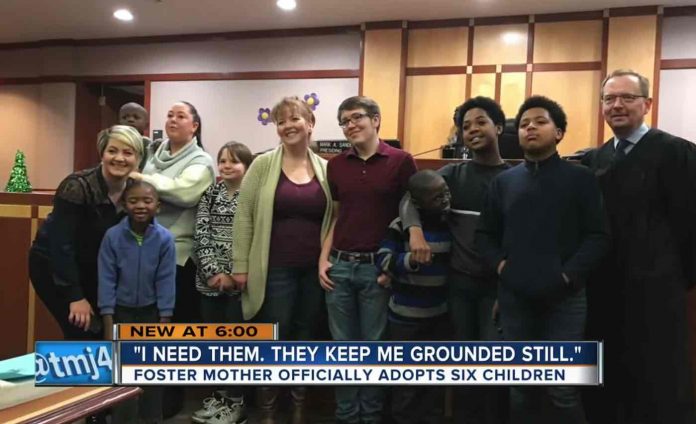
After experiencing years of childhood loneliness in the foster care system, this single mother has just adopted six young boys into her home.
Jessica Benzakein was only 12 years-old when her mom surrendered her to the state. Since older foster kids are far less likely to get adopted, Benzakein languished in the foster care system until she turned 18, and then headed off to college.
Benzakein spent many holidays as a young woman wishing for a family—so when she finally had a house of her own in Milwaukee, Wisconsin, she decided to open her heart and home to foster kids and siblings who were enduring the same struggles she had as a child.
In addition to co-parenting two biological sons with her ex-husband, Benzakein welcomed the six boys from the foster care system several years ago.
Four of the boys are biological brothers currently ranging in age from 8 to 18; the other two boys, aged 4 and 6, are also related.
The youngsters were originally only supposed to stay with Benzakein for a weekend, but those few days quickly turned into several years as a happy family—which was officially sanctioned earlier this week when Benzakein adopted the boys to become their legal guardian.
“Everybody tells me how lucky these kids are and what a good thing I did,” the 46-year-old mother told TODAY. “But … I’m going to cry … they grounded me. I went through my 20s thinking I didn’t really need a family. But I did.”
“They give me purpose.”
(WATCH the news coverage below) – Screenshot image from WTMJ-4 News video
Be Sure And Share The Inspiring Story With Your Friends On Social Media…
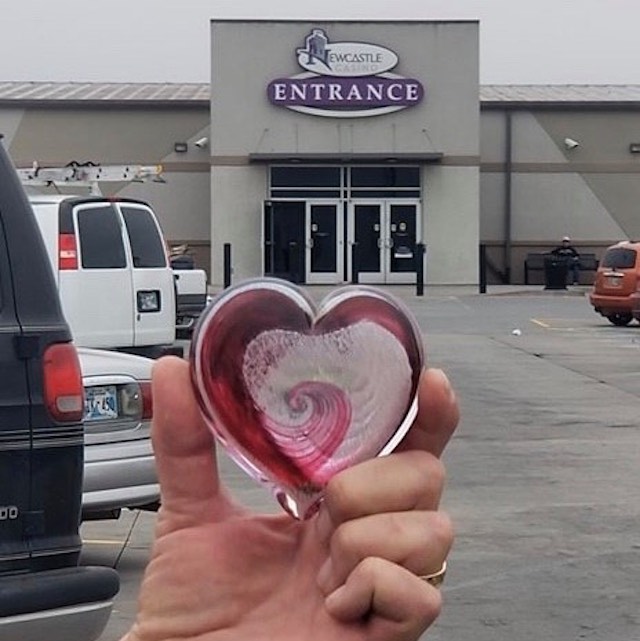
Greg Dale's glass memorial for his grandparents, Maynard and Claudia.
If you don’t want to memorialize family members with headstones in crowded cemeteries, this creative couple from Seattle has taken a much more artistic approach—and their creations are breathtaking.
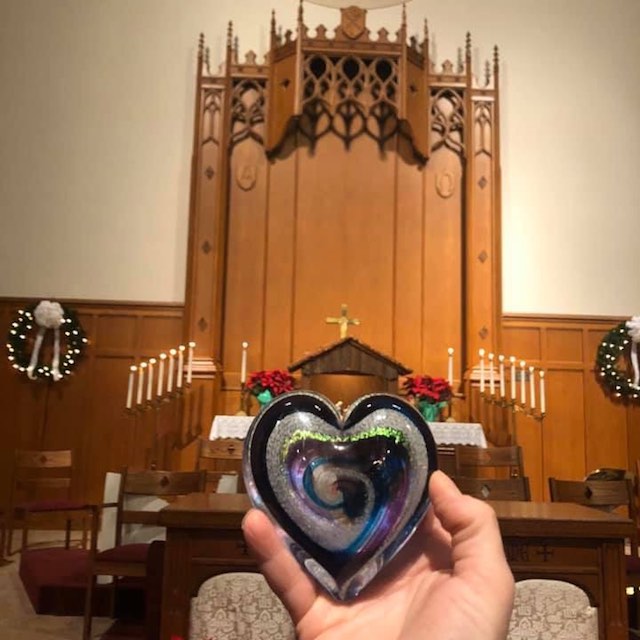
Greg and Christina Dale specialize in turning the cremated ashes of people’s loved ones into swirling, colorful glass sculptures and pendants—and already 50,000 of their memorials have helped families to grieve and remember.
Greg first got the idea for the unique labor of love after he and his wife were forced to consider funeral arrangements for his father.
“I almost lost my father to a surgery,” Greg told Good News Network. “We were going over options if I lost him and the idea for our amazing business was hatched.
“Getting shot out into space, fireworks, and becoming part of a reef are great ideas we went over,” he added. “But I realized everyone is looking for help healing, and I thought beautiful glass art would help.”
Although Greg’s father apparently made it through the surgery, he did end up using his grandparents’ ashes to make a memorial of his own—a fitting start to the Dales’ work.
Greg’s memorial for his grandparents, Maynard and Claudia.
Since launching their Artful Ashes business back in 2012, they have made more than 50,000 glass memorials, sculptures, and pendants for mourners.
“I took my mom to one of her favorite places on her birthday.” –Artful Ashes customer LeAnn
Clients are only required to send the Dales one tablespoon of ashes for the artists to handcraft a memorial within four weeks.
“I love my heart! I take it everywhere! Mom came to Christmas Eve service with us!” –Artful Ashes customer Kerri
The creations cost up to $185 apiece—but some of the glowing testimonials that the Dales have received on their memorials have proven to be priceless.
“Hello Greg and Christina, I graduated to grandma!!! Thanks to your beautiful art, my mother got to be part of our first grandson (her great grandson). Thank you.” –Artful Ashes customer Tamara
If you want to order a memorial of your own or check out more of the Dales’ stunning work, be sure and check out the Artful Ashes website or Facebook page.
“My husband totally surprised me with this gift. Thank you so much for the care you took in bringing my mom and stepdad home to me this Christmas. It’s beautiful.” –Artful Ashes customer Terri
Be Sure And Share The Stunning Story With Your Friends On Social Media…
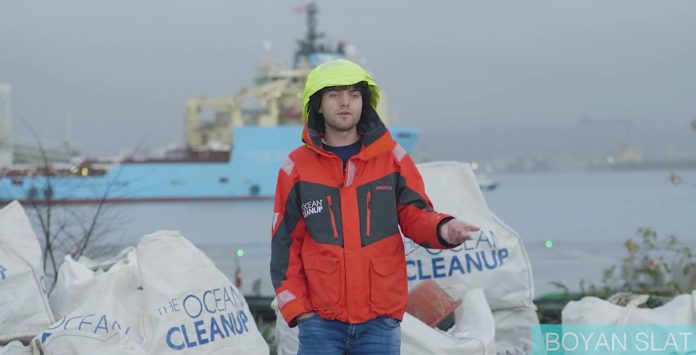
Boyan Slat is the young engineer responsible for the organization that recently collected two shipping containers of trash from the Great Pacific Garbage Patch for the first time in history—and now, the Dutch conservationist is setting his sights on the very source of most of that water pollution.
Slat already has his oceanic cleanup vessels deployed along the path of key ocean currents, allowing vast amounts of plastic waste to drive themselves toward his devices before being hoovered up and moved to shore for recycling. He has also confirmed they are capturing even microplastics that are one millimeter in size.
But, simultaneously, he is also tackling a related issue—a facet that is just as critical to the overall plastic pollution problem: the world’s most littered rivers.
Slat and his organization, The Ocean Cleanup, began targeting river pollution after their research revealed that 1,000 of the world’s rivers are responsible for depositing 80% of all the trash that is currently swirling in the ocean.
By “turning off the taps” and catching the plastic along the river’s course, the much more difficult task of capturing it in the ocean can be mostly avoided.
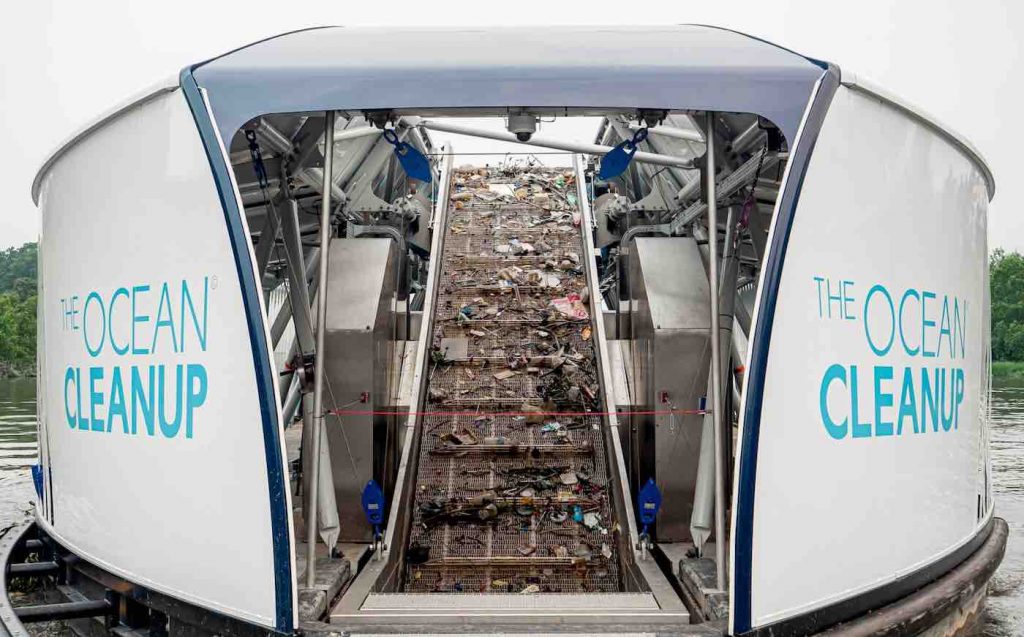
Enter Slat’s latest creation, The Interceptor: an efficient solar-powered barge that gobbles up plastic river garbage.
The Interceptor – The Ocean Cleanup
Prepare the Interceptor
The Interceptor collects trash by extending a water-permeable barrier halfway across the river. A conveyor belt at the front of the Interceptor then scoops the plastic out of the water and deposits it onto a shuttle that moves across the length of the barge and deposits the trash into one of 6 dumpsters which can be remotely monitored by an onshore crew.
Once full, the dumpsters—which sit on a separate barge—can be removed by another boat and brought ashore for recycling.
At top performance, the Interceptor can extract 220,000 pounds (100,000 kilograms) of trash per day, and with several Interceptors placed along key or narrower parts of the river, minimal amounts of garbage are ever likely to reach the ocean.
Interceptor 002 at work in Klang, Malaysia. Was amazing to see it in reality! pic.twitter.com/7xXoYojgzX
Slat’s goal is to have Interceptors in all 1,000 of the worst polluting rivers by 2025. The Interceptor is scalable and easily manufactured, allowing it to be more widely available in poorer countries where pollution is at its worst because waste disposal is far less developed than in most Western countries.
Currently, The Ocean Cleanup has Interceptors in the Klang River in Kuala Lumpur—which is among the 50 worst rivers for pollution—and the Cengkareng Drain in Jakarta.
The Ocean Cleanup will help anyone looking to lobby their local governments for implementation of the Interceptor in their own rivers, which readers can explore by visiting the “Nominate your River” section of the organization’s website, which also describes how you can become an operator, and where the 1,000 worst rivers are in the world.
If you DONATE $50 to keep the Interceptors and ships operating, you are guaranteed to receive one of the first recycled products, to be announced later this year, from the Pacific Garbage Patch.
(WATCH the video explaining the brilliance of the Interceptor below)
Float This Great News Over to Your Friends On Social Media!
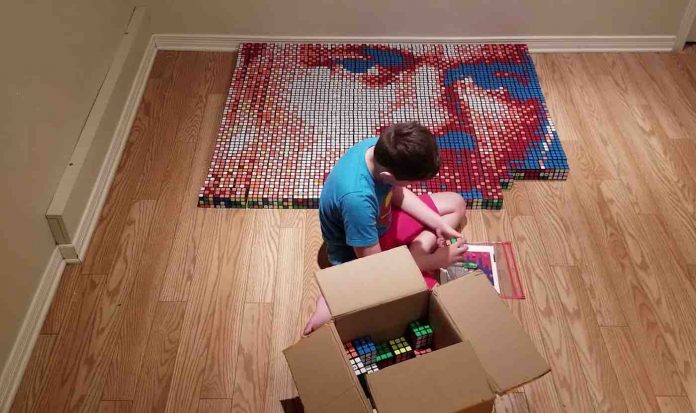
Despite how Benjamin’s dyslexia has always made it hard for him to read and write, he has always had a knack for memorizing and copying patterns at an incredible speed.
His mother Melanie Russo says that his heightened sense of spatial awareness is part of what makes solving Rubik’s cubes so easy for the youngster. In fact, he can finish just one side of a Rubik’s cube in about one second.
“Dyslexia is not my disability,” reads one of the printed notecards in Benjamin’s Rubik’s cube video. “Dyslexia is my SUPERPOWER.”
(WATCH the video below)
Piece Together This Sweet Story Be Sharing It With Your Friends On Social Media…
Quote of the Day: “He who lives in harmony with himself lives in harmony with the universe.” – Marcus Aurelius
Image: by HaPe Gera, CC license on Flickr – adjusted levels
With a new inspirational quote every day, atop the perfect photo—collected and archived on our Quotes page—why not bookmark GNN.org for a daily uplift?
California’s housing crisis is hitting especially lower-income communities harder than ever, as rent prices continue to rise stemming from the endless injections of big-tech money into areas like San Francisco and Oakland.
According to The Guardian, the number of homeless encampments within the city of Oakland outnumbers the square kilometers that make up that city—but at the corner of 37th Street and Martin Luther King Jr. Way, this community of housed and unhoused citizens are creating reasons for people to change their attitudes toward the often embattled encampments.
“37MLK” was just a vacant Oakland lot of overgrown weeds squared away by tattered chain link fencing in the northwest part of town where Stefani Echeverría-Fenn, a local resident, walked on her way to work.
“Every single day for the past decade I lived here, I walked on my way to work past this vacant lot, this eyesore, this blight that was never put to good use to the community,” the 32-year-old told The Guardian. “Meanwhile, you would see the tents grow just a half a block down there. You see people literally sleeping on the side of the street, on the side of freeways.”
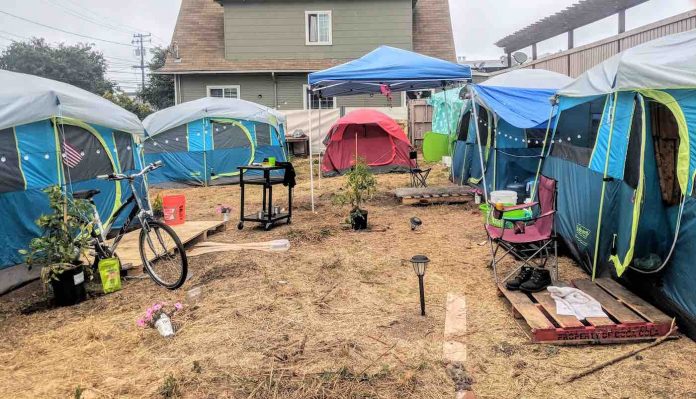
Today, 37MLK has become far more than a homeless encampment; it is a homeless sanctuary.
There’s a solar shower, a garden that grows food and flowers, a communal kitchen and dining table, camping toilets and a pump-operated sink, all of which are maintained and kept clean by the campers in the community—mostly homeless black women.
The little community feels protected inside the fencing—and the walkways between tents are lined with solar-powered lights and mini white picket fences. The women also keep chickens, which provide eggs and help keep insect and rodent populations under control.
Echeverría-Fenn and other housed neighbors do their part to take care of the community by providing the services which 37MLK cannot provide for themselves, such as trash and waste disposal.
“…there are the allegations that homeless people are dirty or don’t keep the space clean,” Echeverría-Fenn said. “There’s only one reason why we’re clean and other encampments are dirty: we have actual access to trash facilities and we have access to running water that other encampments don’t.”
While the police have been called twice in the community’s history, among the residents there’s a sense of collective responsibility, with regular meetings held to discuss cleanliness and to remind everyone that noise or blight complaints could lead to the dismantling of their quiet and peaceful way of life.
Creativity and Urgency
Oakland city council members recognize the role that camps like 37MLK may play in the tackling the homelessness epidemic now, while the much-needed affordable housing is erected.
Recently $600,000 was allocated to a pilot project based on the 37MLK model in an Oakland district.
“These are spaces that people may need to stay in for two to five years, not a matter of months,” Nikki Fortunato Bas, the local lawmaker heading up the project told The Guardian. “And we need to be able to house them in a way that’s healthy and safe and dignified.”
“The homelessness and housing affordability crisis has grown to an extent that we can no longer ignore it,” Bas said. “You juxtapose that…with stories like 37MLK being an incredibly creative and inspiring and successful story of unsheltered older black women. I think we have to draw from the human resilience and creativity we’re seeing from people who are in deep crisis and respond with that same level from government, respond with that same level of creativity and urgency.”
Readers who live in the city of Oakland can follow 37MLK on Facebook, where posts report semi-frequently about goings-on in the community and how local housed residents can help if they feel inspired to. Often this involves visiting and just saying hello, while perhaps taking a bag of garbage with you when you leave.
Be Sure And Share The Inspiring Story With Your Friends On Social Media…
Anxiety disorders are the most common type of psychiatric illness, yet researchers know very little about factors associated with recovery.
However, Canadian researchers were heartened to report earlier this week that there is hope on the horizon for people suffering from anxiety.
The study from the University of Toronto investigated three levels of recovery in a large, representative sample of more than 2,000 Canadians with a history of generalized anxiety disorder (GAD).
The study reports that 72% of Canadians with a history of GAD have been free of the mental health condition for at least one year. Overall, 40% were in a state of excellent mental health, and almost 60% had no other mental illness or addiction issues, such as suicidal thoughts, substance dependence, a major depressive disorder or a bipolar disorder, in the past year.
The definition of excellent mental health sets a very high bar. To be defined in excellent mental health, respondents had to achieve three things: 1) almost daily happiness or life satisfaction in the past month, 2) high levels of social and psychological well-being in the past month, and 3) freedom from generalized anxiety disorder and depressive disorders, suicidal thoughts and substance dependence for at least the preceding full year.
“We were so encouraged to learn that even among those whose anxiety disorders had lasted a decade or longer, half had been in remission from GAD for the past year and one-quarter had achieved excellent mental health and well-being,” says Esme Fuller-Thomson, lead author of the study. Fuller-Thomson is director of the University of Toronto’s Institute for Life Course and Aging.
“This research provides a very hopeful message for individuals struggling with anxiety, their families and health professionals. Our findings suggest that full recovery is possible, even among those who have suffered for many years with the disorder,” she says.
Individuals who had at least one person in their lives who provided them with a sense of emotional security and wellbeing were three times more likely to be in excellent mental health than those without a confidant.
“For those with anxiety disorders, the social support that extends from a confidant can foster a sense of belonging and self-worth which may promote recovery,” says co-author Kandace Ryckman, a recent graduate of University of Toronto’s Masters of Public Health.
In addition, those who turned to their religious or spiritual beliefs to cope with everyday difficulties had 36% higher odds of excellent mental health than those who did not use spiritual coping. “Other researchers have also found a strong link between recovery from mental illness and belief in a higher power,” reports Fuller-Thomson.
The researchers found that poor physical health, functional limitations, insomnia and a history of depression were impediments to excellent mental health in the sample.
“Health professionals who are treating individuals with anxiety disorders need to consider their patients’ physical health problems and social isolation in their treatment plans,” says Ryckman.
The researchers examined a nationally representative sample of 2,128 Canadian community-dwelling adults who had a generalized anxiety disorder at some point in their lives. The data was drawn from Statistics Canada’s Canadian Community Health Survey-Mental Health and the research was published online ahead of press this week in the Journal of Affective Disorders.
Reprinted from the University of Toronto
Multiply The Good News By Sharing It With Your Friends On Social Media – File photo by Practical Cures, CC
Thousands of Australians are being heartened by these striking photos of greenery and plant life growing out of an area that was left charred and blackened by the bushfires last month.
The pictures were taken by Australian photographer Murray Lowe in the Kulnura area of the Central Coast in New South Wales.
“Ventured out into the fire grounds today to capture some images of how the Aussie bush responds to fire, and the way it regenerates itself and comes back to life,” Lowe wrote in a Facebook post. “Even without any rain, life bursts through the burnt bark from the heart of the trees and the life cycle begins again.
“It’s so heartening to see the bush coming back to life again,” he added.
One Facebook user thanked Lowe for the photos, saying: “I think everyone is so happy to see your beautiful photos showing something positive after weeks of heartache—it gives us hope.”
Another commenter wrote: “Thank you for sharing these Mr Lowe! It’s so nice after all the tragedy to see the new growth in our bush.”
Since Lowe posted the photos to social media earlier this week, they have been shared more than 39,000 times.
“I did not, in my wildest dreams, anticipate the overwhelming response to my photos that I’ve seen,” he wrote in an update. “It’s both humbling, and heart-warming.”
Lowe is not the only one shining a light on the landscape’s recovery; Koala Hospital Port Macquarie posted their own pictures of the steadily returning greenery in Port Macquarie, New South Wales.