All News - Page 631 of 1736 - Good News Network
Home Blog Page 631

“Loneliness is only an opportunity to cut adrift and find yourself.” – Anne Shannon Monroe

SONY DSC

Quote of the Day: “Loneliness is only an opportunity to cut adrift and find yourself.” – Anne Shannon Monroe

Photo: by Hafiz Issadeen, CC license, Flickr (cropped)

With a new inspirational quote every day, atop the perfect photo—collected and archived on our Quotes page—why not bookmark GNN.org for a daily uplift?


Last Full Moon of the Decade Rises on 12/12 at 12:12 AM – For Lucky East Coasters

If you’re a stargazing enthusiast who lives on the east coast of the United States, it’s time to grab your binoculars—the last full moon of the decade is taking place this week.

For east coasters, the moon is set to hit maximum exposure at exactly 12:12AM on December 12th.

Astronomers all over the world will still be able to catch a gorgeous glimpse of the moonrise, but its full illumination will take place at a less superstitious time than 12:12AM on 12/12.

LOOK: Photographer Captures Picture of Stunning ‘Ice Ball’ Phenomenon on Finnish Beach

That being said, stargazers in the central US time zone can still catch the moonrise at 11:12PM on December 11th, which makes for a palindromic timestamp.

This particular full moon has been called the “Long Night’s Moon” or the “Cold Moon” because its occurrence in December usually precedes the start of winter on the 21st, meaning that the nights will start getting longer and colder and the moon will sit above the horizon for a longer period of time.

If you want to prepare for this week’s moonrise, be sure and check a moonrise calculator as well as your local weather radar for cloud cover predictions. For more general information about the moonrise, you can also check out the Farmer’s Almanac.

Be Sure And Share This Far Out News With Your Friends On Social Media…

After Five Years of Drought, Kenyan Region Finally Gets Clean Water Thanks to Solar-Powered Saltwater Plant

For the last five years, this Kenyan region has been suffering from debilitating drought—but they have finally been given the gift of clean water thanks to a new solar-powered desalination plant.

Prior to the plant’s launch in the town of Kiunga, villagers had completely run out of clean drinking water and had instead resorted to using dirty well-water and saltwater from the Indian Ocean.

Now, the solar water farm produces enough clean drinking water for more than 35,000 people every day. Not only that, the water has been shown to be even cleaner than typical desalination plants.

RELATED: Drought-Proof ‘Cooling Houses’ Use Saltwater and Cardboard to Grow Tons of Healthy Produce in the Desert

The desalination farm is just the latest project launched by GivePower, an international nonprofit dedicated to using renewable energy as a means of bringing water, food, and energy to the places that need it most.

In addition to successfully launching the solar water farm, the foundation has also brought renewable energy to over 2,500 schools in 17 countries, thus benefiting more than 300,000 people.

Following the unparalleled success of the water farm in Kiunga, the group now plans on building similar facilities in other drought-prone areas such as Colombia and Haiti.

(WATCH the GivePower video below) – Photo by GivePower

Power Up With Positivity By Sharing The Good News To Social Media…

Watch Delivery Driver’s Adorable Reaction to Finding Goodies Waiting for Him on a Doorstep


It can’t be easy working as a delivery driver during the busy holiday season—which is why Kathy Ouma always makes sure to leave out some goodies for mail workers.

Despite how there is a basket of snacks and beverages on Ouma’s doorstep every year, one particular Amazon Prime delivery driver named Kareem Earl Reed III recently went viral for having the sweetest reaction to Ouma’s labor of love.

According to security footage from Ouma’s doorbell cameras, Reed can be seen dropping off some packages only to catch sight of the goodies and let out an exclamation of delight.

“Oh! This is nice!” says Reed. “They’ve left some goodies! Oh, this is sweet! Oh, wow! Get out of here. This is so nice!”

RELATED: Kangaroo Has Been Hugging Her Rescuers Almost Every Day Since They Saved Her As an Orphan #TBT

The basket of snacks was adorned with a sign reading: “UPS, USPS, Amazon, FedEx: Please take some goodies to enjoy on your route. Thank you for making holiday shopping easy. The Ouma Family.”

After selecting a few treats for the road, Reed can even be seen doing a little happy dance as he is walking away from the house.

Since uploading the footage to Facebook last week, the video has been viewed more than 10 million times—and it’s not hard to see why.

(WATCH the adorable video below)

Deliver This Sweet Story Of Kindness To Your Friends On Social Media…

Rather Than Plastic or Bird Feathers, These Winter Coats Are Filled With Wildflowers to Help Butterfly Habitats

Photo by Pangaia
Photo by Pangaia

These stylish winter parkas aren’t just fashionable—they’re also designed to be far more sustainable than the coats hanging in your average department store.

Rather than being stuffed with plastic materials or animal-derived fillings, these “flowerdown” jackets are filled with wildflowers that have been sourced from restoration projects helping to support butterfly species.

Sustainable fashion company Pangaia says that they have spent the last 10 years developing the patented technology as a sustainable and cruelty-free alternative to goose-down insulation.

LOOK: Revolutionary New Arm Cast is Waterproof, Breathable, and Itch-Free

The vegan coat is filled with a fully biodegradable material made out of certifiably hypoallergenic wildflowers, biopolymer, and a specialized aerogel that keeps the material insulated and waterproof, but still breathable.

“The wild flowers we source are from areas which contribute to habitat restoration, whilst helping to conserve a species of local butterflies,” the company told Tree Hugger. “This kind of regenerative agriculture results in a reduction of greenhouse gas production (12 tons of CO2 per hectare of plant material). The method also helps to preserve groundwater, as it doesn’t require irrigation.”

Photo by Pangaia

The aerogel is reportedly made out of 85% recycled paper and several other renewable, non-toxic, and biodegradable materials. Pangaia designers also say that it is the world’s first green aerogel.

The coat cannot be hailed as being entirely plastic-free since the outer shell and lining are made out of nylon and polyster, but the company says that all of their plastics are made from recycled materials in order to maintain a zero-waste production cycle.

The regular-sized coats are currently being sold on the Pangaia website for $550 a pop.

(WATCH the video below)

Plant Some Positivity By Sharing The Good News With Your Friends On Social Media…

First Graders Persuaded School to Adopt Therapy Dog—And Their Story Won $100K for Shelter That Housed Him

A group of elementary schoolers managed to persuade their principal to adopt a therapy dog for the school.

Not only has the pup’s presence made a dramatic impact on the school, he has also brought joy to the animal shelter that adopted him out.

Back in 2018, the first grade students at Reeths-Puffer Elementary School in Muskegon, Michigan conducted a writing exercise in which they wrote letters to their principal citing evidence on how a therapy dog would benefit their students.

Their letters were so well-articulated, vice principal Karyn Benner began visiting local animal shelters with the hopes of finding a dog fit for the job—one who was hypoallergenic, well-behaved, quiet, and generally good with kids.

LOOK: After Bullied Boy Has Terrible First Day of School, Upperclassmen Take Him Under Their Wing

Upon meeting Buddy the dog at the Humane Society and Animal Rescue of Muskegon County, she knew that he would be perfect for the school.

Since 40% of Reeths-Puffer students come from low-income households or troubled backgrounds, Buddy has now become an invaluable member of the school’s support team.

“He cheers up teachers who have had a rough moment and supports our school-wide Positive Behavioral Interventions and Supports (PBIS) initiative,” says Benner. “We have some highly aggressive students who have elaborate behavior plans. When their behaviors would escalate, our masters-level staff were often unable to de-escalate them in a timely manner. But when Buddy comes in, the students just melt in a matter of minutes.

“When students are depressed, Buddy instinctively goes to them and lies next to them or brings them a toy to play,” she added. “He is trained to stay at my side as his handler; however, when he senses a need in another, he is drawn to the person’s side and provides comfort simply by being there.”

Buddy’s impact on the school later inspired Benner to send their story to the Petco Foundation’s 2019 Holiday Wishes grant campaign. This year in particular, the foundation has awarded $875,000 in grant awards to support various animal welfare organizations—including the Humane Society that matched Buddy with the school.

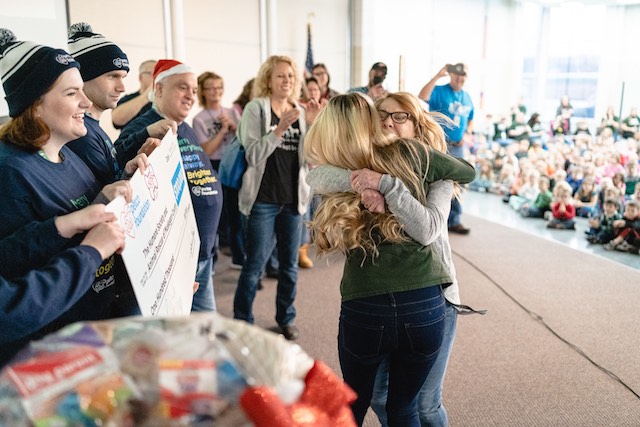
As a thank you for the shelter’s efforts, the Petco Foundation surprised the Humane Society administrators with a $100,000 check—and they were understandably overwhelmed by the gift.

(WATCH the emotional video below)

Be Sure And Share The Pawesome Story With Your Friends On Social Media…

“The family is one of nature’s masterpieces.” – George Santayana

Quote of the Day: “The family is one of nature’s masterpieces.” – George Santayana

Photo: by jeff_golden, CC license, Flickr (colorized)

With a new inspirational quote every day, atop the perfect photo—collected and archived on our Quotes page—why not bookmark GNN.org for a daily uplift?


Listen to Man’s Tale of How His Grandma Saved Christmas With a Care Package of ‘Magic and Love’

Listen to this heartwarming tale of familial affection in this week’s edition of MOTH Monday, a partnership with Good News Network that features inspiring videos from The MOTH, a nonprofit group showcasing the art of storytelling.

Leonard Lee Smith was just a boy when his mother and new stepfather tore him away from his family in rural Alabama and moved him all the way to the strange and sunny shores of California.

Smith had trouble fitting into his new home in the Golden State—but most of all, he missed spending Christmas with his beloved grandmother.

When it finally came time for Smith to spend his first holiday season away from home, his grandmother reassured him that she would be sure to include him on the festivities.

True to her word, his grandmother went above and beyond the call of duty to send him a very special care package in the mail—and she made sure to send him one every Christmas afterwards, too.

(LISTEN to the emotional story below)

The Moth gives people an opportunity to tell a true story in front of a live audience, and sometimes their stories are chosen to air on the radio show, now celebrating its tenth year, and broadcasting on 485+ public radio stations—and on The Moth podcast, which is downloaded over 52 million times a year. The Moth’s third book, Occasional Magic: True Stories About Defying the Impossible is now available for purchase through your favorite booksellers.

Send This Sweet Story Of Christmas Cheer To Your Friends On Social Media…

Four Teen Surfers Hailed for Rescuing Drowning Brothers On a Foggy California Coastline

Photo by Eva York

These teen surfers have been hailed as heroes after they came to the rescue of two drowning swimmers last month.

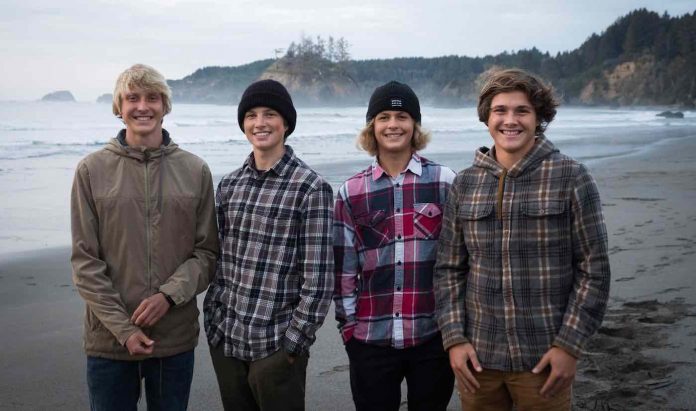
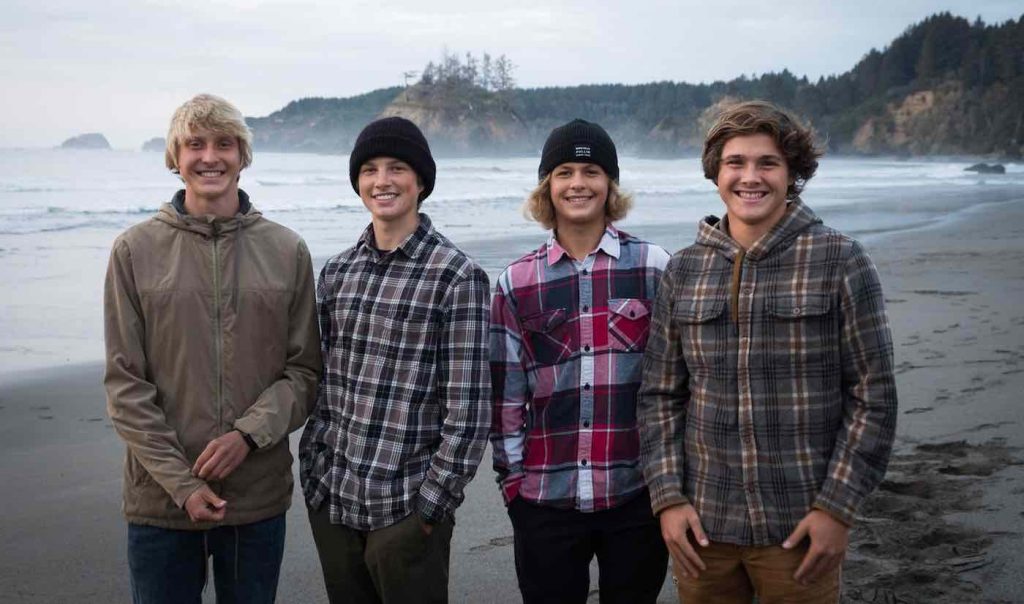
Narayan Weibel, Spenser Stratton, Adrian York, and Taj Ortiz-Beck had already been catching some waves at Trinidad State Beach in California for several hours when they decided to take a break and sit on their surfboards for a breather. As they were resting in the chilly waters, however, they began hearing cries for help.

Since it had been a particularly foggy evening, the 15- and 16-year-old boys had to peer through the mist in order to locate the source of the yelling. They then spotted two swimmers who were splashing about in the ocean with their heads barely held above water 100 feet away.

The surfers—two of whom had been through junior lifeguard training—knew that the distressed swimmers did not have long before they fell victim to hypothermia, so they immediately jumped into action. While York quickly headed back to shore to call 911, Weibel, Stratton and Ortiz-Beck paddled over to the swimmers and helped them onto their boards.

WATCH: More Than 20 Drivers Stop Traffic to Rescue a Frightened Dog From the Highway Following Car Collision

The high schoolers say that the swimmers were two brothers aged 15 and 20 who had not been wearing the appropriate swimwear for such chilly waters. They had been playing in the surf when they were suddenly carried away by a strong current—and since the beach had been so foggy, the brothers’ family had not been able to spot them in the mist.

Though it had been difficult to sufficiently calm the panicked brothers and get them onto the surfboards—particularly because one of the brothers reportedly weighed an estimated 250 pounds—the group was eventually able to get everyone safely to shore.

“We told them, ‘Calm down, we got you!’ ” Weibel told The Washington Post. “Being out in that cold water without a wet suit is like taking an ice bath. They were having a hard time keeping their heads above water and thought they were going to die.”

RELATED: Cheerleader Jumps Off Parade Float So She Can Save Choking Toddler in the Crowd

After all of the boys had been checked over by paramedics, the four rescuers were sent home by their proud—and relieved— families.

“I can’t say enough about what these boys did,” one of the responding paramedics told The Post. “They were willing and prepared to risk their lives.

“There’s no doubt in my mind those guys would have drowned without their quick intervention,” he added. “To find out [the teenage rescuers had] been through our lifeguard program—we’re all really proud of them.”

(Left to right) Adrian York, Spenser Stratton, Taj Ortiz-Beck and Narayan Weibel. Photo by Eva York.

Save Your Friends From Negativity By Sharing The Good News To Social Media…

First Drone Project of Its Kind in Canada is Aiming to Plant 1 Billion Trees by 2028

A Canadian tech company is aiming to plant 1 billion trees by 2028—and they plan on achieving their goal with drones.

Toronto-based startup Flash Forest is using a fleet of aerial drones which has been designed to plant trees ten times faster than human planters. Since they began testing their prototype drones earlier this year, they have already managed to plant several thousand trees across Ontario.

Using pre-germinated seed pods, the drones are capable of planting trees at just 50 cents per sapling—which is just one-fourth the cost of typical planting methods.

WATCH: Man Succeeds Where Government Fails—He Planted a Forest in the Middle of a Cold Desert

Flash Forest hopes to diversify their ecosystems by using eight different species of tree. The organization has already managed to hit their first crowdfunding goal of $10,000 within 24 hours of launching their Kickstarter campaign.

The group now plans to start planting trees in April with at least 150,000 trees in the ground by the end of 2020.

While this is not the world’s first drone-headed reforestation project, Flash Forest advisor Angelique Ahlstrom told Good News Network in an email that their startup is the first of its kind in Canada.

MORE: Ethiopia May Have Just Shattered World Record By Planting 350 Million Tree Saplings in One Day

“Our goals are to have a significant and measurable impact on mitigating climate change in the next decade, while combatting deforestation and biodiversity loss on a global scale,” wrote Ahlstrom. “Using this technology, we aim to plant at least 1 billion trees by the year 2028.

“We feel we are one of the only ways that the federal government will be able to fulfill its pledge to plant 2 billion trees in the next ten years,” she added.

(WATCH the video below)

Plant Some Positivity By Sharing The Good News With Your Friends On Social Media…

Hotel Helps Dogs Get Adopted By Allowing Long-Term Guests to Foster Shelter Pups During Their Stay

Photo by Humane Society of Southern Mississippi

At this hotel in Mississippi, you can get a lot more than just food delivered with your room service.

As a means of helping shelter dogs find their forever homes, the Home2 Suites in Biloxi has been hosting adoptable dogs in their hotel so that they can encourage their long-term guests to foster a dog during their stay.

The dogs, which are kept in a kennel in the hotel lobby, are from the nearby Humane Society of Southern Mississippi in Gulfport.

RELATED: This is the World’s First Beer Taproom That Also Houses Foster Dogs Rescued From Kill Shelters

Not only does their “Fostering Hope” program help shelter dogs to get adopted, it also helps free up space in the kennels at the Humane Society.

Since the dogs are kept in the hotel lobby, all guests have to do is ask the concierge for the dog to be brought up to their room DURING THEIR STAY.

Bianca Janik, the shelter’s relations manager, told USA Today that the program is ideal because the hotel hosts a lot of long-term military visitors: “They have a lot of transient guests who stay for months at a time near our army and navy bases and that’s just enough time to fall in love with a dog.”

LOOK: When Animal Shelter Uses Area 51 Internet Meme to Appeal for Adoptions, They Are Flooded With Support

Since launching the program in October 2018, the hotel has helped 33 dogs get adopted into forever homes.

The hotel now hopes that their program will inspire other businesses to setup similar initiatives with their local animal shelters.

Photo by Humane Society of Southern Mississippi

Be Sure And Share The Pawesome Story With Your Friends On Social Media…

Man Has Been Using 590 Feet of Extension Cords to Illuminate Roadside Christmas Tree for Commuters

Drivers passing by on this Canadian highway might be surprised to see a scrawny little fir tree alight with Christmas lights on a hill in the middle of nowhere—but for many people in the community, the tree is a very familiar sight.

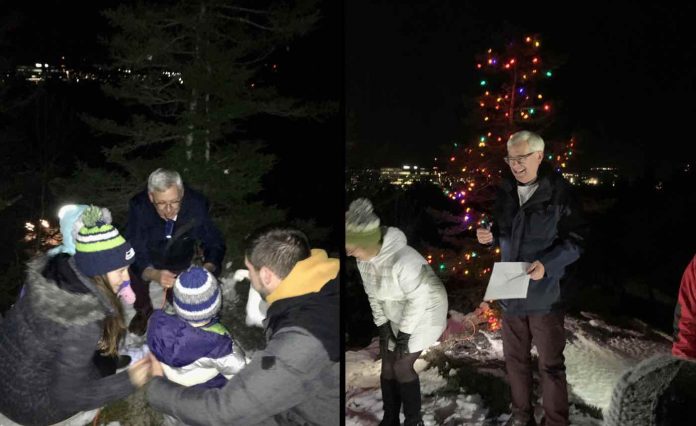
For the last 20 years, Ed McHugh has been stringing 590 feet (180 meters) of extension cords from his home in Bedford, Nova Scotia so he can illuminate the little tree on the hill.

McHugh was first inspired to decorate the tree back in 2000 because it closely resembled the iconic tree from The Charlie Brown Christmas Special. Upon deciding that the tree just “needed a little love”, McHugh ran to the store, bought several extension cords, and ran them up to the tree.

“Some people talk about him being a little beacon as they drive home in the evenings from work,” McHugh told CBC. “He stands out in the dark because there’s no houses along here so as you drive along the highway you go, ‘How the heck did that get there?’”

LOOK: Sympathetic Cops Cut Some Slack For Overzealous Family Toting Massive Christmas Tree

The tree-lighting has now become a beloved tradition for the community. Every year, hundreds of neighbors and local families gather around the “Charlie” tree to sing carols and celebrate the tree-lighting, and the youngest in attendance is usually invited to plug in the lights. After the tree is lit, everyone is invited back to the McHugh’s house for a Christmas party.

The tree then stays lit until January 6th—and the town is always looking forward to seeing his lights on the isolated little hill.

“I just love doing this and I love the reaction from people,” McHugh told the news outlet. “People complain about the commercialism of Christmas, but that’s only if you go that way. For me, this is exactly what Christmas should be. It can be about simple little things that make people smile.”

Be Sure And Celebrate This Sweet Story With Your Friends By Sharing It To Social Media…

“When you feel like you’ve only got a bit part in your own life, write the script yourself.” – Benny Bellamacina

Quote of the Day: “When you feel like you’ve only got a bit part in your own life, write the script yourself.” – Benny Bellamacina

Photo: by GWC – copyright 2018

With a new inspirational quote every day, atop the perfect photo—collected and archived on our Quotes page—why not bookmark GNN.org for a daily uplift?


Shelter Believes Dogs Deserve the Spirit of Christmas, Too–Watch the Excitement as Santa Brings Bag Full of Goodies

For many years now, a shelter for rescued animals in Romania has been providing their 4-legged residents with Christmas cheer during the holidays—and the gratitude rings out in howls of delight through the snowy countryside.

Alexandra Sava is a veterinary technician who, together with her family, opened an animal shelter in 2012 which now houses over 250 dogs, cats, birds, and bunnies.

This Romanian family so loves their rescued animals that every winter they prepare the shelter for a Christmas visit from Santa Claus.

“We do this because some of the shelter animals are here for over 6 years,” Sava told GNN. “Unfortunately due to various reasons their chances of adoption are low, and they deserve to feel the spirit of Christmas!”

Every Christmas day Alexandra’s brother or dad dresses up like Santa Claus for all the animals in the shelter, bringing a sack filled with “toys, yummy food, goodies, and gifts” donated from people around the world.

PHOTOS: Man Transforms His Pub into the Most Festive Bar in All of UK So He Can Raise Money for Sick Children

“We make our best to save animals and offer them a better life in our shelter until they find their home,” says Sava.

The shelter, Sava’s Safe Haven, was built and runs with the support of donations—without any help from authorities or local companies. They rely on animal lovers who cover the cost of food, veterinary care, and repairs.

They also organize various projects to help the people in the community of Galati with their own animals—through social programs offering free veterinary care or food in the southeastern part of the country.

WATCH the heartwarming video below—and please consider sending Sava and her family a holiday donation to support their loving mission at SavaSafeHaven.com.

Also, follow their Facebook or Instagram page to see what Santa brings THIS year…

SHARE the Spirit of Christmas With Animal Lovers on Social Media!

MORE: You Can Now Help Santa Deliver to Low-Income Kids By ‘Adopting’ Their Christmas Letters Through USPS

Amazing Video Shows Special Needs Teen Walking For the First Time in 8 Years

A trainer has been working with special needs kids and their families to provide strengthening techniques and programs, and has achieved inspiring results—some might even call them ‘miracles’.

One such ‘miracle’ was caught on video, demonstrating that with determination, practice, and the right encouragement, the sky is the limit.

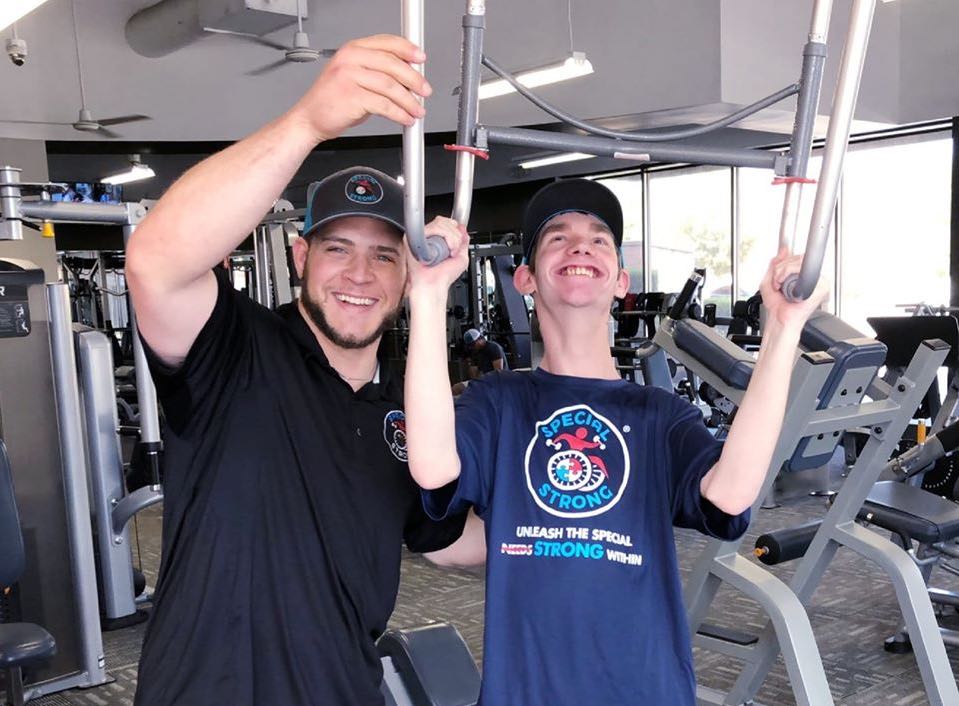
Daniel Stein owns and operates Special Strong, a special needs website and program that provides physical activities and lifestyle advice for parents and professionals.

“We know that the assumptions and expectations about the special needs population can fuel limiting aspirations and lead to inhibiting anxiety that can only lock-in the special needs child’s sense of being depressingly different,” says Stein. “That’s in part why we exist, to show these young men and women and their families, that many of the assumptions about their diagnoses are false. When we can prove it to them, well, that’s when the miracles happen.”

Those are the moments that make Stein feel especially blessed to have chosen his line of work—and they give his entire team a real sense of purpose and meaning.

They never know when those miracles will occur, but they offer a free 7-day gym pass to see if any breakthroughs might indicate future success.

On June 4th of 2019, a parent signed up for the trial services for her 17-year old son, Brandon Neal.

Brandon’s development was problematic from the start. By the age of six months, he was extremely underweight and jaundiced. Developmentally, he was very behind and unable to sit up, roll over, stand or make eye contact.

At the age of 5, he needed to get five surgeries to fix his eyesight. A few years later, he finally was able to talk in sentences. But Brandon had a genetic gene mutation that was causing all of his problems, including his abnormal gait—and x-rays uncovered scoliosis and a misplaced right hip.

Brandon and his family were advised to have surgery to correct his hip and were told he would be walking normally again within six months. But, after the six months, Brandon still wasn’t walking. He became severely depressed and anxious—and the follow-up physical therapy made him so sick with fear that he was hospitalized many times. As a result, he remained in his wheelchair and would not allow anyone to take him out of it.

Brandon was unable to walk for eight years following the hip surgery, but one day when his mom approached him about getting a new wheelchair, he told her he didn’t want any more wheelchairs. He wanted to walk, and he wanted to do it on his own.

Instead of buying the new wheelchair they decided to invest in a personal trainer and began working with Daniel Stein in McKinney, Texas.

LOOK: Dad Builds Wheelchair-Accessible Snow Fort So All of His Children Can Play Together

On July 15th, they had their first training session. Stein saw potential and shared with Brandon that he knew there would be a day when he would walk again.

Although Brandon was scared of falling and getting hurt, trust was developing between the two that would lead to amazing progress.

They started workouts with exercises that began to correct the muscles that had atrophied during eight years of inactivity.

“Whenever I told him we were doing a new exercise, he would begin to physically shake and say, “I CAN’T DO IT DANIEL – I’M SCARED!” However, even though Brandon was scared, he was always receptive to my coaching. He understood his fear, but he didn’t run away from it, which was crucial. You might not look at him and think he is brave, but he was as courageous as anyone who has ever faced a ferocious enemy or worse, their own demons.”

“I ended up making a rule with him that the word “can’t” was not allowed in my gym. I told him to think of the word “can’t” like a cuss word that should never be spoken.”

RELATED: After Special Needs Man Was Found Wandering the Streets Without a Family, His Former Teacher Took Him In

Soon Brandon progressed to using forearm crutches, and his parents were told to stop bringing the wheelchair to the gym.

During his fifth session July 30th, he was challenged to walk a step or two without the crutches, and though he teared up and was scared, he did it—and it gave him an incredible amount of confidence for what was to come.

After additional strengthening of Brandon’s legs, core, and lower back—and overcoming more bouts with fear—on August 21st, he arrived and gave Daniel a strong impression that today was the day he would walk independently. He said, “I’M READY!”

“I knew I had to get this moment on video, anticipating something great was going to happen; another ‘miracle’. I gave Brandon a pep talk, encouraged him, and got the video rolling—and that’s when he truly conquered his fears for the first time his life.


“Daniel, I did it! … Daniel, I did it!” After that moment, everything changed for Brandon and his entire family. He hadn’t just learned to walk, he had conquered the assumptions and self-limiting thoughts. He had conquered himself.

The video was seen all over the world, and Brandon was so encouraged by it that he started going to school without his wheelchair or walker. Peers started coming up and telling him how proud they were after seeing the video. For the first time in his life, Brandon felt like he had a purpose and that he could make a difference in the lives of others.

(Check out the Special Strong program, here)

Brandon continues to train twice a week at Special Strong. On August 26th, he kept pace with a 4.0 speed on the treadmill—a light jog. Daniel became confident that one day Brandon will walk, run, and even sprint—and so did Brandon.

SHARE the Inspiring Story of Overcoming on Social Media…

Boy’s Comical Reaction to Shoveling Too Much Snow Might Be the Most Relatable Winter Video All Year

Not many people are excited to shovel snow, and this kid from Colorado is no exception.

In a hilarious video that was captured by CCTV cameras in Colorado Springs last week, a youngster named Peyton was filmed as he exhibited the most relatable reaction to the endless heaps of powder sullying his driveway.

According to Peyton’s mother, the boy had volunteered to shovel the snow covering their driveway only to find that he had offered a little more exertion than he could stomach.

“My son Peyton offered to go shovel the 8 inches of snow we got earlier today but quickly realized he was in over his head,” she told Licensor. “My security cameras caught his mini-tantrum.”

(WATCH the amusing silent footage below)

Deck The Halls Of Your News Feed –Share The Video On Social Media…

New Study Proves That People Can Train Themselves to Be More Focused By Manipulating a Brain Wave

Photo by Yasaman Baghezadeh / MIT News

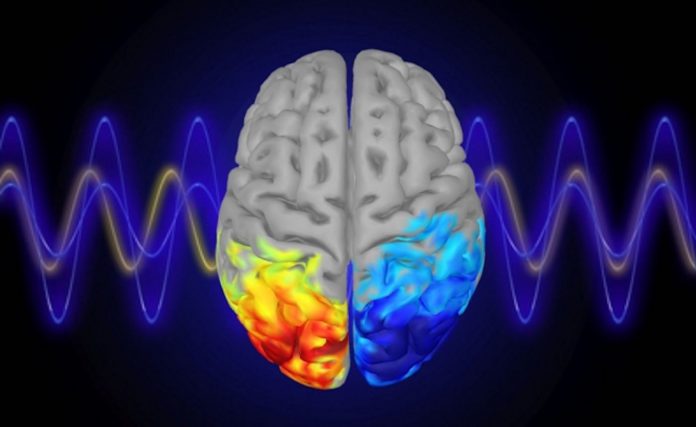
Study shows that people can boost attention by manipulating their own alpha brain waves.

Written by Anne Trafton – MIT News

Having trouble paying attention? MIT neuroscientists may have a solution for you: Turn down your alpha brain waves.

In a new study, the researchers found that people can enhance their attention by controlling their own alpha brain waves based on neurofeedback they receive as they perform a particular task.

The study found that when subjects learned to suppress alpha waves in one hemisphere of their parietal cortex, they were able to pay better attention to objects that appeared on the opposite side of their visual field. This is the first time that this cause-and-effect relationship has been seen, and it suggests that it may be possible for people to learn to improve their attention through neurofeedback.

RELATED: Study of Surveillance Cameras Proves That Strangers Will Almost Always Intervene to Help

“There’s a lot of interest in using neurofeedback to try to help people with various brain disorders and behavioral problems,” says Robert Desimone, director of MIT’s McGovern Institute for Brain Research. “It’s a completely noninvasive way of controlling and testing the role of different types of brain activity.”

It’s unknown how long these effects might last and whether this kind of control could be achieved with other types of brain waves, such as beta waves, which are linked to Parkinson’s disease. The researchers are now planning additional studies of whether this type of neurofeedback training might help people suffering from attentional or other neurological disorders.

Desimone is the senior author of the paper, which appeared in Neuron earlier this week.

Alpha and attention

There are billions of neurons in the brain, and their combined electrical signals generate oscillations known as brain waves. Alpha waves, which oscillate in the frequency of 8 to 12 hertz, are believed to play a role in filtering out distracting sensory information.

CHECK OUT: Stressed-Out Americans Only Get 43 Minutes of ‘Me Time’ Per Day, But Solution May Lie in Their Backyards

Previous studies have shown a strong correlation between attention and alpha brain waves, particularly in the parietal cortex. In humans and in animal studies, a decrease in alpha waves has been linked to enhanced attention. However, it was unclear if alpha waves control attention or are just a byproduct of some other process that governs attention, Desimone says.

To test whether alpha waves actually regulate attention, the researchers designed an experiment in which people were given real-time feedback on their alpha waves as they performed a task. Subjects were asked to look at a grating pattern in the center of a screen, and told to use mental effort to increase the contrast of the pattern as they looked at it, making it more visible.

During the task, subjects were scanned using magnetoencephalography (MEG), which reveals brain activity with millisecond precision. The researchers measured alpha levels in both the left and right hemispheres of the parietal cortex and calculated the degree of asymmetry between the two levels. As the asymmetry between the two hemispheres grew, the grating pattern became more visible, offering the participants real-time feedback.

Although subjects were not told anything about what was happening, after about 20 trials (which took about 10 minutes), they were able to increase the contrast of the pattern. The MEG results indicated they had done so by controlling the asymmetry of their alpha waves.

“After the experiment, the subjects said they knew that they were controlling the contrast, but they didn’t know how they did it,” said McGovern Institute postdoc Yasaman Bagherzadeh, the lead author of the study.

MORE: The Science of Kindness—Biology Proves How We Are All Connected

“We think the basis is conditional learning—whenever you do a behavior and you receive a reward, you’re reinforcing that behavior. People usually don’t have any feedback on their brain activity, but when we provide it to them and reward them, they learn by practicing.”

Although the subjects were not consciously aware of how they were manipulating their brain waves, they were able to do it, and this success translated into enhanced attention on the opposite side of the visual field. As the subjects looked at the pattern in the center of the screen, the researchers flashed dots of light on either side of the screen. The participants had been told to ignore these flashes, but the researchers measured how their visual cortex responded to them.

One group of participants was trained to suppress alpha waves in the left side of the brain, while the other was trained to suppress the right side. In those who had reduced alpha on the left side, their visual cortex showed a larger response to flashes of light on the right side of the screen, while those with reduced alpha on the right side responded more to flashes seen on the left side.

RELATED: The Science Behind Why We Need More of the ‘Secret Sauce’ of Kindness

“Alpha manipulation really was controlling people’s attention, even though they didn’t have any clear understanding of how they were doing it,” Desimone says.

Persistent effect

After the neurofeedback training session ended, the researchers asked subjects to perform two additional tasks that involve attention, and found that the enhanced attention persisted. In one experiment, subjects were asked to watch for a grating pattern, similar to what they had seen during the neurofeedback task, to appear. In some of the trials, they were told in advance to pay attention to one side of the visual field, but in others, they were not given any direction.

When the subjects were told to pay attention to one side, that instruction was the dominant factor in where they looked. But if they were not given any cue in advance, they tended to pay more attention to the side that had been favored during their neurofeedback training.

CHECK OUT: Instead of ‘We Are What We Eat,’ the Science of Kindness Says ‘We Are What We See’ in Daily Life

In another task, participants were asked to look at an image such as a natural outdoor scene, urban scene, or computer-generated fractal shape. By tracking subjects’ eye movements, the researchers found that people spent more time looking at the side that their alpha waves had trained them to pay attention to.

“It is promising that the effects did seem to persist afterwards,” says Desimone, though more study is needed to determine how long these effects might last.”

“It would be interesting to understand how long-lasting these effects are, and whether you can use them therapeutically, because there’s some evidence that alpha oscillations are different in people who have attention deficits and hyperactivity disorders,” says Sabine Kastner, a professor of psychology at the Princeton Neuroscience Institute, who was not involved in the research. “If that is the case, then at least in principle, one might use this neurofeedback method to enhance their attention.”

Reprinted with permission from MIT NewsFeatured photo by Yasaman Baghezadeh / MIT News

Focus On The Positive Effects Of Science By Sharing The Good News With Your Friends On Social Media…


“Not until we are lost do we begin to understand ourselves.” – Henry David Thoreau

Quote of the Day: “Not until we are lost do we begin to understand ourselves.” – Henry David Thoreau

Photo: by Navaneeth Kishor, CC license on Flickr–cropped

With a new inspirational quote every day, atop the perfect photo—collected and archived on our Quotes page—why not bookmark GNN.org for a daily uplift?


For the First Time, Scientists Have Reversed Dementia in Mice With Drug That Reduces Brain Inflammation

SWNS

Rather than targeting the typical rogue proteins associated with dementia, scientists say that—for the very first time—they have reversed dementia in mice with a drug that reduces inflammation.

Up until now, most dementia treatments have targeted the amyloid plaques that are found in people with Alzheimer’s disease. However, the latest study published in Science Translational Medicine suggests targeting inflammation in the brain might stop it in its tracks.

In experiments conducted at the University of California, Berkeley, senile mice were significantly better at learning new tasks, and became almost as adept as those half their age.

WATCH: Thanks to Student’s Hunch, Seniors With Dementia Are ‘Coming Alive’ Again With the ‘Magic’ of Virtual Reality

Experts are “optimistic” that it will work in humans and possibly lead to a cure for the devastating neurological condition. Not only that, they hope that any drugs developed with their strategy can also help brains recover from strokes, concussions, or traumatic brain injuries.

The successful treatment in mice supports a growing body of research which says that our blood-brain barriers begin to leak as we get older. This is the filtration system that blocks infectious organisms, letting in chemicals that destroy neurons.

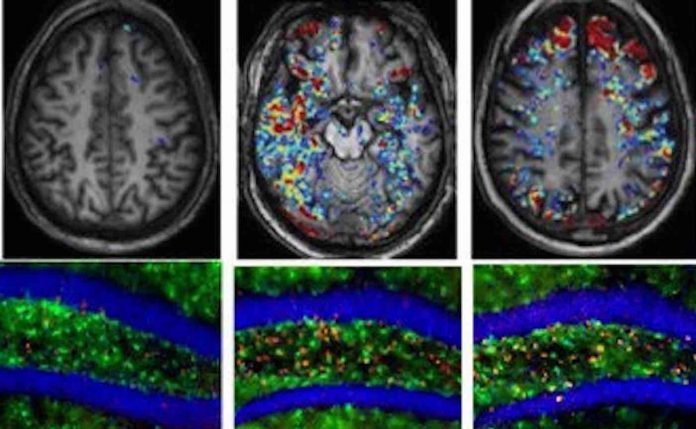
Previous MRI (magnetic resonance imaging) scans by study co-author Professor Alon Friedman have found that the barrier breaks down in nearly 60% of people by the age of 70.

CHECK OUT: New Research Links Five Simple Lifestyle Choices to a 60% Reduced Risk of Developing Alzheimer’s

Experiments in mice showed this causes an inflammatory fog that alters the brain’s rhythms, causing tiny seizure-like events. This leads to momentary lapses in the hippocampus that controls memory—shedding fresh light on the symptoms of dementia and other degenerative brain diseases.

“We tend to think about the aged brain in the same way we think about neuro-degeneration,” said senior author Professor Daniela Kaufer of the University of California, Berkeley. “Age involves loss of function and dead cells. But our new data tell a different story about why the aged brain is not functioning well.

“It is because of this ‘fog’ of inflammatory load. But when you remove that inflammatory fog, within days, the aged brain acts like a young brain,” he added. “It is a really, really optimistic finding, in terms of the capacity for plasticity that exists in the brain. We can reverse brain aging.”

MORE: Another Study Shows How Flickering Lights Can Slow (And Maybe Even Reverse) Alzheimer’s Symptoms

Scans called EEGs (electroencephalograms) revealed similar brain wave disruption in humans with Alzheimer’s, mild cognitive impairment (MCI) and epilepsy.

It means leaky barriers and abnormal brain rhythms detectable by MRI and EEG scans, respectively, can be used to flag people with dementia—as well as signal an intervention opportunity using a drug to slow or reverse the disease.

The drug, called IPW, blocks a gene known as TGF-β that fuels the inflammation triggering blood protein albumin.

RELATED: Be Sure and Floss! Researchers Say Good Dental Health ‘Substantially’ Decreases Risk of Alzheimer’s

“We now have two biomarkers that tell you exactly where the blood-brain barrier is leaking, so you can select patients for treatment and make decisions about how long you give the drug,” said Professor Kaufer. “You can follow them, and when the blood-brain barrier is healed, you no longer need the drug.”

When they gave the drug to mice in doses that lowered the gene’s activity, their brains looked younger; there was less inflammation and improved brain waves as well as reduced seizure susceptibility. The mice also navigated a maze and learned spatial tasks similarly to a young mouse.

In an analysis of brain tissue from humans, Professor Kaufer found evidence of albumin in aged brains and increased neuro-inflammation and TGF-β production.

Prof Friedman, of Ben-Gurion University of the Negev in Israel, developed a scanning technique called DCE (dynamic contrast-enhanced)—a special type of MRI. This detected more leakage in the blood-brain barrier of people with greater cognitive decline.

WATCH: Inventor Makes ‘Music Memory Box’ So Dementia Patients Can Reconnect With Their Loved Ones

Altogether, the evidence points to a disfunction in the brain’s blood filtration system as one of the earliest triggers of neurological aging, said Kaufer.

Her team have now started a company to develop a drug to heal the blood-brain barrier for clinical treatment—and it may eventually help older adults with dementia or Alzheimer’s disease who have demonstrated leakage of the blood-brain barrier.

“We got to this through this back door; we started with questions about plasticity having to do with the blood-brain barrier, traumatic brain injury and how epilepsy develops,” said Kaufer. “But after we’d learned a lot about the mechanisms, we started thinking that maybe in aging, it is the same story. This is new biology, a completely new angle on why neurological function deteriorates as the brain ages.”

Currently, the only drugs for dementia or Alzheimer’s treat the symptoms and not the cause. This new drug, however, opens the door to changing just that.

Cure Your Friends Of Negativity By Sharing The Good News To Social Media…

Teen Can Return to School After Undergoing Free Surgery to Correct Her Extreme Bow-Leggedness

(Left to right) Before and after Valerie’s corrective surgery on her bowlegs. SWNS

These incredible before and after photos show the transformation of a teenager who was given free surgery to correct her extremely bowed legs.

14-year-old Valerie—who surgeons declined to fully name—developed bowed legs at the age of four and had such low self-confidence, she convinced her parents to pull her out of school.

She joined her uncle’s tailoring shop as an apprentice and worked hard, despite the fact that her harshly-angled legs arched outwards from her hips, making it difficult for her to walk.

RELATED: Bedridden for 11 Years, Man Proves the Experts Wrong By Inventing a Surgery to Cure Himself

The talented seamstress was busy sewing when a customer told her that a hospital boat operated by the charity Mercy Ships had docked near her West African home in Cotonou, Benin.

Mercy Ships operates the largest non-governmental hospital ship in the world, providing humanitarian aid for terminally-ill patients. It has operated in more than 57 developing nations and 18 developed nations around the world, with a current focus on African countries.

Valerie boarded the charity’s ship Africa Mercy and was one of 76 children and teenagers to receive free surgery during the boat’s 10-month stint.

Valerie recovering on the ward after surgery. SWNS

During her knee operation, surgeons removed a wedge of bone from the outside of both her knees, causing her legs to bend inward. Since Valerie was in post-surgery rehab for about four months, she spent all of her recovery time learning how to read.

Now that her bow-leggedness has been corrected by the surgery and months of physical therapy, she can walk, run, and fulfill her plans for returning to school.

LOOK: Girl Born With Backwards Legs Walks for the First Time Thanks to Strangers Funding ‘Miracle’ Surgery

“I was desperate to learn how to read. A friend onboard gave me a few alphabet pages for me to trace—and the next day I told her I needed more to read!” said Valerie.

“Not long after then, my legs were strong enough for me to go home. I was very happy. I told myself—‘I no longer want to be a seamstress! I want to go back to school!’”

Valerie in rehab after getting her casts off. SWNS

Bow-leggedness is a deformity marked by outward bowing at the knee, which gives the limb the appearance of an archer’s bow. The chief cause is rickets, but it can also be caused by skeletal problems, infections, and tumors.

Although Valerie did not disclose the cause of her condition, she cannot contain her excitement over returning to school.

“School will be great,” she added. “People will say—‘Is this the same girl? Her legs are straight’!”

SWNS

Be Sure And Share This Inspiring Story With Your Friends On Social Media…