










All News - Page 659 of 1732 - Good News Network
Home Blog Page 659

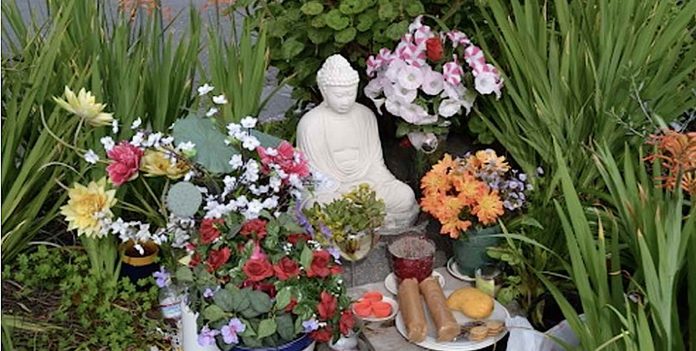
When Man Got Sick of Trash and Crime, He Bought Buddha Statue for the Street—and Transformed the Neighborhood

Back in 1999, this California intersection was rife with trash and criminal activity—but the area has been transformed thanks to one little statue.

Dan Stevenson, who is a resident of Oakland, says that after making countless calls to the local public works department, he had grown sick and tired of the litter and dubious dealings.

“A lot of graffiti, a lot of urination and drug use kind of thing,” Stevenson told PRI. “Mattresses, tables — just junk, just continual junk.”

Despite not being a religious person, Stevenson was eventually inspired to attach a two-foot high statue of Buddha to a rock in the median strip of the intersection. He hoped that its religious influence would help to “shift the energy” of the neighborhood.

What happened in the years afterward was nothing short of stunning: fewer and fewer drug deals were made at the intersection; less trash was thrown on the street; and small gifts started appearing around the statue.

When several local Vietnamese residents were informed of the statue’s placement in the median strip in 2010, they took it upon themselves to build a shrine around the Buddha and use it for regular prayer sessions.

Not only has the shrine served as a community space for both religious and non-religious neighbors, it has also had a dramatic impact on the neighborhood crime rate. Since the worshippers began showing up for prayer at the shrine, a police statistician told SF Gate reporters that crime rates had fallen in the neighborhood by 82% in five years.

Though the “Buddha of Oakland” has been vandalized a few times over the course of the last decade, the locals have never failed to build it back again bigger and more beautiful than before.

WATCH: 170 Foxes Are Rescued From Fur Farm and Given New Home at a Buddhist Monastery

“It’s become this icon for the whole neighborhood,” Stevenson told Oakland North. “There’s a lot of people that are not Buddhist that really come and just talk in front of him, they walk their dogs, they stand there—it’s a place where people meet and talk. It’s just cool.

“Since the Vietnamese have adopted the space, every morning they come and they clean it, and they sweep it,” he added. “It just kind of turned the whole thing around to zero. No more mattresses and no more garbage and no more graffiti and no more hanging out.”

(WATCH the video below)

Clean Up Negativity By Sharing The Good News With Your Friends On Social Media…
5 Ways Companies, Governments, and People Are Helping Bees—on National Honeybee Day

As biologists and conservationists scramble to positively impact the declining pollinator populations, individual gardeners and cities around the world are doing their part to help honeybees in a variety of ingenious ways.

In honor of National Honeybee Day today, we’ve collected five ways that people and their communities are saving honeybees—and how you can help as well.

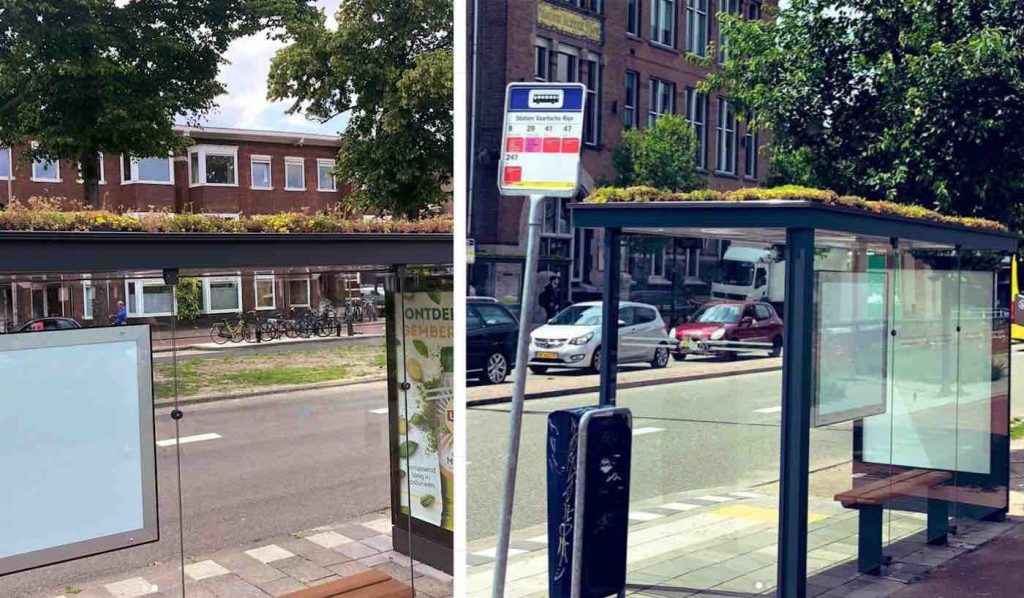
1) 316 Dutch Bus Stops Are Getting Green Roofs Covered in Plants as a Gift For Honeybees

Hundreds of Dutch bus stops are getting eco-friendly makeovers so they can be transformed into lush green sanctuaries for honeybees and humans alike.

All 316 bus stops in the city of Utrecht are receiving green rooftops covered in sedum plants. Not only are the succulents good for improving air quality, they are also good for helping to support dwindling pollinator populations.

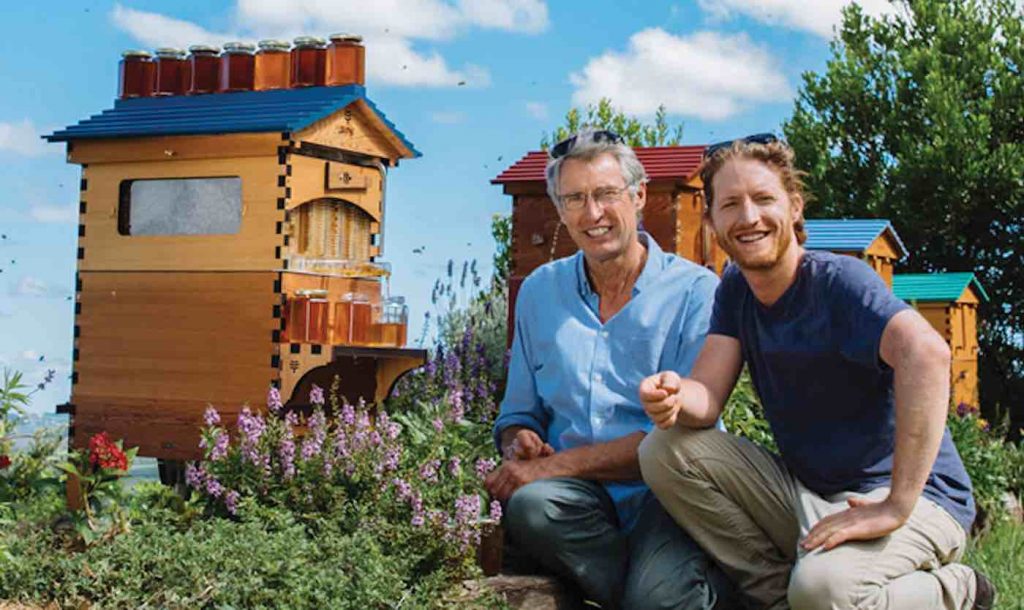
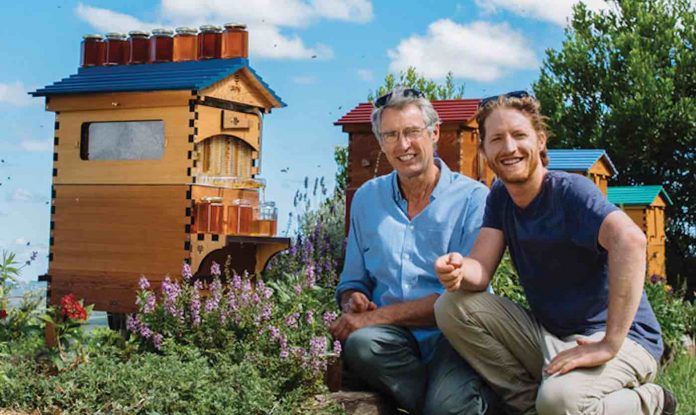
2) Since Father-Son Duo Designed Revolutionary ‘Honey on Tap’ Beehive, There Are 51,000 New Bee Colonies

Stuart and Cedar Anderson are the co-creators of the Flow Hive: a specially designed beehive that has encouraged many new beekeepers to tend hives. It cuts hours from the labor intensive work load by simply channeling all of the honey into a tap that can be turned on and off at will.

Four years after their initial success, the Flow Hive has had a dramatic impact on honeybee populations around the world. The Andersons say that they have successfully shipped over 51,000 hives to 150 different countries. Since they launched the hive in 2015, the number of beekeepers in the U.S. alone has increased by over 10%.

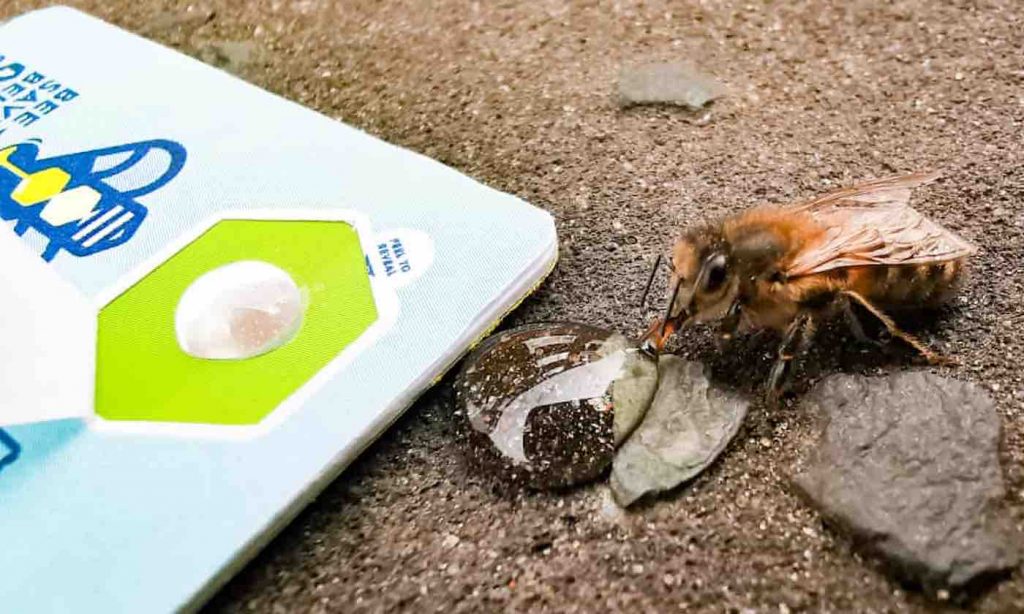
3) You Can Now Use These Pocket-Sized ‘Bee Savior’ Cards to Rescue Hungry Honeybees on the Sidewalk

40-year-old Dan Harris designed the Bee Savior Cards in order to ensure that anyone can save hungry honeybees this summer simply by using the contents of their wallet.

The cards hold three different stashes of sugar solution which can be used as a life-saving snack for pollinators.

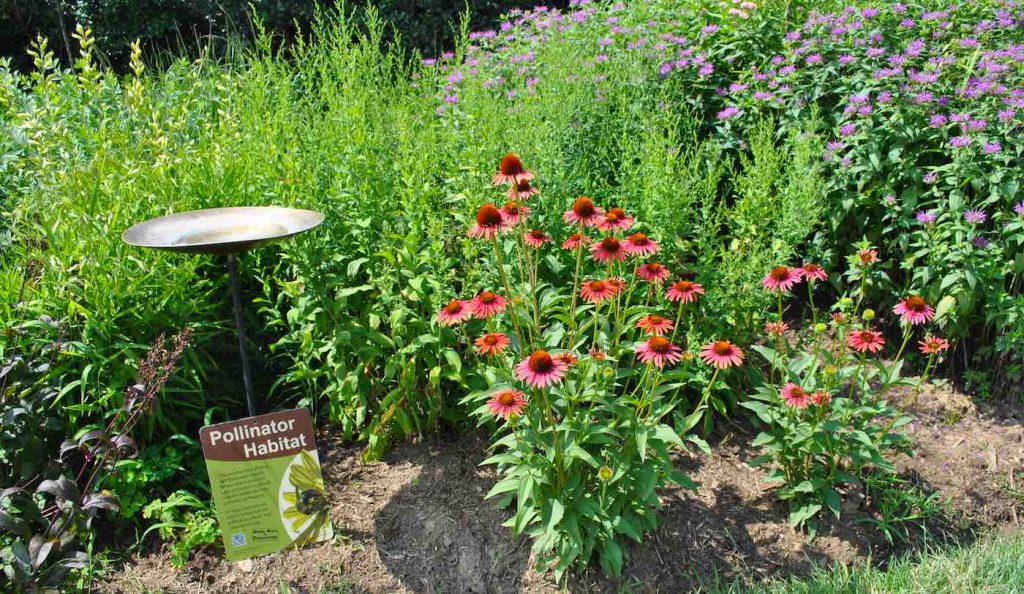
4) Over 1 Million Gardeners Have United to Create Global Network of Greenery That Nourishes Bees and Butterflies

Back in April, the National Pollinator Garden Network has surpassed their goal of registered pollinator gardens with just over 1,040,000 gardens now registered with their Million Pollinator Garden Challenge—and you can join the team too.

Though most of the registered pollinator gardens are concentrated in the United States, the ambitious project has also recruited members in Canada, Mexico, and Europe. The registered spaces, most of which are comprised of private yards and public gardens, all add up to a network of approximately 5 million acres of enhanced or new pollinator habitat.

5) Minnesota Will Soon Pay for Your Landscaping Costs If You Plant Bee-Friendly Greenery

As a means of boosting honeybee populations, Minnesota lawmakers have approved a new program that will compensate homeowners for planting pollinator-friendly greenery on their properties.

According to the proposal, the state will allocate roughly $900,000 in state funding for the creation of honeybee habitat over the course of one year.

The funding will then be distributed to Minnesota homeowners who are seeking to transform their gardens and outdoor spaces into bee-friendly spaces.

BONUS: Mathematician Unveils Breakthrough on Non-Toxic Pest Control That Doesn’t Harm Bees

MORE: Native Bees Are Poised to Be First Pollinators Protected Under California Endangered Species Act

Bee Sure And Share The Good News With Your Friends On Social Media…
“I’m always thinking about creating. My future starts when I wake up every morning.” – Miles Davis (‘Kind of Blue’ released 60 years ago today)

Quote of the Day: “I’m always thinking about creating. My future starts when I wake up every morning.” – Miles Davis (Kind of Blue released 60 years ago today)

Photo: by cathredfern, CC license, via Flickr

With a new inspirational quote every day, atop the perfect photo—collected and archived on our Quotes page—why not bookmark GNN.org for a daily uplift?


Collapsed 73-Year-old Man Rescued From the Desert Thanks to Miraculous Appearance of a Cyclist

Photo by Tomas Quinones

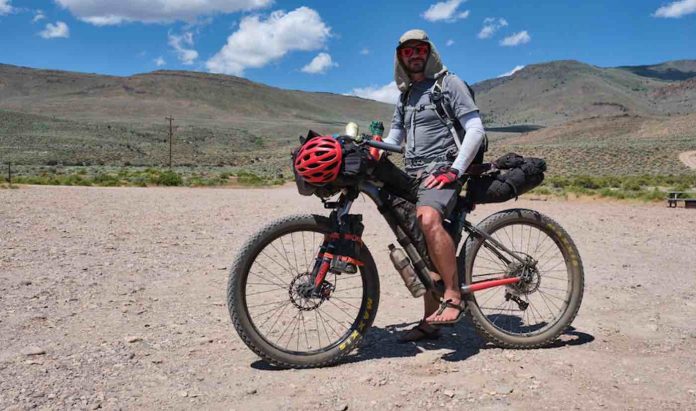
Gregory Randolph was near death with one of his dogs by his side when he was miraculously saved thanks to a cyclist who happened to be passing through the desert.

The 73-year-old had been out driving with his two canine companions last month when he decided to explore an area of the high desert in Lake County, Oregon. Unprepared for an emergency and without any cell service in the area, Randolph’s Jeep became stuck in a remote, dry creek bed in a narrow, roadless canyon.

Lake County, a sparsely populated area with less than one person per square mile, is largely made up of uninhabited scrub and cattle land. When authorities located Randolph’s Jeep, it was 40 miles from the nearest town.

After spending the first night in his vehicle, Randolph took the calculated risk of walking away from the site with his dogs, Cruella and Buddy. However, Buddy decided to return to the Jeep, perhaps wanting to get a drink from the muddy puddles that they had left behind.

RELATED: American Brothers Successfully Save Irish Girl Who Was Swept Out to Sea in Serendipitous Twist of Fate

After four days of walking through the exposed landscape with no protection from the elements, Randolph collapsed in the dirt, sunburned and dehydrated.

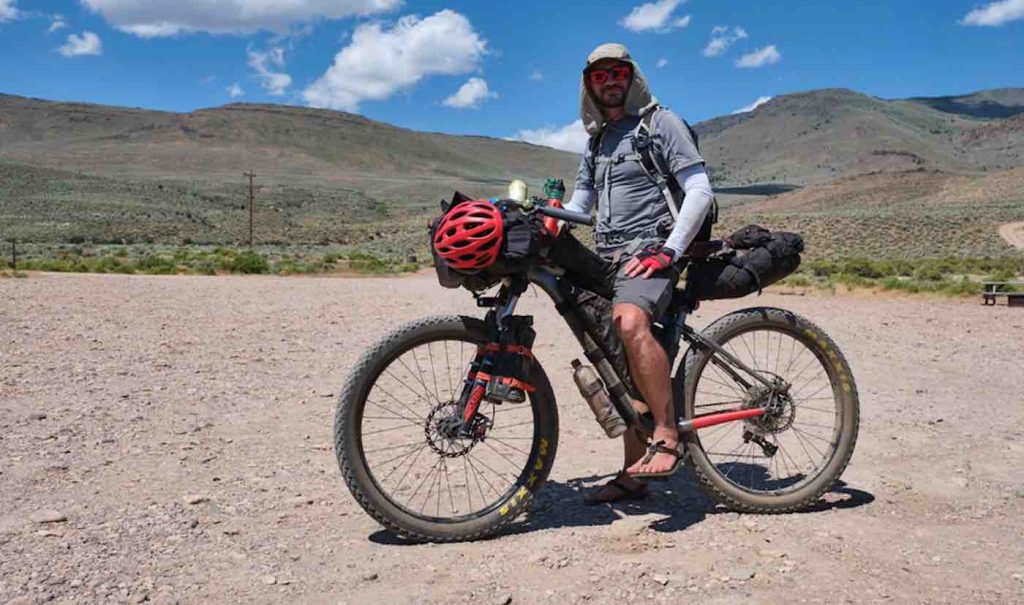
Thankfully, he was found by a cyclist from Portland named Thomas Quinones.

Quinones had been on a back-country mountain biking trip through the remote high desert when he thought he was approaching a dead animal. “I thought, that’s a funny-looking cow,” he told the Statesman Journal. As he got closer, he realized it was a man.

Photo by Tomas Quinones

Randolph couldn’t talk or sit up, and he could barely drink the water that Quinones offered him.

“I started noticing that he sometimes would look at me, but his eyes were all over the place, almost rolling into the back of his head,” he told the news outlet. “Once I got a better look at him, I could tell that he was in deep trouble.”

Quinones recalled that he hadn’t had a cell phone signal for two days. Thankfully, the cyclist had prepared for his long-distance ride by packing necessities: a tent, water, food, protective clothing, and other emergency items—but most importantly, he had a GPS unit that could send a signal via satellite.

MORE: Grandma Missing 5 Days is Found Alive After Her Grandson and Friends Decide to Search One Last Time

Quinones pushed the SOS button, set up his tent to provide some shade for Randolph, and then waited for help to arrive.

He was soon joined by Cruella, the tiny Shi Tzu, who had stayed faithfully nearby. Quinones and Cruella then shared some peanut butter from the cyclist’s bag and waited for over an hour until an ambulance whisked the man away to a hospital.

A sheriff’s deputy also arrived to take a statement and bring Cruella back to civilization in his car.

RELATED: Youth Charges Straight into Fire to Save His 8-year-old Niece: ‘I’d do it again… even if I died’

As Quinones continued on his trip, he noticed footprints that led him through the desert for four miles until they eventually disappeared from the road. As he crossed paths again with the sheriff leaving the area, he reported the footprints.

Oregon State Police used an airplane to locate the Jeep two days later, and found Buddy, in need of medical care, but alive, next to the vehicle.

Photo by Oregon State Police

“It’s still there. It very well could stay there forever. I don’t know how he got the Jeep in as far as he did,” Lake County Deputy Buck Maganzini told the news outlet.

It took Randolph three days in a hospital before he could sit up, eat, and have a conversation. It was later determined that he had walked about 14 miles through the remote desert lands before collapsing.

Thanks to the heroism and serendipitous intervention from Quinones, Randolph continues to recover safely at home with Cruella and Buddy by his side.

Save Your Friends From Negativity By Sharing The Inspiring Story To Social Media…

Apples, Tea, and Moderation—The 3 Ingredients for a Long Life

This exciting new piece of research says that consuming flavonoid-rich items such as apples and tea protects against cancer and heart disease, particularly for smokers and heavy drinkers.

Researchers from the School of Medical and Health Sciences at Edith Cowan University (ECU) analyzed data from the Danish Diet, Cancer and Health cohort that assessed the diets of 53,048 Danish people over 23 years.

They found that people who habitually consumed moderate to high amounts of foods rich in flavonoids, compounds found in plant-based foods and drinks, were less likely to die from cancer or heart disease.

Lead researcher Dr. Nicola Bondonno said while the study, which was published in Nature Communications, found a lower risk of death in those who ate flavonoid-rich foods, the protective effect appeared to be strongest for those at high risk of chronic diseases due to cigarette smoking and those who drank more than two standard alcoholic drinks a day.

RELATED: Broccoli Isn’t Just Good For You; Scientists Find It Holds Molecule That Could Be the ‘Achilles’s Heel’ of Cancer

“These findings are important as they highlight the potential to prevent cancer and heart disease by encouraging the consumption of flavonoid-rich foods, particularly in people at high risk of these chronic diseases,” she said.

“But it’s also important to note that flavonoid consumption does not counteract all of the increased risk of death caused by smoking and high alcohol consumption. By far the best thing to do for your health is to quit smoking and cut down on alcohol.

“We know these kind of lifestyle changes can be very challenging, so encouraging flavonoid consumption might be a novel way to alleviate the increased risk, while also encouraging people to quit smoking and reduce their alcohol intake.”

MORE: Managing Your Gut Bacteria Shown to Alleviate Anxiety, Says New Research

Participants consuming about 500 milligrams of total flavonoids each day had the lowest risk of a cancer or heart disease-related death.

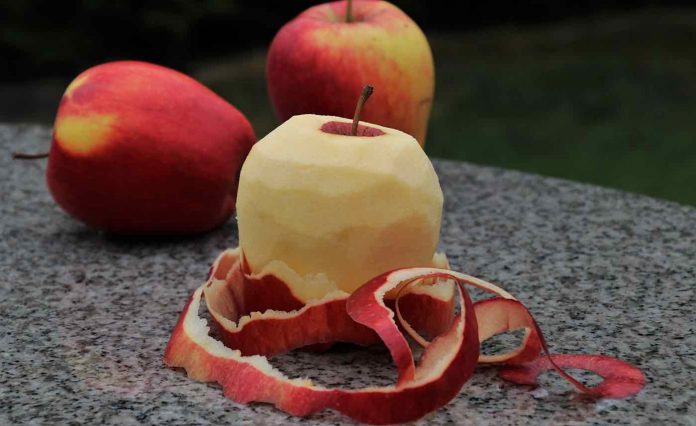
“It’s important to consume a variety of different flavonoid compounds found in different plant based food and drink. This is easily achievable through the diet: one cup of tea, one apple, one orange, 100 grams of blueberries, and 100 grams of broccoli would provide a wide range of flavonoid compounds and over 500 milligrams of total flavonoids.”

Dr. Bondonno said while the research had established an association between flavonoid consumption and lower risk of death, the exact nature of the protective effect was unclear but likely to be multifaceted.

CHECK OUT: Eating Mushrooms a Few Times a Week Could Dramatically Reduce Dementia Risk, Says 6-Year Study

“Alcohol consumption and smoking both increase inflammation and damage blood vessels, which can increase the risk of a range of diseases,” she said.

“Flavonoids have been shown to be anti-inflammatory and improve blood vessel function, which may explain why they are associated with a lower risk of death from heart disease and cancer.

Dr. Bondonno said the next step for the research was to look more closely at which types of heart disease cancers were most protected by flavonoids.

Reprinted from Edith Cowan University

Be Sure And Share The Intriguing Story With Your Friends On Social Media…
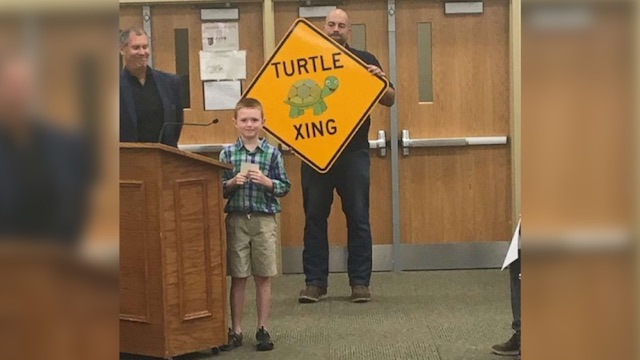
City Gets First Ever ‘Turtle Crossing’ Signs After Concerned Second Grader Writes Letter to the Mayor

A second grander from Indiana has become a local hero to turtles after he wrote a letter to the mayor about the plight of his reptilian friends.

Since the town of West Lafayette has many small ponds and lagoons dotting the landscape, it’s not uncommon for turtles to end up on a busy roadway.

Unfortunately, not every turtle is able to cross the street without getting hit by a car.

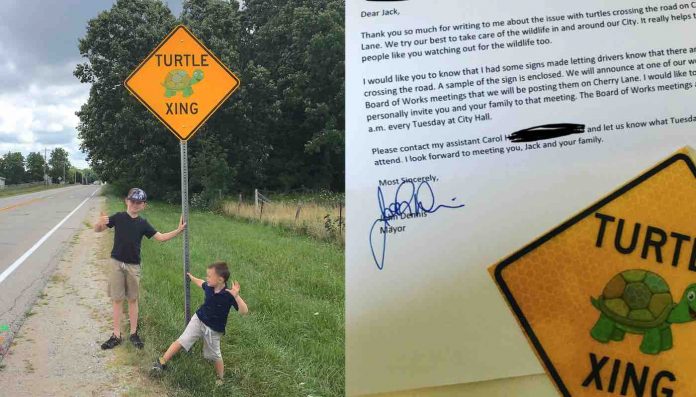
8-year-old Jack Wietbrock had been heartbroken to see several dead turtles on one particular local street in town. When he and his mother were eventually forced to rescue a baby turtle who had been attempting to cross the street last month, Jack resolved to do something about the situation.

RELATED: Teen Awarded $50,000 Science Fair Prize for His Method of Removing Microplastics From Water

“We were able to save that baby, but we had a couple of times that were some not-so-great moments of seeing turtles on the side of the road,” Jack’s mother Michelle told Journal and Courier. “I was trying to think of something productive to say as a parent. And Jack said, ‘Maybe we should send a letter to the mayor.’ I was like, OK, we’ll send him one.”

That very same night, Jack went home and wrote a letter to West Lafayette Mayor John Dennis reading: “Dear Mayor Dennis, There are turtles crossing the road and they need our help. Can you please put up a turtle crossing sign? Thank you.”

Weeks later, he received a heartwarming response.


Mayor Dennis wrote a letter to Jack saying that he had been moved by the youngster’s compassion for the local wildlife. Since the city’s parks department has a machine for making custom signs, Dennis said that he had commissioned them to design the city’s first ever “turtle crossing” sign.

Not only that, Dennis said that the sign was to be presented at a town meeting—and he wanted Jack to help unveil the sign.


Photo by Michelle Wietbrock

The signs were later erected onto the street—and Jack’s mother said she could not be more proud of her son.

She and Mayor Dennis now hope that Jack’s initiative will inspire other youngsters to take action in their community.

“The great thing about West Lafayette is we embrace the unique and, in some cases, the odd,” Dennis said during the presentation. “So, we felt, you know what, there’s something we can do here that’s going to be kind of cool and celebrates Jack’s initiative on making us aware of a problem.”

Be Sure And Share This Sweet Story Of Activism With Your Friends On Social Media…
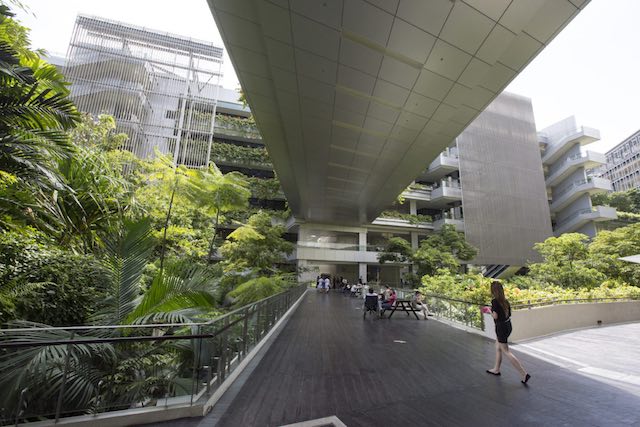
When Asked to Build a Hospital That Lowers Blood Pressure, They Built a ‘Forest-Like’ Sanctuary

Photo by Khoo Teck Puat Hospital

Hospital environments can be stressful for anyone—from the sterile smell and the drab decor to the metallic sounds of medical equipment, it’s not the most comforting setting for patients and visitors.

So when a design firm was tasked with creating a hospital that actually lowered people’s blood pressure, they turned to greenery as the solution—and it worked wonderfully.

More than 700 native species of fragrant plants and trees have been integrated into the structure and surroundings of the Khoo Teck Puat Hospital in Singapore.

RELATED: This Doctor Broke The Law To Engineer a Better Nursing Home, And the Death Rate Plummeted

When Singapore-based design firm CPG Corporation was commissioned to design the hospital in 2005, they were tasked with creating a hospital environment that soothed and uplifted its patients; and since being in nature has been shown to have dozens of physical and mental health benefits, they believed foliage and natural greenery to be the obvious solution.

In addition to the hospital now serving more than 800,000 patients since it opened its doors in 2010, a recent case study found that the “hospital’s lush greenery and peaceful ambiance have made it a popular spot for students seeking a conducive environment.”

There are a number of other clever details that contribute to the hospital’s ingenious design. Researchers found that the facility’s enlarged windows and spacious indoor layout improved air flow throughout the area by 20 to 30%. Since this reduced the building’s dependency on mechanical ventilation by 60%, researchers say that the facility likely saves untold amounts of money in energy costs.

Photo by Khoo Teck Puat Hospital

They also found the success of the hospital’s natural ecosystem is “evident in the increasing number of butterfly species sighted on the hospital grounds (increasing from 3 to 83 as of now).”

On top of all of this—literally and figuratively—the hospital has a volunteer-run rooftop garden with more than 100 species of fruit trees, 50 species of vegetables, and 50 species of herbs, all of which are served to the patients.

Photo by Khoo Teck Puat Hospital

The hospital has won a number of awards for its design, including the Biophilic Design Award from the International Future Living Institute, a nonprofit which supports healthier and more sustainable public spaces.

“What is most impressive about this project is its post-occupancy evaluation which sampled a group of 200 users comprised of patients, staff, and visitors, of whom 80% responded yes to hospitals investing in implementing biophilic elements,” said Stephen Kieran, a juror for the award.

LOOK: Trees Growing Out of Buildings Could Help Heal China’s Air Pollution Problem

“Thinking of nature as part of the patient hospital experience, Khoo Teck Puat continually treats staff, patients, and visitors to direct access to nature at multiple angles,” he added.

The hospital’s success has already spurred the architects to launch similar projects in Malaysia, China, and Pakistan—and it will likely inspire many more around the world.

Photo by Khoo Teck Puat Hospital

Plant Some Positivity By Sharing This Fascinating Story With Your Friends On Social Media…
‘Best Boyfriend Ever’ Fills Anniversary Gift – a Prescription of ‘Love Pills’– With Tiny Notes

Denisha Bracey was suffering from a bad case of summertime blues last month, until a very wonderful guy gave her a homemade gift.

LISTEN to the inspiring story told on the radio by our GNN founder (in the Good News Guru podcast below) or READ the full story that follows…

Amid all her struggles with anxiety and panic attacks, her boyfriend did his best to help her cope.

But, his concern blazed the most beautifully on the occasion of the Ontario couple’s two-year anniversary on July 24th.

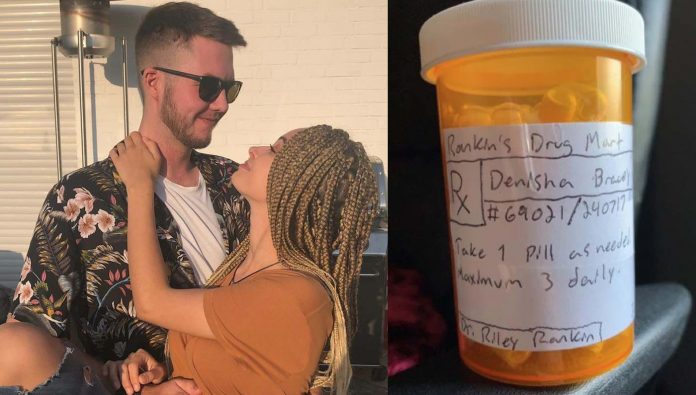
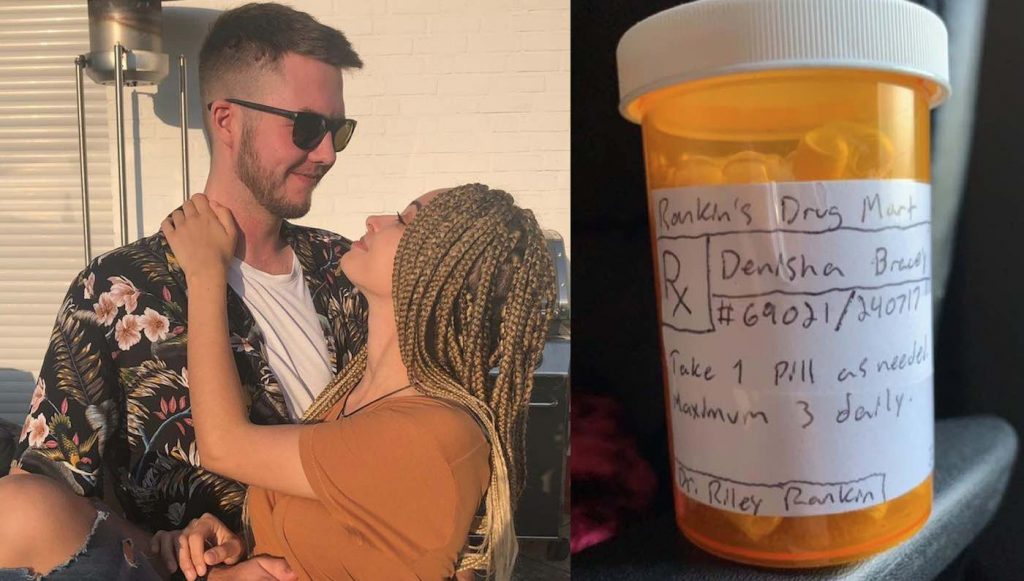
After he opened Denisha’s gift of a Playstation controller, Riley Rankin presented her with a homemade gift that would make any girlfriend weak in the knees.

He gave her a love prescription.

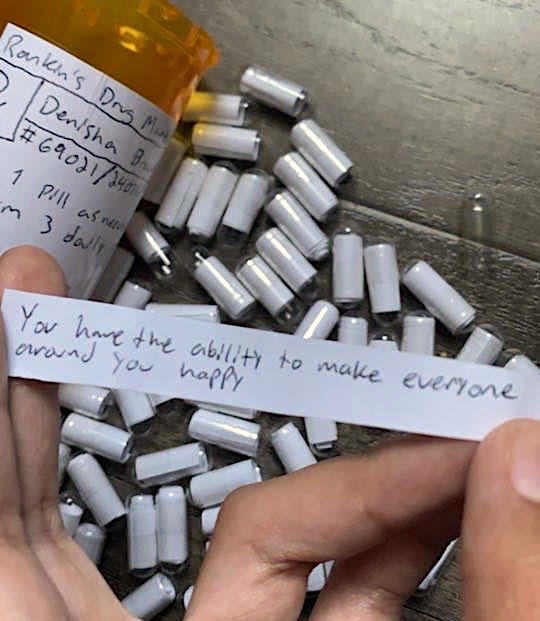
He took an empty pill bottle and made a new label dated with July 24, 2017, from “Dr. Rankin”. The directions included, “Take one pill as needed.”

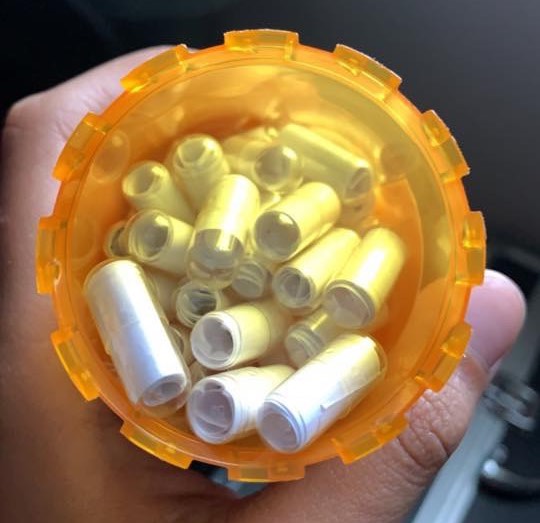
He bought empty pill capsules at the pharmacy and stuffed each one with a tiny, carefully rolled up love note until the jar was filled.

Each “love pill” contained a sweet compliment or a reminder of one of her many good qualities:

  • “Be proud of yourself, you are amazing, think of all the things you’ve accomplished!”
  • “Your positivity is so refreshing and inspiring.”
  • “You should run for Miss Universe because DAMN!”

“Once he gave it to me, and explained why he decided to make it because of how I’ve been feeling, I just started bawling,” said Denisha. “I’ve never seen this anywhere [and] I Pinterest a lot! … I am overcome with love for this boy.”

Photos submitted by Denisha Bracy

Riley told GNN: “It took about three hours to get everything together. It was definitely worth the time. I think I read about someone doing something similar in a post on reddit, like 6 months before.”

RELATED: Dying 86-Year-old Bought 14 Years Worth of Christmas Gifts for 2-Year-old Neighbor

“I wanted to make her happy, I wanted her to be able to cope with her anxiety when I’m not around— or even when we’re having argument—or I just can’t be there for her.”

Denisha hopes sharing her story will inspire other people to make a DIY gift for those they care about.

“Gifts don’t have to cost $100 to be meaningful, a couple bucks and some creativity and you’ve got the best gift ever!”

LOOK: Guy Makes Everybody Smile When He Picks Up His Girlfriend in Themed Cars Every Single Day

We’re pretty sure there will be some copycat pills ‘prescribed’ around the world—guaranteed to relieve pain, and earn anyone the title of ‘Best Sweetheart Ever.’

GIVE Your Friends a Great DIY Gift Idea! Be Sure to Share This on Social Media…

“I became a journalist to come as close as possible to the heart of the world.” – Henry Luce (founded Time, Life, and Sports Illustrated—first published 65 years ago today)

Quote of the Day: “I became a journalist to come as close as possible to the heart of the world.” – Henry Luce (founded Time, Life, and Sports Illustrated—first published 65 years ago today)

Photo: by Melissa Wall, CC license, via Flickr

With a new inspirational quote every day, atop the perfect photo—collected and archived on our Quotes page—why not bookmark GNN.org for a daily uplift?


Watch Two Total Strangers Face Off for the Most Epic Saxophone Battle On the NYC Subway (#TBT)

This incredible musical face-off on the New York City subway may have taken place several years ago, but it has since gone down in internet history as a jazz performance for the ages.

Back in 2013, several subway passengers captured video footage of two musicians having what is supposedly an impromptu saxophone battle on one of the train cars.

At the start of the video, one of the saxophonists can be seen playing some tunes for a few attentive passengers—but he is eventually joined by a second saxophonist from the other end of the car.

RELATED: Watch Excited Dad Captivate His Cow Herd With Saxophone Serenade in New Viral Video

The two men then face off in the middle of the train and begin covering everything from Michael Jackson’s “Billy Jean” to “Chameleon” by Herbie Hancock—and as the tunes get jazzier and jazzier, the passengers quickly become more and more enthused.

Since two different videos of the event were uploaded to Youtube six years ago, they have collectively garnered over 14 million views.

It’s quite possible that the performance had staged, rather than improvised—but that doesn’t mean that their duets are any less impressive.

(WATCH the jaw-dropping performance below)

Be Sure And Share This Saxy Story With Your Friends On Social Media…
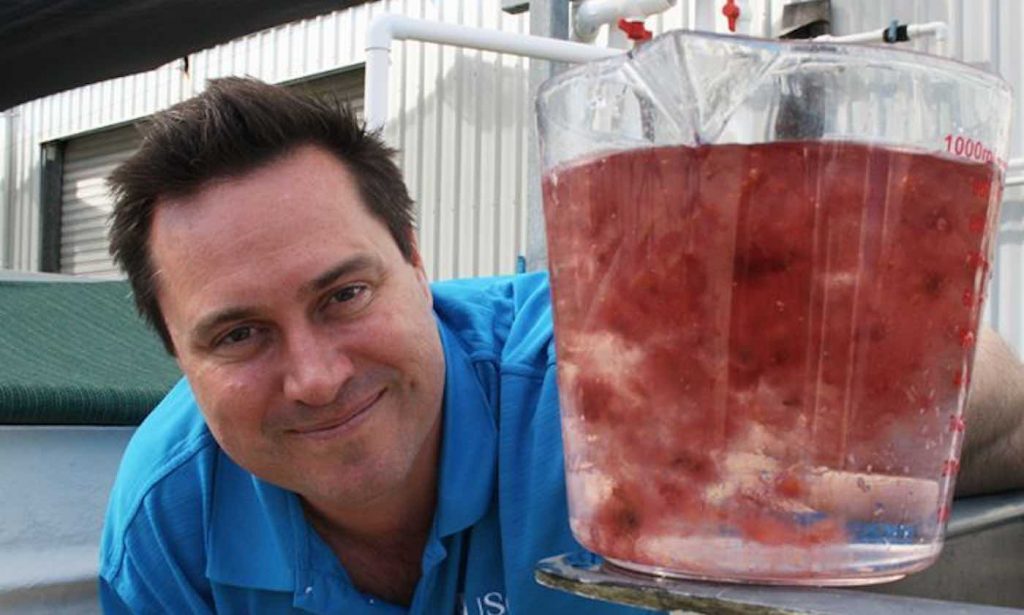
This Tasty Seaweed Reduces Cow Emissions by 99%—and It Could Soon Be a Climate Gamechanger

Photo by USC

A puffy pink seaweed that can stop cows from burping out methane is being primed for mass farming by Australian researchers.

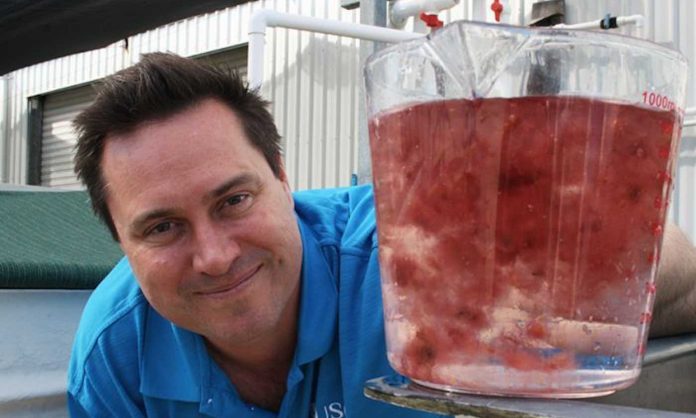
The particular seaweed species, called Asparagopsis, grows prolifically off the Queensland Coast, and was the only seaweed found to have the effect in a study five years ago led by CSIRO. Even a small amount of the seaweed in a cow’s diet was shown to reduce the animal’s gases by 99%.

Associate Professor Nick Paul, who is the leader of the Seaweed Research Group at the University of the Sunshine Coast (USC), said that if Australia could grow enough of the seaweed for every cow in the nation, the country could cut its greenhouse gas emissions by 10%.

“Seaweed is something that cows are known to eat. They will actually wander down to the beach and have a bit of a nibble,” Dr. Paul said.

RELATED: Student Treks to Yellowstone and Finds Bacteria That Eats Pollution and ‘Breathes’ Electricity

“When added to cow feed at less than 2% of the dry matter, this particular seaweed completely knocks out methane production. It contains chemicals that reduce the microbes in the cows’ stomachs that cause them to burp when they eat grass.”

The USC team is working at the Bribie Island Research Centre in Moreton Bay to learn more about how to grow the seaweed species, with the goal of informing a scale-up of production that could supplement cow feed on a national—and even global scale.

Photo by USC

“This seaweed has caused a lot of global interest and people around the world are working to make sure the cows are healthy, the beef and the milk are good quality,” Dr. Paul said.

“That’s all happening right now. But the one missing step, the big thing that is going to make sure this works at a global scale, is to make sure we can produce the seaweed sustainably.

LOOK: Trees Growing Out of Buildings Could Help Heal China’s Air Pollution Problem

“If we’re able to work out how to scale up the seaweed to such a level to that can feed all of the cows and the sheep and the goats around the world, then it’s going to have a huge impact on the climate; it’s going to address a whole lot of carbon-neutral agendas that different countries have; and it’s ultimately going to save us all billions of dollars,” he concluded.

This article was reprinted from the University of the Sunshine Coast.

(WATCH the intriguing interview with Dr. Paul below)

Feed Your Friends Some Positivity By Sharing The Good News To Social Media…

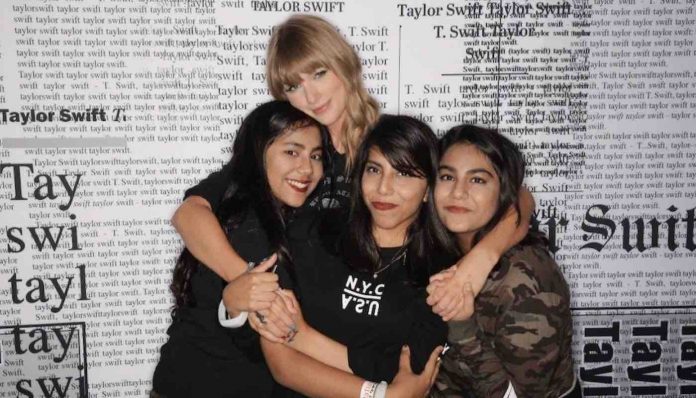
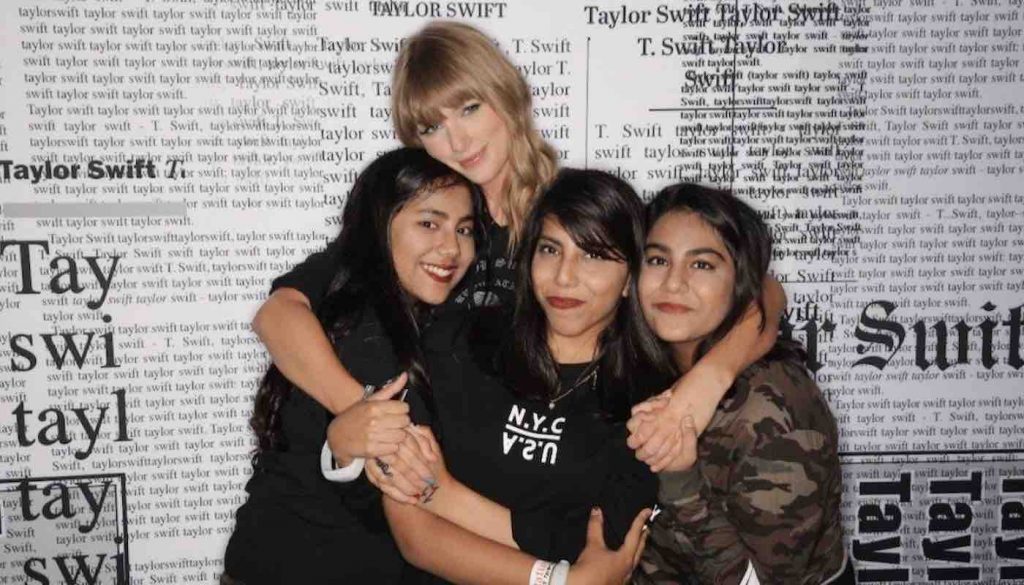
When Taylor Swift Fan Can’t Afford College Tuition, the Pop Star Sends $6,400 to Pay It: ‘Get your learn on girl!’

Photo by Ayesha Khurram

A Taylor Swift superfan in Canada finally has the ability to shake off her financial worries thanks to an unprompted donation from the pop star.

Ayesha Khurram is a second-year accounting student at the University of Waterloo in Ontario. Due to the province’s recent cuts to student assistant programs, Khurram had been struggling to scrape together the money for her upcoming semester.

In addition to her mother suffering from chronic kidney disease, both of her parents work low-income jobs as Pakistani immigrants—so Khurram knew that she had to raise the money on her own.

WATCH: Taylor Swift Delivers Christmas Miracle to 96-Year-old Fan

At the suggestion of a friend, she created a Paypal account for people to contribute to her college fund. Hours after making the account, she received a donation for $6,386.47 with a note reading: “Ayesha, get your learn on girl! I love you!”

The donation, which covered the entirety of her tuition, was made by none other than Taylor Swift.

This is not the first interaction that Khurram has had with the superstar. Since Khurram first fell in love with Swift’s music as she was living in Pakistan back in 2009, the two have shared multiple social media interactions (only recently, Swift liked several social media photos that Khurram had posted of the musician’s chai cookie recipe). After Khurram moved to Ontario, she was able to see Swift in concert in 2018—and the superstar even invited Khurram backstage for a meet-in-greet.

RELATED: Jaden Smith Celebrates 21st Birthday By Deploying Vegan Food Truck to Hand Out Free Meals to Homeless

But Khurram never thought in a million years that her musical hero would donate thousands of dollars towards her education.

“My parents actually cried when I told them the Taylor news because they couldn’t believe it,” Khurram told The Star. “It’s like a guardian angel is watching or something.”

Photo by Ayesha Khurram

Don’t Let Your Friends Get Bad Blood From Negative News; Share This Sweet Story To Social Media Instead!

Amazon Will Soon Be Helping Their Sellers Donate All Unsold and Unwanted Products to Charity

Amazon will soon be helping to donate millions of unsold and unwanted goods to charity.

The company’s new Fulfillment by Amazon (FBA) Donations program will allow—and encourage—their third-party sellers to make all of their excess products available to charitable organizations.

According to an Amazon blog post, the program is set to launch in September in the United States and United Kingdom. Independent sellers will be able to opt out of the program, but it will be the default option for unsold products.

The announcement comes shortly after reporters found that several Amazon warehouses in France were trashing thousands of unsold products. Though a company spokesperson declined to comment on the reports back in May, they did claim to donate a large portion of their returned or unsold products.

RELATED: Canadian Credit Card Holders Are ‘Over the Moon’ With Chase Bank’s Decision to Forgive Outstanding Debt

The new FBA program, however, will apparently make the process far more streamlined. For American-based donations, Amazon will be working with global philanthropic group Giving360 to distribute the products, while organizations like Bernardo’s and Newlife will be handling the collaborative UK donation process.

“We know getting products into the hands of those who need them transforms lives and strengthens local communities,” said Amazon in the Community Director Alice Shobe. “We are delighted to extend this program to sellers who use our fulfillment services.”

Pass On The Positive News To Your Friends By Sharing This To Social Media Photo by Jonathan Stead / Amazon

Uber Driver Surprises Fast Food Worker With New Clothes After Hearing About Her Christmas Wish

A compassionate Uber driver is being praised for surprising one of her passengers with an unexpected gift.

Lamiyah Jabbar had first picked up Diane early one morning last week so she could take the Tim Hortons employee to work.

As they were chatting during the car ride, Diane mentioned that she had been looking forward to Christmas because she was hoping to receive a new robe, house shoes, and a dress for church.

While these may not seem like extravagant purchases, Diane said that she did not have much money for herself because she uses most of her finances to help take care of her grandkids.

MORE: When Passenger Asks to be Left at a Bridge, Uber Driver Intervenes Instead

After Jabbar dropped Diane off at work, she abstained from picking up any more passengers so she could head to Old Navy to do some shopping.

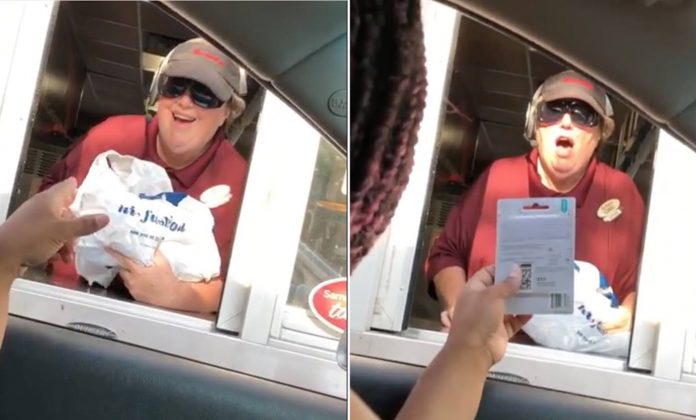
Jabbar then returned to the Tim Hortons where Diane worked in Buffalo, New York so she could surprise Diane with a new dress and a $50 Visa gift card for the shoes and robe.

In a video that Jabbar uploaded to Instagram, the Uber driver can be seen pulling up to Diane’s drive-thru window to say hi. At first, Diane doesn’t recognize her; but then Jabbar reminds her of their conversation earlier that morning and hands Diane the dress.

CHECK OUT: When I Was Alone at the Hospital at 4AM, a Lyft Driver Restored My Faith in Humanity

“This was on my mind from the moment she got out my car, so I had to contribute,” Jabbar wrote in the Instagram video caption. “Can you imagine waiting till Christmas just to get a robe, house shoes and a outfit for church? We tend to take things for granted, but why not help someone else if you can?”

Diane was stunned—and extremely grateful for the gift, saying: “Oh my God. Thank you so much! This has been such a horrible day and you just made this day so much better!”

Jabbar later told CBS News that she offered to return to Tim Hortons later that day so she could give Diane a ride home for free.


“I’m one of those people who’s like, you can’t tell me your issues and I can’t move on without helping,” she told the news outlet.

Jabbar also said that she does not usually publicize her good deeds on social media, but she hopes that the video will inspire her followers to do something kind for a stranger.

Pay The Kindness Forward By Sharing This Sweet Story Of Kindness To Social Media…

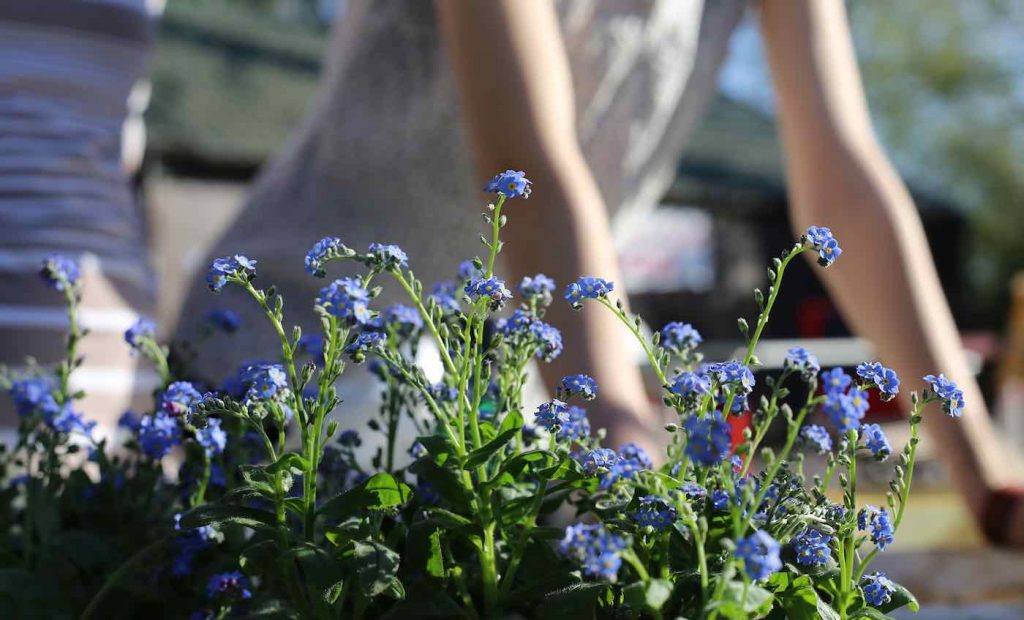
“After the rain, the sun will reappear. After the pain, the joy will still be here.” – Walt Disney

Quote of the Day: “After the rain, the sun will reappear. After the pain, the joy will still be here.” – Walt Disney

Photo: by alfarman, CC license, via Flickr

With a new inspirational quote every day, atop the perfect photo—collected and archived on our Quotes page—why not bookmark GNN.org for a daily uplift?


Choral Reef? Listen to Scientist’s Recording of How Fish ‘Sing’ at Dawn

It’s not just birds of a feather that flock together.

Scientists in Australia were delighted to discover that fish also sing together at dusk and dawn—just like the birds do.

Actually, singing might be pushing it a bit. They make intentional sounds by using parts of their anatomy, like using their teeth to make clicking sounds, while some use their swim bladder to push air out through their mouth to create an identifiable audio pattern.

The fish that make these distinct patterns of communication are called “soloist fish.” When these noisier specimens come together in the same location, their sounds overlap to create a chorus.

RELATED: Watch This Fun-Loving Owl Have an Absolute Hoot When It Discovers Children’s Inflatable Pool

Robert McCauley and his colleagues at Curtin University in Perth discovered the sounds after they began studying the underwater acoustics off the Port Hedland shore by placing two sea-noise trackers 22 kilometers apart off the coast for 18 months.

“I’ve been listening to fish squawks, burble and pops for nearly 30 years now, and they still amaze me with their variety,” says McCauley, who led the research.

The team already knew that sound played an important role in certain fish behaviors such as reproduction, feeding, and territorial disputes; some fish use sounds to stay together, and others use their unique pattern to defend their turf.

MORE: Song Made Entirely of Bird Calls is Climbing the Music Charts – Watch the Enchanting Music Video

However, they found that there were diurnal cycles to some of the soloists coming together—specifically at dusk and dawn.

“You get the dusk and dawn choruses like you would with the birds in the forest,” says Steve Simpson, a marine biologist at the University of Exeter, UK.

And while choruses were also recorded on different days, there were 80 days when more than one chorus was recorded at the same site.

In addition to the choral songs, the scientists also picked up the sounds of passing ships and boats and humpback whale songs. The team’s long 18-month monitoring period allowed them to recognize patterns not only to monitor the fish, but their entire ecosystems.

They now have a better understanding of the underwater habitat and its rhythms, although McCauley admits, “We are only just beginning to appreciate the complexity involved and still have only a crude idea of what is going on in the undersea acoustic environment.”

While the “foghorn” call of the blackspotted croaker overlapping the grunt of a species of Terapontid probably isn’t the lyrical song we’re accustomed to in the gentle light of dawn, the musical blurps of our fishy friends are probably a lovely way to start a new day under the sea.

Be the First to Share a Fishy Song With Friends On Social Media…

Paralyzed Patients Regain the Use of Their Hands Thanks to Breakthrough Nerve Surgery in Australia

Courtesy of Paul Robinson

Recent surgical trials have bestowed new life on quadriplegics who can now return to activities they never thought they’d be able to do again, thanks to an innovative surgery that relocates nerves.

A dirt bike accident in 2015 left Australian Paul Robinson, now in his 30s, paralyzed from the chest down. Robinson landed on his head and broke one of the vertebrae in his neck, leaving him confined to a wheelchair and rarely able to leave his home. He was one of 16 people participating in a medical trial at Austin Health in Melbourne that used nerve transfers to re-enervate paralyzed muscles in quadriplegic patients.

Another young man recruited for the study had been the CEO of three different companies before being hurt in a tragic boating accident. “He had decided that he would try this surgery, but if it didn’t work he was going to exit—he didn’t want to live any more,” said Dr. Natasha van Zyl, the lead reconstructive surgeon.

After the combination of tendon and nerve transfers, he started to work again from home and was able to take his family to the movies independently—handling the money, getting the tickets, and buying the popcorn.

Tendon transfers have long been used to restore function to paralyzed upper limbs by strategically transplanting working muscles to take over the mechanical function that was lost due to the paralyzed tissue, that never actually restored function to the paralyzed muscle. The new technique of nerve transfer re-routes a functioning nerve and implants it into a paralyzed muscle, essentially ‘plugging in’ its signals to another functioning part of the spinal cord.

RELATED: Noninvasive Spinal Stimulation Enables Paralyzed People to Regain Use of Hands

Nerve transfers to improve upper limb functioning were performed as early as 1962, but the technique never received much attention until recently. Van Zyl concedes that her team didn’t invent the procedure, but explains that no one had yet used the technique as extensively, or for quadriplegic patients.

In 2014, her team designed a triple nerve transfer procedure that was completely successful—and in their long-term study, published last month in The Lancet medical journal, it showed amazing results.

Attempting to restore elbow extension, hand extension and grip, the surgical team completed a total of 59 nerve transfers on the 16 patients, with each participant receiving either a single or multiple nerve transfer in one or both upper limbs, along with post-surgical physical therapy.

Of the 13 that completed the study, all experienced improvement in their elbow extension and hand function.

POPULAR: Watch Boy Dance For First Time Since He Was Paralyzed

While such interventions don’t restore full functionality to the paralyzed limbs, the improved mobility made all the difference in the world to these people who had lost it all—and it gives immense hope to those who await their turn for a chance at restored muscle function.

Courtesy of Paul Robinson

“Prior to surgery, none of the participants were able to perform the grasp or pinch strength tests, but two years later, their pinch and grasp strength was sufficient to allow them to do most activities of daily living,” according to an article from Pursuit, at the University of Melbourne.

Robinson, who previously had no hand function at all, is now able to use his hands and arms to propel his own wheelchair, pick up items from the ground, and with one hand use a television remote control and hold a glass.

“Before, I was confined to a wheelchair but I couldn’t push it unless I wore special gloves. If I dropped something on the ground, I had to ask someone to pick it up. I couldn’t drive. To pick up a drink, I’d have to use two hands and squeeze them up,” said Robinson in a CNN article.

“It’s made a massive difference to my life.”

SHARE This Good Science News With Everyone on Social Media…

Europe Could Produce Enough Wind Farm Energy to Power the Whole World for 30 Years, New Study Shows

University of Sussex

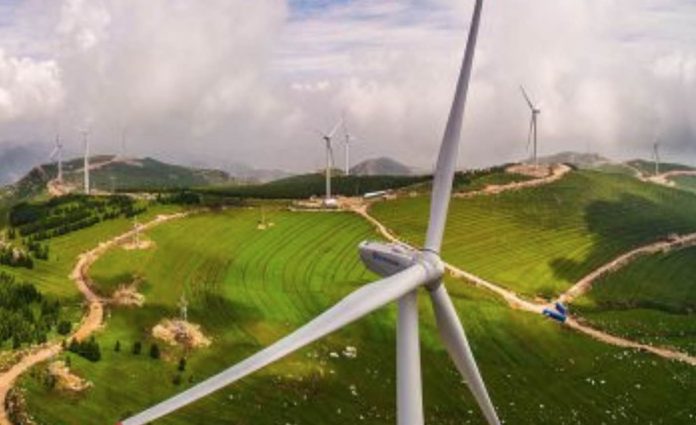
This exciting new data says that Europe has the capacity to produce more than 100 times the amount of energy it currently produces through onshore windfarms.

In an analysis of all suitable sites for onshore wind farms, the new study from the University of Sussex and Aarhus University reveals that Europe has the potential to supply enough energy for the whole world until 2050.

The study reveals that if all of Europe’s capacity for onshore wind farms was realized, the installed nameplate capacity would 52.5 TW—equivalent to 1 MW for every 16 European citizens.

“The study is not a blueprint for development, but a guide for policymakers indicating the potential of how much more can be done and where the prime opportunities exist,” said co-author Benjamin Sovacool, Professor of Energy Policy at the University of Sussex.

CHECK OUT: Hyundai Launches First Car With Solar Roof Charging System

“Our study suggests that the horizon is bright for the onshore wind sector and that European aspirations for a 100% renewable energy grid are within our collective grasp technologically.

“Obviously, we are not saying that we should install turbines in all the identified sites but the study does show the huge wind power potential right across Europe which needs to be harnessed if we’re to avert a climate catastrophe.”

Spatial analysis of Geographical Information System (GIS)-based wind atlases allowed the research team to identify around 46% of Europe’s territory which would be suitable for onshore wind farms siting.

MORE: This Revolutionary Blast Furnace Vaporizes Trash and Turns It into Clean Energy (Without Any Emissions)

The advanced GIS data at sub-national levels provided a far more detailed insight and allowed the team to factor in a far greater range of exclusionary factors including houses, roads, restricted areas due to military or political reasons as well as terrains not suitable for wind power generation.

The greater detail in this approach allowed the research team to identify more than three times the onshore wind potential in Europe than previous studies.

Peter Enevoldsen, assistant professor in the Center for Energy Technologies at Aarhus University, said: “Critics will no doubt argue that the naturally intermittent supply of wind makes onshore wind energy unsuitable to meet the global demand.

LOOK: Canadian Supermarket Proves a Little Humor Can Go a Long Way to Help Save Ourselves From Plastic Bags 

“But even without accounting for developments in wind turbine technology in the upcoming decades, onshore wind power is the cheapest mature source of renewable energy, and utilizing the different wind regions in Europe is the key to meet the demand for a 100% renewable and fully decarbonized energy system.”

The study estimates that more than 11 million additional wind turbines could be theoretically installed over almost 5 million square kilometers (1.9 million square miles) of suitable terrain generating 497 EJ of power which would adequately meet the expected global energy demand in 2050 of 430 EJ.

The authors identified Turkey, Russia, and Norway as having the greatest potential for future wind power density, although large parts of Western Europe were also considered ripe for further onshore farms because of favorable wind speeds and flat areas.

MORE: You Can Now Use These Pocket-Sized ‘Bee Savior’ Cards to Rescue Hungry Honeybees on the Sidewalk

Mark Jacobson, Professor of Civil and Environmental Engineering at Stanford University, said: “One of the most important findings of this study, aside from the fact that it concludes that the European onshore wind potential is larger than previously estimated, is that it facilitates the ability of countries to plan their onshore wind resource development more efficiently, thereby easing the way for commitments by these countries to move entirely to clean, renewable energy for all purposes.”

Reprinted from the University of Sussex

Power Up With Positivity By Sharing The Good News To Social Media…

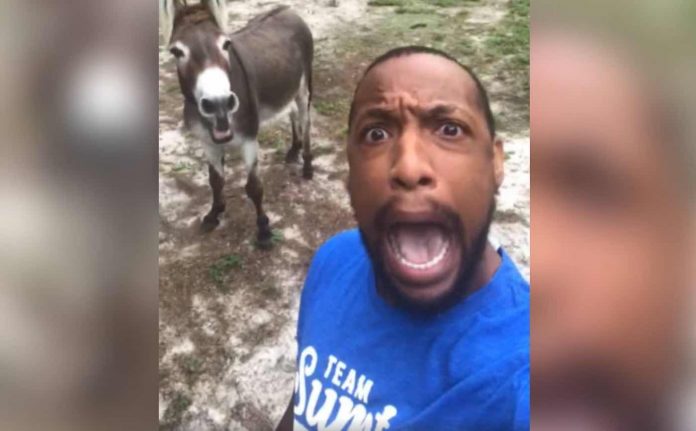
Man and His Donkey Are Going Viral for Their Enthusiastic Duet of ‘The Circle of Life’ From Lion King

This South Carolina man started filming himself with his farm animals with the hopes of making a funny video—but thanks to one of his four-legged friends, the video turned out far better than he ever would have expected.

31-year-old Travis Kinley and his pet donkey Nathan are going viral after they were filmed singing the iconic “Circle of Life” song from The Lion King back in July.

At the request of his friends, Kinley had been preparing to take a video of himself singing the song to his horses.

WATCH: Need a Smile? Watch Dog’s Gobsmacked Reaction to Cat Companion Swatting Her on the Head

After he started singing, however, he was stunned when Nathan started braying along to the tune.

“I got in the pasture, I gather all horses…. I start singing and Nathan starts to bray behind me, and I’m kind of blown away because we never do this together; we never sing together,” Kinley told WTLX. “He keeps going, so I keep going, and all of a sudden I just kind of break down laughing at the end.”

Since uploading the video to social media, it has been viewed millions of times—and it’s not hard to see why.

(WATCH the video below)

Don’t Make Us Assk Twice! Share The Story With Your Friends On Social Media…
“Ask not what your teammates can do for you. Ask what you can do for your teammates.” – Magic Johnson (turns 60 today)

Quote of the Day: “Ask not what your teammates can do for you. Ask what you can do for your teammates.” – Magic Johnson (turns 60 today)

Photo: by Jim Larrison, CC license, via Flickr

With a new inspirational quote every day, atop the perfect photo—collected and archived on our Quotes page—why not bookmark GNN.org for a daily uplift?