












All News - Page 663 of 1737 - Good News Network
Home Blog Page 663

Scientists Use Tiny Spring Magnets to Harmlessly Dissolve Microplastics in Water

A University of Adelaide-led research team has developed a new approach to purging water sources of the microplastics that pollute them without harming nearby microorganisms.

Plastic waste finds its way into oceans and rivers poses a global environmental threat with damaging health consequences for animals, humans, and ecosystems.

The researchers have developed a technique to break down the microplastics using tiny coil-shaped carbon-based magnets. Their work is published in the journal Matter.

“Microplastics adsorb organic and metal contaminants as they travel through water and release these hazardous substances into aquatic organisms when eaten, causing them to accumulate all the way up the food chain,” says senior author Shaobin Wang, Professor of Chemical Engineering at the University of Adelaide.

RELATED: Teen Awarded $50,000 Science Fair Prize for His Method of Removing Microplastics From Water

“Carbon nanosprings are strong and stable enough to break these microplastics down into compounds that do not pose such a threat to the marine ecosystem.”

Although often invisible to the naked eye, microplastics are ubiquitous pollutants. Some, such as the exfoliating beads found in popular cosmetics, are simply too small to be filtered out during industrial water treatment. Others are produced indirectly, when larger debris like soda bottles or tires weather amid sun and sand.

To decompose the microplastics, the researchers had to generate short-lived chemicals called reactive oxygen species, which trigger chain reactions that chop the various long molecules that make up microplastics into tiny and harmless segments that dissolve in water. However, reactive oxygen species are often produced using heavy metals such as iron or cobalt, which are dangerous pollutants in their own right and thus unsuitable in an environmental context.

LOOK: Students Design Beach Vacuum That Can Suck Up Microplastics While Leaving All the Sand

To get around this challenge, the researchers found a greener solution in the form of carbon nanotubes laced with nitrogen to help boost generation of reactive oxygen species. Shaped like springs, the carbon nanotube catalysts removed a significant fraction of microplastics from water samples in their lab over the course of just eight hours.

“It turns out that the degradation products of microplastic are completely harmless, and they can also be used as a carbon source for algae growth,” says project co-leader Dr. Xiaoguang Duan. “The microplastics are completely transformed into carbon dioxide or other harmless substances, and they will not cause any adverse or toxic effects to microorganisms or fish or other animals in water.”

Furthermore, the springs were able to remain stable themselves in the harsh oxidative conditions needed for microplastics breakdown because the coiled shape increases stability and maximizes reactive surface area. As a bonus, the minute springs became magnetic after the team included a small amount of manganese buried far from the surface of the nanotubes to prevent it from leaching into water.

LOOK: This Simple Solution for Pollution Kept 815 Pounds of Trash Out of the Water–Make Sure Your City Does it

“Having magnetic nanotubes is particularly exciting because this makes it easy to collect them from real wastewater streams for repeated use in environmental remediation,” says Duan.

As no two microplastics are chemically quite the same, the researchers’ next steps will center on ensuring that the nanosprings work on microplastics of different compositions, shapes and origins. They also intend to continue to rigorously confirm the non-toxicity of any chemical compounds occurring as intermediates or by-products during microplastics decomposition.

The researchers also say that those intermediates and byproducts could be harnessed as an energy source for microorganisms that the polluting plastics currently plague. “If plastic contaminants can be repurposed as food for algae growth, it will be a triumph for using biotechnology to solve environmental problems in ways that are both green and cost-efficient,” Professor Wang says.

Reprinted from the University of Adelaide

Clean Up Negativity By Sharing The Good News To Social Media…

Watch 5-Year-old Bust a Move at Foo Fighters Show After They Ask the ‘Wee Dude’ to Join Them On Stage

There is nothing ordinary about this little boy’s adorable experience with his musical heroes.

5-year-old Taylor Hooper was just one of the 35,000 people who were attending the Foo Fighters’ concert in Belfast, Northern Ireland last week.

Not only is the American rock group his favorite band, it was also his first ever concert.

Taylor’s mother, Nikki Hooper, says that she and her husband have always been huge fans of the Foo Fighters. In addition to traveling far and wide to see their shows, they even named their son after the drummer, Taylor Hawkins.

WATCH: Foo Fighters See ‘Kiss Guy’ With a Sign in Audience, and Pull Him On Stage—And He Nails it

So when the band was due to play in their home city, they decided it was finally time for their son to see their beloved rock and rollers in concert.

“He’s been listening to them since he was born—mainly because me and his dad are massive fans,” Hooper told BBC. “We contacted the event promoters and they said it would be no problem, but that we should be aware it would be a loud music event, so we got Taylor some special headphones. When we got there, everyone was so welcoming to him.”

Throughout the show, concert-goers continuously urged Taylor and his parents to move closer to the stage. Furthermore, Hooper helped her son stand out from the crowd by making him a sign that said he was a 5-year-old attending his first concert.

RELATED: Dave Grohl’s Surgeon Invited to Sing With Foo Fighters And Rocked the Stadium

When Foo Fighters frontman Dave Grohl eventually caught sight of the sign and read it aloud into the microphone, the crowd began chanting for them to bring the youngster onto the stage—and that’s exactly what he did.

Upon commanding the stage managers to “bring the wee dude up here”, Grohl asked Taylor to show the crowd how to dance.

The pint-sized rocker then spent the entirety of the song busting out his cutest dance moves, making him an “internet sensation” in the process.

“It was a proud moment for us as parents,” Hooper told BBC. “People say you want to meet your rock legends, but for me personally, nothing will beat this. It was a massive moment and I’m not at all jealous because these memories will stay with Taylor forever.”

Taylor didn’t just walk away from the show with memories, either; the band also invited him backstage to give him a number of gifts, including a pair of Taylor Hawkins’s drumsticks.

Are Your Friends Getting The Best Of Good News? Then Share This Sweet Story To Social Media…
National Suicide Prevention Hotline is Getting Its Own 3-Digit Number in the US

Calling a suicide prevention hotline will soon be as simple as dialing 911.

Earlier this week, the Federal Communications Commission (FCC) submitted a report to Congress describing the best possible method of implementing a 3-digit phone number for the federally-funded National Suicide Prevention Hotline.

The 138-page report recommends that Congress designate 988 as the new dialing code to be used for a nationwide suicide prevention and mental health crisis hotline, which “would likely make it easier for Americans in crisis to access potentially life-saving resources.”

RELATED: Suicide Rates at Japanese Train Stations Have Plummeted by 84% Thanks to Simple Solution

The report was created in response to the National Suicide Hotline Improvement Act of 2018, which was approved in the House in a near unanimous 379-1 vote back in July 2018. It was then signed into effect by President Donald Trump the following month.

“We all know by heart to dial 911 during an emergency. We have fate and confidence that somebody who can help will be on the line. It shouldn’t be any different for someone in a mental health crisis,” said Rep. Leonard Lance (R-NJ) in support of the bill.

Once the report’s recommendation for the new hotline number is approved in the House and Senate, thousands of people are likely to benefit from the legislation.

CHECK OUT: Restaurant Owners Who Say Anthony Bourdain Changed Their Lives Donate Profits to Suicide Hotline

“Crisis call centers have been shown to save lives,” said FCC Chairman Ajit Pai. “This report recommends using a three-digit number to make it easier to access the critical suicide prevention and mental health services these call centers provide. I intend to move forward on this recommendation.

“In the meantime, my heart goes out to anyone facing a crisis. I hope they will contact 1-800-273-TALK for support today,” he added.

Be Sure And Pass On The Positive News To Your Friends On Social Media…

Hearts Are Melting Over Waiter’s Compassion Towards 91-Year-old Dining Alone

A young man is being praised for his compassion towards a 91-year-old man who was sitting alone for dinner last week.

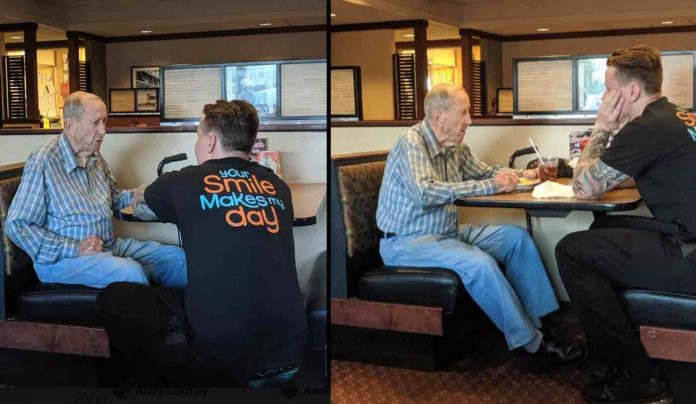
Lisa Meilander and her family had been eating at Eat’n Park in Belle Vernon, Pennsylvania when she noticed how her server was interacting with a senior patron.

The server, Dylan Tetil, had dropped to one knee so he could give his full attention to the gentleman.

“The man apologized for not hearing too well,” Meilander wrote on Facebook. “He had forgotten to put in his hearing aids. He talked about how he lost his hearing during his time in the war. He was 91 years old with many stories to tell. Dylan patiently listened giving him his full attention.

LOOK: Elderly Man Gazing Fondly at His Date in McDonald’s Inspires Thousands of Romantics Online

“Eventually the man apologized for talking so much. ‘I’m alone now,’ he said, ‘and I don’t often have someone to talk to.’ Dylan smiled and said he enjoyed listening.

Dylan then helped the man figure pick out a meal from the menu before putting the order into the kitchen.

Meilander was so touched by the exchange, she tried to flag Dylan down so she could offer to pay for the man’s meal. Before she could, however, another patron asked Dylan the same thing—and to his surprise, Dylan said that someone else had already taken care of the check.

RELATED: Restaurant Offers Sweet Note of Forgiveness to Manager Who Accidentally Served $6,000 Bottle of Wine

“I guess we weren’t the only ones eavesdropping on the conversation,” mused Meilander. “After the man received his food, Dylan came back to say he was on a break. He asked if he could sit with the gentleman as he ate. As we left the restaurant the two of them were conversing and many people seated nearby were smiling. It was a touching sight.”

Before leaving her table, Meilander snapped some pictures of Dylan chatting with the senior and published them to Facebook where they have since been shared thousands of times.

“With all of the negative stories about our youth today, this was a breath of fresh air. I wonder if I would have been as kind and attentive if I were the one working there,” she added. “One thing’s for sure, if you are ever at Eat’n Park in Belle Vernon, ask for Dylan. If he’s your waiter you’re certain to get great service.”

Be Sure And Share This Sweet Story Of Kindness With Your Friends On Social Media…

“In the truest sense, freedom cannot be bestowed; it must be achieved.” —Franklin D. Roosevelt (it’s the 30th anniversary of The Baltic Way)

Quote of the Day: “In the truest sense, freedom cannot be bestowed; it must be achieved.” – Franklin D. Roosevelt (it’s the 30th anniversary of The Baltic Way)

Photo: by swarnendu ghoshdastidar, CC license, via Flickr

With a new inspirational quote every day, atop the perfect photo—collected and archived on our Quotes page—why not bookmark GNN.org for a daily uplift?


Watch This Adorable Little Girl Light Up Police Cars With Her ‘Magic’ Wand (#TBT)

Every little thing that this youngster does is magic—from her smile to the way police cars seemingly light up at her command.

In an adorable video that was uploaded by the Orlando Police Department of Florida back in November 2018, a smiling policeman and a little girl with a magic wand can be seen walking past a line of parked police cars.

As they pass each police car, the little girl taps the bumpers with her wand—and to her delight, the red and blue lights of the cars turn on in response to her magic wand-waving.

Needless to say, the police department’s video of the event is pretty adorable.

The cars had already been lined up in preparation for the regular “Goodnight Lights” tradition at the Orlando Health Arnold Palmer Hospital for Children.

“Officers will wave at kids and run lights and sirens while the kids flash their room lights in response,” wrote the department.

The officers say that they participate in the event because they simply “love putting smiles on the faces of kids”—and based on their videos, it seems that they did a job well done.

Light Up Your News Feed By Sharing This Sweet Story To Social Media…
You Butter Believe It: Cornell Researchers Make New, Healthy Spread Made Almost Entirely of Water

Photo by Cornell University

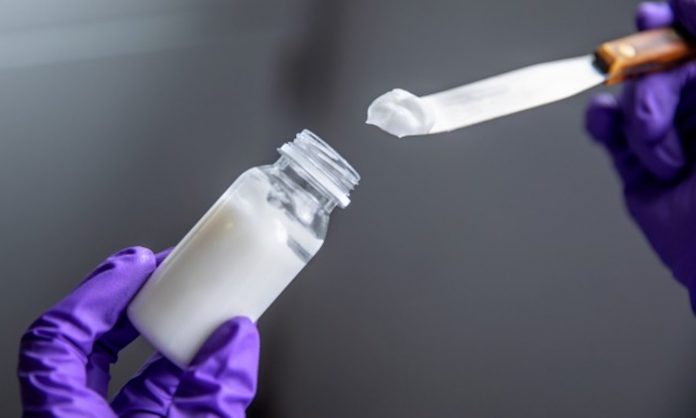
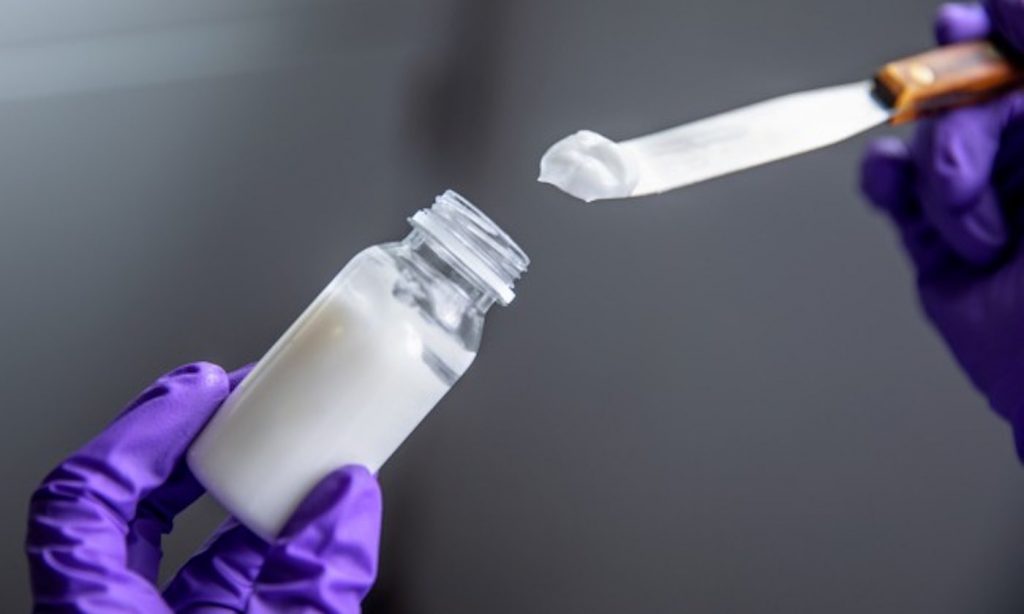
Cornell University food scientists have created a healthy new low-calorie “butter” spread—and it is almost entirely made of water.

A tablespoon of this low-calorie spread has 2.8 grams of fat and 25.2 calories. Butter, on the other hand, which is 84% fat and about 16% water, has about 11 grams of fat and nearly 100 calories.

They figured out a new process to emulsify a large amount of water with minuscule drops of vegetable oil and milk fat to mimic butter, at approximately one-fourth the calories of real butter and without artificial stabilizers.

“Imagine 80% water in 20% oil and we create something with the consistency of butter, with the mouth feel of butter and creaminess of butter,” said food science professor and senior author of the paper Alireza Abbaspourrad.

RELATED: Apples, Tea, and Moderation—The 3 Ingredients for a Long Life

Emulsifying water and oil is nothing new, said Abbaspourrad, but by using high-internal phase emulsions (HIPE), “we keep adding water to that oil until the final composition is 80% water and 20% oil.”

The demand for low-fat, high-protein products has rapidly increased due to consumers’ growing health awareness, said lead author Michelle C. Lee, a doctoral candidate in the research group.

“Since the HIPE technology features high water-to-oil ratios—while simultaneously delivering unique texture and functionality—it can play a role in providing healthier solutions for consumers,” Lee said.

CHECK OUT: Company Uses NASA Tech to Make Healthy Food ‘Out of Thin Air’ Using Only CO2, Water, and Solar Electricity

Abbaspourrad said food chemists can adjust for taste, preferences and health.

“We can add milk protein or plant-based protein, and since the water acts like a carrier, we can adjust for nutrition and load it with vitamins or add flavors,” he said. “Essentially, we can create something that makes it feel like butter—and instead of seeing a lot of saturated fat, this has minute amounts. It’s a completely different formulation.”

Reprinted from Cornell University

Photo by Cornell University

Feed Your Friends The Good News By Sharing It To Social Media…
Check Out Some of the Gorgeous Winning Pictures From This ‘Kindness Photography’ Contest

Research has shown that viewing images of peace, kindness, and compassion has a dramatic impact on a person’s happiness and wellbeing. That’s why photographers from all over the world were asked to share their kindest photos—and the winners have finally been announced.


Envision Kindness, a nonprofit organization dedicated to spreading media positivity, recently concluded their third annual The World is Kind photography contest for images that embody kindness.


For this year’s contest, there were more than 1,800 submissions from 750 photographers in over 85 countries. The Envision Kindness team selected 20 of their favorite photographs while another 20 pictures were chosen by members of the public—and all of them are breathtaking.


“Every day, people are exposed to negative images, stories, and experiences,” says David Fryburg, founder of Envision Kindness. “We know that this exposure is stressful to the viewer—it causes anger, anxiety, depression, and can affect behavior, disconnecting people from one another.”


“To help counterbalance the negative, we want to share diverse, positive images like those submitted to the contest on a regular basis. We know that these images have great power to bring out joy, gratitude, optimism, love, and compassion,” he added.


If you would like to check out the rest of this year’s winners, you can visit the Envision Kindness website—or you can check out more of last year’s winners here on GNN.


Be Sure And Share The Photos With Your Friends On Social Media…

Female Inmates Are Helping to Save Endangered Butterfly Species From Behind Prison Walls

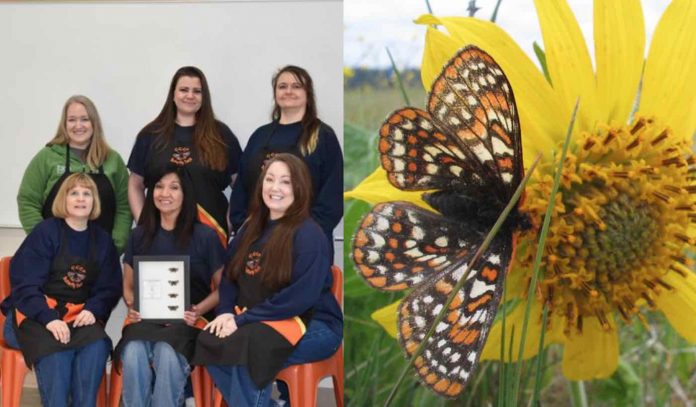
Coffee creek butterfly conservation team and the Taylor's checkerspotted butterfly — Photos by Oregon Department of Corrections (left) and Aaron Barna / USFWS (right)

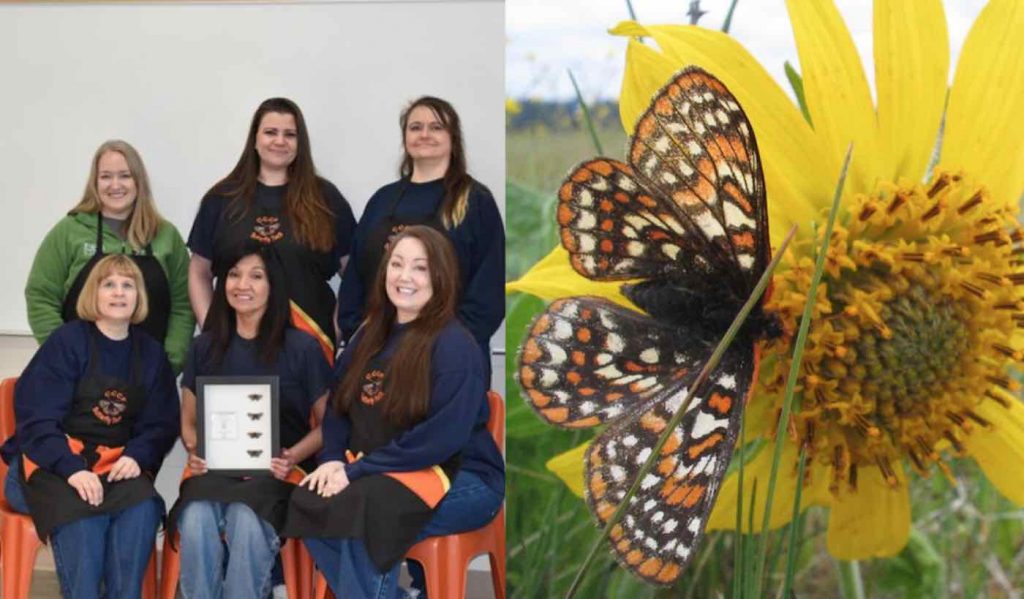
A team of female conservationists is helping to save an endangered butterfly species in Oregon—and they are doing it all from within the walls of a prison.

Coffee Creek Correctional Facility, which is the only women’s prison in the state, hosts a conservation program that recruits inmates to care for the Taylor’s checkerspot butterfly.

Since losing most of its habitat in the Pacific Northwest, the butterfly was officially listed as an endangered species several years ago. Thanks to the women in Coffee Creek, however, over 1,200 larvae have been raised and released back into the wild since the program’s creation in 2017.

During the program’s inaugural year alone, the team released almost 600 butterflies that were raised in their facility. In March, they released hundreds more.

The program was created in collaboration with the Oregon Zoo, the U.S. Fish and Wildlife Service, and the Institute for Applied Ecology as a source of rehabilitation for the inmates and preservation for the species. Not only does the facility provide a controlled, isolated environment for the butterflies with a team of dedicated workers on hand, it provides essential job skills and psychological relief for the inmates trained to work in the lab.

CHECK OUT: Matches Made in Heaven (and Jail)—Look at the Troubled Dogs Saved From Euthanasia by Doting Inmates

“Having a captive rearing and release program in Oregon is vital for the recovery of Taylor’s checkerspots,” said Oregon Zoo butterfly conservationist Ronda Naseth, who advises the program at Coffee Creek.

Additionally, she says that “inmates who have the opportunity to participate in this species recovery program are eager to share what they’ve learned with their loved ones. That has the wonderful ripple effect of more and more people in our communities caring about the future of these butterflies.”

Coffee creek butterfly conservation team and the Taylor’s checkerspot butterfly — Photos by Oregon Department of Corrections (left) and Aaron Barna / USFWS (right)

Carolyn Exum, one of the lab’s five butterfly technicians who was incarcerated on a 24-year sentence for a felony murder charge, told Oregon Public Broadcasting in the interview below: “It feels like I’m in an actual lab. We work professionally, together … it just takes you out of the actual prison environment, it gives you a sense of peace.

LOOK: Man Single-handedly Repopulated Butterfly Species in a City Using His Backyard

“I often say when I’m going to work that we’re saving the earth one butterfly at a time. And I feel like I’m part of a bigger picture. It starts here,” she added.

Once Exum is eligible for release in 2024, she says she plans on using her experience to begin a career in conservation and give lectures on the importance of the Coffee Creek program.

(LISTEN to the Oregon Public Broadcasting interview below)

Plant Some Positivity By Sharing The Good News With Your Friends On Social Media…
Two Sisters Have Been Reading Bedtime Stories for Children on Facebook Live Every Night

These two sisters have been reading bedtime stories aloud on Facebook Live in order to share their love of books with children who may not be as fortunate.

Every week, 13-year-old Zaria Willard and her 8-year-old sister Hailey visit their local library to pick out a selection of books to read on social media. The girls then take turns recording their Facebook Live readings every night of the work week.

The Delaware girls have been sharing their daily bedtime stories on their Zaria x Hailey Facebook page since March—and they have already garnered over 10,000 fans.

RELATED: Principal Reads Books in Her PJs Online So Students Always Have a Bedtime Story

Since some children don’t have access to books and parents might not have time to read with them at night, Hailey and Zaria have been able to share their stories with over 100 young listeners every night.

“We are already reading each night, but we thought it may be beneficial for children who don’t get this luxury,” wrote the sisters. “Parents sometimes work late or are too tired for stories [so] we are not only helping children, we are giving parents a nice break after a long day of work.

“We presented the idea to my mom and she agreed it would be great. She personally doesn’t want us to be on social media but we all agreed being on it in a positive way would help light the world.”

(WATCH the news coverage below)

Help Your Friends Read This Sweet Story By Sharing It To Social Media…

“Regret for the things we did can be tempered by time; it is regret for the things we did not do that is inconsolable.” – Sydney J. Harris

Quote of the Day: “Regret for the things we did can be tempered by time; it is regret for the things we did not do that is inconsolable.” – Sydney J. Harris

Photo: by Esparta Palma, CC license, via Flickr

With a new inspirational quote every day, atop the perfect photo—collected and archived on our Quotes page—why not bookmark GNN.org for a daily uplift?


This Seventh Grader Donated All $15,000 of His County Fair Earnings to a Children’s Hospital

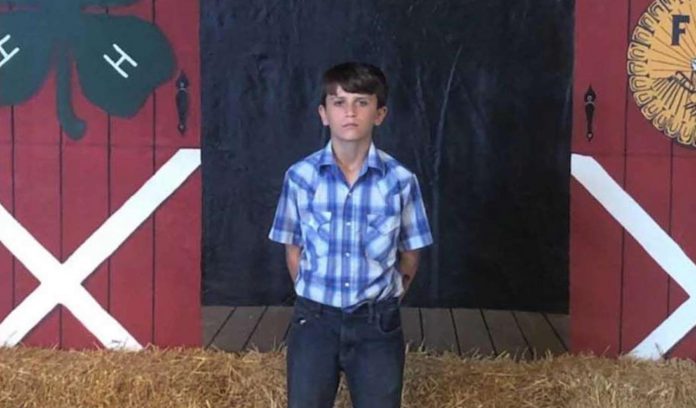
Childhood diseases are no laughing matter; that’s why this serious-looking youngster is being praised for donating thousands of dollars to a children’s research hospital earlier this week.

Diesel Pippert, who is a seventh grader in the Western Reserves School District of Ohio, earned $15,000 in livestock premiums from the county fair’s animal sale.

Much to the surprise of his adult peers, Diesel then donated all of the money to St. Jude Children’s Research Hospital.

Impressed by his generous donation, the school district posted a photo of Diesel to their Facebook page as a means of spotlighting his good deed.

RELATED: Teen Awarded $50,000 Science Fair Prize for His Method of Removing Microplastics From Water

“A young man lives amongst us who should be an example to us all,” wrote the district Facebook page. “His donation of $15,000 will help to find cures for young children and save lives. Diesel, you are a hero!”

Since the post has already been shared by hundreds of social media users, Diesel’s generosity has inspired other people to donate to the hospital as well.

One commenter aptly commended the youngster by saying: “You have forever changed your community and world, Diesel, and I hope you’re reminded of that in miraculous ways when the commotion fades. Thank you so much for your donation.”

Another social media user wrote: “A philanthropist can be any age at all. And he can be an extraordinary example of compassion to all. Congratulations to Mr. Pippert and those who are teaching him true love.”

Multiply The Good By Sharing This Inspiring Story To Social Media…
Conservationists Successfully Swoop in to Save Last of Known Endangered Frog Species Just in the Nick of Time

A healthy Loa water frog in 2015 (left), compared to the malnourished Loa water frogs (right) rescued this month from their dried-up habitat in Chile and taken to the National Zoo of Chile to be nursed back to health. (Left photo by Claudio Soto Azat. Right photo by the Ministry of Housing and Urbanism of Chile)
Rescuer Loa water frog – Photo by the Ministry of Housing and Urbanism of Chile

A team of conservationists and government officials in Chile are being praised for their swift and unprecedented rescue mission of a critically endangered frog species just in the nick of time.

Last month, the researchers managed to save 14 of the Loa water frog, a species that can only be found in a single stream in Chile.

Specialists say that the rescued amphibians could be the last of the entire species—and the critters were rescued just before their habitat had completely dried up, leaving the frogs malnourished and barely hanging on.

Chilean officials stumbled upon the plight of the Loa water frog after they discovered that its habitat outside the city of Calama—which is located in the middle of the Atacama desert—had dried up as a result of mining, agriculture, real estate development, and water extraction for mining purposes.

WATCH: This Circus Uses Elaborate Hologram Light Show in Response to Mistreatment of Performing Animals

In a region where water is a scarce resource, all of the frogs had been pushed into a tiny pool of muddy water. Thankfully, the team managed to collect what they believe to be the last 14 frogs and brought them to the National Zoo of Chile to start a conservation breeding program.

As the zoo’s specialists try to nurse the critters back to health, they are reportedly talking to water frog experts from around the world in order to gather tips for calculating the best methods of breeding and care.

A healthy Loa water frog in 2015 (left), compared to the malnourished Loa water frogs (right) rescued this month from their dried-up habitat in Chile and taken to the National Zoo of Chile to be nursed back to health. (Left photo by Claudio Soto Azat. Right photo by the Ministry of Housing and Urbanism of Chile)

A number of international wildlife organizations—including Amphibian Ark, the IUCN SSC Amphibian Specialist Group, the Amphibian Survival Alliance and Global Wildlife Conservation—are now calling on the government of Chile to continue this great work by protecting and restoring the frogs’ home in the wild.

“We request that consideration be given to the development of an emergency plan for the protection and recovery of Loa frog habitat,” said Jon Paul Rodríguez, chair of the IUCN Species Survival Commission. “For this reason, we call for the establishment of a technical working group to assist the work in this matter.”

LOOK: Dozens of Creatures Thought to Be Extinct Found Alive in ‘Lost City’ in the Jungle (Photos)

There are at least 63 known species of water frogs, or Telmatobius species, found from Ecuador to Chile, including in Peru, Bolivia and Argentina. Many of these species, like the Loa water frog, are microendemic, which means they live in just one small place. Water frogs are semi-aquatic or entirely aquatic, making them very sensitive to any changes in their environment. Habitat destruction, pollution, disease and invasive trout are among the biggest threats they face.

Photo by Gabriel Lobos

“Without the zoo, we wouldn’t have made it this far,” said Claudio Soto Azat, co-chair of IUCN SSC Amphibian Specialist Group Chile. “The situation was so critical, the main habitat was so dry, that the rescue was the only option. If the zoo wouldn’t have had the capacity to do it, the story right now would be very different.”

Perhaps the most well-known individual water frog is Romeo: a Sehuencas water frog from Bolivia who was formerly known as the world’s loneliest frog.

The Sehuencas water frog team at the Museo de Historia Natural Alcide d’Orbigny where Romeo lives has been among the experts helping to advise the National Zoo of Chile. Additionally, Romeo has written a letter to his Loa water frog brethren at the National Zoo in Chile encouraging them not to lose hope—and he even narrated a video about their plight. Global Wildlife Conservation is asking individuals around the world to spread the word about the Loa water frogs using the hashtags #SaveTheLoaFrog and #SalvemosLasRanitasDelLoa to show international support for the frogs.

(WATCH Romeo the frog’s call to action below)

Romeo the Frog Urges Action to #SaveTheLoaFrog (English) from GlobalWildlife on Vimeo.

You Better Hop To It! Share The Good News With Your Friends On Social Media…
These Musicians Play Classical Songs At Crime Scenes to Help Neighbors Heal After Tragedy

While there may not be an obvious audience for these musicians in Wisconsin, they are always performing for the people who may need music the most.

The Black String Triage Ensemble is a group of classical musicians who play music at Milwaukee crime scenes after the law enforcement teams have left.

Ranging in age from 11 to 75, the musicians hope that by playing music at the sites of gun violence and shootings, they can help ease the pain of nearby community members who may have been affected by the incident.

RELATED: Watch Passengers Sing Emotional ‘Irish Blessing’ For Their Airline Pilot After His Final Flight

“It’s not necessarily so much for the family of the victims; that healing trajectory is a much longer arc of time,” Black String Triage Ensemble founder Daybin Hallmon told WISN.

“But for everyone else in the neighborhood—people who live next door, down the street, maybe there’s somebody who owns a store—everybody that’s in that space is somehow devastated in some way by this impact. So there has to be something that sweeps that away, sweeps those ashes away, so they don’t carry them home.”

(WATCH the news coverage below) – Photo by WISN

If Music Be The Food Of Love, Then Be Share And Share This Inspiring Story With Your Friends On Social Media…
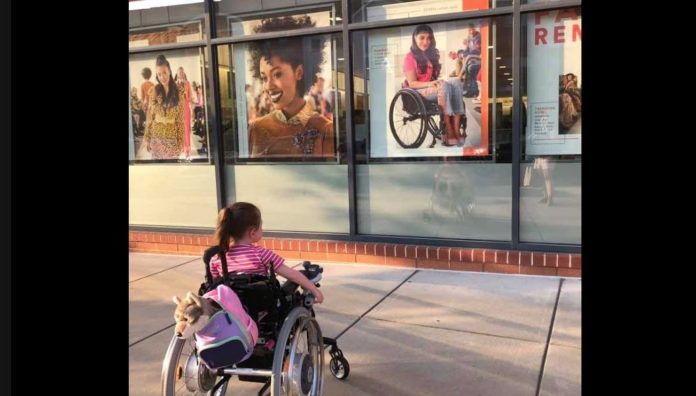
Hearts Are Melting Over Little Girl Admiring a Beauty Ad Depicting Woman in a Wheelchair

This photo of a little girl in a wheelchair admiring a beauty advertisement is going viral for a very special reason.

4-year-old Maren Anderson only recently become accustomed to using her wheelchair as a result of living with a rare disease caused by a genetic mutation. For 12 weeks, she had been practicing her navigation skills until she was finally comfortable enough to use the chair in public earlier this month

The youngster had been out with her mother Carolyn Anderson in Leesburg, Virginia when they passed an Ulta advertisement that depicted a smiling woman in a wheelchair—and Maren was floored.

RELATED: First US National Park to Offer Heavy-Duty Wheelchairs for Disabled Visitors to Enjoy the Scenery

“On this particular evening, Maren was cruising on the sidewalk in her wheelchair with a confidence we had not seen before,” Anderson told Good Morning America. “She was so eager, we could barely get her to stop at crosswalks. Then, she suddenly stopped and focused all her attention on this image of a woman in a wheelchair like hers. It was amazing.”

Anderson snapped a photo of the enchanting moment and published it to social media as a means of expressing her gratitude towards Ulta for representing differently-abled women.

MORE: After Saving Money for Two Years, Teen Finally Gets to Surprise His Friend With New Electric Wheelchair

“Well Ulta, you absolutely stopped my girl in her tracks this evening,” wrote Anderson. “It was mesmerizing to watch her stop, turn and gaze at this poster. So thank you.”

Since Anderson posted the photo to Facebook, it has been shared thousands of times—and she hopes that its internet fame will help show advertising companies that representation matters.

“She got to see herself in this picture, and that planted a seed for her to see that there is a place for kids like her in this world,” Anderson told GMA. “She was included.”

Represent Positivity By Sharing This Sweet Story With Your Friends On Social Media…

“I don’t dread any challenge that lies ahead, because I remember all the victories behind.” – Steven Furtick

By Hernán Piñera, CC license

Quote of the Day: “I don’t dread any challenge that lies ahead, because I remember all the victories behind.” – Steven Furtick

Photo: by Hernán Piñera, CC license, via Flickr

With a new inspirational quote every day, atop the perfect photo—collected and archived on our Quotes page—why not bookmark GNN.org for a daily uplift?


Former Child Refugee Finally Gets to Thank Aid Worker for the Life-Changing Gift He Gave Her 24 Years Ago

A Dutch humanitarian worker changed her life when she was five, after her family fled war torn Iraq. Recently, she became determined to find the man who presented her with a shiny new red bicycle and transformed her self-worth.

LISTEN to the inspiring story told on the radio by our GNN founder (in the Good News Guru podcast below) or READ the full story below…

It’s been almost 24 years since he gave Mevan Babakar the gift—and thanks to the power of the internet, she was finally able to thank him for the gift that helped to change her life.

While a new bicycle may not seem particularly special, Babakar had been in a particularly tough spot when she received the gift.

Back in 1991, Babaker and her family had fled northern Iraq in search of sanctuary. They traveled through Russia, Turkey, and Azerbaijan until they finally came to stay at a refugee camp in the town of Zwolle.

Babakar may have only been 5 years old at the time, but she clearly remembers getting to know a Dutch humanitarian worker at the camp named Egbert.

RELATED: Rapper’s Insistence on Featuring Homeless People in Music Video Results in Family Reunion

After she and her family were eventually able to resettle in Bergen aan Zee, Egbert later surprised the refugee family by making the 100-mile trip from the refugee camp to their front door so he could give Babakar a brand new red bicycle for Christmas.

“I remember my heart just exploded with joy … I couldn’t believe it was mine,” she recalled in an interview with the UN Refugee Agency. “When someone gives you something better than you deserve, you have to start to reassess what you’re worth.”

After Babakar and her family moved to London, she went on to get a Master’s degree in bio-engineering and pursue her career in the media.

WATCH: Tears Flow as 88-Year-old Finally Meets Biological Daughter She Thought Died At Birth

She only recently felt inspired to retrace her history as a Kurdish refugee—and as a part of her personal journey back through her experiences and cultural interactions, she became determined to track down the benefactor who helped to shape her childhood.

There was only one problem: upon arriving back in Zwolle, she realized that she didn’t really know who Egbert was.

“I went to city hall and the local library and asked as many people as I could. Nobody knew much,” says Babakar. “We kind of gave up.”

In a last ditch effort to find Egbert, Babakar tweeted a grainy old photo of the man from the refugee camp and asked her followers for help. She wrote: “Hi internet, this is a longshot, BUT I was a refugee for 5 years in the 90s and this man, who worked at a refugee camp near Zwolle in the Netherlands, out of the kindness of his own heart bought me a bike. My five year old heart exploded with joy. I just want to know his name. Help?”

Within hours, social media users put her in touch with Egbert and she was able to reunite with him at his home in Germany.

“Not only did I find him, but I’ve also had other refugees reach out to me and tell me that him and his wife helped them too!” Babakar later wrote on Twitter. “Their kindness has touched so many lives. One woman said: ‘they weren’t friends to me, they were family.’”

Additionally, Babakar’s Twitter posts put her in touch with another humanitarian worker from the refugee camp: a woman named Sandra who taught her to use a computer for the first time, which put her on track to pursue her career in technology.

“It was wonderful. It was like seeing [relatives] that you hadn’t seen in a very long time,” Babakar told the UNHCR.

Despite finally being able to thank the man for the bike, Babakar says that she was never really thanking him for the bike. “The gift of the bike and those feelings eventually became the value of my own self-worth,” she mused.

(WATCH the interview below)

Be Sure And Share This Sweet Story With Your Own Friends And Family On Social Media…

Tree-Filled City Parks Make People as Happy as Christmas Day, Says New Study of Twitter Posts

Feeling unhappy and cranky? This new study says that walking in a leafy public park can make feel as happy as Christmas day.

The first-of-its-kind study from the University of Vermont shows that people who visit urban parks use happier words and express less negativity on Twitter than they did before their visit—and that their elevated mood lasts, like a glow, for up to four hours afterwards.

In fact, the scientists discovered that the effect is so strong, the increase in happiness from a visit to an outpost of urban nature is equivalent to the mood spike on Christmas, which has been shown to be by far the happiest day each year on Twitter.

With more people living in cities, and growing rates of mood disorders, this research may have powerful implications for public health and urban planning.

RELATED: Managing Your Gut Bacteria Shown to Alleviate Anxiety, Says New Research

The new study was published today in People and Nature, an open-access journal of the British Ecological Society.

For three months, the scientists studied hundreds of tweets per day that people posted from 160 parks in San Francisco. “We found that, yes, across all the tweets, people are happier in parks,” says Aaron Schwartz, a UVM graduate student who led the new research, “but the effect was stronger in large regional parks with extensive tree cover and vegetation.” Smaller neighborhood parks showed a smaller spike in positive mood and mostly-paved civic plazas and squares showed the least mood elevation.

In other words, it’s not just getting out of work or being outside that brings a positive boost: the study shows that greener areas with more vegetation have the biggest impact. It’s notable that one of the words that shows the biggest uptick in use in tweets from parks is “flowers.”

LOOK: How a Yoga Teacher is Saving First Responders Across America From Depression With Downward Dog

“In cities, big green spaces are very important for people’s sense of well-being,” says Schwartz; meaning that efforts to protect and expand urban natural areas extend far beyond luxury and second-tier concerns. “We’re seeing more and more evidence that it’s central to promoting mental health,” says Taylor Ricketts, a co-author on the new study and director of the Gund Institute for Environment at UVM.

In recent years, “a big focus in conservation has been on monetary benefits—like: how many dollars of flood damage did we avoid by restoring a wetland?” Ricketts says. “But this study is part of a new wave of research that expands beyond monetary benefits to quantify the direct health benefits of nature. What’s even more innovative here is our focus on mental health benefits—which have been really underappreciated and understudied.”

The new study relied on the hedonometer. This online instrument—invented by a team of scientists at UVM and The MITRE Corporation—has been gathering and analyzing billions of tweets for more than a decade, resulting in numerous scientific papers and extensive global media coverage. The instrument uses a body of about 10,000 common words that have been scored by a large pool of volunteers for what the scientists call their “psychological valence,” a kind of measure of each word’s emotional temperature.

CHECK OUT: Instead of ‘We Are What We Eat,’ the Science of Kindness Says ‘We Are What We See’ in Daily Life

The volunteers ranked words they perceived as the happiest near the top of a 1-9 scale; sad words near the bottom. Averaging the volunteers’ responses, each word received a score: “happy” itself ranked 8.30, “hahaha” 7.94, and “parks” 7.14. Truly neutral words, “and” and “the” scored 5.22 and 4.98. At the bottom, “trapped” 3.08, “crash” 2.60, and “jail” 1.76. “Flowers” scored a pleasant 7.56.

Using these scores, the team collects some fifty million tweets from around the world each day—“then we basically toss all the words into a huge bucket,” says Dodds—and calculate the bucket’s average happiness score.

To make the new study, the UVM team fished tweets out of this huge stream—from 4,688 users who publicly identify their location—that were geotagged with latitude and longitude in the city of San Francisco. This allowed the team to know which tweets were coming from which parks. “Then, working with the U.S. Forest Service, we developed some new techniques for mapping vegetation of urban areas—at a very detailed resolution, about a thousand times more detailed than existing methods,” says Jarlath O’Neil-Dunne, director of UVM’s Spatial Analysis Laboratory in the UVM Rubenstein School of Environment and Natural Resources and a co-author on the new study. “That’s what really enabled us to get an accurate understanding of how the greenness and vegetation of these urban areas relates to people’s sentiment there.”

MORE: Next Time You’re Feeling Stressed or Anxious, This Study Says You Should Play Tetris

“This is the first study that uses Twitter to examine how user sentiment changes before, during, and after visits to different types of parks,” says Schwartz, a doctoral student in the Rubenstein School and Gund Institute graduate fellow. “The greener parks show a bigger boost.”

Overall, the tweets posted from these urban parks in San Francisco were happier by a dramatic 0.23 points on the hedonometer scale over the baseline. “This increase in sentiment is equivalent to that of Christmas Day for Twitter as a whole in the same year,” the scientists write.

“Being in nature offers restorative benefits on dimensions not available for purchase in a store, or downloadable on a screen,” says UVM’s Chris Danforth, a professor of mathematics and fellow in the Gund Institute. He notes that a growing body of research shows an association between time in nature and improved mood, “but the specific causal links are hard to nail down.”

RELATED: Exciting New Study Shows That Zapping the Brain ‘Acutely’ Relieves Symptoms of Depression

The team of UVM scientists consider several possible mechanisms through which urban nature may improve mental health, including Green Mind Theory that suggests that the negativity bias of the brain, “which may have been evolutionarily advantageous—is constantly activated by the stressors of modern life,” the team writes.

“While we don’t address causality in our study, we do find that negative language—like ‘not,’ ‘no,’ ‘don’t,’ ‘can’t,’—decreased in the period immediately after visits to urban parks,” says Danforth, “offering specific linguistic markers of the mood boost available outside.” Conversely, the study shows that the use of first-person pronouns—“I” and “me”—drops off dramatically in parks, perhaps indicating “a shift from individual to collective mental frame,” the scientists write.

Of course, Twitter users are not a representative sample of all people—perhaps just the “twitter-afflicted” (as Adam Gopnik wrote in a recent issue of the New Yorker) who pick up their phone to tweet from a park. Still, Twitter users are a broad demographic, earlier research shows, and this approach to near-real-time remote sensing via Twitter posts—not based on self-reporting—gives a new window for scientists onto the shifting moods of very large groups.

Reprinted from the University of Vermont

Plant Some Positivity By Sharing The Intreeging Research With Your Friends On Social Media…

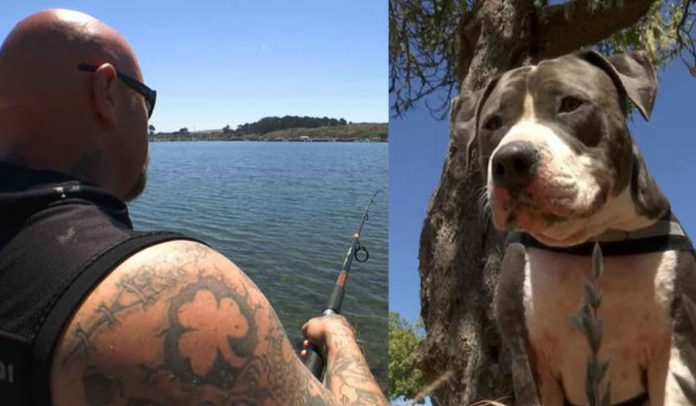
Pit Bull Hailed As a Hero After Reportedly Fighting Off a Shark to Save Its Owner

This courageous pit bull has proven itself to be man’s best friend—and hero—after it saved his owner from a 6-foot shark last month.

James White had been fishing off the coast of Bodega Bay in Sonoma County, California when he felt a hefty tug at the end of his line. Eager for a big catch, White told NBC News that he spent 10 minutes reeling it in only to find that he had hooked a massive sevengill shark.

When White tried to free the shark from his hook, it twisted, fell to the ground and reportedly bit down on his ankle, puncturing an artery in the process.

The fisherman tried to free his leg from the jaws of the predator, but to no avail. He then called to some nearby fishermen for help—but before they could get to him, Darby the pit bull rushed to his rescue.

WATCH: Dog That Shoplifted a Book on ‘Abandonment’ is Given the Love It Was Asking For

Since there had been an abundance of traffic in the area, White had kept his 1-year-old canine companion in his jeep parked a few yards away from his fishing spot with the windows slightly rolled down. When Darby saw that his owner was in distress, however, he scratched at the car door until he managed to pull the handle open and run to White’s side.

The 100-pound pup then bit the shark on the gills, which only caused it to sink its teeth deeper into White’s ankle. When White told Darby to back off, the dog then grabbed the shark by the tail and pulled it off of his owner onto dry land.

After White was able to throw the shark back into the ocean, it swam away with little more than a few bite marks from the heroic pit bull—and White says that he was able to walk away with his foot still intact thanks to Darby.

RELATED: Watch This Stunning Video of a Border Collie Sprinting to the Rescue of a Dog in Harm’s Way

Though White always knew Darby to be a sweet and playful dog, he never knew that the pup was capable of such bravery—and he is now eternally indebted to the dog for his actions.

“He’s been a part of the family from day one, just now a little more,” White told NBC. “If it wasn’t for him I would have been a lot worse.”

(WATCH the NBC interview below)

Be Sure And Share This Pawesome Rescue With Your Friends On Social Media…

Metallica Donates a Quarter-Million Dollars to Help Build First Children’s Hospital of Its Kind in Romania

It has been 20 years since Metallica played in Romania—and they are celebrating their return to the European nation by making a particularly noteworthy contribution to its medical community.

The iconic heavy metal band has already been doing charity work for every city they visit on their WorldWired global tour. Thus far, the group has made headlines for donating thousands of dollars through their All Within My Hands Foundation to community food banks they pass along the way.

Now as a means of kicking off the final leg of the European chapter of their tour, Metallica says that they are donating $277,000 (€250,000) to help build the country’s first pediatric oncology and radiotherapy hospital and equip it with the latest medical technology.

RELATED: Woman Who Used Metallica Song to Scare Off a Hungry Cougar Gets Unexpected Call From Band’s Frontman

Prior to their sold out show at the Arena Națională in Bucharest, Romania, the band members presented a check to Daruieste Viata (The Give Life Association), which is the organization responsible for the hospital’s construction.

Carmen Uscatu, President of Daruieste Viata Association, said in a statement: “The donation made by Metallica has a special meaning to our project … their music inspires and touches so many Romanians, and at the same time, so many Romanians are inspired by and contribute to the establishing of the first Pediatric Oncology and Radiotherapy Hospital in Romania, in order to give children with cancer a chance to live.”

CHECK OUT: Father of Metallica Bassist Who Died Has Been Quietly Donating Royalties to Child Musicians

According to the nonprofit’s website, “Only 50% of the children with cancer survive in Romania. The average in the EU is at over 80%.

“When completed, this will be first state-of-the-art hospital that will have been built in Romania in over 30 years, while also being the only project funded exclusively by private donors.”

The hospital, which has been funded by about 260,000 individuals and 2,000 companies, is projected to open to the public in 2020.

Ride The Good News By Sharing This With Your Fellow Metalheads On Social Media…