For the first time in history, wind energy accounted for more electrical usage in Texas than coal.
The Electrical Reliability Council of Texas, which manages about 90% of the electrical flow in the state, released a report earlier this month stating that—during the first half of 2019—wind power generated 22% of the state’s electrical usage while coal only generated 21%.
In addition to Texas being the largest producer and consumer of energy in the US, they have also been the largest consumer of coal. Back in 2003, coal fulfilled 40% of the state’s electrical needs. Wind, on the other hand, only generated 0.8%.
That being said, a new report that was released today by the US Energy Information Administration shows that much has changed over the course of the last 16 years.
Based on data from 2018, Texas now ranks first in US-installed wind capacity and number of turbines. The state generated roughly 24 gigawatts of wind energy, which is three times more than Iowa, the second largest wind power state.
Only 41 US states have installed a minimum of one wind turbine. Of these 41 states, Texas had the largest number of turbines, with more than 13,000. For perspective, California had the second largest amount of turbines with about 7,600.
Power Up With Positivity By Sharing The Good News To Social Media – Photo by Christoph Hrdinka, CC
When an ailing young fan asked his favorite baseball player to hit a home run, the Red Sox champion went above and beyond to make the boy’s wish come true—not once, but three times.
10-year-old Nico Sapienza suffers from spinal muscular atrophy, a genetic disease that affects the motor neurons in a person’s spine and takes away their ability to do simple physical tasks. He also happens to be a huge Red Sox fan.
That’s why the youngster asked the Make-a-Wish Foundation for a chance to meet the team—particularly his favorite player, Mookie Betts.
Nico’s wish came true after he was brought to Fenway Park prior to the Sox’s game against the New York Yankees earlier this week.
In addition to the boy being given a tour of the stadium, he got to meet with all of the players and chat about their shared love of baseball.
Before he left, Nico asked Betts to hit a home run against the Yankees—and even though it could have been a hard promise to keep, Betts was more than happy to oblige.
"I'm glad he came. He was our good luck charm. He's a great kid. I think him and his family had fun down in BP and I think if I can kind of use the platform that I have to make people smile like that then I know I've done something well." - Mookie after meeting Nico Sapienza https://t.co/miYaaSDSgK
An Irish teenager has just won the prestigious Google Science Fair Grand Prize for his ingenious method of extracting microplastics from water.
Thousands of participants between the ages 14 to 18 entered this year’s contest. Out of the 24 international finalists, 18-year-old Fionn Ferreira was named the winner for his technique of using magnets and ferrofluids—a combination of oil and magnetite powder—to collect the tiny bits of plastic from water samples.
Since most microplastics measure less than 5 millimeters in diameter, it is impossible to prevent the small pollutants from ending up in oceans, lakes, and urban waterways using typical filtration methods.
According to The Journal, there are currently no microplastic filtration systems being utilized in any of Europe’s wastewater treatment plants.
However, Fionn was able to use his ferrofluid method to collect 87% of microplastics from his water samples in 1,000 different tests.
Now that he has been awarded Google’s $50,000 grand prize, the teen from West Cork hopes to start implementing his filtration technique in wastewater treatment plants so the microplastic pollutants won’t ever reach the ocean.
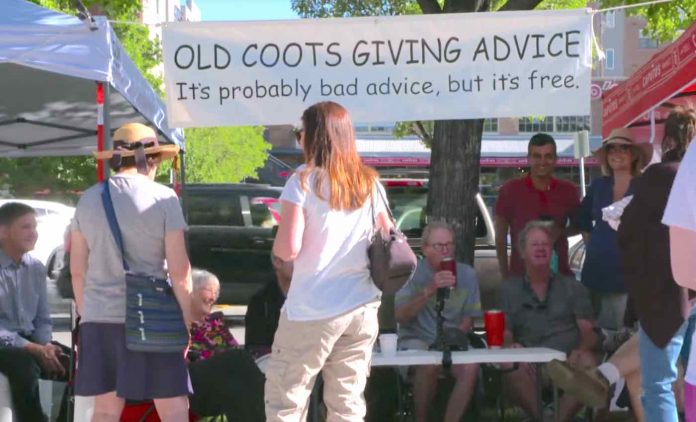
For years, this group of old-timers had been meeting at their local coffee shop in order to chat, joke, and discuss the world’s problems.
Amused by their own banter, the elderly pranksters decided to open a booth at the farmer’s market in Salt Lake City, Utah so they could share their wisdom with the world.
The gang then set up a table with a sign reading “Old Coots Giving Advice: It’s probably bad advice, but it’s free.”
To their surprise, a line of people quickly formed in front of their table, eager for advice and conversation.
The Old Coots have now been setting up shop at the farmer’s market every summer Saturday for the last several years—and it seems that they won’t be running out of advice any time soon.
(WATCH the news coverage below or our international viewers can check out the footage on the CBS website) – Photo by CBS News
Be Sure And Share This Sweet Story With Your Friends On Social Media…
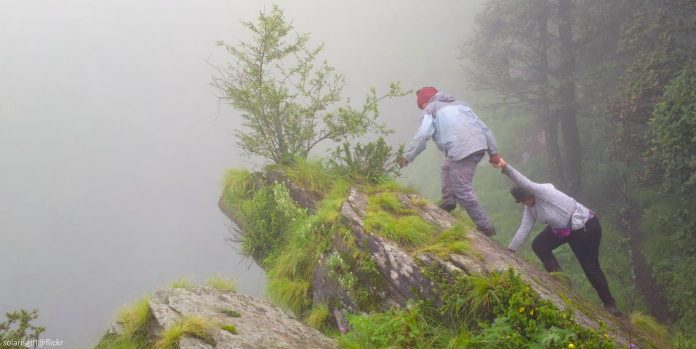
Quote of the Day: “Success means we go to sleep at night knowing that our talents and abilities were used in a way that served others.” – Marianne Williamson
Photo: by solarisgirl, CC license on Flickr
With a new inspirational quote every day, atop the perfect photo—collected and archived on our Quotes page—why not bookmark GNN.org for a daily uplift?
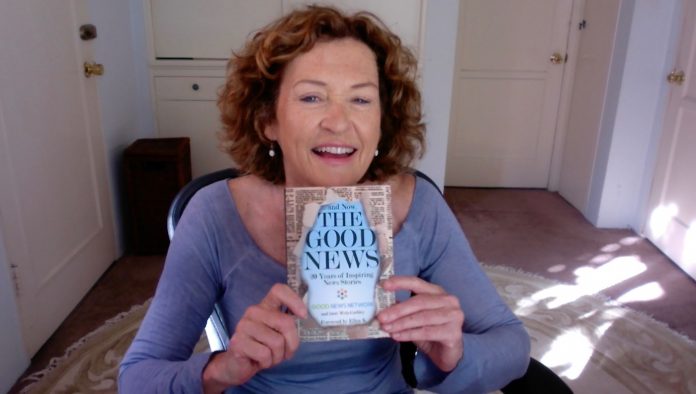
I have been wanting to do a video about my book for MONTHS, and finally sat myself down in front of a camera this week. One of the reasons I procrastinated is because I never liked much how I look on camera. (I know, so much vanity, right?)
But, I was spurred to action by the need to talk about our Summer Book Sale, which offers 20% savings now for a limited time, if you’re shipping to the USA.
You can save $2.00 compared to Amazon prices—plus get FREE shipping! Claim your Summer Savings here: GNN.to/book
I really hate to exclude people outside the US, but GNN can only ship domestically. HOWEVER, I promise to run an Amazon sale all my friends outside the US later this year. Amazon sells our book, ‘…And Now, The Good News: 20 Years of Inspiring News Stories’ in Canada, the UK, Australia, Germany, Spain, and Italy—and all the links are HERE.
Love to all, Geri
KNOW Someone Who Might Like the Book? Share the Savings on Social Media…
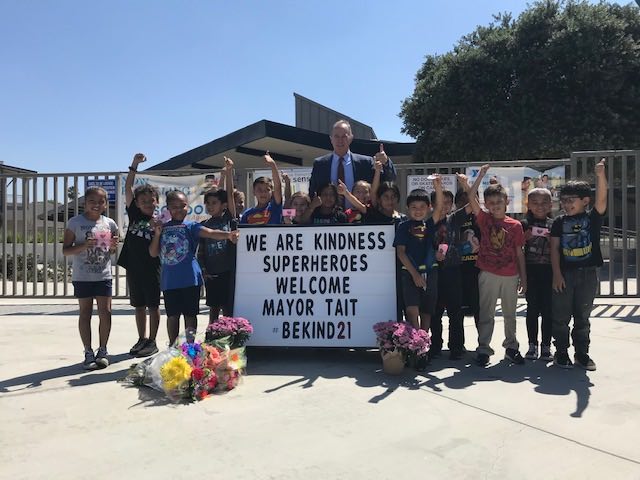
This story was submitted as a nomination to the Reader’s Digest “Top 50 Nicest Places in America” contest: a crowd-sourced effort to uncover nooks where people are still kind and respectful in an era of cultural and political divides. Be sure and vote for which story you think should be nominated as the top Nicest Place by visiting the Reader’s Digest website.
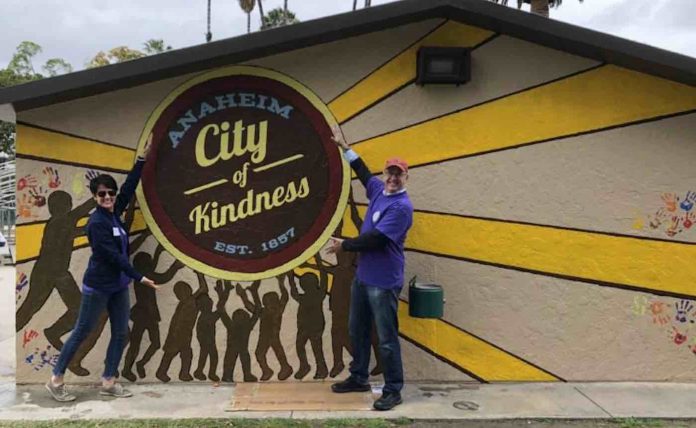
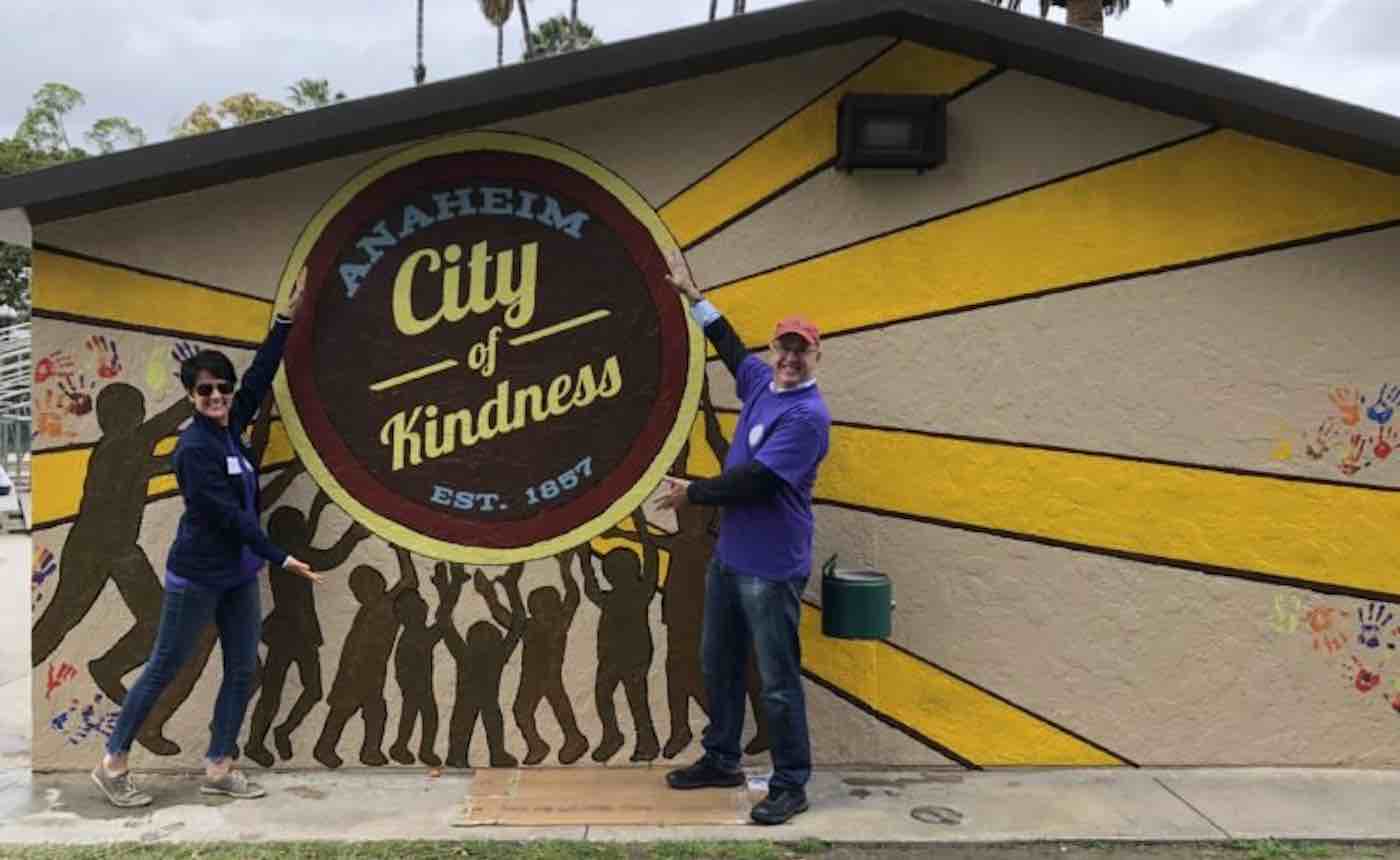
Photo by Tom Tait
It isn’t every city where someone can be elected mayor by running on the slogan “Make Kindness Contagious”—but that is exactly how this California town made a reputation for itself as “The City of Kindness”.
After Edward Jaievsky’s daughter passed away in a car accident, he was later surprised to discover that she made a series of drawings and writings about her wish for a world filled with kindness.
At a loss as to what to do amid this tragedy, he decided to honor her memory by hanging up signs reading “Make Kindness Contagious” all over Anaheim.
That tiny act, sparked by the wishes of an innocent girl, ended up having an enormous impact on the town.
Tom Tait, a former city councilman who nominated Anaheim as one of the Nicest Places in America, tells Reader’s Digest that he saw the signs and wanted to figure out where they came from. He eventually tracked down Jaievsky and learned about his daughter’s wish.
Jaievsky’s story then inspired Tait to run for mayor with “Make Kindness Contagious” as his campaign slogan.
It might sound overly simple, but Tait hoped that if the city adopted “kindness” as one of its essential pillars, life in Anaheim would get better for everyone.
And here’s the crazy thing: it worked.
Tait served as mayor from 2010 to 2018, and nearly ten years later, the “City of Kindness” has become famous for its ethos of smiles and caring—so famous that the Dalai Lama chose to spend his 80th birthday in the town.
Just one of the city’s reoccurring examples of kindness is how all Anaheim schools now host a Serve-a-Thon every Martin Luther King Day. Instead of taking the school holiday off, teachers, administrators, and hundreds of students come together in order to do compassionate activities such as planting trees and singing songs at a senior citizens center.
“It’s really fun,” says fifth-grader Kenley Herrera, who participated in a neighborhood cleanup. “It’s just the thought of making people happier.”
She and her friends made posters with uplifting messages like “May You Have Love in Your Heart” to carry as they picked up trash for nearly two miles, all the way from her elementary school to Anaheim High.
“Kindness has just become integrated into who we are,” says Ephrain Paniagua, principal of Lincoln Elementary.
Reprinted with permission from Reader’s Digest. To learn more about GNN’s part in searching for the Top 10 Nicest Places, click here.
Be Sure And Share This Sweet Story Of Neighborly Kindness With Your Friends On Social Media…
Researchers have discovered an interesting new method for exhausted students to relax and relieve themselves of stress-related headaches.
Teenagers report higher levels of stress than adults, and cite school as the highest contributing factor, according to the American Psychological Association‘s annual report. A summary from 2013 concluded that while stress among Americans was not new, “what’s troubling is the stress outlook for teens in the United States.”
In response, some schools have recently turned to mindfulness-based programs as a way to alleviate stress among their students. These programs could benefit from more research into what activities students find most useful.
In a pilot study led by the University of Washington, researchers explored art-based mindfulness activities that schools could use to reduce headaches, a common side effect of stress in adolescent girls.
After three weeks of twice-weekly mindfulness and art therapy sessions, the girls reported experiencing significantly fewer headaches. At the beginning of the study, the girls reported 7.38 headaches, on average, within the previous two-week period. At the end of the study, that number had dropped to 4.63 — almost a 40% decrease. This drop remained even seven weeks after the study had ended. The researchers published their findings in the journal Art Therapy.
“This study highlights one of my main research missions: We should be making interventions in cooperation with teenagers if we want these strategies to work,” said corresponding author Elin Björling, a senior research scientist in the UW’s human centered design and engineering department.
“There’s something powerful about saying ‘I’m inviting you to start thinking about how you could get better. Come have a conversation with me about how we could do this.’ I think that’s why we saw such a strong response even in this tiny study.”
The team recruited eight girls between the ages of 14 to 17 from a high school in Seattle. All of the participants reported experiencing three or more headaches not related to an injury within a two-week period, and five of the eight mentioned tension or stress as the main reason for headaches.
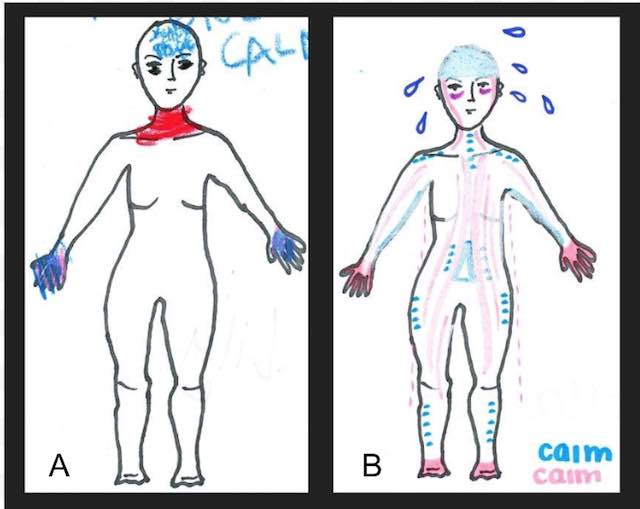
During the program, the students met twice a week for a 50-minute session with the research team. Each session began with an activity in which students would map where they were feeling stressed on a drawing of a body. Then the teens would participate in mindfulness and art activities before closing the session with another body map.
The researchers asked the students to mark where they feel stress and tension on a drawing of a body before (left, A) and after (right, B) participating in mindfulness and art therapy activities. (Photo by the University of Washington)
“After the study, we looked at all the before and after body maps side by side. It was so clear that something significant was going on,” Björling said. “In the beginning everything was in pieces, and in the end everything was flowing through the whole body.”
The teens tried different mindfulness techniques in each session so they could find which ones worked the best for them.
What teens liked: square breathing, a technique that encourages people to take slow breaths by concentrating and counting.
“I thought: ‘No teen ever wants to do counted breathing, and they’re never going to do it,’” Björling said. “But a few of them said ‘That’s my favorite. I do it all the time now.’”
What teens didn’t like: mindful eating, a technique that asks people to focus on what and how they’re eating.
“They hated it,” Björling said. “This was a technique straight out of a lot of mindfulness programs for teens, but it didn’t connect with them. It just annoyed them. It goes to show I need them to be experts in their own lives.”
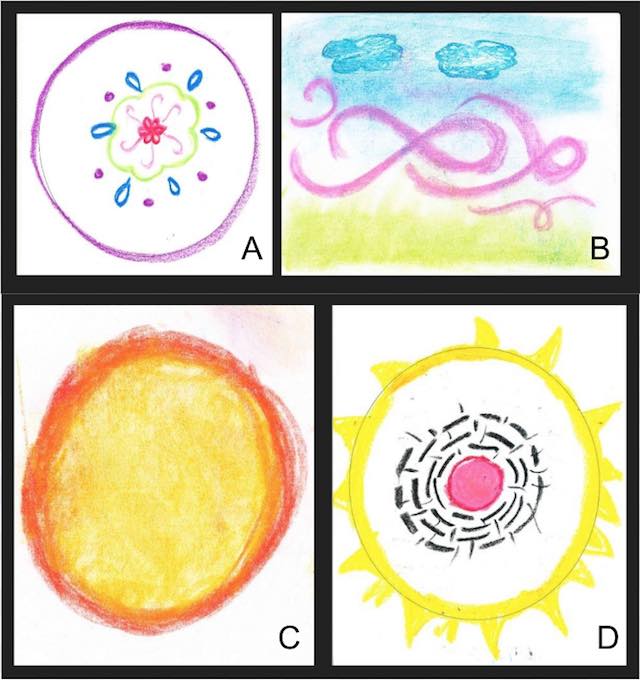
The researchers also asked the students to participate in different mindful art activities. During each session, the students tried a new art medium — they particularly liked using oil pastels — and different types of art therapy projects, including one where they worked together to create mandalas before and after a meditation exercise.
During one of the sessions, the researchers asked the students to work together to create mandalas before (left, A and C) and after (right, B and D) participating in a meditation activity. (Photo by the University of Washington)
While the teens experienced fewer headaches after the study ended, their overall stress levels didn’t change much—but the students reported feeling better in the moment, saying that they felt like they could handle whatever happened for the rest of the day.
The team was surprised to see any differences, given the small size of the group.
“It’s not just about this study,” Björling said. “This problem of teen mental health and headaches is so big that I’m worried about what happens if we don’t take it on. Some teens will want nothing to do with art mindfulness. So we need to come at this in lots of different ways. We’re going to need an army of people and a cornucopia of options.”
A 13-year-old boy from East China was found guilty of hijacking two seaplanes for a joyride last week—but instead of being punished for his little heist, he may have paved his way towards a career as a pilot.
The teenager reportedly learned how to start the planes after he biked to the Taihu Lake hanger in the Zhejiang province last weekend and watched the pilots doing maintenance repairs on the planes.
He then biked back to the airport in the dead of night and dragged one of the seaplanes onto the tarmac so he could take it for a drive. After he accidentally ran the plane into a guardrail, he hopped into a second aircraft for a few laps around the tarmac before he abandoned his new hot rod and escaped on his bike.
Once police officials consulted the hanger’s security footage and identified the boy, they negotiated the price of a small fine from his family in order to fix the damaged seaplane.
Hanger employees say that it would have been impossible for the youngster to take the plane into the air without the proper training, but they were still impressed with the boy’s skill.
He also told the news outlet that he and the other hanger employees are now trying to take the boy under their wing so they can give him flying lessons and help him become a certified pilot.
(WATCH the video below) – Photo by Asiawire
Fly This Story Over To Your Friends By Sharing It On Social Media…
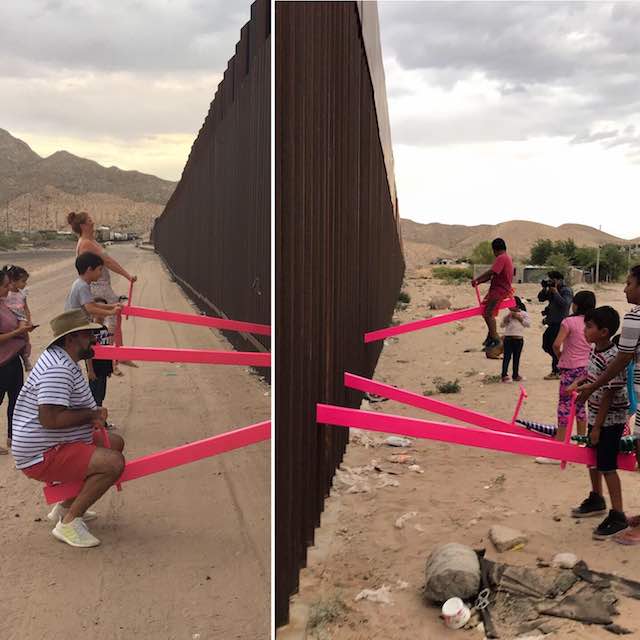
Two California college professors have just finished installing a powerful new architectural addition to the US-Mexico borderwall.
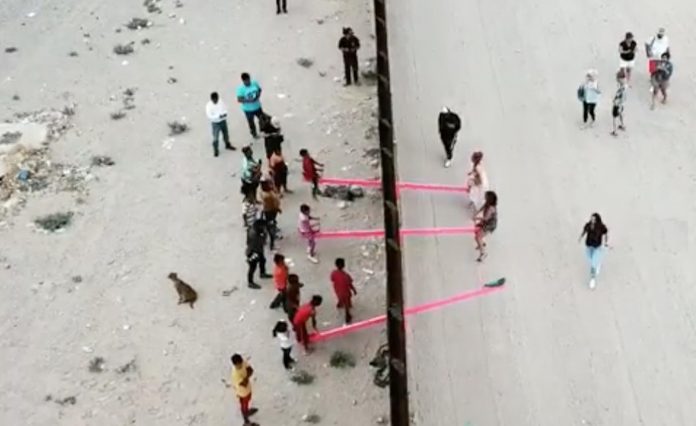
Professors Ronald Rael and Virginia San Fratello traveled to Sunland Park, New Mexico this week in order to build a “Teeter-Totter Wall” into the slatted border fence separating the city from Ciudad Juárez, Mexico.
The set of seesaws allow children and adults from both sides of the fence to play together—all while still being on their own respective sides of the border.
Rael and Fratello first got the idea for their international play structure back in 2009. After they succeeded in conceptualizing the idea into a book, the Teeter-Totter Wall finally came to fruition this week—and “with no advance planning for participants on the Mexico side of the fence, this unifying act took place,” wrote the University of California, where Rael teaches, in a statement.
“One of the most incredible experiences of my and Virginia San Fratello’s career [is] bringing to life the conceptual drawings of the Teeter-Totter Wall from 2009 in an event filled with joy, excitement, and togetherness at the borderwall,” said Rael in an Instagram post.
“The wall became a literal fulcrum for US-Mexico relations and children and adults were connected in meaningful ways on both sides with the recognition that the actions that take place on one side have a direct consequence on the other side,” he added.
This new set of Twitter photos just proves yet again that Keanu Reeves is one of the most excellent human beings in Hollywood.
The film star’s acts of kindness and philanthropy have made national headlines at least a dozen times over the last few years.
Back in April, Reeves was praised for helping two dozen airline passengers to their destinations after their plane was force to make an emergency landing; and in January 2018, reporters discovered that Reeves has been anonymously pouring money into a charity for years.
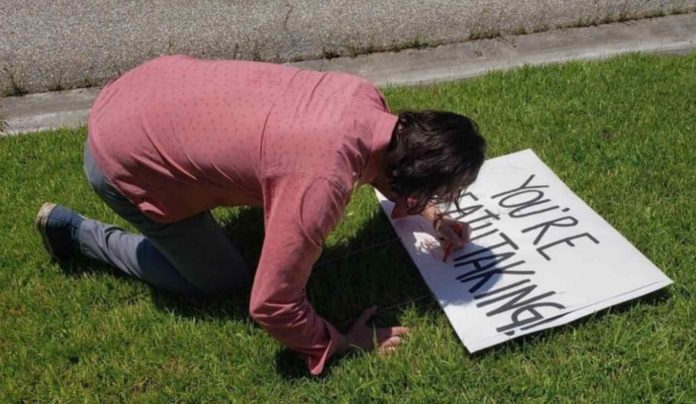
Now, as his most recent act of compassion, he was photographed hopping out of his car so he could autograph a handmade sign that read “You’re breathtaking!”
The photos were captured by Ed Solomon, the screenwriter for the third Bill and Ted’s Excellent Adventure movie starring Reeves.
Solomon said that he had been on his way to the film set with Reeves when the actor spotted the sign had been planted on a grassy area. He then jumped out of the car so he could leave a little note on the sign saying: “Stacey, you’re breathtaking! –Keanu Reeves.”
Though it is unclear why Reeves dedicated the autograph to Stacey, the compliment is likely a reference to his recent guest appearance at the XBox press conference during which an excited fan yelled “You’re breathtaking!” right after Reeves finished describing a video game as “breathtaking”.
Surprised and delighted, Reeves yelled back: “You’re breathtaking! You’re all breathtaking!”
(WATCH the video below)
Be Sure And Share This Excellent Story Of Celebrity Kindness With Your Friends On Social Media…
Quote of the Day: “Children are likely to live up to what you believe of them.” – Lady Bird Johnson, former first lady of the United States
Photo: licensed for use
With a new inspirational quote every day, atop the perfect photo—collected and archived on our Quotes page—why not bookmark GNN.org for a daily uplift?
Hear a serendipitous tale of blossoming community spirit in this week’s edition of MOTH Monday, a partnership with Good News Network that features inspiring videos from The MOTH, a nonprofit group showcasing the art of storytelling.
Aaron Naparstek found a nice old brownstone in Brooklyn with three big windows overlooking the street. There was only one problem—the constant honking—but, his creative, community-minded spirit came up with a perfect solution for himself and his neighbors.
When he got so frustrated at Christmas with a man laying on his horn while sitting in front of a red light, he knows he has to channel his anger, instead of pelting the car with eggs—which he tries, but realized there was a major flaw in that plan. (The driver knows were he lives!)
In a display of mindfulness, he just “observed the honking” while in a peaceful state, and then composed a 3-line Haiku poem.
He printed up some copies and displayed them around the neighborhood, unexpectedly starting a community movement through his street-traffic poetry.
He called it Honku—and Aaron became known as The Bard of Clinton Street after a neighbor saw him on the sidewalk one morning taping his latest poem.
“We just LOVE what you’re doing,” she said excitedly. “My daughters are now writing Honku, too!”
Other Honku poetry began blossoming around the lampposts, and Aaron decided to cultivate the bond he shared with his neighbors by calling for a face-to-face meeting—which led to an amazing civics lesson on how to get things done to improve the quality of life.
(LISTEN to our delightful MOTH Monday storyteller to hear what happened next…)
The Moth gives people an opportunity to tell a true story in front of a live audience, and sometimes their stories are chosen to air on the radio show, now celebrating its tenth year, and broadcasting on 485+ public radio stations—and on The Moth podcast, which is downloaded over 52 million times a year. The Moth’s third book, Occasional Magic: True Stories About Defying the Impossible is now available for purchase through your favorite booksellers.
SHARE the Community Spirit With Your Neighbors on Social Media!
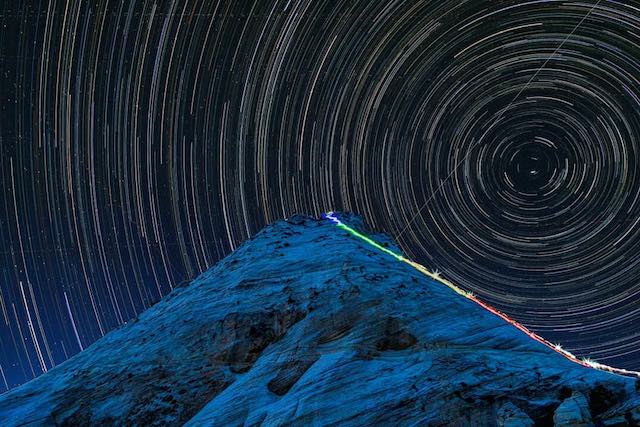
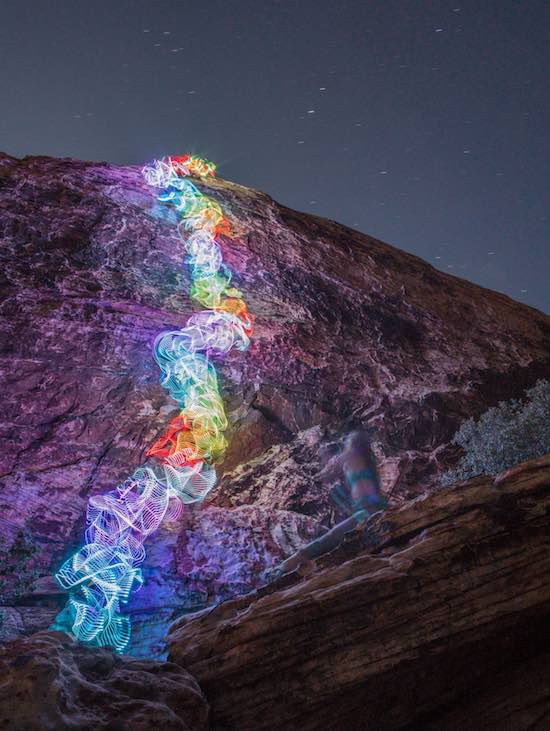
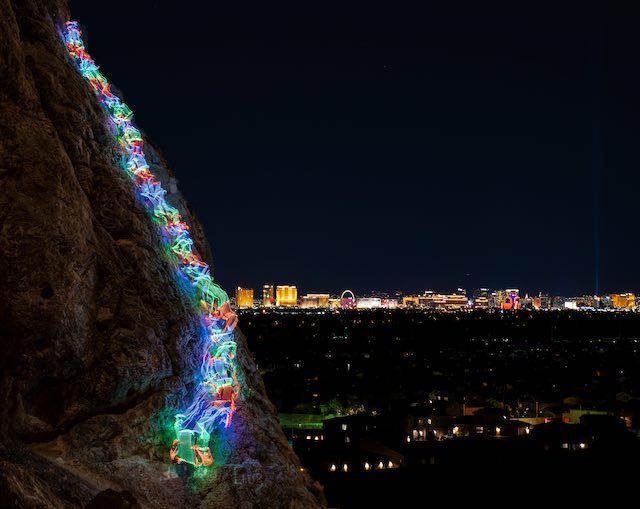
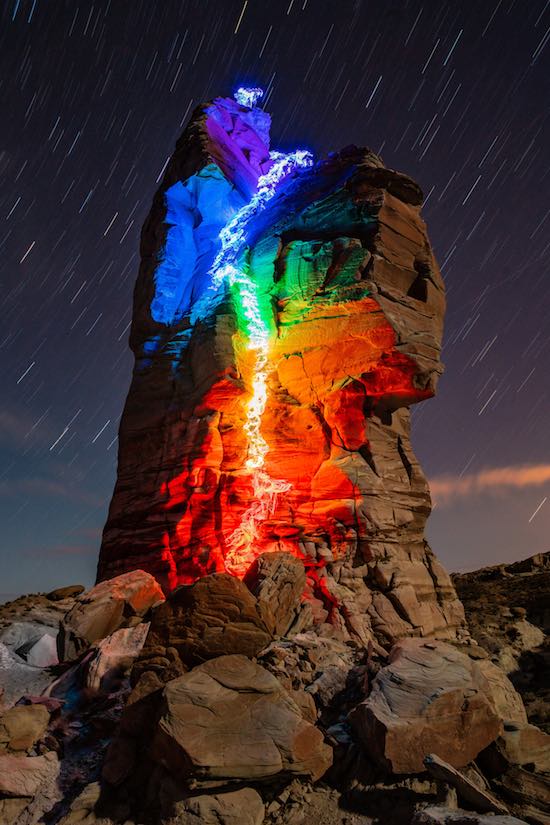
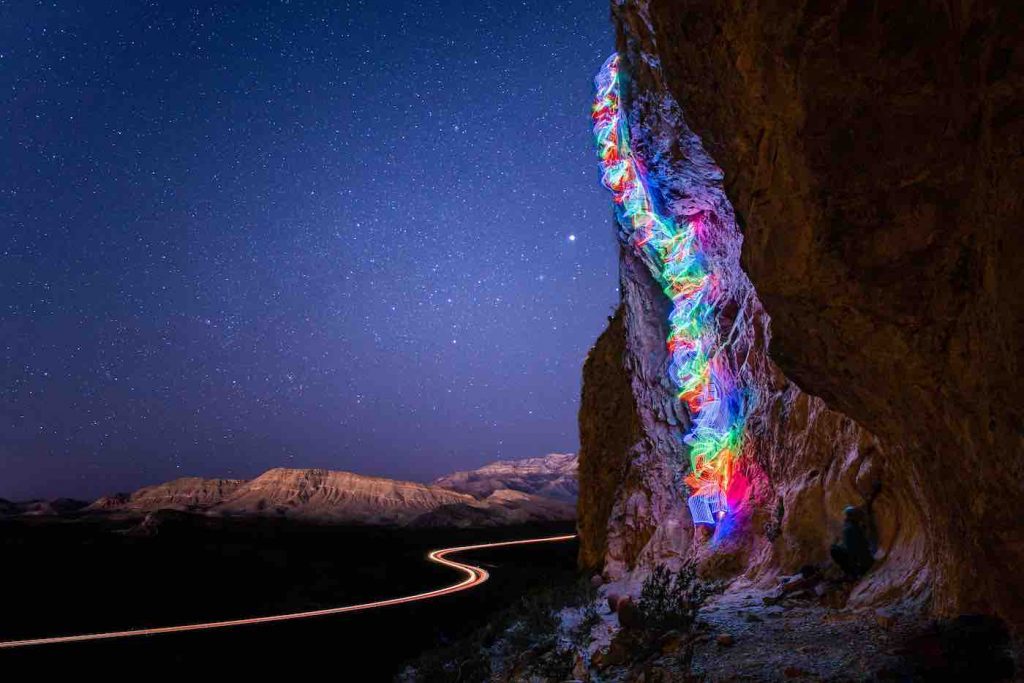
These fascinating images are the result of a photographer using LED lights to track his climbing routes up sheer rock faces and mountain hikes.
27-year-old Luke Rasmussen takes to sky-high ridges across the USA under the cover of darkness so he can use the lights to turn his journeys into colorful patterns.
He records the routes through a series of long-exposure images taken from the foot of each rock face.
“I wanted to capture the passage of time as I moved up a rock face, flowing from one hold to the next,” says Rasmussen. “I wanted a way to visualize the line that exists in a climber’s mind as he pieces together the natural features of the wall.
“I wanted to be able to illuminate the motion that I experience while climbing. And I think I’ve begun to do just that.
Rasmussen, who is from Las Vegas, started rock climbing at the age of 11 before he even got his hands on his very first camera.
SWNS
“I certainly enjoyed taking photos and the process of photography, but I knew there was something more that I could get out of it. I knew there was a way that I could use photography as a tool to capture the ‘passage of time in a single moment’ that I was so fascinated by.
SWNS
“So, I started experimenting with longer exposures. This is where I truly found a passion for photography.”
SWNS
Rasmussen describes his photography as “showing the motion of the climb”, capturing his individual movements through colorful, intricate courses of light.
SWNS
On each climb, he shoots 17 separate 30-second RAW photos of himself—along with 78 separate 30-second exposures of the night sky to capture the star trails. The images are then stacked and edited in Photoshop.
SWNS
“My photography is an attempt to capture time frozen in a moment rather than a moment frozen in time,” says Rasmussen. “The photo is a snapshot of the moment. But, what it’s not is a snapshot of time. Time is that stacking up of moments, the aggregate of every moment past, present, and future.
SWNS
“Traditional photography does not allow us to capture that. My photography is an attempt to do so. It is an attempt, in some small way, to capture the passage of time and freeze it in a single moment.”
(WATCH the slideshow below)
Light Up The Internet By Sharing These Cool Photos With Your Friends On Social Media…
When two sisters were left scrambling to find a way to attend their aunt’s 100th birthday, an aptly-named Uber driver turned out to be the answer to their prayers.
Kerry Maggard and Deb Eggers had been preparing to fly from Minneapolis to Sioux Falls last weekend when their flight was canceled due to bad weather.
Unfortunately for the siblings, all other flights to South Dakota were fully booked and they were unable to get a rental car to drive the 200 miles to their destination.
With no other options available to them, Maggard called an Uber—and their travel request was granted by a man named Jesus Florentino.
“I was shocked that anyone picked it up. It was kind of a last resort to see if anyone would consider it,” Maggard told CNN. “It was picked up immediately and of course I got the message on the phone which said ‘Jesus is 7 minutes away’, which was quite a shock.”
Maggard called Florentino to confirm the travel destination and make sure that he was up for the drive.
Photo by Kerry Maggard
Regardless of the distance, Florentino was happy to accept their request and he reassured his passengers that they would be able to celebrate their aunt’s centennial.
After the sisters arrived at their aunt’s house in Sioux Falls at 6PM, Florentino turned his car around and made the 4-hour trip back home.
Maggard also told CNN that she tipped Florentino $50 for the $216 voyage—a fair price to pay for the quality time that she got to spend with her aunt.
Florentino later told the news outlet: “I felt that they needed to attended the birthday and I enjoy driving, so yeah, it worked out well. It’s an important occasion, and if I was in their place I would appreciate very much someone bringing me there when there was no other way.”
Drive This Sweet Story Of Kindness Over To Your Friends By Sharing It To Social Media…
— Dr.-Ing. Getahun Mekuria (@DrGetahun) July 29, 2019
Ethiopia may have just shattered the world record for planting the most amount of tree saplings in one day.
The country of India originally set the record for planting 66 millions trees during a 12-hour period back in July 2017—but now, Ethiopian officials say that they have successfully planted over 350 million trees in a single day.
The tree-planting event was orchestrated by Ethiopian Prime Minister Abiy Ahmed as a part of his “Green Legacy” initiative to restore natural greenery to the nation.
According to BBC, UN officials reported that Ethiopia’s forest coverage has decreased from 35% in the early 20th century to just over 4% in the early 2000s.
The prime minister hopes to fight the nation’s deforestation issues by planting at least 4 billion indigenous trees before October.
— Office of the Prime Minister - Ethiopia (@PMEthiopia) July 29, 2019
Thus far, officials say that they have planted a total of 2.6 billion saplings across the nation.
Though the new world record has not yet been officially confirmed by the Guinness Book of World Records, the prime minister’s office told the Associated Press that the organization has been helping to tally up the final tree count.
Until Friday the 19th at 4 PM we are allowing folks to pay their parking tickets in cat food, kitten food, or kitty litter! Bring a donation in the amount of your ticket. The @MuncieACS is overrun with cats and kittens. We want to help! pic.twitter.com/mtwYzLdlCs
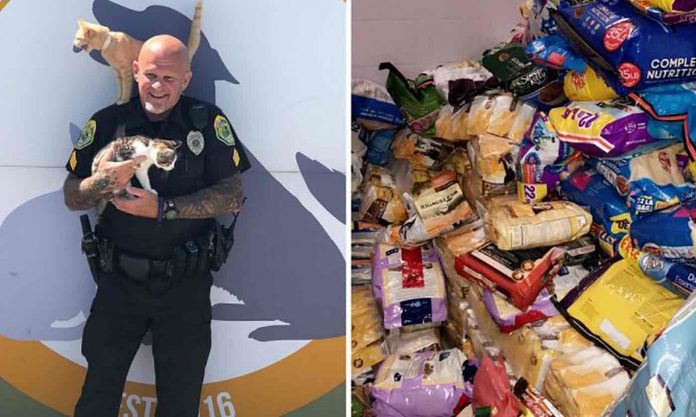
An Indiana police department has come up with a brilliant way to use their community services as a way to benefit their local animal shelter.
Earlier this month, the Muncie Police Department made several social media posts announcing that people with unpaid parking tickets could pay off their fines by donating pet supplies to Muncie Animal Care and Facilities.
“Until Friday [July 19th] at 4 PM, we are allowing folks to pay their parking tickets in cat food, kitten food, or kitty litter! Bring a donation in the amount of your ticket,” wrote the police department.
“The [shelter] is overrun with cats and kittens. We want to help!” they added.
Since shelter workers say that they have been caring for more than 350 cats and kittens over the course of the summer, they were in desperate need of supplies.
Thankfully, the two-day donation drive was an enormous success.
According to the Muncie police force, dozens of people donated cat food and litter—and many of them did not even have parking tickets.
This is not the first time that police departments have used unpaid tickets to benefit an organization in need. The city of Las Vegas only recently launched a program that allows people to pay off their speeding tickets with school supplies.
The Muncie police officers now hope that their donation drive will inspire other law enforcement teams to launch similar initiatives in their own cities.
Be Sure And Share This Pawesome News To Social Media…
Quote of the Day: “Despair is only for those who see the end beyond all doubt. We do not.” – J.R.R. Tolkien (first printed in The Fellowship of the Ring 65 years ago today)
Photo: by Stephen Gough, CC license on Flickr
With a new inspirational quote every day, atop the perfect photo—collected and archived on our Quotes page—why not bookmark GNN.org for a daily uplift?
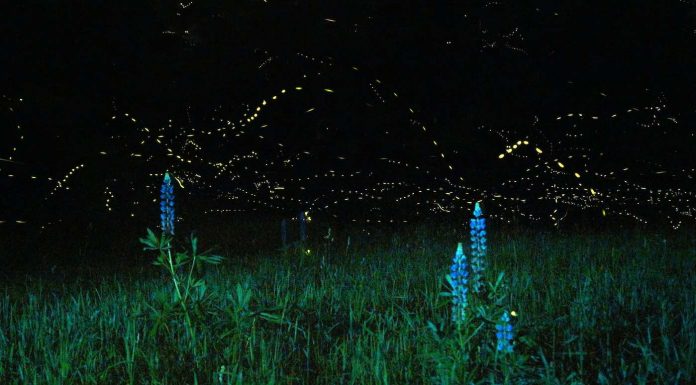
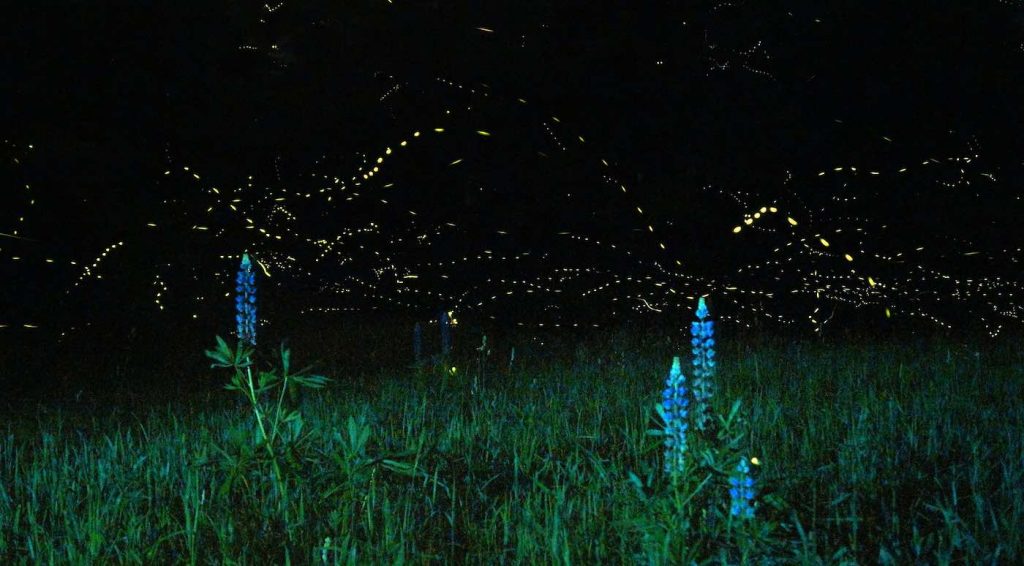
Summer is in full swing in the northern hemisphere, and with it comes longer days, more outdoor adventures, and evenings spent outdoors. For many of us, the arrival of summer is also synonymous with the arrival of fireflies. All across the central and eastern U.S. and Canada—and in small pockets of the West as well—fireflies can be seen performing their annual light show.
Fireflies have captured the human imagination for centuries. Their spectacular courtship displays elicit awe and delight in children and adults of all ages—yet their numbers appear to be dwindling.
One likely driver for this decline is ‘light pollution’. Put simply, fireflies need dark nights.
The bioluminescent beetles, which use various patterns of flashes and glows to communicate, can be outshone by bright lights from our cities, vehicles, roadways, and backyards. In fact, light pollution is impacting many species that are active at night or at dusk—including migrating birds.
Light pollution comes in several forms: skyglow (the haze over highly populated areas), light trespass (illumination that reaches beyond its intended or needed area), and glare (light that excessively illuminates areas or objects). These artificial light sources are increasing to the point that only a handful of areas in the U.S. and Canada are now truly dark at night.
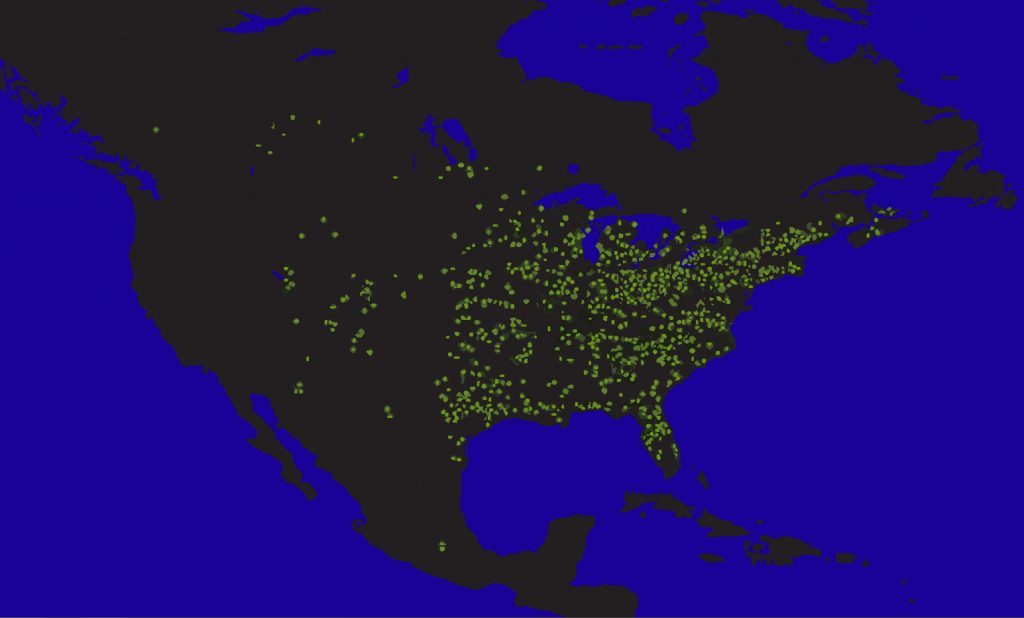
Firefly Distribution as determined by Mass Audubon’s Firefly Watch data 2008-2019 -by Xerces Society / Jenni Denekas
The problem is, it can cause changes in animal behavior and affect species’ distribution, activity periods, and, ultimately, reproductive success. Fireflies are particularly at risk—with too much light obscuring their natural bioluminescence and interrupting signals used for mating and warding off predators.
In celebration of World Firefly Day this month, and in support of fireflies everywhere, the Xerces Society for Invertebrate Conservation encourages you to consider the impact your lighting activities may have on our nighttime fauna. Being thoughtful about outdoor lighting can benefit not only fireflies but also other nocturnal animals such as moths, bats, and sea turtles.
The most important step is to reduce or eliminate unnecessary outdoor lighting. For fireflies, this is especially important in the summer when adults are active. Below are several other ways you can keep areas as dark as possible at night, while still keeping them safe for humans.
Recommendations to Help Fireflies:
In areas where lights cannot be turned off at night, consider the following options:
Swap bright light bulbs for dim red bulbs, which fireflies are less able to see—or filter existing bulbs to make them dimmer and redder.
Limit outdoor illumination to desired areas such as sidewalks or pathways:
Place landscape lighting low to the ground to reduce the lit area.
Shield lights so they point down, rather than radiating outward in all 360 degrees.
Use motion-detection and/or automatic timers so lights are on only as needed.
Limit the number of hours per day that lights are kept on.
Close your curtains or blinds at night when interior lights are on in order to reduce the amount of light that shines outside of your windows.
• Join or start a local chapter of the International Dark-Sky Association to advocate for local policies to control light pollution. In addition to helping fireflies and allowing people to appreciate the night sky, these initiatives often result in cost savings for municipalities and businesses—a win-win for all.
• Determine if your community is eligible for designation under the International Dark Sky Places Program, founded in 2001; if so, work with leaders to apply.
• Participate in community science dedicated to understanding the distribution and population trends of our many firefly species—Firefly Watch, a nationwide citizen science program run by Mass Audubon, and the Western Firefly Project, a western-focused project run by the Utah Natural History Museum.
Most hospital patients are excited to ring a “cancer-free bell” once they’ve finished with their medical treatment—but a new video is winning hearts across the internet because of the woman whose Texas-sized excitement was on display.
Since Darla Jaye was diagnosed with breast cancer back in February, she has undergone 30 rounds of chemotherapy and radiation.
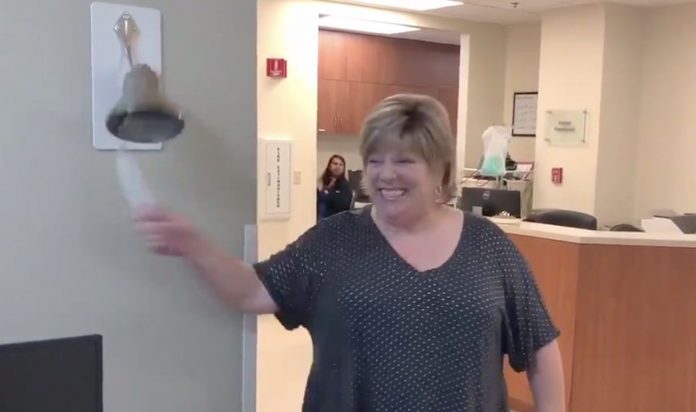
So when she finally finished with her last round of treatment at Harris Health System in Houston earlier this month, she was extremely delighted to get her hands on the hospital’s cancer-free bell.
As the nurses recorded Jaye excitedly announcing the end of her treatment, they caught the moment when she rang the bell so hard, the rope detached from the bell and went soaring through the air.
“I broke the bell,” she laughed. “That’s fantastic!”
The hospital staffers felt so proud of Jaye’s enthusiasm that they shared the sweet video on social media, expressed their admiration.
Jaye was also emotional over the symbolic ceremony. “I’ve looked forward to this day since February,” she told the hospital. “I was scared to death, but you guys saved my life!”
(WATCH the heartwarming video below)
Congratulations to @DarlaJaye1 She completed her last round of radiation treatment for breast cancer. She was so excited, she broke the bell! “I’ve looked forward to this day since February. I was scared to death, but you guys saved my life!” pic.twitter.com/4DnQmNGW9P
— Harris Health System (@harrishealth) July 15, 2019
Be Sure And Share The Sweet Story With Your Friends On Social Media…




















 Hear a serendipitous tale of blossoming community spirit in this week’s edition of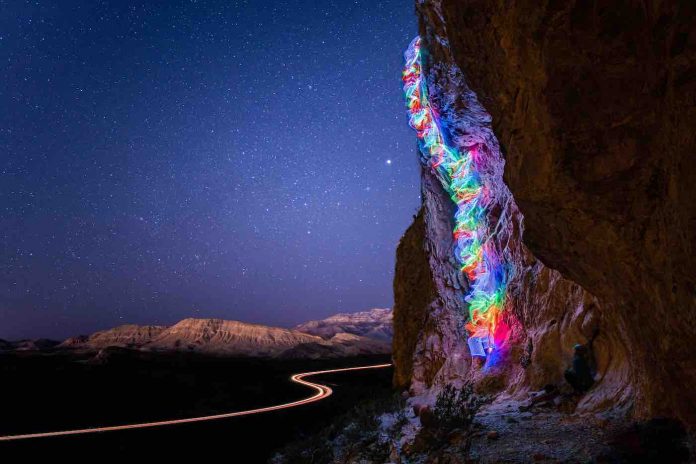




 Summer is in full swing in the northern hemisphere, and with it comes longer days, more outdoor adventures, and evenings spent outdoors. For many of us, the arrival of summer is also synonymous with the arrival of fireflies. All across the central and eastern U.S. and Canada—and in small pockets of the West as well—fireflies can be seen performing their annual light show.