Quote of the Day: “Gratitude is a sign of maturity. Where there is appreciation: there is also courtesy and concern for the rights and property of others.” – Gordon B. Hinckley
Photo: by Pablo Andres, CC license
With a new inspirational quote every day, atop the perfect photo—collected and archived on our Quotes page—why not bookmark GNN.org for a daily uplift?
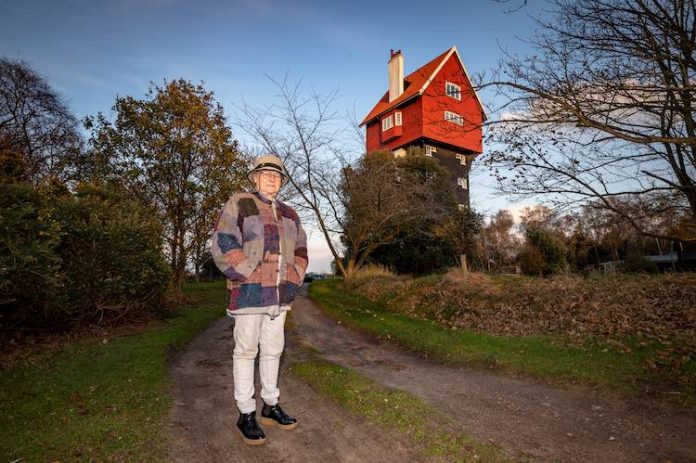
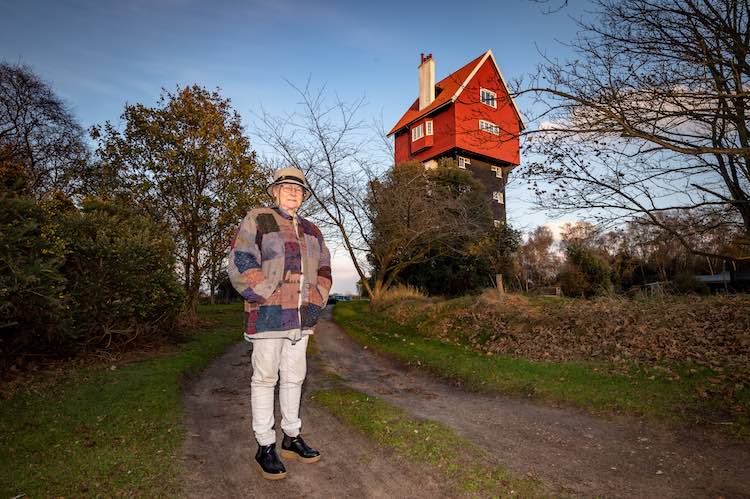
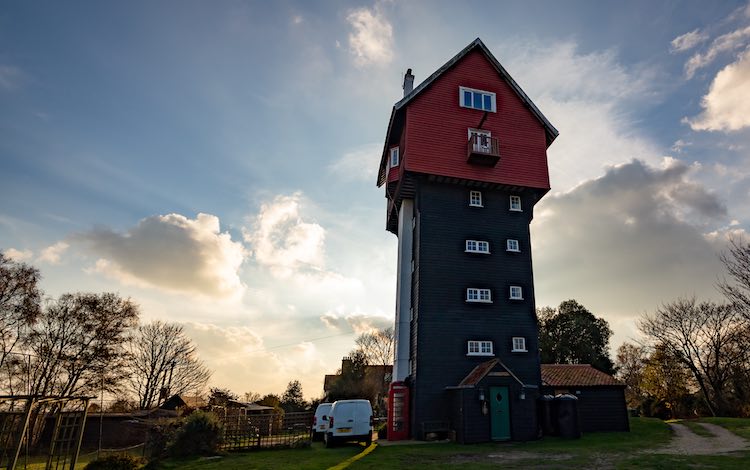
The stunning “House in the Clouds” is one of Britain’s tallest cottages and towers 70 feet above the surrounding landscape.
The 1920s structure was originally designed to hide an old water tower in the village, and included housing at the bottom for children’s author and poet Malcolm Mason.
Today it is the “fairytale home” of Sylvia Le Comber who has filled its interior with dozens of intricately crafted fairy dolls.
The fairies are scattered all around the house as a tribute to Mrs. Mason who featured them in her writings.
The 78-year-old, who actually uses the “fairy house” as her home, said: “I have changed very little since I bought the house in 1976. The house looks exactly as was in 1922.”
The 5-story-tall home provides five bedrooms – two with double beds, three with twin beds – three bathrooms, drawing room, dining room and one room at the top where the water tank holding 50,000 gallons had been located.
SWNS
There is also one acre of private grounds surrounding the home, in Thorpeness, Suffolk which includes a tennis court.
The structure was built in 1923 to provide Aldringham Mill with water but was turned into a family home with impressive views across the Suffolk Coast.
The house was originally converted for Mrs. Mason by the Ogilvie family – farmers who used to own the Thorpeness village. Sylvia, who is has now retired, said Mason authored a book filled with poems all about fairies. Granted the home by the Ogilvie family she lived there with her children, and named it ‘House in the Clouds’.
SWNS
Mason wrote in her book about the home: “The fairies really own this house or so the children say. In fact, all of them moved in upon the same day.”
“It is funny because the number of fairies I have is constantly rising,” adds Sylvia. “More fairies keep arriving at the home, they just appear all of a sudden because someone has come round and dropped one off.”
“There is more than 30 fairies around my house all different shapes and sizes as well. There are so many I can’t keep count. People who come and stay find the fairies all over the house and it surprises me, as well, sometimes.
SWNS
“It’s lovely, I have big giant mushrooms that have grown at the front of my house and they are for the ‘real’ fairies… Well, that is what I tell people.”
The grandmother of three says she is thankful to own a house which is a well-known landmark and says it is great for when her family comes to visit.
“All the children love the fantasy of the house, as they see the mushrooms outside the house and imagine the fairies flying to the mushrooms.”
SWNS
Sylvia, who says she loves to continue to fuel the imagination of her young guests, adds: “It is quite an extraordinary house … It is lovely when the whole family comes.”
(WATCH the video to see the interior below)
Be Sure And Share This Stunning Piece With Your Friends On Social Media
For the last 44 years, Deke Duncan has been spinning records from a studio in his garden shed for “the smallest audience in the country” – also known as his wife.
Because he did not have a radio license, Duncan was only able to ‘broadcast’ through a speaker placed in the living room of the home he shared with wife Teresa.
His friends in Stevenage, England would often join him for non-stop weekend broadcasts in which they would record all of their shows onto the same old spools of tape because they couldn’t afford to buy new ones.
Though Duncan and his wife now live in the Greater Manchester area, he still plays records for her through their own special little radio setup – but now, his lifelong wish of broadcasting to a wider audience is coming true.
Back in October, BBC Archives tweeted a video interview they did with Duncan back in 1974, and it immediately prompted a social media search to find the self-made DJ.
#OnThisDay 1974: "The station's entire audience has decided to go down the shops" Radio 77 held the dubious distinction of broadcasting to the smallest audience in the country. pic.twitter.com/xkUZnfAPpR
Dealey explained how – during Duncan’s vintage interview from almost half a century ago – he had mentioned that his “ultimate ambition” was to DJ for his city of Stevenage, which has a population of about 87,000 people.
The Three Counties host then played a recording of his station editor telling Mr. Duncan that they wanted him to be the DJ of his very own hour-long radio show over Christmas—playing music not only for one town, but for the hundreds of thousands of people living in Bedfordshire, Hertfordshire, and Buckinghamshire.
Back in 1974, Deke Duncan ran a radio studio in his garden shed which broadcast to just one person - his wife. His lifelong ambition was to broadcast to the whole of Stevenage ?
Now 73, the amateur DJ was beyond thrilled and emotional. “Pass the tissues,” he said, feeling speechless.
To top off the extraordinary saga, Host Dealey brought Deke Duncan back to the very home where he first started spinning records for his wife – and though the shed is no longer there, Duncan called the moment “magical”.
Deke Duncan and his Shed Radio story has gone viral. He’s waited 44 years for the credit he deserves. I love him. I took him back to his old house in Stevenage this morning where he built Radio 77. A station that was enjoyed by one person - his wife xxxx pic.twitter.com/jMXZQDbinK
You’re never too old to write a letter to Santa Claus – and now, a department store is offering to donate money to charity in exchange for your note.
For the eleventh year in a row, Macy’s is donating $1 for every letter to Santa for the first one million entries submitted on their website or through the red mailboxes located inside their stores.
All of the money pledged through their “Believe” campaign will be given to Make-A-Wish so the charity can grant the holiday wishes of sick children around the world.
Since 2003, Macy’s has donated more than $112 million to Make-A-Wish, including more than $17 million through the annual Believe campaign, helping grant more than 13,000 wishes and impact more than 2.6 million people, including wish kids and their families, volunteers, community groups, nurses, doctors, and more.
“National Believe Day brings our Macy’s colleagues and customers together to help celebrate the holiday season by giving back in a big way,” said Sam Harrison, vice president of giving and volunteerism at Macy’s. “The amazing wishes bring unmatched joy and hope to children and families across the country, and Macy’s is thrilled to support such wonderful moments.”
“We have collected millions of letters throughout the years – each one representing an individual who was moved by the message of hope, love and generosity,” she added. “The result has been the creation of a holiday tradition for families across the country, and ultimately, wish fulfillments that deliver joy and hope to the most amazing children. Macy’s is incredibly proud to play a part in that magic.”
If you want to send a letter, Macy’s will be accepting the messages until December 24th – so if you don’t have to pay for stamps, what are you waiting for?
Be Sure And Send This To Everyone On Your Nice List By Sharing It To Social Media – Photo by Macy’s
After nearly two decades of research, this doctor has finally been given the go-ahead to start turning thousands of pounds of biowaste into food.
Last Tuesday was a career-defining moment for Dr. Keerti Rathore after his work in growing edible cotton seeds was approved for commercialization by the U.S. Department of Agriculture’s Animal and Plant Health Inspection Service.
Rathore managed to develop the edible cotton seeds by silencing a gene in the seeds that produced a toxin called gossypol. Once the seeds are made edible, they reportedly taste similar to hummus.
Now that the seeds have been approved, edible cottonseed could be an effective way to feed millions of people. Being naturally high in protein, the plant is expected to be beneficial for individuals living in countries where the diet is primarily low-protein, plant-based diets. The seed could be ground into a flour and implemented into various recipes and cuisines, all while remaining low in cost and incredibly abundant in supply.
To illustrate the significance of this research and its potential, let’s do some quick math. Considering how the world produces 48.5 million tons of cotton each year, and each pound of cotton fiber produces 1.6 pounds of cottonseed, Rathore’s edible innovation could result in roughly 155 billion pounds of edible cottonseed annually, which would have a tremendous impact in the fight against world hunger and malnutrition.
“Growing up in rural India as the son of a doctor, I had seen the effects of malnutrition firsthand in my father’s patients,” said Rathore, according to AgriLife. “Many of their health issues were due to inadequate food and nutrition.”
By introducing this modified cotton for mass consumption, Rathore hopes to eradicate these issues. The seeds still need to be approved by the FDA, but Rathore is confident that it will receive the green light within the next few months.
In addition to its impact on world hunger and malnutrition, Rathore’s research could also lead to a significant increase in revenue for farmers and the cotton industry at large.
“I also realized the value to cotton farmers everywhere … because such a product is likely to improve their income without any extra effort on their part or additional input,” said Rathore. “Such a product can also be important from the standpoint of sustainability because farmers will produce fiber, feed and food from the same crop.”
Plant Some Positivity Amongst Your Friends By Sharing The News To Social Media – Photo by AgriLife Today
Quote of the Day: “I have a very strong feeling that the opposite of love is not hate – it’s apathy.” – Leo Buscaglia
Photo: by J. S., CC license
With a new inspirational quote every day, atop the perfect photo—collected and archived on our Quotes page—why not bookmark GNN.org for a daily uplift?
A 23-year-old Filipino inventor has just won a multi-thousand dollar prize for designing a cheap bamboo house that could be assembled in 4 hours.
Earl Forlales, who is from Manila, designed his “CUBO” housing as a means of solving the housing crisis in his home country. He drew inspiration for the innovative design from his grandparents’ bamboo cabin outside the city.
This week, the engineering grad was given the top $64,000 prize by the Royal Institute of Chartered Surveyors (RICS) for their Cities for Our Future competition. Forlales plans on using money to begin construction on the houses during the coming year.
Materials for the modular CUBO homes cost just $64 (£50) to manufacture—and growing the sustainable material will release 35% more oxygen than trees would, without causing soil degradation. He estimates being able to rent the housing for 0.20£ per person per day.
“The world’s cities are growing all the time and there is a real need to make sure they are safe, clean and comfortable places to live for future generations,” said John Hughes, the competition’s head judge and Rics president.
“There were many exciting, original designs among the submissions. However, Earl’s idea stood out for its simple yet well thought through solution to the world’s growing slum problem.
“As we look at our entrants, who are our next generation of leaders, I believe that real progress will be made in tackling the world’s biggest issues.”
See an overview video of how this design can serve as a great alternative for very low-income housing… (Note: The audio is only music, so you can turn speaker down.)
Build Some Positivity By Sharing The Good News With your Friends On Social Media
It’s been almost fifty years since John Metzler received the Christmas card from Donna Caye that meant so much to him.
At the time, he was a 23-year-old helicopter sniper who was in the middle of fighting in the Vietnam War – and while his time overseas was brutal, he says there was one thing that kept him going: a small note that was mailed to him on Christmas Day from a little girl back in the United States.
Caye, who was in the sixth grade at St. Mark’s Lutheran Church and School, wrote inside the card: “Dear Serviceman … I want to give my sincere thanks for going over to war to fight for us. The class hopes you will be able to come home.”
Metzler is now a 71-year-old Army veteran, but he still keeps the card on a shelf in his Wendell, Idaho home.
“Fact is I think it means more today than it did when I got it,” John told CBS News.
He recently asked his family members to try and track Caye down so he could meet her, but they told him they couldn’t find her. Little did he know, however, his family had found Caye—and they arranged for her to fly out to Idaho from her home in Florida so she could surprise Metzler.
Needless to say, their meeting was incredibly emotional.
(WATCH the tear-jerking video below or our international viewers can watch it on the CBS website) – Photo by CBS News
Be Sure And Share This Amazing Story With Your Friends On Social Media
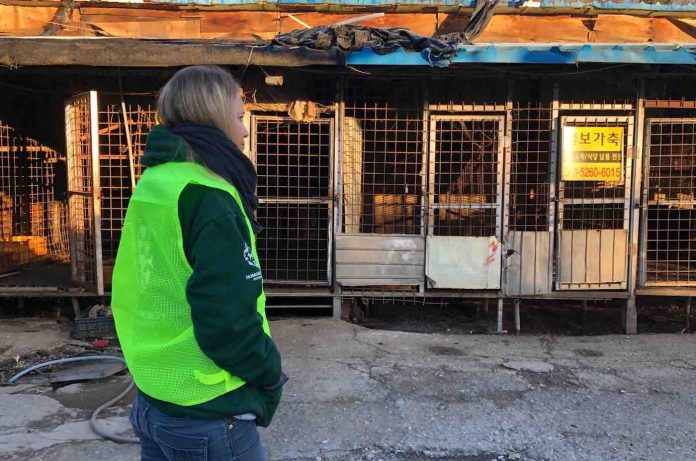
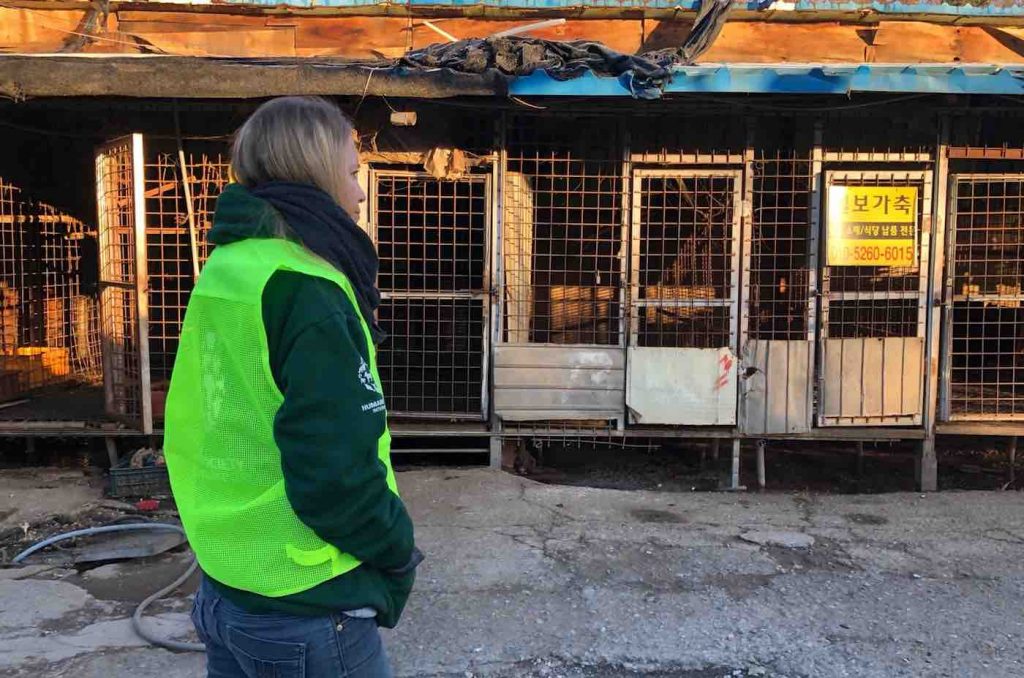
Animal rights activists are rejoicing over South Korean officials closing down the largest dog meat slaughterhouse in the country.
The Taepyeong-dong complex in Seongnam previously hosted six slaughterhouses that supplied much of the country’s demand. This week, however, officials started tearing down the facilities and turning the grounds into a public park.
The closure of the complex comes at a time when dog meat consumption is declining rapidly in South Korea, particularly among younger generations. A survey from June shows that 70% of South Koreans say they will not eat dog meat in future, and a series of recent moves to curb the dog meat trade reflects a society increasingly ill at ease with the practice.
In April this year, a district court in Bucheon fined a farmer under the Animal Protection Act for unlawful animal slaughter, ruling that meat consumption was not a legal justification to kill dogs. In August, Seoul City announced there will be no more dog slaughterhouses at Kyungdong Market in Dongdaemun. In that same month operators of an illegal dog slaughterhouse were prosecuted for water pollution, and President Moon Jae-In’s Blue House pledged to consider removing dogs and cats from the legal definition of livestock.
“Both as a Korean citizen and an animal campaigner, it was incredibly moving for me to a part of the historic closure of this notorious dog slaughterhouse,” said Nara Kim of Humane Society International in a statement.
By Michael Bernard, Humane Society International
“This really feels like a landmark moment in the demise of the dog meat industry in South Korea, and sends the clear message that the dog meat industry is increasingly unwelcome in Korean society.”
Be Sure And Share The Good News With Your Friends On Social Media…
What happens to those who behave unselfishly and make sacrifices for the sake of others? You might be surprised to hear that greed may not be the path to prosperity.
According to an interdisciplinary study by researchers from Stockholm University, the Institute for Futures Studies, and the University of South Carolina, unselfish people tend both to receive higher salaries, in comparison to more selfish people.
“The result is clear in both the American and the European data. The most unselfish people receive the highest salaries. And we also find this result over time – the people who are most generous at one point in time have the largest salary increases when researchers revisit them later in time,” says Kimmo Eriksson, researcher at the Centre for Cultural Evolution at Stockholm University and one of the authors of the study.
The results of the study, which have now been published in the Journal of Personality and Social Psychology, are contrary to theories that selfish people manage to get their hands on more money through their selfishness, as suggested in previous research.
Previous psychological and sociological research has shown that unselfish people are happier and have better social relationships, but this study focuses on unselfishness from an economical and evolutionary perspective.
In this collaboration with the Institute for Futures Studies and the University of South Carolina, researchers at Stockholm University have looked at how selfishness relates to income and family size. Selfishness was measured partly through attitudes and partly through reported behaviors according to the analyses of four major studies of Americans and Europeans.
Unselfishness is defined in the study as the desire to help others because you care about their welfare. Therefore, attitudes concern how important a person thinks it is to help others and care about their welfare. The behaviors concerned how often and how much the person engaged in various help behaviors, e.g. giving money or their time to help others.
“In a separate study, we examined the expectations of ordinary people to see if their expectations aligned with our data. The results of this study showed that people generally have the correct expectation that selfish people have fewer children, but erroneously believe that selfish people will make more money. It is nice to see that generosity so often pays off in the long run,” says Pontus Strimling, one of the authors behind the study.
The authors themselves believe that improved social relationships may be the key to generous peoples’ success from an economic perspective, but note that their research does not definitely answer this question.
“Future research will have to delve deeper into the reasons why generous people earn more, and look at whether the link between unselfishness, higher salaries and more children also exists in other parts of the world. And it is of course debatable how unselfish it really is to have more children,” says co-author Brent Simpson of University of South Carolina.
Quote of the Day: “Whether the glass is half-empty or half-full depends on what one is drinking.” – Kim Wood
Photo: by Evangelio Gonzalez, CC license
With a new inspirational quote every day, atop the perfect photo—collected and archived on our Quotes page—why not bookmark GNN.org for a daily uplift?
After six days of failed rescue attempts and dropping food down the pipe for Jamie, animal welfare charity RSPCA was finally called to the house in Bridgwater, Somerset – and animal welfare officer Alison Sparkes leapt to the rescue with a tiny handcrafted ladder, one-meter-long cut some from old wire mesh.
And sure enough, the trapped pet managed to clamber up the ladder to safety.
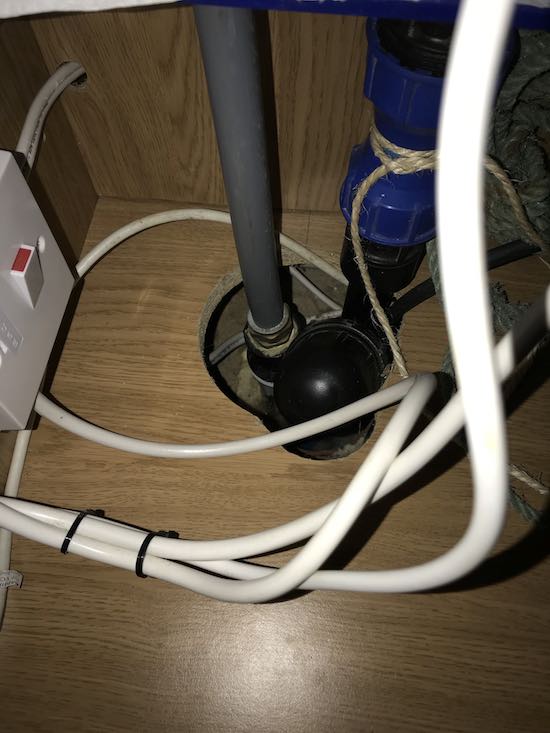
Alison said: “Jamie was being looking after by a friend of his owner when he escaped and went down a 10cm-wide pipe that housed the water pipes.
SWNS
“This vertical pipe was one-meter-deep.
“The gap between the water pipes he squeezed through was about 4cm wide and was impossible to look down the pipe due to the pipes inside it.
“They’d dropped a piece of thin rope down hoping he would climb up but after six days, still no luck so they called us.”
Alison added: “We knew he was ok as they’d been dropping food down and could hear him eating.
“So I went home and cut a one-meter-long ladder (pictured) from some old wire mesh, then went back, fitted it in the pipe and that night he emerged. Very thirsty, but ok.”
SWNS
Be Sure That You Share This Sweet Rescue Story With Your Friends On Social Media – Photos by SWNS
MIT engineers fly first-ever plane with no moving parts The silent, lightweight aircraft doesn’t depend on fossil fuels or batteries.
Written by Jennifer Chu MIT News
Since the first airplane took flight over 100 years ago, virtually every aircraft in the sky has flown with the help of moving parts such as propellers, turbine blades, and fans, which are powered by the combustion of fossil fuels or by battery packs that produce a persistent, whining buzz.
Now MIT engineers have built and flown the first-ever plane with no moving parts.
Instead of propellers or turbines, the light aircraft is powered by an “ionic wind” — a silent but mighty flow of ions that is produced aboard the plane, and that generates enough thrust to propel the plane over a sustained, steady flight.
Unlike turbine-powered planes, the aircraft does not depend on fossil fuels to fly. And unlike propeller-driven drones, the new design is completely silent.
“This is the first-ever sustained flight of a plane with no moving parts in the propulsion system,” says Steven Barrett, associate professor of aeronautics and astronautics at MIT. “This has potentially opened new and unexplored possibilities for aircraft which are quieter, mechanically simpler, and do not emit combustion emissions.”
He expects that in the near-term, such ion wind propulsion systems could be used to fly less noisy drones. Further out, he envisions ion propulsion paired with more conventional combustion systems to create more fuel-efficient, hybrid passenger planes and other large aircraft.
Barrett and his team at MIT have published their results today in the journal Nature.
Barrett says the inspiration for the team’s ion plane comes partly from the movie and television series, “Star Trek,” which he watched avidly as a kid. He was particularly drawn to the futuristic shuttlecrafts that effortlessly skimmed through the air, with seemingly no moving parts and hardly any noise or exhaust.
“This made me think, in the long-term future, planes shouldn’t have propellers and turbines,” Barrett says. “They should be more like the shuttles in ‘Star Trek,’ that have just a blue glow and silently glide.”
About nine years ago, Barrett started looking for ways to design a propulsion system for planes with no moving parts. He eventually came upon “ionic wind,” also known as electroaerodynamic thrust — a physical principle that was first identified in the 1920s and describes a wind, or thrust, that can be produced when a current is passed between a thin and a thick electrode. If enough voltage is applied, the air in between the electrodes can produce enough thrust to propel a small aircraft.
For years, electroaerodynamic thrust has mostly been a hobbyist’s project, and designs have for the most part been limited to small, desktop “lifters” tethered to large voltage supplies that create just enough wind for a small craft to hover briefly in the air. It was largely assumed that it would be impossible to produce enough ionic wind to propel a larger aircraft over a sustained flight.
“It was a sleepless night in a hotel when I was jet-lagged, and I was thinking about this and started searching for ways it could be done,” he recalls. “I did some back-of-the-envelope calculations and found that, yes, it might become a viable propulsion system,” Barrett says. “And it turned out it needed many years of work to get from that to a first test flight.”
The team’s final design resembles a large, lightweight glider. The aircraft, which weighs about 5 pounds and has a 5-meter wingspan, carries an array of thin wires, which are strung like horizontal fencing along and beneath the front end of the plane’s wing. The wires act as positively charged electrodes, while similarly arranged thicker wires, running along the back end of the plane’s wing, serve as negative electrodes.
The fuselage of the plane holds a stack of lithium-polymer batteries. Barrett’s ion plane team designed a power supply that would convert the batteries’ output to a sufficiently high voltage to propel the plane. In this way, the batteries supply electricity at 40,000 volts to positively charge the wires via a lightweight power converter.
Once the wires are energized, they act to attract and strip away negatively charged electrons from the surrounding air molecules, like a giant magnet attracting iron filings. The air molecules that are left behind are newly ionized, and are in turn attracted to the negatively charged electrodes at the back of the plane.
As the newly formed cloud of ions flows toward the negatively charged wires, each ion collides millions of times with other air molecules, creating a thrust that propels the aircraft forward.
The team flew the plane in multiple test flights across the gymnasium in MIT’s duPont Athletic Center — the largest indoor space they could find to perform their experiments. The team flew the plane a distance of 60 meters (the maximum distance within the gym) and found the plane produced enough ionic thrust to sustain flight the entire time. They repeated the flight 10 times, with similar performance.
“This was the simplest possible plane we could design that could prove the concept that an ion plane could fly,” Barrett says. “It’s still some way away from an aircraft that could perform a useful mission. It needs to be more efficient, fly for longer, and fly outside.”
The new design is a “big step” toward demonstrating the feasibility of ion wind propulsion, according to Franck Plouraboue, senior researcher at the Institute of Fluid Mechanics in Toulouse, France, who notes that researchers previously weren’t able to fly anything heavier than a few grams.
“The strength of the results are a direct proof that steady flight of a drone with ionic wind is sustainable,” says Plouraboue, who was not involved in the research. “[Outside of drone applications], it is difficult to infer how much it could influence aircraft propulsion in the future. Nevertheless, this is not really a weakness but rather an opening for future progress, in a field which is now going to burst.”
Barrett’s team is working on increasing the efficiency of their design, to produce more ionic wind with less voltage. The researchers are also hoping to increase the design’s thrust density — the amount of thrust generated per unit area. Currently, flying the team’s lightweight plane requires a large area of electrodes, which essentially makes up the plane’s propulsion system. Ideally, Barrett would like to design an aircraft with no visible propulsion system or separate controls surfaces such as rudders and elevators.
“It took a long time to get here,” Barrett says. “Going from the basic principle to something that actually flies was a long journey of characterizing the physics, then coming up with the design and making it work. Now the possibilities for this kind of propulsion system are viable.”
A couple from Louisiana has over a million more reasons to be thankful this year thanks to a little last-minute holiday cleaning.
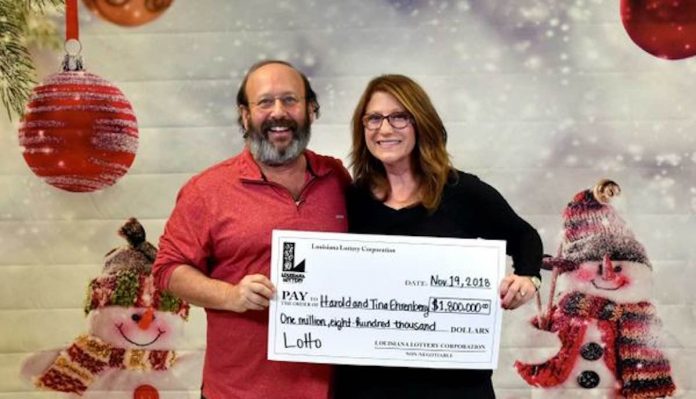
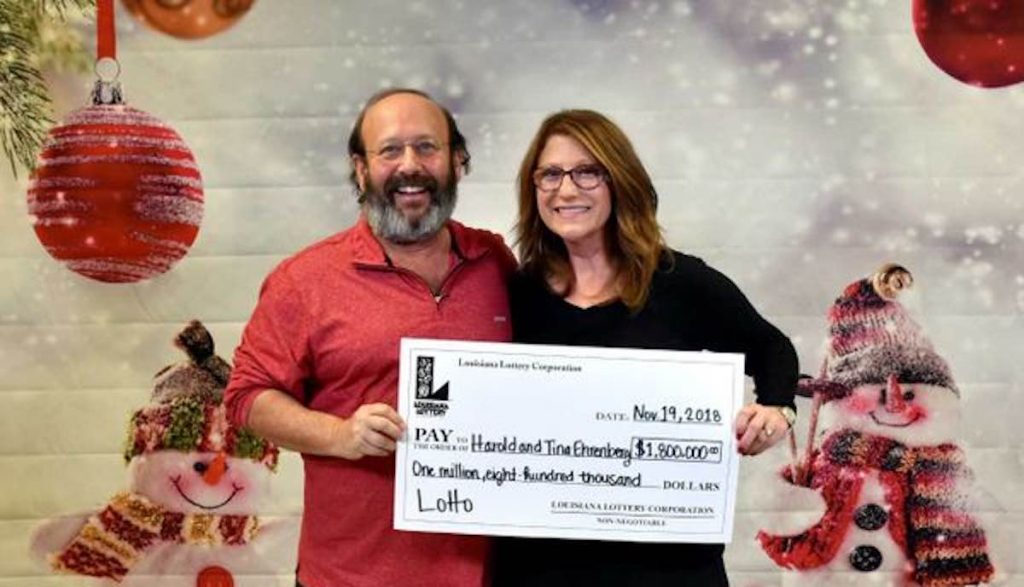
Harold and Tina Ehrenberg from Mandeville were tidying up their house in preparation for Thanksgiving guests when they found a few unchecked lottery tickets among some papers on their bedside table.
“We [had] family coming into town for Thanksgiving, so I was cleaning up the house and found a few lottery tickets on my nightstand that we hadn’t checked,” Tina recalled.
Upon checking the numbers on the lottery website, they found that they had a $1.8 million winning ticket from June.
It’s a good thing that they checked the numbers, too – since the prize needs to be claimed within 180 days of the drawing, the Ehrenbergs only had two weeks left to climb their prize.
Despite winning the staggering amount of money, the couple won’t be blowing all their cash on fancy cars. Instead, they will be putting the money into a retirement fund.
“We don’t have any plans to buy anything crazy or go on any big trips,” Tina explained. “The most fun is going to be depositing that check!” Harold added.
Inspire Your Friends With This Lucky Story By Sharing It To Social Media – Photo by Louisiana Lottery
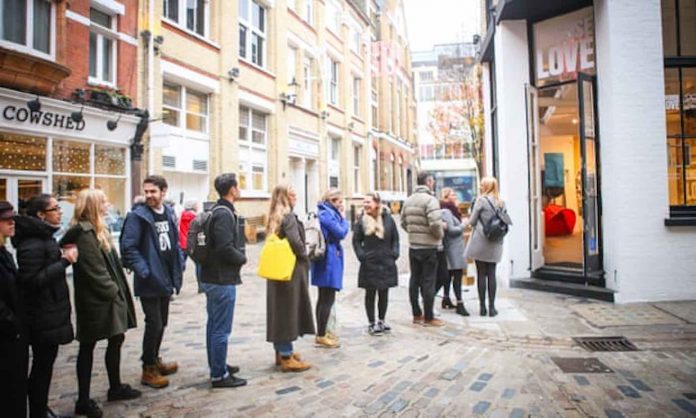
While some people might be lining up on Black Friday to jump on the latest holiday bargains, these people are lining up outside of a unique pop-up store so they can buy holiday gifts for refugees.
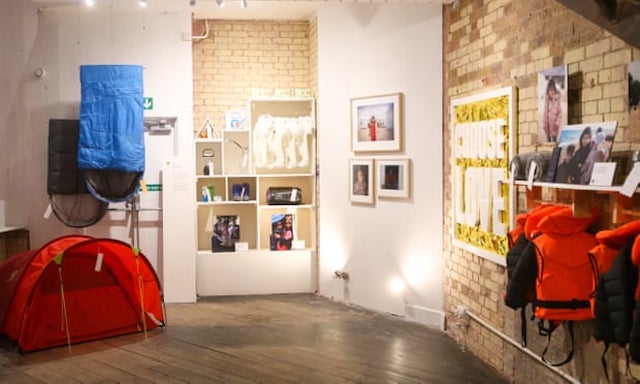
Choose Love is a shop that is stocked with important items and resources that customers can buy for refugees in need – or as the store puts it, customers can “shop your heart out, leave with nothing, and feel the love”.
The shop is stocked with everything from emergency blankets, tents, warm clothing, and hygienic supplies to educational materials and keys to a home. All of the items purchased at the Choose Love pop-ups are then distributed across Europe and the Middle East.
According to Help Refugees, the nonprofit behind the initiative, their charitable efforts in 2017 collectively raised the equivalent of $962,000 (£750,000).
The charity was so successful with its location in London last year, it also opened up a secondary location in New York City for 2018.
Additionally, the shops will now be stocked with sleeping bags and supplies that can be purchased for homeless groups in the UK and US.
“Christmas is a time of giving in abundance, but it makes you think about people who aren’t as lucky as we are,” Josie Naughton, the chief executive of Help Refugees, told The Guardian. “When you look at the stats of how much money is spent on Black Friday and compare that to the need in the world, it’s quite shocking.
“We just really wanted to show there was another way to look at consumerism and another way to look at Black Friday.”
Be Sure And Share The Inspiring New With Your Friends On Social Media – Photos by Alex Green / Help Refugees
A 6th grader is being hailed for their honesty after they saved a young college student from having to open his wallet for unintentional car damage.
Andrew Sipowicz, who is a senior student at Canisius College, was upset when he approached his car earlier this week and found that another vehicle had damaged his 2012 Ford Mustang.
But his mood changed when he found a note tucked under the windshield.
The note was written by a sixth grader from Houghton Academy in Buffalo, New York. The message detailed how the student had seen their school bus driver trying to pull out into the road when she hit Sipowicz’s car and fled the scene.
“Shoutout to the anonymous 6th grader for saving me a couple thousand (Bus not drawn to scale),” wrote Sipowicz. The photos later ended up being shared hundreds of thousands of times.
Sipowicz says that he has since been in touch with the school bus company to initiate the insurance process. The company will reportedly be paying for the car’s repairs and giving Sipowicz a loaner car while his Mustang is in the shop.
Be Sure And Drive This Story To Your Friends By Sharing It To Social Media
Quote of the Day: “In the absence of longing, in the absence of doubt, will be the solutions and abundance that you seek.” – Esther Hicks
Photo: by brentolson, CC license
With a new inspirational quote every day, atop the perfect photo—collected and archived on our Quotes page—why not bookmark GNN.org for a daily uplift?
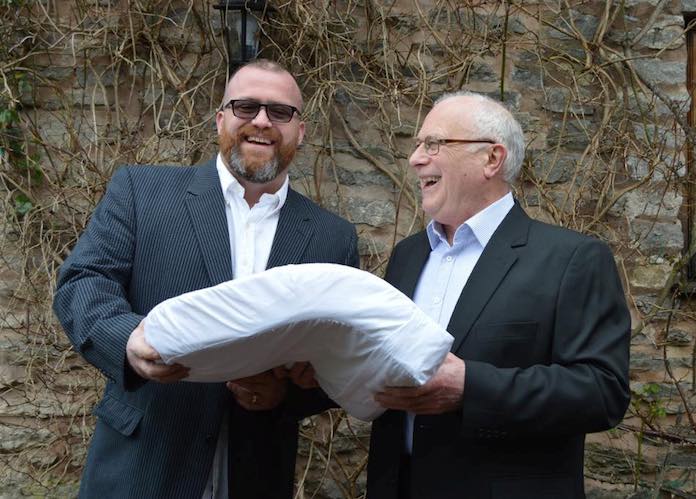
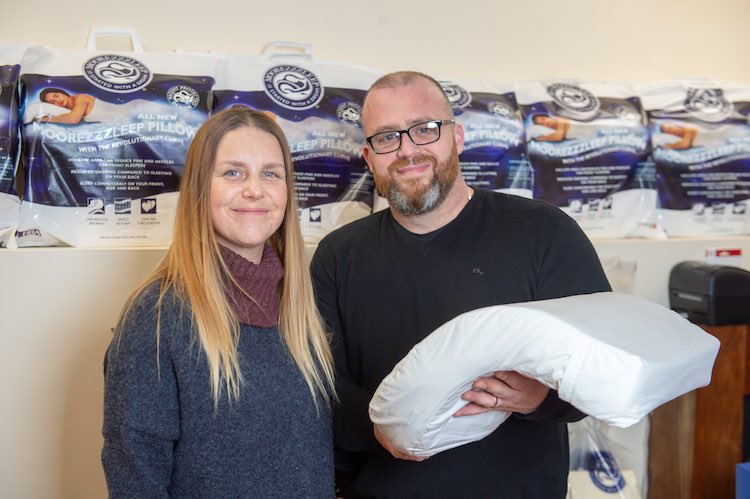
After years of strife, this cabbie says that he saved his marriage by inventing a pillow to stop himself from snoring.
42-year-old Phil Moore was forced to sleep alone for five years because his loud snoring was too much for his 43-year-old wife Stephanie, banished to nights on the living room sofa.
His loud wheezing and spluttering, which sounds like a “steam train”, caused a rift in the marriage – and left Stephanie in tears at the end of the bed.
But Phil had a revelation when he designed a pillow to stop the snoring – and ironically, the idea came to him in a dream.
And now, the pillow is hitting shop shelves after a chance encounter with a patent lawyer in the back of his cab.
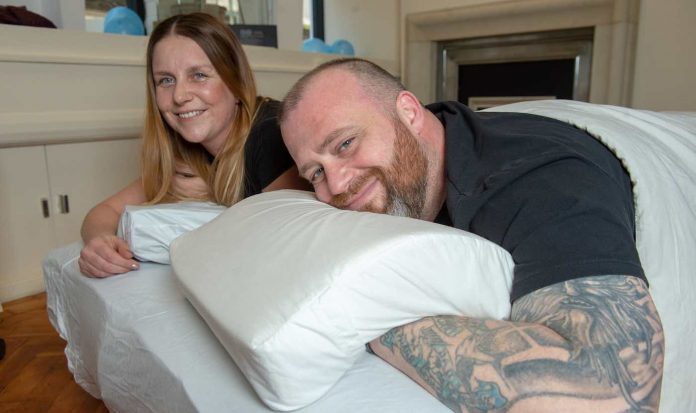
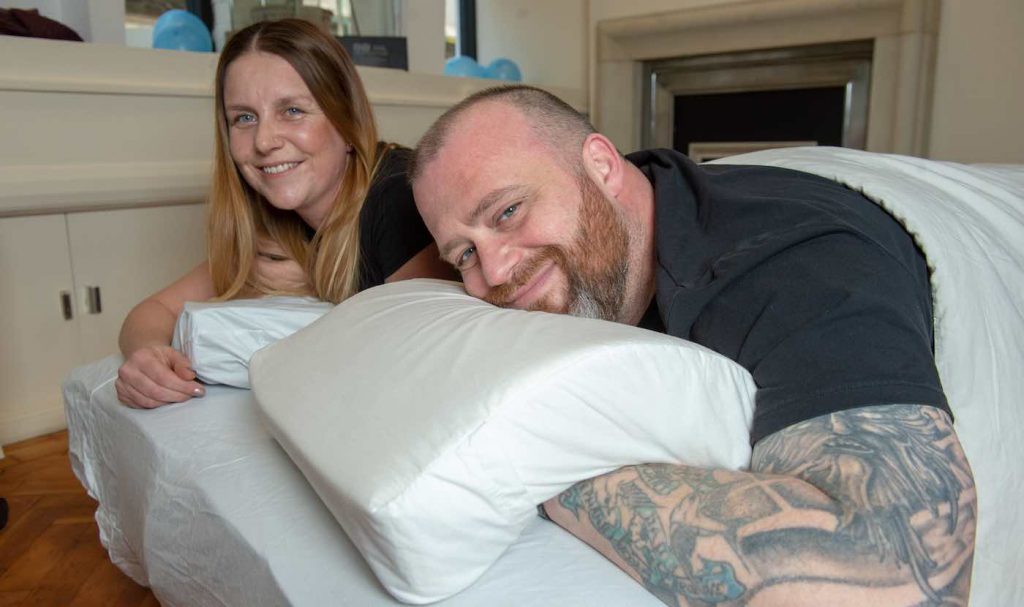
The special pillow, which costs £169 ($217), is flexible with a raised center so that people can sleep on their fronts and place their hands comfortably underneath.
Phil said: “My wife was at her wit’s end. I remember her sitting crying on the end of the bed. She’s been through a lot. It was putting so much strain on our marriage and became really difficult to cope with.
SWNS
“When our boy was born it was really tough. The baby would wake up in the night and then she wouldn’t be able to get back to sleep because of my snoring. Then one day I woke up with the idea – and I said to my wife, ‘here, I’ve dreamt of this thing’.
“It’s scientifically proven that sleeping on your front reduces snoring, but unfortunately, it’s the most uncomfortable position to sleep in. I used to wake up with pins and needles from lying on my arms.
“This way, you can lie on your front and reduce snoring.”
Phil and Stephanie, who live in Seaford, East Sussex., have three children: Rosaria, 21, Laila-Mae, 17, and Harrison, 10.
Stephanie, who helps run the pillow business, said: “Phil has snored for years. It sounds like a train – he had his mouth wide open and head back all through the night.
SWNS
“I would nudge him to roll onto his front, and he still snored, but not as a bad.
“I was sleeping downstairs on the sofa for five years. Not sleeping in the same room for years isn’t nice, [but] I just couldn’t bear it anymore. The living room became my bedroom.
“We would argue and it felt like were going out of sync even though we loved each other.
“I filmed him [snoring] on a few occasions and he was quite embarrassed,” says Stephanie. “Those videos won’t see the light of day.
“I would push my hand under his chin in the dead of night to see if it would help and it would stop for a few seconds. Imagine my relief to experience silence. Then when I removed my hand, he would start again.”
On the firm’s website, it is described as “the ideal pillow for side sleepers, front sleepers and back sleepers” and has a “flexible curved shape, with a distinctive hollow area for your arms”.
The description says it “enables you to lay comfortably on your front or side” and “keeps your head and neck supported when lying on your back”.
Pillowcases cost £19.99 and are available in cream or white.
(WATCH the video below)
Don’t Let Your Friends Sleep On This Story: Share It To Social Media
While some employers might be celebrating the season of giving by mailing out some greeting cards, this company founder is going above and beyond to show his employees how much he appreciates their work.
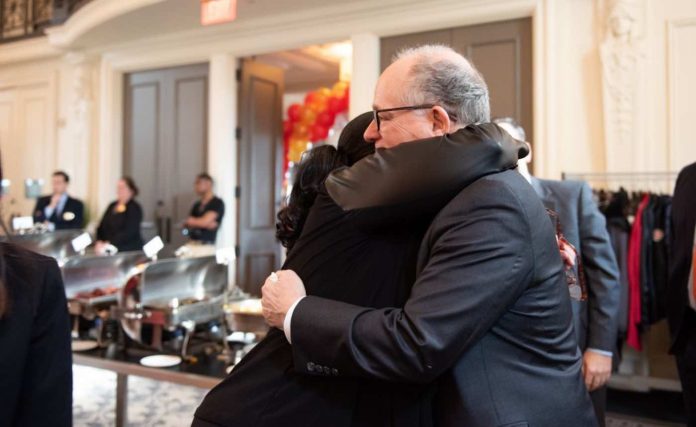
Mark Baiada, the chairman and founder of Bayada Home Health Care, was hosting a staff luncheon for his employees at the Bellevue Hotel in Philadelphia earlier this week when he said that he had a surprise for them.
“I’m taking $20 million, dividing it up and giving it to everybody,” Baiada tearfully told the crowd. “I wanted to show some gratitude to everybody for all the hard work you’ve done taking care of our clients.”
Needless to say, there was not a dry eye in the audience.
The Philly-based private-nursing company is worth $1.4 billion. It currently boasts a staff of 32,000 people who received varying amounts of money based on their seniority with the company. Some long-time staffers were given thousands of dollars, while new hires received more modest sums. Even former workers who retired from the company after 2010 reportedly received checks in the mail.
“I just want to say thank you to them all,” Baiada told CBS Philly. “Thanksgiving is a season of gratitude. You look around your life and say, ‘I’m so fortunate.’”
This will not be Baiada’s only gesture of compassion during the winter season, either – the 71-year-old says that he plans on converting his business into a nonprofit in January so they can start “putting mission over money”.
(WATCH the emotional interview below or our international viewers can watch it on the CBS website) – Photo by Bayada Home Healthcare
Be Sure And Share This Sweet Story Of Giving With Your Friends On Social Media
A Thanksgiving Day message from GNN Founder, Geri Weis-Corbley:
We have a new book coming out—a collection of 28 of the most inspiring stories published in the first 20 years of the Good News Network. (Sign up here and be notified about when and where to buy it!)
Happy Thanksgiving to all those around the world celebrating today the abundance of every moment on this planet… xxoo from the GNN team