Quote of the Day: “The best and most beautiful things in the world cannot be seen or even touched. They must be felt with the heart.” – Helen Keller
Photo: by Michell Zappa – CC license on Flickr, cropped
With a new inspirational quote every day, atop the perfect photo—collected and archived on our Quotes page—why not bookmark GNN.org for a daily uplift?
Queen Abigail—or “Abi”—was only five months old when she was rescued as a little orphaned kangaroo.
That being said, she still insists on starting each of her mornings by hugging her human family.
Abi was rescued and hand-reared by the wildlife specialists at the Kangaroo Sanctuary Alice Springs in Australia about 12 years ago—and she has consistently showed her love to the rescuers by giving them hugs almost every single day ever since.
“Abi came to me as an orphan of 5 months old and was quite busted up with cuts and scrapes,” one of the sanctuary caretakers wrote on Facebook in 2013. “And [she] is my only kangaroo who comes up and gives a great big rugby tackle cuddle.”
You might recognize Abi’s hugs from a viral video that was published by the sanctuary back in 2016—and it’s not hard to see why it won the hearts of more than a million people.
Thankfully, the sanctuary’s more recent social media posts show that Abi is still just as happy—and snuggly—as she was several years ago.
(WATCH the adorable video below)
Be Sure And Share This Sweet Story With Your Friends On Social Media…
Getting sober is already a challenge, but it can also be difficult to stay on the wagon when drinking and hanging out in bars is such a common social activity for adults.
Thankfully, “sober bars” like the Cherokee Recovery Village in Bastrop, Texas are providing recovered addicts and alcoholics with a space for community, fun, and sobriety support.
Instead of serving beer and liquor, the bar serves beverages like kombucha and coffee. Additionally, they host events like karaoke nights, fundraisers, and community dinners.
Not only has the bar appealed to people undergoing the 12-step program, it has also appealed to people experimenting with the health benefits of sobering up for shorter periods of time.
Cherokee Recovery Village owner Paul French, who is a licensed chemical dependency counselor as well as a former addict, says the bar helps recovering alcoholics become adjusted to typical bar environments without feeling tempted to drink.
“This is exposing yourself to triggers intentionally to weaken those triggers,” he told KEYE in the interview below. “It will allow you to eventually go into establishments where there’s drinking and partying and craziness and it won’t affect you as strongly as it did.”
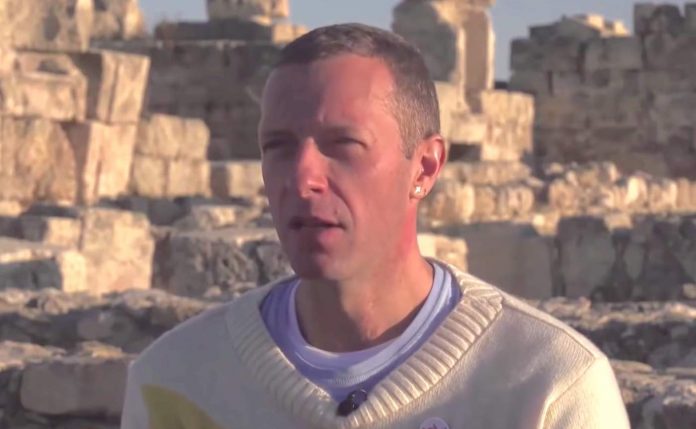
Earlier this week, English rock band Coldplay announced that they will be not being touring their music until they could find a way to make their shows more sustainable.
Frontman Chris Martin told BBC in an interview that the band hoped to delay touring their new album for the next one or two years—at least until they could play their concerts without distributing single-use plastics or using excessive airplane fuel for international transportation
“Our next tour will be the best possible version of a tour like that environmentally. We would be disappointed if it’s not carbon neutral,” Martin told the news outlet. “The hardest thing is the flying side of things. But, for example, our dream is to have a show with no single use plastic, to have it largely solar powered.
“We’ve done a lot of big tours at this point,” he added. “How do we turn it around so it’s no so much taking as giving?”
The last time that Coldplay embarked on a world tour, they reportedly played 122 shows across 5 continents. With their new album Everyday Life set to be released on November 22nd, the band hopes the record and its eventual tour will help raise awareness for how musicians and individuals can fight the climate crisis.
Coldplay will be playing a show in London at the Natural History Museum later this week, although all of the proceeds from the concert will reportedly be donated to an environmental charity. Additionally, they will be celebrating the album’s release with two shows in Jordan, the entirety of which will be livestreamed on YouTube.
(WATCH the BBC interview below) – Photo by BBC
You Don’t Have To Be A Scientist To Share This Great News With Your Friends On Social Media…
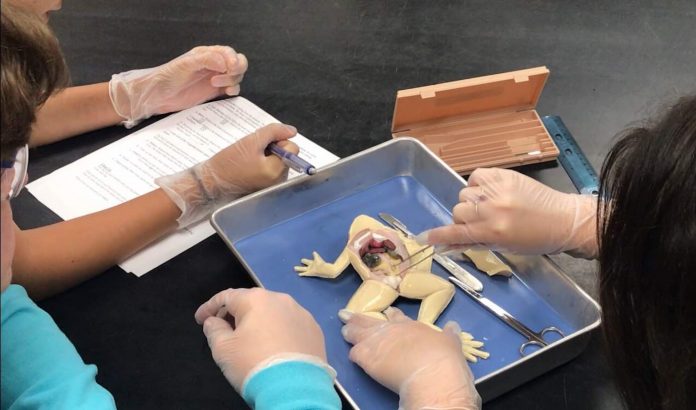
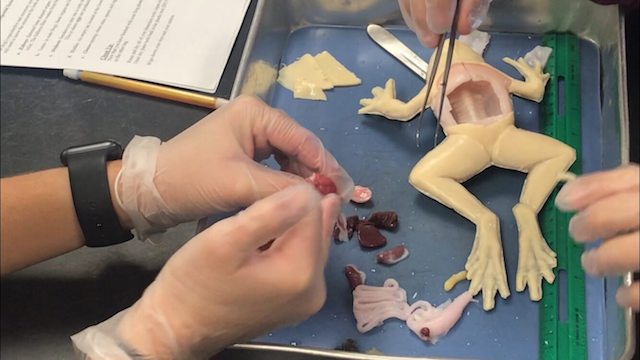
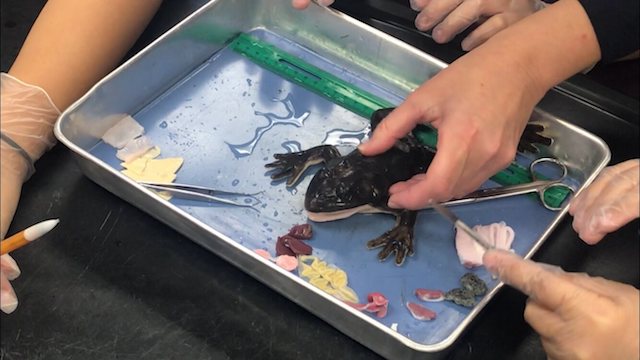
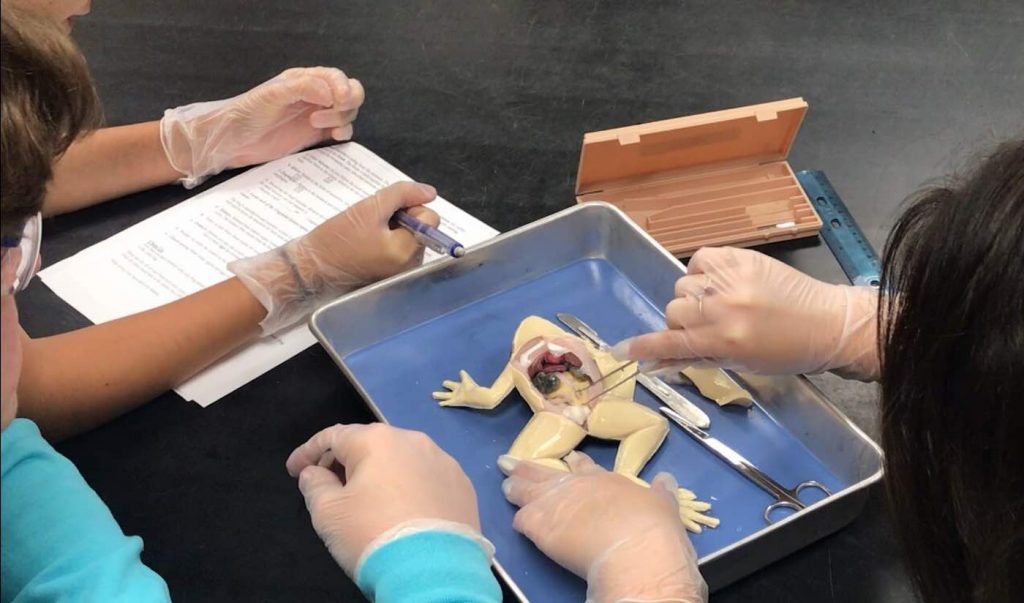
Dissecting frogs in science class may soon be a thing of the past thanks to these life-like replicas.
Earlier this week, nearly 100 students at J.W. Mitchell High School in New Port Richey, Florida were able to try a revolutionary new educational tool: the SynFrog, a hyper-realistic synthetic frog that can completely replace the use of frogs for dissection in K–12 and collegiate science classes.
At least 3 million frogs are killed annually for such lessons. In addition to contributing to declining frog populations, frog dissections can also discourage queasier students from taking more of an interest in science.
Photo by Syndaver
That’s why SynDaver—the world’s leading manufacturer of hyper-realistic, synthetic human and animal surgical trainers—partnered with PETA to create the true-to-life, hands-on dissectible frog so that it is almost indistinguishable from real ones.
Unlike the preserved bodies of dead frogs, which are bathed in chemicals and have monochromatic organs that are difficult to differentiate, the SynFrog is free of formaldehyde and formalin and contains removable and anatomically correct organs that accurately mimic living tissue.
“PETA has promoted virtual dissection for years, but some teachers still request ‘hands-on’ teaching tools—and that’s where the SynFrog comes in,” says PETA Vice President of International Laboratory Methods Shalin Gala. “It’s safer, more effective, and more humane.”
Despite how the replica is significantly more expensive than a real frog, its synthetic tissues—made out of water, fibers, and salts—means they are also reusable and chemical-free.
“With SynFrog, there’s no longer any need to harm real frogs for the sake of enhancing the educational experience,” reads the product bio. “In addition to eliminating the ethical concerns of sacrificing living animals to teach comparative anatomy, SynFrog is a better option for students because it does not expose them to hazardous chemicals, like formaldehyde and formalin.”
Photo by SynDaver
Be Sure And Share The News With Your Friends On Social Media…
Quote of the Day: “The most important decision you make is to be in a good mood.” – Voltaire (born 325 years ago today; inspired the French and American Revolutions)
Photo: by Andrey – CC license on Flickr, cropped
With a new inspirational quote every day, atop the perfect photo—collected and archived on our Quotes page—why not bookmark GNN.org for a daily uplift?
Photo by Doug Dugas / University of Louisiana at Lafayette
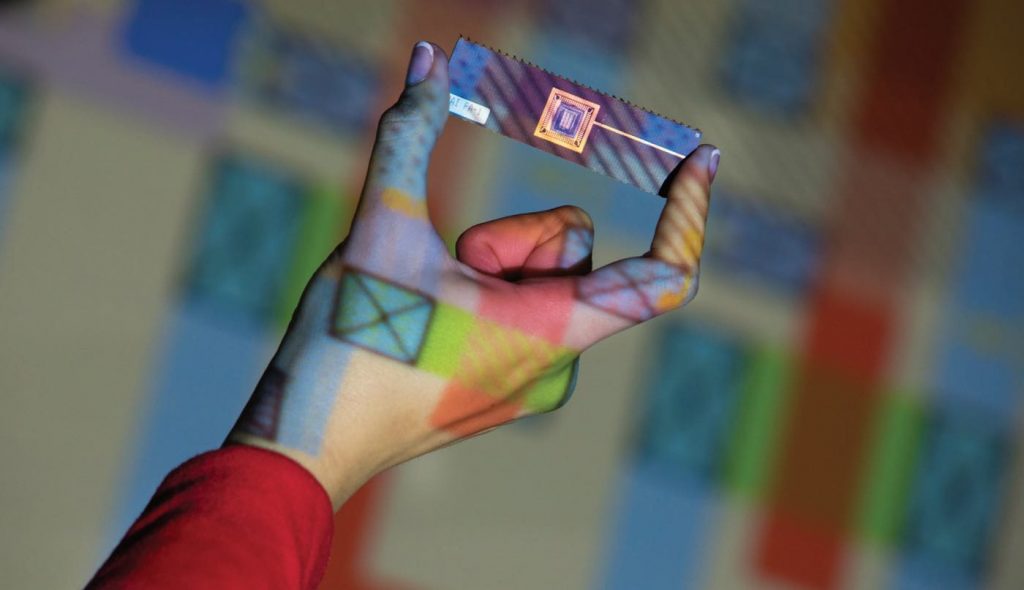
Researchers at the University of Louisiana at Lafayette have developed an artificial intelligence system that can predict epileptic seizures up to an hour before they occur.
The system will give people suffering from epilepsy warning that a seizure is imminent, enabling them to take medication—or alert a friend, relative or medical professional. It had an accuracy rate of 99.6% based on results of electroencephalogram, or EEG, tests that monitored brain signals of 22 patients at the Boston Children’s Hospital.
Epileptic seizures can currently be predicted with EEG tests conducted in hospitals or other medical settings, followed by predictive modeling, a process that relies on statistics. The artificial intelligence technology developed at UL Lafayette relies on EEG tests and predictive modeling simultaneously, resulting in earlier and more accurate detection.
Dr. Magdy Bayoumi and Dr. Hisham Daoud, researchers in the University’s Department of Electrical and Computer Engineering, led a team who developed the system.
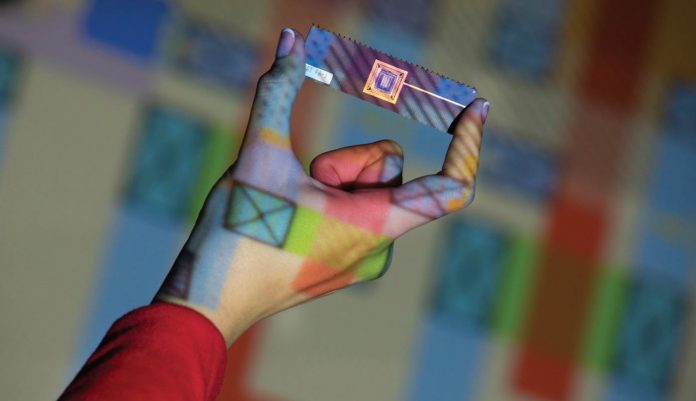
Bayoumi said the next step in the process is developing a way to bring the system to people who have epilepsy. UL Lafayette researchers are developing a customized computer chip that could be placed inside a smartphone or wristwatch-like device and synchronized with sensors embedded in headgear similar to a swimmer’s cap. The chip would wirelessly predict epileptic seizures by monitoring brain seizures.
“Bringing this technology from a medical setting to everyday life would greatly improve quality of life for people who have epilepsy. There would be a medical benefit for them, and a significant psychological one as well,” he explained.
Read more about the project—and a similar project by University researchers to develop a brain chip that would enable a person to move a prosthetic limb via thought—in an article published in the Fall 2017 issue of La Louisiane, the magazine of the University of Louisiana at Lafayette.
Photo by Doug Dugas / University of Louisiana at Lafayette
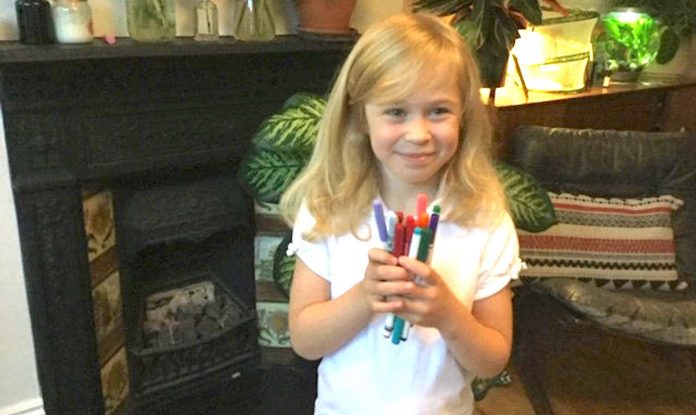
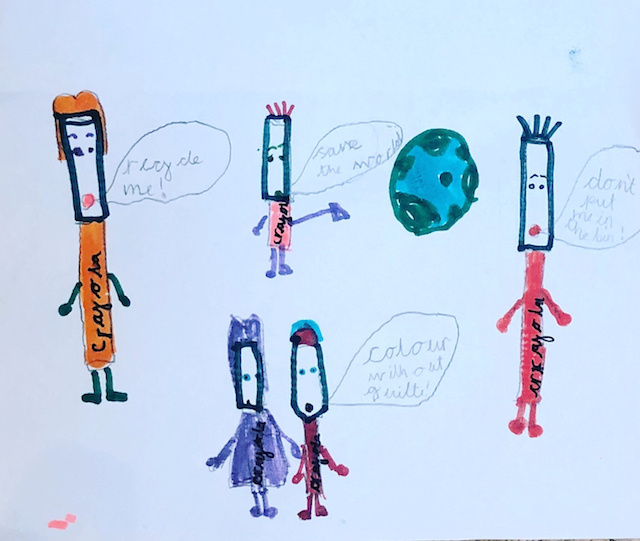
A 7-year-old eco-warrior has gathered almost 70,000 signatures on her petition to force Crayola to make their coloring pens recyclable.
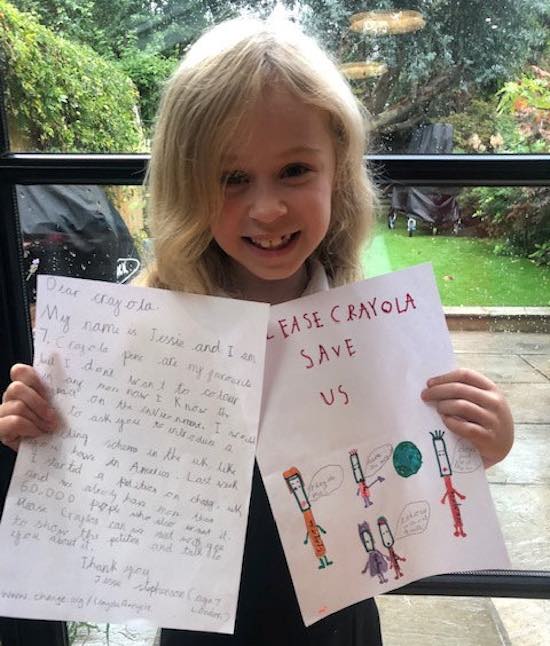
Jessie Stephenson’s passion for art means she goes through a lot of felt-tip pens, but she was upset to learn that they could not be recycled—so she then started the petition asking Crayola UK to give its British customers a recycling scheme.
“I really love using Crayola pens but I don’t want to use them now that I know the impact on the environment,” reads the petition. “I care about the environment because we live here and if we wreck it, we won’t get a second chance.”
Crayola has a recycling scheme in America, but it has yet to have one in the UK. Since the petition has racked up thousands of signatures, Jessie’s mom Charlotte Stephenson said: “We never expected it go quite so crazy [but] Jessie is super keen on the climate change debate.”
Jessie and her 10-year-old brother are both pupils at John Stainer School in Brockley, south east London, where the little girl has a place on the “Eco-Council”. The family all live a green lifestyle by recycling and limiting their meat intake.
Her head, Sue Harte, said: “I am absolutely delighted that Jessie has been so motivated to do this petition to convince Crayola start recycling in the UK.
SWNS
“How wonderful that such a young child has the awareness and the drive to do something to make the world better and the support for her has been fantastic.
“We are very proud as a school to be totally supporting Jessie’s petition.”
Crayola has a recycling scheme in America, but it has yet to have one in the UK. After Jessie’s petition for a recycling scheme began picking up steam, she received a letter from Crayola UK describing how they would look into her request—but she was not happy with the company’s response.
“Crayola said they would just talk about it and that’s not enough for us,” said Jessie. “We’re not going to give up.”
Jessie also asked people with leftover felt tips to save them so they could be deposited through the recycling scheme which she hopes will be implemented soon.
Incumbent MP Vicky Foxcroft has also given her support to Jessie’s campaign, saying: “Climate change is one of the main issues young people contact me about. It’s their future they are worried about and it’s great to see them lobbying for change.”
Crayola UK has been approached for a comment, although there has not yet been a published response.
Color Your News Feed With Positivity By Sharing The News To Social Media…
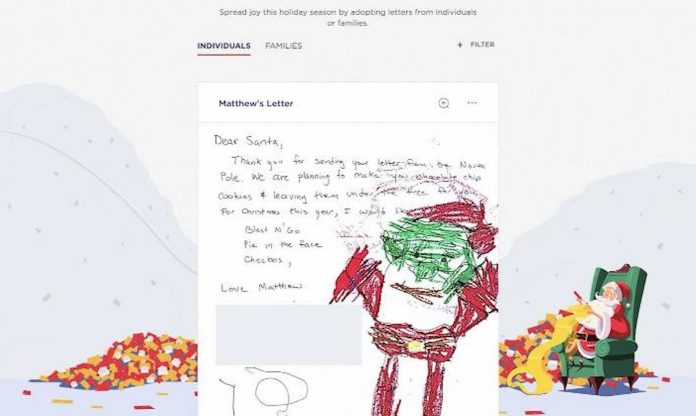
You don’t have to be an elf to help Santa during this year’s holiday season.
As the US Postal Service prepares to start mailing letters to the North Pole, they have launched their online service that allows users to “adopt” children’s letters to Santa in order to help deliver gifts for low-income families.
The USPS Operation Santa website has been publishing photos of Christmas wishes from children in 15 US cities whose parents may not be able to afford many gifts. Users can then volunteer to anonymously fulfill the Christmas wish on behalf of Santa.
This is the 107th year that Operation Santa has been running—except USPS expanded the service this year to include letters from 8 more cities.
All participants have to do is create an account on the Operation Santa website, select a letter that plucks at their heartstrings, fulfill the Christmas wish as desired, and ship it from a participating post office before December 21st.
Children from any of the cities listed on the USPS site who may want to send a letter to Santa can address their letters to:
Santa Claus
123 Elf Road
North Pole
88888
Deck The Halls With Good News By Sharing This With Your Friends On Social Media…
The government of New Zealand has just enshrined their commitments to the Paris Agreement by approving a new piece of legislation which will require the nation to achieve carbon neutrality by 2050.
In a historic show of bipartisan agreement, the Climate Change Response (Zero Carbon) Amendment Bill was passed last week in a 119-1 vote.
The legislation will now provide a framework for the nation’s citizens and governments to fight—and adapt—to the effects of the climate crisis during the coming decades. It reportedly also makes New Zealand one of the few countries in the world to approve legislation solidifying their commitment to the Paris Agreement.
“This is a historic piece of legislation and is the centerpiece for meaningful climate change action in New Zealand,” said NZ Minister for Climate Change James Shaw in a statement. “Climate change is the defining long-term issue of our generation that successive Governments have failed to address. Today we take a significant step forward in our plan to reduce New Zealand’s emissions.
“We as the elected representatives of New Zealanders must take the opportunity to act on climate change before the window closes. We’ve led the world before in nuclear disarmament and in votes for women, now we are leading again.
“The Bill had nearly eleven thousand written and oral submissions. The Committee heard from parents, students, scientists, farmers, academics, health professionals, activists, iwi, local government, and many more,” he continued. “This bill belongs to New Zealand, and together we have ensured that we shift towards a low emissions country that keeps us all safe.
“The budgets provide the pathway towards the 2050 target, and confidence for New Zealanders that we are moving towards a more climate-resilient future.”
(WATCH the inspiring speech below)
Be Sure And Share The Good News With Your Friends On Social Media…
When a young man with autism experienced too much sensory overload to fulfill his dream of riding on the Polar Express, the train staffers went above and beyond to make his wish come true.
18-year-old Ty Swartout is non-verbal and autistic—and he also loves “The Polar Express”. In addition to reading the book hundreds of times, he makes sure to watch the movie every month.
So when his parents discovered that there was a real-life version of the magic holiday train at the Grand Canyon Railway and Hotel’s Polar Express in Williams, Arizona, they knew they had to orchestrate a visit for Ty.
Ty handled the 4-hour drive to the railway hotel with ease; he and his service dog even wore matching plaid pajamas to ensure that they would be granted passage as described in the book.
As he and his parents ate dinner and prepared to board the train, however, Ty became more and more overstimulated by the excitement of the visit. After experiencing two minor meltdowns leading up to the platform, Ty was too overwhelmed to board the train.
The train staffers refused to leave without Ty, but his parents told them to go ahead without them.
“The staff of the Grand Canyon Railway tried so hard to help,” Ty’s mother Angie wrote in a Facebook post. “They even held the train. Finally, I had to say let’s go back to the room.
“I cried all the way back. My heart was shattered,” she added. “I wanted this so badly for my son.”
Thankfully, she did not have long to weep. After they got back to their hotel room, they heard a knock at the door from a hotel staffer and police officer who had stopped by to make sure that Ty was okay. Not only that, they said that they wanted to do something to make it up to Ty.
As hotel staffers helped Ty’s father Lloyd reschedule their visit on the Grand Canyon Expressway with free special needs accommodations, Ty and Angie curled up to read “The Polar Express” only to be visited by the real-life railway train conductor.
“I had just finished when my husband came back in and he said that there was someone special that wanted to visit,” wrote Angie. “Ty and I shook our head yes and in walks the train conductor.
“He sat next to Ty’s bed and chatted with him. Ty was star struck. He was so excited and happy. Then the conductor gave Ty his pocket watch!
“After the conductor, left my husband told me that the hotel and railway offered to reschedule our visit special accommodations! They said that they wanted everyone to experience something special and magical.
“They succeeded,” she continued. “We may not have gotten to ride a train but we got something even more magical… We got the gift of human kindness!”
Be Sure And Share This Sweet Story Of Kindness With Your Friends On Social Media…
Quote of the Day: “Don’t be satisfied with stories, how things have gone with others. Unfold your own myth.” – Rumi
Photo: by Quinn Dombrowski – CC license on Flickr, cropped
With a new inspirational quote every day, atop the perfect photo—collected and archived on our Quotes page—why not bookmark GNN.org for a daily uplift?
For the first time ever, a human patient with sickle cell disease has been treated with genetically-modified cells that have been edited by CRISPR technology—and new data says that the experimental treatment is working.
Up until now, the genetic blood disorder has been incurable. Sickle cell patients such as Victoria Gray—the patient who underwent the treatment in mid-2019—experience frequent bouts of physical pain and are often forced to get blood transfusions in order to ensure that their body has enough healthy red blood cells to carry oxygen throughout their body.
Since Gray was treated with a CTX001 infusion of edited cells, however, the 34-year-old is already experiencing noticeable health improvements. Not only have clinical followups shown that the treatment is safe, but it has also dramatically reduced the amount of pain Gray experienced as a result of the disease.
“It’s a miracle,” Gray told NPR. “When you pray for something for so long, all you can have is hope. It’s amazing.”
Dr. Haydar Frangoul of the Sarah Cannon Research Institute in Nashville, Tennessee, who is treating one of the the patients, also told the news outlet: “We are very, very excited. This preliminary data shows for the first time that gene editing has actually helped a patient with sickle cell disease. This is definitely a huge deal.”
The companies are now recruiting additional patients to continue their research on the treatment’s efficacy against sickle cell disease, beta thalassemia, and other chronic diseases.
“The data we announced today are remarkable and demonstrate that CTX001 has the potential to be a curative CRISPR/Cas9-based gene-editing therapy for people with sickle cell disease and beta thalassemia,” said Dr. Jeffrey Leiden, Chairman, President and CEO of Vertex.
“While the data is exciting, we are still in the early phase of this clinical program. We look forward to continuing to work with physicians, patients, caregivers and families over the coming months and years to bring forward the best possible therapy for these two serious diseases and to continue to accelerate our gene-editing programs for other serious diseases such as Duchenne muscular dystrophy and myotonic dystrophy type 1.”
(LISTEN to the NPR report below)
Cure Your Friends Of Negativity By Sharing The Good News To Social Media — Photo by Libertas Academica, CC
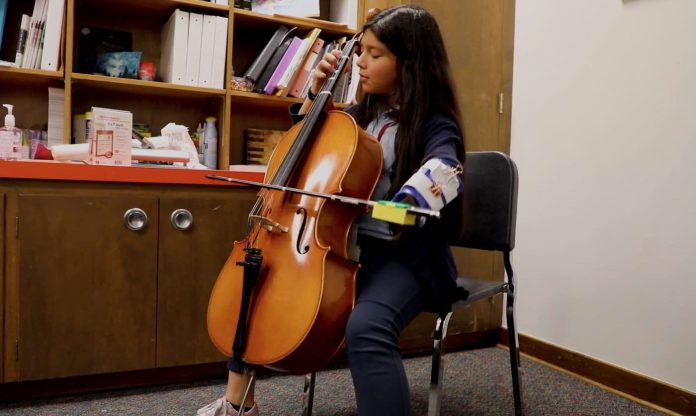
Despite how Kayla Arqueta was born without a left forearm or hand, she was determined to play the cello in her middle school orchestra.
After Kayla approached the Austin Middle School orchestra director Carly Addison about her dreams of being a cellist, Addison knew she had to help the youngster.
“I couldn’t look at Kayla and say no,” says Addison. “When you see a kid advocate for themselves, you just have to do it. Then, it was like all the doors just opened up.”
Upon researching similar stories of amputee musicians on the internet, she found a free set of online blueprints for a prosthetic arm that had helped a high school student learn to play the cello. Addison then reached out to Dwight Davison, who is the engineering teacher at the nearby Nimitz High School.
As luck would have it, the school had recently acquired several 3D-printing for their engineering department—and Davison was more than happy to assemble a team of volunteer high school students to build the prosthetic.
After customizing the designs to Kayla’s measurements, the teens successfully built a prosthetic for her to play the cello—and it has had a dramatic impact on the youngster’s confidence.
“You can see how empowered she’s been by being accepted and encouraged by all of the other musicians in her classroom,” Addison said in a video produced by the school district.
Kayla—who says that the prosthetic has helped her to “feel normal”—now hopes that her story will inspire other students to pursue their dreams regardless of their disabilities.
“I learned that people are willing to help, and that it’s okay to be different,” she said. “I would like other students to know that life is challenging, but everyone is going to love you for who you are.”
(WATCH the school district video below) – Photo by Dennis Palacios
Be Sure And Share This Inspiring Story With Your Friends On Social Media…
A secret clean energy startup backed by Bill Gates has just gone public with the announcement of its new technology that uses concentrated solar energy to exceed temperatures greater than 1,000 degrees Celsius (1,800 degrees Fahrenheit)—and it could be a game-changer in the fight against the climate crisis.
For perspective, that kind of heat is about one-quarter of the temperatures found on the surface of the sun. At that temperature, the energy company—Heliogen—can replace the use of fossil fuels in critical industrial processes, including the production of cement, steel, and petrochemicals, dramatically reducing greenhouse gas emissions from these activities.
This singular scientific achievement was accomplished at Heliogen’s commercial facility in Lancaster, California.
Heliogen’s mission is to create the world’s first technology that can commercially replace fossil fuels with carbon-free, ultra-high temperature heat from the sun and to transform sunlight into fuels at scale—taking a major step towards solving climate change.
Its heat technology represents a key technical breakthrough for concentrated solar thermal. Previous commercial concentrating solar thermal systems have been designed to reach temperatures of up to only 565 degrees Celsius—useful for power generation, but insufficient for many industrial processes. Many of these processes require much higher temperatures, which have traditionally been reached through the burning of fossil fuels.
The potential impact of Heliogen’s patented technology is massive. With temperatures from its concentrating solar thermal technology exceeding 1,000 degrees Celsius, Heliogen will be able to replace the fuel that generates greenhouse gas emissions from industrial processes with solar energy for the first time. For instance, cement production—one of the industrial processes well suited to Heliogen’s technology—alone accounts for more than 7% of global CO2 emissions.
Photo by Heliogen
“Today, industrial processes like those used to make cement, steel, and other materials are responsible for more than a fifth of all emissions,” said Bill Gates. “These materials are everywhere in our lives but we don’t have any proven breakthroughs that will give us affordable, zero-carbon versions of them. If we’re going to get to zero-carbon emissions overall, we have a lot of inventing to do. I’m pleased to have been an early backer of [this] novel solar concentration technology. Its capacity to achieve the high temperatures required for these processes is a promising development in the quest to one day replace fossil fuel.”
In addition to industrial process heat, Heliogen’s technology roadmap calls for temperatures up to 1,500 degrees Celsius. At that temperature, Heliogen can perform CO2-splitting and water-splitting to make 100% fossil-free fuels such as hydrogen or syngas.
Heliogen is able to achieve these breakthrough temperatures as a result of its technology that uniquely uses advanced computer vision software to hyper-accurately align a large array of mirrors to reflect sunlight to a single target.
The firm’s founder and chief executive officer is Bill Gross, a lifelong entrepreneur and founder of Idealab. The Heliogen team includes scientists and engineers from Caltech, MIT, and other leading institutions and is based in Pasadena, California.
“The world has a limited window to dramatically reduce greenhouse gas emissions,” said Heliogen CEO and founder Bill Gross, who is also the founder and chairman of Idealab.
“We’ve made great strides in deploying clean energy in our electricity system. But electricity accounts for less than a quarter of global energy demand. Heliogen represents a technological leap forward in addressing the other 75% of energy demand: the use of fossil fuels for industrial processes and transportation. With low-cost, ultra-high temperature process heat, we have an opportunity to make meaningful contributions to solving the climate crisis.”
(WATCH the explanatory video below)
Power Up With Positivity By Sharing The Good News To Social Media…
It’s not uncommon for doting pet owners to show off pictures of their pups on the internet—but this community of dog lovers has been going one step further in order to include a blind man who was missing out on the pictures.
The Dogspotting Society is a public Facebook group for people to post photos of dogs, discuss different breeds, swap stories, and share in the general joy of canines.
Earlier this week, a blind man named Stephen William Dale Shkuratoff posted in the group asking people to describe their dogs so he could picture them in his mind.
“I love being a member of this group!” wrote Shkuratoff. “I am blind and was hoping to ask for more dog descriptions. Personality traits are more helpful than colors. Like how soft the dog is, for example. Bonus as always for dogs full of kisses and snuggles.
“Thanks for making me feel included,” he concluded. “Hope no one minds me asking for descriptions a lot recently.”
To his delight, thousands of people answered his request and left detailed descriptions of their mutts.
One comment reads: “Billy is a chocolate lab. He’s silly and funny, and so loving. He knows when you’re sad, or tired. He’ll put his super soft snoot, that feels like velvet on your lap, and when you start petting his smooth, silky head and back you can feel his whole body sigh, and relax. Something about that just pulls all the sad out of you and helps you feel better almost instantly.”
Another comment reads: “I have a Boston terrier named Elma. Her name means Apple in Turkish because she is the apple of my eye. She is a very sweet and quiet dog and rarely barks. We have to be careful she does not get shut in a bathroom by accident because she is so so quiet. She makes up for no loud barks with the loudest snores you’ve ever heard from a 18-pound animal. She is also an expert blanket hog and particularly likes faux fur blanket throws.”
Shkuratoff is not the only one who has appreciated the comments. Some users have used the post to express their gratitude for such a wholesome comment thread; others have thanked Shkuratoff for helping to make the group more inclusive for users with disabilities.
After the post had racked up roughly 2,000 comments, Shkuratoff simply said: “All these descriptions are so lovely and I am very thankful.”
Be Sure And Share This Pawesome Story With Your Friends On Social Media…
Quote of the Day: “Spiritual awareness unfolds when you’re flexible, when you’re spontaneous, when you’re detached, when you’re easy on yourself and easy on others.” – Deepak Chopra
Photo: by Charles Dyer – CC license on Flickr, cropped
With a new inspirational quote every day, atop the perfect photo—collected and archived on our Quotes page—why not bookmark GNN.org for a daily uplift?
Hau Thai-Tang, Ford Motor Company’s chief product development officer, discusses the all-electric Ford Mustang Mach-E at Jet Center Los Angeles in Hawthorne, California on Sunday.
Photo by Ford
For decades, the words “Ford Mustang” have conjured up images of one of America’s most iconic muscle cars.
While you might think of the Fastback, the Shelby, the Cobra, or the GT500 as some of the most prolific sons of the Detroit motoring giant, the next generation may picture something completely different.
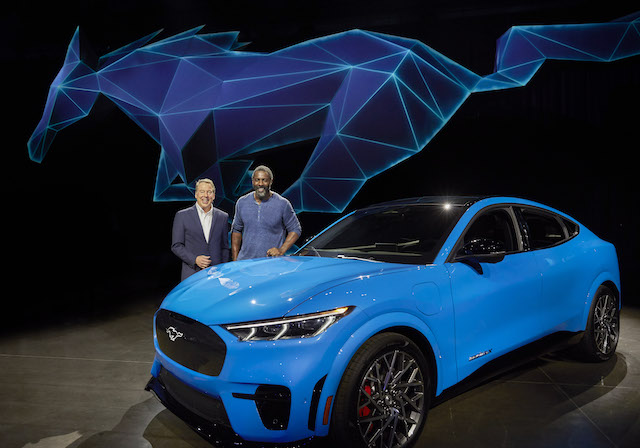
Enter the Ford Mustang Mach-E: a Mustang SUV that is entirely electric.
Mach-E for electronic
Be warned—this is NOT your father’s Mustang. Between boasting an emission-free 0 to 60 time of 3.5 seconds on the GT model, a targeted EPA-estimated range of at least 300 miles, and a crossover design with trunk space both in the back and under the hood of the car, it’s a far cry from the rear-wheel drive V8 bellowers of decades past.
The high-tech doesn’t stop there, either; the Mach-E features handle-less, latch-less doors that sense when you are near and illuminate a button that will allow you to enter the vehicle.
However, what is undoubtedly the most interesting aspect of the Mach-E is the fact that this will be the first entirely electric version of one of the most successful sports cars in history—and while even modern descendants of its gas-guzzling predecessors can manage as little as 19 miles per gallon (9 kpl), a brand new Mach-E with the extended-range 98.9 kilowatt hour battery pack requires half the energy to travel just as far.
Mach-E for efficiency
For decades, the idea of what a sports car is and should be has been different depending on which side of the Atlantic Ocean you found yourself. However, as the methods of modern automotive engineering advance, more and more manufacturers are moving towards electric vehicles. Mercedes, Porsche, Audi, Jaguar, and other luxury brands have all released electric models.
Ford Motor Company Executive Chairman Bill Ford and actor Idris Elba next to Ford Motor Co.’s all-electric Mustang Mach-E GT SUV at Jet Center Los Angeles in Hawthorne, California on Sunday.
The advantage Ford has gained from waiting this long to turn their iconic “pony” into a battery-powered beast is that the advancements made in battery-powered automotive technology have developed much further since the release of the first Toyota Prius.
For example, while electric cars in the first decade of the new millennium became famous for taking whole days and nights to fully charge, the Mach-E can charge up to 47 miles in just ten minutes at a charging station. In your garage, this can fall to around 22 miles per hour of charge, which is pretty standard for electric vehicles.
A perfect medium
Starting at $43,000 for the base model and climbing to $60,000 for the GT and First Edition models, the Mach-E represents a significantly more affordable bill of entry for those looking for an electric SUV. The Tesla SUV released last year requires at least $80,000, with the electric Porsche Cayenne coming in at not much less. The Volvo XC40 costs a few thousand less, but doesn’t equal the power and torque of the Mach-E.
Hau Thai-Tang, Ford Motor Company’s chief product development officer, discusses the all-electric Ford Mustang Mach-E at Jet Center Los Angeles in Hawthorne, California on Sunday.
The 6 versions of the Mach-E will be released in a trickle, with two coming at the end of 2020, two more following in early 2021, and the final two in the spring. This early public release and prolonged deployment will allow Ford plenty of time to adjust to concerns and feedback from testers.
Will the 2021 Ford Mustang Mach-E be the bedroom wall pinup poster car of Generation Z? As battery power catches up to petrol in both convenience and performance there’s a chance that if they ever remake Bullet, Steve McQueen will be driving a Mach-E rather than a Fastback.
Drive The Good News Over To Your Friends By Sharing This To Social Media…
Listen to this amusing tale of a little girl’s accidental acting mishap in this week’s edition of MOTH Monday, a partnership with Good News Network that features inspiring videos from The MOTH, a nonprofit group showcasing the art of storytelling.
When Ally Mason was auditioning for her school’s third grade play about Paul Bunyan, she took on the role of “Babe” with the hopes that her theatrical skills would help her achieve school-wide popularity—and win the heart of her crush.
Ally was dismayed, however, when she eventually discovered that her role as Babe would require her to dress up as a fat blue ox who sang about craving pancakes.
Since her teacher would not allow Ally to switch roles, she became determined to sabotage herself so she would not be forced onto the stage.
In an amusing and fortuitous twist of events, Ally was indeed forced to play Babe the ox—but to her surprise, her attempts to ruin her own performance ended up getting her the exact attention and adoration she had hoped for.
(LISTEN to the hilarious 5-minute story below)
The Moth gives people an opportunity to tell a true story in front of a live audience, and sometimes their stories are chosen to air on the radio show, now celebrating its tenth year, and broadcasting on 485+ public radio stations—and on The Moth podcast, which is downloaded over 52 million times a year. The Moth’s third book, Occasional Magic: True Stories About Defying the Impossible is now available for purchase through your favorite booksellers.
Don’t Hesitate To Share This Sweet Story With Your Friends On Social Media…
After record-breaking wildfires tore through northern California last year, this art therapist and counselor began collecting the keys to homes and buildings that had been lost in the blaze so she could transform them into a symbol of hope.
34-year-old Jessie Mercer is just one of the longtime Paradise residents who was left heartbroken by last year’s Camp Fire. In addition to her father losing his home, they also lost their shared art studio.
After Mercer watched her father pull out the keys to his destroyed home, she decided to build something meaningful out of other people’s keys.
Over the course of the last year, Mercer has been collecting keys to destroyed churches, schools, classrooms, homes, businesses, and even diaries. Though her unique mission involved listening to the stories of people’s heartbreak and loss, she says that the experience helped her come to terms with her own grief.
“I needed to make something to put us back together, and the keys were the only thing we still had in common since we lost everything else,” Mercer told CNN. “I just told people, you don’t have to carry around this totem of sorrow that makes you sad every time you look at it. Let me transform it into something comforting.”
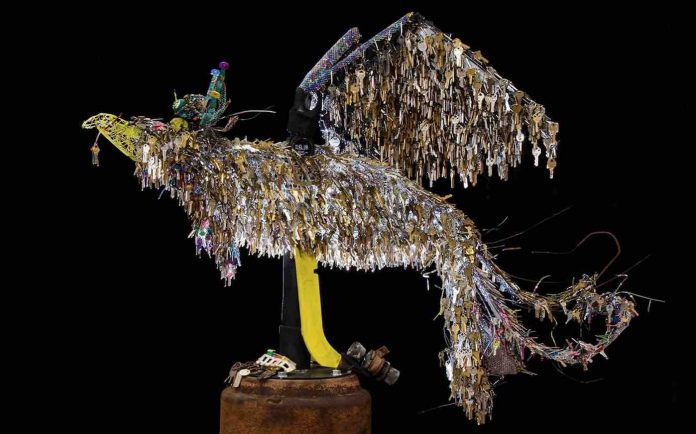
Mercer learned to weld and began crafting a phoenix made entirely out of the donated keys. She did not have any sketches or plans for the sculpture—she says that she simply followed her heart for the final design.
Last week—exactly one year after the wildfires destroyed the town—Mercer unveiled the results of her labor to thousands of awestruck Californians: an 800-pound metal phoenix made from 14,000 keys donated by wildfire victims.
Mercer gifted the Phoenix Key Project to Paradise’s Butte Resiliency Center—a new facility that will help to rebuild the community and help its residents to heal.
As a thank you for her gift, Mercer was presented with a key to the city—and she was incredibly moved by the gesture.
“It’s the first ever time they’ve ever given the key to anyone,” Mercer told CNN. “It’s so cool. I don’t care about anything else. I have the key to Paradise.”
If you want to buy a print of the Phoenix Key Project, all of the proceeds from the sale will be donated to Mercer’s art therapy nonprofit Butte County Art on Wheels.
(WATCH the news coverage below)
Build Up Some Positivity Amongst Your Friends By Sharing The Inspiring Story With Your Friends…