Oslo is set to become the world’s first city to install a wireless charging system for electric taxis.
The Norwegian capital hopes that by implementing the electrical system, all of the city’s taxis will be electric and emission-free before 2023.
Thus far, the greatest hurdle for encouraging the world’s transition to electric vehicles has been implementing more convenient infrastructure. As of right now, it is too time-consuming for taxi drivers to find chargers, plug in, and then wait for the car to power up.
The project in Oslo, on the other hand, aims to install wireless charging plates in the ground where the taxi is parked along with an electrical receiver inside of the taxi in order to allow charging up to 75 kilowatts.
In order to build the necessary infrastructure, the city’s legislators have partnered with two clean energy companies: Fortum and Momentum Dynamics.
“We will install the wireless chargers at taxi stands, such as the one at the Oslo Central Station,” says Annika Hoffner, Head of Fortum. “Taxis will be able to drive up to the charger and a wireless charging session will automatically start. This allows the taxis to charge in a place where they would anyway be waiting for new customers. The difference is that they won’t be emitting exhaust while waiting, instead they will be receiving renewable energy to charge the taxi’s battery.”
The scheme corresponds with the country’s goal of ensuring that all of their cars sold after 2025 will either be a hybrid or an electric vehicle. They currently maintain the world’s highest rate of electrical car ownership in the world. Reports from last year show that one in every three cars bought in 2018 were electric.
“The future is electric, and it is already here, right now,” says Sture Portvik, the City of Oslo’s Electro Mobility Manager. “Wireless charging is a potential game changer. From 2023 onward, all taxis in Oslo will be zero emission. Together with the taxi industry we will make sure that the shift is as user friendly and efficient as possible.
“Oslo will always be at the front of innovation and we are delighted to join forces with two of the industry’s most progressive players in this game-changing move to launch the world’s most ambitious plan for wireless charging of a taxi fleet.”
Power Up With Positivity By Sharing The Good News With Your Friends On Social Media – Photo by Fortum
This 22-year-old man has become something of a folk hero to the people of Canada after he spent several days temporarily filling in some treacherous potholes.
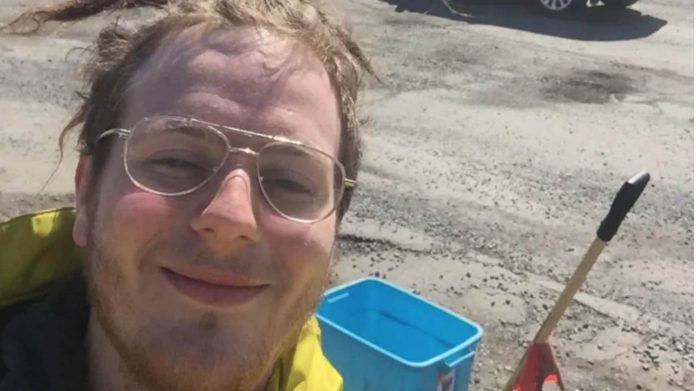
John McCue first became inspired to patch up some of the road hazards in Stellarton, Nova Scotia after he and his mother drove over a particularly nasty pothole.
“There was one story a couple of weeks ago where a car was driving through and it nailed one of the biggest potholes here and it ripped the axle right off the car,” McCue told CBC.
Rather than waiting for the city government to fix the pavement, McCue grabbed a snow shovel and started shifting gravel and road fill from the roadside ditches and moving it into the potholes. Now that passing traffic has packed the filling into the holes, McCue said that the road is significantly better than when he started.
That being said, local police officers had warned McCue that if he did not stop his mission, then he would be charged.
Even though the penalties may vary, DIY road repair is strongly discouraged across various state and regional governments because it can compromise the safety of the road and the civilian. Additionally, drivers or civilians can take legal action in the case of an accident involving an unlicensed road repair.
Civilians who fill in potholes without a permit can be charged anywhere from $200 to $2,000 – but despite receiving these warnings, McCue showed up with snow shovel in hand the day after speaking to the authorities and told the Cape Breton Post: “I hope they don’t come and get me until I’m done with this.”
Additionally, passing motorists have expressed their gratitude towards the roadside vigilante by tipping him in cash, cannabis, and warm cups of coffee.
“Yep, I’m definitely getting a lot of tips — I had a couple of people give me some joints, too, which is pretty nice,” he mused.
McCue told CBC that he hopes to use the money to pay for his upcoming move to Alberta in May.
Pave The Way To Positivity By Sharing The Story With Your Friends On Social Media – Photo by John McCue
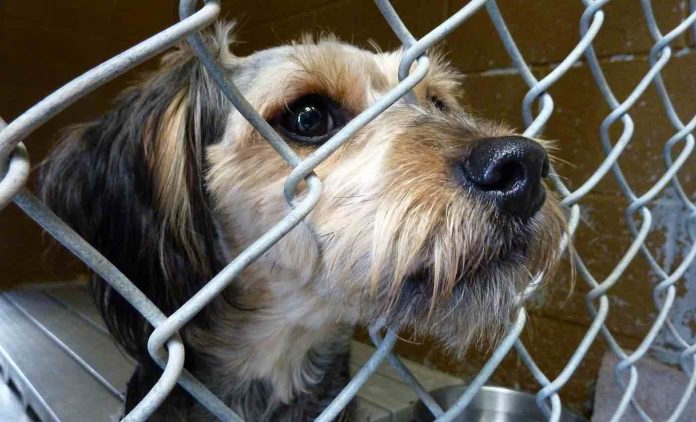
As a means of raising awareness for animal adoption, the state of Ohio has just made shelter pets their state animal.
The designation was officially instated last week after the Ohio Senate approved Senate Bill 86.
Ohio is not the first to pass such legislation advocating for animal adoption; Colorado, California, Georgia, Illinois, and Tennessee have all made shelter pets their official state animal, and Texas and Oregon are currently considering similar measures, according to the Humane Society of the United States (HSUS).
Regardless of the timeliness, HSUS lauded Ohio’s decision in a statement to the Cincinnati Enquirer.
“This designation will help raise public awareness for shelter animals and the many shelters throughout Ohio which are full of wonderful, family-ready pets,” the organization said in a statement. “Animal shelters and rescues always have a great selection of pets looking for new homes.”
GOOD NEWS! ?
Shelter pets officially become Ohio's state pet today! This will help raise public awareness for shelter animals & shelters throughout Ohio which are full of wonderful, family-ready pets. Visit your local shelter or @shelterpets today! https://t.co/OVnHCfLB1Fpic.twitter.com/CPdxJwWf4W
— The Humane Society of the United States (@HumaneSociety) March 20, 2019
Be Sure And Share The Pawesome News With Your Friends On Social Media – Photo by Dave Parker, CC
At this time of year, there are thousands of students and partygoers who are spending their spring break on the beautiful beaches of Miami.
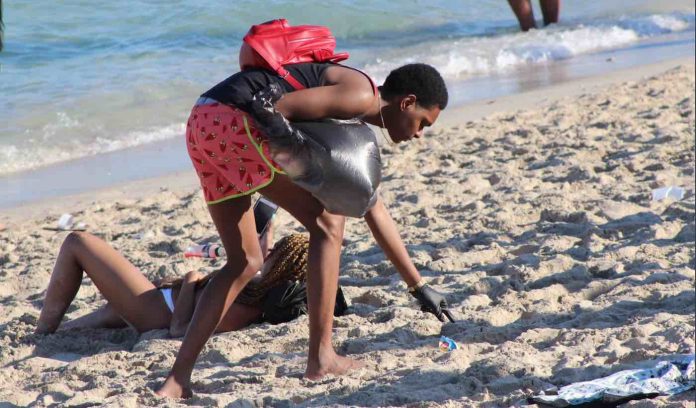
But instead of spending his vacation enjoying the music, drinks, and dancing, 19-year-old Joshua Caraway spent his spring break picking up trash that had been left behind by tourists.
Over the course of just one Saturday afternoon, the young man quickly managed to fill up three trash bags.
Caraway, who is from Atlanta, Georgia, told a local reporter that it was important to keep the beach clean, saying: “Even though I’m on vacation, I still can help out.”
Despite going to South Florida with a group of friends, he was apparently unsuccessful in trying to convince them to join him for his beach clean-up.
“I asked my friends if they were going to do it with me, and they were like, ‘Clean up the trash? No, I’m not with that,’” said Caraway, according to WSVN.
Caraway’s actions eventually caught the eye of Major Paul Acosta from the Miami Beach Police Department.
“So I told Joshua, you’ve been picking up trash for a long time instead of hanging out and listening to music,” Acosta wrote on Twitter. “I asked why. He says he love animals and wants to take care of their home and ours.”
Acosta wanted to thank Caraway by inviting him to the police station to receive an honorary certificate, but Caraway says that he had to travel back to Georgia the following day.
So Acosta took to social media to share the act of kindness – and just a little over an hour later, a small group of tourists responded to the post by joining Caraway and helping him to clean.
Quote of the Day: “A garden to walk in and immensity to dream in—what more could he ask? A few flowers at his feet and above him the stars.” – Victor Hugo, Les Misérables
Photo: by Jessica Wilson, CC license via Flickr
With a new inspirational quote every day, atop the perfect photo—collected and archived on our Quotes page—why not bookmark GNN.org for a daily uplift?
Investing is no longer something that only your dad does; according to new research, millennials are stepping up to the plate and taking a shot—and they’re quite good at it.
A new survey of 2,000 millennials shows that nearly 7 in 10 of them are currently financially investing in something. Furthermore, 85% of those youth do not, in fact, feel too young to invest.
The survey, which was conducted by OnePoll on behalf of Ally Financial Inc., also uncovered how millennials felt about investing—which is, surprisingly confident.
According to the results, 85% of millennial investors have grown their money, with the average saying they’ve netted $2,527.
Most participants believed the “right age” to dive into investing is 28, and survey respondents said you should have at least $3,600 in your savings account.
While millennials, in general, are pretty on top of it, there are still about 1 in 5 who say they’re so overwhelmed by the idea of investing, that they haven’t even looked into its potential, at all.
They need to learn about the magic of compounding (see link above), and jump in, if they can!
TOP 7 REASONS WHY MILLENNIALS DON’T INVEST
I don’t have enough money to invest. 53%
I don’t know how to properly invest. 42%
I don’t know the first thing about investing. 39%
I’m afraid of losing money on the stock market. 38%
I don’t have time to invest. 9%
Investing is completely out of the question for me. 9%
Investing is not worth it for me right now. 9%
Investments, we learn from this survey, are not always based on profit— it’s more about ethics for our younger generation.
Of the millennials who never invested, 83% said if they were to do it, it would be important for that company to be ethical and socially responsible.
Additionally, when asked if they would invest in an unethical and socially irresponsible company that would make them “rich”, the majority of millennials said “no”.
“The millennial generation has plenty of motivation for getting invested; they know it’s one of the surest ways to overcome debt and build financial security over time,” said Ally Invest’s executive director Dave Dusseault.
“But all of the industry jargon and daily market moves have them spooked. The truth is, it only takes a few simple steps to get started and put yourself in a position to benefit from the market.”
TOP 10 SECTORS MILLENNIALS INVEST IN
Technology 58%
Energy 37%
Healthcare 34%
Financial 33%
Telecommunications 31%
Retail 26%
Industrial 25%
Established institutions 23%
Socially responsible companies 23%
New startups 21%
Invest In Your Water Cooler Chat – Share the Topic With Your Friends…
This cable technician is being praised for going above and beyond the call of duty after he arrived at the home of a stressed-out mother and her wailing toddler.
Earlier this month, Jessica Nash Donnahoo had been having a particularly hard day with her 3-year-old son Sailor. She had been trying to finish her household chores and simultaneously care for her 2-year-old daughter while her husband was at work – but her tasks were made all the more difficult by the fact that Sailor had been crying all morning.
Because Sailor suffers from blindness and two rare brain defects, he has a hard time communicating his needs. To Donnahoo’s surprise, however, she was given an unlikely reprieve from her parenting duties when Rob Kinney walked in through the door.
Kinney, who works as a cable technician for Spectrum, had been called to fix the internet in their Greenville, South Carolina home.
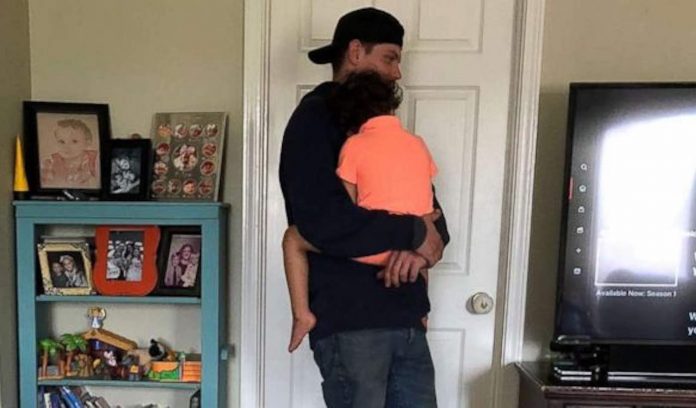
Immediately after he walked in through the door, Sailor ran up to the repairman and held up his arms – and to Donnahoo’s surprise, Kinney happily responded by scooping Sailor into his arms.
Kinney then spent the next 45 minutes rocking and soothing the youngster while he fixed the internet. By the time he was ready to leave, Sailor was almost asleep.
Donnahoo was overwhelmed with gratitude for the technician’s kindness. Upon having the freedom to finish folding her laundry and cleaning the dishes, she snapped a photo of Kinney and her son and posted it to social media.
“It was a huge relief to this tired momma,” Donnahoo wrote on Facebook. “Robert could have walked in, rushed, and left, but instead he saw a need greater than internet and met it.
“That’s beyond customer service – it’s humanity at its best,” she added.
According to an interview with Good Morning America, Kinney is used to caring for anxious children because he is a single father to a 4-year-old girl.
Despite the Facebook post accumulating over 164,000 shares, Kinney is humble about his good deed.
“For them to adopt him and take care of him on a daily basis is much more than what I did for a short period of time,” he told GMA. “God really has blessed that family and will continue to do so because of the kind and gentle spirit they have. They deserve more recognition than anyone.”
Be Sure And Share This Sweet Story Of Kindness With Your Friends On Social Media…
Snow leopard populations are no longer an endangered species – and it is partially thanks to the poachers who once hunted them.
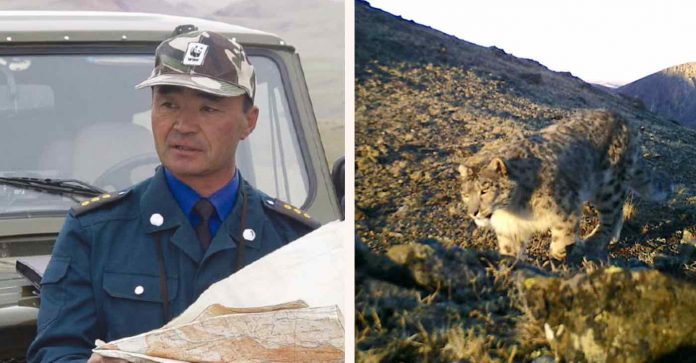
Rather than trying to discourage Russian hunters from poaching the elusive big cats, the World Wildlife Fund decided to take advantage of their unique tracking skills and recruit them as researchers to help monitor snow leopard populations and movements.
Since the program was launched in 2015, snow leopard populations in Russia have stabilized and even improved in certain regions.
This trend is also likely a contributor to the snow leopard’s reclassification from “endangered” to “vulnerable” in 2017.
WWF now plans on implementing similar initiatives in the neighboring countries of Kyrgyzstan and Tajikistan as a means of ensuring the species’ protection.
(WATCH the breathtaking BBC video below) – Photos by WWF / WWF Mongolia
Preserve Positivity By Sharing The Good News With Your Friends On Social Media…
Family planning for women might one day be as simple as putting on an earring.
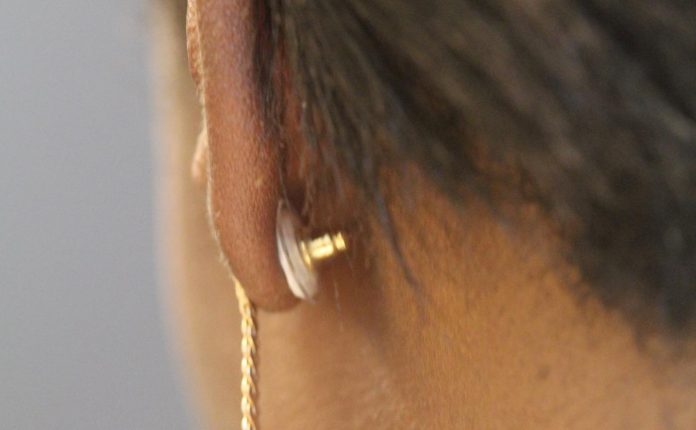
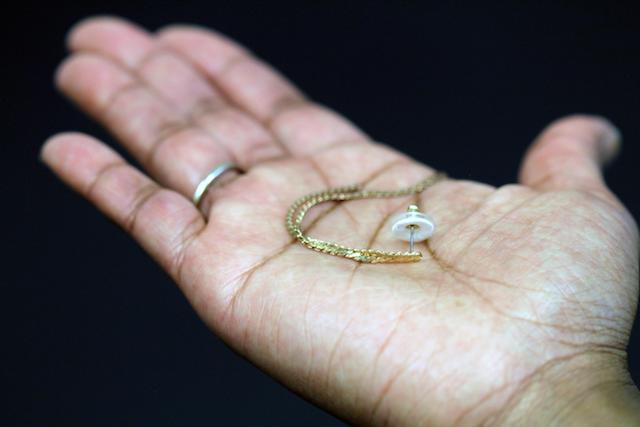
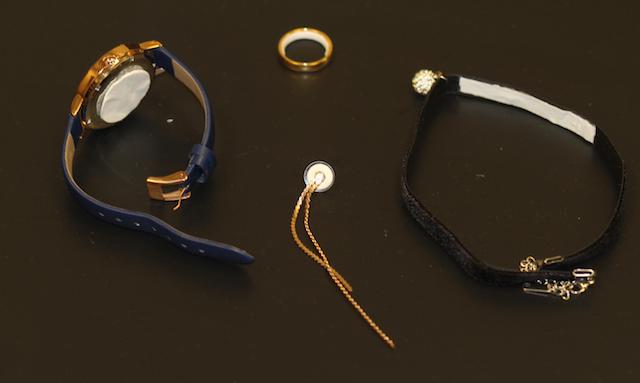
A new study from the Georgia Institute of Technology describes a technique for administering contraceptive hormones through special backings on jewelry such as earrings, wristwatches, rings or necklaces.
The contraceptive hormones are contained in patches applied to portions of the jewelry in contact with the skin, allowing the drugs to be absorbed into the body.
Initial testing suggests the contraceptive jewelry may deliver sufficient amounts of hormone to provide contraception, though no human testing has been done yet. A goal for the new technique is to improve user compliance with drug regimens that require regular dosages. Beyond contraceptives, the jewelry-based technique might also be used for delivering other drugs through the skin.
“The more contraceptive options that are available, the more likely it is that the needs of individual women can be met,” said Mark Prausnitz of the institute’s School of Chemical and Biomolecular Engineering.
“Because putting on jewelry may already be part of a woman’s daily routine, this technique may facilitate compliance with the drug regimen. This technique could more effectively empower some women to prevent unintended pregnancies.”
This proof-of-concept research, which was published in the Journal of Controlled Release earlier this month, was supported by the U.S. Agency for International Development (USAID).
Contraceptive jewelry adapts transdermal patch technology that is already used to administer drugs that prevent motion sickness, support smoking cessation, and control the symptoms of menopause, but have never been incorporated into jewelry before. Contraceptive patches are also already available, but Prausnitz believes pairing them with jewelry may prove attractive to some women – and allow more discreet use of the drug delivery technology.
Photo by Mark Prausnitz / Georgia Tech
“There is a lot of experience with making and using conventional transdermal patches,” he said. “We are taking this established technology, making the patch smaller and using jewelry to help apply it. We think that earring patches can expand the scope of transdermal patches to provide additional impact.”
Upon applying the concept in animal models, the researchers simulated the removal of the earrings during sleep by applying the patches for 16 hours, then removing them for eight hours. Testing suggested that even though levels dropped while the earrings were removed, the patch could produce necessary amounts of the hormone in the bloodstream.
The earring patch tested by the researchers consisted of three layers. One layer is impermeable and includes an adhesive to hold it onto an earring back, the underside of a wristwatch or the inside surface of a necklace or ring. A middle layer of the patch contains the contraceptive drug in solid form. The outer layer is a skin adhesive to help stick to skin so the hormone can be transferred. Once in the skin, the drug can move into the bloodstream and circulate through the body.
If the technique ultimately is used for contraception in humans, the earring back would need to be changed periodically, likely on a weekly basis.
The contraceptive jewelry was originally designed for use in developing countries where access to health care services may limit access to long-acting contraceptives such as injectables, implants and IUDs. However, Prausnitz says the technology may be attractive beyond that initial audience. “We think contraceptive jewelry could be appealing and helpful to women all around the world,” said Prausnitz.
Earring backs and watches may be most useful for administering drugs because they remain in close contact with the skin to allow drug transfer. The dose delivered by a patch is generally proportional to the area of skin contact.
“The advantage of incorporating contraceptive hormone into a universal earring back is that it can be paired with many different earrings,” Prausnitz noted. “A woman could acquire these drug-loaded earring backs and then use them with various earrings she might want to wear.”
Though transdermal drug-delivery patches have been available since 1979, testing would be required to determine whether the earring patch is safe and effective. In addition, research would be required to determine whether the concept would be attractive to women in different cultures.
“We need to understand not only the effectiveness and economics of contraceptive jewelry, but also the social and personal factors that come into play for women all around the world,” Prausnitz said. “We would have to make sure that this contraceptive jewelry concept is something that women would actually want and use.”
The technique could potentially be used to deliver other pharmaceuticals, though it would only be suitable for skin-permeable drugs that require administration of quantities small enough to fit into the patches.
“We think there are uses beyond contraceptive hormones, but there will always be a limitation that the drug has to be effective with a low enough dose to fit into the limited space in the patch,” Prausnitz said. “It also should be a drug that would benefit from continuous delivery from a patch and that is administered to a patient population interested in using pharmaceutical jewelry.”
The earring patch is designed to add another contraceptive option for women. “Pharmaceutical jewelry introduces a novel delivery method that may make taking contraceptives more appealing,” he added. “Making it more appealing should make it easier to remember to use it.”
A homeless man has been given a job and a roof over his head thanks to a teenager who saw his impassioned plea.
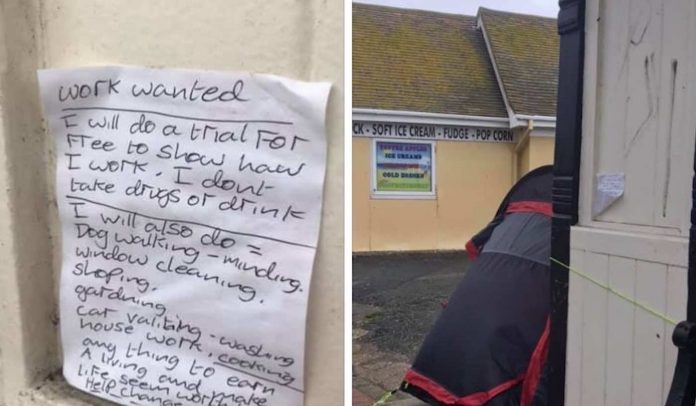
In a bid to find himself a job, 37-year-old Anthony Johnson posted a “Work Wanted” sign at a Hastings bus stop in Sussex, England.
The sign read: “I will do a trial for free to show how I work. I don’t take drugs or drink. I will also do dog walking/minding, window cleaning, shopping, gardening, car valeting/washing, housework, cooking.”
“Anything to earn a living and make life seem worth living,” he added.
Luckily, the note was spotted by 16-year-old Charlotte Howard. After she snapped some photos of Johnson’s sign and tent, she posted them to social media and started a GoFundMe page in hopes of drumming up enough cash to buy him a used caravan.
Over the course of the next 10 days, the campaign surged past its original goal and raised over $3,100 (£2,300).
Since a local charity was inspired to donate a caravan to Johnson, the money is being used to provide him with supplies, food, and additional resources to make up for the last nine years of living on the streets.
Not only that, a local landscaper contacted Johnson about starting a home repair business.
Johnson says that the outpouring of support and compassion has left him overwhelmed with gratitude – especially towards Charlotte.
“It’s not like I haven’t previously been asking for help but all it takes is an open-minded person like Charlotte to come along and help,” Johnson told the Hastings Observer. “She saw me and recognized my position and decided she wanted to do something to help.
“I wouldn’t have got anywhere looking for a job if it wasn’t for her,” he added. “She really is incredible.”
Be Sure And Share This Inspiring Story Of Kindness With Your Friends On Social Media…
Quote of the Day: “We are what we think. All that we are arises with our thought. With our thoughts, we make our world.” – Gautama Buddha
Photo: by Mark Rowland, CC license via Flickr
With a new inspirational quote every day, atop the perfect photo—collected and archived on our Quotes page—why not bookmark GNN.org for a daily uplift?
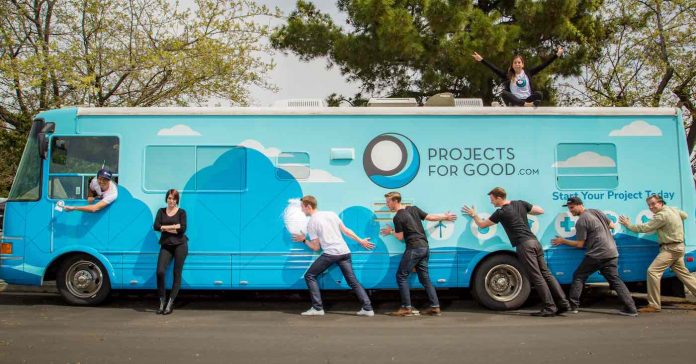
Unlike Kickstarter which funds creative startups, or GoFundMe which addresses personal needs, Projects for Good was designed for people who want to support the greater good, not just with money, but with their talent and energy—and don’t know where to start.
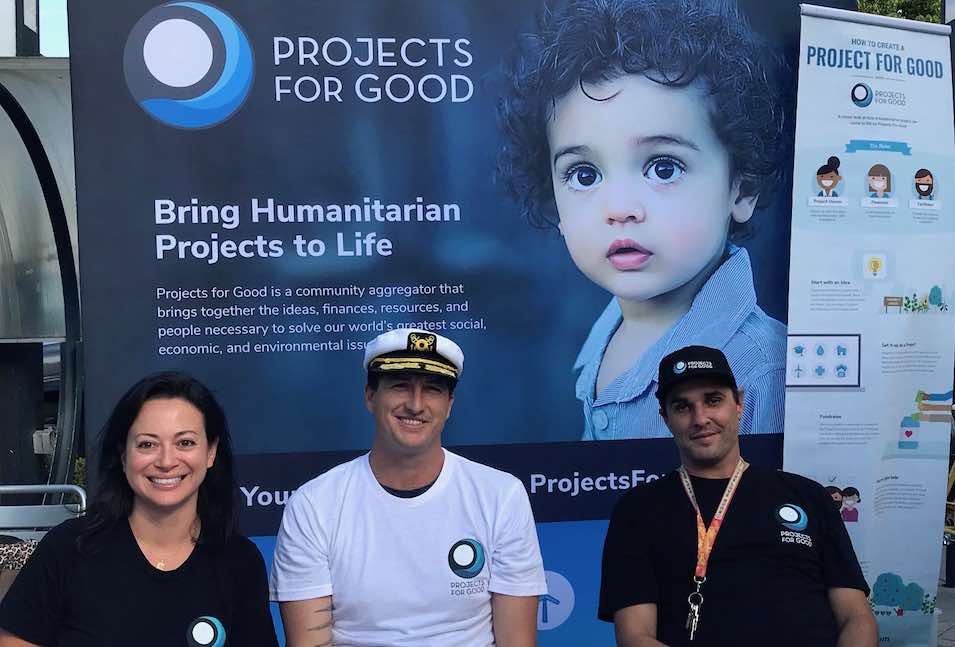
Patrick Furlotti is giving them that opportunity. Growing up in Santa Monica, California, Patrick learned at an early age that society could create a better world if people just worked together.
As a teen he volunteered with Heal the Bay, which was trying to clean up water pollution in 1980s Los Angeles. He folded, sealed, and mailed thousands of letters. The group scored a huge victory when a billion-dollar sewage treatment facility was erected right next to LAX airport.
“I realized how valuable a campaign could be to the world, and that politicians weren’t all bad—they just didn’t know what to do. We provided momentum and direction.”
Beyond studying business at college, Furlotti began captaining ships for researchers who were studying human impact on coral and water quality around the Hawaiian islands.
At age 20, he was one of the youngest ever to captain a sailboat from California to Tahiti, gaining a deep respect for the natural forces that connect us to the planet. Now 37, he enjoys big wave surfing whenever he’s not launching or investing in social impact technology and environmental protection.
He also has attended many green tech conferences: “I saw all these people with great ideas—so many half-baked projects, but the world needs all these ideas.”
“I had seen firsthand how hard it is to get projects started, funded, and completed, and wanted to create a whole new model to help people with their ‘Projects for Good’.”
It took a year to design the web platform, and today they are adding new features all the time to make it “a complete project success ecosystem”.
‘Currently with Kickstarter and Gofundme, you can just give money. That’s cool, but what about if you’re really inspired and want to join the project? A lot of people don’t have any money, but they think, ‘I would really love to work for this cause.’”
Patrick Furlotti, center, launched Projects for Good in 2017
“Our commitment is not to make money, but to build a community of like-minded individuals who are passionate about changing the world—not by featuring someone who is trying to build a robot that makes coffee and smoothies (not that there’s anything wrong with that!), but by focusing on projects that help the greater good,” Patrick told GNN.
“It’s about humans working together, and educating each other on what’s possible, that’s why I love partnering with Good News Network.”
PFG is trying to give project owners the tools they need—to make it cheaper to become a nonprofit, easier to find grants, and even make it free to crowdfund, so fees aren’t diverted from the money that is being donated. Patrick also believes there should be more transparency about where the money is going on these fundraising platforms.
The Community Center is where jobs can be posted, milestones recorded, and new members welcomed. These are some early success stories on the PFG platform:
Peter Gottesman is passionate about animal rights and has championed projects from saving cheetahs in Africa to rescuing bears in Laos through his non-profit Endangered Species Revenge. For him, Projects for Good offers exposure to caring people who want to support him. To date, he has raised over $6500 on PFG to help fund his animal causes.
Andrew Malais saw how badly Joshua Tree National Park needed a trash cleanup. He used PFG partially as a fundraising tool but mainly to list jobs and hire the perfect candidate or find volunteers. His project was a success, raising over 80% of its fundraising goal to purchase the supplies he needed and hire workers to cover the vast acreage.
Peter Fiekowsky raised money on Projects for Good to help develop patented technology that will capture excess CO2 in the atmosphere—and convert it into building materials. They are literally turning ‘air into concrete’. The founder of Foundation for Climate Restoration and partner in Blue Planet Ltd. praised Projects for Good for “helping the foundation raise the crucial seed funding needed to design our first Blue Planet prototype direct air capture machine.”
“PFG is the first crowdfunding platform where jobs can be posted and bid on.”
“It’s not always about money, it’s about love, and about passion, and being dedicated to a cause. Maybe I can volunteer; maybe you can pay me–maybe I can message that guy saving the dolphins and go there to help him save those dolphins.’’
“It’s like when I was working at Heal the Bay, and I was facilitating the envelopes. Those mailings made things happen. That project never would have happened without the little people, and the big people all working together.”
Whether you can help with social media, or donate time as a pro-bono attorney, or stuff envelopes, join Projects For Good, and get involved in the community to make real change in your world.
A lot of people never get a chance to look inside of an airplane cockpit before their flight – but when this passenger asked to get a glimpse of his pilots at work, he was delighted by what they found.
This picture of a mother-daughter duo preparing for takeoff has been going viral on social media since it was published by Dr. John R. Watret on Twitter last week.
Watret had been settling in for a Delta airlines flight from Los Angeles to Atlanta when a woman asked the attendants if her two kids could meet the pilots.
“The flight attendant said they could – and that they would be surprised,” Watret said in a press release.
Upon chatting with the Rexons, he was even more delighted to discover that Wendy’s husband is a pilot for American Airlines; her father is a retired pilot; and her other daughter is also a pilot.
Watret was particularly heartened by the team because he is the chancellor of Embry-Riddle Aeronautical University’s worldwide campus. He is also an enthusiastic advocate for recruiting more female pilots since only 7% of currently licensed American pilots are women.
“There has to be more diversification in the industry,” he said. “It’s crucial and one of the key factors we focus on. When there are more opportunities, everyone wins.”
“The first officer had a great role model for becoming a pilot – her mother,” he added. “It’s good for aviation and inspiring for all of us.”
Though Watret said that he rarely posts to social media, his phone has apparently been “blowing up” with messages and reactions from social media users sharing in his delight over the photo.
Fly This Story Over To Your Friends By Sharing It To Social Media…
This entire mountain will now be guaranteed protection in the future thanks to a charity that managed to collect £1.6 million in just eight weeks.
Last week, the Woodland Trust Scotland announced their successful purchase of the 1,752-foot-tall Ben Shieldaig after it was put up for sale by a private landowner.
The organization now plans to “begin the process of planting, protecting and regenerating” the mountain which stands next to Loch Torridon in the northwest highlands.
The stunning peak is home to an ancient pinewood forest that can be traced back to the end of the last ice age, as well as a temperate rainforest of native birchwood.
The huge mound is teeming with Scottish wildlife including sea eagles, golden eagles, red squirrel, pine marten, otter and the UK’s smallest dragonfly.
“The public reaction to our appeal has been absolutely fantastic,” said Woodland Trust Scotland director Carol Evans. “A huge thank you is due to everyone who contributed.
“This is a rare chance for us to bring a whole mountain under our care. It already supports a magnificent area of ancient Caledonian pinewood and a Scottish rainforest of native birchwood.
Steve Carter / SWNS
“Perhaps even more exciting is the potential to manage these within a mosaic of their natural neighbors. Our aim is to see native woodland, montane scrub and open moorland habitats meshing naturally with each other from sea to sky.
“That would encapsulate all that a restored landscape can be, not just in Torridon but across the Highlands,” she added.
The mountain covers about 3,800 acres, set in the Torridon landscape in the Wester Ross National Scenic Area.
It has views and walking routes from the summit towards Skye and the Outer Hebrides.
Steve Carter / SWNS
It also contains some of the world’s rarest lichens, bryophytes and liverworts, and is home to the UK’s smallest dragonfly – the black darter.
The Woodland Trust Scotland said it is now looking to raise £3.4 million ($4.5 million) to spend on management.
“With your help we can use our expertise to manage the woodland, combining careful woodland creation with natural regeneration and effective deer management,” said the organization.
Plant Some Positivity By Sharing The Good News To Social Media…
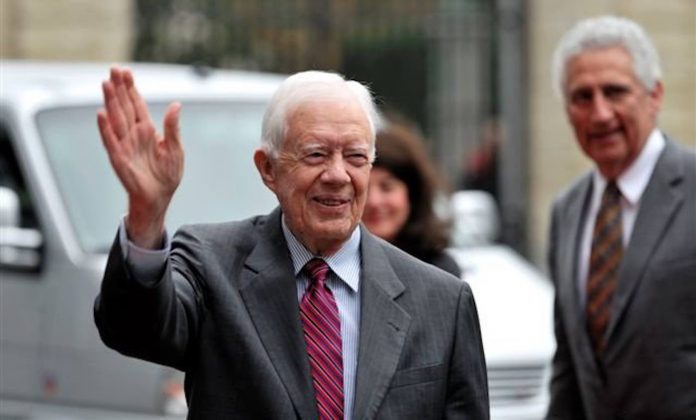
Jimmy Carter has just become America’s longest-living president in history – and he is still making sure that the country is on its way to a brighter future.
The title used to be held by the late George H.W. Bush before he passed away in November at 94 years and 171 days old.
Even though Carter made headlines this week for surpassing Bush’s record at 94 years and 172 days old, this is not his first news appearance in the last few years.
It has been 38 years since Carter was in office, but the former president has only recently been responsible for creating a new health clinic in a small town that had been without a physician for four months; he leased out a portion of his own property in order to launch a solar farm powering half of his hometown; and his charity has been a major contributor in making guinea worm the second disease to ever be eradicated.
Additionally, Carter was diagnosed with stage 4 melanoma in 2016 – and even though he was undergoing treatment, he still spent his time building homes for the needy in Tennessee. Thankfully, his immunotherapy treatments proved to be successful and he was declared cancer-free several months later.
Carter, who is also still happily married to his wife of 70 years in a house that is worth only $167,000, is now one of only five other US presidents who have lived past the age of 90.
“Both President and Mrs. Carter are determined to use their influence for as long as they can to make the world a better place. Their tireless resolve and heart have helped to improve life for millions of the world’s poorest people,” said a Carter Center spokesperson in a statement.
Be Sure And Share The Good News With Your Friends On Social Media – Photo by The Jimmy Carter Library
Though our world’s current state of affairs may seem bleak, we’re here to remind you of why you should believe in humanity.
From saving the planet to developing cures for cancer, these are five great reasons why you should have hope for the future.
Learn more about the stories listed in the video on GNN: the coral reef removal; breast cancer cure; Swiss businessman’s donation; diabetes reversal; and the Pacific Ocean garbage cleanup.
Want to keep good news on your coffee table? Get a copy of our good news book right now, for the office, home, or gifts for friends.
Share This to Restore Your Friends’ Faith in Humanity…
Quote of the Day: “Uncertainty is the very condition that impels man to unfold his powers.” Erich Fromm
Photo: by David Fulmer, CC license via Flickr (Potato Chip Rock, San Diego)
With a new inspirational quote every day, atop the perfect photo—collected and archived on our Quotes page—why not bookmark GNN.org for a daily uplift?
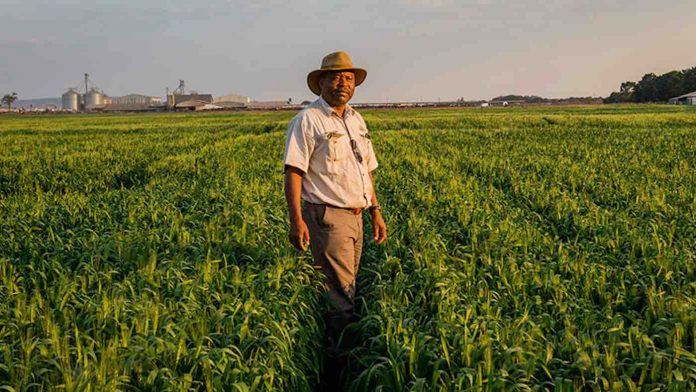
Africa is set to receive a massive financial windfall courtesy of the world’s largest developmental banking organization.
In addition to the $200 billion that it has already pledged towards fighting climate change, the World Bank Group is stepping up its support for Africa by committing $22.5 billion between 2021 to 2025.
The funding, which more than doubles their commitment to climate-related projects over the last five years, is part of the group’s 2025 Targets to Step Up Climate Action which they launched in December 2018.
This announcement comes in tandem to the United Nations’ third One Planet Summit (OPS) earlier this month. The summit brought together international government leaders and representatives from the private sector, including entrepreneurs, donors, organizations and other global stakeholders to discuss collaboration on climate action.
In the wake of the most recent climate report from the IPCC, the World Bank, along with the rest of the international summit leaders, view 2019 as a pivotal year to plan accelerated climate action – and this year’s summit narrowed its focus on ways to accelerate and step-up climate action in Africa.
The additional funding from the bank builds upon its ongoing African Climate Business Plan (ACBP), which has financed over 176 conservational projects across the continent and become a critical support mechanism for countries to institutionalize climate action that meet their contributions submitted under the historic Paris Climate Agreement.
The bank is now collaborating directly with eight countries – Rwanda, Mali, Cote d’Ivoire, Namibia, Uganda, Mozambique, Zimbabwe, and Kenya – on climate adaptation and mitigation.
Since the creation of the ACBP, the partnership has delivered stunning results across the continent. In 2018, for example, the World Bank Group approved an investment package of $794.5 million for hydropower projects in Cameroon. It is estimated that once this project is completed, it will increase the nation’s electricity-generating capacity by 30% and provide clean energy; economic opportunities; and agricultural stability to disadvantaged communities.
“This investment in clean energy is key to lowering the cost of electricity and ensuring that Cameroon’s economy is competitive,” said Elisabeth Huybens, World Bank Country Director for Cameroon. “[This project] is one of the very few public-private partnership hydropower projects in Sub-Saharan Africa that will accelerate Cameroon’s realization of its development goals, including poverty reduction.”
Additionally, the campaign has helped to create agricultural plans to improve food security for rural poor people; natural disaster management systems for catastrophes in Kenya; and one of the most successful electrification programs in Sub-Saharan Africa.
Plant Some Positivity By Sharing The Good News To Social Media – Photo by Arne Hoel / World Bank
Today is MOTH Monday on Good News Network: In partnership with The Moth, a nonprofit dedicated to the art of storytelling, we bring you the most uplifting speakers from live stages across the world.
When Liel Leibowitz was just a boy, he was stunned to hear that his father was actually the notorious bank robber who he and his friends had always idolized.
Needless to say, the revelation ended up posing some bizarre personal challenges for Leibowitz as he grew up.
But now over the course of raising two children of his own, Leibowitz has come to realize that his father’s alter-ego gave him an invaluable lesson which has greatly benefitted both himself and his children.
Listen to his story below…
The Moth gives people an opportunity to tell a true story in front of a live audience, and sometimes their stories are chosen to air on the radio show, now celebrating its tenth year, and broadcasting on 485+ public radio stations—and on The Moth podcast, which is downloaded over 52 million times a year.
This photo of a compassionate firefighter lifting an older woman up some stadium steps is also lifting spirits across social media.
Shayla and Thomas Harwell were attending a Brad Paisley concert at the Houston Livestock Show and Rodeo last week when she noticed the woman struggling to get to her seat.
Since her husband is a firefighter for the Hardin Volunteer Fire Department north of Houston, Texas, Shayla pointed the woman out to Thomas and suggested he lend a hand.
Thomas immediately leapt to his feet and helped the woman to her seat.
After the show was over, Thomas saw the woman was too tired to get back up the stadium steps once more – so he simply scooped her into his arms and carried her the rest of the way.
“I’m almost shocked, I really honestly didn’t think it would go that far,” Shayla told CNN. “She was very appreciative. When he placed her down at the top of the stairs, she was grinning ear to ear. It really touched her to have him help her.”
Since Shayla posted a photo of her husband’s good deed to Facebook, it has been shared thousands of times. People have even offered to give the couple additional concert tickets as a thank you for their kindness.