Quote of the Day: “Do not be always turning up your soil with the ploughshare of self-examination, but leave a little fallow corner in your heart ready for any seed the winds may bring.” – Henri Frederic Amiel
Photo: by Alejandro Groenewold, CC license
With a new inspirational quote every day, atop the perfect photo—collected and archived on our Quotes page—why not bookmark GNN.org for a daily uplift?
In a famous Middle Eastern folk tale, a boy’s wish is granted after he finds a magical lamp.
This year, echoes of that story reverberated all the way back to the Middle East from Peru when a boy was spied doing his homework under a street lamp—wishing he had electricity in his family home.
Thanks to city security officers making it public, a video clip of Víctor Martín Angulo Córdoba doing homework under a Peruvian street lamp was shared thousands of times on news websites and social media.
When it went viral, the pictures caught the attention of several key people who were in a position to help.
The first person to respond to the dedicated young man was the city’s mayor, Arturo Fernández Bazán. He learned that Víctor was using a street light due to a lack of electricity in his family’s home. Víctor’s mother didn’t just lack the money to pay, there was a substantial obstacle—she didn’t have the documents to prove she owned the home which were needed to legally install electrical service.
The mayor of Moche assisted Rosa throughout the process so she could obtain the deed—he also delivered school supplies to support Víctor’s desire to stay in school and become a police officer.
But, the real genie with the ability to provide a storybook ending was 31-year-old Yaqoob Yusuf Ahmed Mubarak, a millionaire importer and chocolatier from Bahrain. Moved by Víctor’s determination, and reminded of his own childhood, the businessman flew nearly halfway around the world to meet him and his family.
When Yaqoob arrived in May and saw the condition of Victor’s home and school, he decided to rebuild the house, adding a second story for bedrooms, and promised to update the school’s infrastructure, adding furniture and equipping a new computer center in Víctor’s honor. He also seized the opportunity to support Rosa in starting a small business.
Giving local photographers a moment to remember, Yaqoob dropped to his belly on the sidewalk with Víctor to recreate the “famous” night scene under the street lamp, and they read books together.
He also gifted him with clothing, handed him a billfold “full of cash,” and sealed their friendship by presenting Victor’s friend with a new wheelchair.
In most fairy tales, the granter of the wishes goes “poof” and disappears…but Yaqoob has promised to return for the inauguration of the new school and new home. Until then, there will be electricity to study by and enough money to pay for it, thanks to the generosity of a benefactor and new friend from across the globe.
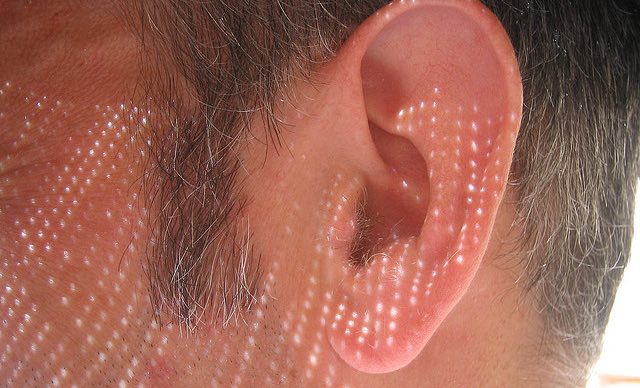
A new study led by the University of Kent has shown that gentle, controlled stimulation of the ear canal can help reduce symptoms of Parkinson’s disease.
The randomized, controlled study—which was conducted on 46 individuals with Parkinson’s disease—showed that twice-daily stimulation for two months was associated with a significant reduction in both motor and non-motor symptoms of the condition.
Participants reported greater movement and mobility, and showed improvements in decision-making, attention, memory, mood, and sleep. Participants also said that by the end of the study, they found it easier to perform everyday activities by themselves.
Most of the therapeutic gains were greatest five weeks after the end of treatment, suggesting that the treatment may have long-lasting effects.
“Those symptoms are often untreated or poorly treated and have a particularly detrimental impact on quality of life, and their treatment is a key unmet need,” said Professor Ray Chaudhuri, Director of the National Parkinson Foundation Center of Excellence at King’s College Hospital.
The stimulation therapy was performed at home using a portable headset produced exclusively for clinical investigations by Scion Neurostim, a US-based device company. Participants continued to take their regular dopamine replacement therapy while using the “easy-to-use” device.
Photo by Simon James, CC license
The study, which was published earlier this week in the journal Parkinsonism and Related Disorders, was led by Professor David Wilkinson at Kent’s School of Psychology.
These results build on other work conducted by Wilkinson’s research group, which has shown that gentle stimulation of the inner ear can also improve neurological symptoms associated with stroke and traumatic brain injury.
“This study raises the intriguing possibility that some aspects of Parkinson’s disease may be better managed if traditional drug-therapies are combined with gentle, non-invasive stimulation of the balance organs,” said Wilkinson.
Professor Chaudhuri said he was very encouraged by the results. “Achieving both widespread efficacy and durable gains in motor and specifically non-motor aspects of Parkinson’s disease would be quite novel, and improvements in non-motor symptoms would be especially notable.”
This story was submitted as a nomination to the Reader’s Digest “Top 50 Nicest Places in America” contest: a crowd-sourced effort to uncover nooks where people are still kind and respectful in an era of cultural and political divides. Be sure and vote for which story you think should be nominated as the top Nicest Place by visiting the Reader’s Digest website.
How would your city respond if 1,600 asylum seekers were sent there? In Las Cruces, they were greeted with food, shelter, and open arms.
In April 2019, the US Customs and Border Protection began dropping off asylum-seekers in Las Cruces, New Mexico: a city of about 100,000 just an hour from the US–Mexico border. Because of “capacity issues,” the U.S. immigration agency said it would be releasing migrants seeking asylum and placing them in New Mexico and El Paso, Texas, according to the Associated Press.
Welcoming more than 1,600 people who show up on your doorstep is not easy, but that’s exactly what Las Cruces did—and they are continuing to do it today.
Thanks to nearly $600,000 in city council funding and generous donations, Las Cruces has been able to provide temporary housing. Not only that, the majority of the community has offered unconditional acceptance to these folks who have few possessions and nowhere else to go.
Steve Ramirez, an employee in the city communications office, said: “Acts of kindness and compassion happen every day in Las Cruces.”
Local churches, like El Calvario and Heart for the World, as well as other community organizations, held donation drives to collect food, clothes, and medical supplies.
Without being asked, community residents began hosting their own clothing and food drives—and even opening up their own homes and businesses to asylum-seekers. Some volunteered at the housing facility themselves; others worked as language interpreters and office workers processing travel documents. Doctors provided medical services and lawyers assisted with legal issues, all free of charge.
For people who know the folks of Las Cruces, this outpouring of kindness won’t come as a surprise.
A 9-year-old boy once held a lemonade stand to raise money for his sick grandfather over spring break. The community rallied behind the family, and surpassed the boy’s goal of $120, raising almost $30,000.
Robert Paquette, a local resident who was homeless as a teenager, has raised tens of thousands of dollars to pay for food and clothing for the homeless population in town.
“Las Cruces is the nicest place in America because Las Crucens care to the core about hospitality,” said two residents who nominated the city. “We offer a hand to our neighbors and we live by the mantra ‘mi casa, es su casa.’”
Reprinted with permission from Reader’s Digest. To learn more about GNN’s part in searching for the Top 10 Nicest Places, click here. – Photo by Visit Las Cruces
Be Sure And Share This Sweet Story Of Neighborly Kindness With Your Friends On Social Media…
It has been five years since Raju the elephant was saved from his previous life as a street-riding elephant in India—and his rescuers are still making sure that he’s being treated like a king every day.
In 2014, Raju was rescued from his plight by the animal welfare group WildlifeSOS. Prior to their intervention, he had been exploited on the streets by his owners for fifty years.
Thankfully, WildlifeSOS was alerted to the situation, and when they finally arrived to witness Raju’s captivity, they found him sick, severely underweight, and suffering from several medical issues.
With the support of government officials, the gentle giant was invited to a better life. Raju then stepped onto the rescue truck and was whisked away to his new forever home at the Elephant Conservation and Care Center (ECCC) in Mathura, India.
Against all the odds, Raju has made remarkable improvements in his physical and mental health. Since the very first day of his arrival at ECCC, the team of veterinarians and keepers has tirelessly tended to his recovery. Under their care, Raju has put on weight, his wounds have healed, and his chronic medical issues are responding well to the treatments.
After such successes, you can imagine how excited everyone at WildlifeSOS was to celebrate his five-year rescue anniversary. The team even prepared an elephant-friendly cake that was garnished with watermelons and pumpkin: Raju’s favorite foods.
Photo by Elephant Conservation and Care Center
Additionally, the team twisted some fresh green fodder—which all elephants love to snack on—into the shape of the number 5.
To the rescue center’s delight, Raju was more than happy to accept their gifts—and showed off a big pachyderm smile as he scooped up the tasty bites of his special cake.
(WATCH the video below)
Be Sure And Share This Sweet Story Of Transformation With Your Friends On Social Media…
Quote of the Day: “Traveling – it leaves you speechless, then turns you into a storyteller.” – Ibn Battuta
Photo: by Tonymadrid Photography, CC license
With a new inspirational quote every day, atop the perfect photo—collected and archived on our Quotes page—why not bookmark GNN.org for a daily uplift?
A café in the Philippines is inspiring thousands of people around the world to replace their plastic straws with a more eco-friendly alternative.
Sarah Tiu, who is the manager of Café Editha in Surigao del Norte, recently started using rolled up coconut leaves as a cheap, biodegradable alternative for plastic straws in her restaurant.
The 37-year-old restauranteur first got the idea to use the straws as she was vacationing with her family on Corregidor Island in Siargao.
Upon ordering some drinks from a local business, Tiu was surprised to receive her beverage with a straw made out of “lukay”—the local term for coconut leaves.
She then asked the managers of the business to teacher her how to craft lukay straws so she could hand them out in her own café.
Once she had mastered the simple skill, Tiu published a photo of her completed straws to the Café Editha Facebook page where it was shared thousands of times by social media users around the world.
Tiu has not just utilized the coconut leaves for straws, either; since the café does not have plastic takeaway lids, they started covering their cups in lukay.
“We still have a lot to eradicate,” wrote Tiu, “[but] hopefully we can find more alternatives to create less waste.”
For anyone who feels inspired to create the sustainable straws on their own, Tiu created an instructional video on how to properly roll and cut the coconut leaves—and she hopes that it will help her fellow business owners to continue phasing out wasteful plastic packaging around the world.
(WATCH the video below)
Pass On The Positive News By Sharing This With Your Friends On Social Media…
This adorable soccer match between three professional soccer players and a team of delighted Chinese children is the perfect example of how quantity can triumph over quality.
Tottenham Hotspur star players Harry Kane, Dele Alli, and Erik Lamela participated in an exhibition game against 100 kids aged 6 to 10 in order to celebrate their pre-season games in China.
Despite how the pro players reassured spectators that they would not go easy on their pint-sized competitors, the 10-minute game in Shanghai ended in a one-to-one draw.
When asked about the difficulty of the game, Alli amusedly gave credit to the “ruthless” kids by saying that they definitely had “bodies behind the ball”— but the opposing teams did not let their action-packed match get in the way of their newly-ignited friendships.
“Another tough challenge,” Alli told reporters with a smile. “Not quite like playing in the Premier League … but it’s exciting and it’s nice to have a bit of fun with them.”
As a reward for the children’s tenacity and support, Alli, Kane, and Lamela made sure to sign shirts and high-five all the youngsters after the harrowing game.
(WATCH the endearing game footage below)
Score Big With Your Friends By Sharing The Story To Social Media…
Despite how cataracts are the most common and treatable form of blindness, there are hundreds of thousands of people suffering from the condition in Nepal every day—and that’s why this one doctor has been working tirelessly to restore their vision.
Dr. Sanduk Ruit is an ophthalmologist who has trekked all over Nepal in order to perform cataract surgeries on blind people living in remote areas. With surgical equipment in tow, Ruit has embarked on 7-day hikes solely for the purpose of treating blindness.
Since Ruit first dedicated himself to treating blindness across his home country, he has personally restored vision to over 130,000 people.
Ruit is also the executive director of the Tilganga Institute of Ophthalmology, a Kathmandu-based nonprofit that caters to as many as 1 million patients.
According to the eye doctor, about 90% of the world’s blind population is located in Nepal. This is partially because there are fewer eye doctors in countries that are less developed, and also because cataract lenses previously had to be imported from international manufacturers, which upped the cost of the lenses to as much as $300.
Since Ruit and his organization have helped to source cataract lenses locally, however, they now cost just $3 a pop.
(WATCH the inspiring video below) – Photo by Great Big Story
It’s Not Hard To See That You Should Share This Inspiring Story With Your Friends On Social Media…
Rather than using milk cartons to raise awareness for missing persons, a New Jersey pizzeria has come up with a clever new way to help search for lost pets.
Angelo’s Pizza restaurant in Matawan has started attaching lost animal flyers to their pizza boxes as a means of helping frantic pet owners reunite with their furry friends.
The owner of the restaurant, John Sanfratello, said he got the idea for the initiative after he saw a neighbor’s Facebook post about a missing cat.
Sanfratello was particularly struck by the post because the cat looked just like his own feline companion who once went missing for an entire week.
He then published a note to the pizzeria’s Facebook page telling pet owners that he would begin attaching their missing animal flyers to all of his pizza boxes free of charge.
“We don’t care if owners are customers or not, I’m concerned about how we can help,” Sanfratello told Good Morning America. “This is a small gesture on our part, but [pets] are family members after all.”
Since Sanfratello publicized the restaurant’s missing pet initiative on Facebook, they have handed out dozens of flyers for three missing pets in the Matawan area. Additionally, Sanfratello has several family members who have been inspired to hand out missing animal flyers from their own New Jersey restaurants.
“We need to find as many pets as we can,” he told GMA. “And we need to raise awareness, so that hopefully more businesses become involved on a local level.”
(WATCH the news coverage below)
Pie The Good News Forward By Sharing It With Your Friends On Social Media…
When a 32-year-old driver became trapped in his overturned car on the highway, a dozen Good Samaritans rushed to his aid.
The driver, Orlando Hernandez, lost control of his Ford pickup truck as he was driving on I-88 in Chicago earlier this week.
Hernandez had been driving in the left lane when the tread of his tires tore off and sent his truck spinning onto its roof and onto the shoulder of the highway.
Upon seeing the disaster unfold, several other drivers stopped their cars and ran to his rescue.
With the help of a few nearby construction workers, the group of rescuers managed to push the truck onto its side, break the safety glass, and free Hernandez from his seatbelt—all before the ambulance crew arrived onto the scene to whisk him off to the hospital.
Apart from a few minor injuries that he endured from the incident, Hernandez says that he is in surprisingly good shape—and he is overwhelmed with gratitude for the people who came to his rescue.
“You know how there’s terrible things happening and people lose faith in things, faith in the world? But seeing that, that sort of restores that goodness in your heart,” Hernandez told WLS-TV.
(WATCH the news coverage below) – Photo by WLS-TV
Save Your Friends From Negativity By Sharing The Good News To Social Media…
Quote of the Day: “Humility is not thinking less of yourself, it’s thinking of yourself less.” – C.S. Lewis
Photo: by Luigi Andreola, CC license
With a new inspirational quote every day, atop the perfect photo—collected and archived on our Quotes page—why not bookmark GNN.org for a daily uplift?
This story was submitted as a nomination to the Reader’s Digest “Top 50 Nicest Places in America” contest: a crowd-sourced effort to uncover nooks where people are still kind and respectful in an era of cultural and political divides. Be sure and vote for which story you think should be nominated as the Nicest Place by visiting the Reader’s Digest website.
Photo by Christian Hinkle/Shutterstock
A compassionate pizzeria owner had a reputation for ensuring that his Amish neighbors never went hungry—so when his rural restaurant later burned down, they were sure to repay their debt.
Just before Christmas in 2013, Delta Pizza burned to the ground. It was a big deal in the tiny hamlet of Delta, Pennsylvania. The remote town of about 700 people on the Maryland border doesn’t have a lot of options when it comes to where to eat.
Then, something magical happened.
“We’re cleaning up and I heard this noise outside, like a train was coming through,” says Sal Ferranti, the owner since his father, Guiseppe, died in 1999. “It was 30 Amish men in buggies. They helped for one day with the demolition of the building.”
As it turns out, they were just returning the favor. For years, Sal had been making sure that extra food from catering jobs would make it to Amish folks who needed it.
In fact, the whole town pitched in to help Sal reopen. They were paying him back too, for his family’s 30 years of serving charity and kindness along with their slices. On snow days, kids gather to eat free pizza and watch cartoons until their parents get home from work. About two times a month, people gather for fundraisers for various causes—all while enjoying donated pizza, of course. Recently, Sal came across a homeless man in town, and after publishing just one Facebook post, he later got him a job and a place to stay.
“That’s just the kind of guy Sal is,” says Deborah Shade, who nominated Delta Pizza for the Nicest Places competition. “Anybody that comes to him with any kind of request, he’s there for them.”
Turns out, he learned it from his dad. In 1984, when the family arrived from Italy, they had nothing and didn’t know the language. After getting citizenship in 1987, Guiseppe bought flags for every flagpole in town—and they fly to this day. It was Guiseppe who started holding fundraisers, getting involved in civic life, and making sure to help anyone who needed it.
So after Delta Pizza’s grand reopening in 2015, Sal knew he had to continue his father’s compassionate legacy. That’s why each year he chooses a different Amish family who helped with the demolition and spends two hard days laboring on their farm, picking tomatoes or tobacco, or whatever else they need done.
“They were so giving and so helping, and I have to give back to them—to everyone who helped,” Sal says.
Reprinted with permission from Reader’s Digest. To learn more about GNN’s part in searching for the Top 10 Nicest Places, click here.
Pie The Good News Forward By Sharing It To Social Media With Your Friends…
Photo by Eran Elinav/Weizmann Institute of Science
Scientists are quickly discovering that our gut microbiomes may hold the key to a vast amount of health issues—including ALS.
Researchers at the Weizmann Institute of Science have shown in mice that intestinal microbes, collectively termed the gut microbiome, may affect the course of amyotrophic lateral sclerosis (ALS), also known as Lou Gehrig’s disease.
As reported this week in Nature, progression of an ALS-like disease was slowed after the mice received certain strains of gut microbes or substances known to be secreted by these microbes—and results suggest that these findings are likely applicable to human patients with ALS.
“Our long-standing scientific and medical goal is to elucidate the impact of the microbiome on human health and disease, with the brain being a fascinating new frontier,” says Professor Eran Elinav of the Immunology Department.
The scientists started out demonstrating in a series of experiments that the symptoms of an ALS-like disease in transgenic mice worsened after these mice were given broad-spectrum antibiotics to wipe out a substantial portion of their microbiome. Additionally, the scientists found that growing these ALS-prone mice in germ-free conditions (in which, by definition, mice carry no microbiome of their own), is exceedingly difficult, as these mice had a hard time surviving in the sterile environment. Together, these results hinted at a potential link between alterations in the microbiome and accelerated disease progression in mice that were genetically susceptible to ALS.
Photo by Eran Elinav/Weizmann Institute of Science
Next, using advanced computational methods, the scientists characterized the composition and function of the microbiome in the ALS-prone mice, comparing them to regular mice. They identified 11 microbial strains that became altered in ALS-prone mice as the disease progressed or even before the mice developed overt ALS symptoms. When the scientists isolated these microbial strains and gave them one by one—in the form of probiotic-like supplements—to ALS-prone mice following antibiotic treatment, some of these strains had a clear negative impact on the ALS-like disease. But one strain, Akkermansia muciniphila, significantly slowed disease progression in the mice and prolonged their survival.
To reveal the mechanism by which Akkermansia may be producing its effect, the scientists examined thousands of small molecules secreted by the gut microbes. They zeroed in on one molecule called nicotinamide (NAM): Its levels in the blood and in the cerebrospinal fluid of ALS-prone mice were reduced following antibiotic treatment and increased after these mice were supplemented with Akkermansia, which was able to secrete this molecule.
To confirm that NAM was indeed a microbiome-secreted molecule that could hinder the course of ALS, the scientists continuously infused the ALS-prone mice with NAM. The clinical condition of these mice improved significantly. A detailed study of gene expression in their brains suggested that NAM improved the functioning of their motor neurons.
Finally, the researchers examined the microbiome and metabolite profiles of 37 human ALS patients and compared them to those of family members sharing the same household. A detailed genomic analysis suggested that the gut microbiomes of ALS patients were distinct in composition and functional features from those of healthy controls. In particular, numerous microbial genes involved in the synthesis of NAM were significantly suppressed in ALS patients.
An analysis of thousands of small molecules in the blood also revealed a distinct pattern in ALS patients as compared to controls. Here too, many of the intermediary molecules involved in the NAM synthesis were altered in the blood of ALS patients. When the researchers tested the levels of NAM itself, they found these to be significantly reduced in both the blood and the brain of 60 human ALS patients as compared to controls. Moreover, there was a correlation between reduced NAM levels and the degree of muscle weakness in the patients.
“These findings are only a first step towards achieving a comprehensive understanding of the potential impact of the microbiome on ALS,” Elinav says, “but they suggest that in the future, various means of altering the microbiome may be harnessed for developing new therapeutic options for ALS.”
Reprinted from the Weizmann Institute of Science
Treat Your Friends For Negativity By Sharing The Exciting Breakthrough To Social Media…
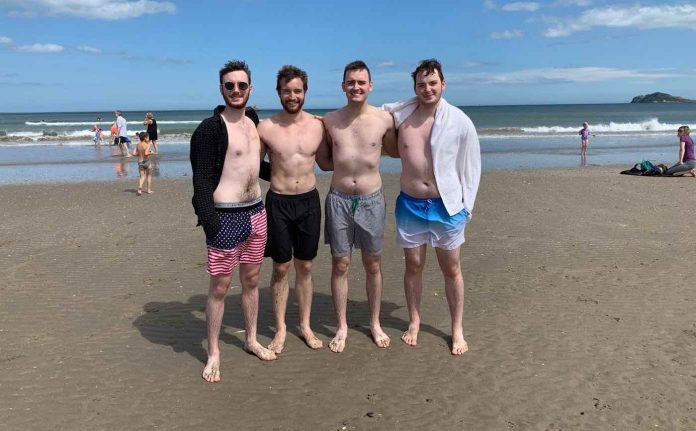
These four American brothers traveled to Ireland last week as visitors—but since they rescued a little girl and her father from drowning in the ocean, they are now leaving the country as heroes.
LISTEN to the inspiring story told on the radio by our GNN founder (in the Good News Guru podcast below) or READ the full story below…
Photo by Juliana Butler
Eoghan, Walter, and Declan Butler had traveled to the Emerald Isles from Washington D.C. with their brother-in-law Alex Thomson in order to attend their grandfather’s funeral.
The young men had been preparing to enjoy a relaxing afternoon on Portmarnock Beach when they heard someone calling for a lifeguard.
A 6-year-old girl on a flotation device had been swept out to sea by a rogue current when her father started yelling for help.
Eoghan, Declan, and Alex immediately sprinted into the ocean to rescue the girl while Walter stayed on shore in case someone needed CPR.
Since the youngster had already drifted half a mile away from the shore, the three brothers were forced to swim for 25 minutes in order to reach her—a harrowing feat, even for three athletic young men.
Once they reached the girl, the brothers then took turns swimming on their backs in order to tow the girl’s flotation device back to shore on their chests.
Upon successfully bringing the girl back to dry land, Eoghan and Declan noticed that the girl’s father was still in the water after he had put on a life vest to swim out and help with the rescue mission. The twin brothers then plunged back into the water and rescued the struggling father as well.
Though the young men felt relieved to have rescued the father-daughter-duo, they felt particularly emotional when they were visited by the little girl’s mother the very next day.
“Seeing her jump around, kiss her mom, that was actually amazing,” Declan told The Washington Post.
Furthermore, the boys later realized that their rescue had taken on a serendipitous meaning of its own: they had rescued the little girl on the exact same day that the brother of their deceased grandfather had drowned several decades ago.
“It’s kind of like this godly, guardian angel kind of feeling,” mused Walter, “that the same day he drowned 64 years ago is the day we actually saved the life of a 6-year-old girl.”
Save Your Friends From Negativity By Sharing The Inspiring Story To Social Media…
In a sweeping show of bipartisan support, the US House of Representatives passed a new piece of legislation that is designed to put a stop to annoying robocalls once and for all.
The aptly-named “Stopping Bad Robocalls Act”, which was first introduced to the House last month, was approved this week in a landslide 429 to 3 vote.
The legislation is being lauded as a much-needed response to annoying robocalls after a February report from the FCC stated that there were over 5.7 million “Do Not Call” complaints from American consumers in 2018, over 3.7 million of which were classified as unwanted robocalls.
Thankfully, some of the bill’s key measures include requiring phone carriers to implement call authentication technology so consumers can trust their caller ID again; directing the FCC to take action against unwanted calls and enact safeguards so companies can’t abuse robocall exemptions; and ensuring the FCC has the authority and the tools to take strong, quick action when it tracks down robocallers.
Additionally, the measure will extend the statute of limitations from one year to three—and in some instances four—for callers violating robocall prohibitions.
The bill was introduced by two Democratic and two Republic representatives who issued a statement on the legislation’s approval this week.
“Today, the House of Representatives voted to restore Americans’ confidence in the telephone system and put consumers back in charge of their phones,” reads the statement. “We’re proud of the strong support our bipartisan Stopping Bad Robocalls Act received this afternoon and look forward to working with our colleagues in the Senate to produce a bill that the President can sign into law. The American people are counting on us to help end the robocall epidemic, and we will deliver for them.”
Share The Call To Action By Passing On The Positive News To Your Friends On Social Media…
A Japanese man’s sweet note for his American neighbors was shared across the internet after the appreciative family posted a photo of the letter to Reddit back in 2013.
Reddit user Theresa52 says that she and her husband had moved to Yokosuka after he had been stationed at the nearby Navy base. Upon moving into their new neighborhood, they set about delivering beer and chocolate to each of their neighbors—including a man named Hiroshi Yamashita.
A few hours later, Yamashita visited the American family’s home and presented them with toilet paper, stuffed animals for their daughter, and a note.
The note read “I can’t speak English. Thank you for the present. My name is Hiroshi Yamashita. I’m 52 years old. [I’m divorced] and I live alone.”
Though the rest of the letter had some translation letters, Theresa inferred that the man was asking whether her husband was in the Navy and expressing his hope that the family would appreciate the toilet paper and toys.
At the end of the note, Yamashita said: “Thank you for your friend operation.”
Though he may have been thanking the family for their gesture of friendship, other internet users assume that he was referring to Operation Friendship, which was the United States’ response to the 2011 earthquake in Japan.
Needless to say, Theresa and her husband were in awe of the heartfelt note.
“It was adorable! We had brought him a six pack and some chocolate and tried to introduce ourselves to him,” wrote Theresa. “A couple hours later he brought over this letter with a pack of toilet paper and some stuffed animals for our daughter.
“Yamashita wrote this note himself with some help from a translate app. His mom dated an American Sailor when Yamashita was a child so he knew a small amount of English.
“We were so impressed with his handwriting and we were totally not expecting a letter or a gift in return. Our introduction to him was a mix of Japanese words and pointing to Google Translate on our phone all while trying to hand him our gifts.”
With several thousand Reddit users vying for an update on Theresa’s new friendship with her neighbor, she later published a photo of her daughter enjoying her new toys—all courtesy of Yamashita.
“[Yamashita] will be getting more presents,” she added. “We never expected anyone to be so nice back to us.”
It has been six years since Theresa originally published a photo of the note to Reddit, but she recently made a post about how her friendship with Yamashita continued after their original interaction.
“Yamashita was a great neighbor! We did have daily morning chats,” she mused. “I had four elderly male neighbors who were all so sweet.
“We all exchanged gifts and food regularly for the four years I lived there. We would go to neighborhood festivals and have dinners together as well. I miss them all and think about them often.
In short, Theresa says that they did indeed end up sharing “a wonderful friend operation” of their own.
Be Sure And Share This Sweet Story Of Friendship With Your Own Acquaintances On Social Media…
Quote of the Day: “We must learn to regard people less in the light of what they do or omit to do, and more in the light of what they suffer.” – Dietrich Bonhoeffer
Photo: by Theophilos Papadopoulos, CC license
With a new inspirational quote every day, atop the perfect photo—collected and archived on our Quotes page—why not bookmark GNN.org for a daily uplift?
Keven Walgamott and the LUKE Arm – Photo by University of Utah Center for Neural Interfaces
Photo by Dan Hixson/University of Utah College of Engineering
Thanks to a groundbreaking new technological accomplishment, amputee Keven Walgamott had a good “feeling” about using his new robotic arm to pick up an egg without crushing it.
What seems simple for nearly everyone else can be more of a Herculean task for Walgamott, who lost his left hand and part of his arm in an electrical accident 17 years ago. When he picked up the egg, however, he was testing out the prototype of a high-tech prosthetic arm with fingers that can not only can move, but also move with his thoughts—and thanks to a biomedical engineering team at the University of Utah, he “felt” the egg well enough so his brain could tell the prosthetic hand not to squeeze too hard.
That’s because the team, led by University of Utah biomedical engineering associate professor Gregory Clark, has developed a way for the “LUKE Arm” (so named after the robotic hand that Luke Skywalker received in Star Wars: The Empire Strikes Back) to mimic the way a human hand feels objects by sending the appropriate signals to the brain.
Their findings were published in a new paper co-authored by U biomedical engineering doctoral student Jacob George and other colleagues in the latest edition of the journal Science Robotics.
“We changed the way we are sending that information to the brain so that it matches the human body. And by matching the human body, we were able to see improved benefits,” George says. “We’re making more biologically realistic signals.”
That means an amputee wearing the prosthetic arm can sense the touch of something soft or hard, accurately understand how to pick it up, and perform delicate tasks that would otherwise be impossible with a standard prosthetic with metal hooks or claws for hands.
“It almost put me to tears,” Walgamott says about using the LUKE Arm for the first time during clinical tests in 2017. “It was really amazing. I never thought I would be able to feel in that hand again.”
Keven Walgamott and the LUKE Arm – Photo by University of Utah Center for Neural Interfaces
Walgamott, a real estate agent from West Valley City, Utah, and one of seven test subjects at the University of Utah, was able to pluck grapes without crushing them, pick up an egg without cracking it, and hold his wife’s hand with a sensation in the fingers similar to that of an able-bodied person.
“One of the first things he wanted to do was put on his wedding ring. That’s hard to do with one hand,” says Clark. “It was very moving.”
How those things are accomplished is through a complex series of mathematical calculations and modeling.
The LUKE Arm has been in development for some 15 years. The arm itself is made of mostly metal motors and parts with a clear silicon “skin” over the hand. It is powered by an external battery and wired to a computer.
Meanwhile, the University of Utah team has been developing a system that allows the prosthetic arm to tap into the wearer’s nerves, which are like biological wires that send signals to the arm to move. It does that thanks to an invention by called the Utah Slanted Electrode Array. The Array is a bundle of 100 micro-electrodes and wires that are implanted into the amputee’s nerves in the forearm and connected to a computer outside the body. The array interprets the signals from the still-remaining arm nerves, and the computer translates them to digital signals that tell the arm to move.
But it also works the other way. To perform tasks such as picking up objects requires more than just the brain telling the hand to move. The prosthetic hand must also learn how to “feel” the object in order to know how much pressure to exert because you can’t figure that out just by looking at it.
First, the prosthetic arm has sensors in its hand that send signals to the nerves via the Array to mimic the feeling the hand gets upon grabbing something. But equally important is how those signals are sent. It involves understanding how your brain deals with transitions in information when it first touches something. Upon first contact of an object, a burst of impulses runs up the nerves to the brain and then tapers off. Recreating this was a big step.
“Just providing sensation is a big deal, but the way you send that information is also critically important, and if you make it more biologically realistic, the brain will understand it better and the performance of this sensation will also be better,” says Clark.
To achieve that, Clark’s team used mathematical calculations along with recorded impulses from a primate’s arm to create an approximate model of how humans receive these different signal patterns. That model was then implemented into the LUKE Arm system.
In addition to creating a prototype of the LUKE Arm with a sense of touch, the overall team is already developing a version that is completely portable and does not need to be wired to a computer outside the body. Instead, everything would be connected wirelessly, giving the wearer complete freedom.
Clark says the Utah Slanted Electrode Array is also capable of sending signals to the brain for more than just the sense of touch, such as pain and temperature, though the paper primarily addresses touch. And while their work currently has only involved amputees who lost their extremities below the elbow, where the muscles to move the hand are located, Clark says their research could also be applied to those who lost their arms above the elbow.
Clark hopes that in 2020 or 2021, three test subjects will be able to take the arm home to use, pending federal regulatory approval.
Reprinted from the University of Utah
(WATCH the arm in action in the video below)
Be Sure And Share The Force Of Good News With Your Friends On Social Media…
This story was submitted as a nomination to the Reader’s Digest “Top 50 Nicest Places in America” contest: a crowd-sourced effort to uncover nooks where people are still kind and respectful in an era of cultural and political divides. Be sure and vote for which story you think should be nominated as the Nicest Place by visiting the Reader’s Digest website.
Photo by the Fugees Academy
This non-traditional school uses soccer to help refugees learn, and it has a 100% college acceptance rate.
In 2019, every single student of the graduating class at the Fugees Academy in Clarkston, Georgia, was accepted into college, and every single one of them was the first in their family to make it past middle school.
It’s a point of pride for the few schools that manage it. For Fugees, it’s extra impressive given the struggles faced by some of its students.
Established in 2004, the school is uniquely designed to help refugee children thrive. Founder Luma Mufleh, who fled her native Jordan and was given political asylum in the United States in 1999, got the idea when she stumbled upon some boys playing street soccer. She joined their game, and soon the boys—refugees from Liberia, Sudan, and Afghanistan—opened up with their stories. They had fled the horrors of war and famine and were struggling in America, where they weren’t getting the attention they needed to succeed in school.
Mufleh asked herself what she would do if these were her kids. “What’s really awesome about this country is that you can build solutions to problems,” she says.
So she sought out the students with the greatest academic need and used soccer as a way in. At Fugees, all 90 kids play soccer every day; they read about soccer; they write papers comparing and contrasting the styles of Messi and Ronaldo. Each pupil reads his or her report card to the entire school, and if a grade is slipping, the student body must decide how they, together, will get that grade back up.
Photo by Fugees Academy
“We want them to see that there’s no shame in struggling,” Mufleh says. “We’re going to help you no matter what.”
One Iraqi pupil, who survived kidnapping, bombing, and other hardships, recently wrote a brief biographical essay reading: “I attend a small private school called the Fugees Academy—and I’m sad when we get days off during snowstorms and holiday breaks.”
Fugees recently opened a second school, in Ohio, with a third one soon to follow.
Reprinted with permission from Reader’s Digest. To learn more about GNN’s part in searching for the Top 10 Nicest Places, click here.
Score Big With Your Friends By Sharing This Inspiring Story With Your Friends On Social Media…