We’ve heard about celebrities such as The Game, Pearl Jam, and Cher contributing to the Flint, Michigan water crisis, so it’s not surprising that Detroit native Aretha Franklin, showed some R-E-S-P-E-C-T for the gravity of the situation.
In a serious feel-good move, the R&B star is reserving enough rooms to house up to 50 of the city’s residents in the Southfield Holiday Inn in nearby Detroit, with the Coney Island restaurant providing catering.
Flint residents who wish to apply for the accommodations will go through a pre-screening at Detroit’s the New Bethel Baptist Church where Aretha’s father used to minister.
“Detroiters usually come to the aid of Detroiters – and Flint is certainly regarded as Detroit,” the Queen of Soul told the Local 4 news station. “Hang in there.”
No word on how long the hotel rooms will be available at no cost.
Meanwhile, Michigan’s political leaders are scrambling to keep from looking like a ”Chain of Fools.”
Brits are banding together over the garden fence to save the country’s favorite little spiny critters – by carving tiny holes in the bottom of those fences and creating ‘hedgehog highways’.
Hedgehogs are much beloved in England as ideal gardening partners because they eat pesky slugs and insects, so it’s been an easy sell by the Hedgehog Preservation Society (HPS) to enlist homeowners in the creative conservation measure.
Since hedgehogs can explore up to one mile a day looking for food, shelter, and, especially, mates, they need plenty of space. Due to residential sprawl and the sturdy fences that inhibit the travel and reproduction of these nocturnal creatures, their population has plummeted by 30% in just the last decade.
The HPS is touting several strategies for the public to help the prickly guys, such as cutting a 5×5 inch hole in your fence (which is just small enough to keep larger pets from escaping your yard), removing a brick or stone in your masonry wall, or simply switching to hedges.
Photo by The Hadfields – CC
You can also make sure your garden is safe for the highways by removing netting, ponds, or toxic slug pellets.
More than 30,000 Hedgehog Champions have registered on the HPS website to take action, which has created friendly web of passages crisscrossing England.
If you want to become a Hedgehog Champion, find out more ways on how to support hedgehog life in your garden by visiting the Hedgehog Preservation Society website.
(CHECK Out the special traits of a hedgehog in the BBC video below) –Top photo by Riude, CC
This “Dynamic Duo” from Down Under had a secret crimefighting weapon to help them stop a robbery: alcohol — lots of alcohol.
And the two Australians showed off an added superpower – the ability to make people laugh uncontrollably.
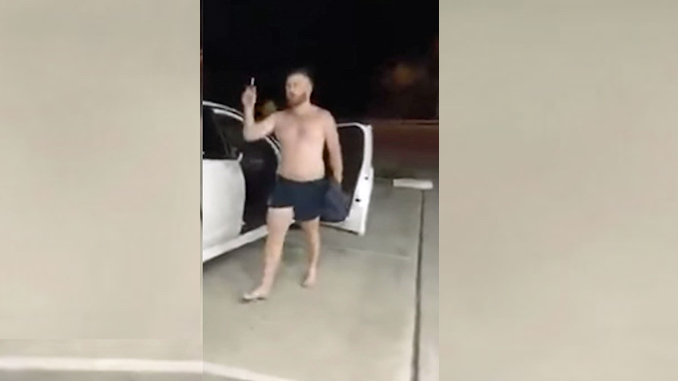
James Ross-Munroe and Kane Wiblen were hanging out at a gas station parking lot after a long night of partying. While James tried to fix his broken flip-flop — a “busted plugger” as he put it, they noticed two men hop out of a car, cover their faces, and head into a store.
Realizing they were witnessing a robbery, the drunken buddies ran — and stumbled — to the getaway car where James found the keys in the ignition, grabbed them and tossed them down a grate.
Unable to drive, the suspects ran off, with the two Aussie heroes in hot pursuit — Kane in flip-flops and James barefoot.
They never never caught up with the bandits, but Kane recorded the whole episode with his cell phone camera and the shaky, profanity-laced video was viewed more than a million times over the weekend.
The two heroes teamed up again for a Nine Network’s Today show interview that left the hosts rolling in laughter. One asked James if working out gave him the confidence to confront the suspected criminals.
“The only gym I go to is Jim Beam,” James answered with a nod to the Kentucky whiskey.
He hit the brakes, losing control of his big rig on the slick road. The 18-wheeler took out 30 feet of guardrail before coming to a stop — the cab hanging precariously over a steep hillside.
Even worse, tree branches kept Collins from opening his door to escape and the smell of leaking diesel fuel portended fire.
Hardly any time passed after the accident, before a rescuer moved the branches, forced the door open, and pulled Collins from the cab with one arm.
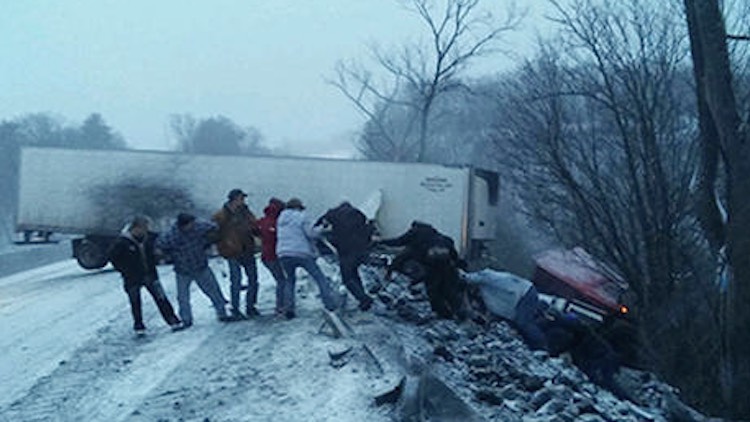
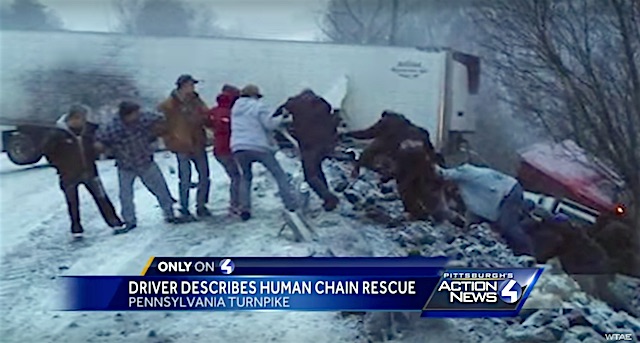
As the trucker looked up the hill, he saw eight men, arms linked together, forming a human chain to secure their safety up the slippery slope.
Truck driver Arlyn Satanek happened on the scene and snapped a photo of the rescue.
“It was just like everyone knew in that moment, we have to reach him, ‘Let’s lock into this and get this guy up.’ It was awesome,” Satanek told WTAE News.
As quickly as the human chain formed, each of its links headed back to their vehicles.
Collins didn’t get a chance to thank them at the time for their “proper road ettiquette,” but said later it’s “nice to know there’s still people like that out there.”
(WATCH the video from WTAE News below) — Photo: Arlyn Satanek
Like an electric blanket, this slab of concrete promises to keep airport runways warmer and bridges free from ice whenever winter storms strike.
Researchers have altered the basic foundation of roadbuilding material so it can electrically melt ice and snow.
At the University of Nebraska-Lincoln they mixed in steel shavings and carbon which allow the material to conduct an electric current. Turning up the power heats the concrete slabs and melts ice and snow.
In the past, road builders have installed cables and pipes in bridges and highways to melt ice and snow, but so far the systems have been expensive and unreliable. Some are eventually ripped out by heavy traffic.
This is the first material to be used within a bridge that conducts electricity directly throughout all the concrete. Even if traffic wears away part of the roadway, the electricity continues to flow and the concrete continues to melt ice and snow.
The university researchers have been testing the material for more than 13 years on a busy 150-foot bridge. The concrete has been melting snow and ice on its own and without a problem since 2002.
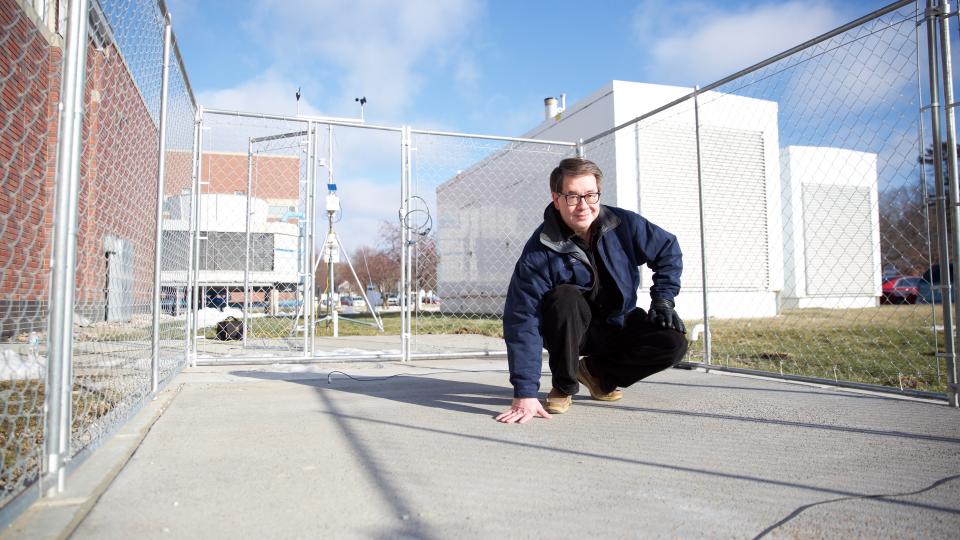
In the picture above, snow blankets the ground outside a UNL classroom except for a 200-square-foot slab of the electrified concrete. Cranking up the power after a winter storm hit in December, melted the precipitation that fell on it (see the video below).
The snow-melting road material isn’t cheap, at $300 per cubic yard, it’s more than twice the price of regular concrete.
The bridge uses about $250 in electricity over a typical three-day storm, but the researchers say that’s a small fraction of the cost of deicing chemicals used to do the same job.
They admit it’s not economical to electrify an entire highway, but since bridges and highway ramps freeze more quickly than roads, the electric-concrete mixture is a bargain to make them safer in freezing weather.
The UNL team is now demonstrating their technology to the Federal Aviation Administration with a goal of using their invention for the tarmac at a major airport.
The FAA isn’t interested in heating runways, but believes the concrete could be helpful around the gates where planes, baggage carts, and food trucks can slide on slick pavement.
“They said that if we can heat that kind of tarmac, then there would be (far fewer) weather-related delays,” civil engineering professor Chris Tuan said. “We’re very optimistic.”
Nebraska’s Department of Roads gave the material a positive review after five years of use on the Roca Spur Bridge in Lincoln and the FAA appears impressed with the material so far.
To show how much he believes in the material, Tuan even built his home’s patio out of the material – and hasn’t ever had to shovel snow off of it.
(WATCH the time lapse video of the concrete in action below) – Photos: University of Nebraska-Lincoln
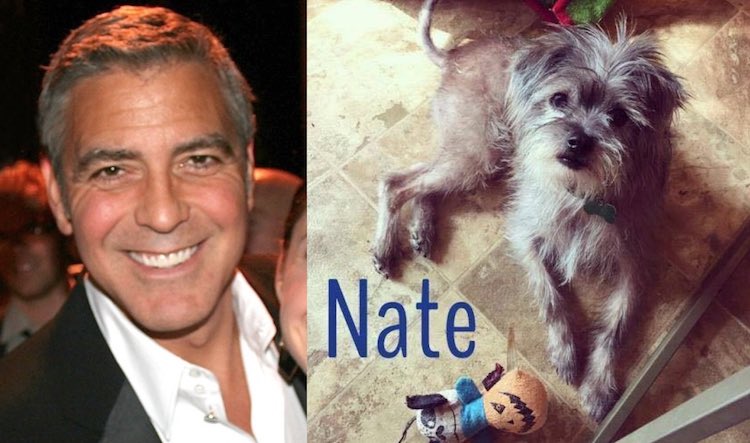
People at each successive adoption event were taken aback by Nate the rescue dog because of his birth defects, but a Hollywood legend decided he was a perfect pet.
“A barrel chest, a leg that swayed. He walked like a Hyena.” LuvFurMutts Animal Rescue posted on its Facebook page describing the little terrier mix.
Actor George Clooney, after seeing photos and video online, thought the little dog was a keeper and adopted the three-year-old mutt for his parents, whose own terrier had passed on recently.
Nate had been one of 22 dogs rescued from a hoarding situation and moved to the group’s adoption facility in Fairfield, Ohio. For nine months nobody wanted him, until the Hollywood A-Lister swooped in to claim him for his mom and dad.
Clooney is keen on rescuing shelter dogs. He and wife, Amal, adopted their third rescue dog, a basset hound named Millie, in October to join two rescued cocker spaniels.
(READ more at LuvFurMutts’ Facebook page) — Photos: Thescrutineer, CC; LuvFurMutts, Facebook
When a wildfire swept across Western Australia, a pair of veterinarians and their nurses elected to stay at their clinic to give free medical care to animals left behind.
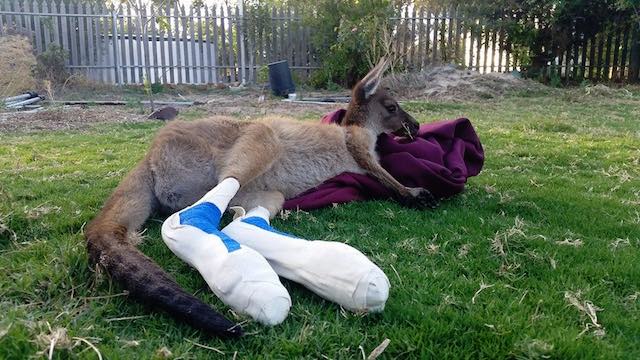
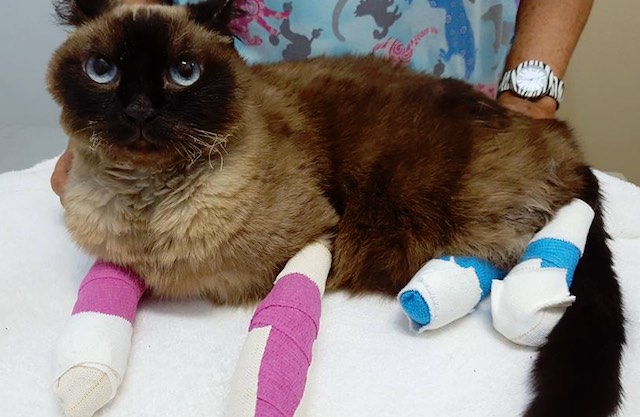
Baby kangaroos, possums, horses, dogs, and cats were brought by firefighters to the staff at the Waroona Veterinary Clinic, keeping them busy around the clock.
The Joey family this afternoon, all doing well, putting on weight and stressing as little as possible!
Kangaroos, wrapped in pink and blue bandages, have filled the paddock behind the clinic, since brush fires swept through the town of Yarloop and scorched 76,000 acres in early January.
The fast moving blazes struck the town with only 25 minutes warning. Hundreds of people were forced to flee so quickly, they had to leave pets and livestock behind.
Genuine heroes, Dr. Ronald Schneider and Dr Rebecca Flegg have traveled to farms and ranches around the region, taking food to surviving livestock and rounding up strays that needed medical attention.
Communities across the region have rallied to donate food for the animals, and the clinic has a stockpile of everything from dog food to cattle feed, which they are offering free of charge to anyone returning to Yarloop.
(WATCH the video of two of the clinic’s rescues below) — Photos: Waroona Veterinary Clinic, Facebook
The city of Chennai in India experienced one of the worst monsoons in over a 100 years, with daily life coming to a standstill in December when thousands were stranded without homes, food or supplies.
During those chaotic weeks, Chennai’s local heroes emerged, battling nature’s fury with resilience and determination to keep the capital city alive.
This is one such story of a man who cooked for four days non-stop without sleep to prepare 170,000 food boxes for people in need. At first, Santosh Muruganantha, who owns a take-out restaurant, was preparing all the food himself, but word spread in the community and help arrived in droves.
He not only wanted to feed people, he organized the army of 300 volunteers–college students, elderly folks, and wealthy businessmen–to put together one thousand personal care kits for people in remote villages who weren’t receiving aid yet– and then deliver them.
“80 percent of the credit goes to Milaap contributors,” said Santhosh, describing the funding he received from the micro-lending organization that collects small loans from citizens across the world to benefit the poor in Africa and Asia.
Eventually, Muruganantha did allow himself to go home and sleep, a new hero to the people of the Tamil Nadu region.
(WATCH the inspiring story below)
SHARE This to Say, “One Person Can Make A Difference”…
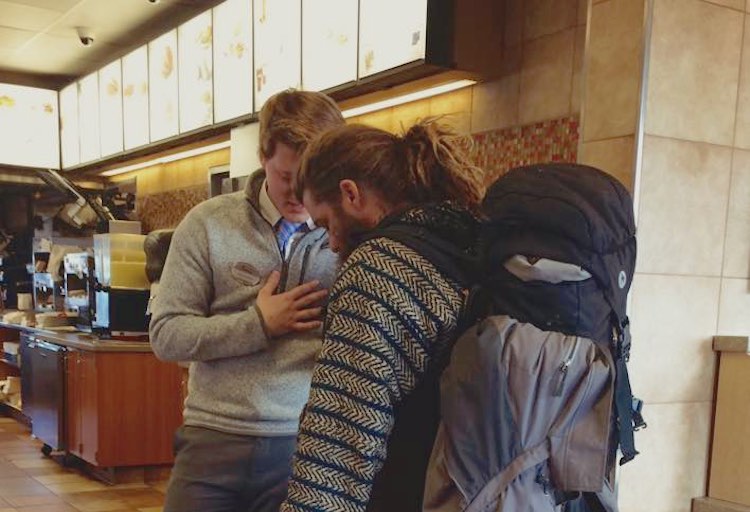
When a drifter wandered into a fast food restaurant asking for any food they might be tossing out, the manager refused to give him scraps and gave him a full meal instead.
The man was covered in mud with a scruffy beard. He stood alone as people avoided him, while someone went to find the manager of the Chick-Fil-A in Murfreesboro, Tennessee.
When the manager came over, he offered a hot meal for the traveler then asked to pray with him. The two bowed their heads and the manager offered his blessings for the meal as customers went about their business all around them.
I took Stella to Chick-fil-A today. It's our normal daddy/daughter spot. It's clean, so good, and the playground has a...
Joey Mustain and his daughter, Stella, watched the scene unfold and posted the story and a picture of the two men praying to his Facebook page. As he explained to his little girl what was going on, Stella bowed her head, too, while the manager and drifter finished their prayer.
Rapper “The Game” is stepping up the game for celebrities who want to contribute to suffering residents of Flint, Michigan during the city’s contaminated water crisis. He delivered a million dollars, in cash and water, and challenged other smaller donors, like Jimmy Fallon and Madonna who gave $10,000 each, to open their wallets wider.
The Game, also known as Jayceon Terrell Taylor, has given $500,000 of his own money and he worked with Avita Water to provide another half-million in free bottled water for city residents.
Flint’s water supply became contaminated after the city switched sources and lead leeched from old pipes into its drinking water.
Other celebrities such as Cher, and Pearl Jam, and Big Sean have contributed money and bottled water to the city’s people, but The Game’s gift is believed to be the largest single contribution so far.
Stay tuned to see how many celebrities take him up on his million-dollar challenge.
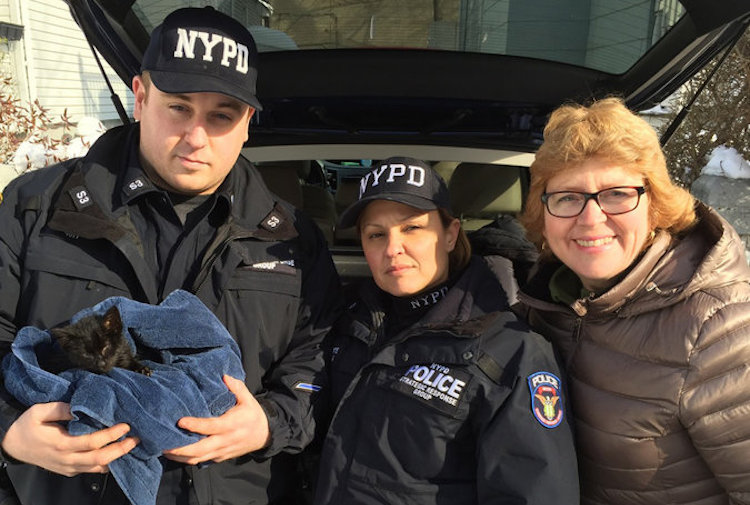
Police officers trained to take down terrorists came to the rescue of a frightened kitten blocking traffic in New York City.
The kitten ran into traffic and jumped into the wheel well of Geraldine Cassone’s car as she was stopped at a red light. When the light changed, she was afraid to move the car for fear of hurting the cat.
Cassone got out of the car and tried to find the kitten. At least eight other people nearby joined her, but couldn’t figure out where it was hiding under her car.
She finally flagged down a police car for help. The officers, with NYPD’s Strategic Response Group, put their training on hunting terrorists to work.
Officers Christopher Rinelli and Kenia Marte carefully moved the car into a driveway and began a strategic search, listening for the cat’s meowing.
When they found the kitten, balled up and hiding above the gas tank, it was still out of reach. The officers and a neighbor had to finally remove the wheel before they could get to the little cat.
“This is exactly what I signed up for in the department,” Officer Rinelli told the New York Times. “To help people that need help. And animals, of course.”
The kitten is being fostered by an animal shelter, but Cassone plans to adopt the two-month-old cat she named Midnight, when she returns from vacation.
Armed with a shovel and a smartphone app, hundreds of young people fanned out across Baltimore, Maryland in the wake of last weekend’s winter storm, to shovel sidewalks for the elderly and disabled.
About 345 teens are benefitting from the City Youth Snow Program, clearing snow for roughly 1,000 people who can’t manage it themselves. They earn $10 an hour and can make up to $750 over the course of the winter.
The program uses a phone app to connect the teens with shoveling jobs within a few blocks of their homes. The shovel crews take before and after pictures of the sidewalk and submit them on the app to show the work was done.
Baltimore mayor Stephanie Rawlings-Blake announced the Youth Snow Program last summer asking teens to hit the streets whenever Baltimore gets five inches or more of snow.
Their first job came on Sunday, when the city saw its largest single-day snowfall ever — topping 27 inches and creating plenty of work for the Baltimore youth who signed up before November.
“Yesterday my back was killing me. My back and my legs. But that was it. I’m good,” 17-year-old Aiesha Johnson told the Baltimore Sun. “I like it. It helps more people out.”
Residents who would like to register can call 443-263-2220.
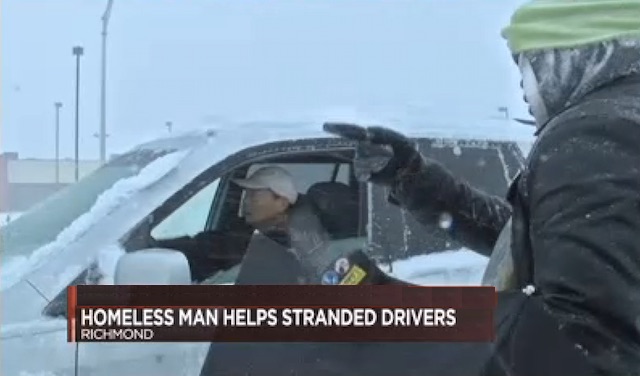
A homeless good Samaritan rushed to help when he saw motorists stuck in the winter storm that hit the Eastern U.S. last weekend.
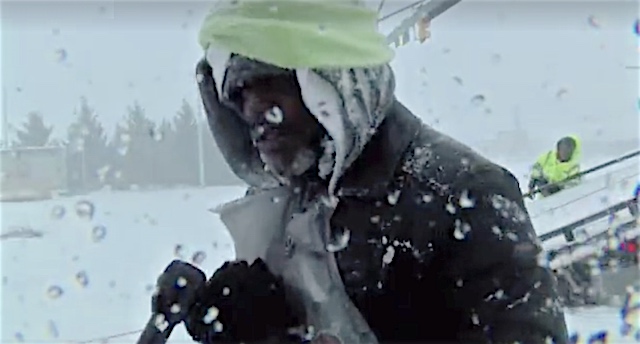
The man, identified only as Curtis, had been taking shelter between two buildings when he noticed cars getting stuck in the snow, so he ran out to help.
“It’s just the right thing to do,” he told WWBT News in Richmond, Virginia. “Because at times, people help me out. One hand washes the other one.”
Many of the more than half dozen drivers that he helped while the TV crew was there thanked him, but never knew he was homeless.
Curtis still didn’t have any idea where he would spend the night as the storm dropped more than two feet of snow on the area. People posting to Facebook wanted to raise money for Curtis, but he didn’t leave any information to make himself easily found.
Reporter Ashley Monfort and her cameraman gave him some hot coffee and a warm meal, and money to pay for transportation to a homeless shelter – then he was back to pushing cars down the road.
(WATCH the video from WWBT News below) — Photos: WWBT video
HOMELESS MAN HELPS STRANDED DRIVERSWe saw many good Samaritans today helping stranded drivers on Midlothian Turnpike. But Curtis has a special place in my heart. He's in the first clip wearing the neon hat. We started talking to him where he told me he's actually HOMELESS and was staying between two buildings. When he saw drivers who were stuck, he would come over to help. AND he flagged down the tow truck to help these stranded drivers.He says many people said thank you but had no idea he doesn't have a home. GOD BLESS YOU Curtis.(PS...we gave him some coffee, warm food and some money so he could make his way to the shelter. I told him over and over again to make sure he heads that way before nightfall).*****EDIT******PPS...So many of you have asked to help and I'm touched by your kindness. But unfortunately I didn't exchange information with Curtis. I was distracted by the snowy conditions and just getting him something warm to eat...I didn't get his information. But if I see him again I'll do a follow up. #RVAsnow #GoodSamaritan #positivenewsstory
Peter Rabbit makes an appearance in a recently discovered Beatrix Potter story to be published later this year — more than 100 years after it was written.
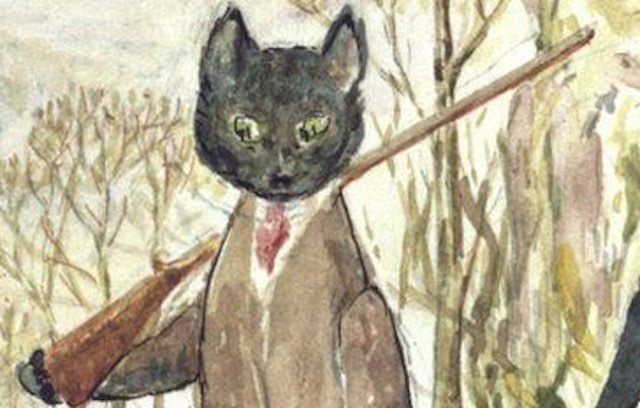
Potter, who created Peter Rabbit and dozens of other beloved characters in her 23 children’s books, sent “The Tale of Kitty-in-Boots” to her publisher in 1914, saying it was the story of “a well-behaved prime black Kitty cat, who leads rather a double life.”
World War I, along with family and health issues interrupted Potter and her publisher and she never completed the book — illustrating only one of the pictures to go along with her story.
Publisher Jo Hanks stumbled onto a reference about the lost book in an old biography of Potter. After some detective work, Hanks was able to track down three versions of the manuscript with notes, some sketches, and the one finished drawing.
Quentin Blake, an illustrator with expertise in Potter’s style has been brought in to finish the book’s pictures. He’s best known for his work with Roald Dahl, who wrote “Charlie and the Chocolate Factory” and “James and the Giant Peach.”
In Kitty’s adventures, she runs into some familiar Potter characters, including Peter Rabbit, after he’d grown older, fatter, and a bit slower. This will be the seventh Potter book that Peter appears in. The Peter Rabbit series has sold more than 151 million copies in 35 languages since it was first published in 1902.
Charitable giving ranging from children’s health to college scholarships have earned nominations for three National Football League athletes to be the “Walter Payton Man of the Year”.
Each team in the NFL nominates one member who has had a positive impact on his community. Last year’s winner was Carolina Panther’s star Thomas Davis.
This year’s nominees are San Francisco Forty-Niners wide receiver Anquan Boldin, New Orleans Saints tight end Benjamin Watson, and New York Giants quarterback Eli Manning.
Boldin created the “Anquan Boldin (Q81) Foundation” which has provided four-year college scholarships to high school seniors while also improving eduction opportunities for other students.
Watson’s “Watson One More Foundation” launches charitable initiatives of its own and contributes to existing charities in New Orleans, Louisiana.
Manning has supported several charities including the March of Dimes and the American Red Cross — where he sits on the organization’s “Celebrity Cabinet.” Manning and his wife have also founded the Eli and Abby Manning Children’s Clinics at the Blair E. Batson Hospital for Children in Jackson, Mississippi.
The winner will be announced February 7, the night before Super Bowl 50. Manning’s brother Peyton, will be playing in the big game the following day as the quarterback for the Denver Broncos.
The NFL created the Man of the Year award in 1970 to honor players for excellence both on and off the field. It was renamed after Chicago Bears running back Walter Payton following his death in 1999.
Photos: National Guard; Jeffrey Beall, CC; Alexa, CC
Syrian refugees fleeing to Germany are in need of basic necessities like food and shelter, but what about having the resources to better assimilate into a foreign-speaking country and rebuild their lives?
That’s why Google just made a $5.3 million grant that will help supply up to 25,000 Chromebooks to asylum-seekers in need.
NetHope, an organization that connects tech companies to nonprofits, teamed up with Google.org to create Project Reconnect where groups geared towards aiding Syrians can apply to receive up to 5,000 of the laptops.
“Chromebooks have proven to be a good fit for education purposes. They can be easily set up to run education or language learning apps.” says Google.org director Jacquelline Fuller in a statement released on Monday. “And they can be configured and managed by a central administrator (in this case the nonprofits) to offer relevant programs, content and materials depending on the situation.”
Google has made several contributions to the refugee crisis, including their $5.5 million donation to organizations like Doctors Without Borders, International Rescue Committee, and Save the Children, matching the amount donated by supporters from around the world during a 48-hour period in November.
File photo, which does not show Chromebooks, by Adlogi, CC
What does a dinosaur in Fort Campbell, Kentucky have in common with a batman in Rowlesburg, West Virginia? They are both digging out from the big snowstorm, of course…
Amy White Saxon posted a video on Facebook that had us chuckling over the weekend showing her whimsical neighbor dressed up in a T-Rex costume struggling to shovel a driveway, while getting a laugh out of his son..
If you were hit by superstorm Jonas or cold weather has got you down, this video of Syrian refugee children sledding in the snow is sure to warm your heart.
Going tobogganing is one of many “firsts” these three siblings are experiencing since they and their mother fled their country’s civil war and arrived in Canada on December 30th. The family has been co-sponsored by Ontario Police constable David McNab and his wife Kristy Hiltz
“Snow is a new experience, but fun in any language looks the same,” McNab said on his Youtube account after creating the video.
The clip of the laughing kids coasting down Armour Hill in Peterborough synced to a Johnny Nash cover “I Can See Clearly Now,” has racked up over 350,000 views since it’s publication on January 19th.
When it comes to helping the people of Flint, Michigan during the city’s water crisis, you “can’t find a better man” than any of the members of Pearl Jam.
The Seattle rock band has pumped aid to the tune of $367,000 into the town where high levels of lead have leeched into the water supply from old pipes.
The band pledged $125,000 to the local United Way and talked their friends and business partners into pledging another $175,000.
The band also created a CrowdRise page to let fans donate to the cause. All money will go to the Flint Water Fund set up by the United Way of Genesee County.
The page has doubled the amount raised by the band with $390,000 pledged by fans.
Not a Pearl Jam fan? Rapper Big Sean also has his own CrowdRise page that’s raised $70,000 so far for the Community Foundation of Greater Flint Michigan.
Aretha Franklin is also stepping up, offering to pay for 50 hotel rooms with meals for families to be pre-screened by her father’s Baptist church in Detroit.
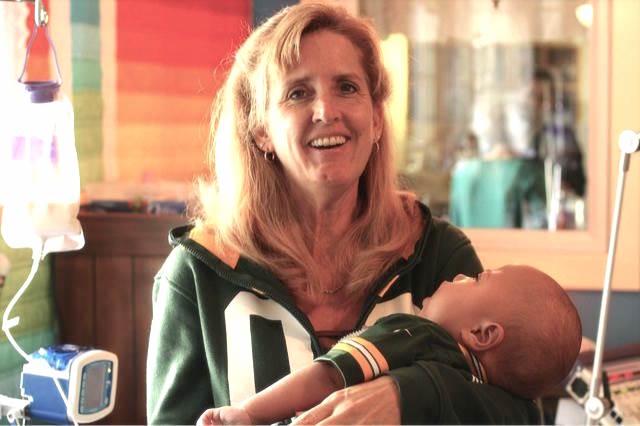
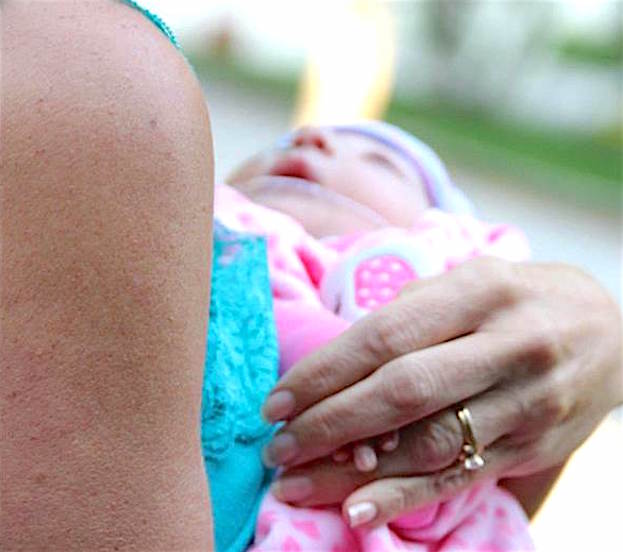
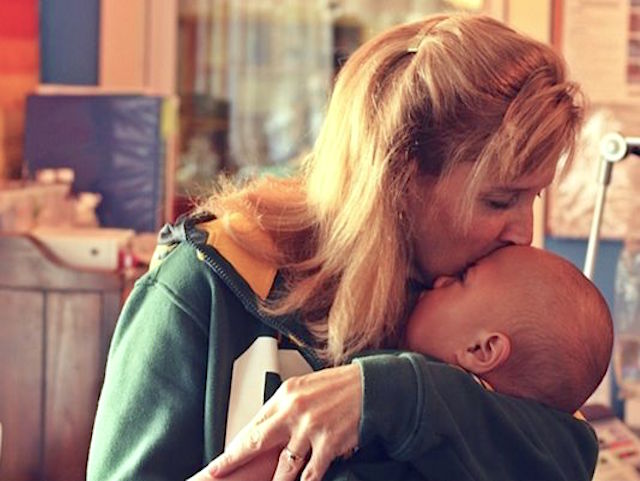
Cori Slachert has created her own “baby hospice” for these infants, inside the home she shares with her husband and where she’s raised their eight biological children.
Emmalynn was the first Cori took in. Born without the right hemisphere of her brain and living only in a vegetative state, the little girl passed away quietly in Cori’s arms, “listening to my heartbeat,” she says, after just 50 days.
The experience, providing love to a baby whose life is so short, inspired her to continue serving.
She took in Charlie next, when he was four-months-old. He was born with a life limiting condition that requires him to breathe through a tiny straw. He has been with her about a year, and is not expected to live through another one.
Cori admits much of her “baby hospice” care is sad, but giving them love while they live is worth it to her.
“What a gift it is to be a part of these babies’ lives,” Cori wrote in an online article for TODAY. “To have the ability to ease their suffering, to cherish and love them even though they aren’t able to give anything tangible back or even smile in return for our efforts.”