In an ambitious bid to cut the nation’s greenhouse gas emissions, India is now ensuring that all diesel and gas stations will only be supplying the cleanest available fuel.
Starting on April 1st, India will join the ranks of the few world nations offering Euro-VI grade fuel, which only contains 10 parts per million (ppm) of sulphur in contrast to the 50 ppm in Euro-IV fuels.
India is reportedly the first country to ever transition directly from IV-grade fuels to VI-grade. Not only that, they managed to achieve the transition in just three years.
According to The Tribune, it took India 7 years to transition from Euro-III grade fuel with a sulphur content of 350 ppm to Euro-IV fuel. Reports also say that most of the nation’s gas stations were already distributing the new ultra-low fuel by the end of 2019.
“We are absolutely on track for supplying BS-VI fuel from April 1. Almost all refineries have begun supplying BS-VI fuel and the same has reached storage depots across the country,” Sanjiv Singh, Chairman of Indian Oil Corp (IOC), told reporters. “It was a conscious decision to leapfrog to BS-VI as first upgrading to BS-V and then shifting to BS-VI would have prolonged the journey to 4 to 6 years. Besides, oil refineries, as well as automobile manufacturers, would have had to make investments twice—first to producing BS-V grade fuel and engines and then BS-VI ones.”
While the initiative is just one of the many ways that India is trying to keep up with the world’s shift towards renewable energy, the nation reportedly made history last week by becoming the first country to power all of its government-run seaports with solar and wind energy.
The “green port” infrastructure means that 12 of the country’s biggest seaports are exclusively using renewable energy to power their daily operations. Not only that, the ports can use the energy to electrically power ships as they are docked.
File photo by Bernard Gagnon, CC
Power Up With Positivity By Sharing The Good News To Social Media…
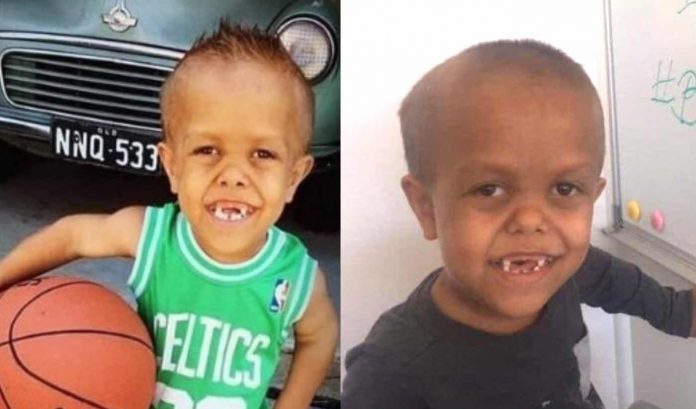
Thousands of people from around the world are rallying behind a 9-year-old Australian boy who was ruthlessly bullied for his dwarfism at his school.
Yarraka Bayles was heartbroken to pick up her son Quaden from school in Queensland this week only to find the youngster in tears from being taunted by some other students.
Bayles posted a video of Quaden’s emotional response to social media in hopes that it would show kids—and parents—just how devastating bullying can be for a boy.
The video did indeed have a powerful response; since it was uploaded on Tuesday, it has been viewed more than 20 million times
Hundreds of thousands of people have sent the family messages of love and support. Sports teams and celebrities such as Hugh Jackman have recorded video messages of encouragement for the youngster.
Furthermore, Australian comedian Brad Williams—who also lives with a form of dwarfism—started a GoFundMe in order to raise money to send Quaden and his family to Disneyland.
“I’m setting up this GoFundMe to let Quaden know that bullying will not be tolerated, and that he is a wonderful human being who deserves joy,” Williams wrote on the campaign page.
“This isn’t just for Quaden, this is for anyone who has been bullied in their lives and told they weren’t good enough,” he added. “Let’s show Quaden and others, that there is good in the world and they are worthy of it.
“I have been in touch directly with Quaden’s mother. So I will have their information to book the flights. Funds raised will be spent on two airplane tickets for Quaden and his mother from Australia to Los Angeles, as well as providing a hotel, food, and tickets to Disneyland Park in Anaheim for multiple days.
“After all the flights, hotel, tickets, and food is paid for, any excess money will be donated to anti-bullying/anti-abuse charities.”
Within 24 hours of creating the campaign, it surged past its original goal of $10,000 and garnered roughly a quarter-million dollars in donations. [Update: By Sunday, February 23, the fund has reached $460,000.]
“This is the best of humanity,” wrote Williams in a Twitter update. “I promise every penny donated will be put to good use. It will go to help Quaden and to make sure no child goes through what he went through. YOU ALL ARE AMAZING!”
Update! We raised 25k! I’m speechless. Many other people and celebrities have started their own campaigns of awareness and that’s great. Doesn’t matter where the help comes from as long as they are legit. I’m talking to his family to schedule the trip! https://t.co/bmRnGiSWil
Quote of the Day: “I felt my lungs inflate with the onrush of scenery—air, mountains, trees, people. I thought, ‘This is what it is to be happy.’” – Sylvia Plath
Photo: by Tim Tiedemann – public domain
With a new inspirational quote every day, atop the perfect photo—collected and archived on our Quotes page—why not bookmark GNN.org for a daily uplift?
Although Harper the dog has already proven herself to be a very capable “branch manager”, it seems that she still has a few tricks that she needs to learn from her mom Willow.
Harper was recently caught on camera struggling with a particularly large stick in a local park. Despite how it seems she was determined to move the stick on her own, Willow was more than happy to lend a helping paw.
Based on their resulting success, we would not be surprised if the two pups made it a family business.
“Both have determined personalities and are always so proud when they are doing it,” their owner Tanya told The Dodo. “They carry [the sticks] for about a kilometer around our 5-kilometer park where they need to get through crosswalks and bollards—which they have now perfected.”
“Harper gets distracted by people wanting to talk to her,” she added “But Mum is always there to help her keep moving on.”
(WATCH the video below)
Be Sure And Share This Pawesome Story With Your Friends On Social Media…
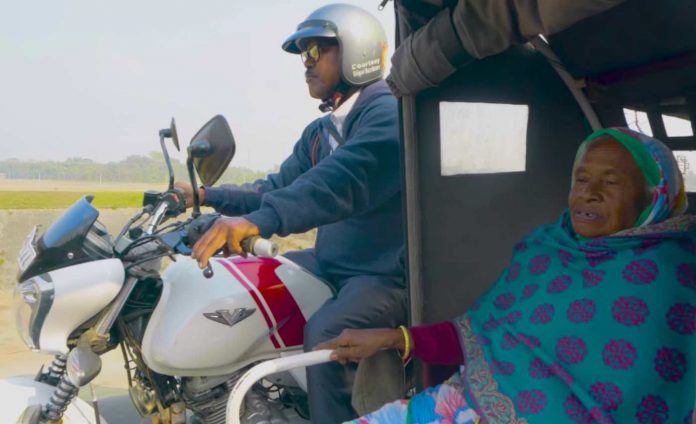
Some rural Indian villages are miles and miles away from the nearest hospital—and that’s why this devoted man has taken it upon himself to run his very own free ambulance service.
During the last 19 years, Karimul Haque has brought more than five thousand people to the hospital using his makeshift motorcycle-powered ambulance.
Haque was first inspired to launch his mission of service after he was left grief-stricken by the death of his mother almost two decades ago. He then vowed not to let any other mothers in the region suffer from lack of medical treatment or access to healthcare.
Since Haque first began his labor of love, his entire family has joined his mission by volunteering their own time and services.
Corporate food giant Kellogg’s is moving to import all of their palm oil from sustainable sources before 2025—and it’s all thanks to the work of two young English sisters who were moved to help endangered orangutans.
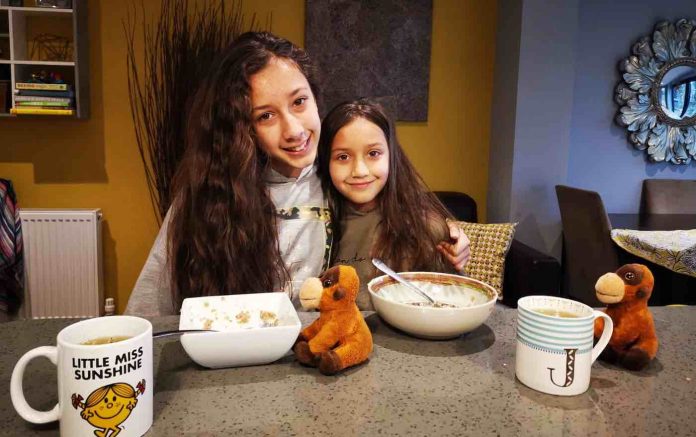
12-year-old Asha Fitzpatrick and her 10-year-old sister Jia stopped eating Kellogg’s cereals and petitioned the firm to improve its palm oil policy after watching a documentary about orphaned orangutans.
Despite its humble beginnings, their petition has since racked up more than 780,000 signatures. Not only that, it caught the eye of Kellogg’s chiefs who invited the determined sisters to a meeting.
The sisters first met the firm’s executives in 2018 to discuss possible changes to where they source their palm oil. The clear-cutting in forests to make way for new palm crops have been blamed for devastating the orangutans’ natural habitat.
Since then, impressed Kellogg’s bosses have pledged to appoint “trusted NGOs” (or nonprofits) to oversee the firm’s planned switch to segregated palm oil—a more sustainable form of the ingredient widely used in food and cosmetics.
Alison Last, a spokeswoman for Kellogg’s, said: “In February 2020, Kellogg updated its Global Palm Oil Policy and launched its Global Deforestation Policy, as well as plans that reflect an evolution of the company’s strategies and actions to further drive impact at scale.
“…Kellogg’s is committed to working with its global palm oil suppliers to source fully traceable palm oil that is produced in a manner that’s environmentally responsible, socially beneficial and economically viable, which includes helping to mitigate deforestation.”
(L-R) Asha Kirkpatrick and Jia Kirkpatrick. SWNS.
In a policy document handed to the Kirkpatricks, Kellogg’s confirmed that it is now “committed” to sourcing 100% of its palm oil sustainably by 2025.
The firm currently sources 15% of its palm oil from uncertified producers and offsets the costs by purchasing environmental “credits” from the conservation nonprofit Roundtable for Sustainable Palm Oil.
Additionally, the food giant has pledged to partner with “trusted” NGOs and work with smallholders to “combat deforestation and support forest restoration.”
The company announced the move in a meeting with the sisters on Friday, 18 months after they first launched their petition.
Harvinder Dhinsa, the girls’ delighted mum, said: “They were really surprised by the announcement.
“They weren’t expecting such a commitment. I’m really proud of them,” she added. “It shows no matter how small you are that you have a voice and people will listen.”
(L-R) Asha Kirkpatrick and Jia Kirkpatrick. SWNS.
Dhinsa, who is from Leighton Buzzard, Bedfordshire, said her daughters have decided to keep the petition active in order to ensure that Kellogg’s management keeps their word.
“If they don’t follow through, we will be on their backs,” she added. “The announcement is great, but we need to keep their feet to the fire and ensure changes are made before we can say it’s done.
“That’s why the petition stays open and we are still calling for signatures.”
Dhinsa said the girls’ petition gained momentum after environmental charity Greenpeace launched a campaign to save the endangered orangutans in Borneo that are losing their homes and habitats to palm oil production.
The girls first met with Kellogg’s chiefs, including Oli Morton, managing director for Western Europe, back in 2018.
“The first meeting was a bit of a charm offensive,” recalled Dhinsa. They gave the girls cereal boxes, posed for photos and spoke about changing their policy.”
In the second meeting last year, Dhinsa said the girls left “disappointed” after the managers seemed to backtrack on their previous claims.
“They rolled back on the commitment saying they were a small player in the global palm oil market without much power to change things,” said the mother. “But on Friday, our third meeting, the firm’s tone became very positive.
“I’m certain that increased media coverage on climate change, the Australian forest fires and figures like Greta Thunberg have encouraged their new stance.”
Dhinsa said Kellogg’s bosses have agreed to meet with the girls again in six months to update them on their progress, and to tell them which NGOs they have appointed for the transition.
Now, the young sisters are considering approaching other firms to see whether they will “step up” and follow Kellogg’s lead.
Serve Up Some Positivity To Your Friends By Sharing The Good News To Social Media…
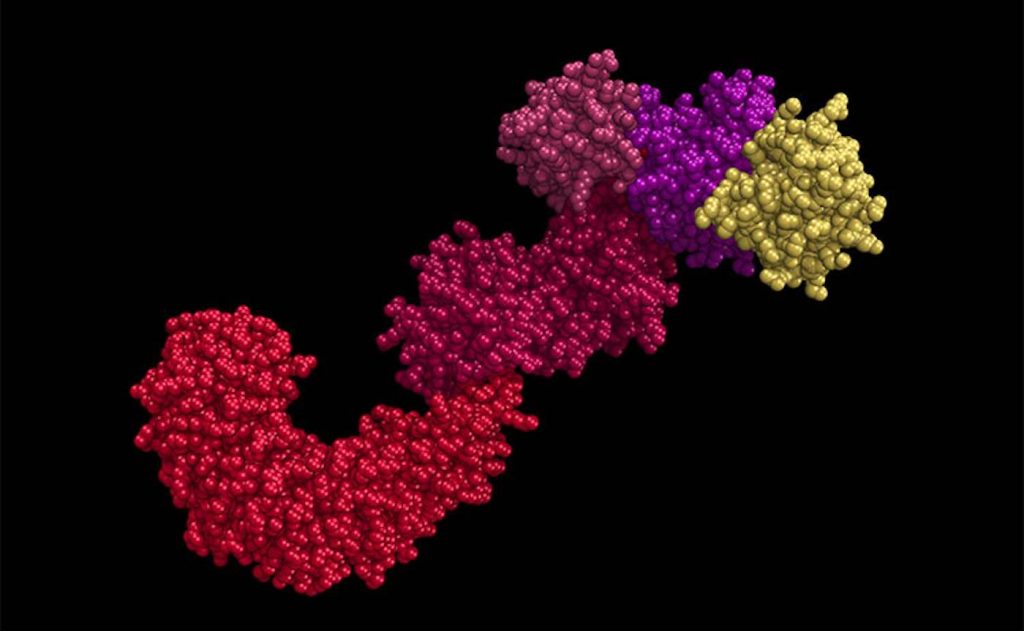
The NLRP3 receptor protein is responsible for detecting potential pathogens in the body and launching an immune response. (File photo by MLGProGamer123, CC)
Chronic inflammation can contribute to a variety of devastating diseases, from Alzheimer’s and Parkinson’s to diabetes and cancer. It flares up if old age, stress, or environmental toxins keep the body’s immune system in overdrive.
Now, scientists at the University of California, Berkeley, have identified a molecular “switch” that controls the immune machinery responsible for chronic inflammation in the body. The results of their testing on mice could lead to new ways to halt or even reverse many of these age-related conditions.
“My lab is very interested in understanding the reversibility of aging,” said senior author Danica Chen, associate professor of metabolic biology, nutritional sciences and toxicology at UC Berkeley. “In the past, we showed that aged stem cells can be rejuvenated. Now, we are asking: to what extent can aging be reversed? And we are doing that by looking at physiological conditions, like inflammation and insulin resistance, that have been associated with aging-related degeneration and diseases.”
In the study, published online in the journal Cell Metabolism this month, Chen and her team show that a bulky collection of immune proteins called the NLRP3 inflammasome—responsible for sensing potential threats to the body and launching an inflammation response—can be essentially switched off by removing a small bit of molecular matter in a process called deacetylation.
Over-activation of the NLRP3 inflammasome has been linked to a variety of chronic conditions, including multiple sclerosis, cancer, diabetes, and dementia. Chen’s results suggest that drugs targeted toward deacetylating—or switching off—this NLRP3 inflammasome might help prevent or treat these conditions and possibly age-related degeneration in general.
“This acetylation can serve as a switch,” Chen said. “So, when it is acetylated, this inflammasome is on. When it is deacetylated, the inflammasome is off.”
The NLRP3 receptor protein is responsible for detecting potential pathogens in the body and launching an immune response. (File photo by MLGProGamer123, CC)
By studying mice and immune cells called macrophages, the team found that a protein called SIRT2 is responsible for deacetylating the NLRP3 inflammasome. Mice that were bred with a genetic mutation that prevented them from producing SIRT2 showed more signs of inflammation at the ripe old age of two than their normal counterparts. These mice also exhibited higher insulin resistance, a condition associated with type 2 diabetes and metabolic syndrome.
The team also studied older mice whose immune systems had been destroyed with radiation and then reconstituted with blood stem cells that produced either the deacetylated or the acetylated version of the NLRP3 inflammasome.
Those that were given the deacetylated, or “off”, version of the inflammasome had improved insulin resistance after six weeks, indicating that switching off this immune machinery might actually reverse the course of metabolic disease.
“I think this finding has very important implications in treating major human chronic diseases,” Chen said. “It’s also a timely question to ask, because in the past year, many promising Alzheimer’s disease trials ended in failure. One possible explanation is that treatment starts too late, and it has gone to the point of no return. So, I think it’s more urgent than ever to understand the reversibility of aging-related conditions and use that knowledge to aid a drug development for aging-related diseases.”
These off-duty police officers are a perfect example of how couples who dine together can also protect and serve together.
Detective Chase McKeown and Officer Nicole McKeown have been married for six months after meeting each other as co-workers at the Elizabethtown Police Department.
The couple had been out on their weekly Saturday date night at Raising Cane’s Chicken Fingers in Louisville, Kentucky when a man entered the restaurant wearing a mask.
At first, the McKeowns thought the man needed help—but when they saw the cashier raise her hands in alarm, they realized the man was attempting to rob the restaurant at gunpoint.
“I saw her hands go up like this and I’m like, ‘Is he doing what I think he’s doing?’” Nicole told reporters as she recalled the evening’s events at a news conference on Tuesday. “And [Chase was] like, ‘Yeah.’”
“There was literally no question. We just looked at each other: ‘Is this what’s going on? Let’s go,’” Chase added. “We just did what we felt like we had to do.”
Security footage then shows Mr. and Mrs. McKeown drawing their firearms and advancing on the 30-year-old suspect, warning him to drop his gun.
The robber runs out the door with the McKeowns in hot pursuit. He was eventually taken into custody after the married police officers cornered him in a nearby residential yard and held him at gunpoint until backup arrived.
Since they first shared dinner at Raising Cane’s on their wedding night, Chase and Nicole have been going there every Saturday—but this week was, by far, the most eventful date since.
(WATCH the video below)
Be Sure And Share The Inspiring Story Of Justice With Your Friends On Social Media…
Quote of the Day: “Life acquires meaning when we face the conflict between our desires and reality.” – Deng Ming-dao
Photo: by léa b – public domain
With a new inspirational quote every day, atop the perfect photo—collected and archived on our Quotes page—why not bookmark GNN.org for a daily uplift?
It has been four years since Natalie Reilly first began writing love notes to first responders with her mother—and despite her mom losing a long battle with cancer, Reilly is still going strong.
Ever since her mother passed away the Arizona daughter has been managing Nothing But Love Notes: an organization dedicated to writing cards to firefighters and police officers.
To date, Reilly has written and distributed more than twenty thousand cards.
“Somewhere along the way I lost my mother, my best friend and biggest cheerleader, but I gained something I never would have expected … an entire community of amazing people who support me, our mission, and our nation’s heroes!” writes Reilly.
But that’s not the only fairytale ending.
Not only have her letters helped to cheer thousands of people, her labor of love also led to love for herself—a new boyfriend, a retired police officer who received one of her letters last year.
An American architect has put his own money and years of struggle on the line to begin building a modern neighborhood that would generate its own power using a closed loop system that would also recycle all the waste and generate all the food.
Officials in the Netherlands have given James Ehrlich an initial green light to construct at least one eco-village 30 minutes outside of Amsterdam, and he hopes to break ground on the project sometime this year.
Ehrlich founded ReGen Villages in 2016 as a startup company intending to disrupt the way the world thinks about housing, development and transportation, and how these CO2-heavy sectors can be overhauled to create a green, self-sustaining lifestyle.
The master plan is for 200-300 homes in the town of Almere where infrastructure permits were approved in 2018.
The vision is a grand one: While incorporating entirely self-sustainable systems for waste management, water treatment, and food production, electricity would be generated through solar, biogas from food and animal waste, and geothermal sources.
Special aquaponic gardens would combine fish farming with aquatic agriculture that allow residents to cultivate a sustainable micro-ecosystem to produce fish and produce.
Rendering by ReGen Villages
Human waste would be composted to feed the ecosystems, with the fish waste providing a critical source of fertilizer for the gardens.
But there are two bigger issues for ReGen Villages: “The two greatest challenges we face are financial support and political will,” the founder told the New York Times.
The company is trying to wrap up a funding round of €16 million in private equity investment for operating expenses needed for the first village and for “master planning the next couple of concurrent developments.”
The homes, to be situated on at least 61 acres of land in the Oosterwold District, would cost according to DutchReview magazine between €200,000 to €850,000 ($216,000–$918,000) depending on the size and luxury of the house.
Continuing the closed-loop ecosystem model, each family home will have a greenhouse attached to it for growing personal crops, and rainwater catch-and-filter systems. The energy and food systems would be managed by ReGen’s staff, but residents could also work in the communal farming systems to reduce the monthly cost of their food and energy fees, which would be charged along with their mortgages.
Build Up Some Positivity By Sharing The Good News With Your Friends On Social Media…
Two “priceless” bonsai trees have been returned to their rightful home at a Washington state museum after they were stolen last week.
The Pacific Bonsai Museum in Federal Way, Washington, is home to more than 100 rare and ancient bonsai trees. On February 9th, museum staffers were left frantic with worry when they discovered that a pair of 70-year-old trees had been taken from the facility.
One of the trees, a Japanese Black Pine, was particularly notable for being grown out of a tin can by a Japanese-American man incarcerated in a World War II internment camp.
The museum quickly made a social media post begging for information on the trees’ whereabouts.
“This is a tremendous loss, not only to our collection but there is a strong likelihood that the trees will perish. These trees have been cared for every day for more than 70 years, and if that daily care doesn’t continue the trees will die,” wrote Aarin Packard, Pacific Bonsai Museum Curator.
The post was shared across the internet until—just 72 hours after their reported theft—museum security guards found the two stolen trees sitting on the roadside near the museum.
Although one of the trees had suffered from some minor broken branches, they were in surprisingly good condition following the heist.
They were put back on display later that very same day and museum staffers thanked members of the public for helping to bring the bonsais back home.
They announced that they now plan on installing an updated security system thanks to the sudden influx of online donations following the trees’ return.
“THANK YOU to everyone who helped share the news of the missing bonsai and perhaps made them ‘too hot to hold,’” wrote the museum. “We are so grateful to all of you.
“We have also noted your good suggestions that we could use a security system upgrade. Many of you have made donations to implement such an upgrade and safeguard the collection—THANK YOU!”
Plant Some Positivity By Sharing The Happy Bonsai Ending On Social Media…
This dynamic duo is winning hearts across social media since photos of their sweet friendship went viral this week.
Herman the pigeon was rescued from a car dealership in Hilton, New York one year ago. The hapless bird, which turned out to be suffering from some neurological condition, had been found sitting on the pavement for three days before his rescuers realized he was unable to fly.
After wildlife specialists declared Herman untreatable, they prepared to euthanize him—that’s when Sue Rogers stepped in to save him.
Rogers is the founder of The Mia Foundation, a Rochester-based nonprofit dedicated to rescuing and rehabilitating animals with physical defects and deformities.
Over the course of the last year, Rogers has cared for Herman, keeping him in a crib when not on daily outings to stimulate his little legs.
More recently, however, Herman was paired with an unlikely roommate: a Chihuahua puppy named Lundy who is unable to move his hind legs due to “swimmer’s syndrome”.
When Lundy’s owners in South Carolina realized that he was disabled, they sent him off to live with the Mia Foundation—and Rogers was amazed by how quickly he befriended his feathered roommate.
Rogers had only briefly placed the two critters together in a bed before they started snuggling. They have since become virtually inseparable.
Furthermore, the foundation has been flooded with thousands of dollars in donations since Rogers posted some photos of Herman and Lundy to social media last week.
“I never imagined the pictures of Lundy and Herman would touch so many people! Almost 5 million people in a little over 24 hours!! Their little story is being shared all over the world!” wrote Rogers.
“And thank you also for the donations coming in,” she added. “We really do need them as we have a few surgeries coming up soon! It brings me to tears to think that our little Herman (the pigeon) is known worldwide now! I’ve been called crazy for keeping Herman alive and trying to make his life a happy one. And Lundy… well, who wouldn’t love that sweet little nugget?”
Mia Foundation
Since they story has been shared across the internet, several people have offered to adopt Lundy once his general health is assured—but Rogers now knows that she will be hard-pressed to separate the pup from his new friend in the future.
Be Sure And Share This Pawesome Rescue Story With Your Friends On Social Media…
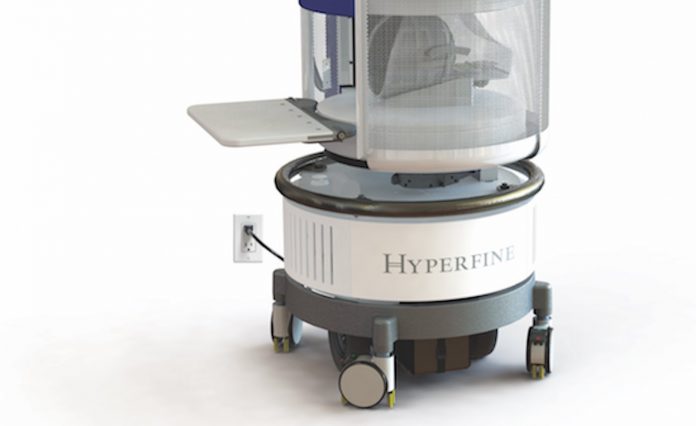
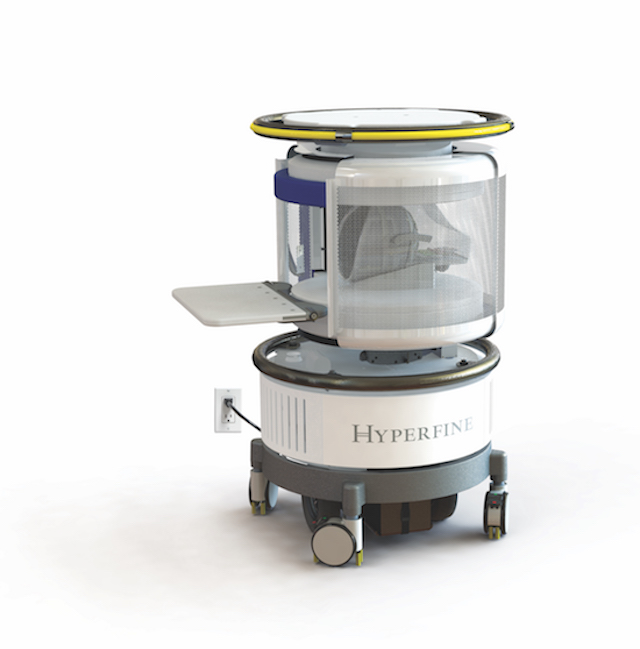
The US Food and Drug Administration (FDA) has just approved the “world’s first” portable MRI machine that easily scans a patient and is 20 times cheaper than current systems.
The device, which was developed by Hyperfine Research Inc. as a safe and practical way of getting accurate brain images at a patient’s bedside, will be ready for commercial shipments in the summer following this week’s 510(k) clearance from the FDA.
In addition to the Hyperfine system being far cheaper than today’s fixed conventional MRI machines, it also consumes 35 times less power and weighs 10 times lighter.
“Nearly six years ago, we assembled an astounding team,” said Dr. Jonathan Rothberg, founder and chairman of Hyperfine Research. “They took the 10 million-fold improvements in computing power since MRI was invented, and the best of the billions invested in green electronics, and built something astonishing, something disruptive.”
The FDA approved the system following a number of positive clinical results which will be presented this week at the American Stroke Association’s International Stroke Conference 2020 in Los Angeles, a world premier meeting for researchers and clinicians dedicated to the science of stroke and brain health.
According to the preliminary research, 85 stroke patients (46% women, age 18-96, 46% ischemic stroke, 34% intracerebral hemorrhage, 20% subarachnoid hemorrhage) received bedside, low-field MRI within seven days of symptom onset. The exam time averaged about 30 minutes, and most patients were able to complete the entire exam. However, five patients could not fit into the 30-centimeter opening of the MRI machine, and six patients experienced claustrophobia, factors which halted their test.
Photo by Hyperfine Research Inc.
“We’ve flipped the concept from having to get patients to the MRI to bringing the MRI to the patients,” said Kevin Sheth, senior author and chief physician, Division of Neurocritical Care and Emergency Neurology at Yale School of Medicine and Yale New Haven Hospital in Connecticut. “This early work suggests our approach is safe and viable in a complex clinical care environment.”
Currently, patients must travel to the location of a high-field MRI device. However, advances in low-field MRI have enabled acquisition of clinically useful images.
“High-field magnets are the cornerstone of commercial MRIs. The portable, low-field MRI could be used at hospitals that currently have a high-field MRI and in any other setting where an MRI is currently not available,” says Sheth.
He added that the portable MRI devices will also decrease need for a special power supply, cooling requirements, cost, and other barriers that currently limit easy patient access
Additionally, the low-field, bedside MRI scanner did not interfere with other equipment, and metals did not need to be removed from the room. No significant adverse events were reported.
In rural settings and in remote villages of the world where it’s hard to get an MRI, this advancement is a game changer, but Sheth’s work is not done. The team’s next steps will include scanning more patients, improving image quality, using the devices in multiple settings and using machine learning to extract as much meaningful information as possible.
Quote of the Day: “To dance is to be out of yourself. Larger, more beautiful, more powerful. It is glory on earth and it is yours for the taking” – Agnes De Mille
Photo: by Allef Vinicius – public domain
With a new inspirational quote every day, atop the perfect photo—collected and archived on our Quotes page—why not bookmark GNN.org for a daily uplift?
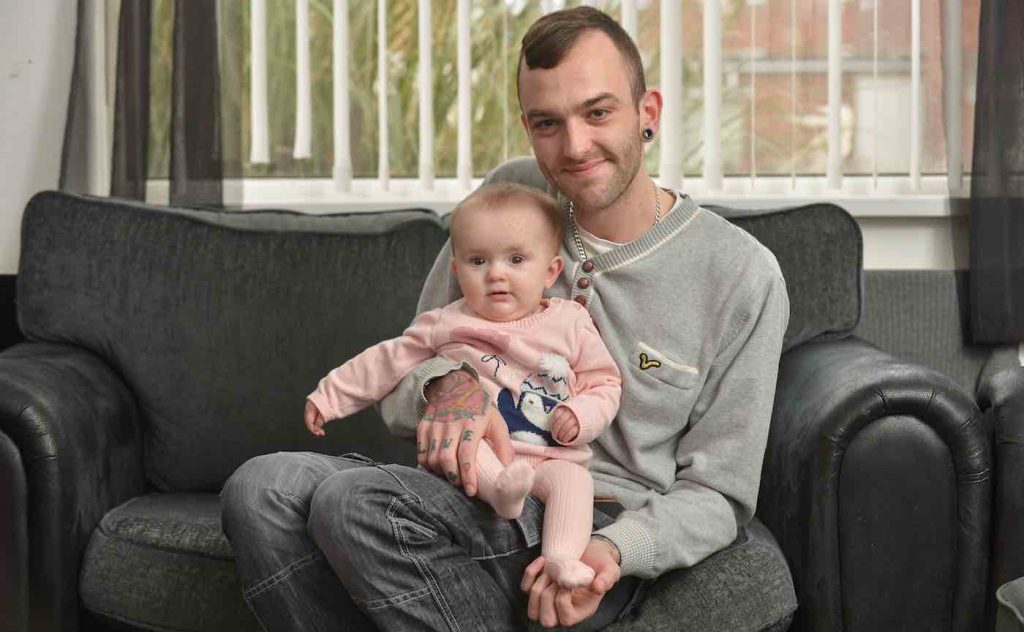
This devoted dad helped deliver their baby at home using just one hand after his wife went into labor and gave birth on their couch.
Rhys Darby had been left with just one working arm after he took a nasty fall during a friendly football game and broke his thumb in three places. For eight weeks, Darby’s left arm was in a bright blue plaster cast that stretched from his knuckles to the middle of his forearm.
Despite his handicap, however, 28-year-old Darby welcomed his baby daughter Ariana by safely catching her in one hand—all while simultaneously juggling towels and a cell phone.
Darby’s 24-year-old girlfriend Jade Brown went into labour in the middle of the night at their home in Sunderland, England last summer.
“I had the cast on one hand and a phone in the other—trying to deliver a baby!” recalled Darby. “I was running around trying to find towels while the woman on the line was trying to give me instructions.
“I bent down and stuck my hand out and the baby just came out. The ambulance arrived two minutes later and they cut the umbilical cord. I said: ‘It’s alright—I’ve done your job for you!’”
SWNS
“It’s funny—Jade was adamant in the run up that she didn’t want me near the business area during the birth,” he quipped. “I should have brought my baseball glove—then it would have been fine! But it was quite scary.”
A week earlier, Brown’s water had broke after she bent down to pick up a sock. Shortly after arriving at the hospital, they were sent home because she had not been dilated enough.
“We were told to come back at the next afternoon if nothing happened and they would start her off, so we went home,” says Darby. “Jade tried to get some sleep, but by 2AM, the pain was overwhelming.”
Brown added: “I was trying to just breathe through [the contractions] but they were getting more intense so I went downstairs and sat with Rhys.
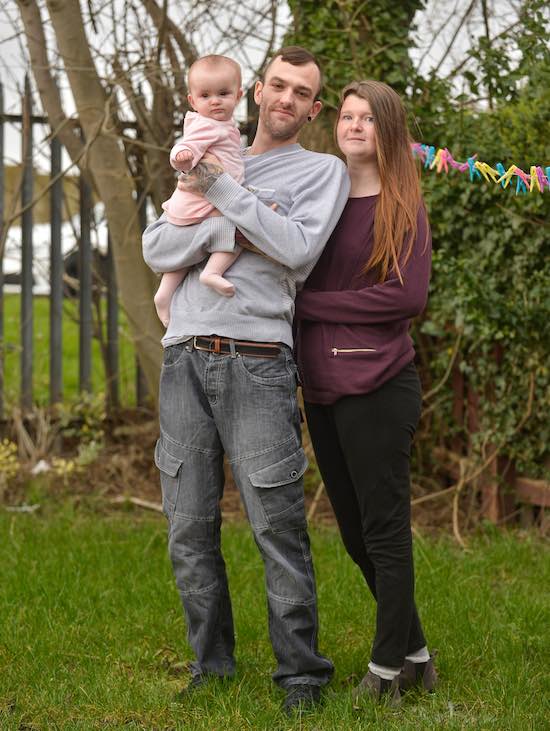
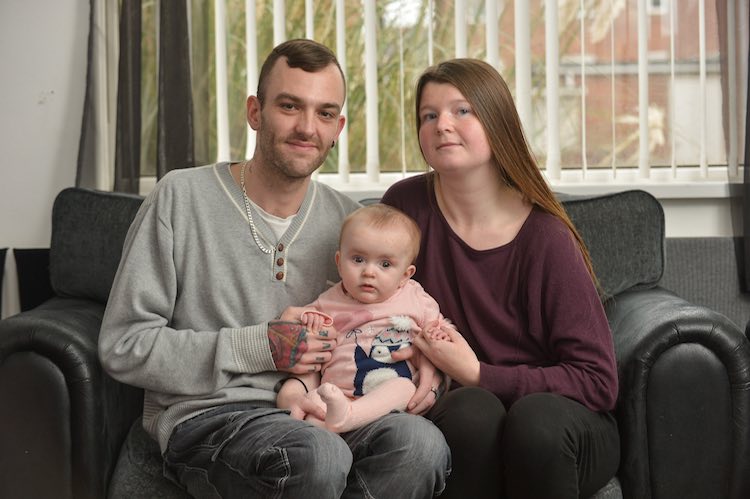
Rhys Darby, Jade Brown, and 7-month-old Ariana.
“I was squeezing his hand every time I got a contraction, but as time went on, I couldn’t cope with the pain and told Rhys we needed to go to the hospital.”
They called for a taxi, but when things got more serious, Darby dialed 999 and was connected to an operator who told him the ambulance was on the way. When the situation escalated further, however, he had to get involved.
“After a few pushes, our baby girl Ariana was born on the settee,” says Brown. “I remember lying with her on my chest and I couldn’t believe how quick it all happened.”
Ariana’s official time of birth was 4:23AM.
“Jade had no pain relief apart from a couple of paracetamol and some gas and air in the ambulance,” recalls Darby.
SWNS
“I had wanted to do the honor of cutting the umbilical cord, but the paramedics said I shouldn’t, because of the situation.
“Apparently we were quite lucky. Lots of stuff could have gone wrong. Ariana is a miracle, really. She was conceived two months after Jade had a miscarriage.”
Brown added: “I was so glad that Rhys got to be so involved with the birth of our baby girl and I am so proud of him for delivering her—especially with a cast on his arm.
“He was amazing during and after the birth and he’s an amazing dad to Ariana.”
Be Sure And Share This Sweet Story Of Childbirth With Your Friends On Social Media…
Multi-billionaire Amazon founder Jeff Bezos has just launched a new fund which will issue grants to charities and innovators working to fight the climate crisis.
Bezos announced the creation of his Bezos Earth Fund on Instagram this week. According to the post, Bezos will begin doling $10 billion in grants to environmental groups starting this summer.
“Climate change is the biggest threat to our planet,” wrote Bezos. “I want to work alongside others both to amplify known ways and to explore new ways of fighting the devastating impact of climate change on this planet we all share.
“This global initiative will fund scientists, activists, NGOs—any effort that offers a real possibility to help preserve and protect the natural world.
“We can save Earth,” he concluded. “It’s going to take collective action from big companies, small companies, nation states, global organizations, and individuals. I’m committing $10 billion to start and will begin issuing grants this summer. Earth is the one thing we all have in common—let’s protect it, together.”
Although details on the fund are currently sparse, Amazon sources confirmed the creation of the fund to The Verge, adding that Bezos has made it clear that he will not be offering any of the grants to the private sector—only charitable recipients.
While environmental groups have been skeptical of the billionaire’s promises, it is one of several initiatives that Bezos and Amazon have taken towards encouraging sustainability; this week alone, Bezos rolled out a new fleet of fully electric rickshaws in India, adding to the company’s global fleet of electric delivery vehicles.
Back in September, Amazon became the first company to sign the Climate Pledge: a commitment which calls on participants to achieve net zero carbon across their businesses by 2040—a decade ahead of the Paris Accord’s goal of 2050.
“Bold steps by big companies will make a huge difference in the development of new technologies and industries to support a low carbon economy,” said Christiana Figueres, the UN’s former climate change chief and founding partner of Global Optimism. “With this step, Amazon also helps many other companies to accelerate their own decarbonization. If Amazon can set ambitious goals like this and make significant changes at their scale, we think many more companies should be able to do the same and will accept the challenge. We are excited to have others join.”
Multiply The Good News By Sharing It With Your Friends On Social Media…
The current Air-gen device can power small devices. Photo by UMass Amherst/Yao and Lovley labs.
Researchers are rejoicing over their newly-developed contraption that can generate clean electricity “from thin air”.
Scientists at the University of Massachusetts Amherst have designed a device that uses a natural protein to create electricity from moisture in the air: a new technology they say could have significant implications for the future of renewable energy, climate change and in the future of medicine.
As reported this week in Nature, the laboratories of electrical engineer Jun Yao and microbiologist Derek Lovley at UMass Amherst have created a device they call an “Air-gen” or air-powered generator, with electrically conductive protein nanowires produced by the microbe Geobacter.
The Air-gen connects electrodes to the protein nanowires in such a way that electrical current is generated from the water vapor naturally present in the atmosphere.
“We are literally making electricity out of thin air,” says Yao. “The Air-gen generates clean energy 24/7.”
Lovely, who has advanced sustainable biology-based electronic materials over three decades, adds, “It’s the most amazing and exciting application of protein nanowires yet.”
The new technology developed in Yao’s lab is non-polluting, renewable and low-cost. It can generate power even in areas with extremely low humidity such as the Sahara Desert. It has significant advantages over other forms of renewable energy including solar and wind, Lovley says, because unlike these other renewable energy sources, the Air-gen does not require sunlight or wind, and “it even works indoors.”
Graphic image of a thin film of protein nanowires generating electricity from atmospheric humidity. Photo by UMass Amherst/Yao and Lovley labs.
The Air-gen device requires only a thin film of protein nanowires less than 10 microns thick, the researchers explain. The bottom of the film rests on an electrode, while a smaller electrode that covers only part of the nanowire film sits on top. The film adsorbs water vapor from the atmosphere.
A combination of the electrical conductivity and surface chemistry of the protein nanowires, coupled with the fine pores between the nanowires within the film, then establishes the conditions that generate an electrical current between the two electrodes.
The researchers say that the current generation of Air-gen devices are able to power small electronics, and they expect to bring the invention to commercial scale soon.
The current Air-gen device can power small devices. Photo by UMass Amherst/Yao and Lovley labs.
Next, the scientists plan to continue their research by developing a small Air-gen “patch” that can power electronic wearables such as health and fitness monitors and smart watches, which would eliminate the requirement for traditional batteries.
They also hope to develop Air-gens to apply to cell phones to eliminate periodic charging.
Yao says: “The ultimate goal is to make large-scale systems. For example, the technology might be incorporated into wall paint that could help power your home. Or, we may develop stand-alone air-powered generators that supply electricity off the grid.
“Once we get to an industrial scale for wire production, I fully expect that we can make large systems that will make a major contribution to sustainable energy production.”
In addition to the Air-gen, Yao’s laboratory has developed several other applications with the protein nanowires. “This is just the beginning of new era of protein-based electronic devices,” he said.
For the last 20 years, a married couple in India has been buying up tracts of land surrounding one of the country’s biggest and most famous tiger reserves.
Although the land started as a barren swath of shrub land, it has since become a lush green oasis for wandering wildlife.
Aditya Singh and his wife Poonam first moved to the the outskirts of the Ranthambore Tiger Reserve in Rajasthan after he quit his job in civil services back in 1998. After they fell in love with the landscape, they moved onto a nearby property so they could fulfill their dream of being closer to nature.
As the years passed, they began buying up the land surrounding the tiger reserve in order to give the big cats extra room to roam.
“As far as this land is concerned, it was a dream that we both saw and achieved together to have our own area of wilderness,” Poonam told Mongabay India.
The couple has since bought roughly 40 acres worth of land, which is now estimated to be worth about $140,000. Apart from clearing the land of invasive species, however, the Singhs refuse to touch the land.
Their determination to keep the land open to leopards, tigers, and boars has attracted dozens of local wildlife species back to the rejuvenated landscape. The forest now boasts two different watering holes and several wandering big cats, too.
Their conservational labor of love has inspired other couples in the region to try and launch similar projects in their own regions.
“Money was never the consideration. It is just about my love for nature and wildlife. Instead, these days I am getting queries from people across India who want to replicate a similar model in their state,” says Mr. Singh.
The Singhs don’t plan on stopping their mission any time soon—in fact, they now hope to continue buying up land while they build a sustainable, solar-powered homestay for themselves on the property.
(WATCH the video below) – Photo by Mongabay India
Plant Some Positivity By Sharing The Good News With Your Friends On Social Media…
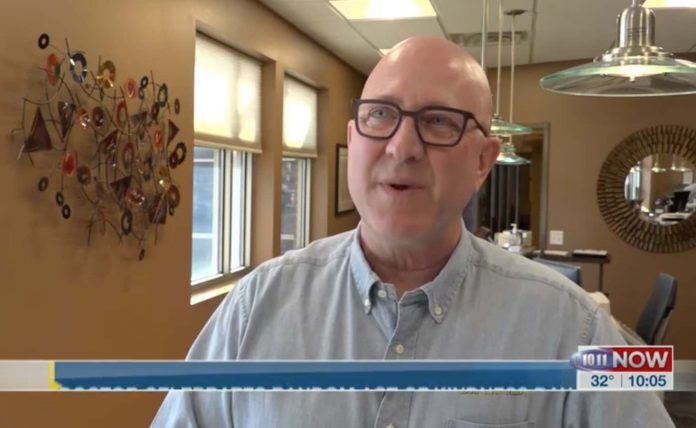
This compassionate doctor decided to celebrate Random Acts of Kindness Day by picking up the bill for his patients’ visits.
As a means of honoring the heartwarming holiday, Dr. Don Rice covered the co-pays for all 80 of his patients who stopped by the Urgent Care Clinic of Lincoln, Nebraska on Monday.
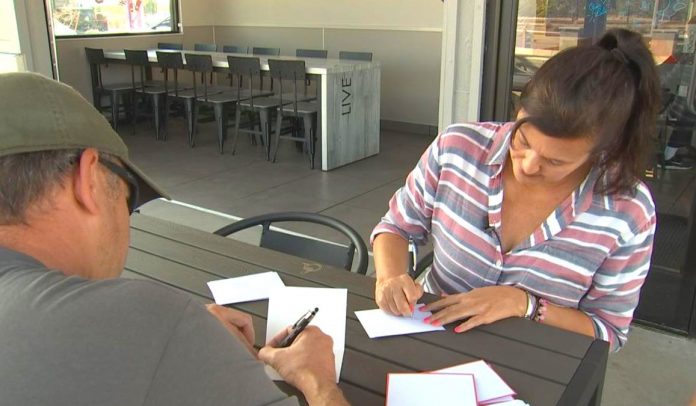
Instead of giving the patients a bill, Dr. Rice gave them small cards that explained his reasoning for the free visits along with the hashtag #KindnessIsContagious.
Collectively, Dr. Rice says he spent $4,000 on his’ co-pays.
The physician’s generous gesture was reportedly inspired by the recent death of a family friend who—despite having two different kinds of cancer—was constantly being kind to other people.
“I think that we have a culture that sometimes forgets that we can have a much better world if we start being kinder to each other,” Rice told 10/11 News in the interview below.
(WATCH the news coverage below) – Photo by 10/11 News
Treat Your Friends To Some Positivity By Sharing This Inspiring Story To Social Media…