All News - Page 651 of 1738 - Good News Network
Home Blog Page 651

High School Football Team Without a Band Invites High School Band Without a Team to Play at Their Games

These exuberant high school band members were “so happy” to play their hearts out at a Michigan football game earlier this week—but it’s not because they were cheering for their own team.

When the Forest Area Schools didn’t have enough students for a football team, they found themselves with a high school band, but no football teams to play for.

As fate would have it, the neighboring Glen Lake school district football team had the opposite problem: they had a football team, but no student band.

RELATED: Ireland Will Finally Get Its Own Ice Hockey Rink, Thanks to a Very Famous Canadian

The Glen Lake team then invited the Forest Area band to play at their game—and even though the young musicians had to drive an hour to attend the gig, they jumped at the opportunity.

“I absolutely flipped. I was so happy,” a Forest Area senior student band member told UpNorth Live. “Since it’s my last year after playing for six years, it’s the most important thing to me to be able to be out here and show people what we can do.”

Despite being forced to play their instruments in the rain, they nailed the performance—and Glen Lake said that the band was more than welcome to come back and play for more games in the future.

(WATCH the sweet news coverage below)

Be Sure And Share This Match Made In Heaven With Your Friends On Social Media…

These New Bionic Legs Allow Amputees to Feel and Use Prosthetic as If It Were Their Real Leg

Scientists have helped three amputees “merge” with their bionic prosthetic legs so they can use and feel their the limb as if it’s a part of their own body.

The amputees were able to climb over various obstacles without having to look thanks to sensory feedback from the prosthetic leg that is delivered to nerves in the leg’s stump.

Djurica Resanovic lost his leg in a motorbike accident several years ago which resulted in amputation above the knee. Thanks to novel neuroprosthetic leg technology, Resanovic was successfully connected to his bionic leg during clinical trials in Belgrade, Serbia.

“After all of these years, I could feel my leg and my foot again, as if it were my own leg,” reports Resanovic about the bionic leg prototype. “It was very interesting. You don’t need to concentrate to walk, you can just look forward and step. You don’t need to look at where your leg is to avoid falling.”

RELATED: Blind Man Develops Smart Cane That Uses Google Maps and Sensors to Identify One’s Surroundings

Scientists from a European consortium led by Swiss Institutions, ETH Zurich and EPFL spin-off SensArs Neuroprosthetics, with clinical trials in collaboration with institutions in Belgrade, Serbia, successfully characterized and implemented bionic leg technology with three amputees. The results appear in this week’s issue of Science Translational Medicine.

“We showed that less mental effort is needed to control the bionic leg because the amputee feels as though their prosthetic limb belongs to their own body,” explains Stanisa Raspopovic, the ETH Zurich professor who led the study.

“This is the first prosthesis in the world for above-knee leg amputees equipped with sensory feedback,” he continued. “We show that the feedback is crucial for relieving the mental burden of wearing a prosthetic limb which, in turn, leads to improved performance and ease of use.”

MORE: Father Uses Scuba Therapy to Restore His Paralyzed Son’s Motor Function—And Now It’s Doing the Same for Others

Wearing a blindfold and earplugs, Resanovic could feel his bionic leg prototype thanks to sensory information that was delivered wirelessly via electrodes surgically placed into the stumps’ intact nervous system. These electrodes pierce through the intact tibial nerve instead of wrapping around it. This approach has already proven to be efficient for studies of the bionic hand led by Silvestro Micera, co-author of the publication, EPFL’s Bertarelli Foundation Chair in Translational Neuroengineering.

Resanovic continues: “I could tell when they touched the [big toe], the heel, or anywhere else on the foot. I could even tell how much the knee was flexed.”

Resanovic is one of three leg amputees, all with transfemoral amputation, who participated in a three-month clinical study to test new bionic leg technology which literally takes neuroengineering a step forward, providing a promising new solution for this highly disabling condition that affects more than 4 million people in Europe and in the United States.

CHECK OUT: After Watching Brother Give Up on Gardening, Man Designs Tabletop Gardens for People in Wheelchairs

Thanks to detailed sensations from sole of the artificial foot and from the artificial knee, all three patients could maneuver through obstacles without the burden of looking at their artificial limb as they walked. They could stumble over objects yet mitigate falling. Most importantly, brain imaging and psychophysical tests confirmed that the brain is less solicited with the bionic leg, leaving more mental capacity available to successfully complete the various tasks.

These results complement a recent study that demonstrated the clinical benefits of the bionic technology, like reducing phantom limb pain and fatigue.

“We develop the sensory feedback technology to augment prosthetic devices,” explains Francesco Petrini, CEO and co-founder of SensArs Neuroprosthetics, and who is guiding an effort to bring these technologies to market. “An investigation longer than 3 months, with more subjects, and with in-home assessment, should be executed to provide more robust data to draw clinically significant conclusions about an improvement of the health and quality of life of patients.”

WATCH: Robotic Arm Named After Luke Skywalker Enables Amputee to Touch and Feel Again—‘It almost put me to tears’

The fundamental neuroengineering principle is about merging body and machine. It involves imitating the electrical signals that the nervous system would have normally received from the person’s own, real leg. Specifically, the bionic leg prototype is equipped with 7 sensors all along the sole of the foot and 1 encoder at the knee that detects the angle of flexion. These sensors generate information about touch and movement from the prosthesis. Next, the raw signals are engineered via a smart algorithm into biosignals which are delivered into the stump’s nervous system, into the tibial nerve via intraneural electrodes, and these signals reach the brain for interpretation.

“We believe intraneural electrodes are key for delivering bio-compatible information to the nervous system for a vast number of neuroprosthetic applications. Translation to the market is just around the corner,” explains Silvestro Micera, co-author of the publication.

Reprinted from the Ecole Polytechnique Fédérale de Lausanne

(WATCH the video below)

Be Sure And Share The Groundbreaking News With Your Friends On Social Media…

Entire High School Wears Yellow to Welcome New Student and Honor Her Late Friend On 1-Year Anniversary

An entire high school stepped up their kindness game last week, just when a new girl in town needed it most.

LISTEN to the inspiring story told on the radio by our GNN founder (in the Good News Guru podcast below) or READ the full story after that…

Megan Carr has had a rough time, ever since a girl who was mentoring her on the Brazoswood Belles High School Drill Team suddenly died. Not only did she lose the girl she called a “big sister”, but her family moved from Lake Jackson, Texas and she had to start over at Dayton High School.

After joining the new drill team, she told her teammates about the upcoming one-year anniversary of her friend’s death.

The high school teens were so moved by the story of friendship between the senior and sophomore, they decided to do something special to honor the memory of her “big sister” Ravenne Dodge.

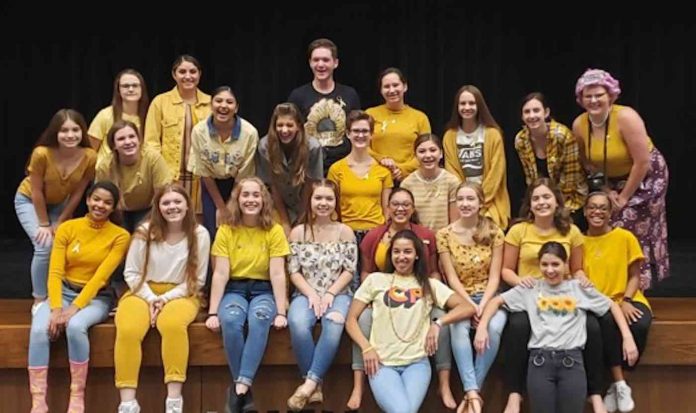
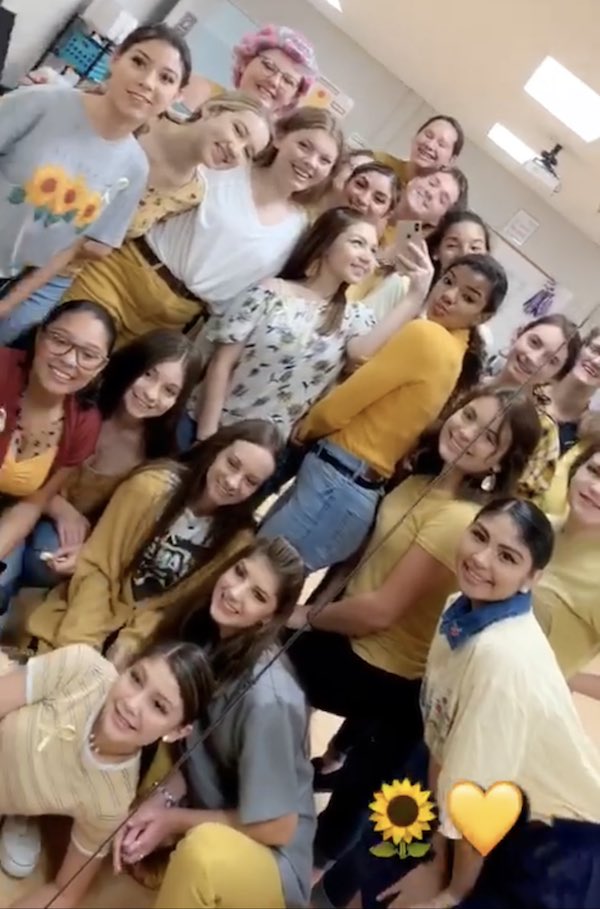
Upon learning that Ravenne’s favorite color was yellow, and she loved sunflowers, Megan’s drill team all showed up to school wearing sunflowers and yellow clothes—and they even festooned the entire locker room with yellow decorations and sunflowers.

According to Megan’s mother Kellie Baldwin, that was just the start of what makes this such an amazing story.

“Somehow, without my daughter’s knowledge, the drill team was able to get the entire school to wear yellow on the same day in honor of this young girl—even though they have no idea who she was.”

“What a wonderful thing, for a school to come together to support just ONE student…to just maybe make her feel a little better and get through a tough day,” Kellie said in a radio interview with 100.3 The Bull in Houston.

WATCH: These Musicians Play Classical Songs At Crime Scenes to Help Neighbors Heal After Tragedy

Ravenne’s mother Amie Dodge, was also astonished. She told GNN, “When I saw the students at the school in another district wearing yellow in memory of my daughter, I was just blown away! It brought tears of joy to my eyes to think that my daughter had an impact on the people she didn’t even know.”

Megan (left) and Ravenne (right) – All photos submitted by families

Dayton High School went even further to show their support, as yellow ribbons were worn last Friday at the school’s pep rally and football game.

RELATED: Hundreds of Strangers Rally One Morning to Grant 4-Year-old Cancer Survivor’s Birthday Wish for 100 Yellow Cars

(LISTEN to the interview below)

Be Sure And Share This Incredible Story Of Great Kids With Your Friends On Social Media…

“I dream of a world where none will be so poor they have nothing to give and none will be so rich they have nothing to receive.” – John Paul II

Quote of the Day: “I dream of a world where none will be so poor they have nothing to give and none will be so rich they have nothing to receive.” – John Paul II

Photo: by Stanley Zimny– CC license on Flickr, cropped

With a new inspirational quote every day, atop the perfect photo—collected and archived on our Quotes page—why not bookmark GNN.org for a daily uplift?


5th Graders Hear Senior Couple’s Story of Racial Injustice and Take Action 60 Years Later

Reverend Gilbert and Grace Caldwell were overjoyed about tying the knot 60 years ago. They were then immediately heartbroken, however, by the honeymoon that followed.

Back in 1957, the Caldwells got married at a church in North Carolina before driving eight hours to the Mount Airy Resort in Poconos, Pennsylvania for their honeymoon.

Despite having a reservation, the happy couple was forced to drive eight hours back home after they were turned away from the hotel for being black.

LOOKWhen Truck is Vandalized With Racist Graffiti Auto Shop Will Not Just Stand By

The incident spurred the Caldwells to join the civil rights movement where they worked side-by-side with Dr. Martin Luther King Junior. In the decades that followed, Grace and Gilbert continued giving speeches and lectures to schools and organizations about their experience with racial injustice.

But when they told the story of their honeymoon to the New Jersey fifth graders at Bear Tavern Elementary back in January 2018, the kids became especially saddened by the tale.

WATCHAdorable Preschool “Twins” Take a Stand Against Discrimination

Months after seeing the Caldwells speak at the school, all of the fifth graders banded together and wrote letters to the Mount Airy Hotel asking for an all-expenses-paid second honeymoon—and their wish was granted.

“It makes me feel really good inside because we know that even though we’re just kids, we made an impact on the world,” one student told CBS News.

(WATCH the heartwarming video below) – Note: International viewers can watch the full video on the CBS News website.

Click To Share The Compassionate Story With Your FriendsPhoto by CBS News

First Study of Its Kind Shows Aspirin May Reduce the Harms of Air Pollution By Half

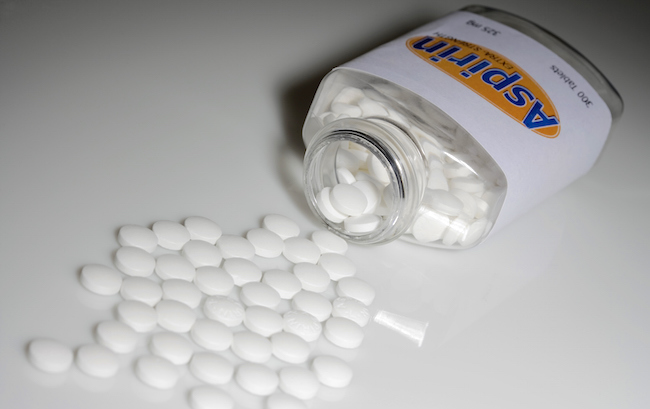
Aspirin spilling from bottle

This intriguing new study is the first to report evidence that non-steroidal anti-inflammatory drugs (NSAIDs) like aspirin may lessen the adverse effects of air pollution exposure on lung function.

The researchers analyzed a subset of data collected from a cohort of 2,280 male veterans from the greater Boston area who were given tests to determine their lung function. The average age of participants was 73 years. The researchers examined the relationship between test results, self-reported NSAID use, and ambient particulate matter (PM) and black carbon in the month preceding the test, while accounting for a variety of factors, including the health status of the subject and whether or not he was a smoker.

They found that the use of any NSAID nearly halved of the effect of PM on lung function, with the association consistent across all four weekly air pollution measurements from same-day to 28 days prior to the lung function test.

Because most of the people in the study cohort who took NSAIDs used aspirin, the researchers say the modifying effect they observed was mainly from aspirin, but add that effects of non-aspirin NSAIDs are worthy of further exploration.

MORE: Father Uses Scuba Therapy to Restore His Paralyzed Son’s Motor Function—And Now It’s Doing the Same for Others

While the mechanism is unknown, the researchers speculate that NSAIDs mitigate inflammation brought about by air pollution.

The team of researchers from the Columbia Mailman School of Public Health, Harvard Chan School of Public Health, Boston University School of Medicine published their findings in the American Journal of Respiratory and Critical Care Medicine.

“Our findings suggest that aspirin and other NSAIDs may protect the lungs from short-term spikes in air pollution,” says first and corresponding author Xu Gao, PhD, a post-doctoral research scientist. “Of course, it is still important to minimize our exposure to air pollution, which is linked to a host of adverse health effects, from cancer to cardiovascular disease.”

CHECK OUT: After 68% of Patients Were Cured of PTSD in Phase-2 Trials Clinics May Soon Offer MDMA Therapy

“While environmental policies have made considerable progress toward reducing our overall exposure to air pollution, even in places with low levels of air pollution, short-term spikes are still commonplace,” says senior author Andrea Baccarelli, chair of the Department of Environmental Health Sciences at the Columbia Mailman School. “For this reason, it is important to identify means to minimize those harms.”

An earlier study by Baccarelli found that B vitamins may also play a role in reducing the health impact of air pollution.

Reprinted from Columbia University’s Mailman School of Public Health

Clean Up Negativity By Sharing The Intriguing Story With Your Friends On Social Media…

Tourist Photo of Cloudy Belgian Sky Holds Stunning Similarity to Van Gogh’s ‘Starry Night’

SWNS
SWNS

A Canadian tourist has made quite a good impression on art enthusiasts since he photographed a cloudy sky that looked like something out of a Vincent van Gogh painting.

31-year-old oncologist Doron Berlin was on holiday in Belgium in July when he looked up to see swirling clouds of blue and grey set against the brilliant sun and spires of the Belfry Bell Tower of Bruges.

The scene looked breathtakingly similar to Van Gogh’s 19th-century masterpiece The Starry Night—so he snapped a photo of the “magical and beautiful” sky.

WATCH: World’s First Hand-Painted Movie Honors Vincent Van Gogh and You Can Finally Watch it Now

“The clouds were particularly striking, and the effect of the sun shining into the camera created a very interesting vortex-type look,” Berlin mused. “That, mixed with the amazing architecture in Bruges and good lighting all came together for a great oil-on-canvas feel.

“The cloudy sky really did look like a work of Van Gogh, and it makes you wonder if this is the type of thing that inspired him,” he added.

SWNS

Post-impressionist artist Van Gogh painted The Starry Night in June 1889, inspired by the view from his French asylum room in Saint-Rémy-de-Provence.

Scientists at the Rochester Institute of Technology and the Museum of Modern Art in New York determined the sky was painted with ultramarine and cobalt blue, while the moon was painted with Indian yellow together with zinc yellow.

Starstruck? Be Sure And Share The Story With Your Fellow Art Lovers On Social Media…

Ocean Cleanup Makes History by Successfully Collecting First Plastic From Great Pacific Garbage Patch

Photo by The Ocean Cleanup

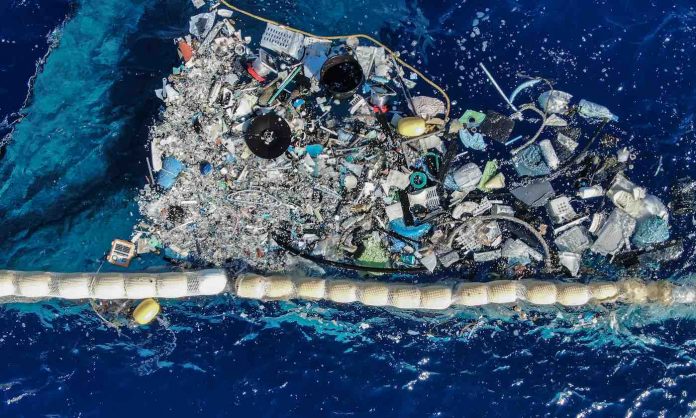
For the first time in history, conservationists have collected trash from the Great Pacific Garbage Patch for recycling.

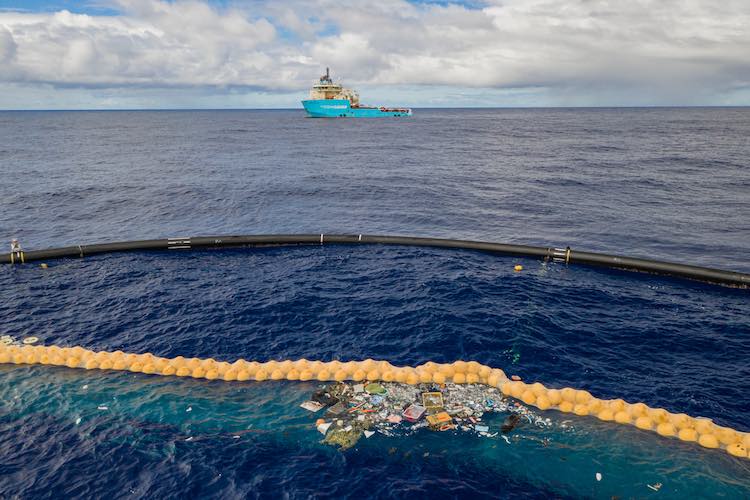
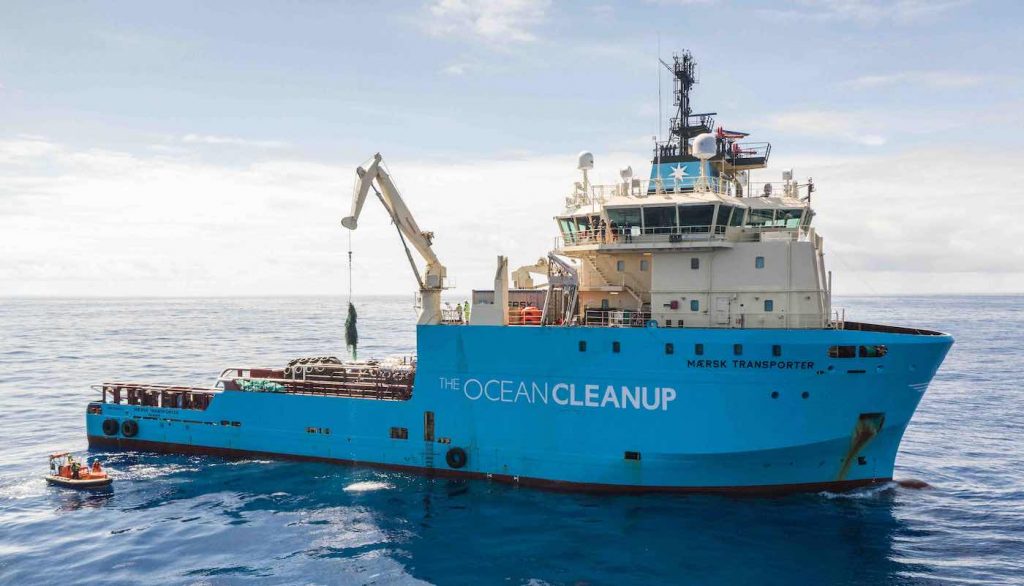
After one year of testing, The Ocean Cleanup organization announced this week that their System 001/B vessel is successfully capturing and collecting plastic debris.

The self-contained system uses the natural forces of the ocean to passively catch and concentrate plastic in the Great Pacific Garbage Patch, thereby confirming the most important principle behind the cleanup concept that was first presented by Boyan Slat back in October 2012.

The patch is a massive island of trash drifting halfway between California and Hawaii. Over a trillion pieces of debris have collected there because of the swirling vortex of current—a floating mass roughly twice the size of Texas.

LOOK: 633 Divers Just Set the World Record for Largest Ocean Cleanup After Collecting 1,600 Pounds of Trash

After discovering the patch in the 90s, scientists said it would take thousands of years to clean it up—but Slat quickly made a name for himself after he presented a TEDx talk in which he claimed that he could do it in less than ten, if he could get his special machinery built.

Though his claim caused many skeptics to raise their eyebrows, Slat dropped out of college so he could bring his plans to life. In addition to crowdfunding $2.2 million for his idea, he garnered millions more dollars through interested investors.

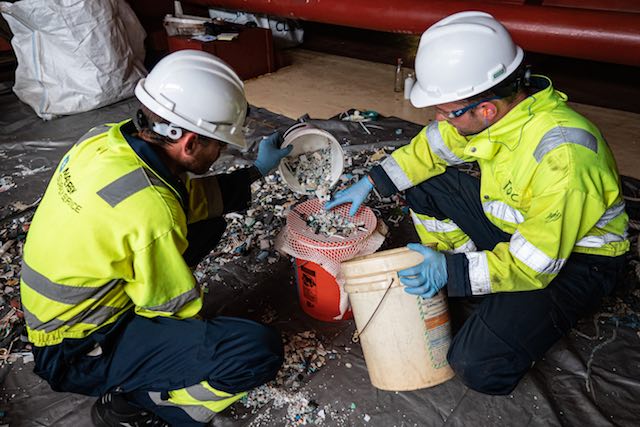
Now, the System 001/B vessel—which launched from Vancouver in June—is The Ocean Cleanup’s second attempt to prove its concept of collecting garbage from the Great Pacific Garbage Patch. In addition to collecting plainly visible pieces of plastic debris, as well as much larger ghost nets associated with commercial fishing, System 001/B has also successfully captured microplastics as small as 1 millimeter—a feat which the organization was pleasantly surprised to achieve.

MORE: 7-Year-Old Sea Turtle Activist Convinces L.L. Bean to Change Company Policy

“After beginning this journey seven years ago, this first year of testing in the unforgivable environment of the high seas strongly indicates that our vision is attainable and that the beginning of our mission to rid the ocean of plastic garbage, which has accumulated for decades, is within our sights,” said Slat.

“Our team has remained steadfast in its determination to solve immense technical challenges to arrive at this point. Though we still have much more work to do, I am eternally grateful for the team’s commitment and dedication to the mission and look forward to continuing to the next phase of development.”

LOOK: Adidas Test to Sell Shoes Made of Ocean Plastic Was So Successful, They’re Going Even Further

Despite the early success of System 001/B, there is still much work to do. With new learnings and experience derived from the successful deployment of System 001/B, The Ocean Cleanup will now begin to design its next ocean cleanup system, System 002; a full-scale cleanup system that is able to both endure and retain the collected plastic for long periods of time.

Once fully operational, The Ocean Cleanup will return plastic to land for recycling. The timing of that phase of the mission is contingent upon further testing and design iteration.

(WATCH the news coverage below)

Clean Up Negativity By Sharing The Good News With Your Friends On Social Media…

‘Bored’ With Baiting Fish, Man Takes Up Magnet Fishing to Collect Scrap Metal and Sell It to Benefit Kids With Autism

Despite spending years of his life as a fisherman, Paul Swanson has found a new purpose in casting his line for a different kind of catch.

The fisherman from Spokane, Washington is the founder of the H2O Magnet Fortunes club: a magnet fishing group dedicated to collecting rusty scrap metal from the Spokane River.

When asked why he started the organization, Swanson simply told KXLY: “I got bored.”

“Doctor pretty much said ‘you need to change your game plan of life,’” he continued. “Couldn’t fish no more, hardly. It was hard to do, tying on the lines and stuff, so I decided to create a little magnet fishing love here in Spokane.”

MORE: Watch Excited Dad Captivate His Cow Herd With Saxophone Serenade in New Viral Video

Since the club began hoarding all of their scrap in mid-June, they collectively salvaged 11,100 pounds of metal, all of which they sold to a recycling company this week so they could donate the proceeds to SOAR, a caregiving organization for children with autism.

Ordinarily, processed iron sells for $80 per ton—but the staffers at Pacific Steel and Recycling were so touched by the group’s mission, they doubled the price of their original offer to help with the donation.

Swanson is now attempting to contact Guinness World Records about setting the world record for the most amount of scrap metal collected by a magnet fishing club.

(WATCH the news coverage below) – Photo by KXLY

We Aren’t Fishing For Compliments, But You Should Definitely Share The Good News With Your Friends On Social Media…

“Write it on your heart that every day is the best day in the year… and no one owns the day who allows it to be invaded with fret and anxiety.” – Ralph Waldo Emerson

Quote of the Day: “Write it on your heart that every day is the best day in the year… and no one owns the day who allows it to be invaded with fret and anxiety.” – Ralph Waldo Emerson

Photo: by Michelle Hyacinth – CC license on Flickr, cropped

With a new inspirational quote every day, atop the perfect photo—collected and archived on our Quotes page—why not bookmark GNN.org for a daily uplift?


TripAdvisor Has Just Cut Ties With Attractions That Breed Whales and Dolphins in Captivity

TripAdvisor and their subsidiaries have just announced that they are ending commercial relationships with facilities that breed or import captive whales, porpoises, and dolphins.

More specifically, the travel platform says that they will no longer sell tickets to, or generate revenue from, any attraction that continues to contribute to the captivity of future generations of cetaceans.

As a result, any commercial facility that either breeds or imports cetaceans for public display will be banned from sale on TripAdvisor and Viator. Products currently on sale and found to breach the new rules will be removed over the course of the next few months, with the policy in full force by the end of 2019. The new policy will not apply to seaside sanctuaries that provide care to cetaceans already in captivity.

The policy aims to drive captivity industry towards seaside sanctuaries as an alternative environment for current generation of captive whales and dolphins.

MORE: EU Approves Groundbreaking New ‘Right to Repair’ Laws Requiring Appliances to Be Easier to Fix

The decision follows an extensive consultation process with a range of experts, including marine biologists, zoologists and conservationists, and considered the scientific evidence and arguments presented from all sides. It also continues TripAdvisor’s commitment to improving the welfare of animals globally, particularly animals in tourism, since they passed their animal welfare policy in 2016.

“The extensive evidence presented to us by the experts was compelling. Whales and dolphins do not thrive in limited captive environments, and we hope to see a future where they live as they should—free and in the wild,” commented Dermot Halpin, President, TripAdvisor Experiences and Rentals. “We believe the current generation of whales and dolphins in captivity should be the last, and we look forward to seeing this position adopted more widely throughout the travel industry.”

Conservation groups and animal welfare experts welcomed the move as an important step forward.

CHECK OUT: Another Victory Against Plastic—These Water Brands Will Soon Be Packaged in Aluminum Cans

“TripAdvisor is on the right side of history,” said Dr. Naomi Rose, a marine mammal scientist at the Animal Welfare Institute. “Whales and dolphins cannot thrive in captivity and enlightened tourists no longer tolerate exploiting these intelligent and socially complex marine predators for human entertainment.”

That being said, TripAdvisor’s policy extension also takes into account that while it is possible to prevent future generations of cetaceans from a life of captivity, the situation is different for those already in captivity. For most of the current population of cetaceans, release into the wild is not a realistic option. Therefore, the policy includes several stipulations aimed at protecting the needs, safety and health of cetaceans currently in captivity, too.

“Our aim is not only to prevent future generations of whales and dolphins from being raised in captivity, but also to encourage the industry to move towards alternative models, like seaside sanctuaries, that will better provide for the needs of the current captive population,” added Dermot Halpin, President of TripAdvisor Experiences and Rentals. “Seaside sanctuaries have enormous potential, but they need more backing from the tourism industry. As long as facilities with captive whales and dolphins continue to profit from keeping these animals in smaller, cheaper and less natural living environments, then they don’t have enough incentive to adopt serious change. We hope our announcement today can help turn the tide.”

Be Sure And Share The News With Your Friends On Social Media – File photo by scooby12353, CC

Kids Are Hailed as ‘Junior Detectives’ After They Successfully Track Down Missing 97-Year-old With Dementia

Photo by Alyssa Hultman

This rescue story from Roseville, California sounds like something straight out of a Nancy Drew novel.

This tenacious team of kids is responsible for the rescue of 97-year-old Glenneta Belford, a non-verbal woman with dementia who went missing from her home on Monday evening.

Upon learning about her disappearance, the Roseville Police Department made a social media post about Belford in hopes that community members may be able to find the missing senior.

To their surprise, Belford was found by none other than five “junior detectives” who had spent their evening searching for the woman on their bicycles after they learned of her disappearance.

LOOK: When Boy With Autism Was Overwhelmed By First Day of School, Kind Classmate Soothed Him

After they finally managed to find her, the youngsters called the police department and reported her location.

“As it turns out, they were the team to locate the missing 97-year-old,” wrote the Roseville Police Department Facebook page. “Our surprised dispatchers took the initial call from this team of junior detectives which helped connect officers to the missing person.

“This is a great example of our exceptional community coming together to lend a helping hand. This proves a great point, age is just a number and anyone can help out in a time of need.”

Be Sure And Share The Sweet Story With Your Friends On Social Media…

Coastal Living is Linked With Better Mental Health, Particularly for Poorer Homeowners

Living close to the sea could support better mental health in England’s poorest urban communities.

According to a new study published today in the journal Health and Place, researchers from the University of Exeter used survey data from nearly 26,000 respondents in their analysis, which marks one of the most detailed investigations ever into the wellbeing effects of being beside the sea.

After taking other related factors into account, the study revealed that living in large towns and cities near to England’s coastline is linked with better mental health for those in the lowest earning households.

Approximately one in six adults in England suffer from mental health disorders such as anxiety and depression, and these are far more likely in people from poorer backgrounds. The findings suggest that access to the coast could help to reduce these health inequalities in towns and cities close to the sea.

RELATED: Watching Birds Near Your Home is Good For Your Mental Health

The research used data from the Health Survey for England and compared people’s health to their proximity to the coast; from those living less than 1 kilometer away, to those more than 50 kilometers (31 miles) away. Its findings add to the growing evidence that access to blue spaces—particularly coastal environments—might improve health and wellbeing.

Dr Jo Garrett led the study and believes the results could have important implications, she said: “Our research suggests, for the first time, that people in poorer households living close to the coast experience fewer symptoms of mental health disorders. When it comes to mental health, this ‘protective’ zone could play a useful role in helping to level the playing field between those on high and low income.”

The report represents the first time the benefits of coastal living have been demonstrated at such a detailed level according to income, and comes as Natural England prepares to open access to all of England’s Coast Path by 2020. With everywhere in England within 70 miles of the sea, more people could harness the wellbeing benefits of living near to the coast thanks to improved access.

RELATED: Want Instant Pain Relief? New Report Says You Could Go For a Swim in Cold Water

Dr. Mathew White, environmental psychologist at the University of Exeter, said: “This kind of research into blue health is vital to convincing governments to protect, create and encourage the use of coastal spaces. We need to help policy makers understand how to maximize the wellbeing benefits of ‘blue’ spaces in towns and cities and ensure that access is fair and inclusive for everyone, while not damaging our fragile coastal environments.”

This work is part of the BlueHealth project, funded by the European Union’s Horizon 2020 program.

Reprinted from the University of Exeter

It’s Not Hard To Sea That You Should Share The News With Your Friends On Social Media…

Bar Employees Spend a Month Taking Down Dollar Bill Decor to Collect $15,000 for Hurricane Dorian Relief

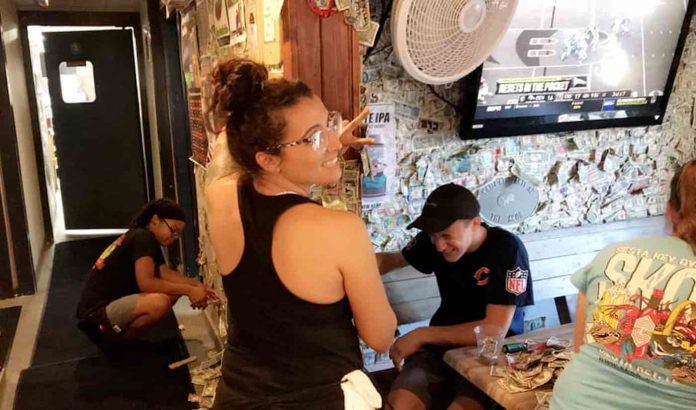
It has always been a tradition for customers at the Siesta Oyster Bar to contribute to the restaurant’s decor by attaching dollar bills to the wall.

However, the staffers have been working tirelessly over the course of the last month to remove the makeshift wallpaper so they can donate it all to hurricane relief in the Bahamas.

Since Hurricane Dorian blew through the islands last month, the staffers have collectively taken down over $15,000 in dollar bills.

It’s apparently taken a lot of hard work to gently remove all of the “hardcore staples” from the wall without hurting the money, but the employees say that they have successfully removed about 90% of the bills.

LOOK: Canadian Supermarket Proves a Little Humor Can Go a Long Way to Help Save Ourselves From Plastic Bags 

Not only that, general manager Kristin Hale told Weather.com that other customers have been inspired to make additional donations of their own.

“They come in and see what we’re going and give us a $20 bill … or a $10 or a $5,” she told the news outlet.

The bar also helped to raise another $10,000 by holding a collaborative fundraiser with some of the other local businesses in Siesta Key Village earlier this month.

Multiply The Good By Sharing The Inspiring Story To Social Media…

“The best way to find yourself is to lose yourself in the service of others.” – Mahatma Gandhi (born 150 years ago today)

Quote of the Day: “The best way to find yourself is to lose yourself in the service of others.” – Mahatma Gandhi (born 150 years ago today)

Photo: by sanchantr – CC license on Flickr, cropped

With a new inspirational quote every day, atop the perfect photo—collected and archived on our Quotes page—why not bookmark GNN.org for a daily uplift?


On 95th Birthday, Jimmy Carter is Still Proving Age is No Obstacle as He Builds Homes for Humanity


Today is the 95th birthday of former US president Jimmy Carter—and despite how he has not served in office for almost four decades, he is still working tirelessly to improve the country.

Born on October 1st, 1924, Carter has now lived longer than any other US president in history. The title used to be held by the late George H.W. Bush before he passed away in November 2018 at 94 years and 171 days old.

Even though Carter made headlines back in March for surpassing Bush’s record at 94 years and 172 days old, this is not his first news appearance in the last few years.

Carter, who is also one of the few American presidents to have ever received the Nobel Peace Prize, was recently responsible for creating a new health clinic in a small town that had been without a physician for four months; he leased out a portion of his own property in order to launch a solar farm powering half of his hometown; and his charity has been a major contributor in making guinea worm the second disease to ever be eradicated.

RELATEDJimmy Carter Delivers a New Clinic to Small Town That Has Been Without a Physician

Additionally, Carter was diagnosed with stage 4 melanoma in 2016—and even though he was undergoing treatment, he still spent his time building homes for the needy through Habitat for Humanity. Thankfully, his immunotherapy treatments proved to be successful and he was declared cancer-free several months later.

Carter and his wife Rosalynn have volunteered for the housing organization for 36 years, during which time they have helped build thousands of homes. Furthermore, they now plan on celebrating Mr. Carter’s birthday by attending yet another annual Habitat for Humanity construction event in Nashville next week.

“Both President and Mrs. Carter are determined to use their influence for as long as they can to make the world a better place. Their tireless resolve and heart have helped to improve life for millions of the world’s poorest people,” said a Carter Center spokesperson in a statement.

(WATCH Carter explain his passion for the project in the 2016 interview below)

Build Up Some Positivity By Sharing The Inspirational News With Your Friends On Social Media…

Watch ‘Superhero’ Woman Rescue Trapped Deer From Not One, But Two Different Fences in a Matter of Minutes

This Georgia woman is about to get her own superhero movie after she came to the rescue of a doe in distress—not once, but twice in just a matter of minutes.

Chloe Dorsey had been out for a morning jog in Stone Mountain Park last week when she came across a deer that had gotten its hips stuck in between the bars of a metal fence.

Since she was unable to help the critter push through the rungs, Dorsey managed to pull the two poles apart so it could run free.

To Dorsey’s exasperation, however, the doe only ran several hundred more feet before it got stuck in between the bars of yet another fence.

MORE: Watch Rollercoaster Passenger Use His Astonishing Catlike Reflexes to Catch a Stranger’s iPhone in Mid-Air

“You need to learn how to jump, boo!” chides Dorsey as she hikes over to the doe once more. “What is gonna happen when I’m not here?”

When the second fence proves to be more difficult to pry apart, Dorsey becomes increasingly nervous about the deer’s fate—but she still continues to persevere.

After pulling at the bars several more times, millimeter by millimeter, Dorsey jumps over the fence—and although her landing may not have been the most graceful hurtle in history, it startles the deer just enough for it to successfully run away from the loosened fence poles.

CHECK OUT: Airman Who Was Traveling to Receive Heroism Award Nonchalantly Saves a Choking Baby on the Way

As the liberated doe rejoins the rest of the herd nearby, Dorsey jokingly yells after them: “Y’all need to show her how to jump!”

Since publishing the videos to social media, Dorsey has become an internet sensation. She also wrote that she was more than happy to help the distressed animal, although she explains that had only been cracking jokes about the deer’s plight out of anxiety for its freedom.

“The second time was more frightening than the first. We were both scared for each other…!” she wrote on Instagram. “I’m so happy I was at the right place at the right time!”

(WATCH the video below)

Be A Deer And Share This Sweet Rescue Story With Your Friends On Social Media…

EU Approves Groundbreaking New ‘Right to Repair’ Laws Requiring Appliances to Be Easier to Fix

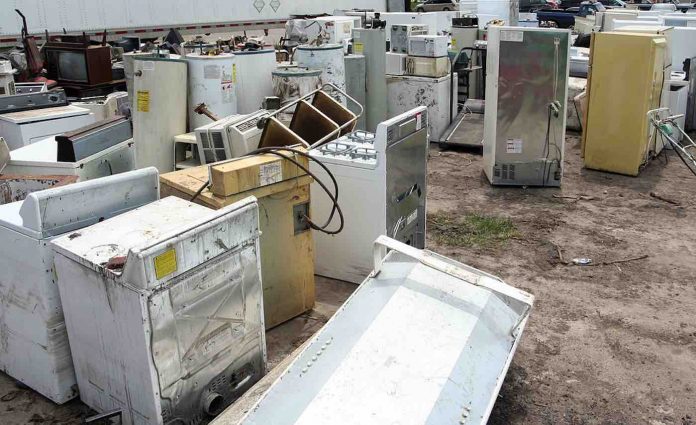
In a continued effort to reduce European’s carbon footprint and make energy bills cheaper for consumers, the European Union has just passed groundbreaking new “right to repair” legislation for products such as refrigerators, washing machines, dishwashers, and televisions.

Improving the eco-design of products contributes to implementing the “Energy efficiency first” principle of the EU’s Energy Union priority.

For the first time, the measures include requirements for repairability and recyclability, contributing to circular economy objectives by improving the life span, maintenance, re-use, upgrade, recyclability, and waste handling of appliances.

“Right to repair” legislation is becoming increasingly popular as consumers across North America and Europe have vocalized their frustration over household appliances breaking down shortly after their warranties expire. Since repairing broken appliances is usually more costly than replacing it, thousands of products are simply sent to the landfill.

MORE: National Suicide Prevention Hotline is Getting Its Own 3-Digit Number in the US

According to BBC, more than 20 US states are currently working on the approval of their own “right to repair” legislation—but now, the European Commission estimates that their two newly-approved measures, together with the energy labels adopted in March, will deliver 167 TWh of final energy savings per year by 2030.

This is equivalent to the annual energy consumption of Denmark and corresponds to a reduction of over 46 million tonnes of CO2 equivalent. These measures are also expected to save European households €150 ($163) per year on average.

These savings come on top of those achieved by the existing eco-design and energy label requirements, which are expected to deliver yearly energy saving of around 150 Mtoe (million tonnes of oil equivalent) by 2020, roughly equivalent to the annual primary energy consumption of Italy. For consumers, this already means an average saving of up to €285 ($311) per year on their household energy bills.

CHECK OUT: European Parliament Approves Sweeping Ban on Single-Use Plastics, a ‘Victory for Our Oceans’

“Whether it is by fostering repairability or improving water consumption, intelligent eco-design makes us use our resources more efficiently, bringing clear economic and environmental benefits,” said European Commission Vice-President for Jobs, Growth, Investment and Competitiveness Jyrki Katainen. “It is with concrete steps such as these that Europe as a whole is embracing the circular economy to the benefit of citizens, our environment and European businesses.”

Following today’s adoption, the legislation will be published in the Official Journal of the European Union in the coming weeks and will enter into force 20 days later.

RELATED: Another Victory Against Plastic—These Water Brands Will Soon Be Packaged in Aluminum Cans

Commenting on the adoption of the measures, Monique Goyens, Director general of the European Consumer Association, said: “The new repair requirements will help improve the lifetime of everyday appliances that currently fail too quickly. It is crucial we bin the current ‘throwaway’ trend, which depletes natural resources and empties consumers’ pockets.

“The EU has started with five products that most consumers own at home and we strongly encourage legislators to make more product categories repairable,” she added.

Fix Up Your Social Media Feed By Sharing The Good News With Your Friends…

Stranger Who Taught Grieving Man to Tie a Tie for Dad’s Funeral Attends the Service to Pay His Respects

Photo by Sherri Butcher

A heartwarming new friendship has blossomed between two strangers thanks to a simple necktie bringing them together in a time of grief.

Kevin Butcher and his wife Sherri had been shopping for neckties at a Walmart in Milford, Ohio so he could wear it to his father’s funeral later in the week.

After they had picked out the proper attire, they both realized that neither of them knew how to tie a tie.

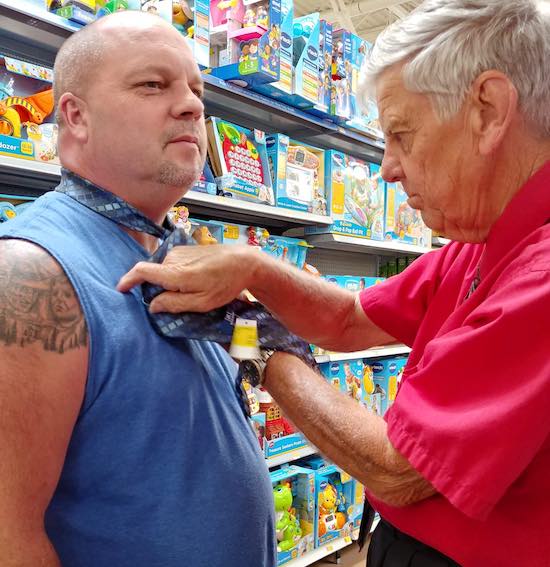
Kevin then noticed that one of his fellow shoppers, an older man who had been browsing some nearby toy shelves, was wearing a tie—so he approached the man and asked for help.

MORE: Crane Operator Makes Heartwarming Pact With Dying Man Who Had Been Watching Him Work Every Day

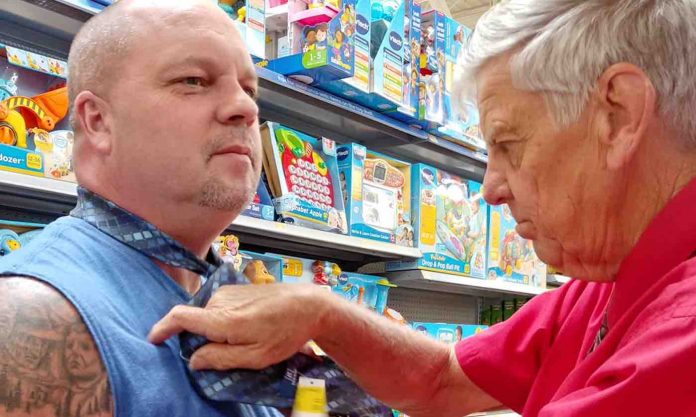
“We both thought he might think we were crazy… but we were both so wrong,” Sherri later recounted on Facebook. “This sweet man did not hesitate when Kevin explained why he needed help and proceeded to put the tie around his neck. He joked with him about [how it] might take all day to get it right… but he was determined.”

“After a few tries of getting the right length, he gently pulled it back over Kevin’s head and thanked HIM for letting him do this!! He reached to shake hands with him and then pulled Kevin in close to hug him and tell him how sorry he was to hear about losing his dad.

LOOK: Dozens of Bikers Visit the Lemonade Stand of the Girl Whose Mother Helped Them One Year Ago

“He looked at me and said ‘take good care of him’ and he walked away,” Sherri continued. “Kevin and I both walked away quietly as we were both having a hard time fighting back the tears.”

Despite how touched they were by the emotional exchange, it would not be their last encounter with the man. After Sherri wrote about the experience on Facebook, local reporters were able to identify the man as Howell Hackler. They then orchestrated a tearful exchange between him and the Butchers the very next day.


“Meeting these two guys again—it’s great because I didn’t ever think I’d see [them] again,” Hackler told WKRC.

Several days later, the Butchers arrived at the funeral of Kevin’s father only to find that Hackler had stopped by to pay his respects and say a prayer for the family—and they were overwhelmed with gratitude for the support.

“There are just no words to explain how Kevin and I felt this morning,” Sherri wrote in a separate Facebook post. “This man is an absolute ANGEL on Earth!!!!”

Tie Your Friends Together With This Sweet Story By Sharing It To Social Media…

Kroger Donates $500,000 Facility to Rival Grocery Store So Community Won’t Be Left Without a Supermarket


Rather than leave a community without a grocery store, the Kroger supermarket chain is donating one of their closed stores to a competing company.

After Kroger closed their Orange Mound location in Memphis, Tennessee back in February 2018, local residents were forced to travel to the Kroger location in Union, which can be a tedious 30-minute bus ride with groceries in hand, according to the Memphis Business Journal.

Community leaders then threatened to boycott the chain unless they were given another fully-serviced grocery store to suit their needs.

LOOK: Supermarket Praised for Replacing Plastic Produce Packaging With Banana Leaves

WMC reporters say that shortly after Kroger representatives closed the location, they had tried to pass on the property to Superlo, a family-owned grocery store chain with several local branches in the city. Unfortunately, Superlo had just opened another branch in the city and they did not feel fiscally comfortable with opening yet another store.

After more than a year of financial preparation, however, Kroger representatives say that they are now donating the $500,000 facility to Superlo.

Superlo representatives say that they hope to have the store up and running again by December 1st.

(WATCH the news coverage below) – Photo by WATN

Multiply The Good—Be Sure And Share The News With Your Friends On Social Media…