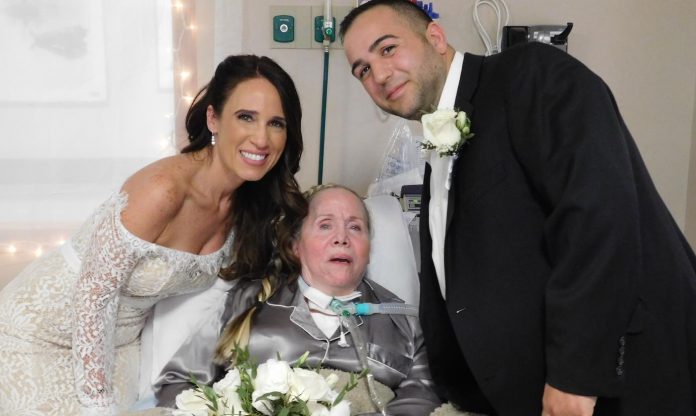
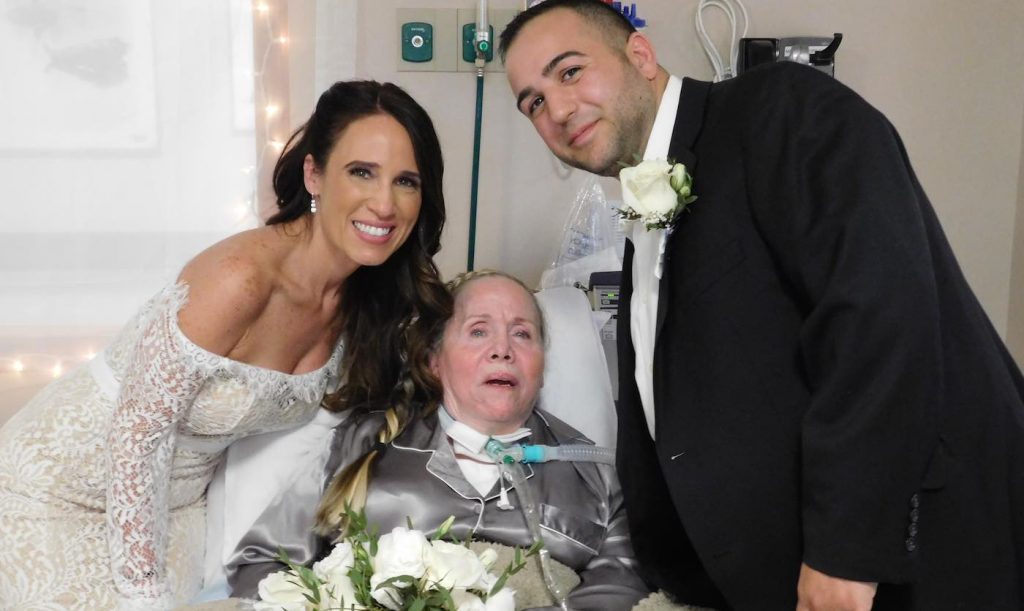
Jane Hartstein has been hooked up to a ventilator in a respiratory care unit for more than three years, but she’s never been more out of breath than she was recently when her daughter Nicole and her fiancé surprised her by bringing their wedding to her bedside.
Jane, who suffered a stoke, was completely shocked seeing her daughter in her wedding dress.
“I can’t believe this,” she said as she was wheeled into the family room of the unit, decorated with twinkle lights, champagne glasses, and a chuppa canopy for the marriage ceremony. “I’m just so happy, I can’t believe they did this.”
According to Nicole, she and her fiancé wanted her mother to be part of their wedding, but knew she couldn’t make the trip to the New Jersey wedding venue on May 26. So, instead, they decided to get married in front of her mom prior to their scheduled ceremony, officially changing their anniversary—if only for those in the know.
The big ‘wedding’ took place as planned at the country club in Woodland Park (and it was live-streamed on Jane’s TV), but Nicole and Edward knew that the important ceremony had already taken place.
After the staff at the Gurwin Jewish Nursing & Rehabilitation Center in Commack, Long Island had transformed the family room into a wedding chapel, complete with lights, Mr. & Mrs. signs and tulle, Jane was wheeled in and she burst into tears—so happy to be able to share in her daughter’s joy.
When Nicole saw her mother cry, she had to wipe her own away, as well. “I know you wanted to be at our wedding, so we’re bringing our wedding to you,” she said, hugging her mom before she took her place to walk down the makeshift “aisle” in the hallway.
“A Thousand Years” by Christine Perri played and staff and residents watched as Nicole was escorted by her uncle, James Jacobs, into the room where a small group of her family, including her mom, waited with the priest and rabbi. Nicole beamed as the ceremony transformed her officially into Mrs. Guida.
An eight-year relationship led up to this point, and Edward knew that his bride-to-be needed her mother to be at her wedding. “I just want Nicole to be happy, and I want her mom to be happy, too. We knew we wanted to do this,” he said.
As the kiss was exchanged and congratulations were expressed, Jane sat watching the festivities. “I can’t believe it,” she said, tearing up. “This is the best gift anyone could ever have given me.”
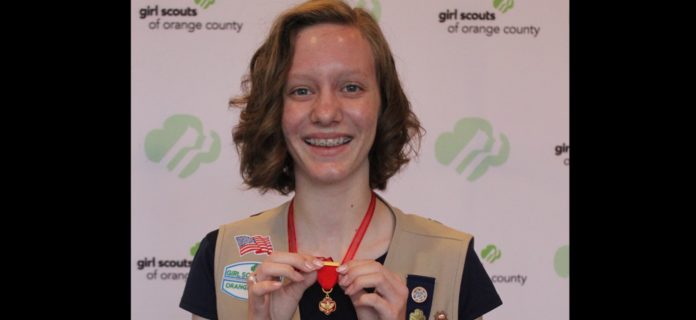
Not only did she enjoy a visit to the Disneyland Hotel last week, Ava Kopecky was presented with the Girl Scout Medal of Honor at a ceremony there for saving the life of a toddler she did not know.
The two-and-a-half year old boy had fallen into the water at Woodbridge North Lake in Irvine, California near where Ava and her friends were playing. Ava was not a strong swimmer, but her quick thinking led her to wade into the water and extend a large stick for the boy to grab onto saved him from drowning.
She then pulled him to safety and reunite him with his mother.
Vikki Shepp, the CEO of Girl Scouts of Orange County, presented the award to Ava, who is a Cadette from Troop 1967 in Irvine.
“Girl Scouts are prepared to do heroic things. We are very proud of Ava’s exemplary actions, which reflected the Girl Scout Promise to help people at all times.”
For more than 100 years, Girl Scouts of America has celebrated girls whose actions saved the lives of others. Today, the national Meritorious Service Awards—the Bronze Cross and Medal of Honor—are presented to scouts (ages 5 to 17) who save or attempt to save a life “under circumstances that indicate heroism”, regardless of risk to their own lives.
Congratulate This Quick-thinking Teen by Sharing on Social Media!
Susan Gonzales knows firsthand how difficult it can be for American military veterans to find work after combat. She’s a West Point graduate and military intelligence official who transitioned into the private sector, but she watched as people around her struggled to find work that aligned with their unique skills and experience.
That’s why she created Silentprofessionals.org, a career services platform focused on US military combat veterans seeking job placement and career growth in the private security sector.
In just over a year since its start, Silent Professionals has placed more than 2,000 combat veterans in jobs all around the world, including corporate security and executive protection roles for high net worth clients.
Each client and candidate is evaluated individually and separately. The team then offers recommendations at no extra cost. This builds trust and ensures candidates are given a firm foundation for success.
“Even though Silent Professionals may look like just a job board on the surface, it is so much more,” said Gonzales. “What we created is a nexus of trust. There are actually people behind the platform who have the experience in these types of jobs. We understand where they are coming from, we understand their experiences.”
“We even know the people they’ve worked with because we all share the same networks.”
With the tagline “share the good”, Jean Trebek has co-founded and launched an LA-based website called insidewink.
Insidewink focuses on hope, inspiration and creativity and Jean says her website comes just in time—stressing “goodness and unity, in a time where we truly need each.”
The website, mentioned on Good Morning America during an interview with her husband Alex, host of the TV game show Jeopardy, includes short stories and blogs written by a team of writers, and features the works of artists, local businesses, visionaries and musicians.
“Our goal is to create community”, Mrs. Trebek explains. “We all share the same things – the desire to be seen, heard, accepted and respected. We want to focus on that.”
The articles range from humorous (how gum can set you free) to poignant (how breast cancer can change a life) and all reflect the “beauty” of the human condition.
Jean’s life path has centered on spiritual and social consciousness. As a spiritual practitioner for the last decade, she has led “life-changing retreats”—and her husband is familiar with the category. “Alex knows that this is my passion—reaching out to others, creating a space for peace and love, allowing people’s stories to be heard.”
The content on the website changes nearly daily, with public interest and requests for submissions on the rise. Jean confesses, “The amount of people asking to be a part of insidewink.com is very pleasantly surprising”
And what does the word “insidewink” mean? “We made it up to symbolize the love in me acknowledging the love in you. There comes a point where we need to see the best in each other… We are all in this together, so let’s move with the goodness that we all have.”
Give Your Friends an Inside Wink, and Share This on Social Media (Photo of Alex in 2012 by ANDERS KRUSBERG, CC license)
Quote of the Day: “Raise the rest of your life to meet you. The world is yours. Light up the night.” – Peter Dinklage (born 50 years ago today)
Image: by Bruno Caimi, CC license via Flickr
With a new inspirational quote every day, atop the perfect photo—collected and archived on our Quotes page—why not bookmark GNN.org for a daily uplift?
Last month, United Airlines strengthened their commitment to being “the world’s most environmentally conscious airline by agreeing to purchase up to 10 million gallons of cost-competitive, commercial-scale, sustainable aviation biofuel over the next two years.
The biofuel, which the airline currently uses to help sustainably power every flight departing out of their Los Angeles Airport hub, achieves more than a 60% reduction in greenhouse gas emissions on a lifecycle basis.
The contract extension with Boston-based biofuel producer World Energy follows the airline’s original purchase agreement from 2013, which helped the company make history in 2016 as the first airline in the world to use sustainable aviation biofuel on a continuous basis. United is still currently the only U.S. airline to use biofuel in our regular operations.
World Energy’s biofuel is made from agricultural waste and has received sustainability certification from the Roundtable on Sustainable Biomaterials. Recently announced, World Energy will invest $350 million to fully convert its Paramount, California facility to renewable diesel and sustainable aviation jet fuel, bringing its total capacity to 300 million gallons of production annually at that location, one of the company’s six low-carbon fuel manufacturing plants.
The contract renewal with World Energy will further assist United in achieving their commitment to reducing their greenhouse gas emissions by 50% by 2050. Their pledge to reduce emissions by 50% relative to 2005 represents the equivalent of removing 4.5 million vehicles from the road, or the total number of cars in New York City and Los Angeles combined. Furthermore, United’s biofuel supply agreements represent more than 50% of the commercial aviation industry’s total agreements for sustainable aviation biofuel.
In addition to their purchase agreement with World Energy, United has invested more than $30 million in California-based sustainable fuel developer Fulcrum BioEnergy. According to the airline, the investment remains the single largest investment by any airline globally in sustainable fuels, and their agreement to purchase nearly 1 billion gallons from Fulcrum BioEnergy is also the largest offtake agreement for biofuel in the airline industry.
The biofuel supply agreements represent more than 50% of the commercial aviation industry’s total agreements for sustainable aviation biofuel.
“Investing in sustainable aviation biofuel is one of the most effective measures a commercial airline can take to reduce its impact on the environment,” said Scott Kirby, United’s president. “As leaders in this space, United and World Energy are setting an example for the industry on how innovators can work together to bring our customers, colleagues and communities toward a more sustainable future.”
Rather than making kids do laps around a gym track, an alternative school in Iowa is allowing their students to earn their physical education credits by helping disabled and senior citizens.
At most traditional high schools, students can finish their PE course by pursuing sports or other after-school activities.
The students at the Alternative Learning Center in Dubuque, however, are being encouraged to fulfill their PE requirements by doing yard work for people in the community who are unable to do it themselves.
The learning center is specifically geared towards junior and senior high students who are at risk of dropping out of traditional schools.
Tim Hitzler, the teacher who launched the program, has been supervising the volunteer students’ yard work over the course of the last few weeks – and he says it has had a noticeable impact on the teens as well as the homeowners.
“The students and I and other students come out and help them. Could be raking leaves, pulling weeds, cutting grass, cleaning gutters, just depends on what they need,” Hitzler told KWWL.
“The students aren’t typically too excited at the beginning, but once they get involved and start doing the yard work, they become more motivated,” he added. “What they really like is … helping people. They really like giving back to people and meeting the person.”
(WATCH the news coverage below)
Plant Some Positivity By Sharing The Inspiring Initiative With Your Friends On Social Media…
A new study from Switzerland shows that music can do much more than soothe the senses – in fact, the research says that specially-orchestrated music can help boost the neurodevelopment of prematurely born babies.
In Switzerland, as in most industrialized countries, nearly 1% of children are born “very prematurely”, i.e. before the 32nd week of pregnancy, which represents about 800 children yearly.
While advances in neonatal medicine now give them a good chance of survival, these children are still at high risk of developing neuropsychological disorders.
To help the brains of these fragile newborns develop as well as possible despite the stressful environment of intensive care, researchers at the University of Geneva (UNIGE) and the University Hospitals of Geneva (HUG) propose an original solution: music written especially for them – and the first results, which were published in the Proceedings of the National Academy of Sciences (PNAS) in the United States, are surprising: medical imaging reveals that the neural networks of premature infants who have listened to this music, and in particular a network involved in many sensory and cognitive functions, are developing much better.
Each year, the Neonatal Intensive Care Unit at the HUG welcomes 80 children born far too early – between 24 and 32 weeks of pregnancy, i.e. almost four months ahead of schedule for some of them. The vast majority will survive, but half will later develop neuro-developmental disorders, including learning difficulties, attentional or emotional disorders.
“At birth, these babies’ brains are still immature. Brain development must therefore continue in the intensive care unit, in an incubator, under very different conditions than if they were still in their mother’s womb,” explains Petra Hüppi, professor at the UNIGE Faculty of Medicine and Head of the HUG Development and Growth Division, who directed this work. “Brain immaturity, combined with a disturbing sensory environment, explains why neural networks do not develop normally.”
The Geneva researchers started from a practical idea: since the neural deficits of premature babies are due, at least in part, to unexpected and stressful stimuli as well as to a lack of stimuli adapted to their condition, their environment should be enriched by introducing pleasant and structuring stimuli. As the hearing system is functional early on, music appeared to be a good candidate. But which music?
“Luckily, we met the composer Andreas Vollenweider, who had already conducted musical projects with fragile populations and who showed great interest in creating music suitable for premature children,” says Hüppi.
Lara Lordier, PhD in neurosciences and researcher at the HUG and UNIGE, describes the musical creation process.
“It was important that these musical stimuli were related to the baby’s condition,” says Lordier. “We wanted to structure the day with pleasant stimuli at appropriate times: a music to accompany their awakening, a music to accompany their falling asleep, and a music to interact during the awakening phases.”
To choose instruments suitable for these very young patients, Vollenweider played a variety of instruments to the babies in the presence of a nurse specialized in developmental support care.
“The instrument that generated the most reactions was the Indian snake charmers’ flute (the punji),” recalls Lara Lordier. “Very agitated children calmed down almost instantly – their attention was drawn to the music!” The composer thus wrote three sound environments of eight minutes each, with pungi, harp, and bells pieces.
The study was conducted in a double-blind study, with a group of premature infants who listened to the music, a control group of premature infants, and a control group of full-term newborns to assess whether the brain development of premature infants who had listened to the music would be more similar to that of full-term babies. Scientists used functional MRI at rest on all three groups of children.
Without music, premature babies generally had poorer functional connectivity between brain areas than full-term babies, confirming the negative effect of prematurity. “The most affected network is the salience network which detects information and evaluates its relevance at a specific time, and then makes the link with the other brain networks that must act. This network is essential, both for learning and performing cognitive tasks as well as in social relationships or emotional management,” says Lara Lordier.
In intensive care, children are overwhelmed by stimuli unrelated to their condition: doors open and close, alarms are triggered, etc. Unlike a full-term baby who, in utero, adjusts its rhythm to that of its mother, the premature baby in intensive care can hardly develop the link between the meaning of a stimulus in a specific context. On the other hand, the neural networks of children who heard Andreas Vollenweider’s music were significantly improved: the functional connectivity between the salience network and auditory, sensorimotor, frontal, thalamus and precuneus networks, was indeed increased, resulting in brain networks organization more similar to that of full-term infants.
The first children enrolled in the project are now 6 years old, at which age cognitive problems begin to be detectable. Scientists will now meet again their young patients to conduct a full cognitive and socio-emotional assessment and observe whether the positive outcomes measured in their first weeks of life have been sustained.
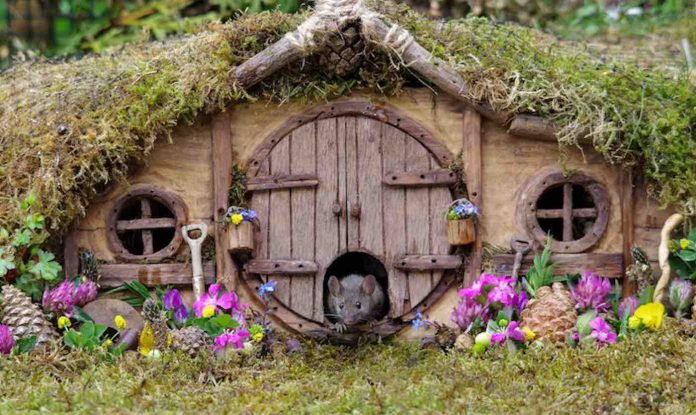
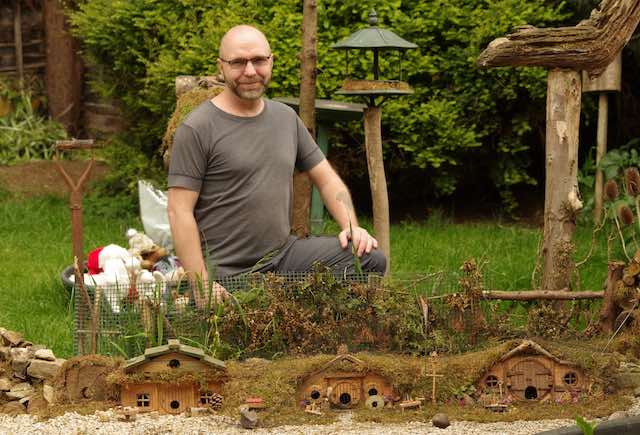
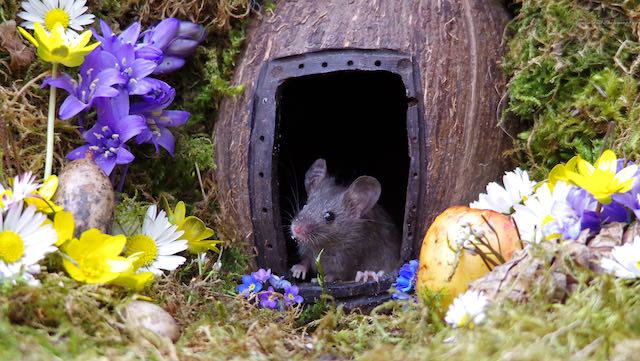
A photographer has built the most adorable mini village of log cabins – complete with post boxes and dining tables – so he can take pictures of their tiny residents: a group of backyard garden mice.
SWNS
Simon Dell first started building his tiny Shire in spring 2018 after he spotted a wild mouse in his back garden.
SWNS
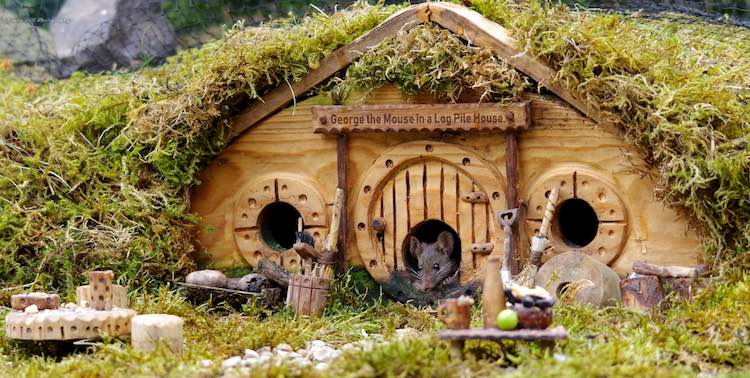
“I could see the cats sitting just feet away from him at the other side of a fence,” said Dell. “So I piled some small logs around a box as a home for the mouse and covered it with moss and straw to give him a little shelter.
“I then put some wire fencing around the fence so there was no way the cats could get to the mouse,” he added, “and we decided to name him George.”
SWNS
After saving the mouse, Simon began to add more homes next door to the makshift neighborhood – and within days, more mice had moved in, looking for creature comforts.
SWNS
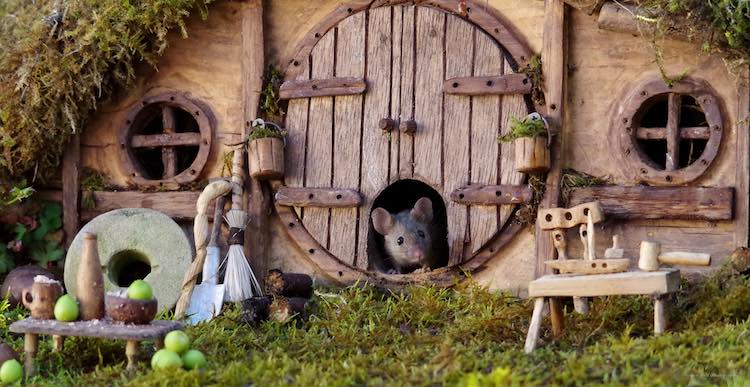
The wildlife photographer began adding more to the tiny houses, fashioning detailed dining tables, washing lines, motorbikes, and even a weights set for the resident rodents.
“The mice seem to love the log pile homes so they wasted no time in moving in,” says Dell.
SWNS
“They are still wild animals who run away if I get too close, most of the time I just sit a couple feet away with a zoom lens, they seem happy to pop in and out,” he added. “The only food I give them is often all natural and pick up berries and fruits that grow in the local area.”
SWNS
Simon now has nine mice living in his back garden village, but he believes that one of the females is pregnant so may have to start building more.
SWNS
Be Sure And Share This Marvelously Mousy Story With Your Friends On Social Media…
Quote of the Day: “We must love them both, those whose opinions we share and those whose opinions we reject. For both have labored in the search for truth and both have helped us in the finding of it.” – St. Thomas Aquinas
Image: by Eu Governo, CC license via Flickr
With a new inspirational quote every day, atop the perfect photo—collected and archived on our Quotes page—why not bookmark GNN.org for a daily uplift?
Seeing a glass as half-full rather than half-empty is typically associated with having a more optimistic worldview, but it may align with even more personality traits including decisiveness, playfulness, and creativity.
A new survey of 2,000 Americans found that when viewing an image of a glass containing an equal amount of liquid and empty space, 58% of Americans felt that the glass was half-full, while 16% felt that it was half-empty (the remaining respondents were indecisive).
The poll found that glass half-full thinkers, while being more optimistic, also tended to be more patient, more competitive, more adaptable, and more playful than glass half-empty thinkers.
Additional Traits That May be Associated With GLASS HALF-FULL THINKERS
More assertive
More right-brained
More extroverted
More practical
More likely to be a morning person
More likely to use Twitter
They also reported having 11 “better than average days” per month and spending 21 hours on hobbies per week.
On the other hand, glass half-empty thinkers tended to be more laid-back, more introverted, more serious and more proud than their half-full counterparts.
Oddly enough, glass half-empty thinkers did not always self-identify as pessimists. In fact, nearly half (48%) of glass half-empty types believe they’re more optimistic than pessimistic.
When faced with personal setbacks, glass half-full respondents have an easier time quickly finding the silver lining while nearly half of all respondents (46%) report that they’re trying to be more positive day-to-day.
Additional Traits That May be Associated With GLASS HALF-EMPTY THINKERS
More left-brained
More sentimental
More rebellious
More likely to be a night person
More likely to use Instagram
They also reported experiencing nine “better than average days” per month, and spent 14 hours on hobbies per week—33% fewer than the other group.
Glass half-full thinkers, spending more time on hobbies, might be more optimistic because they allow more time for fun. Respondents who think more positively reported almost 10% more days they rated as “better than average” each month than those who see things as being half-empty (11 days vs. 9 days).
Glass half-full thinkers are 39% more likely to self-identify as a morning person, although the majority of both groups of respondents believed great days start with great mornings.
The survey was conducted by OnePoll on behalf of Borden Dairy for their optimism-inspired campaign.
Be Sure And Share The Survey With Your Friends On Social Media – File photo by Kurt, S, CC
When you’re looking at Elizabeth Fournier’s funeral home from the street, it looks like any ordinary farmhouse nestled into the hills of Boring, Oregon—and even after she welcomed me through the front door, it seemed hard to believe there were two wicker caskets tucked neatly in the back room of the cozy house.
Offering woven caskets is just one of the things that makes Fournier’s mortuary business particularly remarkable.
With the enormous costs of chemically-treated wood coffins, concrete burial vaults, liners, cremations, urns, cemetery space, and embalming, an average funeral in America costs about $10,000. In addition to adding a financial burden to the backs of grieving families, these burial methods are also notoriously toxic for the environment.
Fournier, on the other hand, has made a name for herself in the funeral industry by ditching toxic burial methods altogether in favor of “green funerals”.
When Good News Network first published an article on Fournier’s trailblazing mortuary career in 2016, she told me about how she created biodegradable urns out of dryer lint, flour, and water so she could give them away to poorer families who couldn’t afford traditional funeral costs.
Not only did she offer discounted services to low-income families, Fournier has also facilitated dozens of funerals for parents who lost their children – and she didn’t charge them a dime.
“As long as the mortuary board is happy with me, and I am being ethical I tend to march to my own drum,” Fournier told GNN in 2016. “If a family is truly having a hardship, I have no issue giving services away.”
Since opening Cornerstone Funeral Services 14 years ago, her passion for eco-friendly mortuary practices has earned her the nickname “The Green Reaper”, although she was quick to assure me that she wasn’t the one to coin the term—there nothing is scary about the humbling way she talks about death and grief.
Beyond her compassionate and eco-friendly business practices, the ease with which she offers her guidance, empathy, wisdom, and expertise is particularly singular. As we chatted in the Cornerstone funeral parlor, she recounted awe-inspiring tales of uplifting funerals and intimate ceremonies that she had been invited to attend after her consultations. Despite her passion for arranging more consoling memorials, she also spoke very frankly about the ones that had been so heartbreaking to facilitate. She simply said that they “just plain sucked”.
Regardless of the circumstances, she emphasized that everyone should be allowed to grieve in their own way. Fournier herself recently had to cope with the loss of her father, but she says she likes to remember him fondly by the numerous jigsaw puzzles that they did together (all of which have been lovingly glued together as a makeshift wallpaper for the Cornerstone funeral parlor bathroom.)
The DIY manual is as fascinating and informative as it is relevant. According to a 2017 survey from the National Funeral Director’s Association, just over half of participants expressed interest in an eco-friendly funeral. Furthermore, 62% of consumers felt it was very important to communicate their funeral plans and wishes to family members prior to their own death, yet only 21% had done so.
What makes the guidebook even more relevant is a law that was passed by the Washington state legislature at the end of May.
The bill, SB 5001, makes Washington the first US state to legalize human composting—also known as “liquid cremation”. Up until the law was passed with sweeping bipartisan support (80-16 in the House and 38-11 in the Senate), the only legal methods of post-mortem funerary processing were cremation and burial.
Now, however, bodies can be naturally processed into clean, odorless soil that can nourish the planet without taking up any space in crowded, pesticide-laden cemetery spaces.
“Natural organic reduction and the conversion of human remains into soil will be opening in the Seattle area in late 2020, and it’ll be the first facility in the world where this can be offered to the public,” Fournier told GNN. “It’s very exciting. Until then, there will be a large push to get the word out and to improve the sustainability, the conscientiousness and the meaning of it all.
“I believe other states are waiting to see how this program will develop before they set foot into the human composting realm,” she added, “but I think it is beautiful, regenerative and really aligned with the cycles of nature.”
Be Sure And Share The Story With Your Friends On Social Media…
You may already know that planting trees is good for your health and the environment, but did you also know that it is good for your wallet as well?
Depending on the region and size of the tree, backyard greenery has been shown to safe homeowners hundreds of dollars in utility bills.
This particular list of USDA-backed research shows that since large, shady trees can prevent a home from being overexposed to excessive sunlight, urban and rural households can respectively save up to 40% and 30% in air conditioning costs. In fact, the USDA says that the “net cooling effect of a young, healthy tree is equivalent to 10 room-size air conditioners operating 20 hours a day.”
Once the trees shed their foliage during the colder winter months, they continue to help homeowners save money in heating costs because they displace chilly wind currents while simultaneously allowing sunlight to warm our buildings, resulting in a 10% reduction in urban heating costs and 20% for rural homes.
Between the reductions in air conditioning and heating costs, homeowners could save anywhere from $180 to $400, depending on the household location and the species of tree.
Though this may not seem like very much money in the long-run, urban tree cover is particularly effective against the heat-island effect that occurs in large cities. By mitigating this heat-island effect with trees in urban areas, it could potentially reduce national energy use in air conditioning by 20% and save over $10 billion per year in energy use.
There may be costs associated with maintaining a tree in your backyard, but having a tree in your yard can also increase the value of your home by up to 15% – or about $7,000 per house.
Furthermore, being surrounded by greenery has been associated with a number of benefits. Medical research has shown that spending time in nature can reduce symptoms of mental and physical ailments and boost the body’s production of immune cells and cancer-fighting proteins. Other studies show that spending just 20 minutes in nature can greatly reduce a person’s stress levels – and people who live close to birds and trees are less likely to suffer from depression, anxiety, and stress.
All of these studies are only reenforced by this more recent piece of research which describes how American counties that have more trees and shrubs have been shown to spend less on Medicare and healthcare costs.
If you’re all ready to grab a shovel and get to work, the Arbor Day Foundation has an online guide for determining which leafy greenery is the best for you and your home. Once you have determined the tree you want to plant, the charity also has a benefits calculator for estimating the total amount of money that you will save on your utility bills based on your area and the size and species of the tree.
You can also support the foundation’s environmental work by buying your new tree sapling directly from their website.
Before planting your tree in your backyard, be sure and give the tree plenty of space so that it does not interfere with your house or garden. For best results, this 2009 study states that arranging your leafy greenery so that it is either within 40 feet of the south side of your house or within 60 feet of the left side will generate the most energy savings.
Plant Some Positive News Amongst Your Friends By Sharing These Handy Hints To Social Media – File photo JR P, CC
Success rarely comes without struggle – but for people who have worked as hard as Eric White, they know that the reward is worth the rocky road.
White is the 33-year-old mastermind behind Zydeco Construction – a company that will build gorgeous backyard beaches and ponds right on your very own property.
The “swimming ponds”, as White calls them, are actually just blissfully blue swimming pools that are surrounded by sand and equipped with his specially patented water pump.
That being said, the Louisiana construction worker wasn’t always a millionaire pool designer. As a teenager, White was homeless for eight months, and he told The Daily Advertiser that he could only read at a second-grade level when he eventually dropped out of high school.
“Growing up, things weren’t easy for me,” he told the news outlet. “I could hardly even spell my name.”
After he flunked out of school, White worked as a helper for a local construction company so he could make enough money to feed his daughter. He tried making more money by working at a car dealership, but he says he wasn’t cut out for the job.
Zydeco Construction, LLC
Construction work, on the other hand, came naturally to him – so when his father tipped him off to a construction company that was looking for new employees in Baton Rouge, he jumped at the opportunity.
“The guy that I worked for there took me under his wing and taught me about the company,” recalled White. “Within the first six months, I was managing the team.
“From there, I went to another company that offered more money, then I started my own company, a pool business called Cool Pools. That business did very well, and last year, I sold it for over a million.”
White now runs Zydeco Construction out of southern Louisiana as a “labor of love” with which he can keep himself busy and give free reign to his creativity.
Though he says that his backyard beaches cost several thousand dollars to build, no two creations are ever the same – and each one is a pond-like paradise.
(WATCH the drone footage of the backyard beach below)
Be Sure And Share This Sweet Story Of Success With Your Friends On Social Media…
With a new inspirational quote every day, atop the perfect photo—collected and archived on our Quotes page—why not bookmark GNN.org for a daily uplift?
College can be a stressful time for aspiring young academics – but one university has found a perfect solution for easing the minds of anxious students while simultaneously preparing puppies for their own canine careers.
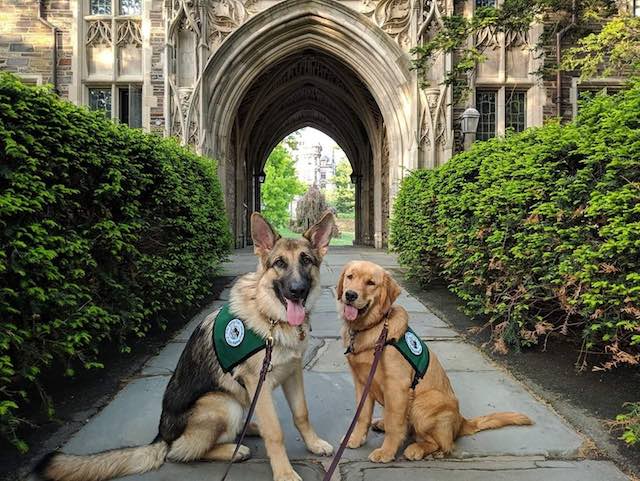
Credited as the oldest guide dog school in the United States, The Seeing Eye is responsible for training hundreds of seeing eye dogs for the blind every year. Prior to graduating from the famed canine academy, however, the young German shepherds, retrievers, and Labradors need to be properly trained and prepared for their future roles as guide dogs.
That’s where Rutgers University comes in; the New Jersey school is just one of two colleges in the nation (University of Delaware is the other) that pairs these guide dogs-in-training with college students.
The Rutgers University Seeing Eye Puppy Raising Club (RUSEPRC) typically hosts 10 to 25 student “raisers” who take on the main responsibility of fostering the puppy while it goes through its preliminary stages of training.
Taking care of a rambunctious puppy can be difficult for any pet owner, let alone a student who is already trying to balance a typical college course load – but that’s why the club also recruits dozens of “sitters” like Ethan Saul.
In addition to being a junior year student at the school and a roommate to one of the club’s raisers, the 20-year-old business major is just one of the club’s many sitters who delights in petsitting the pups as needed.
Photo by RUSEPRC
“Luckily, a lot of raisers are animal science majors that can bring their dog to work,” Saul told Good News Network. “If they can’t, there’s lots of sitters like me who are happy to help watch them.”
In fact, he told GNN that interacting with the dogs is his “favorite thing” about this university.
“Being a student in the business school, I spend a lot of my time studying for classes like accounting or statistics… very dry and boring,” says Saul. “Being able to see a dog on campus, let alone being able to live with one, is amazing! It really relieves a lot of stress for us.
“As you know, school is exhausting and stressful,” he added. “So coming home to a furry animal that only wants love is the best.”
While the students are devoted to socializing the puppies and giving them mounds of affection, they also provide a very important aspect of the dogs’ training, which is helping to expose the dogs to as many different sights, smells, environments, and experiences as possible.
Photo by RUSEPRC
“From the second we get them, we shower them with a lot of love and we work on their basic obedience and commands – but the most important aspect of the training that we do with them is the exposure training,” RUSEPRC President Emily Cruz told GNN.
“We never know what type of person they will guide or in what kind of environment they will guide in. They may guide a retired man living in Florida or maybe a young woman with kids teaching at a college in a big city. The possibilities are endless!” she added. “Therefore, we make sure to expose them to many different people, places, sights, sounds, environments, and experiences to ensure that they are the most confident guide dog in every and any situation.”
The club has collectively raised over 200 guide dogs. If any of the canines fail to make the cut as a service animal, then the raiser has first dibs on its adoption – otherwise, Saul says that they are often sent to live with “a family from a waiting list that is years long.”
That being said, the RUSEPRC club members are quick to say how life-changing the program has been for them during their college careers.
Photo by RUSEPRC
“This program has not only helped make a difference in the lives of blind people, but also has shaped the lives of hundreds of Rutgers students,” says Cruz.
“It might not be easy to give [the dogs] back up, but knowing that they are doing bigger things in the world and knowing that you played a part in that swells everyone involved with pride.”
Photo by RUSEPRC
“While we teach our puppies a lot, they teach us so much in return,” she added. “I know that I wouldn’t be myself if it wasn’t for this program.”
Guide Your Friends to This Pawesome News On Social Media…
[NOTE: GNN in no way supports candidates for elected office.]
When newly-elected Congresswoman Tulsi Gabbard came to Washington, DC, she knew that the American political system was breaking down, and one of the essential missing cornerstones was any sense of respect and camaraderie for those politicians on “the other side of the aisle”.
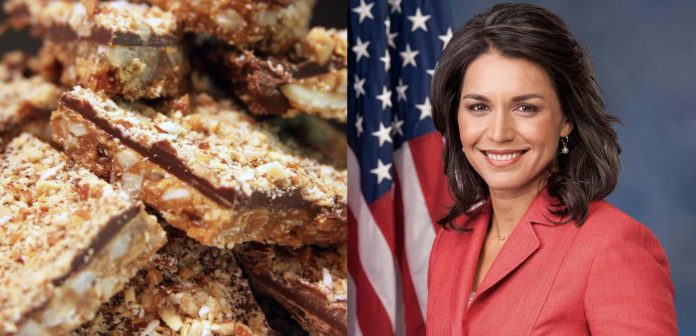
A Democrat and combat veteran, she recalled in an interview with Joe Rogan how she used toffee in 2013 to try to heal the divide.
“I was told as a new member of Congress… with Republicans in charge, coming from a small state like Hawaii, you will never get anything done, so just accept that fact,” said Gabbard.
Upon receiving that warning, one of the first things Gabbard did was to try to get to know people, to make friends.
“My mom and dad are small business owners. They have this macadamia nut toffee business, and so I called home and said, ‘Hey mom, can you make 434 boxes of your toffee—one for every Member of Congress, Democrat and Republican?”
Her mom loved the idea—and also sent 435 bigger boxes that would be given to each of their staffs.
It wasn’t long before she was sitting in the House chambers listening to debate when the leadership of powerful committees would begin making their way across the aisle, searching her out to say thank you, and asking how they could get more boxes of the delicious toffee to bring to their wives or kids.
Then, she would hear something like, “Tell me what’s going on in Hawaii; let me know how we can work together.”
“I started writing hand-written notes, introducing myself,” says Gabbard. “Just that one small outreach of ‘Aloha’ opened the doors to these relationships that enabled me to be able to pass my first piece of legislation.”
“It’s because (I was) just treating people with respect, saying, ‘Yeah, we can disagree on nine out of ten things, but on that tenth thing, ‘Let’s talk, let’s get something done.’”
“It further affirmed what I already knew—what I knew from growing up in Hawaii with the Aloha spirit—that this ability to transcend all the superficial divisiveness, is what has the power to bring us together as a country.”
We can only hope she keeps this spirit alive in the future.
Share This Bipartisan Peace With Your Friends On Social Media – File toffee photo by Dana Moos, CC
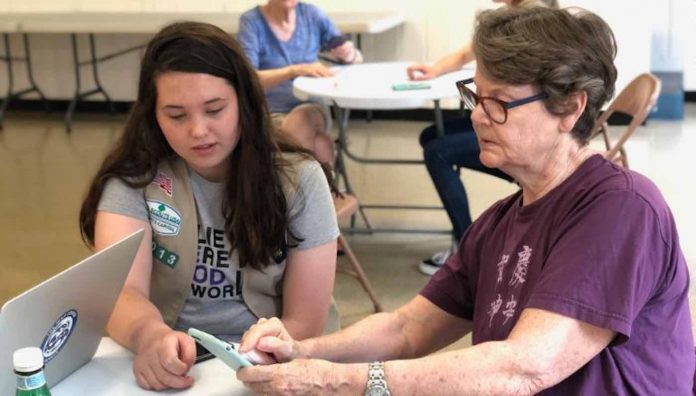
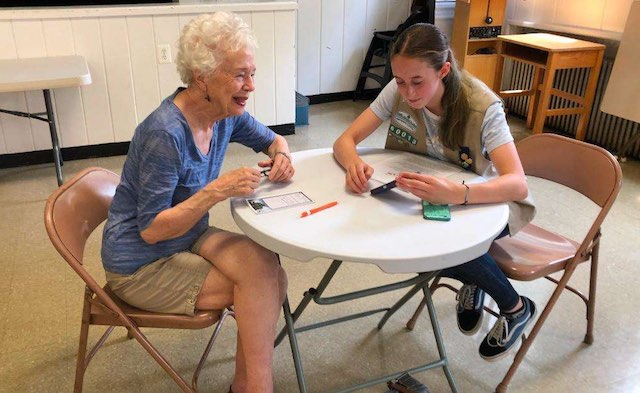
People may get upset because most young people are always on their phones, but these Girl Scouts are receiving praise for helping senior citizens to use their own cell phones.
The Girl Scouts from Troop 60013 in Arlington, Virginia set up their first walk-in clinic for elderly people having trouble understanding how to unlock the secrets of their modern gadgets.
Each teen spent at least an hour of one-on-one time with their older counterparts. Based on their technological experience, each Girl Scout was assigned to teaching different aspects of Android and Apple phones.
Some of the oldsters actually wanted to join the ecommerce revolution, and needed help setting up ApplePay—others simply had trouble learning how to send messages to their family members.
“I was teaching this older woman how to text people, and the first thing that she did was text her daughter,” one of the Scouts told CNN. “And I thought that was really sweet. It just made me feel really, really happy.”
In addition to orchestrating group lessons for all of the seniors to learn together at the end of the clinic, the youngsters even printed out brochures and guides for the seniors to take home in case confounded seniors had trouble with their smart phones in the future.
Photo by Jenny Sammis
The eighth graders orchestrated the clinic as a means of earning their Silver Award, the highest honor a Girl Scout Cadette can receive.
After experiencing the resounding success of their project, the girls hope to organize more clinics in the near future.
“Those girls were just marvelous,” said Nancy Taylor, a great-grandmother of four who visited the clinic. “They were all set up and ready for us and had a very mature attitude about answering our questions, and they were magnificent.”
(WATCH the clinic footage below)
Be Sure And Share This Sweet Story Of Intergenerational Kindness With Your Friends On Social Media…
This week the third largest chain of supermarkets in the United Kingdom has committed to cutting a further 1,284 tons of plastic from their supply chain over the course of the next year, including plastic cutlery, bags, lids, and trays.
Sainsbury’s will start by removing 489 tonnes’ worth of plastic bags, which are currently used for loose fruit, vegetables and bakery items. Customers buying loose fruit and vegetables will either be able to bring their own bags or buy a re-usable bag made from recycled materials. Paper bags will be available to customers for loose bakery items.
The company has previously implemented measures that are already leading to a reduction of 8,101 tonnes of non-recyclable plastic and “virgin plastic” every year. Its latest efforts bring this total to over 10,000 tonnes. This is in addition to its commitments to ensure all plastic packaging is reusable, recyclable or compostable by 2025.
Plastic cutlery will be removed from all their over 1,400 stores as well as plastic trays for asparagus and sweetcorn; plastic cream pot lids; plastic tomato and carrot trays; and plastic sleeves from herb pots.
The company has also committed to replacing their black plastic trays; plastic fruit and vegetable film; PVC and polystyrene trays; and plastic egg trays with recyclable alternatives.
Sainsbury’s CEO Mike Coupe said: “We are absolutely committed to reducing unnecessary plastic packaging in Sainsbury’s stores. Our customers expect us to be leading the way on major issues like this, so I am determined to remove and replace plastic packaging where we can and offer alternatives to plastic where packaging is still required to protect a product.”
They will also end the use of dark colored plastics (which are difficult to recycle) across fresh foods by the end of 2019 and entirely by March 2020, replacing them with recyclable alternatives by the end of the year.
Be Sure And Share The Good News With Your Friends On Social Media…
Quote of the Day: “Someday, after we have mastered the winds, the tides and gravity, we shall harness the energies of love. Then for the second time in the history of the world, man will have discovered fire.” – Pierre Teilhard de Chardin
Image: by 小花 王, CC license via Flickr
With a new inspirational quote every day, atop the perfect photo—collected and archived on our Quotes page—why not bookmark GNN.org for a daily uplift?