











All News - Page 625 of 1737 - Good News Network
Home Blog Page 625

Longterm Recovery Rates for Anxiety Surprise Researchers

Anxiety disorders are the most common type of psychiatric illness, yet researchers know very little about factors associated with recovery.

However, Canadian researchers were heartened to report earlier this week that there is hope on the horizon for people suffering from anxiety.

The study from the University of Toronto investigated three levels of recovery in a large, representative sample of more than 2,000 Canadians with a history of generalized anxiety disorder (GAD).

The study reports that 72% of Canadians with a history of GAD have been free of the mental health condition for at least one year. Overall, 40% were in a state of excellent mental health, and almost 60% had no other mental illness or addiction issues, such as suicidal thoughts, substance dependence, a major depressive disorder or a bipolar disorder, in the past year.

RELATED: Managing Your Gut Bacteria Shown to Alleviate Anxiety, Says New Research

The definition of excellent mental health sets a very high bar. To be defined in excellent mental health, respondents had to achieve three things: 1) almost daily happiness or life satisfaction in the past month, 2) high levels of social and psychological well-being in the past month, and 3) freedom from generalized anxiety disorder and depressive disorders, suicidal thoughts and substance dependence for at least the preceding full year.

“We were so encouraged to learn that even among those whose anxiety disorders had lasted a decade or longer, half had been in remission from GAD for the past year and one-quarter had achieved excellent mental health and well-being,” says Esme Fuller-Thomson, lead author of the study. Fuller-Thomson is director of the University of Toronto’s Institute for Life Course and Aging.

“This research provides a very hopeful message for individuals struggling with anxiety, their families and health professionals. Our findings suggest that full recovery is possible, even among those who have suffered for many years with the disorder,” she says.

MORE: Watching Birds Near Your Home is Good For Your Mental Health

Individuals who had at least one person in their lives who provided them with a sense of emotional security and wellbeing were three times more likely to be in excellent mental health than those without a confidant.

“For those with anxiety disorders, the social support that extends from a confidant can foster a sense of belonging and self-worth which may promote recovery,” says co-author Kandace Ryckman, a recent graduate of University of Toronto’s Masters of Public Health.

In addition, those who turned to their religious or spiritual beliefs to cope with everyday difficulties had 36% higher odds of excellent mental health than those who did not use spiritual coping. “Other researchers have also found a strong link between recovery from mental illness and belief in a higher power,” reports Fuller-Thomson.

CHECK OUT: Next Time You’re Feeling Stressed or Anxious, This Study Says You Should Play Tetris

The researchers found that poor physical health, functional limitations, insomnia and a history of depression were impediments to excellent mental health in the sample.

“Health professionals who are treating individuals with anxiety disorders need to consider their patients’ physical health problems and social isolation in their treatment plans,” says Ryckman.

The researchers examined a nationally representative sample of 2,128 Canadian community-dwelling adults who had a generalized anxiety disorder at some point in their lives. The data was drawn from Statistics Canada’s Canadian Community Health Survey-Mental Health and the research was published online ahead of press this week in the Journal of Affective Disorders.

Reprinted from the University of Toronto

Multiply The Good News By Sharing It With Your Friends On Social Media – File photo by Practical Cures, CC
Thousands of Aussies Are Heartened by Photos of Charred Landscapes Already Recovering From Bushfires

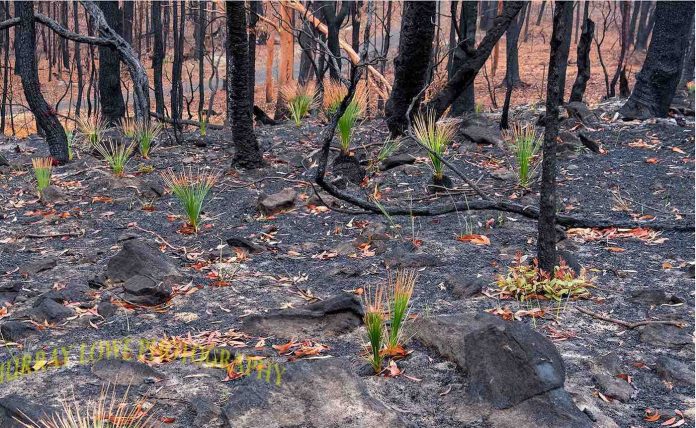
Thousands of Australians are being heartened by these striking photos of greenery and plant life growing out of an area that was left charred and blackened by the bushfires last month.

The pictures were taken by Australian photographer Murray Lowe in the Kulnura area of the Central Coast in New South Wales.

“Ventured out into the fire grounds today to capture some images of how the Aussie bush responds to fire, and the way it regenerates itself and comes back to life,” Lowe wrote in a Facebook post. “Even without any rain, life bursts through the burnt bark from the heart of the trees and the life cycle begins again.

“It’s so heartening to see the bush coming back to life again,” he added.

RELATED: Here Are a Dozen Different Ways the World Has Rallied Behind Australia During the Bushfires

One Facebook user thanked Lowe for the photos, saying: “I think everyone is so happy to see your beautiful photos showing something positive after weeks of heartache—it gives us hope.”

Another commenter wrote: “Thank you for sharing these Mr Lowe! It’s so nice after all the tragedy to see the new growth in our bush.”

Since Lowe posted the photos to social media earlier this week, they have been shared more than 39,000 times.


Lowe is now selling prints of the photos so he can donate all of the proceeds to wildfire relief.

“I did not, in my wildest dreams, anticipate the overwhelming response to my photos that I’ve seen,” he wrote in an update. “It’s both humbling, and heart-warming.”


Lowe is not the only one shining a light on the landscape’s recovery; Koala Hospital Port Macquarie posted their own pictures of the steadily returning greenery in Port Macquarie, New South Wales.

Other social media users have posted additional photo updates on the region’s recovery while international groups and activists rally behind the Australian provinces still battling the bushfires.


Plant Some Positivity By Sharing The Encouraging News With Your Friends On Social Media…

US Cancer Rates Continue Decline With Largest Ever Single-Year Drop in Cancer Mortality

Fewer and fewer people are dying from cancer in the United States every year, with 2017 showing the largest single-year drop in cancer mortality ever reported.

The cancer death rate declined by 29% from 1991 to 2017, including a whopping 2.2% drop from 2016 to 2017.

Overall cancer death rates dropped by an average of 1.5% per year during the most recent decade of data (2008-2017), continuing a trend that began in the early 1990s and resulting in the 29% drop in cancer mortality in that time.

The drop translates to approximately 2.9 million fewer cancer deaths than would have occurred had mortality rates remained at their peak. Continuing declines in cancer mortality contrast with a stable trend for all other causes of death combined, reflecting a slowing decline for heart disease, stabilizing rates for cerebrovascular disease, and an increasing trend for accidents and Alzheimer disease.

RELATED: As First US State Approves Human Composting, ’The Green Reaper‘ Has Your Guide to Eco-Friendly Burials

The steady 26-year decline in overall cancer mortality is driven by long-term drops in death rates for the four major cancers—lung, colorectal, breast, and prostate, although recent trends are mixed.

The pace of mortality reductions for lung cancer—the leading cause of cancer death—accelerated in recent years (from 2% per year to 4% overall) spurring the record one-year drop in overall cancer mortality. In contrast, progress slowed for colorectal, breast, and prostate cancers.

The news comes from Cancer Statistics 2020, the latest edition of the American Cancer Society’s annual report on cancer rates and trends. The article appears early online in CA: A Cancer Journal for Clinicians, and is accompanied by a consumer version, Cancer Facts & Figures 2020.

CHECK OUT: FDA Approves Pancreatic Cancer Drug Treatment After It Was Shown to Double Patient Lifespans

Lung cancer death rates have dropped by 51% (since 1990) in men and by 26% (since 2002) in women, with the most rapid progress in recent years. For example, reductions in mortality accelerated from 3% per year during 2008-2013 to 5% per year during 2013-2017 in men and from 2% to almost 4% in women. However, lung cancer still accounts for almost one-quarter of all cancer deaths, more than breast, prostate, and colorectal cancers combined.

The most rapid declines in mortality occurred for melanoma of the skin, on the heels of breakthrough treatments approved in 2011 that pushed one-year survival for patients diagnosed with metastatic disease from 42% during 2008-2010 to 55% during 2013-2015.

MORE: Husband-Wife Duo Has Developed ‘Gene and Cell Therapy’ Cancer Vaccine Now Being Tested on Patients

This progress is likewise reflected in the overall melanoma death rate, which dropped by 7% per year during 2013-2017 in people ages 20 to 64, compared to declines during 2006-2010 (prior to FDA approval of ipilimumab and vemurafenib) of 2%-3% per year in those ages 20 to 49 and 1% per year in those ages 50 to 64. Even more striking are the mortality declines of 5% to 6% in individuals 65 and older, among whom rates were previously increasing.

Highlights from the report:

  • The death rate for breast cancer dropped by 40% from 1989 to 2017.
  • The death rate for prostate cancer dropped by 52% from 1993 to 2017.
  • The death rate for colorectal cancer dropped by 53% from 1980 to 2017 among males and by 57% from 1969 to 2017 among females.
  • Decades-long rapid increases in liver cancer mortality appear to be abating in both men and women.
  • Progress for hematopoietic and lymphoid malignancies (leukemias and lymphomas) has been especially rapid due to improvements in treatment protocols, including the development of targeted therapies. The 5-year relative survival rate for chronic myeloid leukemia increased from 22% in the mid-1970s to 70% for those diagnosed during 2009 through 2015, and most patients treated with tyrosine kinase inhibitors now experience nearly normal life expectancy.
  • The overall cancer incidence rate in men declined rapidly from 2007 to 2014, but stabilized through 2016, reflecting slowing declines for colorectal cancer and stabilizing rates for prostate cancer.
  • Cancer survival has improved since the mid-1970s for all of the most common cancers except cervical and uterine cancers. Stagnant survival rates for these cancers largely reflect a lack of major treatment advances for patients with recurrent and metastatic disease.

“The accelerated drops in lung cancer mortality as well as in melanoma that we’re seeing are likely due at least in part to advances in cancer treatment over the past decade, such as immunotherapy,” said William G. Cance, M.D., chief medical and scientific officer for the American Cancer Society. “They are a profound reminder of how rapidly this area of research is expanding, and now leading to real hope for cancer patients.”

Reprinted from the American Cancer Society

Save Your Friends From Negativity By Sharing The Exciting News To Social Media — File photo by Airman Adam R. Shanks / US Air Force

Boy Was Inspired to Become Youngest Yogi in US After Seeing How Yoga Healed His Mom After Chemo

SWNS
SWNS

At just 7 years old, this boy was inspired to become the youngest yoga teachers in the United States—and one of the youngest in the world after he saw how the ancient discipline helped his mom recover from chemotherapy.

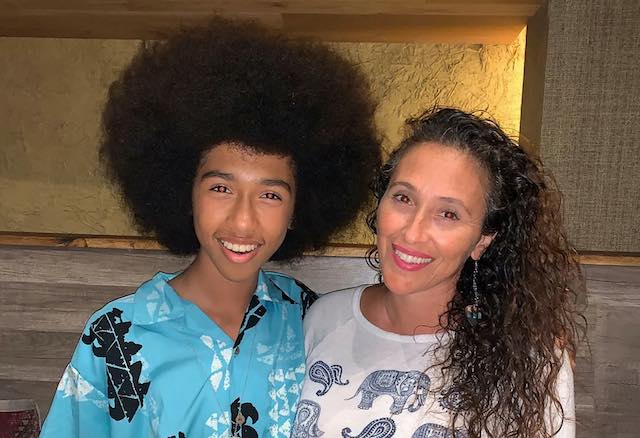
Now 14 years old, Tabay Atkins teaches three classes a week and holds seven different yoga teacher certifications.

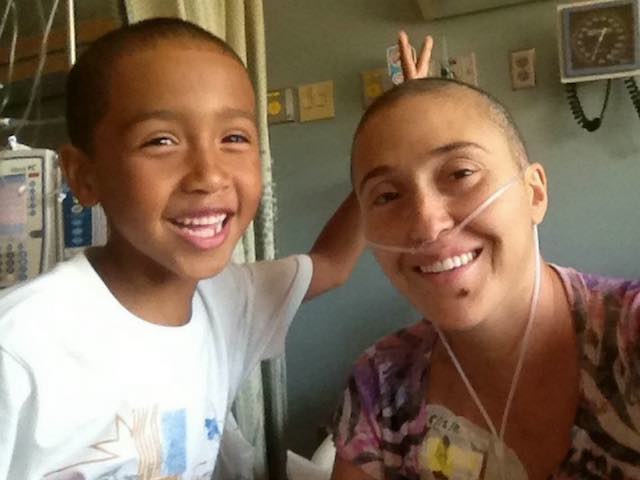
The young yogi was devastated to watch his 40-year-old mother Sahel Anvarinejad struggle as she underwent chemo and even shaved his head in solidarity when she lost her hair.

LOOK: How a Yoga Teacher is Saving First Responders Across America From Depression—With Downward Dog

But when he saw how yoga helped her to walk and find joy in life once more, he was determined to help others find the same healing on the mat.

“My mom beat cancer and two weeks later, she was introduced to yoga,” says Tabay. “She was able to walk on her own and things that used to stress her out didn’t matter as much as they did before.

“That’s when I decided to be a yoga teacher,” he continued. “I wanted to teach yoga so I could heal people the way yoga had healed my mom.”

SWNS

Sahel was diagnosed with stage 3 non-hodgkin lymphoma in April 2012. She says: “I had gone to the doctor for almost a year complaining of flu-like, cold-like symptoms,” says Sahel. “By April, I could barely breathe. My neck became so big that my parents took me to the emergency room. The tumors were the size of softballs.

“Doctors told me if I had waited til the next morning to come to hospital, I wouldn’t have made it.”

MORE: First Ever Study Shows Chair Yoga is Effective Arthritic Treatment

Sahel underwent intensive chemotherapy treatment and spent almost all her time in a hospital bed.

“I was in such bad shape. I was basically living at the hospital,” recalls Sahel. “Tabay couldn’t be around me a lot, all we had were quick visits.

“It was really hard because I had everything you could imagine—blood clots, blood transfusion, bone marrow biopsy, and staph infection. But I am a single mom and all I kept thinking about was Tabay. He was 6 years old, I didn’t want to die.”

SWNS

When Sahel lost her long hair as a side effect of the chemotherapy, her devoted son even shaved his head in solidarity with his sick mom.

“He came and surprised me with a shaved head to support me,” says Sahel. “He was so sweet.”

In September 2012, doctors told Sahel she was cancer-free. After being broken down by the chemo, however, Sahel worried about how she would build up her strength.

“I had been very active, I did pilates five times a week and I went to the gym—but before my diagnosis, I judged yoga,” says Sahel. “I assumed it was for people who wanted to sit in a dark room with their eyes closed. I thought: ‘No thanks, I’ll get a workout.’”

RELATED: Check Out This Yoga Studio Made Entirely of Salt For Extra Health Benefits

But Sahel’s mind changed when an acquaintance, who had supported her during her cancer journey, turned out to be a yoga teacher starting a teacher-training course.

“I walked into the gym and she was sitting in the lobby with eight other people who had been doing yoga together and they had huge manuals in their laps,” Sahel remembered.

“She told me she was starting a 200-hour teacher training course. I laughed. I had barely done yoga in my life. I couldn’t walk or bend my knees. I was still bald with no eyelashes, no eyebrows, no hair. She just said: ‘This is meant to be’.”

SWNS

Sahel admitted that at times, she didn’t think she would complete the course but Tabay was by her side.

“There were so many times that I wanted to leave,” she said.

“Tabay was by my side the whole time, I didn’t have anyone to watch him. The training was two and half months long and in those months, I was able to walk again.

WATCH: 4-Year-old Girl Saves Mom’s Life With ‘Bravery and Poise’—All While Calming Her Siblings and Dogs

“I felt like I could take a deep breath for the first time in years. I thought: ‘This is life-changing’.

“And then Tabay said to me: ‘I want to be a yoga teacher so I can heal people the way yoga healed you.’”

SWNS

Tabay received his first yoga certificate at 7 years old and underwent the very same 200-hour teacher training when he was 10 years old.

“It was me and four adults,” he recalled. “It was very intensive teacher training.

“At certain times in training, they wanted to give up but when they saw me, a 10-year-old, doing it, it made them think they could do it too.”

WATCH: 9-Year-old Who Got in Trouble for Doodling in Class Now Has Job Drawing On Restaurant Walls

Tabay now has seven yoga teacher certifications, including aerial yoga, restorative yoga, and yoga for those on the autism spectrum.

The youngster splits his time between teaching three classes a week either at his mom’s studio Care4Yoga in San Clemente, California, or in resorts and schools in Maui, Hawaii. Additionally, he has taught yoga classes all over the world, including in the UK, France, Australia, Mexico, and New York.

SWNS

“At my mom’s yoga studio, I teach some donation-based classes where I donate all the money we make to helping people who have cancer,” says Tabay.

He added that some students are shocked to walk into class and learn that their teacher is a 14-year-old.

“Sometimes they ask me where the teacher is,” says Tabay. “At the beginning, they often don’t think it’s going to be a good class. But my sixth grade English teacher took one of my classes—she has been doing yoga for 19 years—and she said my class is the best she ever took.

MORE: 11-Year-old Crocheting Prodigy is Raising Thousands of Dollars for Orphans–One Stitch at a Time

“A lot of students leave crying after class because it’s such an amazing experience.”

Tabay also taught yoga at a school in San Francisco for children on the autism spectrum.

“The school staff called my mom and warned us that sometimes these kids can get violent, they can’t have their eyes closed, they can’t make contact with other students.

SWNS

“I still wanted to teach them and in class, the students were all doing meditation with their eyes closed and they were doing partner poses with each other.

“The staff were shocked,” he added. “It just goes to show you that everyone is capable.”

“Once my students try the food they are shocked, because it tastes like the real thing.”

Tabay and Sahel start each day by practicing yoga for an hour together. The youngster, who graduated high school earlier this year with a 4.0 GPA, says that yoga helped him concentrate on his school work.

CHECK OUT: 14-Year-old Awarded $25,000 For Her Invention That Totally Eliminates Blind Spots in Your Car Using a Projector

Tabay is also a vegan cook and teaches vegan cookery with his mom in Hawaii and California. He now plans on growing up to be a full-time yoga instructor and vegan chef.

“I want to continue inspiring as many people as I can to live healthier,” says Tabay.

Tabay shares his yoga teachings on his Instagram page and also offers online yoga and vegan cooking courses on his official website.

Be Sure And Share This Incredible Story With Your Friends On Social Media…

“Relax. Give life a chance to flow in its own way, unassisted by your mind and effort. Stop directing the river’s flow.” – Mooji

Quote of the Day: “Relax. Give life a chance to flow in its own way, unassisted by your mind and effort. Stop directing the river’s flow.” – Mooji

Photo: by Sonja und Jens, CC license on Flickr – cropped

With a new inspirational quote every day, atop the perfect photo—collected and archived on our Quotes page—why not bookmark GNN.org for a daily uplift?


Sustainable Sand Gives Pollution a One-Two Punch by Soaking Up Toxic Metals and Purifying Water Supplies

A team of engineers has developed a mineral-coated sand that can soak up toxic metals like lead and cadmium from water.

Along with its ability to destroy organic pollutants like bisphenol A, this material could help cities tap into stormwater—an abundant, but underused water source.

The team’s findings were recently published in the journal Environmental Science: Water Research & Technology.

The researchers from UC Berkeley knew that the naturally occurring minerals they coated onto sand could react with organic contaminants like pesticides in stormwater. However, the ability of the coated sand to also remove harmful metals during filtration could unlock urban water supplies that had been written off.

WATCH: After Five Years of Drought, Kenyan Region Finally Gets Clean Water Thanks to Solar-Powered Saltwater Plant

Cities with Mediterranean climates, like Los Angeles, could store stormwater underground during wet winters, where it could serve as an inexpensive, local supply during the dry season. But this resource has gone mostly untapped because stormwater picks up toxic chemicals as it runs through streets and gutters.

“The pollutants that hold back the potential of this water source rarely come one at a time,” said study lead author Joe Charbonnet, who conducted this research as a graduate student in civil and environmental engineering. “It makes sense that we fight back with a treatment technology that has these impressive double abilities to take out both toxic metals and organics. We suspected that the mineral-coated sand was special, but the way it continues to impress us with multiple capabilities is rather extraordinary.”

Cities often discard stormwater as pollution because it picks up contamination like lead particles left behind from decades of leaded gasoline emissions or pesticides from lawns. Exposure to these chemicals is associated with slow neurological development in children and some types of cancer.

LOOK: Determined to Save His Country’s Water Supply, 26-Year-old Has Revived 10 Lakes From a Polluted Mess

However, researchers say that their coated sand material could be installed in rain gardens in places like parking lots where stormwater can be collected and cleaned. They estimate that this material could remove metals from stormwater for over a decade in a typical infiltration system, which would convey runoff into underground aquifers.

The researchers see this material turning pollution into a solution for strained water supplies, particularly in parched cities that pay to import water.

“Rainwater used to percolate into the soil and recharge aquifers,” said David Sedlak, professor of civil and environmental engineering and co-author of the paper. “That changed when we covered city landscapes with hard surfaces like roads and buildings. As water-stressed cities try to figure out how to get urban stormwater back into the ground, we have serious concerns about the quality of that water. Our coated sands can remove not one, but two major classes of contaminants that threaten groundwater quality during stormwater infiltration.”

MORE: Instead of Wasting Trillions of Gallons of Water Every Year, ‘World’s First’ System Dyes Fabrics With CO2

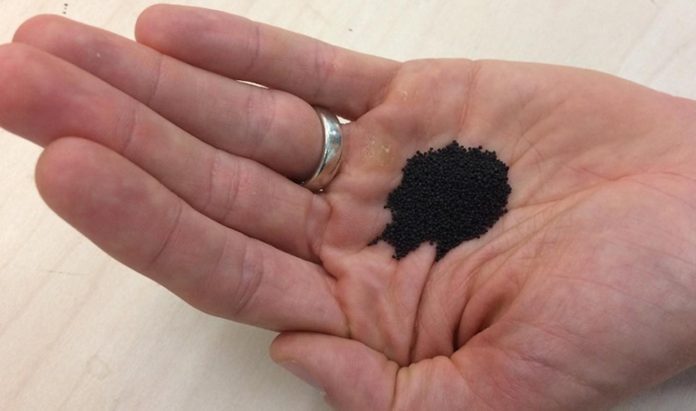
To make the filtration media, the scientists coated sand particles with manganese oxide, a naturally-occurring nontoxic mineral commonly found in soil.

Work has already begun to investigate how well this material performs at large scales. Researchers have deployed large test columns of the mineral-coated sands to treat stormwater at sites in Los Angeles and Sonoma, California.

Reprinted from UC Berkeley Engineering

Clean Up Negativity By Sharing The Good News With Your Friends On Social Media…

Girl Had Only Been Volunteering at Pet Shelter for Two Days When She Was Reunited With Lost Cat From Childhood

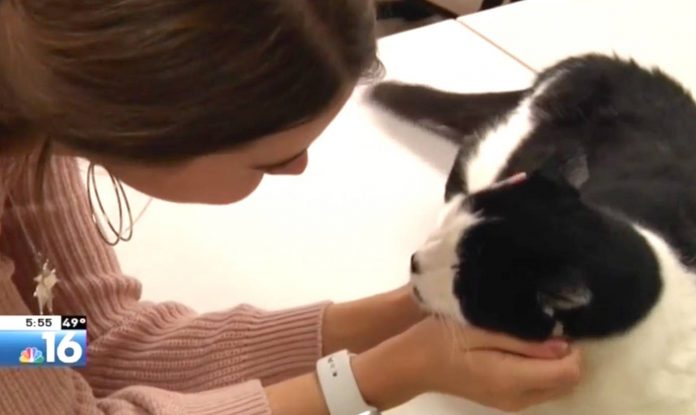
This 15-year-old girl had only been volunteering at her local animal shelter for a few days when she was suddenly reunited with her childhood cat named Spunky.

Hannah Rountree had not seen Spunky since he disappeared from her home in Roseburg, Oregon during a family vacation three years ago.

In the days following his disappearance, Hannah would often cry over her missing feline friend—and as more and more time went by, she and her family assumed the worst.

Now 15 years old, Hannah started volunteering at the Saving Grace Pet Adoption center back in December. As fate would have it, it was only her second day on the job when she noticed a cat who looked shockingly like Spunky.

RELATED: After Homeless Man is Featured on the Front Page, His High School Friends From 1971 Rally to Get Him Off the Street

To her surprise, it was indeed her missing cat.

The feline had been found on the side of a highway back in September. After he was put up for adoption, he was taken home by a couple only to be brought back to the shelter a few weeks later because he didn’t want to catch mice.

Since Hannah brought him back home, she says he has quickly become comfortable with his old stomping grounds once more—although this time, she made sure to get him microchipped.

(WATCH the news coverage below) – Photo by KMTR

Be Sure And Share The Pawesome Reunion Story With Your Friends On Social Media…

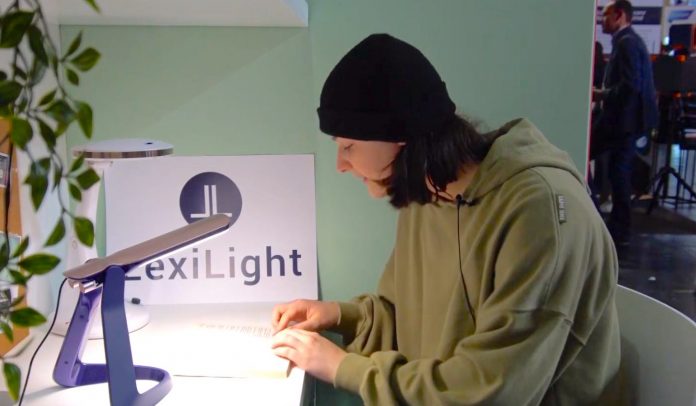
This New LED Lamp Has Helped 90% of Its Dyslexic Users to Read ‘Effortlessly’

There may be no current pharmaceutical treatments or cures for dyslexia, but scientists have designed a new kind of lamp that could be a game-changer for people with the learning disorder.

Although the cause of dyslexia is still a bit of a mystery, researchers have found that the disorder may be caused by a person being born with two dominant eyes rather than one.

Because both eyes are vying to process information, written letters and words can become blurred or mirrored, which makes reading and writing particularly difficult for people with dyslexia.

That’s why a team of French researchers developed the Lexilife lamp as a tool for helping dyslexics to read and write.

RELATED: Parkinson’s Pen For Patients Who Want to Keep Writing Christmas Cards

The LED lamp is designed to pulse and modulate at customizable speeds that clear up the visual symptoms of dyslexia.

The Lexilife team tested the light’s efficiency on 300 people with dyslexia—and 90% of participants said that they could “effortlessly read a text illuminated by the lamp.”

The device is currently being sold in Europe for €549 along with a free 30-day trial, and it will soon be made available in the United States.

LOOK: This Font is Designed Specifically For Dyslexia—And It Really Works

The Lexilife developers also admit that although the price is steep, they hope to bring down production costs by funding additional research on the lamp’s capabilities and the causes of dyslexia.

“Jean-Baptiste Fontes, founder of Lexilife, decided to share [the lamp] with as many people as possible,” reads the Lexilife website. “Manufacturing costs and selling prices are still high, but the more it is known and adopted, the more accessible it will be.”

(WATCH the lamp in action below) – Photo by Lexilife

Help Your Friends Read The Good News By Sharing It To Social Media…

Quick-Thinking Doctor Saves Man’s Life Mid-Flight After Making Makeshift Catheter Out of Oxygen Mask and Straw

Some people might dislike flying because of the food or lack of leg room—for others, it might be the danger of succumbing to a sudden medical emergency.

Unfortunately for a Chinese man on a 13-hour flight from Guangzhou to New York back in November, that was exactly what he was dealing with.

The unidentified man, who had a history of prostate enlargement, was in severe pain aboard the Boeing 787 on China Southern Flight CZ399 when a quick-thinking doctor stepped in to save the day.

Dr. Zhang Hong was later hailed as a hero after his actions ended up saving the patient from a possibly life-threatening bladder complication.

RELATED: Airman Who Was Traveling to Receive Heroism Award Nonchalantly Saves a Choking Baby on the Way

The plane was still 6 hours away from its destination when Dr. Hong was forced to construct a catheter out of a straw, a syringe, and the plastic tube of an oxygen mask so he could suck 800 milliliters of urine out of the patient’s bladder over the course of 37 harrowing minutes.

“If we had not dealt with the situation in time, the patient’s life would have been at risk,” Dr. Hong, who is head of vascular surgery at the First Affiliated Hospital of Jinan University, told The South China Morning Post.

In the end, Hong downplayed his actions, remarking on how saving lives is in his instincts and so the extreme nature of the intervention never crossed his mind. His first priority was simply figuring out how to draw out the urine and ease the pain of the man who he described as being “hardly able to bear it anymore”.

(WATCH the incredible video below) – Photo by China Southern Airlines

Be Sure And Share This Incredible Story With Your Friends On Social Media…

Here Are a Dozen Different Ways the World Has Rallied Behind Australia During the Bushfires


With wildfires continuing to blaze throughout southern Australia, the situation may be dire—but in the wake of tragedy, there is always a slew of people, celebrities, religious groups, and organizations rallying to offer support.

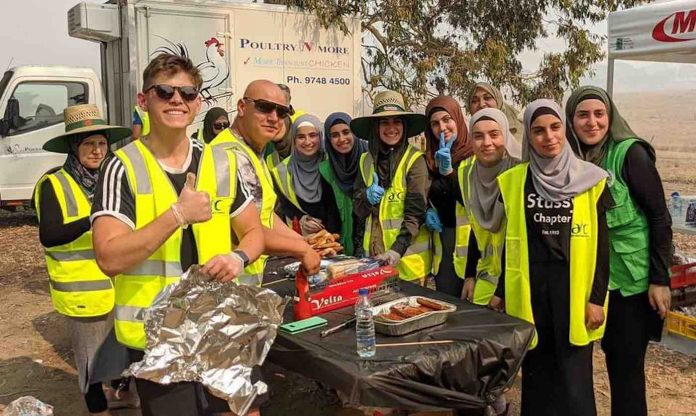
This week, teams of Muslims from the Australian Islamic Center began cooking meals for exhausted firefighters across East Gippsland. The group also distributed several truckloads worth of food, emergency supplies, and resources across the region.

In the very same area, chefs from the Sikh Volunteers Australia set up their own mobile kitchen so they could feed firefighters and bushfire evacuees.


On the international front, Canada and the United States have collectively deployed more than 200 volunteer firefighters over the course of the last month to help contain the blazes as part of an international coalition to combat wildfires.

As a means of helping animals that have been rescued from the fires, needleworkers from around the world have crafted thousands of mittens, jumpers, blankets, and nests for Australian wildlife organizations—and they have raised almost $5 million in donations for wildlife hospitals.

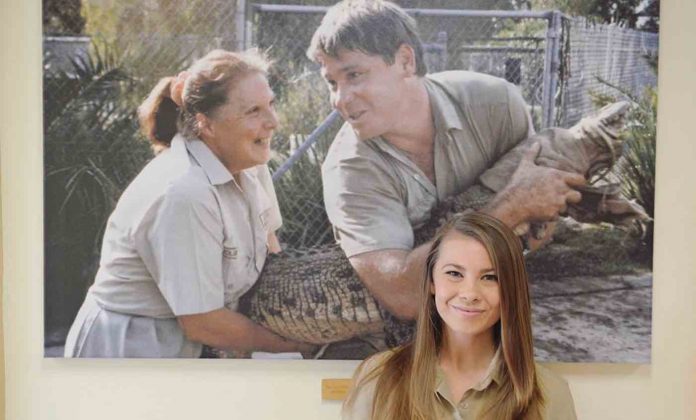
Furthermore, the family of Steve Irwin has already treated hundreds of animals rescued from the wildfires at their hospital in Queensland.

A number of Hollywood A-listers and famous folk from all walks of life have also contributed to wildfire relief efforts. For starters, an online fundraiser created by Australian comedian Celeste Barber has raised a whopping $30 million in just one week—which is roughly $10,000 in donations per minute.


Australian actress Nicole Kidman made an Instagram post earlier this week stating that she had donated $500,000 to Rural Fire Services, while pop star Pink donated an additional $500,000 to local firefighting departments as well.

Australian tennis player Ashleigh Barty, who is ranked number one in the world in singles by the Women’s Tennis Association, has announced that if she wins the Brisbane International tournament, she will be donating every cent of the $382,000 prize money to the Red Cross.

The Australian children’s entertainment group The Wiggles have reunited for the first time since 2012 so they can play two shows in New South Wales and donate all of the concert proceeds to wildfire relief. The concerts, which reportedly sold out in five minutes, will take place on January 17th and 18th.


Finally, Australian Prime Minister Scott Morrison pledged more than $1.4 billion USD ($2 billion AUD) in taxpayer money to create a national recovery fund for wildfire-afflicted citizens.

While there have been dozens of other individual stories of compassion and charity on the home front as well, these headlines have all proven that the world is standing behind Australia until the last of the bushfires have been extinguished.

Be Sure And Share The Inspiring News With Your Friends On Social Media…

“When we make mistakes, we cannot turn the clock back and try again. All we can do is use the present well.” – Dalai Lama

Quote of the Day: “When we make mistakes, we cannot turn the clock back and try again. All we can do is use the present well.” – Dalai Lama

Photo: by Giallo, public domain

With a new inspirational quote every day, atop the perfect photo—collected and archived on our Quotes page—why not bookmark GNN.org for a daily uplift?


Shutdown of US Coal-Fired Plants Linked to 26,000 Deaths Averted—And Higher Crop Yields on Farms

This exciting new study has measured just how much decommissioning coal-fired power plants help to save lives and improve crop yields by the millions.

The findings of the new University of California San Diego study published this week in Nature Sustainability use the U.S. transition in recent years from coal towards natural gas for electric power generation to study the local impacts of coal-fired unit shutdowns.

While the shift from coal to natural gas has reduced carbon dioxide emissions overall, it has also changed local pollution levels at hundreds of areas around the country.

In particular, the burning of coal creates particulate matter and ozone in the lower atmosphere—often experienced as “smog” —which can affect humans, plants and regional climate. These pollutants (aerosols, ozone, and other compounds) from coal burning can wreak havoc on human health when inhaled, and also have damaging effects on plant life. They also alter local climate by blocking incoming sunlight.

LOOK: Toronto Garbage Trucks Will Soon Be Powered by Biogas From the Very Food Scraps That They Collect

Study author Jennifer Burney, associate professor of environmental science at the UC San Diego School of Global Policy and Strategy, combined data from the Environmental Protection Agency (EPA) on electric power generation with satellite and surface measurements from the EPA as well as NASA to gauge changes in local pollution before and after coal-fired unit shut-downs.

She also studied changes in county-level mortality rates and crop yields using data from the Centers for Disease Control and the U.S. Department of Agriculture.

Burney found that between 2005 and 2016, the shutdown of coal-fired units saved an estimated 26,610 lives and 570 million bushels of corn, soybeans and wheat in their immediate vicinities. The inverse calculation, estimating the damages caused by coal plants left in operation over that same time period, suggests they contributed to 329,417 premature deaths and the loss of 10.2 billion bushels of crops, roughly equivalent to half of year’s typical production in the U.S.

MORE: First Fully Rechargeable Carbon Dioxide Battery is Seven Times More Efficient Than Lithium Ion

“The deaths are assumed to be NOT necessarily workers, but rather among the full population nearby that is exposed to pollution from plants as they operate (importantly, these numbers don’t count coal miner exposures, as those are often in locations far away from the plants that burn the coal),” Burney told World at Large.

“One of the difficult characteristics of air pollution-related deaths is that they are often not obviously due to pollution—it affects cardiovascular, respiratory, and other pathways, and deaths are usually just coded as such.”

These findings suggest that switching to more modern forms of energy production could have unforeseen or additional advantages for public welfare than just a decrease in CO2 emissions.

Burney added that although there are considerable benefits of decommissioning older coal-fired units, the newer natural gas units are not entirely benign. Natural gas units are associated with increased pollution levels; although different than the pollutant mix from coal-fired units, and more research is required to fully understand their impacts.

“Policymakers often think about greenhouse gas emissions as a separate problem from air pollution, but the same processes that cause climate change also produce these aerosols, ozone, and other compounds that cause important damages,” Burney concludes. “This study provides a more robust accounting for the full suite of emissions associated with electric power production. If we understand the real costs of things like coal better, and who is bearing those costs, it could potentially lead to more effective mitigation and formation of new coalitions of beneficiaries across sectors.”

Reprinted from University of California – San Diego

Power Up With Positivity By Sharing The Good News With Your Friends On Social Media — File photo by Tj.Blackwell, CC

Irwin Family Advances Steve’s Legacy, Saving Hundreds of Animals From Australian Bushfires


It has been a little more than 13 years since beloved television host and wildlife advocate Steve Irwin passed away—but his family is continuing to save thousands of Australia’s most vulnerable animals.

The Irwin family has carried on Steve’s legacy by treating thousands of animals that have been rescued from the bushfires at their Australian Zoo Wildlife Hospital in Queensland.

Collectively, Steve’s widow Terri and his two kids Robert and Bindi have treated more than 90,000 animals at the zoo’s 24/7 medical unit since they opened 16 years ago—and since the wildfires has caused their patient intake rate to skyrocket, the hospital is busier than ever.

RELATED: More Than 200 Volunteer Firefighters From US and Canada Have Deployed to Help With Australian Bushfires

Robert recently posted a photo of their record-breaking animal patient to his Instagram page, saying: “This is patient number 90,000 that the Australia Zoo Wildlife Hospital has treated. ‘Ollie’ the orphaned platypus is receiving round the clock care until he can be released back to the wild.

“Over the last 16 years, the hospital has provided 24/7 wildlife rehabilitation and an incredible animal rescue service,” he added. “We’re so proud of this world-class facility! Thank you for your support—with pressures from drought to bushfires, wildlife need our help now more than ever.”

The Irwins have taken to social media to reassure their concerned followers that they are not in danger of being affected by the wildfires—although they plan to continue taking in as many rescued and injured animals as possible until the fires have been controlled.

Be Sure And Share The Inspiring News From Down Under With Your Friends On Social Media….

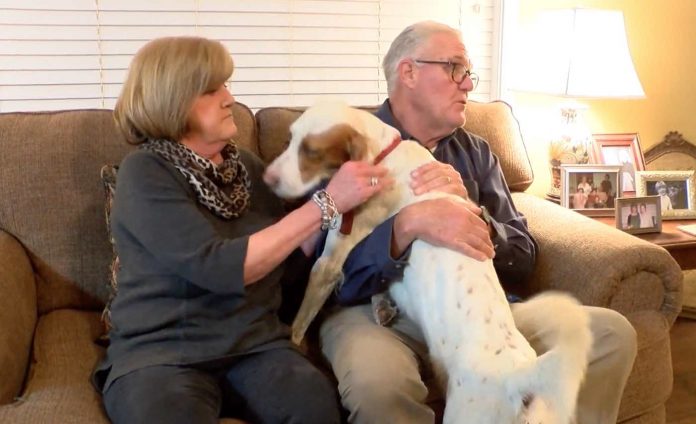
After Losing Hope of Ever Finding Their Dog, Pup is Finally Found Living Like King Among Doting Prison Inmates

Last month, Michael Parker had been out preparing for quail season by helping his beloved dog Soup learn how to smell, flush out, and retrieve the game birds when suddenly, the English setter was distracted by a scent and ran off into the woods next to the orchard where they had been training.

For days, Parker and his wife searched in vain for their family pooch across Montgomery, Alabama, all while posting notices to social media and checking up on their local Humane Society shelter 3 to 4 times a day.

As the couple feared for the worst, Soup was off living like a king in the last place they would have expected: the Kilby Correctional Facility.

Soon after his owner lost him in the forest, Soup was found on the grounds of the prison by Charles Brooks, a plant maintenance supervisor.

WATCH: Wife Quits Her Job As Couple Spends 57 Tireless Days Searching for Their Dog in Mountain Town—See the Reunion

According to the Montgomery Advertiser, Brooks found Soup lying next to a truck looking scared. He had lost his collar during his adventure in the woods—but after Brooks fed him a biscuit, Soup quickly took a liking to the man.

As Soup followed Brooks all over the facility, he became an instant celebrity with the inmates. They began giving up parts of their dinner to Soup so he could feast on chicken, roast beef, and even peach cobbler. He played basketball in the yard, and tussled with the guard dogs.

Parker finally learned of his dog’s discovery thanks to a phone call from a social media user who had seen Parker’s pleas for help on a Facebook group for missing animals.

LOOK: Man Reunites Senior With His Pup After Standing On a Street Corner With ‘Lost Dog’ Sign for 3 Hours

“Someone called and said, ‘He’s up at Kilby Prison and they’re taking care of him and want to keep him,’” Parker told the Advertiser. “‘You better go get him before they do.’”

When Parker and Brooks met outside his shop on the prison grounds, Brooks whistled for Soup to join them. The excited pup immediately began jumping all over his owner as he lay on the concrete in tears.

“You absolutely knew that it was his dog,” Brooks told the news outlet. “Me and the dog were inseparable for three days, and he wouldn’t even come to me when that man pulled up.”

RELATED: Tears Flow as 88-Year-old Finally Meets Biological Daughter She Thought Died At Birth

Instead, Soup jumped into the passenger seat of the truck and the two rode off together back home.

After a few days, it was clear that Soup missed all his new friends from his adventure; so the Parkers resolved to start bringing their pup back to the correctional facility for regular play dates.

“We’re going to take him to visit the prison,” said Parker’s wife. “And we’re going to take the warden a pecan pie.”

(WATCH the news coverage below) – Photo by WSAV

Be Sure And Share This Pawesome Story With Your Friends On Social Media…

Researchers On Brink of Delivering Energy-Dense Battery That Will Power Your Phone for 5 Days Straight

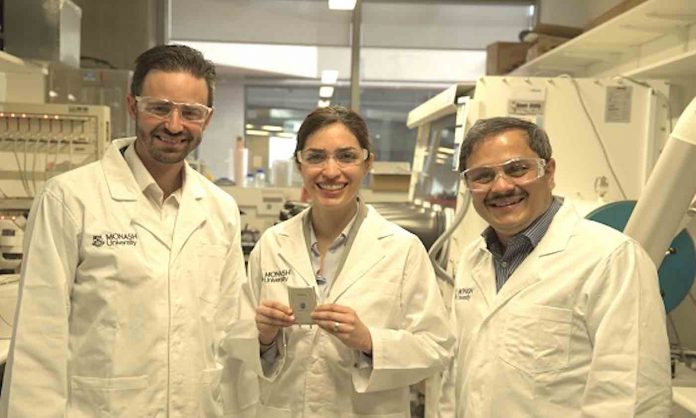
Associate Professor Matthew Hill, Dr. Mahdokht Shaibani, and Professor Mainak Majumder with the lithium-sulphur battery design — Photo by Monash University.

Imagine having access to a battery, which has the potential to power your phone for five continuous days, or enable an electric vehicle to drive more than 600 miles (1,000 kilometers) without needing to “refuel.”

Monash University researchers are on the brink of commercializing the world’s most efficient lithium-sulphur (Li-S) battery, which could outperform current market leaders by more than four times, and power Australia and other global markets well into the future.

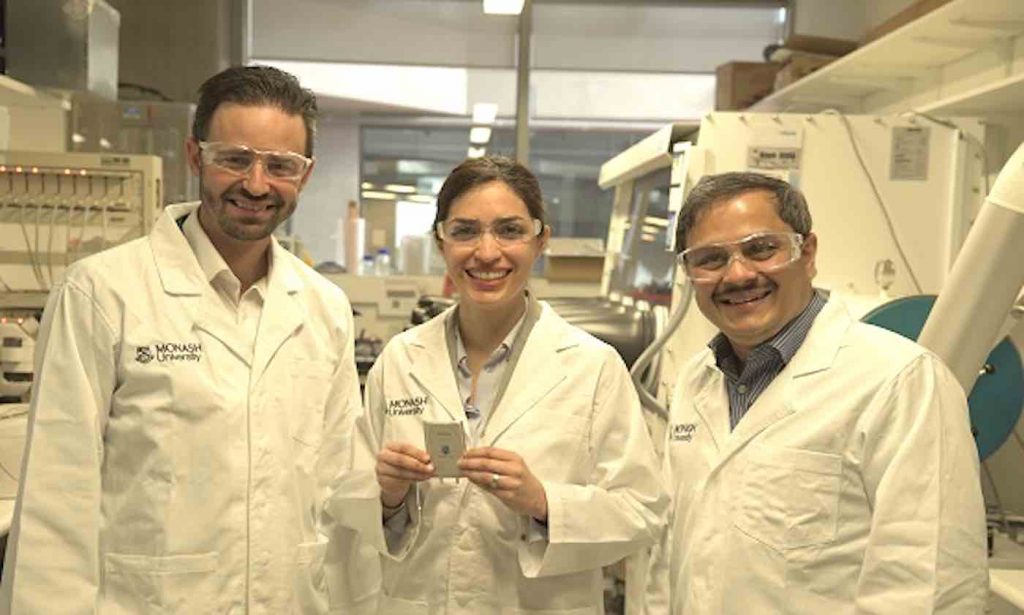
Dr. Mahdokht Shaibani from Monash University’s Department of Mechanical and Aerospace Engineering led an international research team that developed an ultra-high capacity Li-S battery that has better performance and less environmental impact than current lithium-ion products.

The researchers have an approved filed patent for their manufacturing process, and prototype cells have been successfully fabricated by German R&D partners Fraunhofer Institute for Material and Beam Technology.

MORE: First Fully Rechargeable Carbon Dioxide Battery is Seven Times More Efficient Than Lithium Ion

Some of the world’s largest manufacturers of lithium batteries in China and Europe have expressed interest in upscaling production, with further testing to take place in Australia in early 2020.

The study was published this week in Science Advances.

Professor Mainak Majumder said this development was a breakthrough for Australian industry and could transform the way phones, cars, computers, and solar grids are manufactured in the future.

Associate Professor Matthew Hill, Dr. Mahdokht Shaibani, and Professor Mainak Majumder with the lithium-sulphur battery design — Photo by Monash University.

“Successful fabrication and implementation of Li-S batteries in cars and grids will capture a more significant part of the estimated $213 billion value chain of Australian lithium, and will revolutionize the Australian vehicle market and provide all Australians with a cleaner and more reliable energy market,” said Majumder.

“Our research team has received more than $2.5 million in funding from government and international industry partners to trial this battery technology in cars and grids from this year, which we’re most excited about.”

Using the same materials in standard lithium-ion batteries, researchers reconfigured the design of sulphur cathodes so they could accommodate higher stress loads without a drop in overall capacity or performance.

RELATED: Working in Secret, Bill Gates-Backed Solar Company Reveals Tech That Could Spell the End of Fossil Fuels

Inspired by unique bridging architecture first recorded in processing detergent powders in the 1970s, the team engineered a method that created bonds between particles to accommodate stress and deliver a level of stability not seen in any battery to date.

Attractive performance, along with lower manufacturing costs, abundant supply of material, ease of processing and reduced environmental footprint make this new battery design attractive for future real-world applications, according to Associate Professor Matthew Hill.

“This approach not only favors high-performance metrics and long cycle life, but is also simple and extremely low-cost to manufacture, using water-based processes, and can lead to significant reductions in environmentally hazardous waste,” said Hill.

Reprinted from Monash University

Power Up With Positivity By Sharing The Good News With Your Friends On Social Media…

More Than 200 Volunteer Firefighters From US and Canada Have Deployed to Help With Australian Bushfires

Back in 2018 when wildfires were raging through California, 138 firefighters from Australia and New Zealand flew into the United States so they could help combat the blazes.

According to the National Park Service, “the Australian and New Zealand personnel filled critical needs during the peak of the western fire season for mid-level fireline management, heavy equipment, helicopter operations, and structure protection”—and now, the US is repaying the favor.

For the first time since 2010, the US federal government has deployed a team of 100 American firefighters to help with the emergency response crews in Australia—and they are deploying several dozen more volunteer firefighters this week, according to The Los Angeles Times.

Due to extended drought combined with hot and dry weather conditions, Australia has been experiencing devastating bushfires—particularly in the states of New South Wales, Queensland, and Victoria—since August.

RELATED: After Evacuating His Own Home, Guy Fieri Cooks Up Thousands of Meals For Wildfire Victims

The US firefighters—many of whom were part of the firefighting teams in California— have been deployed in several separate teams over the course of the last 30 days. The international relief mission is part of the National Interagency Fire Center (NIFC), the nation’s support center for wildland firefighting. Based out of Boise, the coalition is made up of eight different agencies and organizations including, the Bureau of Land Management, Bureau of Indian Affairs, U.S. Fish and Wildlife Service, National Park Service, U.S. Forest Service, National Weather Service, U.S. Fire Administration, and the National Association of State Foresters.

“We’re sending a contingent from several federal agencies that reflects decades of fire management experience,” said U.S. Forest Service Fire Director Shawna Legarza. “We face many of the same firefighting challenges in each country. We’ve utilized their expertise in the past and welcome the opportunity to reciprocate.”


The US is not the only country sending aid to Australia, either—Canada has also sent several teams of wildfire specialists as well, bringing their total amount of volunteers to 87.

According to CBC, this is the first time that Canada has deployed firefighting assistance to Australia, although Canada also benefitted from the firefighting teams of Down Under during the devastating British Columbian wildfires in 2017 and 2018.

Be Sure And Share This Story Of International Brotherhood With Your Friends On Social Media…

“January, The first month of the year. A perfect time to start all over again. Changing energies and deserting old moods; new beginnings, new attitudes.” – Charmaine J Forde

Quote of the Day: “January, The first month of the year. A perfect time to start all over again. Changing energies and deserting old moods; new beginnings, new attitudes.” – Charmaine J Forde

Photo: by Christian Collins, CC license – cropped

With a new inspirational quote every day, atop the perfect photo—collected and archived on our Quotes page—why not bookmark GNN.org for a daily uplift?


Modest Seattle Woman Donates Entire $10 Million Fortune Earned From Trading Stocks to 17 State Schools

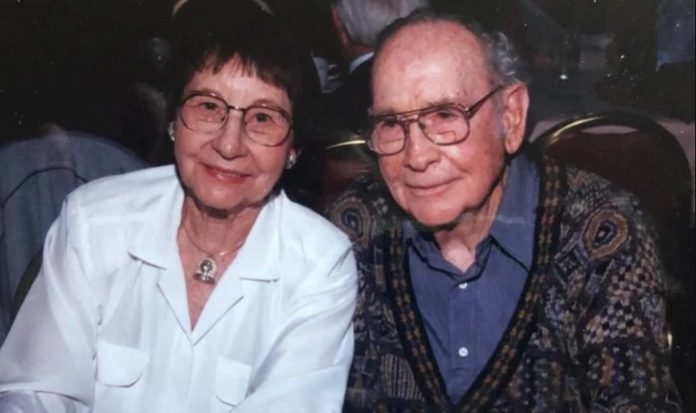
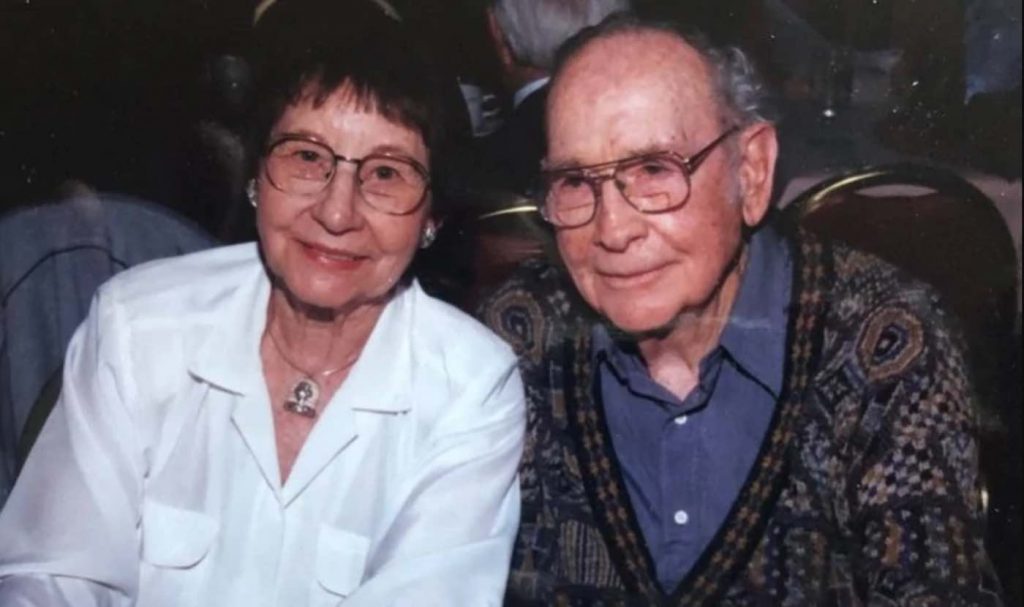
Ed and Eva Gordon — Photo by John Jacobs

More than a dozen different community colleges across Washington State were shocked to find a check worth $550,000 sitting in their mailboxes last month.

The checks were courtesy of Eva Gordon, a 105-year-old woman from Oregon who passed away in June with a secret $10 million fortune she had amassed entirely through savvy investing.

“A lot of people didn’t know the wealth she had. If there was a coupon for two-for-one at Applebee’s, she was all about that,” John Jacobs, her godson and estate representative, told Renton College representatives. “She liked seeing students working, earning and doing things. Her goal was to provide an opportunity for those folks who could ill-afford it, whether vocational training or an academic skill.”

The donation has been hailed as the single largest financial contribution to community colleges in the history of Washington state.

LOOK: Man Returns to Poor Neighborhood Where He Grew Up So He Can Give Away $12,000 in Free Toys

Renton Technical College, one of the 17 lucky schools to receive a donation from Gordon’s estate, announced it would use the money to set up a grant and scholarship fund for underprivileged students, particularly those with financial barriers to attending school.

“At RTC many of our students are first-generation college, single parents, immigrants, or working in order to pay for school,” said Stan Kawamoto, RTC Foundation board president. “The true cost of college goes beyond paying for tuition, especially in King County where the cost of living is high. When you’re a working parent, or the first in your family to go to college and need transportation to get to school, your costs are much higher.”

Ed and Eva Gordon — Photo by John Jacobs

Never having attended college herself, Gordon had a passion for education and childcare, and donated her time and money during her lifetime to different child education programs.

Jacobs informed the schools that while there are no stipulations in Gordon’s will and testament for how the money should be used, she expressed her preference for the money to help the disadvantaged students of her adopted home state.

An American Story

Gordon moved to Seattle after high school where she started working as a trading assistant in an investment firm.

MORE: Billionaire Who Promised to Pay Off College Debt for Grads is Now Paying Off Their Parents’ School Debt Too

Her $10 million fortune, hidden entirely from her friends’ knowledge, was amassed over decades of buying and keeping stock with long-stable financial returns in now-famous Northwest companies such as Nordstrom, Starbucks, and Microsoft.

In 1964, she married stockbroker Ed Gordon, but the two never had children. Jacobs recounted that they had lived a reserved lifestyle, and that it was only in the final decade of her life that the stocks she held onto for so long really began to grow.

Jacobs credits his godmother’s monumental posthumous donation to Gordon being a person “with a tremendous heart [who] liked to throw a rope to help people climb.”

Be Sure And Share This Inspiring Story Of Kindness With Your Friends On Social Media…

Couple Protects Endangered Lemurs in Madagascar By Launching Mobile Library to Teach Indigenous People to Read

- Lemur Mobile Library Project

When a young couple went on their 2014 honeymoon in Madagascar—one of the most cherished environments in the world—the heartbreaking problems of indigenous people, forests, and lemurs swirled around in their minds until one day a holistic solution revealed itself, like a bright sunbeam through the tangle of jungle canopy.

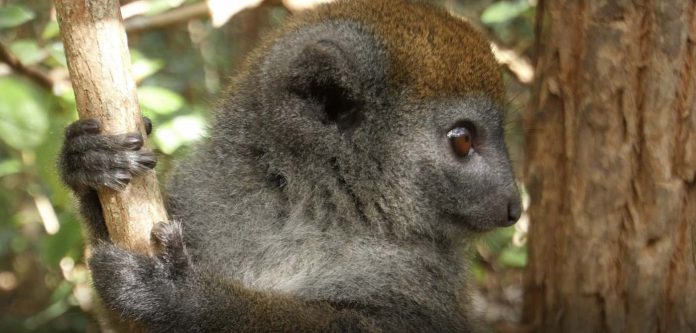
Their notion of how they could benefit both wildlife and people is today a program that is easing the poverty of the Malagasy people, while helping to save the endangered lemurs, which are found on the island of Madagascar, and no where else.

The nation’s economy is the fourth fastest-growing in the world. In fact, one fourth of the globe’s vanilla comes from the island. Yet the vast majority of the adult Malagasy people can’t even read, so they don’t benefit from the higher-paying jobs. They are left to fend for themselves, living off the land—which encroaches on and endangers the wildlife surrounding them.

The couple, Shana and Vlad Vassilieva, learned all this from their tour guide, JJ (Jean-Jacques Rafenomahazomanana), a passionate local who shared his vast experiences of Malagasy culture and led them beyond designated tourist zones, into isolated villages.

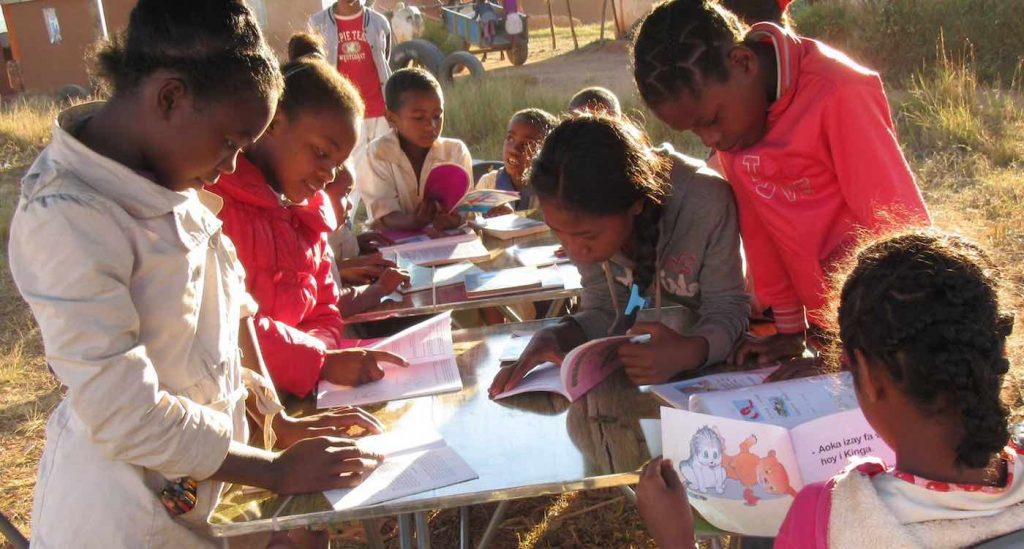
There, they noticed that the schools for children had no books—and the agricultural practices in villages were not sustainable. They decided they could address both these problems, by tackling the literacy issue.

They partnered with JJ to create the Mobile Library Project, designed not only to teach people about letters, but also about their lemurs.

“One of the main goals is to help the Malagasy see how much can be gained from the forests and nature when you take care of it and practice more sustainable methods,” said Shana. “So while kids and adults are learning to read, they are also learning how to thrive off the lands in more mutually beneficial ways.”

LOOK: Dozens of Creatures Thought to Be Extinct Found Alive in ‘Lost City’ in the Jungle

The non-profit Mobile Library Project employs two additional educators and operates out of a van that travels to four villages every month in coordination with local schools.

They not only provide books and lessons on reading and writing, the group also offers workshops on how to improve your crop yield and how to rely less on the forests. That way, the Malagasy can develop new resources and leave more of the forest to the indigenous animals—80 percent of which are not seen anywhere else in the world.

“When the people read books, they start to see the relation between the environment and people,” said Madagascar native JJ, who serves as manager of the nonprofit. Speaking to Shana, an Idaho filmmaker, as part of a short documentary, he explained that the people are learning “if they protect the forest, they can get a lot of benefit from it.”

The project also gives families seeds to plant. Whenever a family joins the book project they also get some seeds, along with a book. Each school the project visits also gets fruit trees. When it’s grown, the students can eat the fruit, or teachers can sell the fruit to help pay for supplies and other needed improvements. The trees also help retain water in the soil, provide shade cover for plants, and prevent soil erosion. They are also sharing ananambo trees because they have medicinal benefits and a denser nutritional value, and beans since they are easy to grow.

MORE: Here’s Why You Can Hail 2019 as a Year of ‘Incredible Species Action’

Since 2016, the group has helped to educate 6,200 people, planted 80 trees at 14 schools, and distributed 66 pounds of seeds for 46 families—as well as thousands of books.

Photos by Mobile Library Project on Facebook

The couple also partners with Zara Aina, a Madagascar nonprofit, and received some grant funding to launch the first tour in 2016. Since adding the seed and tree sharing program in November 2018, they’ve expanded their vision further, hoping to offer micro loans to help Malagasy natives develop their own businesses.

“I love the idea of becoming, not just a mobile library for education, but also a mobile ‘re-greener’ and conservation based financial empowerment tool on wheels,” she said.

WATCH the video about the Lemur connection, and FIND more info at mobilelibraryproject.com

Support the People of Madagascar… By Sharing on Social Media

Hundreds of Americans Become Foster Families to Ailing Senior Veterans, Opening Up Their Hearths and Homes

Today in the United States, more than 82,000 veterans live in nursing homes—probably not the kind of conditions or end-of-life care that would warm the hearts of veterans who had served gallantly in Korea and Vietnam.

However, the Medical Foster Home program launched by the U.S. Department of Veterans Affairs (DVA) in 2008 has been providing opportunities for a much more comfortable life to senior veterans who can’t live alone by allowing American families to open their own doors to the nation’s heroes.

“A Medical Foster Home can serve as an alternative to a nursing home…for veterans who require nursing home care but prefer a non-institutional setting with fewer residents,” says the DVA website.

WATCH: Veteran Goes From Janitor to Physicist After Teaching Himself Trigonometry Using Only Youtube Videos

This was certainly the case for Korean War veteran Stewart Breeding who resigned himself to spending the remainder of his life alone in a nursing institution after his wife died in 2016.

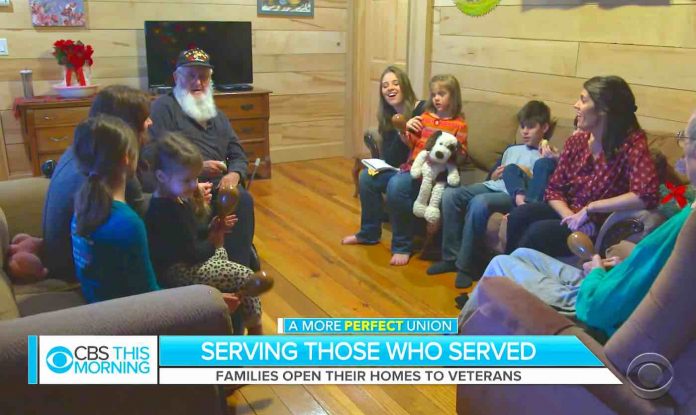
Two years later, Donna and Bennie Nolan became a DVA-certified medical foster family, and surprised Breeding on his 86th birthday with a cake, balloons, and a room full of well-wishers who celebrated the news that he could move in with them.

“I want to live here with Donna and Bennie until the day I die,” Breeding told The Washington Post. “I love everything about this family. It’s a great place to be.”

LOOK: Canada Now Has Its First Ever Tiny House Village for Homeless Veterans

According to The Post, Donna Nolan, who is part of an Air Force family, knew she wanted to be a part of the program as soon as she heard about it in 2016. Her husband Bennie—a veteran of the Gulf War, former Army blacksmith and railroad engineer who worked as a communications specialist for 20 years—felt exactly the same.

“It’s an honor to have them living with us,” Bennie said. “Nurturing has always been a big part of my life, and Donna’s life too.”

Homes for Heroes

The program, launched in 2008, now has a presence in 44 states, and each family in the program is allowed to take up to three veterans into their homes in order to give them a more comfortable and personalized care environment.

The agreement is a long-term commitment, and according to Cathy Free at The Post, the veterans often live in the foster homes for the remainder of their lives.

WATCH: Boss Pays Off His Employee’s Mortgage So the Vietnam Vet Can Finally Retire

The demand and desire for foster homes over institutions or nursing homes varies from state to state, but trends highest in rural areas, explains Dayna Cooper, Director of Home and Community Care in the Office of Geriatrics and Extended Care for the DVA.

Most veterans want to stay in the towns where they live—a dignity which Cooper feels they certainly deserve, and so the program’s managers always begin the search for foster homes in the vicinity where the veterans currently live.

The program has one of the highest rates of satisfaction of all post-deployment VA programs.

CHECK OUT: Watch ‘Lieutenant Dan’s’ Emotional Reaction to Heartfelt Thank-You Video From Veterans

“Many of our caregivers and vets become family,” Cooper told Southern Living. “They take them on vacation. We recently spoke to a family who takes their veteran—a quadriplegic—camping twice a year. These are opportunities they never would have had.”

(WATCH the video belowEDITOR’S NOTE for international viewers: You can watch the footage on the CBS News website) – Photo by CBS News

Be Sure And Share This Inspiring Story With Your Friends On Social Media…