Jaden Smith is already famous for being a beloved musician and actor, but now he is doing even more to add to his growing reputation as a philanthropist.
Earlier this week, the young celebrity celebrated his 21st birthday by giving away free vegan meals to homeless people on Skid Row.
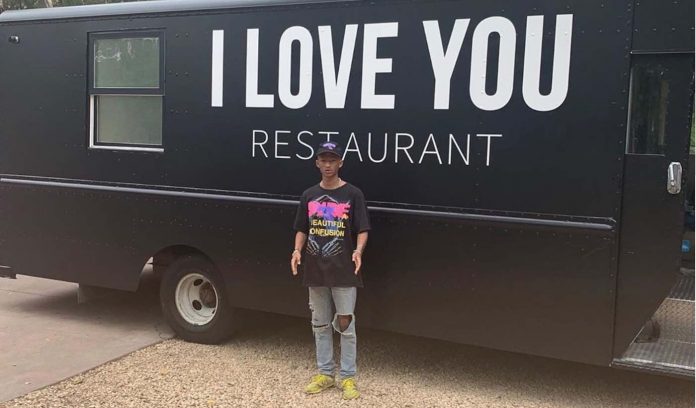
The giveaway was just the first of many pop-up events that will be hosted by Jaden’s new “I Love You Restaurant” vegan food truck.
Though Jaden has not disclosed any details about how often the truck will be distributing the free meals, the project has already garnered an outpouring of praise and support on social media.
This is not the first time that Jada Pinkett and Will Smith’s son has made headlines for charity work, either. In March, Jaden’s foundation collaborated with a church in Flint, Michigan in order to deploy various water filtration systems.
He is now asking his fans to keep an eye out for the I Love You Restaurant vegan food truck in Los Angeles because it will reportedly be making many more appearances in the days to come.
Feed Your Friends Some Positivity By Sharing The Good News To Social Media…
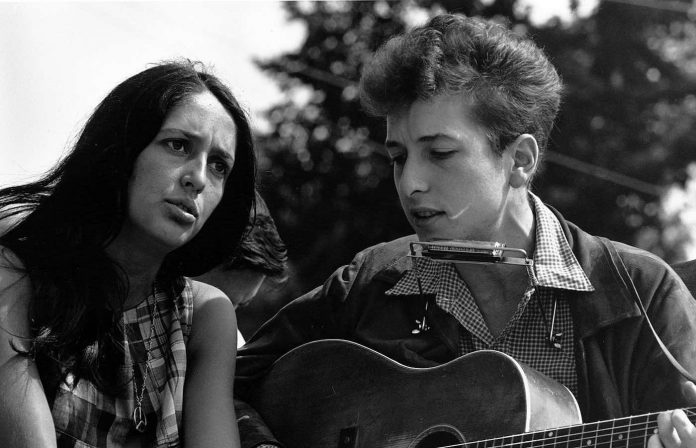
Joan Baez and Dylan at the Civil Rights March on Washington, D.C. in 1963 – Rowland Scherman, CC license / National Archives
Quote of the Day: “We were singing strictly gospel, but then (we heard Joan Baez and Dylan) and saw that those songs were very fitting for us because they were singing the truth, and truth is gospel.” – Mavis Staples (80 years old today)
Photo: by Rowland Scherman in D.C. in 1963, CC license
With a new inspirational quote every day, atop the perfect photo—collected and archived on our Quotes page—why not bookmark GNN.org for a daily uplift?
This story was submitted as a nomination to the Reader’s Digest “Top 50 Nicest Places in America” contest: a crowd-sourced effort to uncover nooks where people are still kind and respectful in an era of cultural and political divides. Be sure and vote for which story you think should be nominated as the Nicest Place by visiting the Reader’s Digest website.
Photo by David Orr via Reader’s Digest
In most places, a dividing line acts to separate people – but in this border town, the line brings folks together.
Texarkana is one city that happens to straddle two states, so it has plenty of built-in divisions.
As its name suggests, the Texas-Arkansas border runs right through the town of nearly 70,000. And as you might expect in this part of the country, a high-school football rivalry between the Texas High Tigers and Arkansas High Razorbacks goes back more than 100 years. The annual game draws 10,000 fans.
Of course, few disputes can’t be solved by breaking bread, and that’s exactly what the town does with another of their annual traditions: the Dine on the Line dinner.
Tables are set up down the middle of State Line Avenue (the state border runs right down the double-yellow traffic lines) and more than 1,000 people come to eat, talk, and have the unique experience of passing the salt across state lines. Diners are invited to sit on either side of the table, and mayors from both towns make a speech.
“You want to focus on working together as one community,” says Bob Bruggeman, mayor of the Texas side. “We don’t talk about ourselves as Texarkana, Texas, and Texarkana, Arkansas; we market ourselves as ‘two cities, one community.’”
Sounds good when a politician says it, but goals aren’t always aligned. A recent water-system dispute (the cities share the system but have different laws governing it) divided leaders in town, according to Les Minor, editor of the Texarkana Gazette. Eventually, differences were settled, and then it was time to make up—over a handshake on State Line Avenue.
These days, the city is coming closer together all the time. Bruggeman, who graduated from Texas High in 1980, recalls the days when the week of the big game would mean pranks all across town.
“That’s really toned down over the years,” he says. After all, locals want to live up to the longtime city motto, written in huge letters on a water tower right by I-30: “Twice as Nice.”
Reprinted with permission from Reader’s Digest. To learn more about GNN’s part in searching for the Top 10 Nicest Places, click here.
Be Sure And Share This Sweet Story Of Community Kindness With Your Friends On Social Media…
The next time you need to get the creative juices flowing, playing some types of video games may help.
Video games that foster creative freedom can increase creativity under certain conditions, according to new research from Iowa State University. The experimental study compared the effect of playing Minecraft, with or without instruction, to watching a TV show or playing a race car video game. Those given the freedom to play Minecraft without instruction were most creative.
“It’s not just that Minecraft can help induce creativity. There seems to be something about choosing to do it that also matters,” said Douglas Gentile, a professor of psychology.
If you are not familiar with the game, Gentile says Minecraft is like a virtual Lego world. The game, which has sold more than 100 million copies, allows players to explore unique worlds and create anything they can imagine. Study participants randomly assigned to play Minecraft were split into two groups. The one receiving instruction was told to play as creatively as possible.
After 40 minutes of play or watching TV, the 352 participants completed several creativity tasks. To measure creative production, they were asked to draw a creature from a world much different than Earth. More human-like creatures scored low for creativity and those less human-like scored high. Surprisingly, those instructed to be creative while playing Minecraft were the least creative.
Gentile says there’s no clear explanation for this finding. In the paper published by the Creativity Research Journal, he and Jorge Blanco-Herrera, lead author and former master’s student in psychology, outlined possible reasons why the instructed Minecraft group scored lower. Blanco-Herrera says the instructions may have changed subjects’ motivation for play.
Photo by Iowa State University
“Being told to be creative may have actually limited their options while playing, resulting in a less creative experience,” Blanco-Herrera said. “It’s also possible they used all their ‘creative juices’ while playing and had nothing left when it came time to complete the test.”
Video games can have both harmful and beneficial effects. Gentile’s previous research has shown the amount, content and context of video games influence what players learn through repeated experiences. While much of Gentile’s research has focused on aggression or prosocial behavior, he says the same appears to be true for creativity.
Most video games encourage players to practice some level of creativity. For example, players may create a character and story for role-playing games or be rewarded for creative strategies in competitive games. The researchers say even first-person shooter games can potentially inspire creativity as players think about strategy and look for advantages in combat.
“The research is starting to tell a more interesting, nuanced picture. Our results are similar to other gaming research in that you get better at what you practice, but how you practice might matter just as much,” Gentile said.
The researchers say based on these findings, it is important to not disregard the potential video games have as engaging and adaptive educational opportunities.
An Aussie family vacation has been saved thanks to a compassionate stranger who felt compelled to help the stranded travelers after learning about their plight on social media.
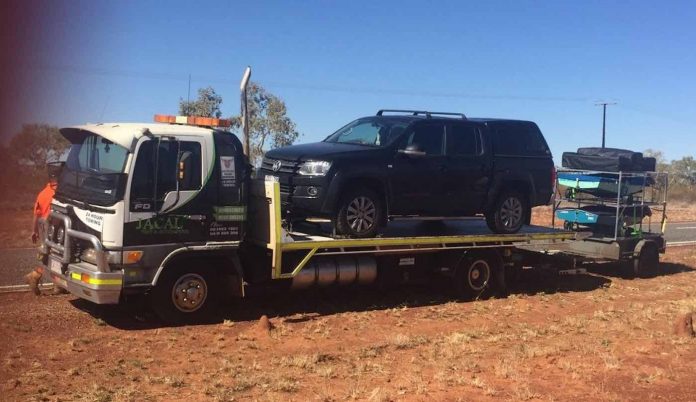
The Melrose family had been in the middle of a 4,000-kilometer (2,500-mile) road trip across Australia last week when their car broke down in the middle of the Northern Territories.
Daryn Melrose, his wife, and two daughters had left their home in Gippsland with two boats in tow so they could compete in the national minnow sailing championships in Darwin.
Since the youngsters had spent all year training for the tournament, they were heartbroken over the idea that all of their efforts had been for naught – but with 620 miles standing between them and Darwin, it seemed as if they had no chance but to give up on their dreams of competing.
Upon learning about their dilemma, ABC News made a social media post with the hopes that one of their readers would feel spurred to help the Melrose family.
As fate would have it, Darwin resident Rodney Sims had been scrolling through his news feed when he saw the plea for help and recalled a time when he had been in the same predicament.
“About 30 years ago, strangely enough, I was in a similar situation with a broken-down car and someone helped me out … this was my time to give back,” Sims told ABC News.
Sims then hopped in his truck and drove all the way down to where the family was staying in a Tenant Creek motel. After hitching up their boats to his vehicle, he brought the Melroses all the way back to Darwin, amounting to a staggering 1,250-mile round-trip journey.
Needless to say, the Melroses were incredibly touched by the stranger’s act of kindness.
“What a legend – what a fantastic effort,” Daryn told the news outlet. “He drove all the way down to us, hooked up the trailer, and drove us all the way back to Darwin.
“My daughters and I could not be more grateful for his efforts,” he added. “They got here on time and are hoping for podium finishes after their competitions.”
Photo by Daryn Melrose
Save Your Friends From Negativity By Sharing This Sweet Story Of Kindness To Social Media…
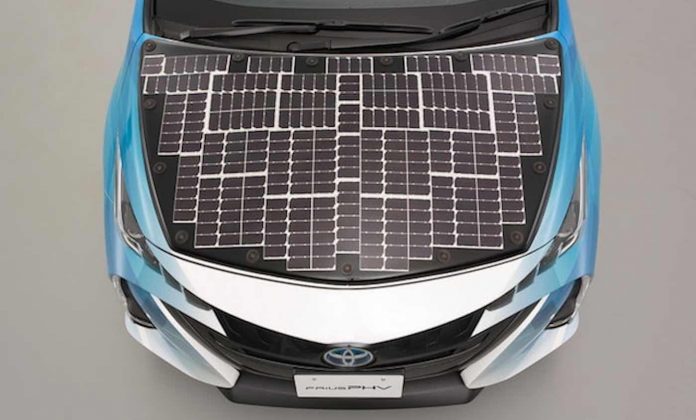
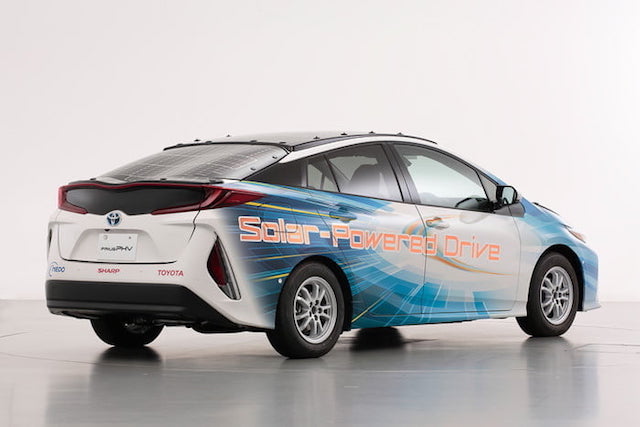
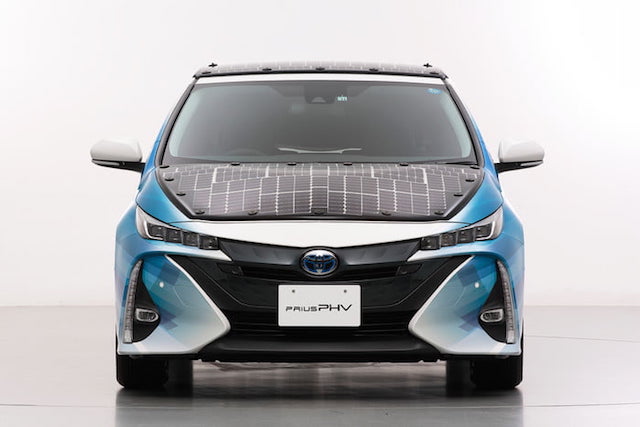
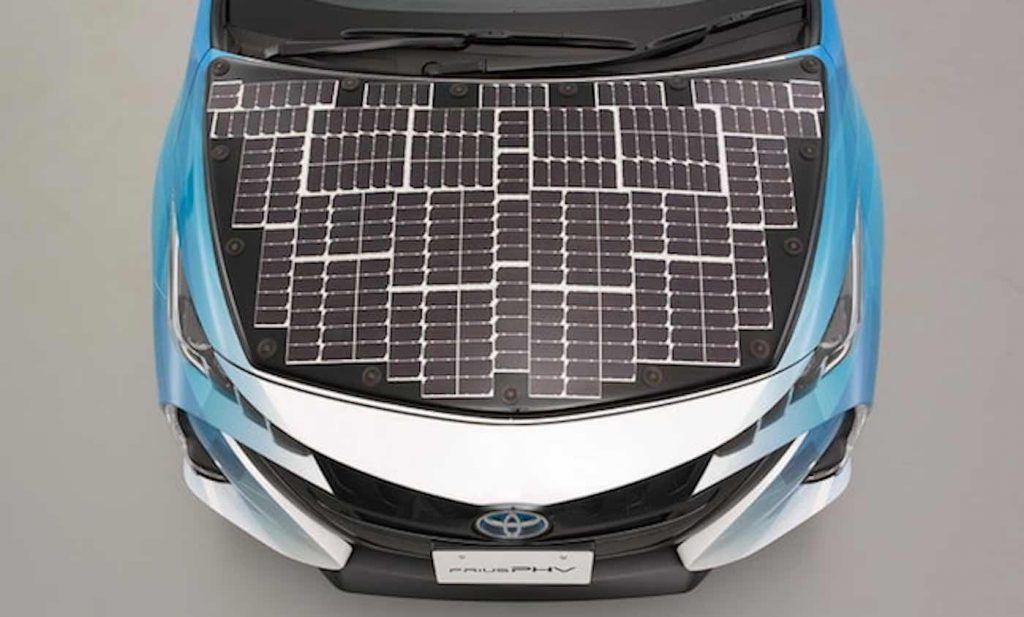
Toyota has begun testing a new Prius model that uses ultra-thin solar panels to eliminate the risk of a car running out of juice on the road.
The company announced earlier this week that they plan to commence public road trials from late July 2019.
The trials, which will be conducted in collaboration with the New Energy and Industrial Technology Development Organization (NEDO) and electronics corporation Sharp, aim to assess the effectiveness of improvements in cruising range and fuel efficiency of electrified vehicles equipped with high-efficiency solar batteries.
To facilitate the execution of this trial, Sharp modularized its high-efficiency solar battery cells (with conversion efficiency of 34%), previously developed for a NEDO-led project, to create an onboard solar battery panel.
The solar battery cell is a thin film about 0.03 mm in thickness, which makes it possible to efficiently install to fit the curves of vehicle parts with limited space.
Toyota then installed this panel on the roof, hood, rear hatch door, and other parts of its “Prius PHV” and produced a demo car for public road trials. By enhancing the solar battery panel’s efficiency and expanding its onboard area, Toyota was able to achieve a rated power generation output of around 860W, which is approximately 4.8-times higher in comparison with the commercial model Prius PHV (equipped with a solar-charging system).
In addition to substantially boosting its power generation output, the demo car employs a system that charges the driving battery while the vehicle is parked and also while it’s being driven – a development that is expected to lead to considerable improvements in electric-powered cruising range and fuel efficiency.
Toyota plans to conduct the trials under various driving conditions in Toyota City, Aichi Prefecture, Tokyo, and other areas. Various data, including the power generation output of the solar battery panel and the amount the drive battery is charged, will be obtained and verified, and then used in the development of an onboard solar recharging system.
The PV-powered Vehicle Strategy Committee, which NEDO launched in 2016 in collaboration with several other entities, will evaluate the benefits based on improvements in CO2 emissions reductions and convenience, such as the number of times a vehicle requires recharging.
Power Up With Positivity By Sharing The Good News To Social Media…
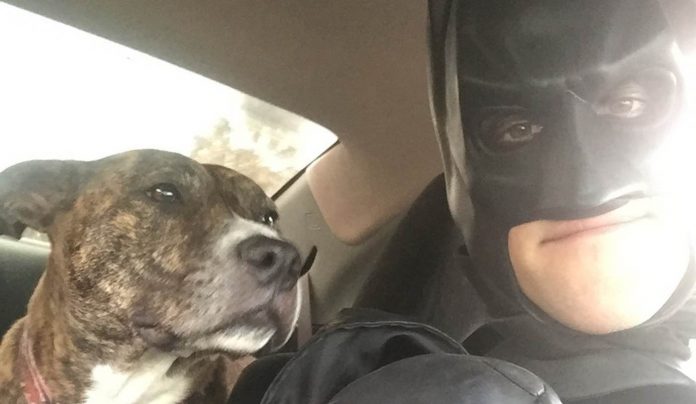
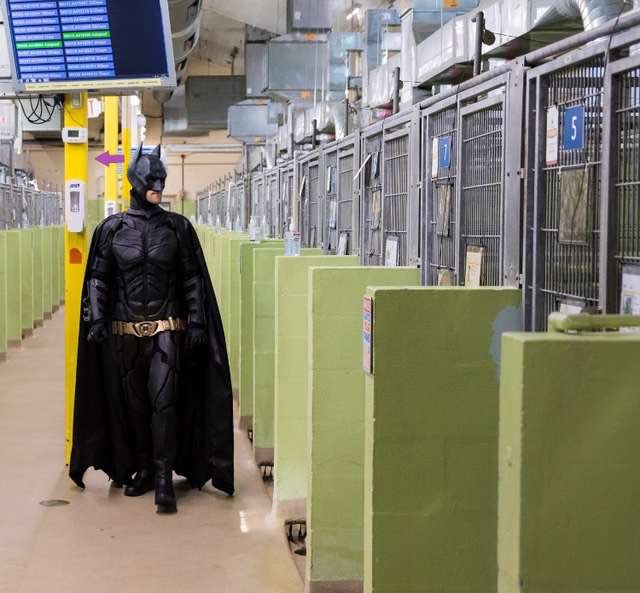
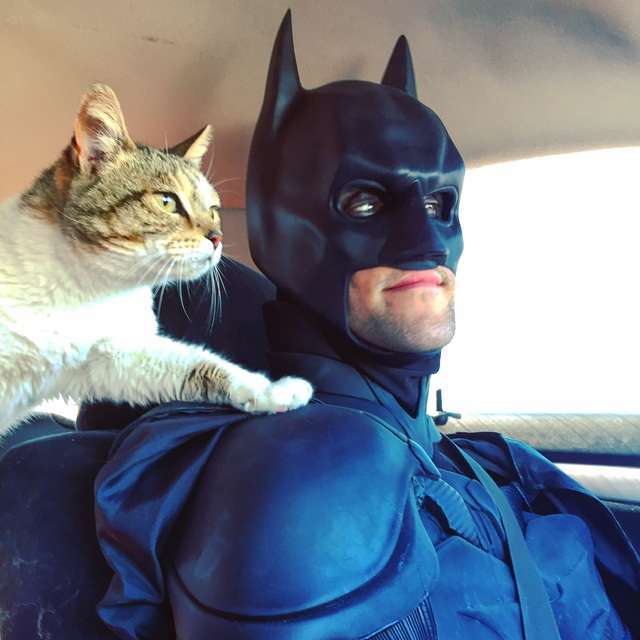
Not all heroes wear capes, but this guy has already saved dozens of dogs and cats from euthanasia – and he has done it all while dressed as Batman.
27-year-old Chris Van Dorn has always been a fan of the beloved Caped Crusader; so when he began volunteering for various animal rescue organizations around Orlando, Florida, he decided to combine his two passions and use a Batman suit to bring attention to the importance of pet adoption.
“It kind of just came as a way to embody all the good I wanted to do in the world,” Van Dorn told The Dodo, “and make it easy for people to talk to me right off the bat.”
Photo by Batman4Paws
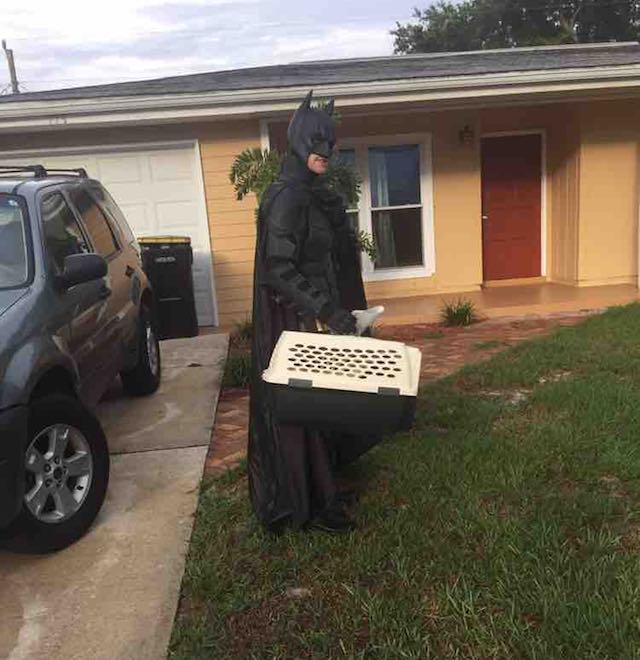
Not only has he used the suit as a conversation starter for why people should adopt shelter pets, he has also donned the suit to transport dozens of animals from the shelter to their loving forever homes.
Initially, Van Dorn used the superhero costume as a means of keeping all of his rescue missions anonymous – but his good deeds finally brought his real identity into the limelight after he was featured as an honorary GoFundMe Hero in May.
Since Van Dorn launched his nonprofit Batman4Paws in 2018, he has embarked on dozens of hours-long cross-country road trips to rescue dogs from euthanasia and bring them to loving families that are willing to adopt them.
Thankfully, the GoFundMe article helped to finance Van Dorn’s rescue missions since his crowdfunding page has collectively raised about $32,000 over the course of the last 10 months.
Photo by Batman4Paws
“When I was first starting out, I was keeping everything really anonymous,” Van Dorn told the news outlet. “I would sign everything ‘Bruce Wayne’ and not put my real name out there … My catchphrase is, ‘It’s not who I am underneath but what I do that defines me’ and I still hold that true today.”
Van Dorn now hopes that he will be able to find a compassionate citizen to donate a bigger van so he can replace his current Batmobile – a humble Honda Accord – and transport more animals on his rescue missions.
He also aims to use his pilot’s license as a means of using air travel as a more efficient means of transporting his doggos in distress.
Additionally, since he recently got his trusty sidekick Mr. Boots licensed as a therapy dog, the two have been making plenty of guest appearances as Batman and Robin at various hospitals around Florida.
Photo by Batman4Paws
The Dynamic Duo has also donned their costumes for adoption events and animal shelter fundraisers.
Van Dorn says that the costume helps to draw in more visitors, and he takes every opportunity to hand out brochures and stickers concerning the importance of adoption.
If you would like to learn more about Van Dorn’s mission or make a donation to his nonprofit, you can visit the Batman4Paws website.
Save Your Friends From Negativity By Sharing The Pawesome Story To Social Media…
Quote of the Day: “Don’t bunt. Aim out of the ballpark. Aim for the company of immortals.” – David Ogilvy
Photo: by Jon Scally, CC license
With a new inspirational quote every day, atop the perfect photo—collected and archived on our Quotes page—why not bookmark GNN.org for a daily uplift?
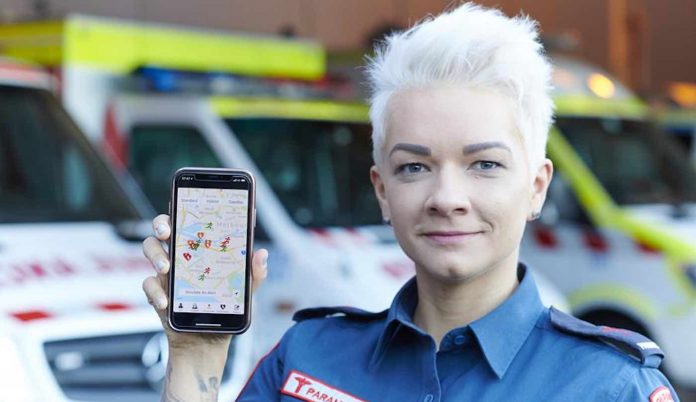
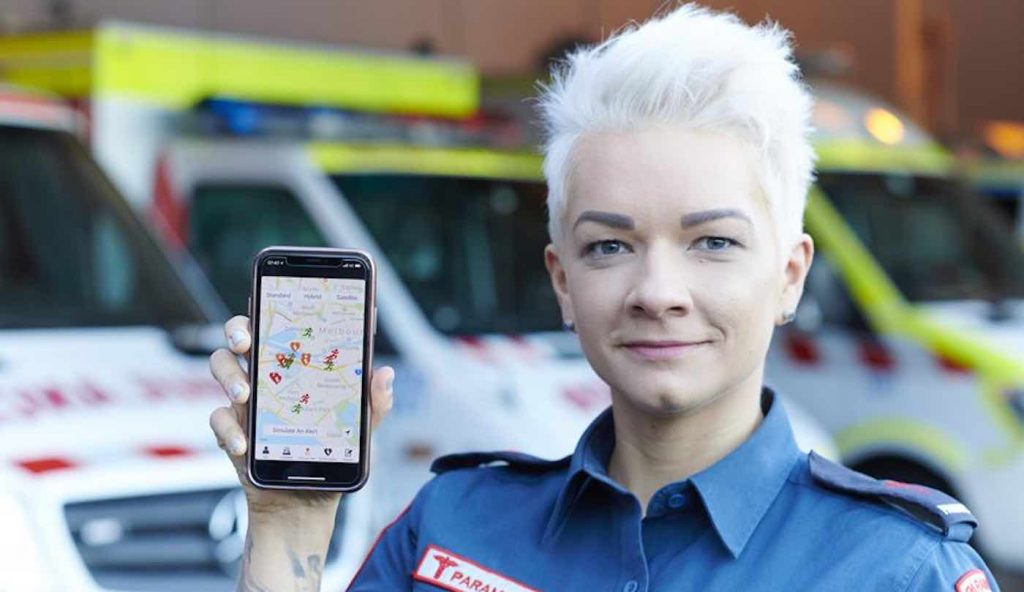
An ingenious new app is recruiting thousands of Good Samaritans as volunteers for medical emergencies.
If an ambulance is dispatched in response to someone in the midst of cardiac arrest or some other life-threatening emergency, the “GoodSAM” app sends a cell phone alert to first responders and medically trained civilians who are nearby to the person in distress.
The Ambulance Victoria website says that for every minute that a cardiac arrest patient doesn’t get CPR or defibrillation, their chances of survival fall by 10% – so recruiting the help of nearby pedestrians can often make a world of difference for a patient’s recovery.
The app’s life-saving potential recently made headlines in Australia after an off-duty paramedic received a GoodSAM notification concerning a 49-year-old man who had collapsed at his Melbourne home in the dead of night.
Since the man lived close to her home, the paramedic was able to rush to his side and give him CPR until the ambulance arrived.
“I didn’t even take the time to get out of my pajamas,” the paramedic told 9News. “I just threw on a hoodie and went down to [his] house.”
Her quick actions ended up saving the man’s life – and her rescue is just one of the app’s many success stories; Victorian Health Minister Jenny Mikakos told the news outlet that the platform has already helped to save 20 people since the start of the year.
Though the app originally limited its volunteer participants to nurses and professionally trained medical professionals, Victorian representatives are now allowing any regional residents with basic CPR and first aid training to enlist as a volunteer with the app.
According to the GoodSAM website, over 40,000 trained volunteers are registered with the app’s international alert system, and they have already responded to roughly 8,000 alerts.
If you would like to learn more about the life-saving platform or register as a respondent, you can visit the app’s official website.
(WATCH the explanatory video below)
Save Your Friends From Negativity By Sharing The Good News To Social Media…
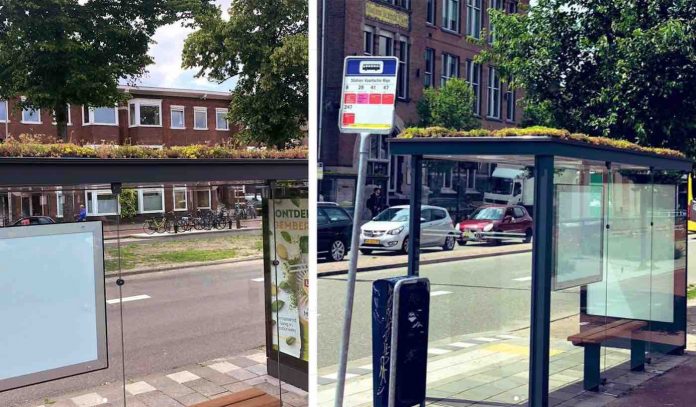
Hundreds of Dutch bus stops are getting eco-friendly makeovers so they can be transformed into lush green sanctuaries for honeybees and humans alike.
All 316 bus stops in the city of Utrecht are receiving green rooftops covered in sedum plants. Not only are the succulents good for improving air quality, they are also good for helping to support dwindling pollinator populations.
The city also says that succulents are good for storing rain water, capturing dust particulates from the air, and providing a cooling environment in the summertime.
The sedum roofs are just one of the ways that the city is improving upon their transit shelters; over the course of the next few years, Utrecht will be installing solar panels on every single one of their bus stops.
In February, the city also announced that they would be replacing their current transit vehicles with a new fleet of electric buses.
Regional officials are aiming to employ an entirely carbon-neutral transit fleet before 2028.
Furthermore, Utrecht is offering subsidies to city residents who want to replace their own worn-out rooftops with sedum roofing or solar panels.
“A green roof is good for a healthy and livable city … that can therefore better cope with climate problems. It helps to prevent flooding and ensures that we suffer less from heat,” reads the city website.
“A good time to install a green roof is when your old roof covering is worn out or if you still have to replace a roof with asbestos,” it continues. “To be eligible for a subsidy, your roof must be larger than 20 square meters – or you can also apply for a subsidy together with your neighbors to get to the 20 square meter mark.”
(WATCH the video of the bus stops in action below)
Plant Some Positivity Amongst Your Friends By Sharing The Good News To Social Media…
This story was submitted as a nomination to the Reader’s Digest “Top 50 Nicest Places in America” contest: a crowd-sourced effort to uncover nooks where people are still kind and respectful in an era of cultural and political divides. Be sure and vote for which story you think should be nominated as the Nicest Place by visiting the Reader’s Digest website.
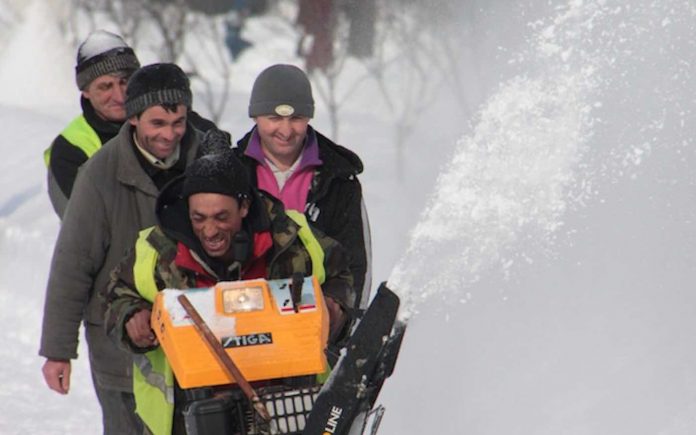
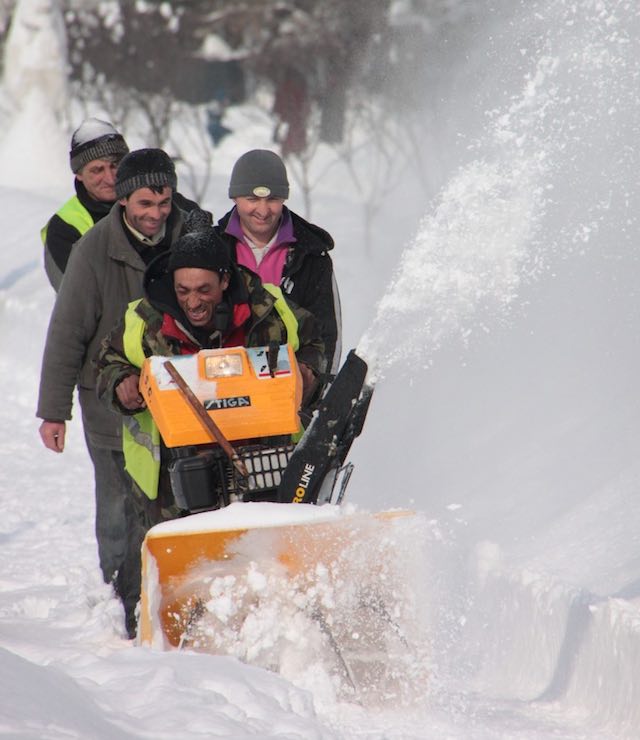
When snow falls, it’s a race to the snowblowers to see who can do their neighbors’ walks first. Everyone wins!
When the first snow falls in winter on South Chestnut Street in Casper, Wyoming, for some, the silent precipitation is a starting gun. Whoever gets up and out first will snow-blow everyone’s sidewalk, winning the “race.” They also have the same race to mow one another’s lawns in the summer – or so our nominator, Danica Sveda, tells us.
To anyone who has had to shovel snow or cut grass, it seemed too good to be true – so we called up one of her neighbors, Marlene Ashbaugh, who lives just a block over on Walnut Street.
She couldn’t vouch for what happens on Chestnut, but says, “My next-door neighbor, he always goes up and snow-blows all of ours. There’s probably one on Chestnut Street who does that,” adding that “it happens all over” the community.
Hard to believe, but we can confirm that it’s true at least in “Big Tree,” as the neighborhood is known. The name calls out the huge, older trees that line the streets, a rarity in high-plains towns. But in Casper, a city of 55,000 in the center of the state that sits at 5,100 feet of elevation, there are 123,000 trees.
They’re like old friends who occasionally make a big mess, as one big storm showed recently.
“Lemme tell ya, Mother Nature has her own way of pruning. Branches, trees, everything was knocked over,” Ashbaugh recalls.
City officials said they’d haul the trash out as long as the residents piled it up—so they jumped into action.
“Instead of being mad, they were out there laughing, gathering the branches. Kids were helping, it was absolutely amazing,” says Ashbaugh. “I don’t know how many tons of branches and debris were hauled to the dump that year, but it was incredible.”
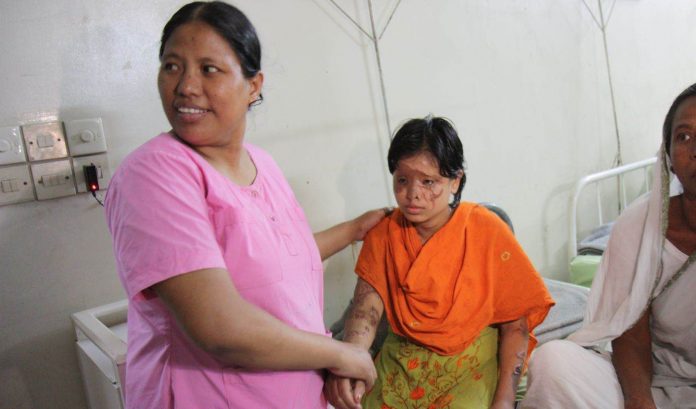
A Pakistani doctor has come up with a revolutionary new form of artificial skin for acid attack survivors that will likely only cost a fraction of the price of current treatment methods.
Currently, burn victims can either be treated with skin that has been grafted from another part of their body or doctors can use skin that has been sourced from a donor. That being said, the procedure for grafting skin from the patient’s own body can be particularly expensive; and since donated skin can’t be stored for long periods of time, these grafts are often in short supply.
Doctors can use artificial skin that has been grown in a lab, but it usually costs about $900 per square inch – which is particularly unaffordable for young women who have fallen victim to acid attacks in rural or underdeveloped regions.
Thankfully, Dr. Rauf Ahmed from the Jinnah Burn and Reconstructive Surgery Center in the Pakistani city of Lahore told CNN that he has developed a much more inexpensive solution to the problem of costly artificial skin grafts.
Rather than use the trypizine enzyme to cultivate artificial skin cells, he began using sodium chloride – also known as salt – to develop the skin samples.
According to the doctor, his breakthrough will likely bring the cost of skin grafts down from $900 to about $5 per square inch. Furthermore, it can be stored for up to two years.
After the artificial skin was successfully tested on animals, Ahmed began human trials on a number of acid attack survivors and burn victims back in October 2018 – and with the trials set to conclude at the end of the summer, he says the results have been “outstanding”.
“Mortality rate among patients with more than 70% of their bodies burnt is 90%. However, with the large-scale production of the biological human skin, surgeons will be able to reduce the burns to 20% and allow patients to live longer,” University of Health Science (UHS) Vice Chancellor Professor Javed Ikram told the Express Tribune about Ahmed’s work.
“In fact, the skin which we have prepared in Pakistan is better than its imported counterpart in many aspects,” he added. “We already have our skin specimen approved by the United States Food and Drug Administration (FDA) and … although we cannot give a date, the commercial production of these medicines and artificial body parts will begin soon and we will try to keep the prices at the lowest.”
Be Sure And Share The Groundbreaking News With Your Friends On Social Media – File photo by Narayan Nath/FCO/Department for International Development, CC
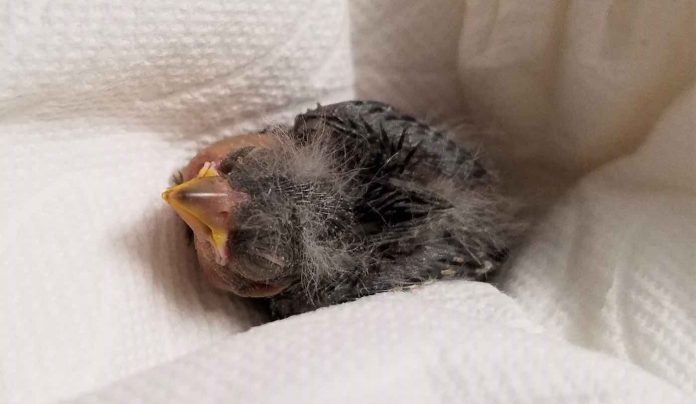
A baby bird has been given a new lease on life after a resourceful partygoer made sure that it could be transported to a rescue center in the safest – and most modern way possible.
Animal rescuers from the Wildlife Rehabilitation Center of Northern Utah (WRCNU) were surprised to find an Uber waiting outside of their front doors last week. The only passenger that had been waiting in the backseat of the car was a tiny baby bird.
Tim Crowley and his friends had rescued the bird as they were in the middle of enjoying a weekend get-together in Clinton.
They had been sitting outside when the bird suddenly fell out of the sky – and they could not figure out where it had come from.
Upon calling the WRCNU, rescuers said that Crowley ought to bring the bird in for treatment as soon as possible. Since Crowley had been drinking, however, he and his friends did not feel capable of driving the little lesser goldfinch to the animal hospital.
“At first it was a joke, like, ‘Hey, maybe we should just call Uber!’” he told KSTU. “Then we were like, ‘No, really. Why not? We’re paying them.’”
Crowley and his friends then called an Uber for the bird and told the driver about their unusual passenger. When the driver canceled the trip due to the bizarre nature of the journey, Crowley then waited to tell their second driver about the feathery passenger until she had already arrived.
Luckily, the woman agreed to drive the bird to the rescue center.
Though WRCNU rescuers were confused by the arrival of the little bird, they quickly took it under its wing and made sure that it got the proper treatment.
The bird, who has fondly been named “Petey Uber” by the rescuers, will most likely be ready to be released back in the wild just in time for the migration season at the end of the summer – and it’s all thanks to Crowley’s quick thinking.
(WATCH the news coverage below) – Photo by the WRCNU
Fly This Sweet Story Over To Your Friends By Sharing It To Social Media…
Quote of the Day: “Useful pain comes to you when you are taking risks, and acting out of love and adventure…The pain is demanding we rise to the occasion.” – Rob Brezsny
Photo: by Thomas Hawk, CC license
With a new inspirational quote every day, atop the perfect photo—collected and archived on our Quotes page—why not bookmark GNN.org for a daily uplift?
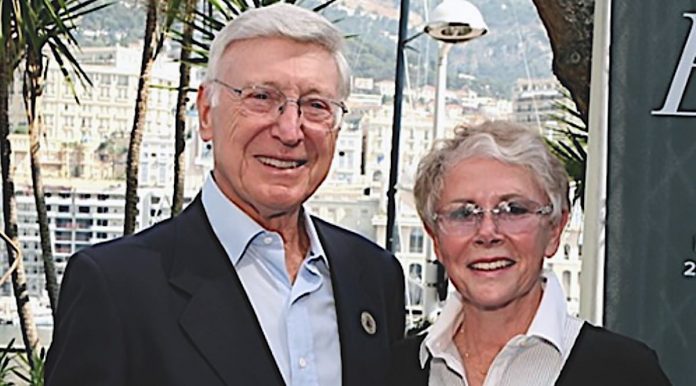
He grew up in a Newark, New Jersey tenement, and when his Russian Jewish immigrant parents didn’t have the money to send him to medical school, he worked to become a pharmacist. But, later it was his business acumen that landed him the CEO job for a home improvement company in California. When he was fired from the job in a power struggle, he didn’t give up and go back to being a pharmacist—he co-founded a store that went on to revolutionize the home improvement industry with its warehouse concept.
Now, the co-founder of The Home Depot says he intends to give most of his remaining fortune to charity, after already having donated nearly two billion dollars to philanthropic organizations across the world.
When the Atlanta billionaire dies, 80 to 90 percent of the remainder of his wealth will be transferred to his foundation.
His current estimated net worth is $4.5 billion, and Bernie and his wife Billi Marcus are signatories of The Giving Pledge, along with 200 others—like Michael Bloomberg, Richard Branson and Elon Musk—a coalition Bill Gates and Warren Buffet designed to recruit wealthy families to pledge at least half their fortunes to charity.
The Marcus Foundation, which has no website of its own, focuses on veteran care, medical research, hospitals, and Jewish causes. Bernie has given instructions to the board to invest in “medical discoveries and treatment for kids with autism (and) creating 20 to 25 centers around the nation to help veterans suffering from brain injuries and post-traumatic stress.”
Though he is 90 years old today, he recently told the Atlanta Journal Constitution that he feels young and hopes to give away most of his money while he’s alive to enjoy it.
”Everything I live for now is finding the right things to put my money into and that can give me a rate of return in emotion and doing good things for this world.”
In April, Marcus donated $25 million to the Marcus Autism Center to spearhead research on the causes and cure for autism, as well as feeding problems known to effect pediatric patients with the disorder.
In 2017, Marcus also funded and founded The Marcus Institute for Brain Health with a $38 Million grant, a Colorado facility devoted to innovative and intensive treatment of U.S. military veterans who now suffer from PTSD, post-traumatic stress disorder.
Share the Wealth of Goodwill by Sharing This on Social Media
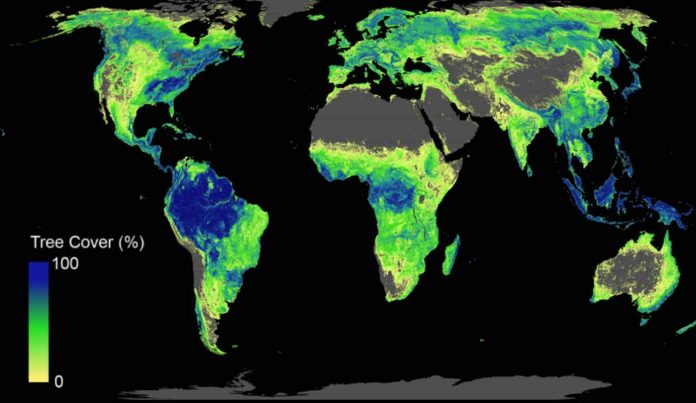
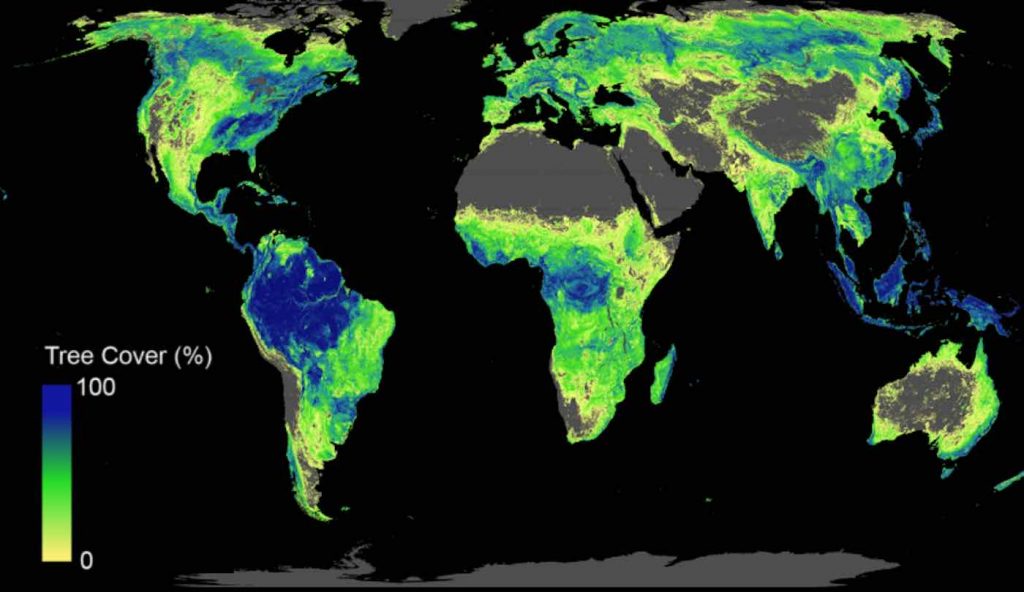
Around 0.9 billion hectares (2.2 billion acres) of land worldwide would be suitable for reforestation, which could ultimately capture two thirds of human-made carbon emissions.
The Crowther Lab of ETH Zurich has published a study in the journal Science that shows this would be the most effective method to combat climate change.
The Crowther Lab at ETH Zurich investigates nature-based solutions to climate change. In their latest study, the researchers showed for the first time where in the world new trees could grow and how much carbon they would store.
Study lead author and postdoc at the Crowther Lab Jean-François Bastin explains: “One aspect was of particular importance to us as we did the calculations: we excluded cities or agricultural areas from the total restoration potential as these areas are needed for human life.”
The researchers calculated that under the current climate conditions, Earth’s land could support 4.4 billion hectares of continuous tree cover. That is 1.6 billion more than the currently existing 2.8 billion hectares. Of these 1.6 billion hectares, 0.9 billion hectares fulfill the criterion of not being used by humans. This means that there is currently an area of the size of the US available for tree restoration. Once mature, these new forests could store 205 billion tonnes of carbon: about two thirds of the 300 billion tonnes of carbon that has been released into the atmosphere as a result of human activity since the Industrial Revolution.
Photo by Crowther Lab / ETH Zurich
According to Prof. Thomas Crowther, co-author of the study and founder of the Crowther Lab at ETH Zurich: “We all knew that restoring forests could play a part in tackling climate change, but we didn’t really know how big the impact would be. Our study shows clearly that forest restoration is the best climate change solution available today. But we must act quickly, as new forests will take decades to mature and achieve their full potential as a source of natural carbon storage.”
The study also shows which parts of the world are most suited to forest restoration. The greatest potential can be found in just six countries: Russia (151 million hectares); the US (103 million hectares); Canada (78.4 million hectares); Australia (58 million hectares); Brazil (49.7 million hectares); and China (40.2 million hectares).
Many current climate models are wrong in expecting climate change to increase global tree cover, the study warns. It finds that there is likely to be an increase in the area of northern boreal forests in regions such as Siberia, but tree cover there averages only 30 to 40%. These gains would be outweighed by the losses suffered in dense tropical forests, which typically have 90 to 100% percent tree cover.
A tool on the Crowther Lab website enables users to look at any point on the globe, and find out how many trees could grow there and how much gamset carbon they would store. It also offers lists of forest restoration organizations. The Crowther Lab will also be present at this year’s Scientifica (website available in German only) to show the new tool to visitors.
The Crowther Lab uses nature as a solution to: 1) better allocate resources – identifying those regions which, if restored appropriately, could have the biggest climate impact; 2) set realistic goals – with measurable targets to maximize the impact of restoration projects; and 3) monitor progress – to evaluate whether targets are being achieved over time, and take corrective action if necessary.
This story was submitted as a nomination to the Reader’s Digest “Top 50 Nicest Places in America” contest: a crowd-sourced effort to uncover nooks where people are still kind and respectful in an era of cultural and political divides. Be sure and vote for which story you think should be nominated as the Nicest Place by visiting the Reader’s Digest website.
Photo by Elizabeth Shook
When illness nearly caused a beloved shop owner to close the doors, one group came to the rescue: Her customers.
For 10 years, Joan Peterson had tried to make life better for the people of Hidden Springs, Idaho. When the community had the chance to return the favor, it did.
In 2008, Peterson and her husband bought the Dry Creek Mercantile, a cluster of stores and services that sits at the heart of Hidden Springs. It’s the place where kids meet after school, where adults gather for a drink or a meal, where families come to host a wedding or graduation. It was hard work for just the two of them, running such a big operation. Things got a lot harder when her husband fell ill. And that’s when her neighbors showed her what they were made of.
“I was driving to the hospital, maybe three days before my husband passed away, and I went past the business and there were all these cars in the parking lot,” she says. “Later I found out that about 125 people came in and gave it a cleaning. Top to bottom, like it was new. I didn’t ask for it. They just did it.”
After losing her husband two years ago, Peterson briefly considered leaving “the Merc,” but discovered that her neighbors were not going to let her go that easily.
“It’s a big operation to run by myself. But they just kept helping me,” she says. “I could have walked away. But I can’t, because I love it. This is my family.”
Hidden Springs is a planned community of about 800 homes, just outside Boise, designed by its founders to avoid typical suburban sprawl and replicate an old-fashioned American small town. Instead of cul-de-sacs and rows of identical homes, it features walkable streets, unique homes, and a network of trails and carefully-preserved open spaces. Instead of strip malls and parking lots, it has the Merc and its big green space, where concerts and events take place all year.
But residents say it’s the people who truly make it special.
“We were out walking, and we heard the sound of laughter, so we went over,” recalls B. J. Shook, who nominated Hidden Springs. They found about thirty kids and parents goofing around on a homemade ice-skating rink that a bunch of dads had built next to an old barn. “It was like a Norman Rockwell picture,” she says.
Reprinted with permission from Reader’s Digest. To learn more about GNN’s part in searching for the Top 10 Nicest Places, click here.
Be Sure And Share This Sweet Story Of Neighborly Kindness With Your Friends On Social Media…
It’s not uncommon to see singing and dancing during the talent show segment of the Miss America pageant – but this lovely young biochemist was recently crowned the new Miss Virginia of 2019 thanks to a more unconventional performance.
24-year-old Camielle Schrier won the competition after she donned a white coat and rubber gloves for an on-stage science experiment.
Using hydrogen peroxide and potassium iodide, Schrier demonstrated the process – – and colorful results – of catalytic decomposition.
After pouring the iodide into the peroxide, the young biochemist immediately stepped away from the table to distance herself from the colorful foam that shot several feet into the air.
In addition to the performance impressing the audience, the science display clearly impressed the judges as well. Schrier was later crowned Miss Virginia 2019 – and since she is now preparing to compete in the Miss America Pageant in September, she hopes that her chemistry performance will inspire other young women to pursue their passions in STEM.
“I am more than Miss Virginia. I am Miss Biochemist, Miss Systems Biologist, Miss Future PharmD looking toward a pharmaceutical industry career,” she said in a release. “Now was the time for me to create a mind shift about the concept of talent by bringing my passion for STEM to the stage. To me, talent is not a passion alone, but also a skill which is perfected over years of learning.”
(WATCH the video below)
Be Sure And Share This Sweet Story With Your Friends On Social Media…
Quote of the Day: “These are times in which a genius would wish to live. It is not in the still calm of life that great characters are formed… Great necessities call out great virtues.” – Abigail Adams (in a letter to her husband John Adams)
Photo: by Zooey, CC license
With a new inspirational quote every day, atop the perfect photo—collected and archived on our Quotes page—why not bookmark GNN.org for a daily uplift?
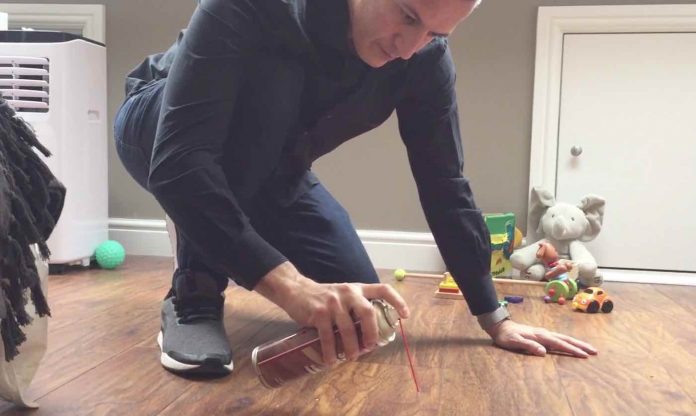
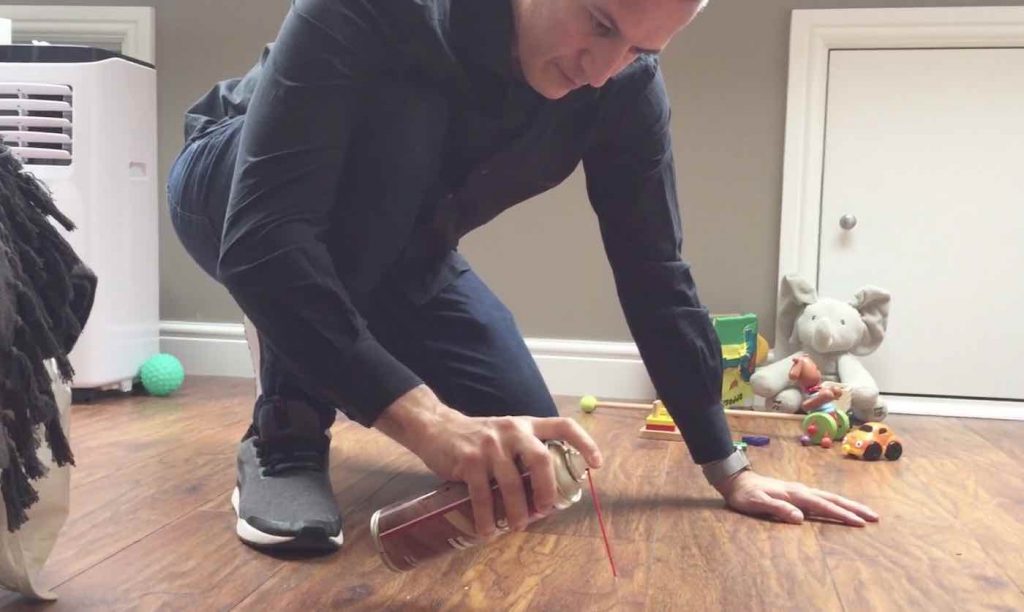
After creaky floorboards kept waking up his newborn daughter, an exhausted dad invented a unique spray that managed to silence his whole house – and it is now helping other sleep-deprived parents has well.
45-year-old Paul Lanzarotti reckons that he has helped thousands of weary parents with his floorboard tonic, which is made from the same lubricant on Teflon pans, but is safe, and nontoxic, categorized as a “food grade” coating by the UK government.
He came up with the idea after his brand new Italian laminate floor shrank in size due to underfloor heating. With the flooring laid throughout his entire house, it squeaked every time he took a step.
Lanzarotti and partner Tracy McCreary put up with the squeaking until they welcomed their newborn baby daughter Sienna.
Every time they put Sienna to bed, they were forced to perform a Mission Impossible-style escape. Just walking out of her bedroom would wake her – and the creaks were so loud, little Sienna would hear them from any room in the house.
“It was incredibly infuriating,” said the self-employed digital innovator from Hendon, London. “We were exhausted and it was a nightmare. Our house wasn’t fun to live in anymore.
Lanzarotti said flooring experts told him that the only solution for the creaking was to rip up and replace the floor for the whopping cost of £5,000 ($6,300).
So the “obsessive problem solver” decided to take matters into his own hands and spent hours trawling the web for a solution.
He learned that the noise was caused by friction, which could be stopped if properly lubricated. Lanzarotti also found out that a safe chemical compound found in Teflon was one of the world’s best lubricant elements.
The determine dad eventually discovered that mixing the Teflon compound PTFE with an acrylic fluid could be used to spray the flooring and stop the creaking. He then called a chemical engineering company and commissioned them to manufacture the spray into a product which he called “Stop Creak”.
Upon using the spray on his floors, he was stunned by its success.
SWNS
“I tested it at home and just couldn’t believe the result. I sprayed it in Sienna’s room first and the floor was immediately silenced,” said Lanzarotti. “Eight months later, it is still silent.
“It felt like a huge relief. When Tracy saw the difference for the first time, her face just lit up.
“You can treat a couple of rooms in an hour and it was such an easy product to come up with. To be honest I have no idea how long it lasts for,” he added. “But I’m baffled there was nothing like it before. It was such a simple problem to fix.”
Manufactured by the respected chemical company that makes WD-40, the ingredients used in the product are “pure Polytetrafluoroethylene (PTFE) and Silicon.” PTFE is known to be stable and nontoxic at lower temperatures, though it begins to deteriorate in cookware in high heat about 260 °C (500 °F). The controversial chemical used in the creation of Teflon pans, which has raised safety concerns, is PFOA. PTFE, on the other hand, is often used as a valve oil to lubricate musical instruments, in other aerosol lubricant sprays, and in Gore-Tex, an insulating material incorporating a fluoropolymer membrane with micropores.
Having nailed his invention, Lanzarotti arranged for a batch of Stop Creak to be shipped out to him so he could share cans of it between friends and family.
When they were just as “amazed” by the result, they suggested he try to sell it online. So Lanzarotti built a website, designed product labels, and listed the cans for sale on eBay for £19.99.
Sales were slow at first, and in the first couple of months, Lanzarotti only sold a handful of cans each week. Eight months later, he now sells up to 130 cans a week, and he has so far made a gross revenue of around £37,000 ($47,000).
He reckons he has collectively sold between 8,000 and 10,000 cans, and his financial projection predicts that he may end up hitting £100,000 in sales by the end of the year.
With orders flying in, Lanzarotti says he has had to put his full-time job on hold in order to manage Stop Creak.
“It started out as a side project just because we really needed a good night’s sleep,” said Lanzarotti. “But now I’m just really happy to be helping other people. I thought there must be other people who are being driven mad by creaky floors.
“It’s a no-brainer for any parent with squeaky floors, but a lot of people just live with it. It is a living nightmare for people, but it doesn’t have to be,” he added. “People don’t realize the difference it makes. It’s life-changing.”
As an “Amazon Prime” merchant, StopCreak had to pass the safety checks required by Amazon to sell to their customers. They are also required by UK law to provide a data sheet to accompany the product, which states the product should be applied in a well-ventilated area and user should avoid contact with skin and eyes.
Be Sure And Share The Story With Your Friends On Social Media…