High school sweethearts Bob and Marjorie attended two proms and were the toast of Bogota High School in New Jersey.
But the dawn of World War II, when Bob enlisted, pulled the two lovebirds apart and life delivered two seemingly separate paths–until recently when they found out they lived in the same town seven miles away from each other.
While Sam Trull was exploring the jungles of Costa Rica, she encountered many fascinating critters, but one in particular stole her heart: the sloth.
After a 15-year conservation career working with primates and other wild mammals in different countries, Sam left her familiar home in the United States to dedicate her life to researching and protecting these 2- and 3-toed vegetarians.
She co-founded the Sloth Institute of Costa Rica in August 2014 and began amassing photographs, as well as data. Her new 100-page photo book, “Slothlove,” is a collection of dozens of portraits of adorable, googley-eyed sloth orphans that have become her furry foster children.
All photos courtesy of Sam Trull
“The first time I held a baby sloth I was learning how to feed her. Her tiny claws clutched tightly to my shirt, and her nose wiggled with innocent perfection,” writes Sam in Slovelove. “I was told baby sloths don’t usually survive well in captivity, and there was a good chance she wouldn’t make it.”
“Looking down at her sleeping face, I made her a promise that I would do everything in my power to give her the life she deserved. I would always put her needs first, and I would make sure she felt safe, comfortable—and loved. That was two and a half years ago. Not only did that sloth survive, but there are now eleven orphaned sloths that I care for around the clock.”
Her ongoing research is becoming one of the most in-depth long term behavioral studies of the tree-dwelling jungle creatures.
Sam, who studied zoology in North Carolina and primate conservation in the U.K., has logged over 15,000 hours of sloth study over the last three years.
In 2014, she made scientific history by performing the first ever sloth C-section.
Beyond the adoring photos, Trull’s book tells the stories of orphans Chuck, Kermie, Elvis, Monster and Newbie.
“Having lost their mothers to dogs, electric wires, cars, or general forest destruction, they come in scared and alone and in need of a new place to call home,” she explained in the introduction to Slothlove.
“In the photos in this book, the sloths aren’t just looking at a camera lens; they are looking at what they perceive as their mom,” says Sam.
She hopes that by sharing their photos, stories, and facts—not only in the book, but through lectures and education for the Costa Rican locals who live among them—she can save more sloth lives.
You can support her sloth conservation efforts by adopting a sloth at the Institute’s website – and even volunteer if you plan a trip to the Central American country.
Pre-order “Slothlove” on Amazon; the book is being released on April 19th, just in time for Earth Day. Don’t Let Your Friends Miss The Cuteness… Click To Share.
I had to share this video! It’s so sweet, and profiles some amazing and inspirational kids, doctors, nurses, and volunteers at this incredible pediatric hospital called Ranken Jordan Pediatric Bridge Hospital. They focus on transitioning kids (with medically complex conditions) from the main hospitals to their homes, teaching kids how to “live” after their injuries. They teach the families how to care for the kids, even making doctor appointments and calling in prescriptions for six months after they get home.
The hospital is small, and is expanding to double in size this fall. They have to turn kids away right now, but they’ll go from a 34 bed hospital to a 60 bed hospital by early 2018. Of course, they are in desperate need of support, as many of their programs are not funded by insurance or federal money. Anything to spread the word about them will be so beneficial to the kids that gain their lives back from the work done here.
The facility, in Maryland Heights, Missouri and founded in 1941, is one of a handful of hospitals in the United States that provide rehabilitation and subacute medical treatment for children, regardless of the family’s ability to pay.
Watch the video above and get inspired to donate your money or time…
Share The Sweetness With Families That You Know… Click To Share
Even though this 9-year-old girl was diagnosed with cancer, she will get by with a little help from her friends – all 86 of them.
After Marlee Pack was diagnosed with Alveolar Rhabdomyosarcoma last spring, the teachers and students of Meridian Elementary in Broomfield, Colorado weren’t about to let her struggle through it alone.
Marlee’s friend Cameron decided to support her bestie by shaving her head in solidarity. Her gesture, then, inspired the school to organize a charity event entitled “Be Bold, Be Brave, Go Bald” on March 16th.
80 students, three female teachers, both male principals and even a student’s mom all shaved their heads to raise money for the Saint Baldrick’s Foundation for cancer research.
(WATCH the video of the event below) –Photo by the Daily Camera
Share The Sweetness With Your Friends… Click To Share
A new indie documentary, “For The Love Of Spock,” will make its world premiere at the Tribeca Film Festival today, featuring a panel discussion with the film’s director, Leonard Nimoy’s son.
For the film, Adam Nimoy interviewed William Shatner, George Takei and Walter Koenig, among others. Zachary Quinto, who portrays Spock in the modern Star Trek films, will narrate the documentary and joins Nimoy on the panel.
Released in time for the 50th anniversary of the original series, the film looks at the enduring impression left by actor Leonard Nimoy and his portrayal of Spock in ‘Star Trek’.
The project was funded by Trekkie fans who donated $662,000 to a successful Kickstarter campaign last year. It will be available to stream later this year.
One of the largest home and garden pesticide makers in America is halting its use of a chemical blamed for killing honey bees.
Among several possible causes of bee deaths and colony declines research has implicated a family of chemical pesticides called neonicotinoids – neonics, for short. Even though the U.S. Environmental Protection Agency is still researching the connection, Ortho announced this week it will start eliminating the chemical in all of it’s products.
Ortho’s announcement comes just as Maryland lawmakers passed a bill that would restrict the sale of home and garden pesticides containing neonics. The governor is still considering whether to sign it.
The company says some of their products will be reformulated to work without the chemical while others will be taken off the market in 2017. Ortho plans to have no neonics in any of its products when the phase-out is finished in 2021.
In March, the U.S. Fish and Wildlife Service said it would consider whether to protect two species of wild bumblebees under the Endangered Species Act, reports CBS News. SHARE the Buzz… (Photo credit: orangeaurochs, CC)
He was the last person many students saw as they departed the school on graduation day, and the one person who could be counted on to remember them whenever they returned.
Kifleab Tekle, affectionally known as “Kief,” spent 30 years shepherding the girls at the private school, helping them cross the street as kindergartners and making sure they were safe teens until they headed off to college.
Even years later, after they left Hockaday School in Dallas, Texas, visiting alumni would be greeted at the front desk by a smiling Kief, instantly recognizing them, calling them by name, and asking about their family members.
When alums heard Kief was retiring this week, they decided to raise money for a gift. The Class of 2005 hoped to raise $2005 symbolic dollars.
Even the organizers were stunned when their GoFundMe page raised $185,000 — nearly 2,000 people chipped in.
Kief was shocked and overwhelmed by the outpouring of gratitude. Just like the names he’s remembered for 30 years, this gesture is something he’ll never forget.
When climate change doubters misrepresented NASA findings in response to a Facebook post by Bill Nye, the space agency launched a series of corrections to set the facts straight.
Nye, “The Science Guy,” had posted a thread about prominent climate change critic Marc Morano turning down Nye’s $20,000 bet that 2010-2020 would be the hottest decade on record.
The comments quickly turned into a debate with facts and figures being tossed around — some of them carelessly.
“Riiiiight,” commenter Fer Morales wrote, “Despite NASA confirming that fossil fuels are actually cooling the planet’s temperature, and that there’s more ice than in the last century in the polar caps. . .”
But NASA has never said anything of the sort, and the space agency, which generally avoids such social media back-and-forths, blasted-off with a series of charts, graphs, and other data, and chastised those who misquoted the agency’s findings.
“Do not misrepresent NASA,” the space agency responded using its NASA Climate Change moniker. “Fossil fuels are not cooling the planet.”
Debate quickly shifted with doubters saying the world is warming, but there’s no proof humans are causing it—and accusing NASA of inaccurate data.
Then, they argued it could be caused by changes in the sun.
They may have missed the fact that NASA has been just about everywhere in the solar system.
“Other planets in the solar system are not warming,” NASA posted. “There is a small amount of evidence of seasonal changes in parts of the solar system, but there is no evidence of global warming anywhere—except on Earth.”
Maybe we need an adult version of “Bill Nye, The Science Guy” to educate more Americans about the dangers posed by climate change to populations around the world.
If you’ve ever wanted to go to the Grand Canyon, this week is the time to do it.
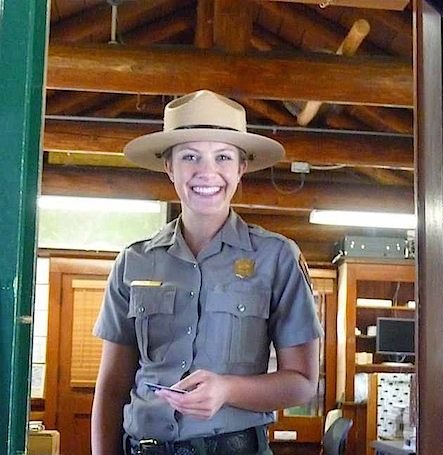
In honor of the National Park Service’s 100th anniversary, the U.S. agency is waiving admission fees for all national parks and monuments during National Park Week– April 16th through April 24th.
Though camping fees will still apply, 410 different parks are opening their doors to accept visitors from near and far for the celebration–not only wilderness areas, but historical sites like Gettysburg, Jamestown and the Wright Brothers Monument, and homes of presidents, like Franklin D. Roosevelt and Harry Truman.
“We have an amazing variety of special events taking place during the centennial,” said National Park Service Director Jonathan B. Jarvis. “Some commemorate our first hundred years, but many others look to the future, to the next 100 years, and will help connect with and create the next generation of park visitors and supporters. It is through them that America’s lands and stories will be preserved and passed on to future generations.”
With National Junior Ranger Day kicking off the event on Saturday, activities have been planned throughout the week to entertain kids and adults alike. Visit FindYourPark.com to learn more about National Park Week activities throughout the country.
If you aren’t able to travel to a park during the coming week, other free admission days this year will include August 25 through August 28, to mark the National Park Service Birthday; September 24, for National Public Lands Day; and November 11, to honor Veterans Day. Invite Your Friends To A Park Field Trip… Click To Share (Photos copyright McKinley Corbley)
The crowd at Oak Middle School in Shrewsbury, Massachusetts wasted no time in joining the rendition, singing the words along with Jagger so he could make it through the song.
“It was just that magical moment where it just felt like the entire community rallied around him,” Jagger’s mom Stacey Lavely told WCBV.
Sean Parker, known as the co-founder of Napster and first president of Facebook, has just donated $250 million to create a new center for immunotherapy cancer treatment research.
The Parker Institute For Cancer will be a collaboration of over 40 laboratories and 300 researchers working together to cure the deadly disease. Medical universities such as Stanford Medicine and the University of California will also be participating.
As simple as a flu shot, the treatment causes cancer cells to self-destruct leaving patients – like beloved former President Jimmy Carter – cancer-free without having to undergo the trials of chemotherapy. After five years of research, the survival rate was 97% for patients who’d been in early stages of prostate cancer and 94% for patients facing a more aggressive form of the disease. That’s 20% better than average survival rates.
“We are at an inflection point in cancer research and now is the time to maximize immunotherapy’s unique potential to transform all cancers into manageable diseases, saving millions of lives,” Parker said in a statement. “We believe that the creation of a new funding and research model can overcome many of the obstacles that currently prevent research breakthroughs. Working closely with our scientists and more than 30 industry partners, the Parker Institute is positioned to broadly disseminate discoveries and, most importantly, more rapidly deliver treatments to patients.”
An early investor in Facebook, Parker started a philanthropic foundation for public health in 2015 with a $600 million contribution. The 36-year-old Silicon Valley mogul’s estimated worth currently stands at $3 billion.Grateful for Research Money? Click To Share… (Photo by Jdlasica, CC)
People can check out a lot more than books at the San Francisco Public Library — they can find housing and mental health care, too.
The California library became the first in the U.S. to hire a social worker with a mental health care background–and since 2009 she’s provided services for 800 homeless patrons.
Best of all, social worker Leah Esguerra has found permanent housing for more than 150.
About 5,000 people visit the San Francisco library every day — 750 of those are homeless. For many, it’s their only shelter during the day, and it also makes it a perfect hub to reach out to the homeless.
“It’s always easier to do outreach on the streets, that’s neutral ground,” she told PBS NewsHour. “But here [in the library], it’s their sanctuary. I have to be respectful.”
She provides clinical assessments and directs homeless people to shelter and services that can help any who need it.
Esquerra’s program has become so successful, the library has hired and trained three formerly homeless people to assist her as “health and safety associates.” After a 12-week vocational training program, they work part-time for $12 an hour, helping identify homeless patrons who may need help.
Another sign of success: since it started nearly seven years ago, at least 24 other public library systems around the U.S. have launched similar programs.
The Dallas, Texas library has a peer-counseling program for homeless patrons, Queens Public Library in New York City has a phone app that connects the homeless with emergency shelter in their buildings, and nurses stroll through 27 libraries buildings in the Tucson, Arizona area library system looking for people who need medical attention.
But Leah is best known in the local neighborhoods where she has become so familiar to the homeless who visit the library, they often shout out to “The Library Lady” when she’s walking down the street.
(WATCH the video below from PBS NewsHour or READ more at CityLab) — Photos: PBS video
Nearly 400,000 Americans are about to get some debt relief on student loans they can’t afford to pay off because they’ve become permanently disabled.
The Obama administration plans to forgive $7.7 billion in federal student loans for more than 100,000 people who will be getting immediate relief starting next week.
If a person is disabled and doctors don’t see any hope of reversing the condition, they have a right under law to be freed from their student loan debt. But not everyone knows this, and the government had not previously notified them.
A review of the student loan program found 387,000 people meet the requirements for debt forgiveness under the law — but were not aware they qualified.
On top of that, 179,000 of those were already in default on their loans, and in danger of losing tax refunds or Social Security payments even though they were unable to work.
Customized letters will go out to that group of people already in default starting Monday, with instructions on how they can apply for loan forgiveness right away.
More letters will go out over the next 16 weeks notifying others of their rights and how to apply.
“Americans with disabilities have a right to student loan relief,” Education Under Secretary Ted Mitchell said in a statement. “Too many eligible borrowers were falling through the cracks, unaware they were eligible for relief.”
The announcement is part of President Obama’s “Student Aid Bill of Rights,” which ordered the federal government in March to overhaul rules on how Americans repay student loans.
(READ more at the Washington Post) — Photo credits: Steve Johnson; NYPhotographic, CCPASS it On To Your Friends, Share It….
Young brainiacs from all over the country are convening at the nation’s capital for President Barack Obama’s final White House Science Fair.
The event will be the 6th and final science fair since it’s creation at the start of Obama’s administration. He said that if Americans take the time to honor sports heroes and athletes, we should give the same amount of attention to academics and science.
Kids from grades K-12 are featuring creations that address everything from climate change, to human safety, to poverty, to just plain fun – whether it’s 3D-printed toys or a robot built to traverse dangerous coal mines, this clever group of youths have pulled out all the stops.
“We look forward to celebrating their ingenuity and entrepreneurship,” said White House officials in a statement, “not just in this moment, but as we look toward a future where they’ll be the scientists, engineers, mathematicians, and innovators who stand to change the world.”
The unanimous vote for favorite science fair moment remains the year Obama teamed up with a 14-year-old to fire a marshmallow cannon across the State Dining Room.
“This is great!” exclaimed Obama, as the two pumped the machine. “The Secret Service is not too happy right now.”
(WATCH the video above) – And, SHARE the Future With Your Friends
When a thief stole a homeless man’s violin in Canada, a symphony of sympathy led to an orchestra replacing the beloved instrument.
Mark Landry woke up Tuesday morning to realize his violin was missing. The homeless man used it to play for tips outside the Montreal Metro, but without it, he was forced to sit silently, holding a sign in French announcing the theft and asking for donations to replace it.
He put in a call to local violin shop Maison du Violon. The story tugged the heartstrings of the store owners and they sold Dupré a new violin and bow at cost, without making any profit.
This is the violin the l'orchestre de Montreal will give to Marc, a street musician whose instrument was stolen pic.twitter.com/K5eRP3XPkO
By that afternoon, reporters and onlookers gathered around Landry as Dupré delivered the new violin — and the homeless man performed for his audience to a standing ovation.
(WATCH the CBC News video below, SEE his performance at the bottom) — Photo: CBC News video
Anti-aging promises have been around since Ponce de Leon went looking for the Fountain of Youth, but the latest promising news comes from an MIT researcher with five Nobel winning experts advising him.
Dr. Lenny Guarente is packing decades of anti-aging research from his Massachusetts Institute of Technology lab and other leading universities into a pill made from all-natural ingredients.
The natural approach will let Guarentee and his Elysium Health co-founders, Eric Marcotulli and Dan Alminana, speed their product to market. Using natural components means they can’t patent their pills, but lets the company bypass the years-long FDA approval process.
The pills rely on sirtuins, a group of enzymes linked to metabolism that have been shown in research to extend lifespans of mice and other animals. It was Guarente’s Center for Scientific Aging Research at MIT that conducted some of the first groundbreaking research into sirtuins.
Harvard researchers expanded on his findings when they discovered one particular type of sirtuins, NAD, “reversed aging” in mice. In the journal Cell they reported that tissue in two-year-old mice given NAD resembled that of six-month-old mice after just a week of treatment.
In humans, that would be like a 60-year-old suddenly sporting some of the same cells as a 20-year-old.
Elysium’s supplement, called Basis, is aimed at replicating that effect in humans, though it’s never been fully tested on people yet.
Even so, more than 30 leading scientists in the field of aging have signed on as advisors for Elysium’s launch. Among them are five Nobel Prize winners including brain researcher Dr. Eric Kandel who won the Nobel for Medicine in 2000 and Stanford cellular physiologist Dr. Tom Sudhof who won it in 2013.
The FDA doesn’t recognize aging as a medical condition, but it does increase the risk for illnesses that can kill people, such as cancer, heart disease, and diabetes.
Guarente and his partners are taking an approach that does not focus on anti-aging or living longer — they see their supplement as a way for people to improve their health over a long lifetime.
Marcotulli told Fast Company, “For us this is about increasing healthspan, not lifespan.”
GIVE Your Friends a Lift, Share It Now… (Photo by Sun Star, CC)
A year of significant expansion in the Chesapeake Bay blue crab population bodes well for a better harvest and lower prices for consumers this year.
The Maryland Department of Natural Resources released its 2016 winter survey this week, which indicates a bay-wide crab population of 553 million, a 35-percent increase over last year.
This is the fourth highest level in two decades, and builds on last year’s 38-percent boost in abundance.
“Due to a milder winter, favorable currents and tides, and wise bay-wide management measures, the Maryland crab population continues to rebound and strengthen,” Fisheries Service Director Dave Blazer said. “With an increase in abundance and steady recruitment, we fully anticipate a robust crab season this year.”
Improvements were seen in all age groups of male and female crabs. The spawning female stock nearly doubled from 101 to 194 million and the adult male stock more than doubled from 44 to 91 million – the second highest levels since 1995.
The number of spawning-age female crabs remains below the 215 million target but above the minimum threshold established in 2011. The juvenile crab abundance increased slightly from 269 million to 271 million, which is just above the 27-year average.
“The highly variable nature of the blue crab population means that we must maintain a degree of caution in considering management adjustments,” Chesapeake Bay Stock Assessment Committee Chairman Glenn Davis said.
The 2015 bay-wide crab harvest increased by 42 percent over 2014 to 50 million pounds and remained at sustainable levels for the eighth consecutive year. This combined with increased abundance means that a slight liberalization of harvest limits for female crabs may be warranted this summer.
The annual Winter Dredge Survey, conducted by the Maryland Department of Natural Resources and Virginia Institute of Marine Science since 1990, is the primary assessment of the Chesapeake Bay’s blue crab population. In the survey, biologists use dredge equipment to capture, measure, record and release blue crabs at 1,500 sites throughout the bay from December through March. Crabs tend to bury in the mud over the cold winter months, which makes it possible for scientists to develop accurate estimates of the number of crabs. SHARE the News…
The Global Tiger Forum kicked off a major tiger conservation meeting in New Delhi this week with exciting new numbers to report.
New census data shows the population of wild tigers to be twenty percent higher than 2010 estimates– with 3,890 roaming worldwide.
“For the first time after decades of constant decline, tiger numbers are on the rise. This offers us great hope and shows that we can save species and their habitats when governments, local communities and conservationists work together,” said Marco Lambertini, Director General of WWF International.
The improvement was attributed to enhanced protection measures and increases in tiger populations in India, Russia, Nepal and Bhutan. Placing armed guards that regularly patrol for poachers has led to a tripling of tiger numbers in Thailand. The animals’ prey is multiplying too, in Thailand, which enables the tiger population to expand with the food source.
The meeting of tiger range governments at the 3rd Asia Ministerial Conference on Tiger Conservation this week is the latest step in the Global Tiger Initiative process that began with the 2010 Tiger Summit in Russia. Governments at that meeting agreed to the Tx2 goal to double wild tiger numbers by 2022.
Over the three day meeting, countries will report on their progress toward the Tx2 goal and commit to next steps. India’s Prime Minister Modi will address the conference on the essential role tigers play as a symbol of a country’s ecological well-being.
Tigers are classified as endangered by the IUCN Red List of Threatened Species, with habitat loss and poaching from a multi-billion dollar illegal wildlife trade identified as the major reasons.
In 2014, tiger range governments agreed to announce a new global tiger estimate by 2016, based on full, systematic national surveys. However, not all countries have completed or published these surveys. The new minimum estimate of close to 3,900 tigers–up from 3,200– is based on updates from countries where national tiger surveys have taken place since the IUCN assessment.
A Kashmir boy lost both of his arms in a sawmill accident when he was eight years old, but that hasn’t stopped him from excelling at his favorite sport–and becoming captain of his cricket team.
Now age 26, Amir Hussain Lone has learned to do everything with his feet–from folding his laundry, to washing his face–even writing letters.
The young amputee fell in love with the sport after watching games on the neighbor’s television through the window.
“I ended up watching a whole innings from outside, spying through a crack in their window, and it was at that moment that my feelings for cricket crystallized and I pledged that I would play,” Amir told the BBC. “I struggled hard to develop my technique, whether it was bowling or holding the bat. Thanks be to God, I have done pretty well.”
Despite people’s prejudice against his disability, Amir has become an accomplished player.
“Nobody can predict what will happen tomorrow but my hope is that I will one day become an international player, and I’m working really hard to make that happen. God-willing one day I will take my place in the national para-cricket team.”
(SEE the inspiring video below from Hindustan Times)
Bowl This Story To Your Friends: Share the Inspiration…