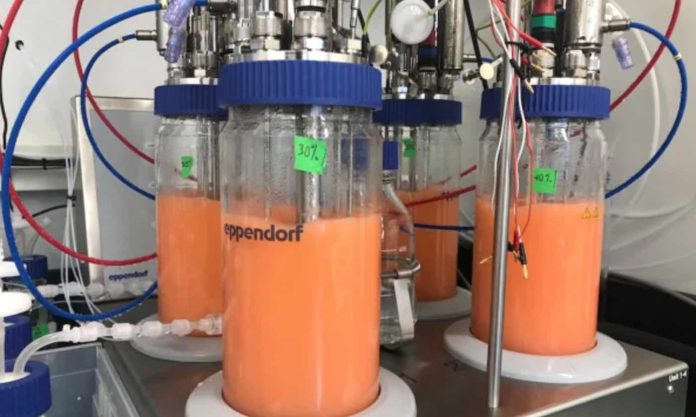
Attempting to put a permanent halt to the advance of palm oil cultivation and the destruction of tropical rainforest to accommodate it, a New York City-based startup called C16 Biosciences is producing oil with very similar chemical and functional properties to palm oil.
Palm oil is the world’s most-produced vegetable oil with a global yield of 75.7 million metric tons entering the market every year. It is found in everything from Cheezits, to ice cream to pizza dough, and even beauty products like shampoo and makeup.
Demand for the crop is projected to quadruple between now and 2050, which is why this new sustainable oil created from yeast cells undergoing fermentation, looks to be a crucial development.
“Our real mission is ending the need for deforestation that’s driven by the palm oil industry,” Shara Ticku, cofounder and CEO of C16 Biosciences told Fast Company. “We believe that it is totally unacceptable to be burning the planet to make a vegetable oil. It just doesn’t make any sense.”
Breakthrough Energy Ventures, a fund established by Bill Gates and other investors to support technological and financial innovations that fight climate change, led a $20 million investment drive for C16 Biosciences, and the company expects to have their first products out in market soon—opting for a quick market entry servicing manufacturers who have a smaller demand for palm oil.
Ticku sees an opportunity for their faux palm oil to succeed in the beauty industry, where a demand for “clean beauty products” is growing and where the demand for palm oil by beauty brands is relatively small, compared to processed foods.
The company uses a method similar to other fermentation processes like the one used to make beer.
They hope to target and replace all the palm oil that is currently linked to deforestation because of slash-and-burn cultivation of new acreage—about 3 million metric tons a year.
SHARE the Palm Oil Positivity With Eco-Friends On Social Media…
Quote of the Day: “Do not overestimate the competition and underestimate yourself. You are better than you think.” – T. Harv Eker
Photo: by lensnmatter (cropped) – public domain
With a new inspirational quote every day, atop the perfect photo—collected and archived on our Quote of the Day page—why not bookmark GNN.org for a daily uplift?
For years, curry lovers have sworn by the anti-inflammatory properties of turmeric, but its active compound, curcumin, has long frustrated scientists hoping to validate these claims with clinical studies.
The failure of the body to easily absorb curcumin has been a thorn in the side of medical researchers seeking scientific proof that curcumin can successfully treat cancer, heart disease, Alzheimer’s, and many other chronic health conditions.
Now, an international team of researchers from the University of South Australia (UniSA), McMaster University in Canada and Texas A&M University has shown that curcumin can be delivered effectively into human cells via tiny nanoparticles.
Sanjay Garg, a professor of pharmaceutical science at UniSA, and his colleague Dr. Ankit Parikh are part of an international team that has developed a nano formulation which changes curcumin’s behavior to increase its oral bioavailability by 117%.
The researchers have shown in animal experiments that nanoparticles containing curcumin not only prevents cognitive deterioration but also reverses the damage. This finding paves the way for clinical development trials for Alzheimer’s.
Co-author Professor Xin-Fu Zhou, a UniSA neuroscientist, says the new formulation offers a potential solution for Alzheimer’s disease.
“Curcumin is a compound that suppresses oxidative stress and inflammation, both key pathological factors for Alzheimer’s, and it also helps remove amyloid plaques, small fragments of protein that clump together in the brains of Alzheimer disease patients,” Zhou says.
The same delivery method is now being tested to show that curcumin can also prevent the spread of genital herpes.
“To treat genital herpes (HSV-2) you need a form of curcumin that is better absorbed, which is why it needs to be encapsulated in a nano formulation,” Professor Garg says.
“Curcumin can stop the genital herpes virus, it helps in reducing the inflammation and makes it less susceptible to HIV and other STIs,” added Garg.
Women are biologically more vulnerable to genital herpes as bacterial and viral infections in the female genital tract (FGT) impair the mucosal barrier.
Curcumin, however, can minimize genital inflammation and control against HSV-2 infection, which would assist in the prevention of HIV infection in the FGT.
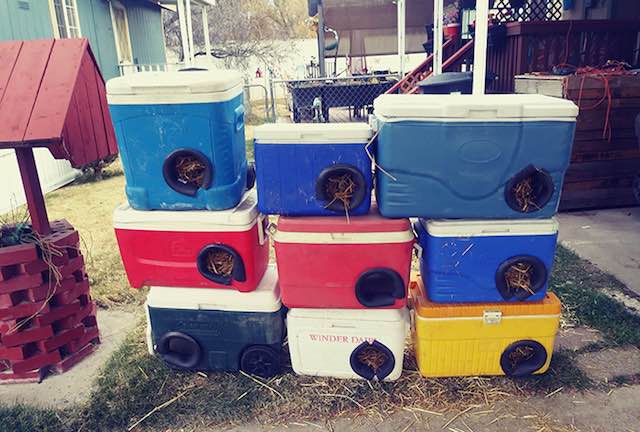
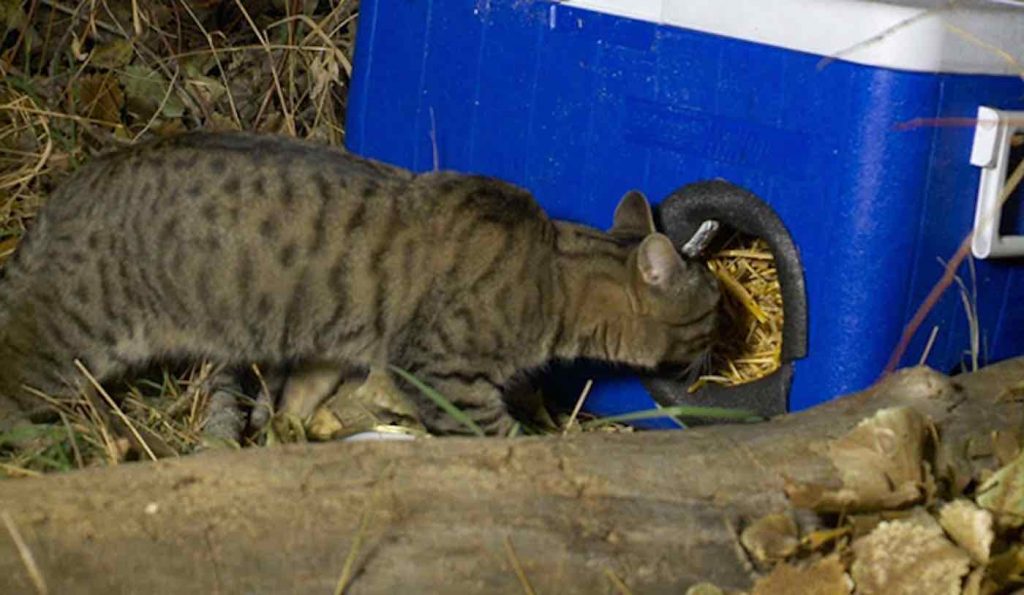
One man from Utah has been protecting stray cats from the cold by recycling old coolers into makeshift shelters.
Philip Rogich first began his labor of love back in November as a means of providing some extra comfort to the feral felines around his home community of Ogden.
“They’re living creatures… To me, living creatures deserve to have their basic needs met,” Rogich told KSTU in the interview below. “I’m giving them a second chance, one way or another,” he said.
Photo by Philip Rogich
Using a 6-inch drill bit, Rogich crafts each “cat cooler” shelter by cutting out a hole in the side of the cooler. Once he lines the holes with strips of pipe insulation foam, he fills the cooler with straw for bedding.
Rogich told GNN this week that he managed to place 150 cat coolers around Riverdale and Ogden before he was forced to put his passion project on hold in order to move houses.
Not only that, dozens of social media users have started crafting similar shelters in their own home towns since he posted pictures of his cat coolers to his charity’s Facebook page.
(WATCH the interview below)
Be Sure And Share The Pawesome Story With Your Friends On Social Media…
Some of the participants use their mother tongue to talk about their culture and language—others simply use their video interviews to talk about themselves; regardless of the topics, all of the video interviews are catalogued and documented through the Wikitongue website.
When Great Big Story interviewed Udell back in April, he said the organization’s volunteers had recorded more than 435 languages from 70 countries ranging from Aruan Malay to Finnish sign language—and that number is increasing every day.
Since Nashville is notorious for being one of the most beloved music capitals of the US, Gibson Guitars is providing a special kind of relief for musicians who may have lost their instruments during this week’s series of devastating tornadoes.
Gibson Gives—the international guitar brand’s charitable foundation—is offering to replace any guitars that may have been lost or damaged during the storms.
“Our goal is to get a guitar back into the hands of anyone who has had their guitar damaged or destroyed in the recent Tennessee storm,” says Dendy Jarrett, executive director of Gibson Gives. “As a Nashville, Tennessee-based company, we are also engaging with our artists and other partners to provide support across many areas.”
The foundation has collectively donated more than $30 million worth of goods and services since their launch in 2002. In addition to installing music rooms in Nashville high schools, they have also donated guitars and supplies to music therapy programs for veterans suffering from PTSD.
Musicians looking to replace their guitars through the Gibson Gives Recovery Plan can email proof of loss or damage to [email protected]. Replacement guitars may be prototypes or refurbished guitars that will be selected at Gibson’s discretion.
Although Swift did not disclose to her Instagram followers exactly how much money she herself had contributed to the fund, her publicist confirmed to NBC News that she had donated $1 million.
Taylor Swift’s Instagram story screenshot.
Be Sure And Share The Good News With Your Friends On Social Media…
Quote of the Day: “When it’s your time, you will walk right into your blessing.” – Germany Kent
Photo: by Luca-Upper – public domain
With a new inspirational quote every day, atop the perfect photo—collected and archived on our Quote of the Day page—why not bookmark GNN.org for a daily uplift?
Idaho has for several years been very proactive in taking steps to protect sagebrush habitat for the sake of hundreds of species including the keystone of them all, the ostentatious greater sage-grouse. Now, a federal judge in that state has voided nearly one million acres of oil and gas leases on federal lands across 11 western states.
Chief Magistrate Ronald E. Bush noted that the period for public comment was too short during the lease application process, and it didn’t allow for adequate protestation time; describing it as “arbitrary and capricious”.
“Faster and easier lease sales, at the expense of public participation, is not enough,” wrote the judge, who reinstated a 30-day public forum-style comment period followed by an administrative protest period on all recent leases on public land.
In January 2018, the Bureau of Land Management (BLM) issued a memorandum of instructions to streamline the leasing process by making common-sense adjustments to steer it away from over-regulation while maintaining standards of public health, environmental review, and public input.
“The court wasn’t fooled by the agency’s efforts to disguise its intention to provide greater influence to extractive energies—and the sage-grouse and 350 other sagebrush-dependent species will benefit from today’s win,” said Talasi Brooks, an attorney with Western Watersheds Project, one of the environmental groups which have supported the Idaho reversal.
Under the recent rollback of protections for 9 million acres of western sagebrush habitat, departments like the Bureau of Land Management, Environmental Protection Agency, and the Interior have moved to allow states to take greater autonomy in energy and mineral production within their borders.
According to The Washington Post, this has involved making decisions that partly and sometimes entirely outflank citizen input in the case of the EPA, while the BLM has opened much shorter public comment periods and also established different methods of accepting public feedback, with some regional offices accepting only fax or in person protests rather than by email.
Greater Sage-Grouse by Jeannie Stafford/USFWS
The treeless meadows of sagebrush habitat characterize the American West, and the greater sage-grouse—which dances, struts, and fans its tail in an extraordinary mating ritual every spring—has become the poster child of this ecosystem. The bird’s population, once numbering 15 million, has been reduced to just 500,000 through habitat loss, drilling, and disease.
Private-public partnerships in states like Idaho have intervened by slowing and even halting the decline of the charismatic bird, so much that the Near-Threatened species never had to be listed as Endangered under the law.
(WATCH the BBC’s amusing video—a dance party of the mating grouse…)
Spread The Good News With Conservation Friends On Social Media…
Attention in the fight against climate change tends to be focused on gasoline and trees, but 75% of the planet’s surface is covered by ocean—and a natural process taking place underwater has excited scores of climate-conscious investors at the recent World Economic Forum who may want to help.
During the recent wildfires in the Amazon rainforest, journalists often portrayed trees as the “lungs of the world,” but that title most certainly belongs to phytoplankton, which alone refreshes nearly 50% of the atmospheric oxygen on planet earth—the value of four Amazons.
And, in the effort to stop the warming of the planet, our greatest allies could belong to the great blue species of whales—because of the tremendous amount of excrement left in their wake.
A new paper published by economist Dr. Ralph Chiami highlights the influence that whales, especially great blue whales—and their poo—have on climate change. It is all due to the predominance of whale fecal matter in the diets of the tiny ocean dwellers called phytoplankton.
The microscopic marine algae floats at the center of several marine food webs, and they provide food for a host of sea creatures including whales, while synergistically also requiring whale excrement to feed on. They also require carbon dioxide to survive, just like trees.
Whales, after deep-sea dives for krill and other food, return to the surface and release into the top ocean layer “fecal plumes” rich in nitrogen and iron. These plumes provide a key food source for phytoplankton which feed on non-organic nutrients like nitrates, phosphates, and sulfur.
Whales – A Public Good
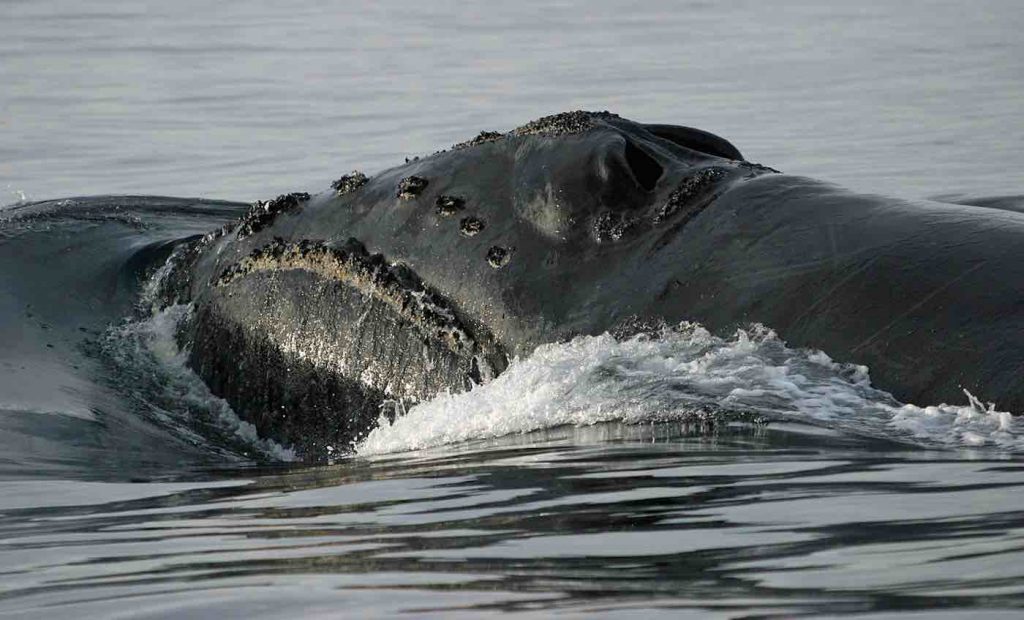
Right whale – NOAA
In his paper, Dr. Chiami, an economist at the International Monetary Fund, suggests that since phytoplankton populations expand wherever whales are, a significant effort should be made to combat climate change by encouraging the growth and protection of whale populations.
“At a minimum, even a 1% increase in phytoplankton productivity thanks to whale activity would capture hundreds of millions of tons of additional CO2 a year, equivalent to the sudden appearance of 2 billion mature trees,” writes Chiami.
Abandoning the jargon of the scientist and replacing it with that of the economist, Chiami estimates that the financial value of a whale in terms of public good should be expressed in a clear dollar amount—so the value of a whale will serve as a better motivation to protect them.
Chiami calculated what a whale would be worth in terms of climate change by calculating the market price of carbon dioxide, the amount of carbon sequestered in their enormous bodies over their lifetime, and their economic effect on fishery enhancement and ecotourism. The figure is roughly $2 million per whale—with a total value of all the world’s whales at well over $1 trillion. Chiami continues his estimations by determining various ways of increasing whale well-being, before concluding that it would take 30 years to double the current worldwide whale stock.
This value, according to Chiami, representing a mere fraction of the potential damage that 30 or 40 years of a warming climate would do to the world economies according to many estimations.
Interestingly, according to one report from the World Economic Forum in Davos, Switzerland where Chiami and his biologist colleague Michael Fishbach from the Great Whale Conservancy presented their whale/climate strategy to a room completely empty of scientists—and instead packed with bankers and investment managers—the duo were mobbed with interested parties who agreed that the financial world could play a large role in helping to fund whale recovery efforts.
On top of the relatively small commercial whaling operations in countries like Norway, Iceland, and Japan, whales are threatened by marine noise pollution, ship strikes, and plastic pollution. However thanks to Chiami and the aptly-named Fishbach, funding for whale conservation could drastically rise in the coming years, as a few hard-nosed financial investors consider producing an influx of cash the size of which NGOs and nonprofits have only dreamed.
Be Sure And Share This Whale Of A Good News Tale With Your Friends On Social Media…
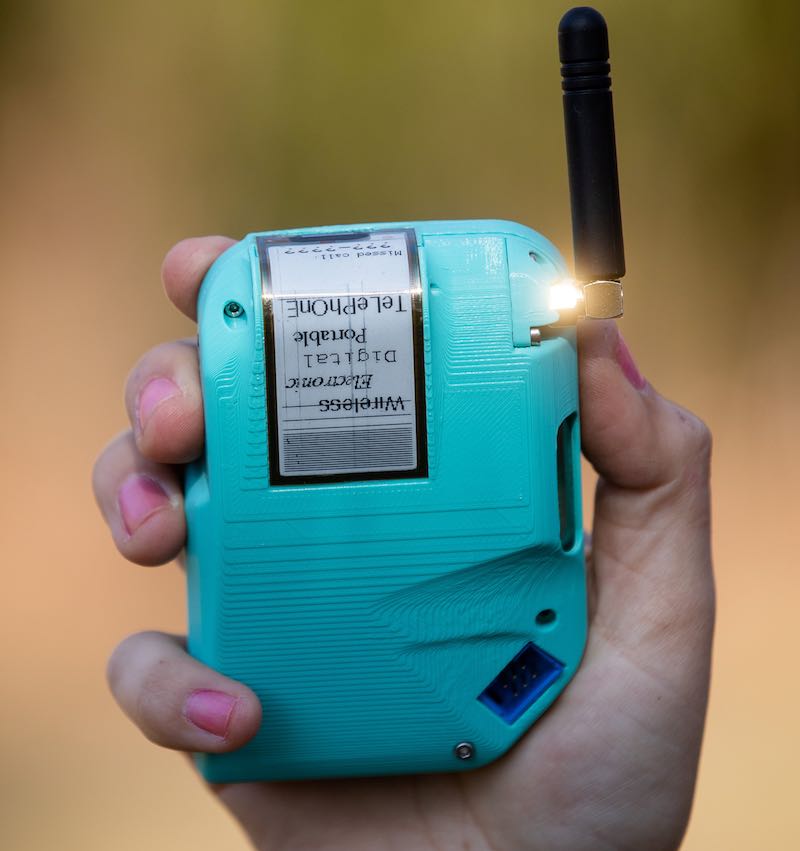
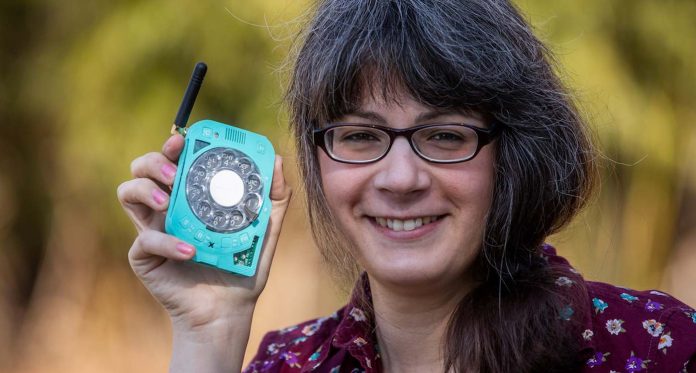
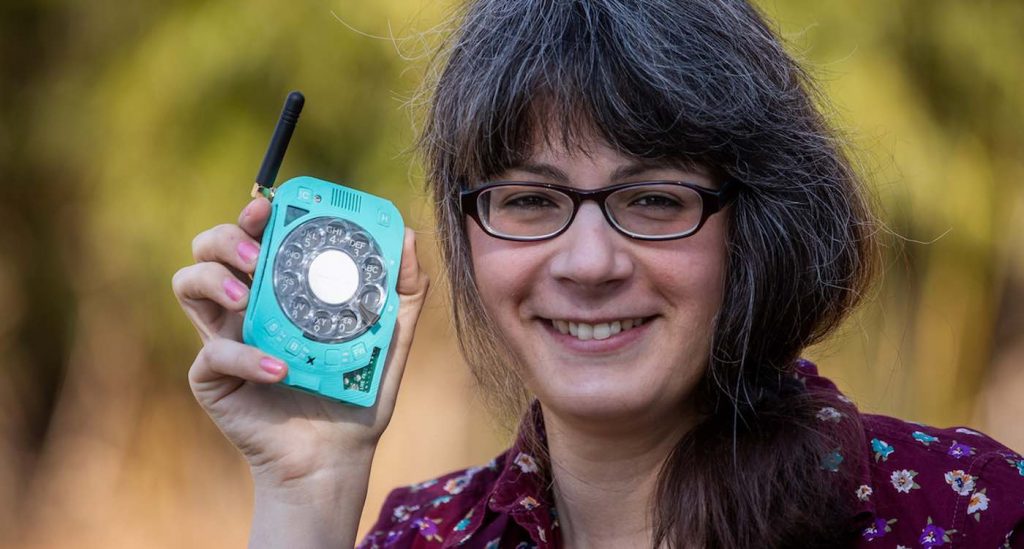
A brilliant 34-year-old engineer has built her own mobile phone with a rotary dial—and she did it because she despises texting and over-complicated smartphones.
Justine Haupt has spent the last three years developing the old school device so that it can fit in her pocket, get better reception, and maintain a battery life of up to 30 hours.
When she wrote about the retro cell phone on her blog, the website crashed from the sheer number of visitors clamoring to admire the retro gadget.
Since Haupt has been inundated with requests from fellow smartphone haters begging for their own version of the phone, she is now offering DIY build-it-yourself kits to the public.
The astronomy instrumentation engineer from New York’s Brookhaven National Laboratory says she was was inspired to make the phone because she dislikes the culture and design of smartphones.
“I work in technology, but I don’t like the culture around smartphones,” says Haupt. “I don’t like the idea of being at someone’s beck and call every moment and I don’t need to have that level of access to the internet.
All photos by SWNS
“I’ve never texted, and building this phone was in part so that I would have a good excuse for not texting. Now I can hold up this phone and say, ‘No, I can’t text.’”
While Haupt did once buy a Samsung Galaxy smartphone for her mother and played around on it herself, she said she got rid of the device after a month.
“I thought I would give it a try but I lasted less than a month with it before I went back to my flip phone,” she recalled. “I’m an engineer, I love technology, but the phone is not the way I want to do it.”
She is also not a fan of the smartphone’s interface or touch screen. (WATCH the video at the bottom)
Numbers display on this screen – SWNS photo
“[It’s] absolutely horrible,” she added. “When you open an application and then you want it to go away but you don’t know if it is closed—that grates against the fiber of my being.”
Haupt’s appreciation of rotary dials inspired her project.
“I had had a flip phone for a long time and it can technically text so I wanted an even more dumbed down phone. I thought: ‘why not make a rotary dial phone?’” says the engineer. “I wanted it to fit in my pocket, be sleek, something I could actually use.
Haupt sourced a rotary dial from an old Trimline telephone, making sure the dial was small enough to fit on a phone which would slip into her pocket.
“I was particular about getting one that could be as compact as possible.”
She then bought a cell phone radio development board from hardware company Adafruit in order to build a basic proof-of-concept prototype before designing her own circuitry.
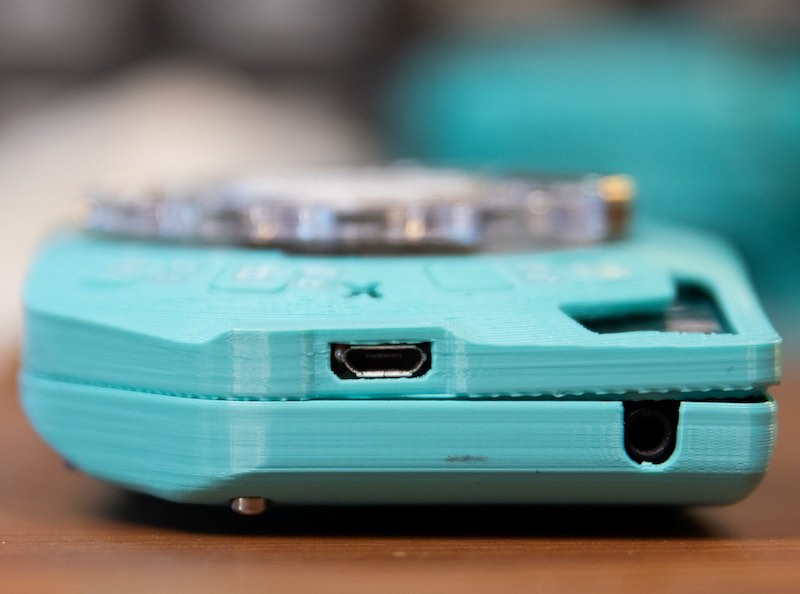
Haupt used a 3D printer to create the cell phone case and she added speed dialing buttons so she could call her husband, David Van Popering, and her mother, Lorraine, at the click of a button.
SWNS photo
“If I want to call my husband, I can call him by pushing a single button,” says Haupt. “I can call people more quickly on this phone than on my old phone. In rare cases when I want to call a new number, I do use the rotary dial and it is a fun, tactile experience.”
“I never expected to go viral with this,” Haupt said. “I didn’t want to sell it at first but everyone was clamoring and I got so many emails from people begging to buy a phone, and (then) someone suggested I should make a kit.”
Customers can buy the kit, which includes the circuit board and the 3D printed parts, from her company Sky’s Edge for $170—although they will have to source their own rotary dial.
“Now I’m looking at making a more inclusive kit that will come with everything you need,” Haupt added.
(WATCH a demonstration in this SWNS video…)
Be an Influencer, and SHARE This Cool Gadget on Social Media…
Editor’s Note: this evergreen story was originally published on GNN in July 2018, but we are reposting it this week for #ThrowbackThursday in hopes of introducing it to our new readers.
While it’s a common belief that money can’t buy happiness, Rachel Lapierre is proving otherwise by giving all of her money away.
The 56-year-old former beauty queen from Quebec won the Gagnant Lifetime Lottery in 2013, which means that she receives a $1,000 stipend every week—and she is going to keep receiving those payments for the rest of her life.
Instead of spending her fortune on lavish possessions, however, Lapierre uses all of her money on running a charity and helping the less fortunate.
“Money is money. When you’re born you don’t have anything,” Lapierre told BBC in the video below. “And when you go, you go with nothing but your memories. You go with what you did here in life.”
Fame and money is not strange to Lapierre, either—as a young woman, Lapierre attended modeling school so she could enter the Miss Quebec beauty pageant. In 1982, at the age of 21, she won the pageant and toured the country.
When she left her modeling lifestyle behind her, she started volunteering with humanitarian organizations and working as a nurse so she could fulfill her desire to help people. Then, when she drew her winning numbers, she used the money to start her charity, Le Book Humanitaire. Though the organization also accepts donations, much of the funding has come out of Lapierre’s wallet.
“We just try to promote good deeds. Good deeds can be so many things. It can be a bike, it can be food, it can be transport to go to the hospital. It can even be just listening to somebody on the phone because they are lonely,” Lapierre said to the news outlet.
“I think happiness comes from the heart. It’s nice to have a new home or car. It can be really fun—but you don’t need that to be happy,” she added.
(WATCH the emotional interview below)
Share This Inspiring Story Of Philanthropy With Your Friends – Photo by BBC
Not only are these two former inmates helping to fight forest fires since gaining their freedom, they’re also proving to their peers that there is life after prison.
During their time at Central New Mexico Correctional Facility, Lawrence Jaramillo and Joshua Melendrez were just two of the inmates who participated in a state-run program that teaches inmates about firefighting and prevention.
The program, which taught the men life skills that they could use to reintegrate into society upon their release, often placed the men on the front lines of wildfire response teams in New Mexico.
The experience was profoundly moving for Melendrez and Jaramillo, and they would often dream of starting a business together once they were released. So, when they were finally freed from the correctional facility in July 2017 and January 2018 respectively, they launched their own forestry company.
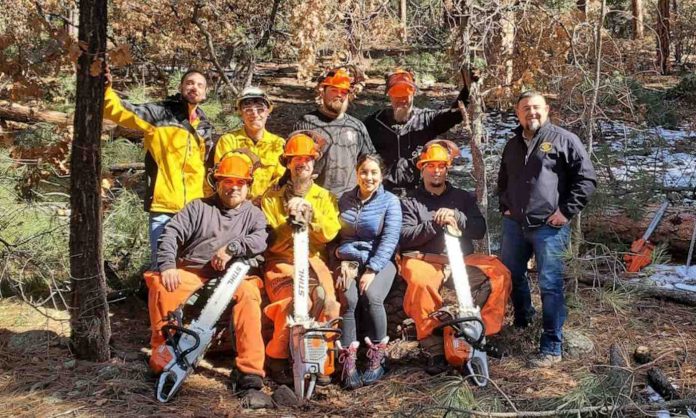
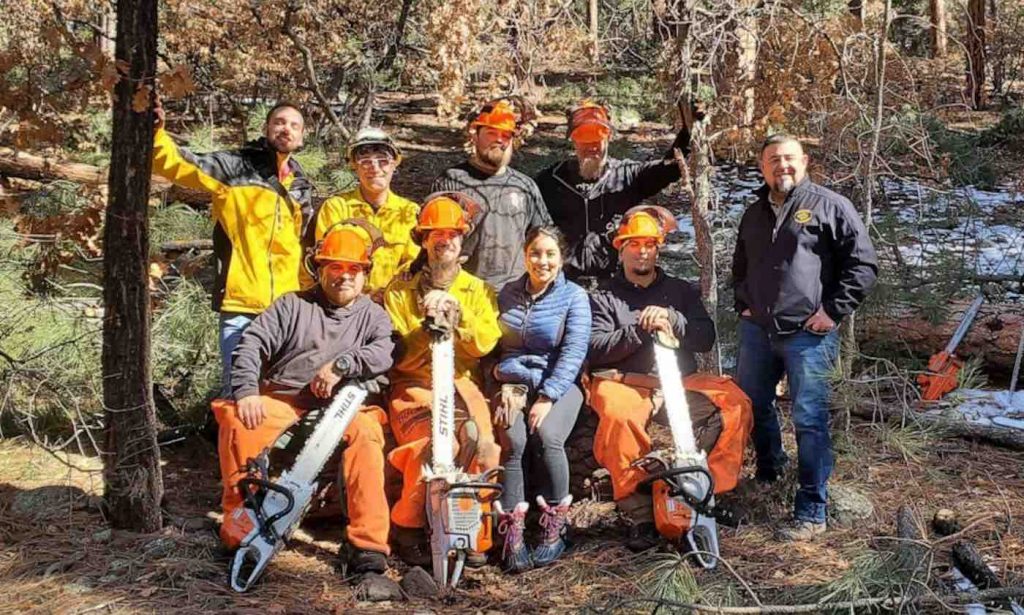
Since they got a business license to operate All Around Forestry in November 2019, the dynamic duo has hired a crew of former inmates to join their company.
“There is life after prison, and that’s what I would like for them to take from this,” Jaramillo told ABC News.
Furthermore, their company has provided much-needed backup support to state firefighters battling blazes across ‘The Land of Enchantment’.
(WATCH the news coverage below)
Plant Some Positivity By Sharing The Good News To Social Media…
Quote of the Day: “Do not be afraid; our fate cannot be taken from us; it is a gift.” – Dante Alighieri
Photo: by Marina Vitale – public domain
With a new inspirational quote every day, atop the perfect photo—collected and archived on our Quote of the Day page—why not bookmark GNN.org for a daily uplift?
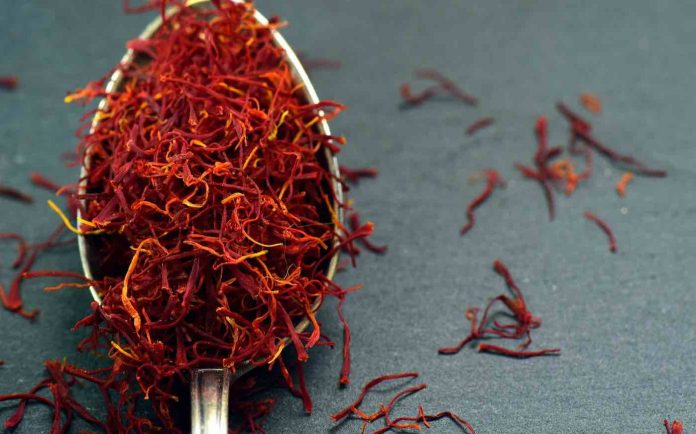
New research has shown that saffron can enhance the quality of sleep in adults who have been experiencing poor sleep.
Lead researcher Dr. Adrian Lopresti came to the hypothesis after earlier research found saffron to be an effective natural agent for the treatment of mild-to-moderate depression, but it also led to improvements in sleep for participants.
This new randomized, double-blind, placebo-controlled trial was conducted at Australia’s Murdoch University with 68 adults who reported sleep problems, but were otherwise healthy.
“We used volunteers who were not being treated for depression, were physically-healthy, had been medication-free for at least four weeks—apart from the contraceptive pill—and had self-reported symptoms of poor sleep,” said Dr. Lopresti.
“This is a serious issue as poor sleep quality can have a negative impact on both mental and physical health and can interfere with daily function.
“Our previous research showed saffron was an effective add-on to pharmaceutical antidepressants in patients experiencing mild-to-moderate depression. Because many of these people reported improvements in their sleep, in this study we focused on healthy adults who were generally medication free but had experienced poor sleep lasting greater than four weeks.”
Dr. Lopresti said the results, published in the Journal of Clinical Sleep Medicine last week, indicate that a standardized saffron extract (affron) at a dose of 14mg, twice daily for 28 days improved sleep quality in adults with self-reported poor sleep, with most of these changes occurring in the first 7 days of treatment.
“In addition to the improved sleep, the study showed that saffron was well-tolerated with no reported adverse effects,” Dr. Lopresti said.
However, the researchers reported that even though the results were positive, the findings require replication using a larger sample size and differing populations. The results were based on data collected from 55 of the participants.
“Our early research is indeed positive and there is evidence that taking a standardized saffron extract is associated with improvements in sleep quality,” Dr. Lopresti said.
“However, to verify these findings, further studies using larger sample sizes, treatment periods and volunteers with varying characteristics is required.”
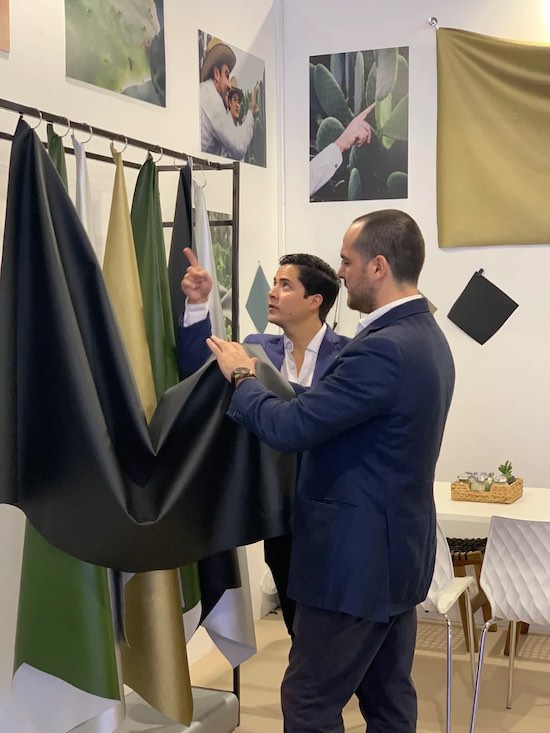
Two men have succeeded in developing an alternative to animal leather made out of Mexican cactus—and it could save millions of animals worldwide.
Adrián López Velarde and Marte Cázarez created their vegan fabric out of the nopal cactus and spent two years researching and developing their design. They then perfected the manufacturing process in July and unveiled the fabric to the fashion world in Milan, Italy in October.
The entrepreneurs realized the environmental impact of animal leather spending years working in the furniture, automotive, and fashion industries. Upon quitting their jobs, they co-founded Adriano Di Marti to find an innovative leather replacement.
Their patented “Desserto” fabric is made out of cactus leaves that are sustainably harvested every 6 to 8 months. The material is designed to breathe easily while still being durable and partially biodegradable. In addition to the cactus-based material requiring a minimal amount of water to develop, it is grown organically in the Mexican state of Zacatecas.
The material, which is available in a variety of colors produced using natural dyes, has now been used to make everything from bags and automotive seating to shoes and jackets.
(WATCH the video below)
Plant Some Positivity – Share The Good News With Vegan Friends On Social Media…
A wish came true for this 8-year-old girl who wanted to attend the school’s daddy-daughter dance—because a compassionate security guard stepped in.
Avey Cox, now a second grader, had always been eager to attend the annual daddy-daughter dance with her friends at the Arkansas school—but after her father passed away over the holidays, the heartbroken youngster assumed she would not be able to go to the February soiree.
When Van Buren school resource officer Nick Harvey heard that Avey did not have an escort to the dance, however, he sought permission to be her date.
“I reached out to the mother because the last thing I wanted was to get rejected by a second-grader, and then the next day I formally asked if she’d be my date to the daddy/daughter dance,” Harvey told KFSM.
Needless to say, Avey was thrilled to accept the invitation, and the dynamic duo even made sure to coordinate their outfits.
After Harvey and Avey took pictures, they rode in a limo to the school and danced the night away with the other elementary school kids and teachers. It was an event the youngster will not soon forget.
Not only that, Harvey says he hopes to be Avey’s escort for all the school dances to come so she never has to miss another dance.
(WATCH the news coverage below)
Serve Up The Good News To Your Friends By Sharing This Story On Social Media…
Hundreds of thousands of women are diagnosed with endometriosis every year, and often are left without any hope for an “effective treatment” other than taking hormones.
Thankfully, a promising new study indicates that the cannabinoid THC might be able to alleviate the worst symptoms of the disease.
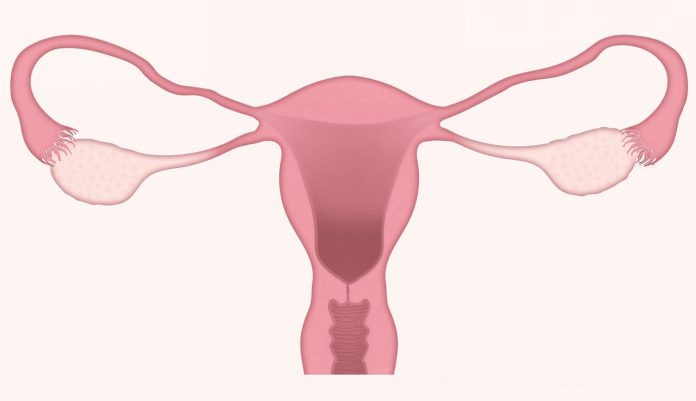
Endometriosis is a condition in which the tissue that normally grows on the inside of the uterus grows on the outside, which causes chronic, shooting pain in the uterus. About 1 in 10 women in the US suffer from the condition, and although symptoms can start at any age, they generally start in women’s thirties or forties.
Symptoms can range from mildly frustrating to chronically unbearable. What causes endometriosis? There are a number of theories: erratic stem cell growth, environmental toxins, autoimmune irregularity, or retrograde periods (when menstrual flows backwards into the fallopian tubes).
The Mayo Clinic says hormones are responsible for the buildup of endometrial tissue each month, and therapies like hormonal contraceptives can manage the growth—birth control pills, patches, or vaginal rings. But hormones have side effects.
Some women focus on their diet, limiting caffeine and alcohol, and many others take some form of pain medication. For others, a more drastic solution is required, like undergoing mildly invasive surgeries to remove the growths—or even the entire uterus, in extreme cases. Very few solutions are pain-free and risk-free, and all of them only address the symptoms.
However, recent experiments made by Spanish medical researchers at the University Pomeu Fabra of Barcelona could be turning things around for those suffering from the debilitating condition.
In January 2020, a research team led by Rafael Maldanado published a study investigating an unlikely endometriosis treatment option: THC. And while these experiments were done using mice, their findings were so significant that clinical tests on women are now being funded at the Gynecology Service of the Clinical Hospital of Barcelona.
THC is the psycho-active ingredient in the Cannabis sativa plant, and since it was a major target in the “War on Drugs”, the plant has been largely absent from medical research for the last 60 years.
“Although cannabis comes with a large number of potential side effects, its medicinal properties could provide pain relief in endometriosis and other conditions,” said Maldonado, Professor at the University Pompeu Fabra of Barcelona.
It could even do more than that.
Researchers studied three specific things in the mice they tested: how THC affects pain-related anxiety, how THC affects pain-related memory deficiencies, and how it affects the actual endometrial growths on the uterus.
The results were surprising, even to the researchers. First, implants that mimic the pain caused by endometriosis were placed in the pelvises of a group of female mice. These implants are already known to cause growths on mice uteruses, just like endometriosis. The implanted group was found to be more anxious; specifically less willing to explore new spaces. They also had a harder time remembering and identifying objects than their pain-free counterparts.
Out of the group of mice with endometriosis-mimicking pain implants, a portion were dosed with 2mg/kg THC for 28 days. The THC-treated mice were shown to be less anxious than their untreated counterparts, and their memory test results were no different than the control group of pain-free mice.
While those findings are already evidence that THC might prove an effective treatment option for humans suffering with chronic pain, there was a much more notable surprise waiting for the researchers: by the end of the experiment, the THC-treated mice had endometrial growths that were noticeably smaller than their non-treated fellow mice.
The study gives hope to the medical community and so many people living with endometriosis that THC, which is already known to help relieve chronic pain, may also help to stop malignant growths. Perhaps we have only begun to tap its full healing potential.
And, as for the psychoactive effects of THC, a number of the over-400 natural cannabinoids in the plant can be tapped to lessen the psychoactive effects of the THC. That means a THC compound might, in the future, be usable for endometriosis, while not causing the high induced by other strains of the plant.
Treat Your Friends To A Daily Dose Of Good News By Sharing This To Social Media…
A New York pizzeria has been thinking outside of the box to get shelter pups adopted—and their scheme has been working pawfectly.
The Just Pizza and Wings Co. restaurant in Amherst has partnered with the Niagara SPCA to attach photos of adoptable dogs to the front of their delivery boxes.
If the cute pictures aren’t enough to sweeten the deal for potential adopters, Just Pizza has also offered to give away free $50 gift certificates to anyone who adopts a dog from the shelter.
Since posting about the initiative on Facebook last week, the shelter has received an outpouring of support from customers, national news outlets, and social media users.
“We’ve had a tremendous amount of interest and support from the community and beyond since the story went viral on Friday,” SPCA event coordinator Kimberly LaRussa told CNN. “Many people want to order a pizza just to get the shelter dog photo, other pizzerias have offered to put flyers on their pizza boxes, and so many people are tagging their friends and family.”
More importantly, the project has already proven itself to be successful—a 6-month-old puppy was adopted from the shelter just one day after his photo was attached to the first batch of pizza box flyers.
The pizzeria is now trying to raise money for the shelter by selling “Pizza + Pups” tee-shorts for a limited time.
Just Pizza is also helping other local pizzerias implement similar initiatives in their own restaurants—and the staffers hope that it will help every last shelter pet across the state find its forever home.
(WATCH the news coverage below) – Photo by Just Wing and Pizza Co.
Be Sure And Share The Pawesome Story With Your Friends On Social Media…
Quote of the Day: “Your mission: Build a life you love so much that you won’t have time for hate, regret or fear.” – Karen Salmansohn
Photo: by Noah Silliman – public domain, cropped, darkened
With a new inspirational quote every day, atop the perfect photo—collected and archived on our Quote of the Day page—why not bookmark GNN.org for a daily uplift?
An eighth grade student managed to convince a team of legislators to participate in a day-long lesson which they will remember for the rest of their life.
14-year-old Alex Johnson has been using a wheelchair since he was in second grade due to a form of skeletal dysplasia—a condition which affects the growth of his bones and cartilage.
Since the teen from Lebanon, Tennessee has now been using a wheelchair for most of his life, he has been issuing a simple challenge to his peers and classmates: spend a day in a wheelchair so they can understand what it’s like to be disabled.
Not only has the youngster gotten dozens of students to participate in his “Spend a Day in My Wheels” challenge, he recently got ten state lawmakers from across the aisle to participate in the challenge as well.
With Alex’s help, Tennessee Rep. Clark Boyd, R-Lebanon hosted the bipartisan event last month—and the challenge was definitely an eye-opening experience for the legislators.
“Even in a building that is handicap accessible, still you bump into doors,” Boyd told WSMV. “You bump into walls. Some of the doors become very heavy for someone in a wheelchair. Opening a refrigerator door, doors seem to be a pretty big challenge.”
Alex now hopes that the experience will help lawmakers to understand the difficulties of the disabled so they can pass more handicap-friendly legislation.
“Our whole community is very supportive of Alex and proud of the effort he’s made to create greater understanding about what it’s like to live with a disability,” Boyd added in a statement. “He’s an amazing young man who has found a way to use his disability as an ability to educate others.”
(WATCH the news coverage below or you can watch the interview on WSMV)
Be Sure And Share This Sweet Story With Your Friends On Social Media…

























 A brilliant 34-year-old engineer has built her own mobile phone with a rotary dial—and she did it because she despises texting and over-complicated smartphones.