All News - Page 629 of 1733 - Good News Network
Home Blog Page 629

Boy’s Comical Reaction to Shoveling Too Much Snow Might Be the Most Relatable Winter Video All Year

Not many people are excited to shovel snow, and this kid from Colorado is no exception.

In a hilarious video that was captured by CCTV cameras in Colorado Springs last week, a youngster named Peyton was filmed as he exhibited the most relatable reaction to the endless heaps of powder sullying his driveway.

According to Peyton’s mother, the boy had volunteered to shovel the snow covering their driveway only to find that he had offered a little more exertion than he could stomach.

“My son Peyton offered to go shovel the 8 inches of snow we got earlier today but quickly realized he was in over his head,” she told Licensor. “My security cameras caught his mini-tantrum.”

(WATCH the amusing silent footage below)

Deck The Halls Of Your News Feed –Share The Video On Social Media…

New Study Proves That People Can Train Themselves to Be More Focused By Manipulating a Brain Wave

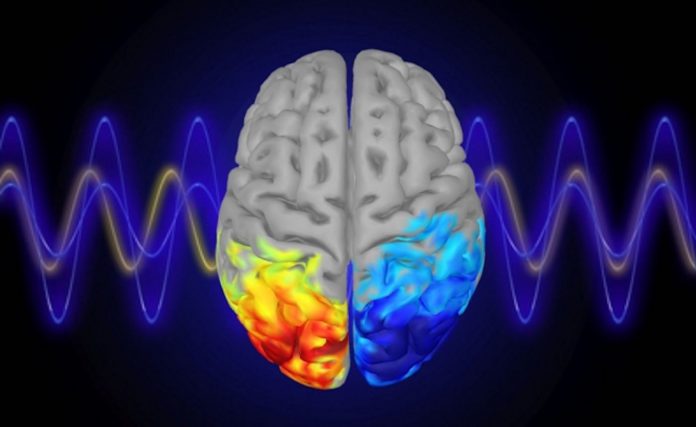
Photo by Yasaman Baghezadeh / MIT News

Study shows that people can boost attention by manipulating their own alpha brain waves.

Written by Anne Trafton – MIT News

Having trouble paying attention? MIT neuroscientists may have a solution for you: Turn down your alpha brain waves.

In a new study, the researchers found that people can enhance their attention by controlling their own alpha brain waves based on neurofeedback they receive as they perform a particular task.

The study found that when subjects learned to suppress alpha waves in one hemisphere of their parietal cortex, they were able to pay better attention to objects that appeared on the opposite side of their visual field. This is the first time that this cause-and-effect relationship has been seen, and it suggests that it may be possible for people to learn to improve their attention through neurofeedback.

RELATED: Study of Surveillance Cameras Proves That Strangers Will Almost Always Intervene to Help

“There’s a lot of interest in using neurofeedback to try to help people with various brain disorders and behavioral problems,” says Robert Desimone, director of MIT’s McGovern Institute for Brain Research. “It’s a completely noninvasive way of controlling and testing the role of different types of brain activity.”

It’s unknown how long these effects might last and whether this kind of control could be achieved with other types of brain waves, such as beta waves, which are linked to Parkinson’s disease. The researchers are now planning additional studies of whether this type of neurofeedback training might help people suffering from attentional or other neurological disorders.

Desimone is the senior author of the paper, which appeared in Neuron earlier this week.

Alpha and attention

There are billions of neurons in the brain, and their combined electrical signals generate oscillations known as brain waves. Alpha waves, which oscillate in the frequency of 8 to 12 hertz, are believed to play a role in filtering out distracting sensory information.

CHECK OUT: Stressed-Out Americans Only Get 43 Minutes of ‘Me Time’ Per Day, But Solution May Lie in Their Backyards

Previous studies have shown a strong correlation between attention and alpha brain waves, particularly in the parietal cortex. In humans and in animal studies, a decrease in alpha waves has been linked to enhanced attention. However, it was unclear if alpha waves control attention or are just a byproduct of some other process that governs attention, Desimone says.

To test whether alpha waves actually regulate attention, the researchers designed an experiment in which people were given real-time feedback on their alpha waves as they performed a task. Subjects were asked to look at a grating pattern in the center of a screen, and told to use mental effort to increase the contrast of the pattern as they looked at it, making it more visible.

During the task, subjects were scanned using magnetoencephalography (MEG), which reveals brain activity with millisecond precision. The researchers measured alpha levels in both the left and right hemispheres of the parietal cortex and calculated the degree of asymmetry between the two levels. As the asymmetry between the two hemispheres grew, the grating pattern became more visible, offering the participants real-time feedback.

Although subjects were not told anything about what was happening, after about 20 trials (which took about 10 minutes), they were able to increase the contrast of the pattern. The MEG results indicated they had done so by controlling the asymmetry of their alpha waves.

“After the experiment, the subjects said they knew that they were controlling the contrast, but they didn’t know how they did it,” said McGovern Institute postdoc Yasaman Bagherzadeh, the lead author of the study.

MORE: The Science of Kindness—Biology Proves How We Are All Connected

“We think the basis is conditional learning—whenever you do a behavior and you receive a reward, you’re reinforcing that behavior. People usually don’t have any feedback on their brain activity, but when we provide it to them and reward them, they learn by practicing.”

Although the subjects were not consciously aware of how they were manipulating their brain waves, they were able to do it, and this success translated into enhanced attention on the opposite side of the visual field. As the subjects looked at the pattern in the center of the screen, the researchers flashed dots of light on either side of the screen. The participants had been told to ignore these flashes, but the researchers measured how their visual cortex responded to them.

One group of participants was trained to suppress alpha waves in the left side of the brain, while the other was trained to suppress the right side. In those who had reduced alpha on the left side, their visual cortex showed a larger response to flashes of light on the right side of the screen, while those with reduced alpha on the right side responded more to flashes seen on the left side.

RELATED: The Science Behind Why We Need More of the ‘Secret Sauce’ of Kindness

“Alpha manipulation really was controlling people’s attention, even though they didn’t have any clear understanding of how they were doing it,” Desimone says.

Persistent effect

After the neurofeedback training session ended, the researchers asked subjects to perform two additional tasks that involve attention, and found that the enhanced attention persisted. In one experiment, subjects were asked to watch for a grating pattern, similar to what they had seen during the neurofeedback task, to appear. In some of the trials, they were told in advance to pay attention to one side of the visual field, but in others, they were not given any direction.

When the subjects were told to pay attention to one side, that instruction was the dominant factor in where they looked. But if they were not given any cue in advance, they tended to pay more attention to the side that had been favored during their neurofeedback training.

CHECK OUT: Instead of ‘We Are What We Eat,’ the Science of Kindness Says ‘We Are What We See’ in Daily Life

In another task, participants were asked to look at an image such as a natural outdoor scene, urban scene, or computer-generated fractal shape. By tracking subjects’ eye movements, the researchers found that people spent more time looking at the side that their alpha waves had trained them to pay attention to.

“It is promising that the effects did seem to persist afterwards,” says Desimone, though more study is needed to determine how long these effects might last.”

“It would be interesting to understand how long-lasting these effects are, and whether you can use them therapeutically, because there’s some evidence that alpha oscillations are different in people who have attention deficits and hyperactivity disorders,” says Sabine Kastner, a professor of psychology at the Princeton Neuroscience Institute, who was not involved in the research. “If that is the case, then at least in principle, one might use this neurofeedback method to enhance their attention.”

Reprinted with permission from MIT NewsFeatured photo by Yasaman Baghezadeh / MIT News

Focus On The Positive Effects Of Science By Sharing The Good News With Your Friends On Social Media…


“Not until we are lost do we begin to understand ourselves.” – Henry David Thoreau

Quote of the Day: “Not until we are lost do we begin to understand ourselves.” – Henry David Thoreau

Photo: by Navaneeth Kishor, CC license on Flickr–cropped

With a new inspirational quote every day, atop the perfect photo—collected and archived on our Quotes page—why not bookmark GNN.org for a daily uplift?


For the First Time, Scientists Have Reversed Dementia in Mice With Drug That Reduces Brain Inflammation

SWNS

Rather than targeting the typical rogue proteins associated with dementia, scientists say that—for the very first time—they have reversed dementia in mice with a drug that reduces inflammation.

Up until now, most dementia treatments have targeted the amyloid plaques that are found in people with Alzheimer’s disease. However, the latest study published in Science Translational Medicine suggests targeting inflammation in the brain might stop it in its tracks.

In experiments conducted at the University of California, Berkeley, senile mice were significantly better at learning new tasks, and became almost as adept as those half their age.

WATCH: Thanks to Student’s Hunch, Seniors With Dementia Are ‘Coming Alive’ Again With the ‘Magic’ of Virtual Reality

Experts are “optimistic” that it will work in humans and possibly lead to a cure for the devastating neurological condition. Not only that, they hope that any drugs developed with their strategy can also help brains recover from strokes, concussions, or traumatic brain injuries.

The successful treatment in mice supports a growing body of research which says that our blood-brain barriers begin to leak as we get older. This is the filtration system that blocks infectious organisms, letting in chemicals that destroy neurons.

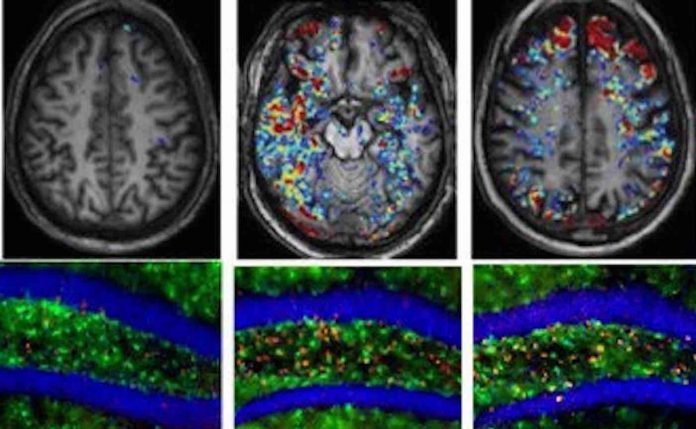
Previous MRI (magnetic resonance imaging) scans by study co-author Professor Alon Friedman have found that the barrier breaks down in nearly 60% of people by the age of 70.

CHECK OUT: New Research Links Five Simple Lifestyle Choices to a 60% Reduced Risk of Developing Alzheimer’s

Experiments in mice showed this causes an inflammatory fog that alters the brain’s rhythms, causing tiny seizure-like events. This leads to momentary lapses in the hippocampus that controls memory—shedding fresh light on the symptoms of dementia and other degenerative brain diseases.

“We tend to think about the aged brain in the same way we think about neuro-degeneration,” said senior author Professor Daniela Kaufer of the University of California, Berkeley. “Age involves loss of function and dead cells. But our new data tell a different story about why the aged brain is not functioning well.

“It is because of this ‘fog’ of inflammatory load. But when you remove that inflammatory fog, within days, the aged brain acts like a young brain,” he added. “It is a really, really optimistic finding, in terms of the capacity for plasticity that exists in the brain. We can reverse brain aging.”

MORE: Another Study Shows How Flickering Lights Can Slow (And Maybe Even Reverse) Alzheimer’s Symptoms

Scans called EEGs (electroencephalograms) revealed similar brain wave disruption in humans with Alzheimer’s, mild cognitive impairment (MCI) and epilepsy.

It means leaky barriers and abnormal brain rhythms detectable by MRI and EEG scans, respectively, can be used to flag people with dementia—as well as signal an intervention opportunity using a drug to slow or reverse the disease.

The drug, called IPW, blocks a gene known as TGF-β that fuels the inflammation triggering blood protein albumin.

RELATED: Be Sure and Floss! Researchers Say Good Dental Health ‘Substantially’ Decreases Risk of Alzheimer’s

“We now have two biomarkers that tell you exactly where the blood-brain barrier is leaking, so you can select patients for treatment and make decisions about how long you give the drug,” said Professor Kaufer. “You can follow them, and when the blood-brain barrier is healed, you no longer need the drug.”

When they gave the drug to mice in doses that lowered the gene’s activity, their brains looked younger; there was less inflammation and improved brain waves as well as reduced seizure susceptibility. The mice also navigated a maze and learned spatial tasks similarly to a young mouse.

In an analysis of brain tissue from humans, Professor Kaufer found evidence of albumin in aged brains and increased neuro-inflammation and TGF-β production.

Prof Friedman, of Ben-Gurion University of the Negev in Israel, developed a scanning technique called DCE (dynamic contrast-enhanced)—a special type of MRI. This detected more leakage in the blood-brain barrier of people with greater cognitive decline.

WATCH: Inventor Makes ‘Music Memory Box’ So Dementia Patients Can Reconnect With Their Loved Ones

Altogether, the evidence points to a disfunction in the brain’s blood filtration system as one of the earliest triggers of neurological aging, said Kaufer.

Her team have now started a company to develop a drug to heal the blood-brain barrier for clinical treatment—and it may eventually help older adults with dementia or Alzheimer’s disease who have demonstrated leakage of the blood-brain barrier.

“We got to this through this back door; we started with questions about plasticity having to do with the blood-brain barrier, traumatic brain injury and how epilepsy develops,” said Kaufer. “But after we’d learned a lot about the mechanisms, we started thinking that maybe in aging, it is the same story. This is new biology, a completely new angle on why neurological function deteriorates as the brain ages.”

Currently, the only drugs for dementia or Alzheimer’s treat the symptoms and not the cause. This new drug, however, opens the door to changing just that.

Cure Your Friends Of Negativity By Sharing The Good News To Social Media…

Teen Can Return to School After Undergoing Free Surgery to Correct Her Extreme Bow-Leggedness

(Left to right) Before and after Valerie’s corrective surgery on her bowlegs. SWNS

These incredible before and after photos show the transformation of a teenager who was given free surgery to correct her extremely bowed legs.

14-year-old Valerie—who surgeons declined to fully name—developed bowed legs at the age of four and had such low self-confidence, she convinced her parents to pull her out of school.

She joined her uncle’s tailoring shop as an apprentice and worked hard, despite the fact that her harshly-angled legs arched outwards from her hips, making it difficult for her to walk.

RELATED: Bedridden for 11 Years, Man Proves the Experts Wrong By Inventing a Surgery to Cure Himself

The talented seamstress was busy sewing when a customer told her that a hospital boat operated by the charity Mercy Ships had docked near her West African home in Cotonou, Benin.

Mercy Ships operates the largest non-governmental hospital ship in the world, providing humanitarian aid for terminally-ill patients. It has operated in more than 57 developing nations and 18 developed nations around the world, with a current focus on African countries.

Valerie boarded the charity’s ship Africa Mercy and was one of 76 children and teenagers to receive free surgery during the boat’s 10-month stint.

Valerie recovering on the ward after surgery. SWNS

During her knee operation, surgeons removed a wedge of bone from the outside of both her knees, causing her legs to bend inward. Since Valerie was in post-surgery rehab for about four months, she spent all of her recovery time learning how to read.

Now that her bow-leggedness has been corrected by the surgery and months of physical therapy, she can walk, run, and fulfill her plans for returning to school.

LOOK: Girl Born With Backwards Legs Walks for the First Time Thanks to Strangers Funding ‘Miracle’ Surgery

“I was desperate to learn how to read. A friend onboard gave me a few alphabet pages for me to trace—and the next day I told her I needed more to read!” said Valerie.

“Not long after then, my legs were strong enough for me to go home. I was very happy. I told myself—‘I no longer want to be a seamstress! I want to go back to school!’”

Valerie in rehab after getting her casts off. SWNS

Bow-leggedness is a deformity marked by outward bowing at the knee, which gives the limb the appearance of an archer’s bow. The chief cause is rickets, but it can also be caused by skeletal problems, infections, and tumors.

Although Valerie did not disclose the cause of her condition, she cannot contain her excitement over returning to school.

“School will be great,” she added. “People will say—‘Is this the same girl? Her legs are straight’!”

SWNS

Be Sure And Share This Inspiring Story With Your Friends On Social Media…

Finally, a Documentary About the Extraordinary Man Who Documents the World: Sir David Attenborough

Photo by Joe Fereday / Silverback Films

Over the course of his 93 years of age, Sir David Attenborough has visited every continent on the globe, exploring the wild places of our planet and documenting the living world in all its variety and wonder—and his fans will soon be able to learn all about him in this new documentary.

Produced by award-winning wildlife filmmakers Silverback Films and the environmental organization WWF, David Attenborough: A Life On Our Planet tells a big story for the big screen—about life on our planet and about the man who has seen more of the natural world than any other.

As he says in the film, “I’ve had the most extraordinary life. It’s only now that I appreciate how extraordinary.”

But during that lifetime, Attenborough has also seen first-hand the monumental scale of humanity’s impact on nature. Now, for the first time ever, he reflects upon both the defining moments of his lifetime as a naturalist and the devastating changes he has seen.

This is Attenborough’s witness statement for the natural world—and it sends a powerful message from the most inspiring and celebrated naturalist of our time.

“For decades, David has brought the natural world to the homes of audiences worldwide, but there has never been a more significant moment for him to share his own story and reflections,” said Colin Butfield, WWF’s Executive Producer for the film.

RELATED: Kristen Bell is Using Her Instagram Page to Help Send Thousands of Gifts to Teachers in Need

The world premiere event will take place at London’s Royal Albert Hall on Thursday 16 April 2020, broadcast LIVE to cinemas across the UK as well as the Netherlands, Iceland, Ireland, Norway, Sweden, Denmark and Finland, with screenings to follow in Australia and New Zealand.

Although it addresses the biggest challenges facing life on our planet, the film also offers a message of hope for future generations.

Viewers of the film will hear Attenborough talk about his lifelong passion to explore, have adventures, and to learn about the wilds beyond. He reflects on when he was 28, at the start of his broadcasting career, and the advent of global air travel opened up exciting new possibilities.

WATCH: Pink Floyd’s David Gilmour Auctions Off 126 Guitars and Raises $21 Million for Climate Change Battle

“I’ve worked with David on many projects throughout my career, but to collaborate on this film has been a real privilege,” said Keith Scholey, Executive Producer at Silverback Films. “At 93 years old, his knowledge and insight of the natural world remains as relevant and cherished today as it was the first time he introduced the British public to pangolins and sloths on television. This new film will bring together those historic moments with his views on the current problems our natural world faces and how we can solve them.”

There is no trailer yet, but tickets for cinema showings will be on sale soon. Register for updates and find your local cinema at the documentary’s website. The film will be released globally on Netflix in spring 2020.

Be Sure And Share The Exciting News With Your Friends On Social Media…

10-Year-old Has Been Donating Hundreds of Pajamas and Books for Children Spending the Holidays in Shelters

Photo by Danielle Owen

For the last 3 years, this little boy named Dominic has been collecting pajamas and books to give to children who will be spending Christmas in shelters after escaping domestic violence.

He started the campaign when he was just 7 years old after he realized not everyone has a great time at Christmas.

Now 10 years old, the youngster from London, England has managed to donate hundreds of brand new pairs of pajamas and hundreds of books to women’s aid so that the children can have a fresh pair of PJs and a bedtime story on Christmas Eve.

And, this year, he is donating even more, as you can see from the photo submitted to GNN by Dominic’s mom.

RELATED: This Seventh Grader Donated All $15,000 of His County Fair Earnings to a Children’s Hospital

He never stops campaigning and trying to make others’ lives better. If he’s not collecting pajamas, he is being an activist, designing his own T-shirt to spread the word on plastic pollution, and donating the proceeds to ocean protection charities.

As a real community champion, Dominic would love to show other kids that they have a voice and they can stand up for what they believe in, too.

To learn more about Dominic’s mission, be sure and check out his website.

Photo by Danielle Owen

Be Sure And Share This Inspiring Story Of Kindness With Your Friends On Social Media…
“You know you’re in love when you can’t fall asleep because reality is finally better than your dreams.” – Dr. Seuss

Quote of the Day: “You know you’re in love when you can’t fall asleep because reality is finally better than your dreams.” – Dr. Seuss

Photo: by Daiana Barcelos, CC license on Flickr–cropped

With a new inspirational quote every day, atop the perfect photo—collected and archived on our Quotes page—why not bookmark GNN.org for a daily uplift?


Ford Has Been Recycling 1.2 Billion Plastic Bottles Every Year to Make Vehicle Parts

Ford Motor Company has been helping to promote the use of environmentally-friendly auto parts—and one way they’re doing that is by using recycled plastic bottles for carpets, underbody shields on all cars and SUVs, and wheel liners on F-Series trucks.

“The underbody shield is a large part, and for a part that big, if we use solid plastic, it would likely weigh three times as much,” said Thomas Sweder, design engineer, Ford Motor Company. “We look for the most durable and highest performing materials to work with to make our parts, and in this case, we are also creating many environmental benefits.”

In the past decade, aerodynamics has driven the need for underbody shields—and the global use of plastics in vehicle parts has grown exponentially. Ford alone uses about 1.2 billion recycled plastic bottles per year—about 250 bottles per vehicle on average.

Here’s how it works: when plastic bottles are thrown into a recycling bin, they are collected with thousands of others, and shredded into small pieces. That’s typically sold to suppliers who turn it into a fiber, by melting the bottle and extruding it. Those fibers are mixed together with other various types of fiber in a textile process and used to make a sheet of material which is formed into the automotive parts.

RELATED: LEGO is Now Offering to Pay For You to Ship Your Unused Bricks to Children in Need

Due to its light weight, recycled plastic is ideal for the manufacturing of underbody shields, engine under-shields, and front and rear wheel arch liners that can help improve vehicle aerodynamics. These shields reportedly also help create a significantly quieter environment on the new 2020 Ford Escape.

This is not the only way that Ford has been using recycled materials to benefit the environment; the automotive company recently partnered with McDonald’s coffee suppliers to recycle all of their coffee roasting biowaste into headlights.

“Ford is among the leaders when it comes to using recycled materials such as this, and we do it because it makes sense technically and economically as much as it makes sense for the environment,” Sweder said. “This material meets all of our robust specifications for durability and performance.”

(WATCH the Ford promo video below)

Clean Up Negativity By Sharing The Good News With Your Friends On Social Media…

Teen Makes ‘Armor’ That Blocks Radiation During Cancer Treatments, Reducing Exposure By Whopping 75%

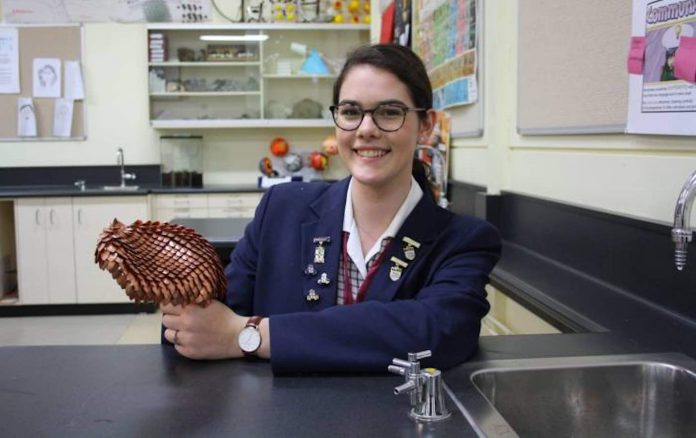
Macinley Butson was just 16 years old when she first felt spurred to try and protect women from excess radiation during breast cancer treatments—and now, her invention could be a game-changer in the medical field.

Butson, whose brother and father also work in medical physics, has always been fascinated by science, but she only began researching the harmful side effects of radiation therapy after her father discussed his experience with ineffective cancer treatments in his own line of medical work.

Since Butson had also recently lost a family relative to breast cancer, she felt inspired to conduct her own investigation on the subject.

She tried to begin her medical research by reading scientific journals, but she found their academic jargon almost impossible to understand.

WATCH: 14-Year-old Awarded $25,000 For Her Invention That Totally Eliminates Blind Spots in Your Car Using a Projector

She then turned to YouTube to find videos that taught how to read scientific journals. As she became more and more entrenched in her research, she stumbled upon a key bit of information: copper has been shown to be dramatically more effective at protecting skin from radiation compared to lead.

The Australian teen from Wollongong, New South Wales then experienced her “eureka” moment as she was viewing a film on medieval wars in her 10th grade history class. When she saw the scaled patterns of the armor, she was inspired to create a wearable protective shield out of copper.

She then headed back to YouTube and watched videos on how to weave together tiny scales. Using high-density copper plating, she made her own flexible scale-mail which she now calls the SMART Armor: Scale Mail for Radiation Therapy.

RELATED: Overcoming Doubt, 14-Year-old Who Made Jaw-Dropping Prom Dress for Older Sister Now Flooded With Requests

When her armor was tested in a laboratory setting, Butson’s invention reduced surface exposure to excess radiation by a whopping 75%.

In 2016, she won first place at the INTEL International Science and Engineering Fair—becoming the first Australian to do so in its 68-year history.

Butson is working on getting her SMART Armor into clinical settings for use within a year.

(WATCH the inspiring video below)

Protect Your Friends From Negativity By Sharing The Incredible Story With Your Friends On Social Media…
Rather Than Polluting Icy Roadsides With Salt, Scientists Use Recycled Biowaste From Fruit

The U.S. spends $5 billion a year to repair damages to road infrastructure from winter snow and ice control operations and the use of traditional de-icers.

Every year, roughly 27 million tons of sodium chloride, commonly known as road salt, is used on U.S. roadways for winter maintenance. The chlorides do not degrade in the environment and may pose long term environmental risks. Commercial de-icers typically contain chemicals that are corrosive toward metals, asphalt, concrete, and pose some risk to aquatic species.

Now, however, a team of researchers from Washington State University is developing a more sustainable solution for road repair using grape skins and other agricultural waste.

The researchers determined that their de-icer containing grape extract outperformed commonly used de-icers, including road salt and what is thought to be a more environmentally friendly blend of salt brine and beet juice.

RELATED: Toronto Garbage Trucks Will Soon Be Powered by Biogas From the Very Food Scraps That They Collect

They published their results in the December issue of the Journal of Materials in Civil Engineering.

Beet juice has become a common additive used by highway departments and cities to enhance the performance of de-icers while reducing their corrosive impacts. However, when beet juice enters water bodies, it can deplete oxygen and endanger aquatic organisms.

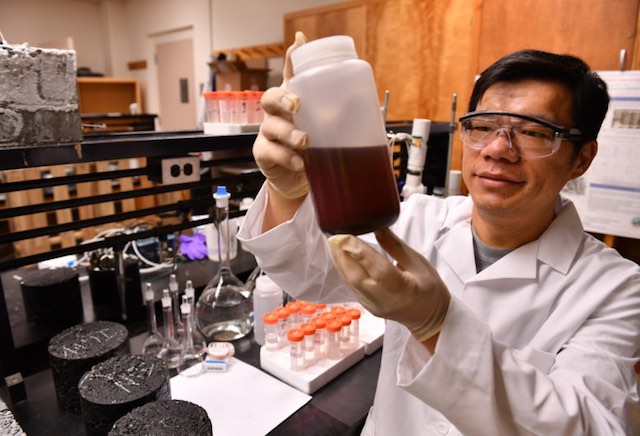
Professor Xianming Shi-Lab Voiland

Working to develop a greener additive, the WSU researchers derived chemicals from waste grape skins through chemical degradation and natural fermentation. Xianming Shi, associate professor in Civil and Environmental Engineering, said their novel process to make the formula produces no waste of any kind.

The researchers found that their grape extract-based solution melts ice faster than other de-icers and causes significantly less damage to concrete and asphalt, the two most ubiquitous materials used in bridges and roads. The solution also poses less risk to nearby water bodies.

LOOK: 316 Dutch Bus Stops Are Getting Green Roofs Covered in Plants as a Gift For Honeybees

“We delivered a more sustainable solution because we’re introducing less chlorides into the road operations and are achieving comparable or better performance,” Shi said. “It’s one step in the right direction.”

Shi first thought of using biotechnology to derive de-icer additives out of agricultural waste materials several years ago when tasked by the Alaska Department of Transportation to develop locally sourced and performance-enhanced brine formulations for anti-icing. His group has also successfully applied this technology to waste peony leaves, sugar beet leaves, dandelion leaves, and waste from apples and grapes.

Photo by Washington State University

“The beauty of this approach is that it allows us to diversify,” he said. “We can use this same platform technology in different regions of the country but choose a different agricultural product, depending on what source of waste is available.”

The work was supported by the National Science Foundation, the Washington Department of Transportation, and the U.S. Department of Transportation.

Reprinted from Washington State University (Photo snowy road by DomiKetu, CC license)

Pave The Way To Positivity By Sharing The Good News With Your Friends On Social Media…

Boy Invites His Entire Kindergarten Class to His Adoption Hearing—and the Ceremony Was Incredibly Sweet

Justice is sweet, but this courtroom full of kindergartners is even sweeter.

5-year-old Michael Orlando Clark Jr. was just one of the children who found his forever family during a recent adoption event in Grand Rapids, Michigan.

He was so excited to officially be adopted, he invited his entire kindergarten class to his adoption hearing—and the ceremony was adorable.

RELATED: After Bullied Boy Has Terrible First Day of School, Upperclassmen Take Him Under Their Wing

As the youngsters waved heart-shaped wands from the peanut gallery, each of Michael’s classmates were given a chance to tell the judge how much they loved him. Michael’s teacher even joined in to say: “We began the school year as a family. Family doesn’t have to be DNA, because family is support and love.”

When it was finally time for the judge to officiate the adoption by banging the gavel, the youngster got to bring the hammer down alongside his new parents—and the entire courtroom erupted in celebration.

(WATCH the heartwarming news coverage below) – Feature photo by WZZM

Be Sure And Share This Sweet Story With Your Friends On Social Media…

“I love snow for the same reason I love Christmas: It brings people together while time stands still.” – Rachel Cohn

Quote of the Day: “I love snow for the same reason I love Christmas: It brings people together while time stands still.” – Rachel Cohn

Photo: by Coline Buch, CC license on Flickr–cropped

With a new inspirational quote every day, atop the perfect photo—collected and archived on our Quotes page—why not bookmark GNN.org for a daily uplift?


Need to De-Stress? Watch This Video of Alpacas Peacefully Grazing While Enjoying a Stunning Sunset


We may have just found the perfect cure to a long work week: watching the sun set on the shores of New Zealand with a pack of contented alpacas to keep you company.

This peaceful 30-second clip from the Shamarra Alpaca Farm depicts a few dozen alpacas grazing in Akaroa as the sun paints the surrounding hillside a stunning pink.

Shamarra Alpaca Farm, which is home to 160 alpacas, is a notorious tourist hotspot for travelers looking to spend some quality time with the fuzzy grazers.

If you want more cute alpaca pictures and breathtaking videos of the New Zealand scenery, you can visit the farm’s Instagram or Facebook page.

(WATCH the soothing video below)

Don’t Let The Sun Set On This Sweet Clip Without Sharing It With Your Friends On Social Media…

Eating in Sync With Biological Clock Could Replace Problematic Diabetes Treatment, Says New Study

Type 2 diabetics inject themselves with insulin, a hormone that regulates the movement of sugar into liver, muscle and fat cells, up to four times a day—however, insulin injections are linked to weight gain and the loss of control of blood sugar levels.

This triggers a vicious cycle of higher insulin doses, continuous weight gain, a higher incidence of cardiovascular disease and other complications.

A new Tel Aviv University study finds that a starch-rich breakfast consumed early in the morning coupled with a small dinner could replace insulin injections and other diabetes medications for many diabetics.

“The traditional diabetic diet specifies six small meals spread throughout the day. But our research proposes shifting the starch-rich calories to the early hours of the day. This produces a glucose balance and improved glycemic control among type 2 diabetics,” explains Professor Daniela Jakubowicz of TAU’s Sackler Faculty of Medicine and Wolfson Medical Center’s Diabetes Unit. “We believe that through this regimen it will be possible for diabetics to significantly reduce or even stop the injections of insulin, and most of anti-diabetic medications, to achieve excellent control of glucose levels.”

RELATED: Largest Study of Its Kind Identifies the Surprising Health Benefits of Fasting Every Other Day

According to the new research which was published in Diabetes Care this week, our metabolism and biological clock are optimized for eating in the morning and for fasting during the evening and night, when we are supposed to be asleep. “But the usual diet recommended for type 2 diabetes consists of several small meals evenly distributed throughout the day—for example, three meals and three snacks daily, including a snack before going to sleep to prevent a drop in sugar levels during the night,” Jakubowicz says.

“But the ‘6M-diet,’ as this is called, has not been effective for sugar control, so diabetics require additional medication and insulin. And insulin injections lead to weight gain, which further increases blood sugar levels,” Jakubowicz adds.

The researchers studied 29 type 2 diabetes participants and compared a new “3M-diet,” more in alignment with our biological clock, with a control group on the traditional 6M-diet. The experimental 3M-diet is comprised of a meal of bread, fruits and sweets in the early hours of the morning; a substantial lunch; and a small dinner specifically lacking starches, sweets and fruits.

MORE: Americans Who Drink This Much Water a Day Are More Likely to Report Feeling ‘Very Happy’

The group on the traditional 6M-diet did not lose weight and did not experience any improvement of sugar levels, requiring an increase in medication and insulin doses—but the group on the 3M-diet not only lost weight but also experienced substantially improved sugar levels.

“Their need for diabetic medication, especially for insulin doses, dipped substantially. Some were even able to stop using insulin altogether,” adds Jakubowicz. “In addition, the 3M-diet improved the expression of biological clock genes. This suggests that the 3M-diet is not only more effective in controlling diabetes. It may also prevent many other complications such as cardiovascular disease, aging and cancer, which are all regulated by the biological clock genes.”

CHECK OUT: 30 Years of Research Shows Sauna Bathing is Game-Changer for Longevity and Heart Disease

The upregulation of the biological clock gene expression in the 3M-diet might be the mechanism behind its success, as it enhances insulin secretion and improves sugar delivery into the muscles, creating a balanced daytime and nocturnal glucose metabolism.

The researchers are now investigating the role certain proteins play in breakfast foods consumed by diabetics.

Reprinted from Tel Aviv University

Be Sure And Share The Intriguing News With Your Friends On Social Media…

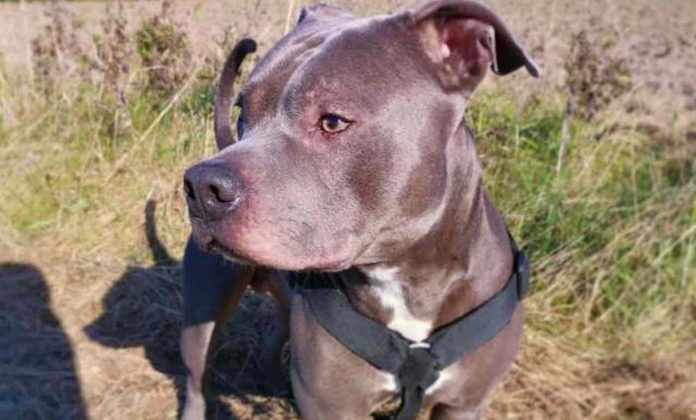
Woman Was Scared Of Neighbor’s Pit Bull—Until He Saved Her Life

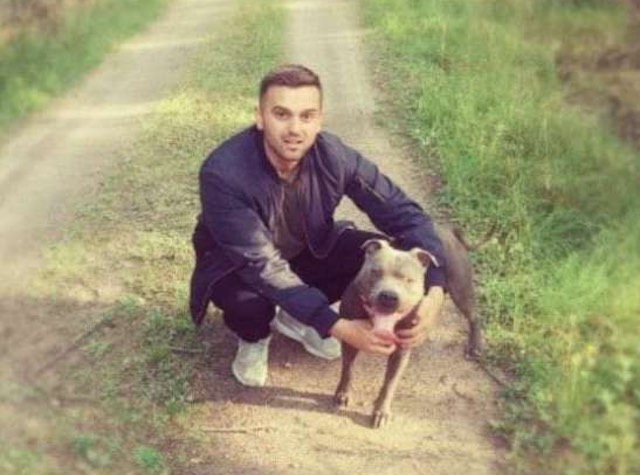
Simba and his owner Arjanit Mehana

This attentive pit bull is a perfect example of why you should never judge a book by its cover.

Simba lives with his owner Arjanit Mehana in an apartment building in Sweden. Despite how Simba has always been a sweet pup, the neighbors in their building have negatively judged him for being a pit bull.

One elderly woman who lived on the floor below Mehana and Simba always took particular care to avoid the pup and shun his advances.

“He always tried to greet her, but she called him mean and looked at him with fear,” Mehana told The Dodo. “She never liked him because he was a ‘bad’ breed.”

Her attitudes changed, however, after Simba saved her life.

LOOK: Stray Dog Found Keeping Litter of Newborn Kittens Warm Amidst Frigid Temperatures On Canadian Road

Mehana and Simba had recently been returning to their apartment from a walk when the pup suddenly started barking and pawing at the elderly woman’s door—and he refused to leave.

As Mehana pulled on Simba’s leash in bewilderment, he heard a faint voice calling for help from inside.

The elderly neighbor had fallen and broken her hip. For two days, she had been stuck on the floor without any way of calling for help.

WATCH: Kangaroo Has Been Hugging Her Rescuers Almost Every Day Since They Saved Her As an Orphan

Mehana then called medical services and waited with her until an ambulance arrived—and she was sure to thank her rescuers for their intervention.

“She said, ‘Thank you for hearing me.’ I thought she was talking to me at first,” Mehana recalled. “But then she said, ‘No, not you—the nice doggie.’”

Suffice it to say that the woman has had a change of heart towards her new canine friend. Mehana also now hopes that Simba’s story will help other people to reconsider their views on pit bulls as well.

Be Sure And Share The Pawesome Rescue Story With Your Friends On Social Media…

For the First Time in the US, Surgeons Pump New Life into Dead Donor Heart for Life-Saving Transplant

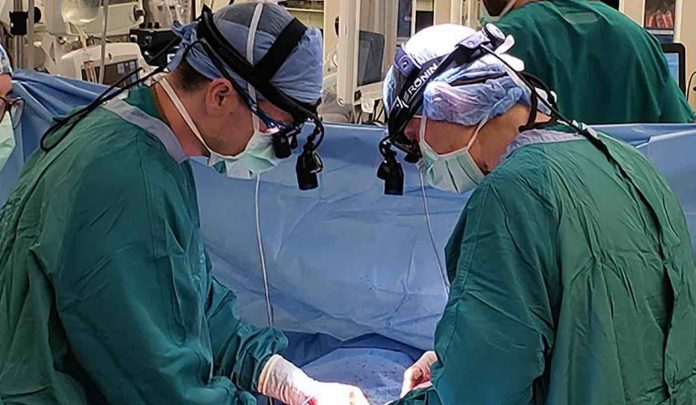
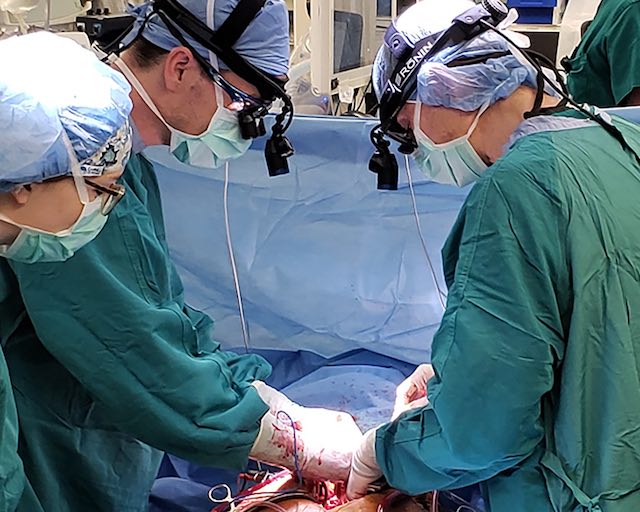
A heart transplant team at Duke University Hospital became the first in the U.S. to transplant an adult heart into a recipient after it had been declared dead.

Duke is one of five centers in the United States that has been approved to perform Donation after Circulatory Death (DCD) heart transplants as part of a recently launched clinical trial of a device that circulates warm, oxygenated blood through organs.

Traditionally, heart donations have depended on a declaration of brain death. Donation after circulatory death occurs after the heart has stopped beating and the person’s death has been declared. DCD transplantation is done regularly in the U.S. for organs other than the heart, although DCD heart transplants have been conducted in Europe and Australia, the first of which reportedly taking place back in 2014 at St. Vincent’s Hospital in Sydney.

WATCH: In Twist of Fate, NFL Star’s Organs Go to the Ailing Sports Hero Who Inspired Him

The life-saving device used for the procedure, the TransMedics Organ Care System, helps to preserve hearts and other organs for several hours after an individual’s death. Though it has been approved for heart transplants in this trial, it has not yet been approved for widespread use by the FDA.

“This procedure has the potential to expand the donor pool by up to 30%,” said Dr. Jacob Schroder, who performed the procedure at Duke over the weekend and is surgical director of Duke’s Heart Transplant Program in the Department of Surgery. “Increasing the number of donated hearts would decrease the wait time and the number of deaths that occur while people are waiting.

LOOK: When Wife Needed Kidney, He Walked For Miles Holding a Sign—and Then He Found a Donor

“It’s important to conduct this clinical trial to determine whether those outcomes are realized,” Schroder said. “We are grateful for the courage and generosity of both the donors and recipients.”

The DCD heart transplantation milestone occurred Sunday after a donated heart was deemed viable for transplant. The recipient, a military veteran who received his heart through the Mission Act, is reportedly recovering well.

Reprinted from Duke University Medical Center

Photo courtesy of Duke Health

Have A Heart For Good News By Sharing This With Your Friends On Social Media…

Dad Spends 1,200 Hours Renovating ‘Back to the Future’ Car So He Can Use it to Pick Up His Kids From School

SWNS
SWNS

This 37-year-old movie enthusiast may be “the coolest dad ever” since he restored an old DeLorean car from the Back to the Future movies so he could use it to pick up his kids from school.

James Napier spent a fortune transforming the once run-down car to resemble the one featured in the 1985’s movie in which Marty McFly travels through time—and even though some automotive fans might only take out their prized hot rods for an occasional spin, Napier uses it for much more mundane reasons.

Napier says that he takes the car out to pick up his three kids; 16-year-old Paige, 13-year-old Devon, and 8-year-old Daisy, from school every day in the silver motor.

LOOK: Man Transforms His Pub into the Most Festive Bar in All of UK So He Can Raise Money for Sick Children

“I take it out on weekends and I drop my kids off at school or football sometimes. They like it and their friends find it quite amusing!” says Napier. “You see other people’s jaws drop when we drive past. The family adores it—although my wife Emma probably doesn’t want to know how much it has cost me in total to restore!

“We drive it everywhere we go—you’ve got to make the most of it.”

The keen fan said he has also taken the car along to charity events across south Essex.

SWNS

“We take the car to all sorts of things,” says Napier. “We’ve been to charity events in Pitsea, Stock and Wickford. People love to see it and constantly want a picture with it.

“When we posted on Facebook that we had bought it, loads of people messaged me and asked me to take their kids out in it.”

His daughter Daisy said she loves it when people beep at them when they drive past.

“It’s really cool. Dad is probably a bit crazy to build something like that!” says Daisy.

Napier, who works as a a website designer from Wickford, Essex, has spent the last five months bringing the iconic car back to life after buying it for £55,000 back in June.

SWNS

When he first got the car, he admits it was a bit of a mess because someone had already tried to convert it into the iconic Back to the Future car.

“It was quite run down. It needed a lot of work,” says Napier. “Somebody had tried to make it into a Back to the Future car—but it was really quite bad! The car was an absolute mess. I was completely nuts.

CHECK OUT: Need to Escape Reality? This Dr. Seuss Exhibit Takes You to Another World

“I thought maybe I could salvage some of it, but in the end I needed to get rid of everything and start from scratch,” he added. “I probably spent around 1,200 hours working on the car and it was quite expensive to do. It was a seven days a week job.

“It might have took a while, but it’s definitely worth it.”

SWNS

His extraordinary left-hand drive car has become the talk of the town and he said people flock just to catch a glimpse of it.

“I like it because it reminds people of their childhood. I love the film and I’m glad I’ve brought it to life for people,” says Napier. “It’s a fully functioning car. It’s passed its MOT and it runs like a dream.

LOOK: After Years of Gaining Trust of Local Squirrels, Photographer Has Captured the Most Wholesome Pictures

“There’s only one other like it in the UK. It’s really rare and one of a kind. It was a once-in-a-lifetime opportunity to buy it. It was one of my childhood dreams to have one.

“I wanted to try and get as many things from the films into my car. There’s a few relays in there that have come from the actual car,” admitted Napier. “My wife wanted to get me something from the Back to the Future films for Christmas a few years ago and she bought me these relays which were used in one of the original cars from the film.

SWNS

“They were in a cabinet just on display, but when I started working on the car, we put them back in where they belong.

“In the film, you see white plumes of smoke and that’s done by fire extinguishers in the film,” he continued. “We’ve done something similar—we’ve used CO2 fire extinguishers with a remote control.

MORE: Seniors Celebrate Grandson’s Birthday By Dressing as His Favorite Movie Characters—and the Results Are Adorable

“We have a smoke machine inside the car too so when you open the doors smoke comes out so it’s like you’ve travelled in time. A lot of the props inside makes the exact same noises. We’ve got the iconic car doors and lights too.

“It usually costs around £30,000 to do up these sort of cars from the bottom up,” added Napier—but despite the extraordinary modifications, it only cost James an extra £20.00 to add the car onto his existing insurance policy.

SWNS

Drive The Good News Over To Your Friends By Sharing This To Social Media…

“The past is there only to teach us, not for us to live in.” – Pakistani Prime Minister Imran Khan 

Quote of the Day: “The past is there only to teach us, not for us to live in.” – Pakistani Prime Minister Imran Khan

Photo: by Jenn L, CC license on Flickr–cropped

With a new inspirational quote every day, atop the perfect photo—collected and archived on our Quotes page—why not bookmark GNN.org for a daily uplift?


After Being Extinct in the Wild, Mexican Wolf Roams the U.S. Desert Once Again Thanks to a Former Wolf Hunter

USFS

The United States has a proud history of wildlife conservation and management, but so many of the great American conservation success stories start with the expertise or initiative of one person in the right place at the right time.

John Muir championed the preservation of the entire Sierra Nevada ecosystem, and the famous valley of Yosemite. John Lacy created and forced through Congress the Lacy Bird and Game Act of 1900 – one of the earliest legislative tools for protecting wildlife.

In 1970, the last Mexican wolf (canis lupus baileyi) in the U.S. was killed in Texas on December 8th, leaving only a small (and reviled) population hiding out in Northern Mexico that would occasionally stray into southern Arizona and New Mexico.

While the North American gray wolf had to contend with centuries of persecution due to its poaching of livestock, the frozen wilderness of Canada provided a safe haven for them to survive.

The Mexican wolf however was not so fortunate, and entered the extinct species list of the United States. Undoubtedly one of the most charismatic of the gray wolf subspecies, the Mexican wolf is covered in splashes of rust, tawny, brown, smoky grey, and black colors.

Roy T. McBride to the Rescue

Enter Roy T. McBride—a legendary trapper hired by the U.S. Fish and Wildlife Service to conduct a Mexican wolf survey and trapping operation in the late 1970s. The goal was to trap enough wolves to create a stable captive breeding population for later reintroduction into their historic U.S. range.

An unlikely ally, McBride was a wolf hunter for ranchers along the Rio Grande. According to one story about McBride, he tracked one wolf for 11 months across Northern Mexico. The wolf, ‘Las Margaritas,’ was a male, and regularly killed young cattle and had two toes missing on his front paw. It’s the stuff of frontier legend.

USFS

The once hunter, expert in hunting rifles, and now wolf savior McBride was able to capture 5 wolves by 1980—three of which became the progenitors for the McBride lineage of Mexican wolves.

RELATED: Wild Wolves Are Bouncing Back From Extinction in Europe

By 1995, close to 100 McBride wolves had been born in the United States, and when combined with another 22 contributed from private ownership as well as an additional 8 wolves born in the Chapultepec Zoo in Mexico City, the Fish and Wildlife Service had a genetically diverse population that was ready to move back into the wild.

The Resurrection

The turn of the millennium saw the reintroduction of wolves into the south-western U.S., and also into Northern Mexico shortly after, in an effort to save the species persecuted almost to oblivion with poison and rifle.

One of the biggest victories for wolf reintroduction in Mexico came in 2009 when by presidential degree, the Janos Biosphere Reserve was created in Chihuahua. This sprawling 500,000 hectare (1.25 mil acre) reserve was established in part so there could be a remote and secure area where wolf populations could recover.

POPULAR: Therapy Wolves Become Guides for Troubled Teens (WATCH)

In February 2018, another 5 wolves were reintroduced into Northern Mexico, and the last survey found there were 37 wolves living in the Reserve, in Chihuahua, and Sonora. More importantly, wolf pups are beginning to be born in the wild, ensuring the small population rapidly reconnects with its home range.

As of 2015, the Fish and Wildlife Service found that there were 109 Mexican wolves roaming the United States. And to protect the two populations on both sides of the border, another 240 remain in breeding centers to ensure disease, poisoning, or poaching will never harm the species existence again.

As you can imagine, trapping members of a species listed as extinct in the wild is very difficult. Trapping 5 such members is even harder. Trapping 5 members of a species extinct in the wild that has learned to fear humans as the cause of their decline is a truly incredible feat that all those who value wolves and biodiversity have Roy McBride to thank.

SHARE the Howling Success With Animal Lovers on Social Media!