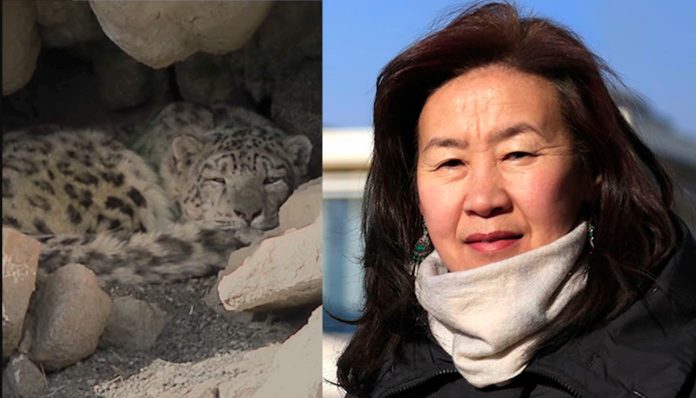
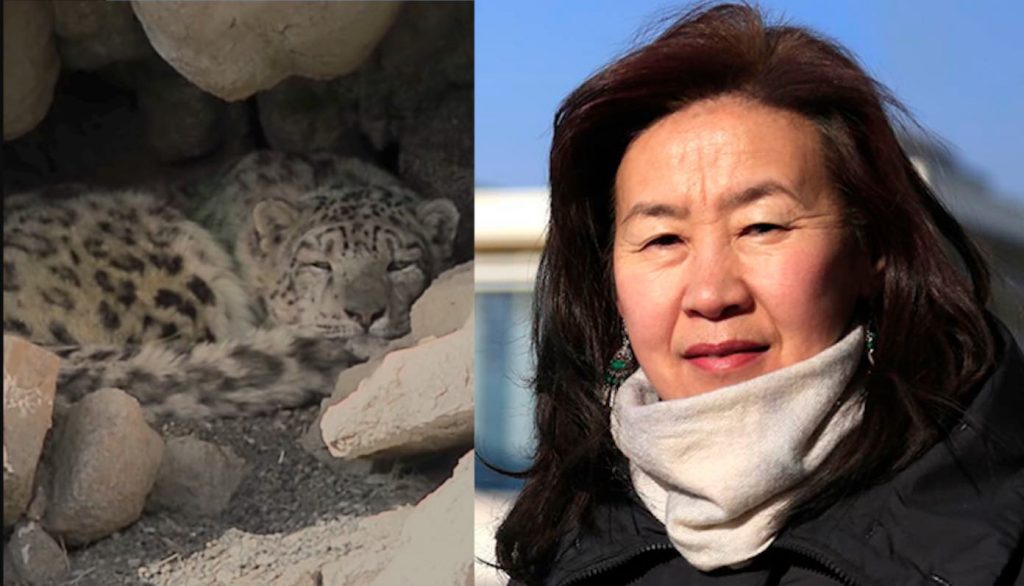
Thousands of snow leopards have been saved from the dangers of mining companies thanks to the tireless efforts of a former language teacher turned animal activist.
49-year-old Bayarjargal Agvaantseren first became determined to save the vulnerable big cats after she spent some time working as a translator for a wildlife scientist back in the 1980s.
The big cat population of southern Mongolia has been dwindling as a result of habitat loss and poaching. Prior to Agvaantseren’s conservation efforts, snow leopards also fell prey to Mongolian farmers who were keen on protecting their livestock.
Upon successfully creating an insurance program for local herders, however, Agvaantseren managed to recruit the farmers as allies in her fight to protect the big cats.
Then in 2009, she learned of extensive mining operations that were being launched in a critical area of snow leopard habitat in the South Gobi Desert.
Her advocacy resulted in the region being turned into the 1.8 million-acre Tost Tosonbumba Nature Reserve, which is the first federally protected area in Mongolia created specifically for snow leopard conservation.
Not only that, Agvaantseren also succeeded in persuading the Mongolian government to cancel all 37 mining licenses on the precious land and ban all future mining permits on the reserve.
In recognition for her conservational career, Agvaantseren was recently awarded the 2019 Goldman Environmental Prize for Asia.
“In a remote, unforgiving corner of the world dominated by runaway mining operations, Agvaantseren championed protections for Mongolia’s remaining population of snow leopards,” read’s the Goldman website. “Moreover, she was able to shift perceptions of snow leopards among herder communities, who now see the animal as an integral part of their identity.”
(WATCH the video below) – Photo by Goldman Environmental Prize
Uplift Your Friends’ Faith in Humanity—Share on Social Media…
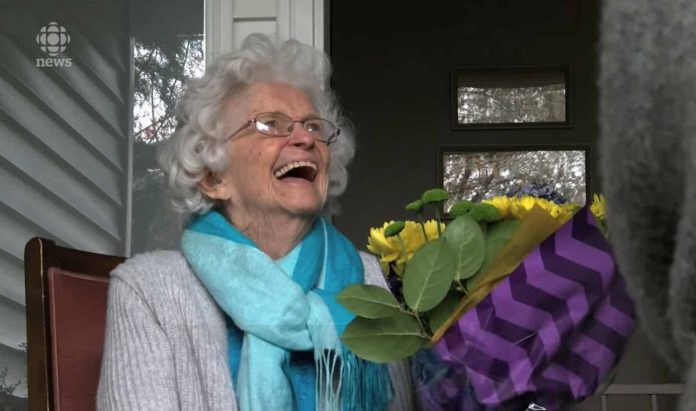
Tinney Davidson has been waving to the children in her town for over a decade – and now that she is finally moving out of her home, the local youngsters made sure to give her a proper sendoff.
The 88-year-old Canadian woman has been waving to the kids of Comox, British Columbia since she and her husband moved into their house back in 2007.
Since the couple’s home is located near the local high school, they delighted in waving to all the teens who were walking to school – and the teens delighted in waving back.
Even after her husband died, Davidson continued the tradition of sitting in front of her window and waving to the kids. In 2016, the youngsters even decided to repay her kindness by giving her dozens of cards and gifts for Valentine’s Day.
So when the community heard that the “Waving Granny” would soon be moving into an assisted living home, more than 400 youngsters gathered in her front yard to say goodbye.
As Davidson cried tears of joy, the kids collectively blew her kisses, gave her hugs, and waved farewell.
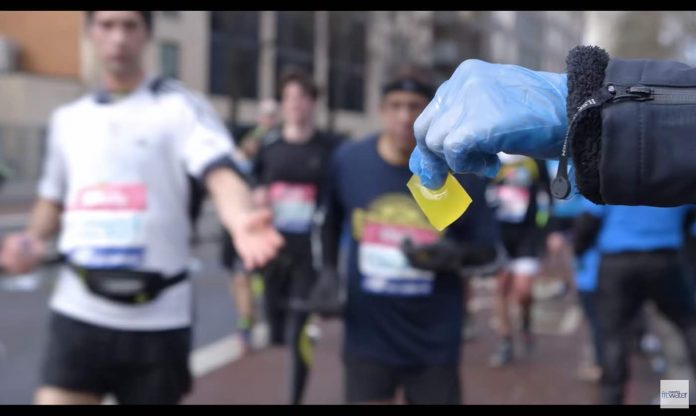
Rather than giving plastic water bottles to the 41,000 athletes who participated in the London Marathon this weekend, the runners were given little biodegradable blobs as a means of reducing plastic waste.
The London Marathon became the first full marathon to replace their plastic bottles with the edible Ooho water bottles.
The Ooho packaging, which is made entirely out of sustainable seaweed extracts, only costs about 2 cents to make.
Designed by London-based startup Skipping Rocks Labs, the tasteless biodegradable container is made out of a thin, flexible membrane composed of sodium alginate – a natural derivative of brown algae – and calcium chloride.
It can either be ripped open so the runner can drink the liquid out of the membrane, or the pods can simply be consumed whole like a cherry tomato.
The water containers have successfully been tested during several smaller sports events, such as the Harrow Half-Marathon back in September, but this week’s full marathon was the largest trial of the edible containers to date.
Over 30,000 Ooho capsules of sports drink were distributed to the runners during the marathon. Combined with the event’s other eco-friendly initiatives, the packaging helped to save over 200,000 plastic bottles from being used on the course.
The biodegradable bottles were part of the London Marathon Event’s (LME) commitment to achieving zero landfill waste by December 2020.
“It is a huge challenge as we must balance providing proper runner welfare with reducing our environmental impact,” says LME event director Hugh Brasher. “We can’t achieve everything in one event, in one year, but the changes and the trials we’re introducing for this year have the potential to change how mass participation events are delivered in future. Everyone can make a difference: our participants, spectators, contractors, volunteers and staff.”
(WATCH the video below) – Photo by Lucozade Sport
Power Up With Positivity By Sharing The Exciting News With Your Friends On Social Media…
One man’s compulsion to sit with a woman who was eating by herself in a restaurant has resulted in an amazing new bond of friendship.
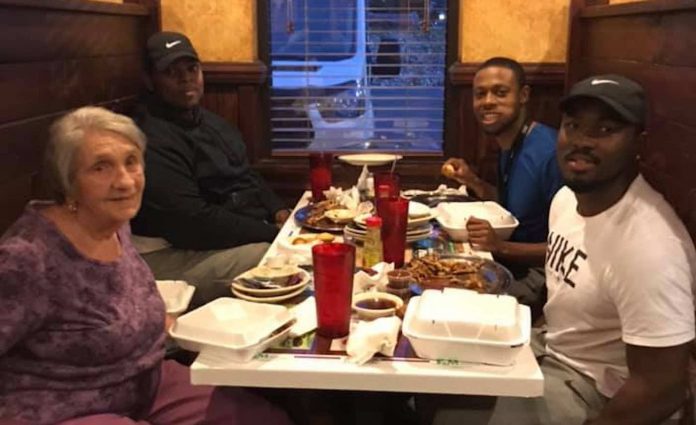
Last week, Jamario Howards and his friends were sharing a meal at Brad’s diner in Oxford, Alabama when he saw a woman named Eleanor sitting alone.
“My exact thoughts [were] ‘dang I’d hate to have to eat alone,’” Howard recalled on Facebook.
The young man then approached Eleanor and asked if he could sit with her. Upon chatting about their lives, the elderly woman revealed that she was a widow and it was the day before her 60th wedding anniversary to her late husband.
Howards immediately asked Eleanor to have dinner with him and his two friends. After he posted a photo of the widow and her three new acquaintances to social media, it was shared thousands of times and featured on dozens of news outlets.
In a recent interview with CBS News, Eleanor says that she believes God sent her to the restaurant that night so she could be reminded of the kindness of strangers.
Howards, who says that he and his friends “already feel like they’re her grandkids,” says that they have all vowed to make time for their new surrogate grandma – and it seems that they are already meeting Eleanor at the restaurant for regular dinners.
(WATCH the heartwarming interview below or our international viewers can watch the footage on the CBS website) – Photo by Jamario Howard
Be Sure And Share The Sweet Story With Your Friends On Social Media…
We should all have such a hobby we love to practice as passionately as the one that Dion does. He is even willing to give up a prosthetic leg to do so. Hear our Good News Guru tell the fun story on the radio in Los Angeles—during the April 26, 2019 Ellen K. Morning Show on KOST-103.5.
LISTEN to this fun story on the radio, with The Good News Guru (our GNN founder), or READ the FULL story below…
In Sonoma County, a man demonstrates how you should never give up on a hobby—even if it costs you an arm or a leg…
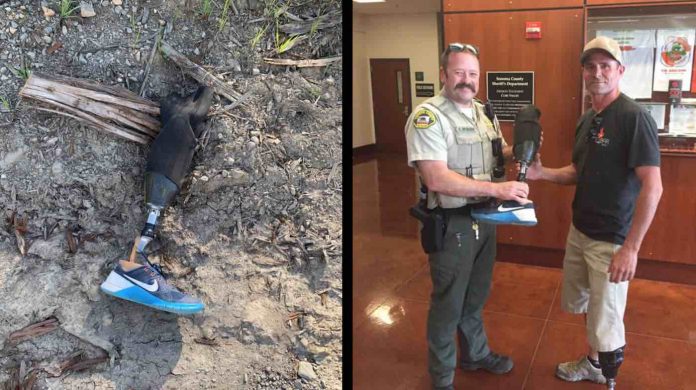
A group of lumberyard employees were bamboozled last week when they arrived early to work and saw a glint of metal in a pile of sawdust. After thinking it was a soda can, they were shocked to find a prosthetic leg sitting on top.
Police later learned that the leg was worth $15,000—and upon hearing the story of how the limb ended up there, they were stunned to find it still in perfect condition.
It seemed to everyone that the leg had just ‘fallen out of the sky’ and, it turns out, indeed it had—from 10,000 feet up.
The leg belonged to Dion Calloway, a skydiving enthusiast who had just leapt out of an airplane and, in mid-jump, his leg came off.
The 39-year-old says that he’s jumped with his prosthetic at least two dozen times, without incident, but on his most recent jump from an airport in Cloverdale, California, he felt it disconnect shortly after he leapt and lost track of it as it plummeted towards the ground.
He and his skydiving buddies spent the rest of the day searching nearby properties, but it turned out to be like looking for a needle in a haystack.
Meanwhile, officers from the Sonoma County Sheriff’s Department happened to speak to the owner of the airport, and the next day Calloway was happily reunited with the leg—and he promised that he would be securing it more carefully in the future.
It seems like nothing will stop this man’s dedication to his passion. After all, it was a skydiving accident that took his original leg in the first place—and even after almost losing his leg a second time, he says he is excited to get back in the air.
“I always seem to come back to it,” Calloway told the Press Democrat. “Skydiving is my everything, and the people I do it with are my family.”
(WATCH the interview below) – Photo by Sonoma Sheriff’s Office
Give Your Friends A Leg Up On the Fun—Share the Story On Social Media…
A pancreas that hurts, exercising in my dreams, and a stubbed pinky toe—these are all creative excuses people have used in order to get out of going to the gym.
A new survey examined how enthused 2,000 Americans were to exercise—and it revealed the weird and common excuses people give for staying home.
The survey results found that being too tired (63%), being too hot (39%), too cold (39%) or recently eating (31%) were all in the top five list of excuses.
Other common excuses included being too busy at work, phone battery being low, gym clothes not matching, and claiming that picking up the kids qualified as a workout!
28% of participants blamed their laziness on the lack of fun involved in working out, while others complained about “getting too sweaty,” “never seeing results,” and “feeling judged at the gym.”
But, these are some of the most amusing of them all:
CRAZIEST WORKOUT EXCUSES
1. My cat is depressed
2. I had to take my son’s bicycle into service
3. I exercised in my dreams
4. I stubbed my pinky toe
5. My pancreas hurts
6. I took Viagra and am too engorged to wear workout clothes
The survey conducted by OnePoll on behalf of Peerfit also provided indicators on what creates workout success and how people can power through the temptation to make excuses.
Accountability and the worry of letting someone else down could be the keys to resisting the desire to come up with excuses. 65% of respondents admitted they’d be more likely to actually make it to the gym if they planned to go with someone else. Furthermore, more than half of those polled say they actually work out better when sweating away their struggles with a buddy.
MOST COMMON WORKOUT EXCUSES
Too tired – 63%
Too hot – 39%
Too cold – 39%
Too much work – 35%
Just ate – 31%
Walked a lot today – 27%
Recovering from last workout – 27%
Gym will be too crowded – 22%
Taking care of my kids – 17%
Gym is too out of the way – 17%
Climbed a lot of stairs today – 15%
No clean workout clothes – 15%
I have a meeting tomorrow – 15%
I feel self conscious today – 14%
I just got my hair done – 12%
Picking up my kids is my workout – 10%
My phone battery is too low – 10%
I just got my nails done – 9%
“We know that when you work out with your co-workers, friends or family you’re not only more likely to actually go, but you’re likely to enjoy it more because you’re getting to know someone better,” said Peerfit CEO, Ed Buckley, III, PhD. “We know sometimes it can be hard to stick with a wellness program, but that’s what your support system of co-workers and friends are there for.”
Yet, it is still a struggle for many to devote time to fitness. 35% in this poll said they can’t make it to the gym because they have too much work on their plates.
This blog was submitted to GNN by Jitendra Bhojwani. If you have any positive stories of your own that you would like to share with our audience, check out our submission page to learn more.
Sometimes in life, a small event can make us realize that kindness still rules the world – and I had an opportunity to experience the kindness of people from a total stranger: a driver named Afolabi.
In October 2007, I was working as a sales manager with a distributor in Lagos, Nigeria that provided me with a company driver to take me home at night. One night when he was returning me to my house, the car broke down on the highway.
The driver, Afolabi, somehow managed to steer the car onto a nearby street before he went off to find a mechanic. As soon as he left, at least 7 to 8 people (“area boys” in the native language) emerged from the deep dark of the night and surrounded our car, demanding me to hand over whatever money I had.
To my relief, however, Afolabi returned to the car so he could intervene and scare them away. Though he was well-built, even in the darkness of the night, people will not generally fight to save their own possessions.
The boys could have been carrying weapons with them, but this loyal driver did not think of any “ifs” or “buts”. His main objective was to save me from getting robbed. He was so concerned for my safety, he even rolled up the car windows so that the boys could not harm me.
Initially, he tried to quietly reason with them to make them understand. When that didn’t work, he raised his voice and ultimately showed that he was ready for a fist fight.
His bold gestures and muscular frame ultimately forced the boys to abandon their intentions and they finally ran away into the same darkness from where they came; but those few moments were enough to register the driver’s kindness into the deepest corner of my heart—and it was even more emotional to me since he was a native of Nigeria and I was a foreigner from India.
So here he was, fighting with his countrymen just to save me, a “foreigner,” solely because of the one common bond that we all share: humanity!
Hats off to Afolabi, the compassionate driver who helped me.
Jitendra left his career as a sales manager to enjoy a calm life in Jaipur doing what he loves most—writing as a freelance creative and technical writer.
Be Sure And Share The Inspiring Story Of Kindness With Your Friends On Social Media – File photo by Joy Agyepong, CC
Quote of the Day: “People don’t care how much you know, until they know how much you care.” – Theodore Roosevelt
Photo: by Rob D, CC license via Flickr
With a new inspirational quote every day, atop the perfect photo—collected and archived on our Quotes page—why not bookmark GNN.org for a daily uplift?
You may not think an 83-year-old widower would have much in common with a pop star, but an awe-inspiring new video proves otherwise.
27-year-old Louis Tomlinson is one of the former members of the boy band One Direction. He and the widower, a former taxi driver named Richard, first started talking to each other after realizing they both have experienced a similar amount of grief.
Richard has been mourning the death of his wife of 60 years since she died of Alzheimer’s complications in 2016. Tomlinson, similarly, has been coping with the death of his mother after she lost a battle against leukemia. He also recently lost his sister to a suspected heart attack.
Tomlinson got to meet Richard at his home in Yorkshire for the first time last month, and the young musician was delighted to hear that Richard was a passionate singer. The Englishman mentioned that he had made a list of things to accomplish with his wife before she died, but didn’t get to finish. When Tomlinson offered to help him tackle the bucket list, he accepted.
Together, Richard and Tomlinson went on a rollercoaster; flew in a helicopter; got tattoos; drove race cars; and sang on stage for a packed stadium.
If that isn’t touching enough for you, Tomlinson then used footage from their adventures to make a music video for his song “Two of Us”, which he wrote for his mother.
“This video feels particularly relevant and powerful to me,” Tomlinson wrote on Instagram.
“Richard is a classic example of a fearless man who in light of tragedy still pushes himself to live with as much laughter and happiness as possible.”
(WATCH the music video below) – Photo by Louis Tomlinson
Be Sure And Share This Sweet Story With Your Friends On Social Media…
The strongest synthetic materials are often those that intentionally mimic nature.
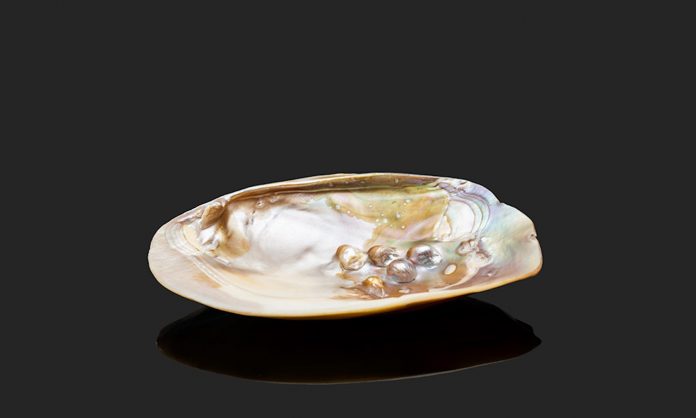
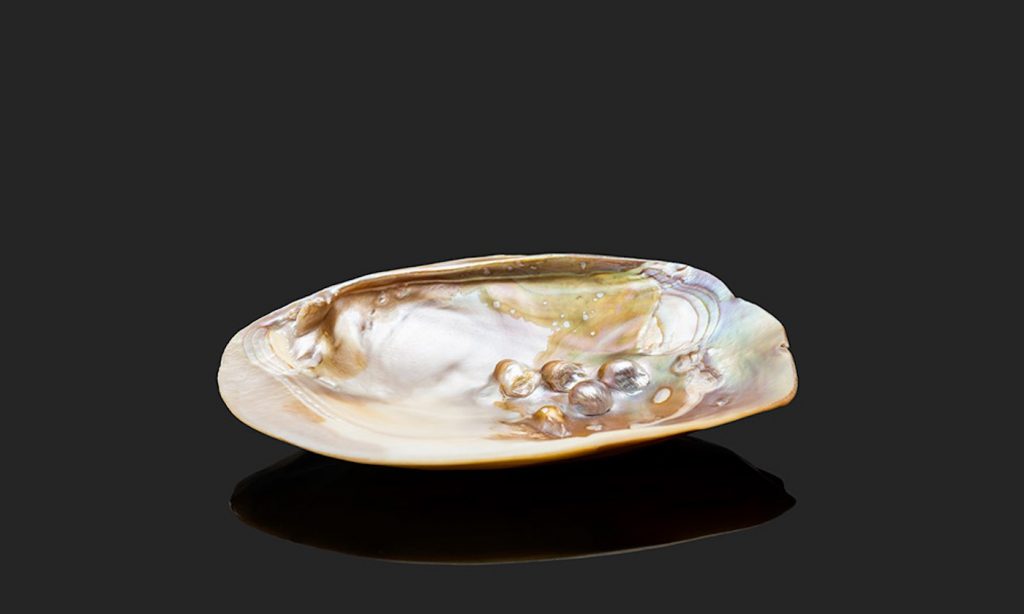
One natural substance scientists have studied as a model for creating synthetic materials is nacre, also known as mother-of-pearl.
Being an exceptionally tough, stiff material produced by some mollusks and serving as their inner shell layer, it also comprises the outer layer of pearls, giving them their lustrous shine.
But while nacre’s unique properties make it an ideal inspiration in the creation of synthetic materials, most methods used to produce artificial nacre are complex and energy intensive.
Now, a biologist at the University of Rochester has invented an inexpensive and environmentally friendly method for making artificial nacre using an innovative component: bacteria. The artificial nacre created by Anne S. Meyer, PhD, an associate professor of biology at Rochester, and her colleagues is made of biologically produced materials and has the toughness of natural nacre, while also being stiff and, surprisingly, bendable.
Photo by University of Rochester / J. Adam Fenster
The method used to create the novel material could lead to new applications in medicine, engineering—and even constructing buildings on the moon.
The impressive mechanical properties of natural nacre arise from its hierarchical, layered structure, which allows energy to disperse evenly across the material. In a paper published in the journal Small, Meyer and her colleagues outline their method of using two strains of bacteria to replicate these layers. When they examined the samples under an electron microscope, the structure created by the bacteria was layered similarly to nacre produced naturally by mollusks.
Although nacre-inspired materials have been created synthetically before, the methods used to make them typically involve expensive equipment, extreme temperatures, high-pressure conditions, and toxic chemicals, Meyer says. “Many people creating artificial nacre use polymer layers that are only soluble in nonaqueous solutions, an organic solvent, and then they have this giant bucket of waste at the end of the procedure that has to be disposed of.”
To produce nacre in Meyer’s lab, however, all researchers have to do is grow bacteria and let it sit in a warm place. They create alternating thin layers of crystalized calcium carbonate—to act like cement—and sticky polymer. They first take a glass or plastic slide and place it in a beaker containing the bacteria Sporosarcina pasteurii, a calcium source, and urea (from urination). This combination triggers the crystallization of calcium carbonate. To make the polymer layer, they place the slide into a solution of the bacteria Bacillus licheniformis, then let the beaker sit in an incubator.
Photo by University of Rochester / J. Adam Fenster
Right now it takes about a day to build up a layer of calcium carbonate and polymer approximately five micrometers thick. Meyer and her team are currently looking at coating other materials like metal with the nacre, and trying new techniques to make thicker nacre-like materials faster.
One of the most beneficial characteristics of the nacre produced in Meyer’s lab is that it is biocompatible—made of materials the human body produces or that humans can eat naturally anyway. This makes the nacre ideal for medical applications like artificial bones and implants, Meyer says. “If you break your arm, for example, you might put in a metal pin that has to be removed with a second surgery after your bone heals. A pin made out of our material would be stiff and tough, but you wouldn’t have to remove it.”
And, while the material is tougher and stiffer than most plastics, it is very lightweight, a quality that is especially valuable for transportation vehicles like airplanes, boats, or rockets, where every extra pound means extra fuel. Because the production of bacterial nacre doesn’t require any complex instruments, and the nacre coating protects against chemical degradation and weathering, it holds promise for civil engineering applications like crack prevention, protective coatings for erosion control, or for conservation of cultural artifacts, and could be useful in the food industry, as a sustainable packaging material.
The nacre might also be an ideal material to build houses on the moon and other planets: the only necessary “ingredients” would be an astronaut and a small tube of bacteria, Meyer says. “The moon has a large amount of calcium in the moon dust, so the calcium’s already there. The astronaut brings the bacteria, and the astronaut makes the urea, which is the only other thing you need to start making calcium carbonate layers.”
Beyond its qualities as an ideal structural material, nacre itself—as any pearl jewelry owner knows—is quite beautiful. Who doesn’t want a bit more beauty in the world?
(WATCH the educational video below)
Share This Amazing Innovation With Your Friends On Social…
It all happened in the month I was about to move my mom to Maui, Hawaii so she could be closer to me after recovering from her lung cancer.
However, we got word that the cancer had metastasized to her brain and she needed emergency surgery. The two fast growing brain tumors that my mom called her “coconuts” were removed on April 9th—and she soon received the first of many miracles on her road to recovery this month.
Miracle 1: She was walking less than 24 hours post-op. (She even ordered a cute top on the QVC channel from her ICU hospital bed).
Miracle 2: She received an all-clear MRI showing the cancer was gone from her brain.
Miracle 3: She sold her home of 20 years in a small town, where real estate rarely moves, while being in the hospital. (Mom’s free now to move to Maui!)
Miracle 4: At a free yoga event in Little Rock, Arkansas, I met Marcus Greene, who lost his mother to brain cancer two years ago. He set up his yoga mat next to me and I learned more about his story.
In honor of his mother, he started a nonprofit called The Shirley Greene Foundation that donates free wigs to cancer patients in the Little Rock area.
A week later, Marcus delivered two blonde wigs to her hospital room. It was even his birthday and he brought his two 4-year-old twins, a 2-year-old, and wife to visit with my mom, on the way to his birthday dinner. What a guy!
He mentioned to me that after he had walked his mother into her radiation treatment shortly after her brain surgery, he ended up wheeling her out of the building and she was unable to walk ever again. He said after her radiation treatments, his mother was never the same; she wasn’t able to take care of her basic needs anymore.
This was very disturbing, as my mom has been advised by her doctor that she will need to undergo radiation and chemotherapy going forward.
There are few people who transform a family tragedy into an incredible charitable cause to give back. Marcus not only gave my mom a new fresh look, but gave her an insight into the risks of radiation. We’ve decided to move her to Maui soon, and live out the rest of her days without the ill side effects of chemo and radiation.
She is currently cancer-free and has chosen to enjoy a quality life with fresh foods, sunshine, and lots of love from my surfing camp for women called Maui Surfer Girls.
Dustin Tester was raised on Maui and learned to surf when she was seven. She’s been a multi-sport water athlete ever since. She founded Maui Surfer Girls surf school.
Share This Story Of Fate And Kindness With Your Friends On Social Media…
Quote of the Day: “Nothing is boring except to people who aren’t really paying attention.” – Michael Chabon
Photo: by Jim McCulloch, CC license via Flickr
With a new inspirational quote every day, atop the perfect photo—collected and archived on our Quotes page—why not bookmark GNN.org for a daily uplift?
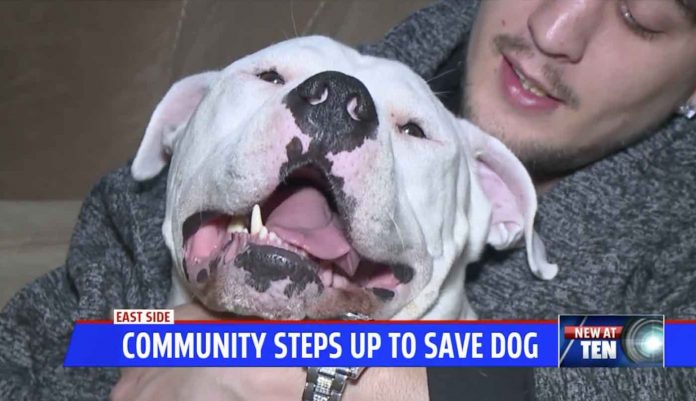
This desperate local R&B singer was ready to sell his car in order to help his sick dog, so the community rallied to help.
Last week, veterinarians told Randy Etter that if his dog Gemini did not undergo emergency surgery, then the pooch would likely die the very same day.
It all started the day Gemini swallowed a bottle top after Etter’s girlfriend’s daughter was playing with the pooch. When the pup started vomiting excessively, Etter brought him from vet’s office to vet’s office, hoping someone could tell him what was wrong with the dog.
The musician was even fired from his day job in Indianapolis because he spent so much time trying to find help for his canine companion.
By the time a vet was able to find the blockage in Gemini’s intestines, he was already in dire straits – and the surgery would cost thousands of dollars.
Etter published an ad on Facebook offering to sell his car for $1,000 less than what it should sell for—but when social media users empathized with the musician’s story and shared it, it eventually reached the ears of the S.O.A.R Initiative (Street Outreach Animal Response).
This dog’s fondness for his food bowl has finally found him a forever home – and just in the knick of time.
Oliver was brought to Memphis Animal Services in Tennessee one month ago. A woman had called animal control officers to pick up the pup after she discovered the rambunctious little guy in her backyard.
Upon being brought to the animal shelter, staffers were surprised by how well trained he was. They quickly discovered that Oliver loved food – and he was always excited to sit and do tricks in exchange for treats.
One of the shelter employees was particularly endeared to the dog after she walked by his kennel and saw that he was lovingly carrying his food bowl in his mouth. The employee filled up the bowl, thinking that he was carrying the container because he had not been given enough food.
But as the days went on, the staffers were amused to discover that he just really, really loved his food bowl.
The animal shelter posted pictures of Oliver and his metallic best friend to social media in hopes that it would help him get adopted.
Staffers started to become anxious about Oliver’s fate, however, when his adoption deadline drew closer – and if no one adopted the cute canine, then he would have to be euthanized.
Luckily, Oliver’s social media pictures ended up being shared thousands of times, and when it was finally the day before his adoption deadline, two women came in to adopt him.
Not only does Oliver now have a forever home, the shelter also gave him his food bowl as a parting gift.
“People all over the world fell in love with him and his bowl!” wrote the shelter. “Two of those people came for him, and today he’s going home – with his bowl, of course!”
Be Sure And Share The Pawesome Story With Your Friends On Social Media…
Scientists may have just found the perfect substitute for the inefficient and polluting gases used in most refrigerators and air conditioners.
Researchers from the UK and Spain have begun using a kind of organic plastic crystal called “neopentylglycol.” (The word “plastic” refers not to its chemical composition, but rather to its malleability.)
When put under pressure, these plastic crystals yield huge cooling effects – enough that they are competitive with conventional coolants. Additionally, the material is inexpensive, widely available, and functions at close to room temperature.
The gases currently used in the vast majority of refrigerators and air conditioners —hydrofluorocarbons and hydrocarbons (HFCs and HCs) — are toxic and flammable. When they leak into the air, they also contribute to global warming.
“Refrigerators and air conditioners based on HFCs and HCs are also relatively inefficient,” said Dr. Xavier Moya, a professor from the University of Cambridge and leader of the research.
“That’s important because refrigeration and air conditioning currently devour a fifth of the energy produced worldwide, and demand for cooling is only going up,” he added.
To solve these problems, materials scientists around the world have sought alternative solid refrigerants – and Moya is reportedly one of the leaders in this field.
In their newly-published research, Moya and his collaborators from the Universitat Politècnica de Catalunya and the Universitat de Barcelona describe the enormous thermal changes under pressure achieved with plastic crystals.
Conventional cooling technologies rely on the thermal changes that occur when a compressed fluid expands. Most cooling devices work by compressing and expanding fluids such as HFCs and HCs. As the fluid expands, it decreases in temperature, cooling its surroundings.
With solids, cooling is achieved by changing the material’s microscopic structure. This change can be achieved by applying a magnetic field, an electric field or through mechanic force. For decades, these caloric effects have fallen behind the thermal changes available in fluids, but the discovery of colossal barocaloric effects in a plastic crystal of neopentylglycol (NPG) and other related organic compounds has leveled the playing field.
Due to the nature of their chemical bonds, organic materials are easier to compress, and NPG is widely used in the synthesis of paints, polyesters, plasticizers and lubricants. Not only is the material widely available, but it is also inexpensive.
NPG’s molecules, composed of carbon, hydrogen and oxygen, are nearly spherical and interact with each other only weakly. These loose bonds in its microscopic structure permit the molecules to rotate relatively freely.
Plastic crystals lie at the boundary between solids and liquids.
Compressing NPG the yields unprecedentedly large thermal changes due to molecular reconfiguration. The temperature change achieved is comparable with those exploited commercially in HFCs and HCs.
The discovery of colossal barocaloric effects in a plastic crystal should bring barocaloric materials to the forefront of research and development to achieve safe, environmentally-friendly cooling without compromising performance.
Moya is now working with Cambridge Enterprise, the commercialization arm of the University of Cambridge, to bring this technology to market.
Be Sure And Share The Cool Story With Your Friends On Social Media – Photo by University of Cambridge
A series of accidental phone calls has blossomed into the sweetest friendship between a grandmother and a woman who needed someone to talk to.
Last year, Grandma Margaret dialed what she thought was the phone number for her grandson Barry. She left a voicemail asking him to bring his pants over so she could fix them up for him.
As it turns out, she had mistakenly dialed the number of a woman named Callie. Upon hearing the voicemail, Callie immediately called Grandma Margaret and told her that she had dialed the wrong number.
Despite the correction, Grandma Margaret would continue trying to reach Barry only to leave voicemails on Callie’s machine. After several misdials, however, she started to call Callie on purpose.
The two began sharing weekly phone calls so they could swap stories and chat about their lives. Callie was particularly grateful for the companionship because she had been going through a rough time with her family and she appreciated having someone to talk to.
So finally after one year of phone calls, Callie drove out of town to meet Grandma Margaret in person last week.
(WATCH the video below)
Be Sure And Share This Sweet Story With Your Friends On Social Media…
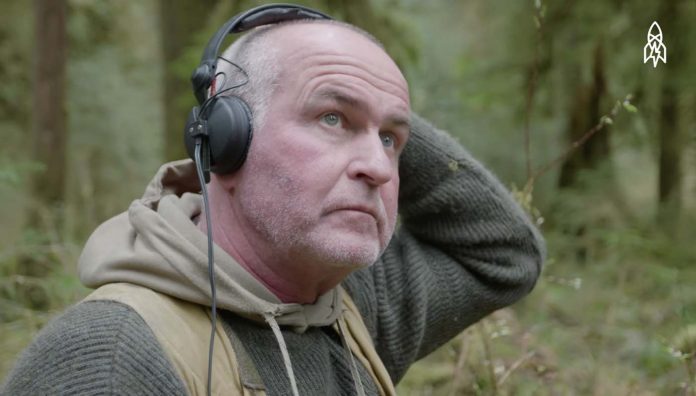
Gordon Hempton is a “sound-tracker” who travels all over the world in order to record rare or disappearing sounds – particularly the sound of silence.
Hempton has spent years fighting to protect the world’s quietest places from noise pollution and the sounds of intrusive human presence.
He first became inspired to preserve silence in 2005 when he visited the Hoh River Valley in Washington. The diligent sound-tracker says that he had to hike 3 miles in order for the sounds of the roads and parking lot to fade away – but his trek through the woods eventually brought him to an approximate square-inch of silence which he believes is the quietest place in the United States.
The park is now just one of the places that Hempton plans on protecting as a “quiet park.”
Hempton believes that designating international quiet parks will help to ensure that people will be able to experience silence for generations to come.
Hempton recently announced the creation of the world’s first certified quiet park in the Amazon Rainforest.
After developing a relationship with the Cofan Tribe and receiving their blessing, the Zabalo River in Ecuador will now be protected from human noise pollution, which will also help to preserve the lands of the native people. Hempton has even ensured that the region is far away from any airplane flight paths that may run overhead.
With the help of his nonprofit organization Quiet Parks International, Hempton now hopes to instate 100 more quiet parks within the next few years, with another 165 already identified as additional quiet parks in the future, several of which are located in the United States.
I’m celebrating my 80th birthday next year by touring a new solo show to UK theatres I know well and a few that I don’t. I open at my local arts centre in January and end up by August in Orkney.
Some people may be anxious about turning 80 years old, but not Sir Ian McKellen.
In fact, the legendary English actor is celebrating his birthday by performing 80 different solo shows across the UK to benefit local theaters.
Each show consists of personal anecdotes, excerpts, and readings from the likes of Shakespeare and Tolkien, among others – and McKellen has apparently been recruiting audience members to the stage as well.
Since the tour launched in January, he has visited dozens of theaters, many of which he used to perform in as a young actor.
“Live theatre has always been thrilling to me, as an actor and in the audience,” McKellen writes on the tour website.
“Growing up in Lancashire, I was grateful to those companies who toured beyond London and I’ve always enjoyed repaying that debt by touring up and down the country myself, with the National Theatre, Royal Shakespeare Company, Prospect Theatre, the Actors’ Company, as well as with commercial productions.”
McKellen has also been donating the proceeds of each show to the venues and theaters he visits along the way. The tour is only halfway done and he has already raised over £800,000 ($1 million) for UK theaters, according to BBC.
McKellen will officially be turning 80 years old on May 25th, and he plans on celebrating the occasion by performing in his hometown of Lancashire.
That being said, he also did a free show in Norwich this week for 80 other 80-year-olds, and one of the adoring octogenarians said that McKellen was simply “a perfect gentleman.”
Last week, Paul T. Davies published a review of McKellen’s show in Colchester – and the critic says he was in awe of the intimate performance.
“Few actors can hold an audience in the palm of his hand; few can engage an audience so vividly; few are playful, poignant, and passionate, a little bit naughty, erudite and so damn talented,” says Davies.
“But the ‘You’ in the title of the show is the important person. He embraces us all, and embraces theatre in a warm hug of experience and joy.”
You Shall Not Pass Unless You Share The News With Your Friends On Social Media – Photo by Olive Rosser / Feast Creative
Quote of the Day: “There is nothing outside of yourself that can ever enable you to get better, stronger, richer, quicker, or smarter. Everything is within. Seek nothing outside of yourself.” – Eiji Yoshikawa, Musashi
Photo: by Don Christner, CC license via Flickr
With a new inspirational quote every day, atop the perfect photo—collected and archived on our Quotes page—why not bookmark GNN.org for a daily uplift?