Skydiving is bound to be an incredible experience, but for these 217 adrenaline junkies, their most recent dive wasn’t just an incredible experience — it was also a world-record-breaking event.
According to Caters News, the skydivers hoped to break the world record for “the largest ever group to complete two and three different formations while free-falling.” Instead of just jumping from the plane and enjoying the view, the group wanted to dance in the sky and create a spectacular show for those on the ground.
So, 217 skydivers piled into 10 planes, flew 19,000 feet above Eloy, Arizona, and jumped. While they were technically hurtling toward the ground at 120 miles per hour, none of them seemed particularly worried or pressed for time.
Instead, they appeared calm, cool, and collected enough to create some pretty amazing formations in the sky as they made their way down to the ground.
You can watch the footage of the stupendous stunt by CLICKING the link below…
We’re Jumping At The Chance To Spread The News: Click To Share With Your Friends
You remember the Ice Bucket Challenge? The goofy YouTube trend where people dumped buckets of ice water over their heads in order to raise money for ALS research? Well, the fad ended up raising over $115 million in charitable donations, which is largely credited as the financial drive behind the most recent breakthrough in treating the awful disease.
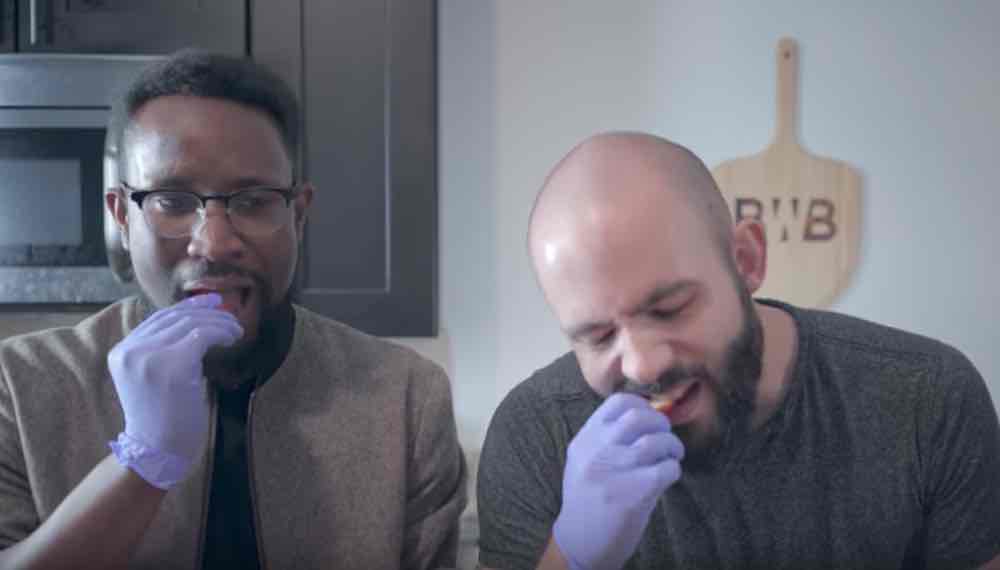
Now, there is a different kind of challenge that is raising thousands of dollars for ALS research: the Hot Pepper Challenge.
Andrew Rea is the host behind the popular YouTube cooking show Binging With Babish. The YouTuber made a video about his Hot Pepper Challenge idea last week because one of Rea’s earliest subscribers and fans, Garmt van Soest, passed away from ALS in late October.
“He reached out when I only had a few thousand subscribers, offering me encouragement, ideas, and inspiring words,” says Rea. “He started fundraisers, spoke at events, and continually inspired and enlivened everyone around him, including myself.”
So when Rea got a text from Van Soest saying goodbye, he was heartbroken; but he also felt spurred to do something positive in memory of his friend.
“I saw him take the Ice Bucket Challenge back in 2014, and that was a huge movement that everybody participated in to help raise funds and awareness for ALS. So I thought why not take that in a different direction?” says Rea.
“The ‘hot thing’ right now, so to speak, is to eat super spicy peppers on camera. So, why don’t we put some purpose behind all this pain that we’re putting ourselves through and create the Hot Pepper Challenge?”
Rea then posted a video of himself eating a ghost pepper – the second hottest pepper in the world next to the Carolina Reaper – to kick off the challenge.
The host says that it works similarly to the Ice Bucket Challenge: if you participate, you nominate three of your friends to eat a hot pepper. If they refuse to do it, then they’re encouraged to donate to ALS research. The spicier the pepper, the less you’re pressured to donate.
Rea also created a GoFundMe campaign for the challenge’s proceeds, which has already raised roughly $19,000 over the course of a week.
“I hope that this will help raise funds and awareness for the ALS Association, a great organization doing important work researching the disease,” says Rea. “Moreover, I hope that I can play a small part in helping to spread Garmt’s message of strength and hope.”
(WATCH the video of Rea’s Hot Pepper Challenge below)
While some people might say that you have to fight fire with fire, this Kentucky father is taking a softer approach.
Earlier this week in Lexington, a sentencing hearing was held in court for Trey Relford, a man convicted for his involvement in the robbery and death of 22-year-old Salahuddin Jitmoud in 2015.
Salahuddin’s father, Jitmoud, addressed the courtroom during the sentencing – but he surprised the witnesses by saying that he forgave Relford for his role in the crime.
“I’m angry at the devil, who is misguiding you and misleading you to do such a horrible crime,” Jitmoud told Relford on Tuesday. “I don’t blame you. I’m not angry at you. I forgive you.”
According to WLEX, Relford tearfully responded by saying: “There’s not much I can really say. I’m sorry about what happened that day. I cannot do [anything] to give that back to you.”
Jitmoud then embraced Relford in the middle of the courtroom.
The event was so emotional, in fact, the judge had to call for a recess.
After Relford was sentenced to 31 years in prison, the compassionate father reportedly whispered to “do good deeds” once he gets out of prison and that he has “confidence that Allah is forgiving.”
(WATCH the video below)
Click To Share The Emotional Story With Your Friends – Photo by WLEX
You can definitely file this story under “stuff you don’t see every day.” Though there are plenty of people who claim to have seen a UFO, I’m sure not many have ever seen a UFO-themed chicken coop!
In Boise, Idaho, a couple spent the entire summer creating this cosmic coop in their yard. A video of their creation has already garnered over a million views on Facebook, and it’s no surprise why!
“We kind of brainstormed how we were going to build that classic shape, and the first discussion was out of wood,” Ellen DeAngelis told CBS Philly. “But we really wanted something a little bit more curvy so we decided that satellite dishes were going to be perfect for what we needed.”
Well, their decision was definitely successful, as the chicken coop — complete with flashing lights — definitely resembled a UFO.
According to the couple, the coop is climate-controlled. Perhaps most surprising is the fact that the chickens seem to love it!
The birds go in and out of the UFO almost as naturally as they would a regular coop – although, Ellen and her husband planned to install an automated ramp so that the chickens wouldn’t even have to walk to get back inside.
Click the link below to see footage of the alien coop in action with flashing lights and all…
Bird Is The Word: Click To Share The Out-Of-This-World News With Your Friends
A science museum in the Midwest has received a huge financial windfall thanks to the fans of the hit Netflix original series “Stranger Things”.
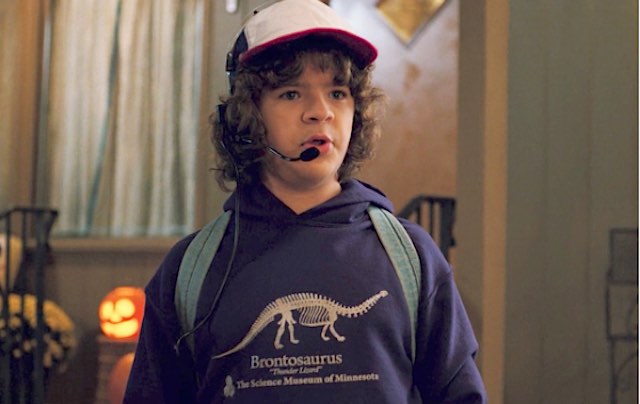
In the first episode of the newly-released second season, the character of Dustin Henderson can be seen rocking a purple sweatshirt from the Science Museum of Minnesota that is emblazoned with a brontosaurus skeleton and a caption reading: “Thunder Lizard”.
The museum immediately became flooded with phone calls and emails from fans asking where they could buy the sweatshirt.
Despite the sweatshirt only being sold in their gift shop back in the 80s, the museum brought the sweatshirt back and started selling “Thunder Lizard” crew necks, tee shirts, and hoodies for $15 to $40 a pop, depending on the size.
Within hours of announcing the merch sale on Twitter earlier this week, the museum website crashed. Since it got up and running again, the institution has reportedly garnered over $400,000 from the clothing sales.
Considering that the “Stranger Things” gang members are zealous young scientists, we think it is safe to say that they would be excited about their contribution to the museum’s funding.
“For us, we’re just relishing this opportunity to be connected to the popular show, especially one that has characters that are interested in science,” says Kim Ramsden, the public relations director at the Science Museum of Minnesota, according to CNBC.
“As a non-profit, all of the proceeds will go back to our mission of science and education and inspiring other young kids like Dustin on the show and his friends to have an interest in science.”
If you want to get your own “Thunder Lizard” shirt, the museum’s online store has an unlimited supply – but they have reportedly sold out of almost all of their in-store sizes, as of Tuesday.
Friends Don’t Lie, But They Do Share Good News With Each Other: Click To Share
Max Lanman knew that a description on Craigslist would not do his girlfriend’s 1996 Honda Accord justice. So instead of making a boring ol’ internet ad, he filmed his own car commercial for the automobile – and it is hilarious.
The cheeky minute-long video is shot in almost the exact same style as typical modern commercials that you see on TV. A silky-smooth voiceover describes the car as a “one of a kind” vehicle for “people who have life figured out, but just need a way to get somewhere”.
Lanman says that he not only shot all of the advert’s footage himself, but they also got someone to do an original score. He admits that while it did take him and his friends over 200 hours of work to finish the commercial, they had all agreed that they mostly just wanted to have fun with it.
The Accord, which is fondly dubbed “Greenie”, was being sold with 141,095 miles on it at a bidding price of $499. The fine print at the end of the video states that while the cat, Papa Puff Pants, and the coffee pot are not included in the sale, eBay bidders get 0% APR financing.
After the commercial went viral, however, Lanman and his now-fiancé Carrie Hollenbeck were shocked to find out that Greenie had wracked up over $150,000 in bids.
“It started to take on a life of its own,” Lanman told CNBC. “eBay called us to reassure us that, you know, they were monitoring it, they were aware of the story, they loved the video and they were actually removing fraudulent bids. So we were in this sort of weird state where, previously we were thinking, ‘There’s no way this is going to be real,’ and then thinking, ‘Wait, is this real?’”
Unfortunately, a worker from the product department had deleted the auction because they had not seen the advert and had trouble believing that a ’96 Accord could sell for so much money.
Delighted by the commercial’s success, Lanman and Hollenbeck are hoping that if Greenie garners as many bids as the last auction, they will be able to use the money for a down payment on a new home – or to simply pay for the wedding.
In order to combat the excessive amount of “fake news” concerning cancer treatment, this charity has just appointed a digital nurse to dispel myths about cancer on the internet.
The digital nurse in question, Ellen McPake, says that because patients will often Google their diagnosis out of anxiety or stress, it is now her job to educate social media users about their disease.
According to the Macmillan cancer charity in the UK, over 42% of people with cancer have looked up information about their diagnosis online, often because they say they didn’t fully understand what their doctor had them told about their condition.
Other statistics have shown that about one-third of cancer patients say they were “in a daze” following their diagnosis, making it hard to understand information about their condition.
“Once the doctor says ‘cancer’, people automatically then shut down and they don’t take in the information that they’re given,” McPake told the BBC. “So they go home, speak to the family. And then they’ll sit online that night and get themselves in a frenzy with what they’re reading.”
In addition to answering questions on social media, McPake will host a monthly question and answer session for different kinds of cancer on the Macmillan charity website. November’s theme will be based on head and neck cancer; December will be based on dealing with the emotions surrounding the disease.
Professor Jane Maher, Joint Chief Medical Officer at Macmillan Cancer Support, says: “It’s completely natural for people to want to Google their diagnosis when they’re told they have cancer. But with countless unverified statistics, fake news and horror stories on the internet, ending up on the wrong website can be really worrying. This can leave people pinning their hopes on a dangerous bogus cure or underestimating the benefit of routine treatments.”
Click To Share The Good News With Your Friends (Photo by Daniel Sone, CC)
A revolutionary treatment has been used to save the life of a young Syrian refugee who suffers from a rare and terrible skin disease.
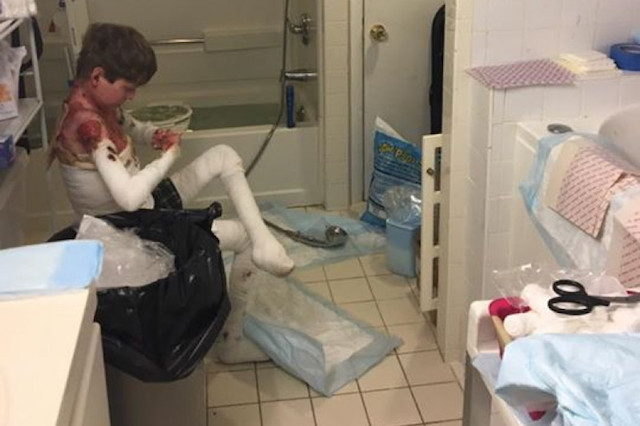
The disease, which is called junctional epidermolysis bullosa (JEB), is estimated to affect only 0.37 people per million. Those who do have the incurable genetic condition, however, are often called “Butterfly Children” due to how their skin can blister, burn, and fall off at the slightest touch. Almost half of the children who are diagnosed with the condition do not make it past adolescence.
The 7-year-old patient in question, whose name was not released in order to protect his privacy, was first admitted to the Ruhr University Children’s Hospital in Bochum, Germany two years ago with blisters covering 80% of his body.
Doctors tried treating the boy with antibiotics without any success. They also attempted using a skin sample from the boy’s father for a skin graft, but his body rejected it.
With the boy struggling to hang on in such a “devastating” condition, physicians were sure he was going to die.
In a last effort to save him, they reached out to Michele De Luca from the University of Modena and Reggio Emilia in Italy.
De Luca and his team are renowned for using a specific kind of gene therapy technique to conduct two successful skin grafts in the past – but no one had ever attempted to graft as much skin as the boy needed to survive.
Once the team agreed to take on the patient, they took a small sample of the boy’s healthy skin and found the broken gene that caused his JEB. After correcting the “LAMB3” mutation, they then used the sample to grow large sheets of skin similar to the kind that doctors use for burn patients.
A few skin grafts later, the boy was released from the hospital in February 2016 following eight months in intensive care. A little over one year later, he is playing soccer like a normal kid.
Though he still has small amounts of blistering on the non-grafted areas of his skin, he has no sign of scarring, due to how JEB only affects the outermost layer of the epidermis.
It is unknown how his skin will fare in the future, but since De Luca’s two other skin graft are still healthy 12 years after their operations, he remains optimistic. Additionally, the treatment is extremely promising for curing other Butterfly Children of the nightmarish disease in the future. Clinical trials are reportedly now underway.
“After this 10 years of struggling to accomplish all these rules and paperwork and bureaucracy, the moment you see a patient like this, you understand it was worth it to do it,” says De Luca in his report of the treatment published in Nature.
(Note: the photo used at the top of the article is a representational picture of John Hudson, another boy who lives with JEB who GNN reported on earlier this year.)
Click To Share The Exciting News With Your Friends
This new piece of tableware sounds almost like something out of a Seinfeld episode – but it’s actually real.
In order to address the loud slurping sounds that people make when enjoying a serving of noodles, a company has made an electronic fork that plays noise-canceling sounds through your phone whenever you make a loud slurping sound during your meal.
The Otohiko fork has been programmed to recognize the sound of slurping through a microphone in its handle. When it detects the slurp, it sends a signal to an app on your smart phone that plays a more pleasant sound over your slurping.
“The more you slurp, the more fun you have,” says a video advertisement for the Otohiko.
Nissin, the company responsible for Cup Noodles, says that they created the Otohiko as a means of addressing “noodle harassment” in Japan.
According to Nippon, “the Japanese, who generally frown on noisy eating, consider it proper and even preferable to suck up one’s noodles with a loud slurping sound”. Thus, the phrase “noodle harassment” was created on social media to describe when travelers are made uncomfortable by the loud slurping sounds made by Japanese people when they eat noodles.
Whether there are many people who actually experience that cultural barrier remains to be seen – but the Otohiko is still a hilariously creative solution for the problem.
The fork is currently available for preorder on Nissin’s website with a release date of December 15th, 2017 – just in time for Christmas.
(WATCH the video below)
Click To Share The Oodles Of Fun With Your Friends (Photo by Nissin)
This 6-year-old girl is taking “dance like nobody’s watching” to a whole new level.
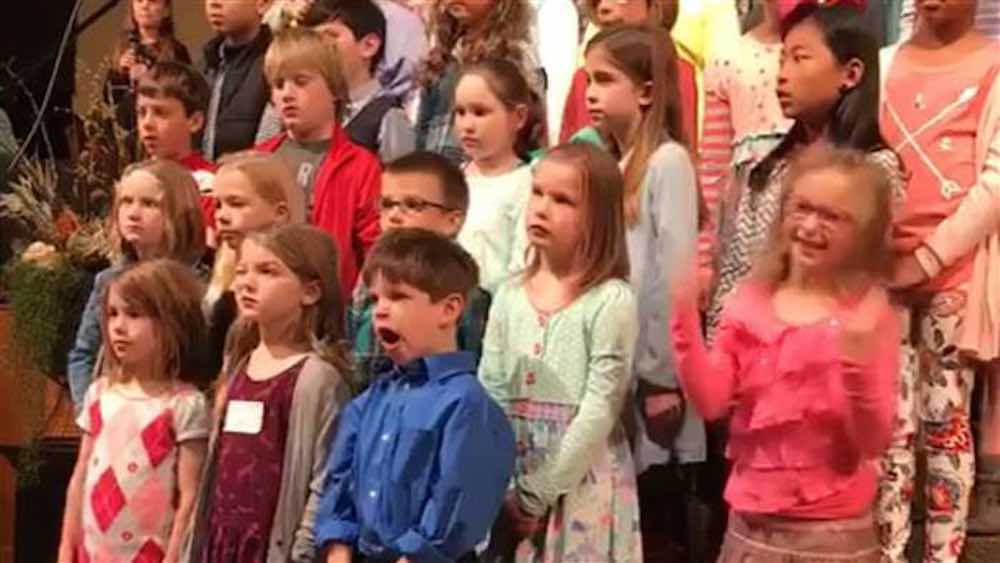
A video of Loren Patterson dancing at her children’s choir performance is going viral after her mother Jennifer posted it to Facebook in October. Two weeks after being published, the clip has already wracked up 42 million views.
While the rest of the kids in her group can be seen standing perfectly straight as they sing “Old Church Choir” by Zach Williams, Loren can be seen shimmying, boogying, and waving her hands in the air like she just doesn’t care.
Just to clarify, there is nothing wrong with preferring to stand still while singing those high notes – but Loren’s dance moves are infectiously fun.
Jennifer, who also sings in the First Baptist Church adult choir in Dickson, Tennessee, says that it was Loren’s first performance in front of the 2,000-member congregation.
“Around here she sings all the time, she’s always dancing around, she makes up her own songs about Jesus,” Jennifer told TODAY. “That’s just her personality; she’s so bubbly and she’s been that way all her life.”
Loren’s dancing has touched so many people, social media users have reached out to Jennifer to say that her daughter’s vivacious performance has inspired them to have more fun in their day-to-day lives.
The 6-year-old’s performance also has another very important lesson for everyone: be yourself, and don’t be afraid to dance like nobody is watching.
Wayne Winters and his wife had been waiting for two years to find a kidney donor that could save her from her stage five kidney failure, and Winters became tired of waiting for a miracle.
Instead, he took to the streets of Farr West, Utah last month with a sandwich board sign reading: “Need Kidney 4 Wife”.
Every day, he would walk for miles down the road in hopes that the right person would see his sign and be inspired to donate the life-saving organ.
After KSTU broadcasted his story, however, the 74-year-old husband was inundated with calls and kidney offers – as many as 800 calls per day.
Then, the Winters got the call that they had been praying for.
“‘We have a kidney for you, get down here,’” Winters told the news station. “I was just so overwhelmed. I didn’t know what to think.”
Ironically, the kidney did not even come from one of the many offers that Winters received. Instead, the organ came from an organ donor who had passed away at the hospital.
The couple is now celebrating the approach of even more adventures added onto their 26 years of marriage.
“If she can have a good five years that would be awesome. We can have our life back,” Winters said.
Wayne, however, is still pounding the pavement with his sandwich board sign, except now he is encouraging pedestrians to donate their kidneys to the next person in need.
“Think about it, we could start a kidney revolution,” says Wayne. “That would be so great.”
(WATCH the video below)
Tell Your Friends This Sweet Story: Click To Share – Photo by KSTU
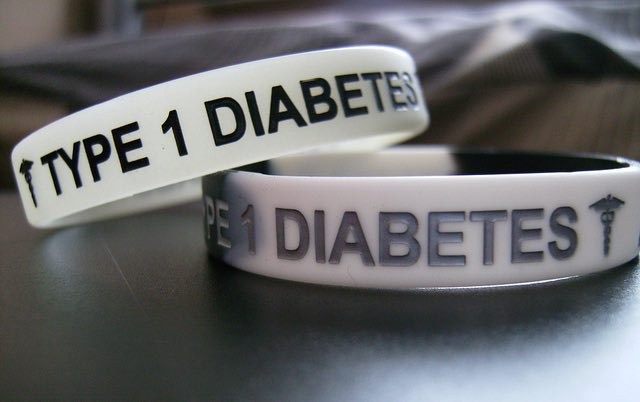
Diabetes is among the most widespread and most troubling health problems in the United States. Keeping the disease in check requires constant vigilance and consistent self-treatment, making it a major challenge for many people.
Fortunately, modern technology offers novel new solutions to many of these issues.
In recognition of National Diabetes Awareness Month, let’s look at some of the ways technology is easing the burden of disease management and making life better for those who struggle with diabetes.
Smartwatches are already used to record and track a variety of physiological data, and researchers believe this data could be a goldmine when it comes to detecting changes in the wearer’s health. For instance, people who are insulin-resistant – and therefore at greater risk of developing Type 2 diabetes – often display particular heart rate patterns that are different from the general population. By monitoring these patterns, smartwatches could be used to alert at-risk people and potentially provide an invaluable early warning.
For those with Type 1 or advanced Type 2 diabetes, insulin management is a major burden. It requires consistent and repeated glucose monitoring via finger-prick testing, as well as occasional insulin injections when necessary. Even vigilant testing isn’t always enough to maintain proper glucose levels, and the monitoring process is often a hassle – but this high-tech solution may be on the horizon.
Medical researchers have developed a smart patch that monitors blood glucose and automatically delivers an appropriate dose of insulin as needed, using a painless delivery system composed of an array of microneedles connected to small insulin pouches. Though this smart patch is still in the testing phase, it has proven effective during initial testing and may soon be ready to change the way diabetes sufferers manage their disease.
Wearable technologies have the power to transform the way people monitor and manage their health. Smart socks and shoes utilize temperature and pressure sensors to monitor blood flow, which could provide early detection of blood supply issues and help to prevent tissue damage.
Additionally, smart contact lenses can monitor glucose levels via human tears.
2) Homes of the Future to Monitor Diabetics’ Glucose Levels
Home automation is one of the hottest trends in technology, but its potential extends well beyond simple convenience and entertainment. Michael Maniscalco, a leading figure in the field of home automation, provides a powerful case study.
After his young son was diagnosed with Type 1 diabetes, Maniscalco created an innovative home automation setup that triggered the smart lighting in his home any time his son’s blood glucose dipped below a certain level.
This is just one way in which homeowners with special medical needs could utilize their systems to the fullest. For example, indoor cameras could remotely monitor patients or loved ones in case of an emergency. Or, alarms can be programmed to recognize if a diabetic’s glucose levels are low.
This kind of home automation has the potential to support disease monitoring and management in a variety of powerful ways, particularly when combined with smart health monitors.
Service dogs may even be able to eventually contribute; researchers are currently working to develop smart interfaces that would enable them to trigger alerts in the event of a hypoglycemic attack.
There’s an app for just about everything these days, and thankfully, diabetes is no different. Several apps already exist to help disease management, and a number of others are currently in development. Sugar.IQ will soon bring the tremendous power of the IBM Watson artificial intelligence platform to diabetes management, analyzing glucose levels and other data to find important trends and offer valuable insights and guidance to help those with diabetes better manage their disease. The Epic Health app similarly offers advanced data analytics, with the added bonus of innovative glucose testing without the need for blood samples. DiabNext, meanwhile, offers an all-in-one solution to help diabetes sufferers test glucose levels, automatically fill logbooks, remember to take medications as prescribed, and more.
Diabetes remains a serious public health issue and a major challenge for those who suffer from the disease, but there is plenty of hope on the horizon. National Diabetes Awareness Month serves as a great opportunity to spread awareness not only of the disease itself but also of the great work being done to direct the power of modern technology towards diabetes management and treatment.
Maricel Tabalba is a freelance writer who is interested in writing about smart gadgets, emerging tech trends and environmentally friendly advice. She earned her Bachelor of Arts in English with a minor in Communication from the University of Illinois at Chicago.
It’s Diabetes Awareness Month: Click To Share The News With Your Friends(Photo by Bradley Johnson, CC)
Some people want to celebrate their birthdays with a big party that’s all about them.
But for Matthew McConaughey, that was the last thing on his mind.
The Oscar-winning actor turned 48 years old on November 4, 2017 and he spent the day giving back to the people of Lawrenceburg, Kentucky.
The Wolf of Wall Street actor handed out 4,500 turkeys to families in the area, alongside 250 volunteers. The kind act was part of a charity initiative with Wild Turkey Distillery, called Wild Turkey Gives Back.
The Kentucky bourbon whiskey brand is located near Lawrenceburg. The actor was hired as the creative director and celebrity spokesman for the company’s latest campaign in 2016.
“Thanksgiving, gratitude, we believe in our family that the more you’re thankful for, the more that you show gratification, the more that you’re gonna create in your life to be thankful for,” the How to Lose a Guy in 10 Days actor told them. “Let’s go make some people happy, put some smiles on some faces, deliver some turkeys. There’s some people that are gonna be happy to get ’em.”
He also shared a second video of himself bringing a free turkey to a group of women who introduced themselves as the “hot mamas.”
Click the link below to watch one of heartwarming Matthew’s surprise visits…
Give Thanks With Your Friends: Click To Share – Photo by Instagram / carriedreams // Instagram / jaredricardo)
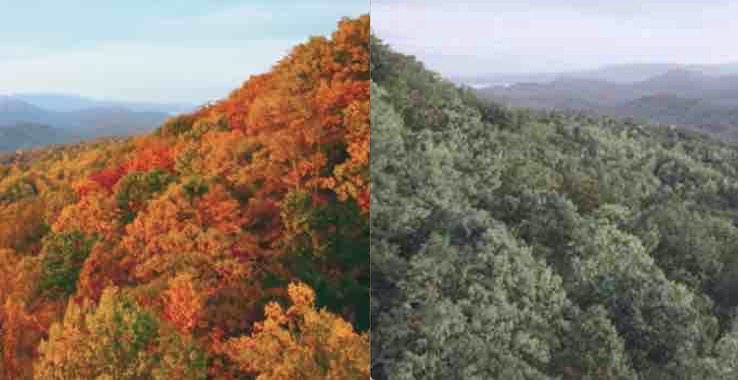
Autumn isn’t just adored by the masses because it brings pumpkin spice lattés and Halloween decorations – the season also brings dazzling colors to forests around the world, the most beautiful of which is in Tennesse.
According to the National Park Service, the Great Smoky Mountain range in Tennesse is the most visited national park in America. When October and November roll around, the mountain ranges transform into a breathtaking collage of red, orange, and yellow colors.
The organization published an emotional video of the “colorblind-less” viewers in action last week, and the reactions of some of the participants are extremely moving.
“It’s how I imagine the difference is between here and heaven,” said one of the visitors. “I feel like now I know why people come from miles and states around just to see this.”
Thousands of tons of baby clothes end up in landfills every year as children get older and outgrow their former outfits – but this new material, which has been nominated as a Dyson Awards finalist, could change that.
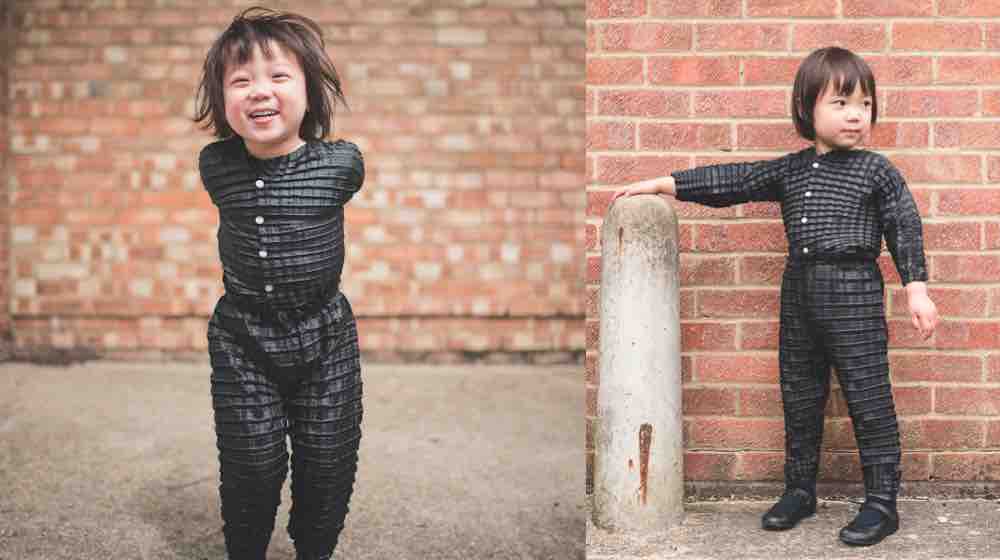
The Petit Pli is a kind of pleated children’s clothing that is being hailed for its groundbreaking design that grows with the wearer. The outfits are made out of synthetic, waterproof material that can stretch to fit youngsters from 6 to 36 months old.
The apparel won’t just save discarded baby clothes from landfills – they could also save parents hundreds of dollars in children’s clothing.
The mastermind behind the ethical clothing design, Royal College of Arts student Ryan Mario Yasin, created the Petit Pli as part of his masters program in Innovation Design Engineering.
“Children outgrow their clothes in a matter of a few months, yet we clothe them in miniaturized adult clothing, as opposed to designing them from the ground up,” he told Dezeen. “With 11 million children in the UK, I thought it was time we redesigned children’s garments.”
With a patent pending on the Petit Pli, he says that he is currently raising investments and looking for manufacturing opportunities.
Yasin is already off to a good start, too – his design was picked out of 2,000 entries as a finalist for the 2017 James Dyson Awards. While Yasin and other national winners of the award are given $2,500 in recognition of their innovation, the international winner of the competition is given a whopping $40,000.
Other designs that have been nominated for the award include a diffuser for wildlife repellant that could be installed along major highways in order to prevent roadkill. Another is Onky: a stuffed toy that moderates children’s vitals so they don’t have to use anxiety-inducing sensors or medical devices.
Last year’s winner of the Dyson Award was the Ecohelment: a recyclable paper bicycle helmet that boasts the same amount of protection as traditional styrofoam and polystyrene bicycle helmets – except it’s more portable and environmentally friendly.
(WATCH the video below)
Help This Story Grow: Click To Share The News With Your Friends (Photo by Petit Pli)
We’re all familiar with the messages used by internet scammers to get money from unsuspecting people thousands of miles away. So, when Ben Taylor struck up a bargain with a man from Liberia, it could have ended badly—but no one could have guessed how wonderfully the bet would pay off.
Joel first sent a message to Taylor on Facebook asking the YouTube personality to send him expensive electronic devices so he could sell them on the Liberian market and support his family. Additionally, he said that he would split the profits with Taylor 50/50.
33-year-old Taylor was about to delete the online plea as spam – but something kept him from writing off the inquiry. He figured that if he continued correspondence with Joel, it would at least use up some of the man’s time keeping him occupied, rather than scamming those who would be more gullible.
So he responded to Joel saying he ran a business that paid people to take photographs of where they lived. If Joel complied, Taylor could hire him as a kind of freelance photographer.
To his surprise, Joel sent Taylor a few photos of his home in Monrovia, Liberia. Though they were blurry and badly-lit, the YouTuber was impressed that the guy even put in any effort at all.
It may have seemed counterintuitive, but Taylor decided to take a chance on Joel. He sent him a $30 camera and asked him to try taking some better photos of his village. He also gave the Liberian some pointers on how to hold the camera still and allow for as much light on the subject as possible.
The photos became clearer and better lit until, eventually, Joel was sending quite poignant pics of life in West Africa.
Taylor then created a photo book of Joel’s pictures called “By D Grace of God” – appropriately named after a line from one of Joel’s emails – and he then started an Indiegogo page asking for donations to help Joel’s family. The book sold over 1,000 copies in 40 countries.
True to their original bargain, Taylor split the profits with Joel 50/50. The YouTuber wanted to give his half to charity, so he asked the Liberian whether there were any charities that could benefit his home country. Joel replied that local children did not have the money for school supplies because they were so poor—money for notebooks, backpacks, and pencils was scarce.
Taylor thought about wiring $500 directly to Joel in Liberia so he could buy the needed supplies. (But wouldn’t he just spend the money on himself and disappear?) To Taylor’s astonishment, the villager kept his promise. He loaded up a taxi filled with newly-purchased school supplies and distributed them among all the local schools—naturally, shooting plenty of pictures to show the kids’ excited reactions.
Ben says that in light of the success from Indiegogo, he created a website, “By D Grace of God,” so people could continue to support Joel and his family by buying the photo book and additional merchandise.
The 33-year-old also says that he still can’t believe his YouTube career has turned into such a life-changing experience.
“I’m just a regular guy!” Taylor told Good News Network. “I go to work and hang out with my wife and baby. YouTube is just a fun side hobby.”
“[But] the response has been crazy,” he added. “People have reached out to me asking how they can help.”
‘If there’s a lesson to be learned, it’s that you shouldn’t judge people right off the bat.’
This is not the only incident where a possible internet scam has had a happy ending, either. After a Swedish woman was scammed by a Nigerian college student, they ended up striking up a friendship and she offered to pay for the rest of his school so he could give up scamming. The two now reportedly call each other on the phone once a week to chat about college life and work.
Another heartwarming example of a negative online experience turned positive is when a woman was cat-fished by an older man on a dating site after using photos of a Turkish model to make her think he was younger and more handsome. When she discovered the truth, she reached out to the model and told him someone was using his photos for online scams. The two then began chatting online until they started dating. They now live together in London.
Taylor’s story may not have ended in romance, but it definitely teaches a valuable lesson on judgment.
“I really thought I was going to make a YouTube series about messing with a scammer,” he told Good News Network. “This story turned into something completely different. If there’s a lesson to be learned, it’s that you shouldn’t judge people… When we actually take time to understand and get to know each other, we might be pleasantly surprised.”
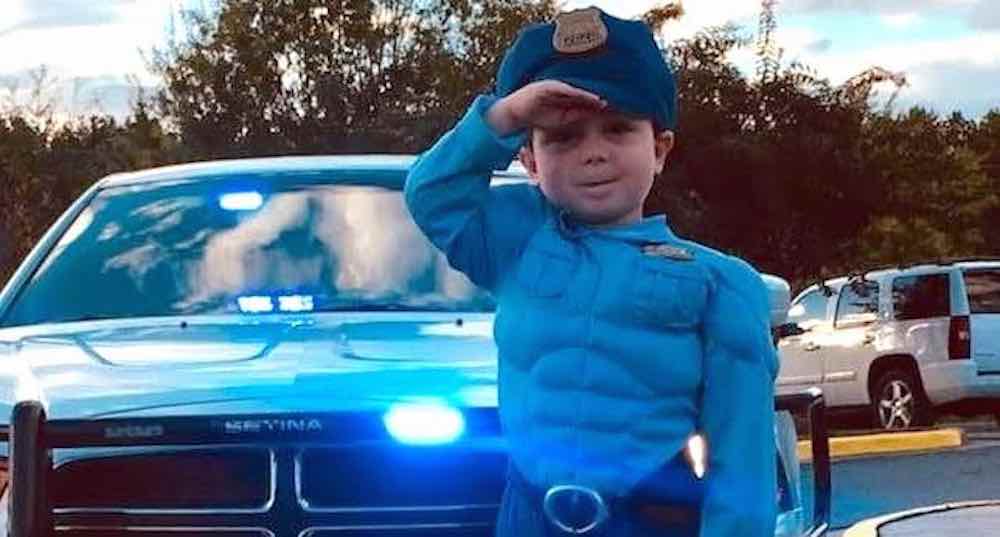
In early October, 3-year-old Cohen Chastain honored a fallen officer from his hometown by standing up and saluting during her funeral procession — for two straight hours.
The tot’s actions moved not only his family but also the entire Floyd County Sheriff’s Office in Rockmart, Georgia, and later that month the officers thanked Cohen by making him an honorary police officer during one special day.
But, like any officer, Cohen needed his very own squad car, so everyone in the police department chipped in to buy the boy his own pint-sized squad car, as well as other goodies.
“Many of you might recall this amazing three-year-old,” the Floyd County Sheriff’s office said on Facebook. “Cohen stood for more than two hours during the processional honoring our sister, Det. Kristen Hearne. We wanted to bless Cohen for his selfless act of support and love.”
CLICK to SEE all the adorable photos from the special day when he was presented with his very own police car.
Click To Share This Sweet Story With Your Friends – Photo by Floyd County Sheriff’s Department
Reprinted with permission from Peace News Written by Mohammed Ibrahim Published on October 31st, 2017
Nigeria is Africa’s most populous country with 185 million people. Its two leading religions are Christianity and Islam, and good relations between followers of these two religions are critical for peace in Nigeria.
Communities in Kaduna State, Nigeria, however, have witnessed ethno-religious conflict in recent years, with Muslim-Christian relations severely damaged as a result. But one group is working to mend these divisions.
The Peaceful Revival Foundation of Nigeria has made strides in southern Kaduna, bringing different religious and ethnic factions together.
“Peace Revival, for the past 5 years – 6 years now, has been going to southern Kaduna, trying to talk to people, meeting with traditional rulers, meeting with community leaders, and meeting with ethnic groups and other NGOs, talking to them, trying to source our problem,” said Pastor Yohanna Buru, founder of the Peaceful Revival Foundation.
“The cause of [conflict] is that some feel they are marginalized in southern Kaduna,” Pastor Buru said. “Mainly most of the Christians there, or the traditionalists there, or the people who claim to be the indigenes of that land.
“And possibly there’s no proper communication – or relationship – between the powerful in Kaduna and the government of today, or the people of northern Kaduna, so these are the contributing factors.”
Justice is a huge concern in the region, and acts of retaliation have sparked conflict.
“Between the government, society, Muslim or Christian – whatever – there is injustice there,” said Mohammed Abdullahi Gambo, a Fulani Muslim from the region. “When we have justice there’s no more conflict.”
Pastor Buru and his team encourage resolutions using dialogue and peaceful negotiation.
“We have been able to reach out to some of the traditional rulers in southern Kaduna, and discuss a lot with them, and try to negotiate for a better solution on how to be in peaceful co-existence with each other,” said Maryam Abubakar, a Fulani Muslim working with the foundation.
“To Muslim and Christians, they should sit down and talk, and they should bring in the traditionalists,” Pastor Buru said. “The moment you sit with the communities there, it has helped in peace-building – they open up, they tell you their problems, and maybe they themselves proffer a solution.”
Participant Aliyu Mohammed said the Muslim community hold Pastor Yohanna Buru in high esteem because of his peace-building work in the area.
“We believe there is the need for other interfaith groups to emulate him in promoting peaceful co-existence in the area,” said Mohammed. “He actually understood the terrain very well because he is also from the area and that has helped him in bringing all aggrieved parties on same table to dialogue.”
“Without peace in [this] environment, we can’t go forward, we can’t forge ahead,” said Pastor Joel Vigo, a Christian leader in the area. “Without peace, you can’t work, or look for something to eat. But when there is peace, life will be ok.”
“Let us understand one another, so that there will be peaceful co-existence between the traditionalists, the Christian, the Muslim, the youths, and the old,” said Reverend Ishaku, a Christian leader.
Click To Share The News With Your Friends –Photo by Peaceful Revival Foundation
One of the largest bell pepper producers of North America almost went out of business last year after it came under fire from a dangerous little pest called the pepper weevil.
The insect, which caused over $75 million in damages to Nature Fresh Farms, could not be seen by humans and it only reproduced faster when exposed to pesticides.
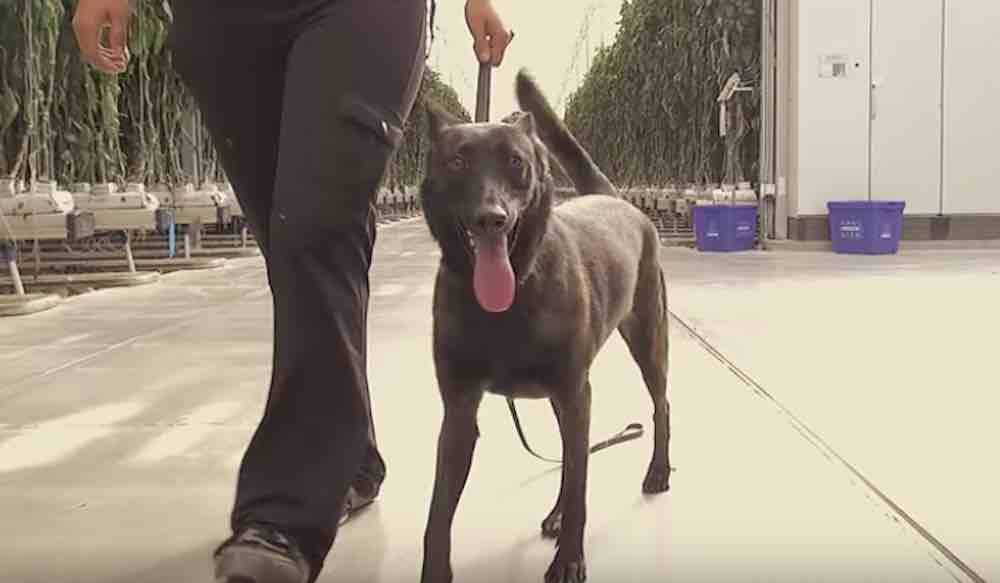
The greenhouse based out of Leamington, Ontario was running out of options for pest control, and staff feared that they would be put out of business. But then, they decided to bring in Chili the 2-year-old Belgian shepherd.
“We were at wits end – we didn’t know what to do,” said Cam Lyons, a pest management scout at Nature Fresh. “And in that desperation, I just got thinking of ‘What can we do that’s different?’ … so the idea of a scent detection dog just came to mind.”
Chili is the world’s first dog certified to sniff out the pesky insect. Since she was hired by Nature Fresh Farms in July, the greenhouse has had little to no interference from the pepper weevil.
The pup is able to sniff out where there is an outbreak of pepper weevils so quarantine specialists can close off the area and eradicate the pest.
“Chili is actually really, really good ” says Chili’s dog handler Tina Heide. “She’ll usually hit on [the smell] right away. It’s actually really cool to watch her, because sometimes as soon as she picks it up … she’ll whip around and head straight for it.”
(WATCH the video below)
Click To Share The Pawesome Story With Your Friends (Photo by Nature Fresh Farms)
While the Houston Astros are being hailed for winning the World Series this week, we’re also taking our hats off to the team of baseball fans who returned a woman’s hat after it fell eight floors down the side of a building.
In a video that has since gone viral on Twitter, the fans can be seen tossing the hat back up floor-by-floor. While one of the participants accidentally dropped the hat down a couple floors, it is quickly snatched back up by another onlooker.















 Skydiving is bound to be an incredible experience, but for these 217 adrenaline junkies, their most recent dive wasn’t just an incredible experience — it was also a world-record-breaking event.