It’s always good to recognize hardworking employees—but this 20-year-old fast food worker has gone viral for his infectiously positive attitude.
Since Jeremiah Murrill began working at the Chick-Fil-A restaurant in Wilmington, North Carolina a few years, he has become somewhat of a local celebrity.
Every day that he is on the clock, rain or shine, Murrill is taking customer drive-thru orders outside of the restaurant with a cheerful smile and amiable attitude. He even tries to remember the names of repeating customers as a personal labor of love.
Murrill recently gave permission for a doting customer to film him as he took their order last month—and since she uploaded the video to Facebook, it has been viewed almost half a million times.
If Murrill’s friendly disposition isn’t enough to convince you of the young man’s character, then maybe the video’s comment section will—there are dozens of comments from local customers praising the young man for always striving to make them smile.
“My favorite guy! Literally the most positive person, rain or shine,” wrote one social media user. “I’m so happy that he is getting the recognition he deserves and has earned simply for being an upbeat and genuine human being. You’re a rare find, friend.”
Another commenter wrote: “You could literally be having the worst day and he would turn it around! I truly miss this location because of him!”
When WWAY reporters asked Murrill about what inspires him to show such kindness to his customers, he simply said: “Your actions, your behavior, or the way you interact with people matters, and it transforms a day.
“Seeing these lives transform just by talking with them and taking their orders and being kind and nice—it’s awesome.”
(WATCH the sweet news coverage below) – Photo by WWAY News
Be Sure And Share This Story Of Compassion With Your Friends On Social Media…
Quote of the Day: “Let us not seek the Republican answer or the Democratic answer, but the right answer. Let us not blame the past (but) accept our own responsibility for the future.” – John F. Kennedy (launched presidential run 60 years ago today)
Photo: by Eve Chan, CC license – cropped
With a new inspirational quote every day, atop the perfect photo—collected and archived on our Quotes page—why not bookmark GNN.org for a daily uplift?
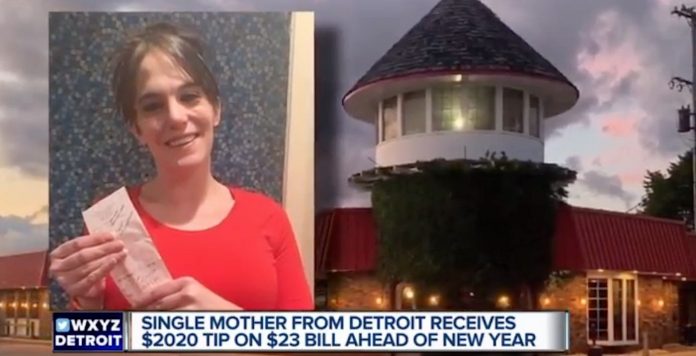
She was homeless just one year ago. But, after packing up and leaving Detroit so she could start a new life in northern Michigan, this 31-year old woman now has confirmation that she’s in the right place.
Danielle Franzoni moved to Alpena and settled into a homeless shelter to stay sober—after struggling with an opioid addition. Now a waitress, a generous tip is helping her build on her dreams after reaching two-years sober.
According to The Alpena News, Franzoni was working her Sunday shift at the waterfront Thunder Bay River Restaurant, when two regulars gave her the surprise of a lifetime, leaving a tip that made her burst into tears.
The total amount of the bill before the unexpected tip was just $23.33, yet the pair gifted her more than two thousand dollars more.
The handwritten note on the the receipt read: Danielle… Happy New Year… ‘2020’ Tip Challenge.
Franzoni told The Alpena News she was shocked, “They don’t know where I’ve come from, they don’t know how hard it’s been. They’re really just doing this out of the kindness of their heart.”
When asked what she plans to do with the money, the mother of three who just moved into a new house, explained that she’ll use some of it to obtain the last piece of the puzzle on her road to recovery—a driver’s license, something she hasn’t had for ten years.
With the bulk of the money going into a savings account, Franzoni will “build a future because of this.”
“My kids have a future,” she told WXYZ. “It’s a big deal. It’s a really big deal.”
Franzoni didn’t waste any time paying it forward, too. She went out to dinner that same day to celebrate, and joined the #2020TipChallenge by leaving a $20.20 tip for her server.
She reportedly hopes to one day open a sobriety house for women and children to show others facing similar struggles that change is possible with the right support.
You might want to pay forward some kindness by joining the so-called #2020TipChallenge and spreading some extra love in your community, without asking for anything in return.
(WATCH a video from WXYZ News) – Featured photo via video screenshot
SHARE the #2020TipChallenge With Friends on Social Media…
Last month, internationally renowned tequila brand Jose Cuervo unveiled their latest eco-friendly initiative: salvaging the leftover agave fibers from their distilling process and upcycling them into a more sustainable alternative to regular plastic straws.
The company is hailing their “Agave Project” straws as a first-of-its-kind biodegradable, bio-based drinking straw that will decompose up to 200 times faster than regular plastic.
Developed in partnership with the scientists at BioSolutions Mexico and the production team at Mexico-based PENKA, the creation of the agave-based straws sets out to offer a more sustainable alternative for the beverage industry, and utilizes the tons of fibrous material left over from the tequila-making process.
In 2020, millions of Jose Cuervo biodegradable agave-based straws will be rolled out at bars, restaurants, and Jose Cuervo events across the US and Mexico in a bid to reduce the consumption of regular plastics from the tequila-drinking experience.
As a family-run company with 225 years of tequila distilling experience, and the largest producer of agave by-product globally, Jose Cuervo has reportedly spent years exploring the potential of agave fiber as an alternative to plastic, paper, housing bricks, and fuel. Working with new partners like BioSolutions Mexico and PENKA marks the beginning of the rapid innovation needed to produce these sustainable items at scale and drive meaningful environmental impact.
“The past, present, and future of Jose Cuervo is tied directly to the agave plant – without it, we would not exist,” said Alex Coronado, Master Distiller and Head of Operations at Jose Cuervo. “It takes an average of 6 years to grow an agave plant before it is mature enough to harvest for tequila production, and we have to be committed to finding more ways to use the agave fibers once that process is complete. The debut of our biodegradable, agave-based drinking straws is a new step in utilizing the full potential of this very special Mexican agricultural product.
“As the tequila industry worldwide booms, it is our company’s responsibility as the leader to take care of the agave plant and ensure that we are producing tequila sustainably,” added Coronado.
Made with an agave bio-based and FDA-approved composite, the new straws replace around a third of the polymers used in traditional straw production, and at the end of its lifecycle can be consumed by microorganisms to fully biodegrade within one to five years in landfill conditions. This is a significant improvement over ordinary plastic drinking straws, which takes considerably more years in the same landfill conditions.
“As a by-product of the tequila industry, agave fiber is a rich resource we have harnessed to create an everyday, more sustainable alternative to plastic,” said Ana Laborde, CEO and Founder of BioSolutions Mexico and PENKA. “The agave fiber in our bio-based composites is an ideal material that not only works as a replacement to plastic, but simultaneously reduces the dependency on petroleum-based polymers, fossil fuels and water for the production of our straws.”
Photo by Jose Cuervo
The agave-based straws feature a mouthfeel and texture similar to traditional plastic straws, with the agave fibers visibly creating a natural, organic tan color. The use of agave fiber by-product is a transformative improvement on other plant-based materials as the natural resources needed for growth is very low compared to plant-based materials coming from corn or potato crops.
“Sustainability isn’t just about biodegradability—that’s the end of the story, but not the beginning. It’s also about the life of the plant and how much energy and resources you need to create the biomaterial. Jose Cuervo’s upcycling of agave fibers generates a virtuous circle, and is the start of creating bio-based hybrid products that offer a meaningful improvement over traditional plastic materials,” continues Laborde.
Toast The Good News With Your Friends By Sharing It To Social Media…
Whether it’s learning to relax, face your fears, or pick up a new hobby, this new installment of Simon’s Cat has all the best tips on facing 2020 with optimism—despite the cat-astrophic obstacles along the way.
Simon’s Cat is a beloved animated web series featuring a conniving cat who exhibits all the typical feline antics we know and love, but with the purrrfect hilarity of cartoon ridiculousness. If you enjoy the series, be sure to check out the Simon’s Cat coloring book series on Amazon.
(WATCH the video below)
Click To Share This Purrrrfect Advice With Your Friends
As English political philosopher Thomas Hobbes famously stated in his treatise On Commonwealth, life without the commonwealth was “nasty, brutish, and short”.
In Hobbes’ day, the average male life expectancy was about 35 to 45 years at birth in England; now the chances for a child—even in rural Africa—of reaching adulthood unmarried, nourished, and educated education, are getting stronger and stronger.
Success by Numbers
“In the year 2000,” reads the report, “an estimated 970 million children were robbed of their childhoods due to … ill-health, malnutrition, exclusion from education, child labor, child marriage, and early pregnancy.
Just two decades later, Save the Children reports that number has been reduced by one-third. 115 million more children are being sent to school, 11 million young girls have been saved from marriage, 3 million girls are saved from bearing children in their young age, there has been a decrease of 94 million child laborers, and 4.5 million children have been saved from violent deaths around the world.
Nations across all 5 major continents have worked hard, sometimes in the face of corruption and even war, to achieve these remarkable results, including Bangladesh, Afghanistan, Colombia, the Philippines, Mexico, and Ethiopia.
Across every major geographical zone on earth, Save the Children’s “End of Childhood Index Score” has increased, including west, central, east, and southern Africa.
Sierra Leone, once a Mad Max-style country of blood diamonds and civil war, has cut their rates of infant mortality, child labor, and child marriages by half since 2000.
25 years after the genocide, Rwanda’s score is 744 out of 1000 after cutting infant mortality rates by 80% and teen pregnancy by 60%.
What Accounts for this Dramatic Improvement?
In the Global Childhood Report 2020, Save the Children lists some of the ways in which these outstanding goals have been achieved.
One of the primary drivers for reductions in things like child marriage, child labor, teen pregnancy, and school absence has been a global drive for equality between the sexes worldwide—not just in western nations.
“As this report shows, rising education rates among women and girls have been critical to improvements in child health in Bangladesh and child protection in Afghanistan and India,” the report reads.
“Investing in education programs for girls and increasing the age at which they marry can return $5 for every dollar spent. Investing in programs improving incomes for women can return $7 dollars for every dollar spent.”
The first 5 of the 17 UN Sustainable Development Goals which so many bilateral development projects attempt to adhere to include Gender Equality and Quality Education.
The MDG (Millennium Development Goals) put down in the year 2000, targeted the eradication of poverty in all its forms by the end of the century.
“A recent Brookings Institution study found as many as 19 million extra child lives – most of them in Africa—were saved because of MDG-accelerated action,” reads the report.
Finally, the advances in technologies like smartphones, social media, medical instruments, vaccines and drugs, have changed the face of the world in ways that especially benefit the developing world. Nearly all (96%) of the humans on earth have access to the internet, up from nearly half (58%) in 2001.
Mobile phones are being used to register births, improve early diagnosis of HIV in infants, monitor malnutrition in children, and to educate individuals about family planning, adolescent health and prenatal care.
If this is what nations can achieve in 20 years, another 20 years of pursuing development goals could mean that another 300 million children worldwide could enjoy their childhoods in relative peace and security before entering adulthood as educated, nourished, and independent members of society—which is quite an encouraging thought to have as we enter this bright new decade.
Be Sure And Share This Inspiring Story Of Good News With Your Friends On Social Media…
Most kids will go nuts for an opportunity to play in a shopping mall play place, but not Oliver Navejar.
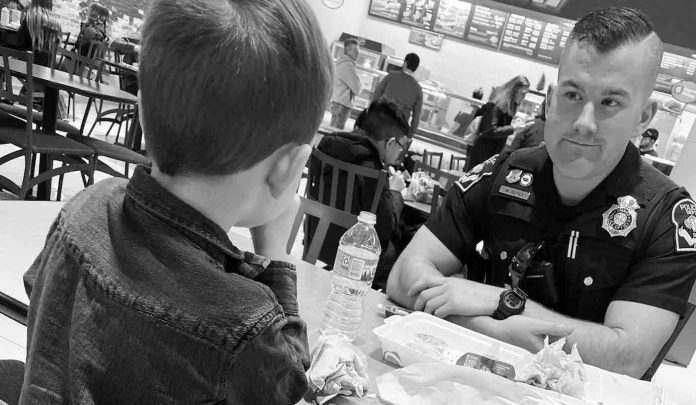
According to a heartwarming post from his mother, the 5-year-old boy from Omaha, Nebraska had been in the middle of frolicking amongst the mall’s play equipment when he suddenly caught sight of a police officer dining alone at the nearby food court.
Rather than continuing with his childlike antics, he immediately abandoned the play area so he could sit with the officer.
“Tonight, I saw Oliver’s eyes light up like I never have before,” Oliver’s mother Danielle Navejar wrote on Facebook. “We were at the mall and he was mid tuck-and-roll in the play area when I saw his eyes shift to something behind me. I asked what it was and he said ‘mommy that police officer is sitting alone.’ I said ‘Yeah, he is. You can go ask to sit with him if you want.’ Without hesitation he ran over and said ‘sir could I please sit with you?’”
Oliver then spent the next 45 minutes chatting with his new law enforcement friend. Meanwhile, Danielle says that she had been so filled with pride and inspiration, she could barely order food for her son because she was too overcome with emotion.
Not only was the exchange particularly meaningful for Oliver, it also helped to cheer up Omaha Police Officer William Klees as well.
“It was really the highlight of his day because, you know, he doesn’t really get to have those good conversations,” Danielle told WOWT. “So I think it really meant a lot to both of them.”
Be Sure And Share This Sweet Story Of Young Kindness With Your Friends On Social Media…
Quote of the Day: Our Toast for 2020: May the new decade bring you 20/20 vision to see wisdom and insight (always rooted in gratitude). – The GNN Team
Photo: by ᗩnneღJ.~ Poetic photography, CC license via Flickr
With a new inspirational quote every day, atop the perfect photo—collected and archived on our Quotes page—why not bookmark GNN.org for a daily uplift?
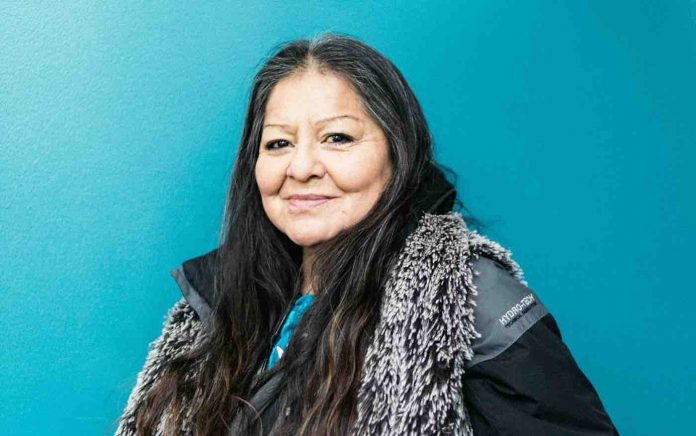
This groundbreaking new homeless shelter in Seattle is the first facility of its kind that has been designed by Native Americans for Native Americans—and it has already helped to take in dozens of people from the streets.
Despite how Native Americans only make up about 1% of the US population, they make up 10% of the country’s homeless. Furthermore, there are more than 1,000 Native Alaskans, American Indians, and Pacific Islanders living in Seattle alone.
That’s why Chief Seattle Club—a nonprofit dedicated to ending Native homelessness—launched the Eagle Village settlement in the Sodo neighborhood of Seattle back in November.
The village is made up of several dozen trailers that can comfortably house two people at a time. Collectively, the village can house up to 31 people who may need access to resources or stable living conditions until they can find arrangement for more permanent housing.
Not only are the trailers sufficiently spacious for the residents, the village also boats a medicine garden, traditional healing circles, and on-site case management and resources.
The managers of the $3.3 million village now hope that their trailblazing new initiative will inspire other cities to tackle the disproportionate amount of Native homeless people in America.
“It’s been a really rough road for me to travel,” 70-year-old Eagle Village resident Patricia St. Marks tearfully told KUOW on the site’s opening day. “Knowing I’m going to have a place to live in Eagle Village, and move into my home one day, has put my heart into a permanent smile. Every day, I wake up feeling free now.”
These McDonald’s employees are being hailed as heroes after they secretly acknowledged a female customer’s pleas for help last week—and their quick actions helped to rescue her from her domestic abuser.
The woman had originally approached the service counter of the restaurant in Lodi, California, by herself so she could pretend like she was placing an order. She then told the staffers to call the police because she was in danger of being harmed by her male travel companion. Additionally, she gave them her license plate number and asked them to keep her hidden until law enforcement arrived.
The woman went to the bathroom as the employees called the San Joaquin Police Department and explained the situation. When the woman returned to the counter to place an order, however, the man in question walked into the store and demanded she use the drive-thru.
San Joaquin police officers later reported that the man, Eduardo Valenzuela, had physically abused the woman in the past. On that particular day, he had threatened her with a stolen firearm and demanded that she take him to see his family.
After the woman was coaxed to go through the drive-thru, she continued mouthing the words “help me” to the employees. Luckily, law enforcement officers arrived on the scene shortly after the call was placed and Valenzuela was arrested and charged with criminal threats, stolen property, and being a felon in possession of a firearm.
Notably, the McDonald’s in question is just one of 20,000 restaurants, businesses, libraries, and community spaces across the United States that have been certified by The Safe Place Program, an organization dedicated to training US workforces so they can offer safety and emergency services to people in need.
“We are proud of our team for doing their part in being A SAFE PLACE!” wrote the Golden State McDonald’s Facebook page. “Thank you to our team for handling this appropriately, and to the San Joaquin County Sheriff’s Office Deputies who are constantly serving and protecting our community! We are proud to be in support with both A Safe Place and all of our law enforcement!”
Make Your Friends Aware by Sharing This Information On Social Media…
Back in 2016, a determined Irishman began collecting spare change to help sick children—and he is now on track to buy an MRI machine for a local hospital.
Liam Duggan first started pursuing his dream of building a children’s hospital by standing outside of a local cafe with a cardboard sign so he could gather spare change from generous passerby.
“I remember waking up one morning with the slogan ‘I may be crazy but I want to build a children’s hospital’ repeating in my head,” recalled Duggan.
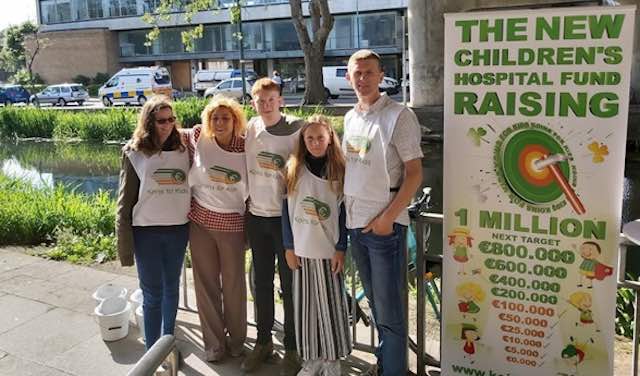
Three years later, Duggan has raised over $165,000 (€150,000)—and while he is not necessarily raising money to build an entirely new children’s hospital, he is more determined than ever to raise enough money to buy an MRI machine.
So how much does an MRI machine cost? “This sophisticated and expensive machine has a price tag of €1,000,000 on it and we are endeavoring to reach this target in 2023,” says Duggan.
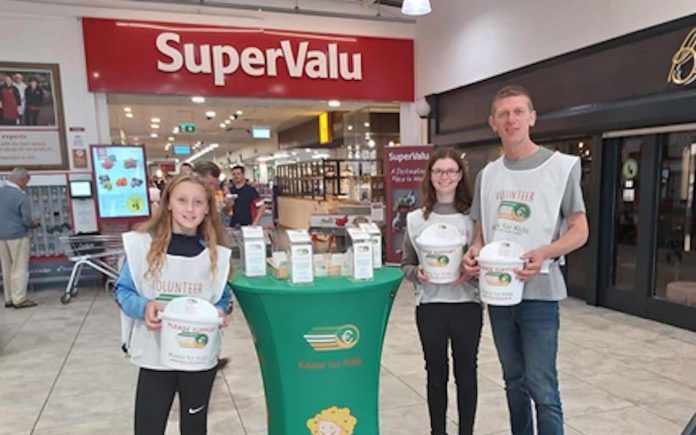
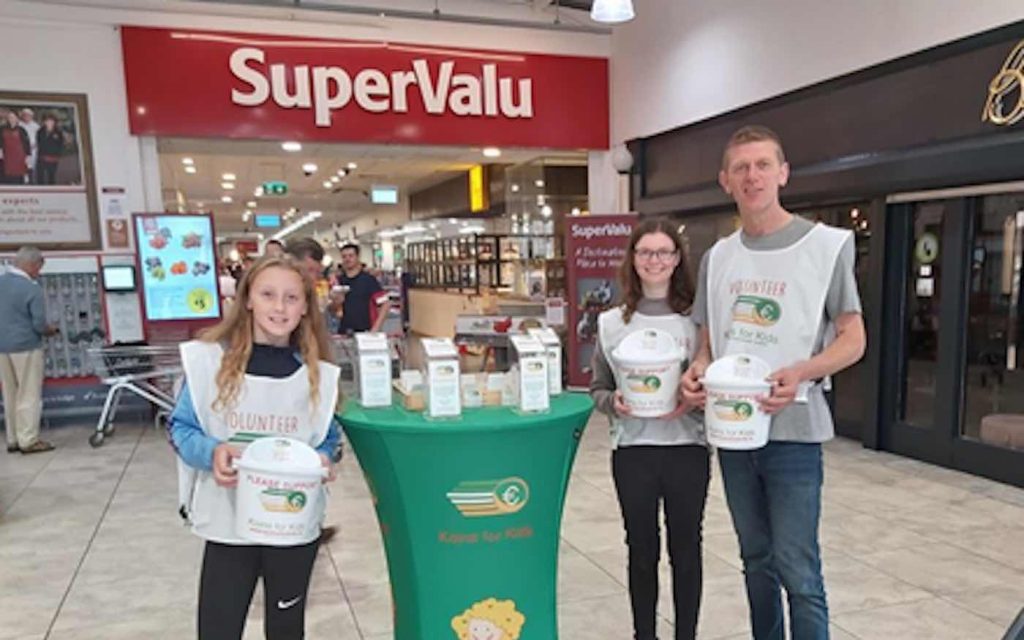
Perhaps what is most curious about Duggan’s goal is just how many small steps he has been willing to take to get there. Since he began his labor of love all by himself and followed the trail of just a few donated coins at a time, Duggan has patiently and persistently stood in rain and shine so he could accept small change, old coins, and even re-patriated foreign coins. Additionally, he has set up countertop collection boxes in supermarkets across the city.
“We have spent the last three years collecting in supermarkets, shopping centers and on the streets of South Dublin,” says Duggan. “We have approximately 200 countertop boxes in retailers.”
From humble beginnings, Duggan’s dream has grown and inspired the support of other people who have helped his dream to flourish. This included a chance encounter with a legal professional, which led to the successful accreditation of Duggan’s venture by the Irish Charity Regulatory so that Koins for Kids Ireland is now a fully-fledged charity with a regulating board of trustees.
After that, the small organization was happily surprised to be chosen as the charity ball beneficiary for a local social club ball—and they were even more delighted when individuals donated cash envelopes to help Duggan make his dream a reality.
When asked if he had any advice to share with people about his work, Duggan spoke of finding inspiration to persevere thanks to a former US president.
“I read a book written by Barack Obama before he was known worldwide,” says Duggan. “He was in this kind of business. His advice was to keep going; do not give up—and I have taken his advice. I do not intend to give up.”
Change The World By Sharing The Good News With Your Friends On Social Media…
Photographed with a Camtraptions camera trap. Laikipia Wilderness Camp, Kenya.
Reprinted with permission from World At Large, a news website reporting on nature, science, health, travel, and world affairs.
The International Union for the Conservation of Nature (IUCN) raved that 2019 was “a year of incredible species action”.
That’s because December 31st marks the end of a year that saw conservation battles fought—and won—and species returning from extinction.
The year of accomplishments is perhaps best highlighted by conservation targets dear to the hearts of many, the Asian tigers and the lemurs of Madagascar—the Darwinian playground of evolution that has attracted support and international conservation initiatives for years.
But there are many more reasons to celebrate in 2020. Here’s a rundown…
Madagascar’s Lemurs
Deforestation and fires have decimated critical lemur habitat. The entire family—around 100 different species of charismatic tree-leapers are very sensitive to habitat loss, especially the critically-endangered species, such as the black-and-white ruffed lemur and the greater bamboo lemur.
Expanding current native and commercial tree nurseries, while simultaneously creating two new ones, has insured the annual tree production reaches the goal of 500,000.
Neil Strickland, CC license
Furthermore, grants have allowed the IUCN to help establish locally-led community initiatives. As World at Large reported in September, one project team worked with the Bara people to reduce lemur hunting by village-level awareness-raising, forest patrols, and poverty reduction; and to stop fires entering endangered lemur habitat with man-made firebreaks.
In 2019, with 160 Bara people mobilized by the Lonaky (their tribal leaders), the community installed almost 4 miles of firebreaks.
Another community-focused strategy to help lemurs thrive has been the establishment of grassroots organizations to memorize and help enforce land laws, and the creation of teacher training workshops and conservation camps held in 12 primary schools and a new high school in lemur dense areas.
Tigers Back on the Prowl
Tigers, undoubtedly one of the most incredible and charismatic animals on earth, are recovering all across their range.
Keven Law, CC license
Back in July, India completed their 2019 tiger survey, concluding that the population of tigers in India has risen for the third consecutive year, and also reached or exceeded 3,000 individuals. That makes India home to 70% of the world’s wild tiger population.
Additionally, a first-of-its-kind study aims to track the use of high-altitude Himalayan ecosystem by tigers in range countries like Nepal and Bhutan in the face of a changing climate. Since high-altitude mountains have such hydrological and ecological import, scientists from India, Nepal, and Bhutan are conducting a large-scale study on land-use by humans and high-altitude habitat use by tigers in order to help avoid conflict.
Westward in Kazakhstan, the government has embarked on a massive rewilding project in the Ili-Bukhash Nature Reserve centered on the shores of Lake Balkhash in the southeast of their nation. There, they have increased protection for species like the goitered gazelle, and reintroduced others like the majestic Bukhara deer.
All these steps have been done in preparation for the day when they can use some of Russia’s Amur tigers and recreate the wilderness area as it would have been before humans caused the local Caspian tiger to become extinct.
Eco-fashion by Lacoste
On the International Day for Biological Diversity in 2019, Lacoste launched a new line of limited-edition polo shirts featuring 10 threatened species. Not only did these particular species take over the crocodile’s notorious spot on the Lacoste polos, but also the heart of every Lacoste store worldwide, as well as their online shop, with proceeds going to species protection efforts.
One of the species is the Burmese roofed turtle. The only surviving wild population of Burmese roofed turtles consists of less than ten adult females and an unknown (but likely few) number of males in a remote stretch of the upper Chindwin River. The turtles are imperiled by loss of critical nesting habitat such as sandbanks, incidental loss to fishing gear, and occasional illegal harvesting of eggs.
The Turtle Survival Alliance received grants from Lacoste to support the restoration of the Burmese roofed turtle to the Chindwin River in Myanmar. The project focuses on recruiting juvenile turtles into the wild population both by introducing captive-bred turtles and by protecting and incubating eggs laid by the remaining wild female turtles.
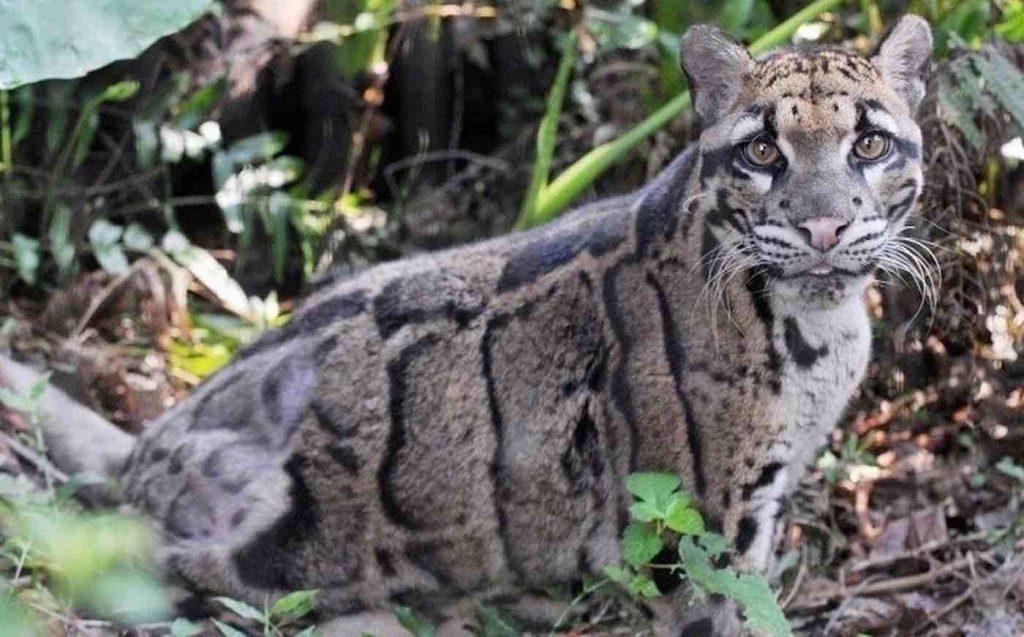
One of the most spectacular big cats ever to walk the earth is perhaps not as extinct as previously thought. Listed as extinct on the IUCN’s red list, Alangyi Village rangers recently spotted what they believed to be a Formosan clouded leopard on a cliff in Taitung County’s Daren Township in southeast Taiwan.
Kao Cheng-chi, President of the Association of the Austronesian Community College Development Association and village chief of the Paiwan Tribe, said that in June of last year, the Alangyi Village set up a team of rangers to patrol traditional areas.
One ranger described clearly seeing a leopard climbing a tree, before scrambling up a cliff to hunt goats. Another team member described seeing a leopard darting past a scooter before scurrying up a tree and going out of sight.
These signs were immensely encouraging to the rangers, and after the sighting, the Alangyi tribal community immediately petitioned the Forestry Bureau to cease all logging and disruptive activities and to help them enforce the prohibition of outsiders entering the region.
Be Sure And Share The Exciting Conservation News With Your Fellow Animal Lovers On Social Media…
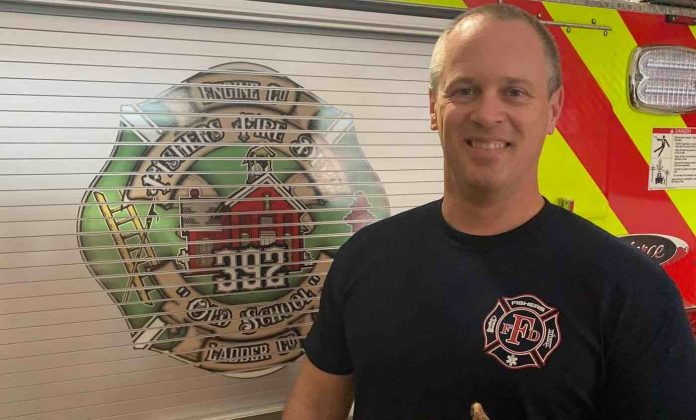
When a team of Indiana firefighters were called away from their grocery shopping on an emergency dispatch call, they were incredibly heartened by what they found when they returned.
The Station 392 crew from the Fishers Fire Department had been shopping at the Olio Road Kroger last week when they were suddenly forced to leave their groceries behind so they could respond to a nearby emergency.
Not only did the Kroger employees stash their groceries in coolers until their return, an anonymous customer paid for the firefighters’ shopping.
According to the department’s Lt. Duane Reddick, he and two other firefighters had been stocking up on dinner and lunch supplies for them and their families when they left on the call—and this was the first time in 20 years that a community member had ever had paid for his supermarket bill as a thank you.
“We don’t always expect a ‘thank you’, we don’t ask for it. We just do it,” Reddick told WIBC. “But it was very heartwarming that somebody saw us leave and [paid for our groceries].”
The department later described the good deed in a Facebook post reading: “When they returned to the store, the awesome staff had placed their groceries in the cooler to keep until their return and some anonymous kind person had paid for them. The crew hopes that person sees this post and understands just how much their kindness is appreciated.”
Multiply The Good By Sharing The Sweet Story With Your Friends On Social Media…
Quote of the Day: “To argue with a person who has renounced the use of reason is like administering medicine to the dead.” – Thomas Paine
Photo: by marneejill, CC license via Flickr – cropped
With a new inspirational quote every day, atop the perfect photo—collected and archived on our Quotes page—why not bookmark GNN.org for a daily uplift?
Are you pondering what kind of resolutions you can adopt to start this upcoming decade off on the right foot?
Well, this research from last year shows that taking part in “Dry January”—a New Year’s challenge in which people abstain from drinking booze for a month—helps people to regain control of their drinking, have more energy, improve their skin, quit smoking, lose weight, and drink less during the following months.
The research, led by University of Sussex psychologist Dr. Richard de Visser, was conducted with over 800 people who took part in Dry January back in 2018—and the results show that the participants were still drinking less in August.
They reported that the average amount of participants’ drinking days fell from 4 to 3 per week; their average amount of drinks per drinking day fell from 8.6 to 7.1; and the average amount of times they reported being drunk dropped from 3 times per month to 2.
“The simple act of taking a month off alcohol helps people drink less in the long term: by August, people are reporting one extra dry day per week,” said Visser.
“There are also considerable immediate benefits: nine in ten people save money, seven in ten sleep better and three in five lose weight,” he added. “Interestingly, these changes in alcohol consumption have also been seen in the participants who didn’t manage to stay alcohol-free for the whole month—although they are a bit smaller. This shows that there are real benefits to just trying to complete Dry January.”
The University of Sussex research also showed that:
93% of participants had a sense of achievement;
88% saved money;
80% feel more in control of their drinking;
76% learned more about when and why they drink;
71% realized they don’t need a drink to enjoy themselves;
70% had generally improved health;
71% slept better;
67% had more energy;
58% lost weight;
57% had better concentration;
54% had better skin.
Furthermore, if quitting smoking is one of your New Year’s resolutions, you might want to consider cutting back on your drinking, too.
A separate study from Oregon State University found that heavy drinkers who are trying to stop smoking may find that reducing their alcohol use can also help them quit their daily smoking habit. Heavy drinkers’ nicotine metabolite ratio—a biomarker that indicates how quickly a person’s body metabolizes nicotine—was reduced as they cut back on their drinking.
Past research has suggested that people with higher nicotine metabolism ratios are likely to smoke more and that people with higher rates have a harder time quitting. Slowing a person’s nicotine metabolism rate through reduced drinking could provide an edge when trying to stop smoking, which is known to be a difficult task, said Sarah Dermody, an assistant professor at Oregon State University and the study’s lead author.
“It takes a lot of determination to quit smoking, often several attempts,” Dermody said. “This research suggests that drinking is changing the nicotine metabolism as indexed by the nicotine metabolite ratio, and that daily smoking and heavy drinking may best be treated together.”
Use of both alcohol and cigarettes is widespread, with nearly 1 in 5 adults using both. Cigarette use is especially prevalent in heavy drinkers. Drinking is a well-established risk factor for smoking, and smoking is well-established risk factor for drinking.
Dermody and colleagues at the Centre for Addiction and Mental Health in Toronto, Canada, wanted to better understand the links between the two. They studied the nicotine metabolite ratio, an index of nicotine metabolism, in a group of 22 daily smokers who were seeking treatment for alcohol use disorder—the medical term for severe problem drinking—over several weeks.
“What’s really interesting is that the nicotine metabolite ratio is clinically useful,” Dermody said. “People with a higher ratio have a harder time quitting smoking cold turkey. They are also less likely to successfully quit using nicotine replacement therapy products.”
However, they found that as the men in the study group reduced their drinking from an average of 29 drinks per week to 7, their nicotine metabolite rate also dropped.
The researchers’ findings for men replicated those of an earlier study that found similar effects and provide further evidence of the value of the nicotine metabolite ratio biomarker to inform treatment for smokers trying to quit, Dermody said.
“The nicotine metabolite ratio was thought to be a stable index, but it may not be as stable as we thought,” Dermody said. “From a clinical standpoint, that’s a positive thing, because if someone wants to stop smoking, we may want to encourage them to reduce their drinking to encourage their smoking cessation plan.”
Be Sure And Pass This Intriguing News Forward By Sharing It With Your Friends On Social Media – Photo by M_Shipp22, CC
Every year, Google dives into the world’s search engine history so they can investigate exactly what people were searching for the most—and in 2019, people were apparently looking for heroes.
Last year’s Google data said that a record-breaking amount of people were searching for “good” things, and this year’s statistics run in a very similarly positive direction.
According to the tech company’s latest internet data, there was a global increase in people searching for phrases such as “unlikely heroes”, “everyday heroes”, “sheroes”, and “unsung heroes”.
“We found heroes at the box office, where Avengers: Endgame was the top-trending movie around the world (in fact, ‘hero’ was searched three times more than ‘villain’ globally this year),” Google wrote in a statement.
“We turned to real-life heroes in times of crisis, when searches for ‘how to become a first responder’ hit an all-time high in the U.S. We cheered for them on the field, where Megan Rapinoe was one of the top-trending athletes globally. And she was joined by other leading ladies: searches for ‘sheroes’ increased by 150% and the ‘first female spacewalk’ became a breakout trend worldwide.”
(WATCH the inspiring montage below)
Help Your Friends Celebrate This Years Heroes By Sharing This Inspiring Story To Social Media…
When two young hospital patients were undergoing treatment in isolation, their friendly custodian took it upon himself to help them form a lasting friendship through their shared love of LEGOs.
Ki-Jana “KJ” Upshaw is responsible for regularly changing the linens in all 82 of the patient rooms in the Bone Marrow Transplant Unit at Cincinnati Children’s Hospital in Ohio.
Earlier this year, Upshaw befriended a 7-year-old patient named Cohen Bramlee who was always playing with LEGOs. Upshaw then noticed that there was another boy across the hall named Keagan Atkins who also spent his spare time building elaborate structures out of the toy bricks.
Upshaw believed that both of the boys were destined to be friends—but because of the hospital’s isolation rules, they were unable to visit each other’s rooms.
Upshaw then spent the following months helping the boys to forge a friendship by swapping messages and communicating between them about their LEGO creations.
Cohen’s mom Carrie Bramlee told the hospital: “It was kind of like a daily report on what the other child was building, and so he kind of enjoyed getting to hear about what someone else had in common with him while he was here, and just getting to talk to KJ, because, you know, our world is pretty small right now. We were in that room, and Cohen was in isolation, he couldn’t leave, and it was just a bright spot in the day when [KJ] would come in and just sit there and chat with Cohen for a second.”
The friendship helped both of the youngsters recover until they were finally able to meet each other in person; on the day that Keagan was well enough to go home from the hospital, Cohen was healthy enough to wear a mask and walk across the hall to Keagan’s door so he could give him a LEGO set as a farewell gift.
The boys’ mothers are already arranging a LEGO playdate for the boys once Cohen is out of the hospital—and it is all thanks to Upshaw.
(WATCH the heartwarming video below)
Cure Your Friends Of Negativity By Sharing This Sweet Story To Social Media…
These three Muslim schoolgirls may not seem like the typical members of a heavy metal band—but that’s exactly why they’re continuing to dominate stages across Indonesia.
Firdda Kurnia, Eusi Siti Aisyah, and Widi Rahmawati all grew up as the daughters of poor farmers in rural West Java, a conservative region of the country. Prior to attending a music class in 2014, the girls had never even heard of heavy metal music.
But that’s when their middle school teacher, Ahba Erza, played them “Toxicity” by System of a Down—and they immediately became hooked on heavy metal.
Erza, who is now their band manager, taught the girls how to play instruments. The youngsters formed a band the very same year and dubbed themselves Voice of Baceprot, which translates to “noise” in their traditional Sudanese language.
Despite having to endure harassment and criticism from the more conservative side of the Indonesia, the Voice of Baceprot has played across the nation’s most popular stages.
“They say my music is forbidden by my religion,” she recalled to NPR. “I’m a different musician because I’m a woman, and I play metal music, but I’m wearing hijab. Hijab is my identity, OK?”
Kurnia added that her own parents had originally forbade her from playing heavy metal. As Voice of Baceprot secretly became more and more locally famous, however, her parents became proud of her passion.
According to Assembly, the girls now play about three shows per month as they continue to become one of Indonesia’s most iconic counterculture musical groups.
Other metal musicians have praised the teens for depicting the more diverse side of the genre since Firdda, Eusi, and Widi—now aged 19, 19, and 17 respectively—play their shows wearing leather jackets and hijabs.
With Indonesia reportedly boasting a thriving underground heavy metal scene, Voice of Baceprot has become more and more popular across the nation. Their Instagram page alone has wracked up more than 32,000 followers.
The girls now hope that their music will help people to understand that Muslim girls can pursue their passions while still faithfully abiding by their religion. Not only that, they hope to show that metal music is for everyone—not matter their race or creed.
(LISTEN to the 2017 interview below)
For Those About To Rock, Be Sure And Share This Awesome Story With Your Friends On Social Media…
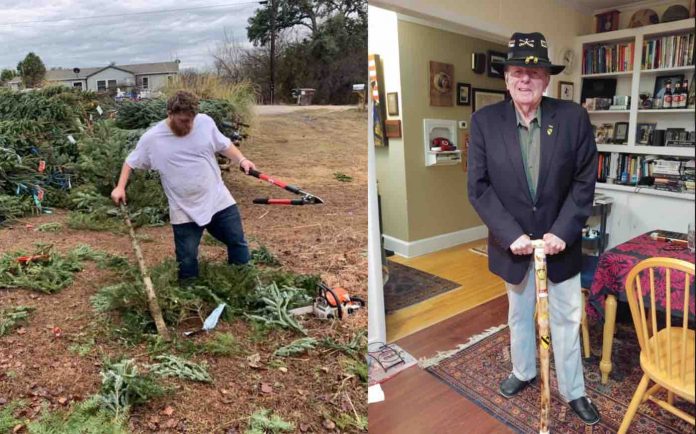
Rather than letting people’s Christmas trees go to a landfill, this Texas veteran is asking community members to donate their old fir trees so he can turn them into stylish canes for his fellow veterans.
After serving in the US Army for 8 years, Jamie Willis returned to Copperas Cove as a 100% disabled veteran who was completely unable to work.
In addition to being forced to use a cane, the Veteran Affairs provided Willis with a cane that was annoyingly ugly and unstable.
Shortly after he discovered the pitfalls of typical VA canes, he discovered Free Canes for Veterans, a Florida-based organization dedicated to giving away cool-looking handmade canes to veterans.
Willis then reached out Oscar Morris, the mastermind behind the organization, and asked if he could learn how to make his own cane—and Morris was happy to oblige.
After Willis made his first wooden walking stick, he worked with Morris to open up a branch of the organization in central Texas. Since opening up shop in 2016, he has crafted and donated more than 200 customized canes for veterans.
“I do this so I don’t sit home all day feeling sorry for myself,” the 50-year-old vet told CNN. “This is all out of kindness. I do everything out of pocket and from donations.”
Now that the holiday season is over, Willis is asking homeowners to donate their old Christmas trees for him to recycle into canes. It typically takes Willis a day’s worth of work to turn one Christmas tree into a cane. After that, he packages it up and ships it off to the recipient.
Although Willis usually crafts his canes for fellow ex-service members, he is also happy to make his canes for anyone with a disability.
This is the second year that Willis has called for tree donations, although he has already been flooded with support since Home Depot donated 400 trees and community members donated an additional 100. If you want to help Willis pay for the organization’s shipping and handling costs, you can donate to his GoFundMe campaign.
Quote of the Day: “I heard a bird sing in the dark of December. A magical thing. And sweet to remember.” – Oliver Herford
Photo: by Bernd Thaller, CC license via Flickr – cropped, edited
With a new inspirational quote every day, atop the perfect photo—collected and archived on our Quotes page—why not bookmark GNN.org for a daily uplift?


























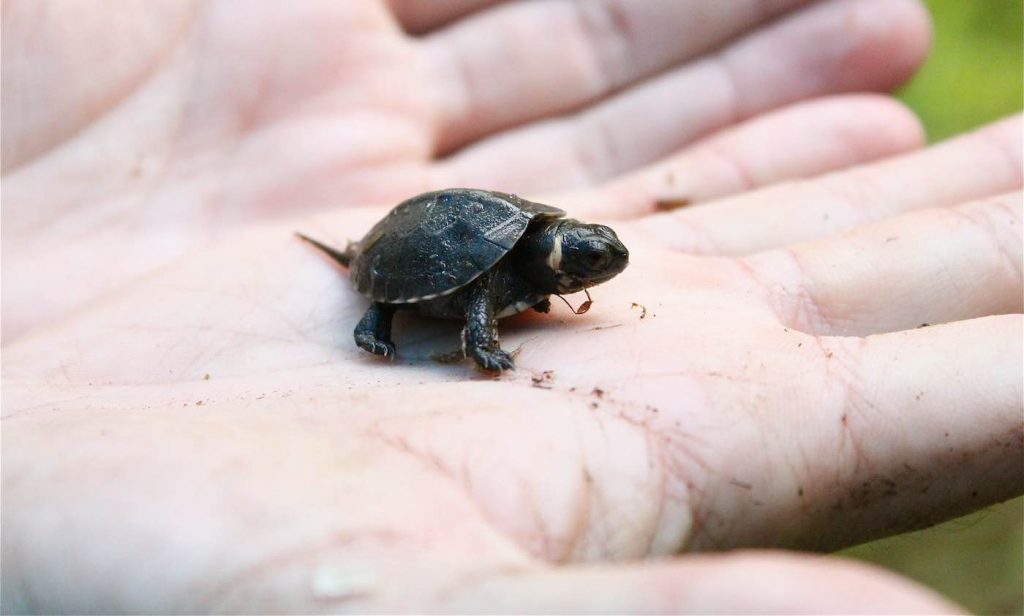 One of the species is the Burmese roofed turtle. The only surviving wild population of Burmese roofed turtles consists of less than ten adult females and an unknown (but likely few) number of males in a remote stretch of the upper Chindwin River. The turtles are imperiled by loss of critical nesting habitat such as sandbanks, incidental loss to fishing gear, and occasional illegal harvesting of eggs.