










Quote of the Day: “Not knowing when the dawn will come, I open every door.” – Emily Dickinson
Painted photo: (c) Donnie Nunley, CC license on Flickr – cropped
With a new inspirational quote every day, atop the perfect photo—collected and archived on our Quotes page—why not bookmark GNN.org for a daily uplift?
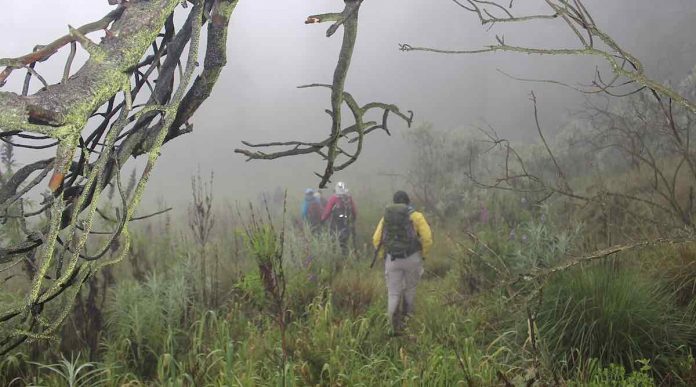
A hiker has captured these magnificent images of a rare weather phenomenon that looks like a “rainbow halo” on top of an English mountain.
39-year-old Adrian Conchie was walking on a fell in the Lake District when he looked down and clocked the spectacular display, known as the Brocken specter.
The dad-of-one described the moment, which took place at 11:30AM on New Year’s Eve, as “magical” and “absolutely incredible”.
According to the Met Office, the Brocken specter appears when a person stands above the upper surface of a cloud—on a mountain or high ground—with the sun behind them.
“When they view their shadow, the light is reflected back in such a way that a spooky circular ‘glory’ appears around the point directly opposite the sun,” the Met Office said.
Conchie, who runs an engraving business in Knutsford, Cheshire, was on an 11-mile hike at Swirl How near Coniston when the Brocken specter appeared to him.
Adrian Conchie – SWNS
“I had always wanted to see one after seeing pictures online and hearing about how amazing they are from friends,” said Conchie. “When we got to the summit I looked down and there it was—it was so vivid.
“I thought it would disappear there and then but it stayed for a few minutes, it was a really magical experience.”
Miraculously, Conchie and his friend Bryony stumbled upon another Brocken specter later that very same day up a nearby mountain called Wetherlam.
Adrian Conchie – SWNS
Be Sure And Share The Breathtaking Photos With Your Friends On Social Media…
The sanctuary of Machu Picchu, one of the most incredible wonders of the medieval world, is about to get a much-needed eco-friendly makeover.
Last week, Peruvian President Martin Viscarra launched a reforestation campaign to plant one million trees around the 86,000-acre (35,000-hectare) complex of the iconic archaeological site and surrounding hills.
“We’re here to begin the planting of a million trees in the protected zone around the Machu Picchu sanctuary … [as] a commitment from the government, the region, the municipality and all the citizens who want to protect this world wonder,” said Vizcarra, according to the AFP.
The danger of mudslides resulting from heavy winter rains and summer forest fires has led environmental ministers to stress the importance of reforesting the site.
Since tree root structures help reduce soil erosion, they represent one of the best natural defenses against mudslides.
The Incan Empire ruled vast tracts of the Andes Mountains in northern and western South America—stretching from Ecuador in the north to Chile in the south. In the Incan language, Machu Picchu means “Old Mountain” and was a religious center and palace built during the reign of the Incan emperor Pachacuti (1438-1471), also known as “Earthshaker”.
In 2017, the government imposed limitations on how many tourists are allowed to visit the site for fear that Machu Picchu was being loved to death; around 1.5 million tourists were visiting the UNESCO World Heritage Site every year, causing damage to the structures and the surrounding area.
Now only 12,000 people are able to travel up the Sacred Valley to Old Mountain every day, and some of the more vulnerable areas have been closed to free-venturing individuals in order to ensure the stately citadel endures for another 600 years.
Plant Some Positivity By Sharing The Good News With Your Friends On Social Media…

A 30-year-old man was finally rescued from the Alaskan wilderness after his cabin burned down, leaving him stranded in the snow for almost three weeks.
Tyson Steele had been living alone for several months in a small house in Skwentna, a town located 70 miles northwest of Anchorage. He had been burning a fire in his woodstove back in December when a piece of flaming cardboard flew up his fireplace chimney and landed on his roof, which started a slow fire that eventually left the cabin in ruins.
Since Skwentna only has a population of about 35 people, Steele’s nearest neighbor lived about 20 miles away. With no means of communication to call for help, Steele endured sub-zero temperatures and brutal weather conditions wearing long johns, boots with no socks, and a heavy wool sweater.
When his family and friends hadn’t heard from Steele for several weeks, they requested a welfare check from Alaska State Troopers. As a helicopter flew over the area, they caught sight of Steele waving his arms in the air next to a massive “SOS” sign that he had stamped into the snow.
Steele had collectively spent 20 days in the cold. After he was rescued, he reportedly requested two things: a shower and a number two McDonald’s breakfast meal.
Now that he is in relatively good health, Steele plans on regrouping with his family in Salt Lake City before returning to his beloved home state of Alaska.
(WATCH the news coverage below)
Be Sure And Share This Incredible Survival Story With Your Friends On Social Media…
A 17-year-old high school student is being hailed for discovering a new planet that is roughly 6.9 times larger than the Earth—and he did it on his third day of an internship with NASA.
Now a senior at Scarsdale High School in New York, Wolf Cukier landed a 2-month internship with NASA back in the summer of 2019. The internship required him to examine variations of star brightness through NASA’s Transiting Exoplanet Survey Satellite (TESS).
Upon noticing a slight dip in the brightness readings, Cukier thought the variation was simply due to a stellar eclipse. He then examined the data further and discovered that the dip was actually coming from a planet.
“I was looking through the data for everything the volunteers had flagged as an eclipsing binary, a system where two stars circle around each other and from our view eclipse each other every orbit,” Cukier said.
“About three days into my internship, I saw a signal from a system called TOI 1338,” he added. “At first I thought it was a stellar eclipse, but the timing was wrong. It turned out to be a planet.”
Since NASA confirmed the teen’s findings, they announced the discovery on their website this week.
TOI 1338 b, as it is now called, is TESS’s first circumbinary planet—a world orbiting two stars. The discovery was featured in a panel discussion earlier this month at the 235th American Astronomical Society meeting in Honolulu.
A paper, which Cukier co-authored along with scientists from Goddard, San Diego State University, the University of Chicago and other institutions, has also been submitted to a scientific journal.
The TOI 1338 system lies 1,300 light-years away in the constellation Pictor. The two stars orbit each other every 15 days. One is about 10% more massive than our Sun, while the other is cooler, dimmer and only one-third the Sun’s mass.
TOI 1338 b is the only known planet in the system. It’s around 6.9 times larger than Earth, or between the sizes of Neptune and Saturn. The planet orbits in almost exactly the same plane as the stars, so it experiences regular stellar eclipses.
(WATCH the news coverage below) – Feature photo by NBC News 4 / NASA’s Goddard Space Flight Center
Be Sure And Share The Out-Of-This-World News With Your Friends On Social Media…
After a 95-year-old woman was robbed of her life savings, her community managed to replace it all by serving spaghetti.
Last summer, Barbara Hinckley’s bank accounts were emptied of about $16,000 after she was targeted by a conman who convinced her she had won second place in a Publisher’s Clearinghouse contest with a prize of $2.5 million and a Mercedes-Benz.
The senior from Auburn later told news reporters about the scam in hopes that it would deter other people from falling prey to the same scheme. When former Maine Gov. John Baldacci heard about the incident on the news in November, however, he was immediately spurred to help.
“Stealing from the elderly is not the Maine Way,” said Baldacci, as reported by the Bangor Daily News. “Let’s turn something bad into something positive by showing the world our true Maine character.”
Baldacci spearheaded a spaghetti dinner fundraiser for Hinckley earlier this month. With 60 pounds of noodles, 17 gallons of sauce, and dozens of cases of vegetables, Baldacci told the Sun Journal that his goal was to not have any food left over by the end of the night.
After 400 people attended the fundraiser, they raised a whopping $18,000—which is even more than what Hinckley was swindled out of.
Hinckley’s daughter Marsha Donahue told the Press Herald that she and the rest of their family had been amazed by people’s compassion during the dinner.
“From the unexpected $1,000 checks to the obviously financially struggling people in line that gave extra above their tickets, I have been bowled over by people’s generosity,” said Donahue. “It has been a roller coaster ride for her and all of us in the family, too, from destitution to solvency.”
Hinckley also says that she is glad that her story could serve as a warning for others—and she has reassured reporters that she will no longer be allowed to spend any of her new life savings without first getting her family’s permission.
Be Sure And Share The Sweet Story Of Community Kindness With Your Friends On Social Media…
Quote of the Day: “Serenity comes when you trade expectations for acceptance.” – Buddha
Painted photo: by Joel Olives, CC license on Flickr – cropped
With a new inspirational quote every day, atop the perfect photo—collected and archived on our Quotes page—why not bookmark GNN.org for a daily uplift?
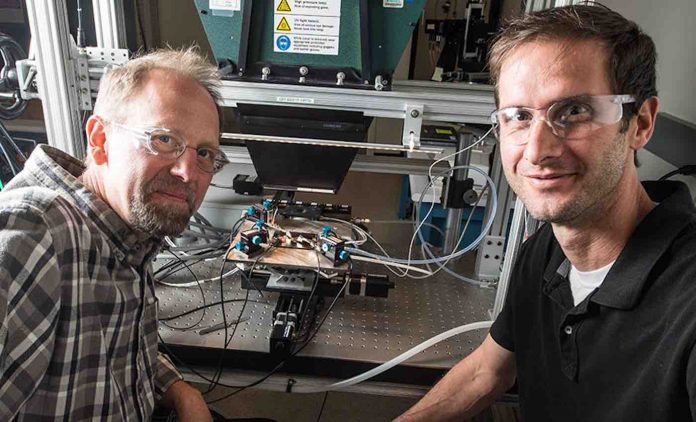
Surgeon connecting liver donor to perfusion machine — Photo by USZ
Swiss researchers have succeeded in developing a machine that repairs injured human livers and keeps them alive outside the body for seven days.
Until now, livers could be stored safely outside the body for only a few hours. With the novel new perfusion technology, livers—and even injured livers—can now be kept alive outside of the body for an entire week.
This is a major breakthrough in transplantation medicine, which may increase the number of available organs for transplantation and save many lives of patients suffering from severe liver disease or a variety of cancers.
Additionally, injured cadaveric livers, initially not suitable for use in transplantation, may regain full function while perfused in the new machine for several days.
The basis for this technology is a complex perfusion system, mimicking most core body functions close to physiology. The device was developed by researchers from the University Hospital Zurich (USZ), ETH Zurich, Wyss Zurich and the University of Zurich corresponding study was published this week in the scientific journal Nature Biotechnology.
“The success of this unique perfusion system—developed over a four-year period by a group of surgeons, biologists and engineers—paves the way for many new applications in transplantation and cancer medicine helping patients with no liver grafts available,” explained Professor Pierre-Alain Clavien, Chairman of the Department of Surgery and Transplantation at the USZ.
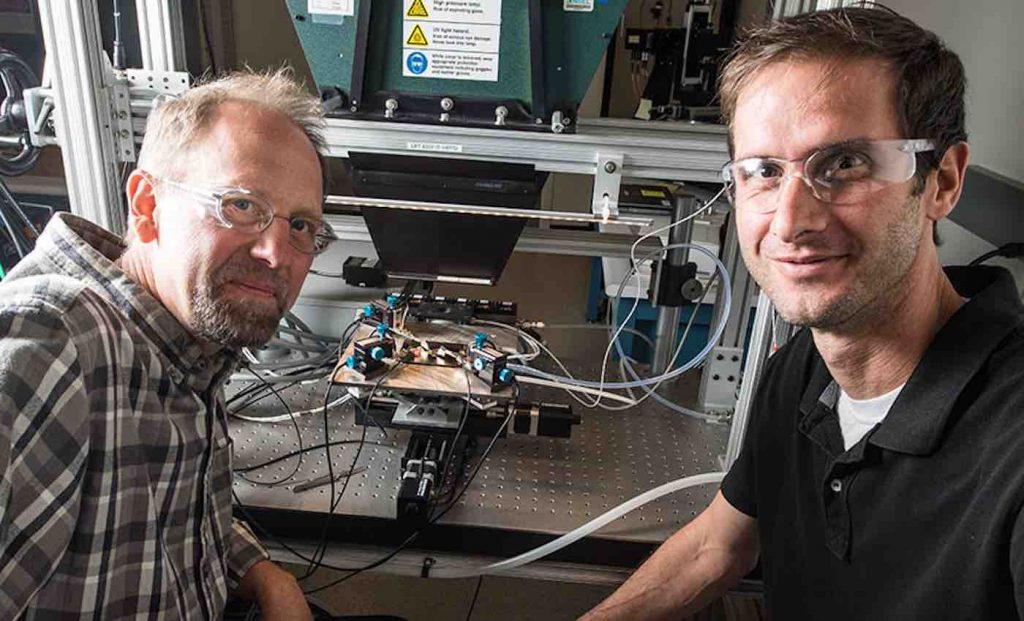
Surgeon connecting liver donor to perfusion machine — Photo by USZ
When the project started in 2015, livers could only be kept on the machine for 12 hours. The seven-day successful perfusion of poor-quality livers now allows for a wide range of strategies, e.g. repair of preexisting injury, cleaning of fat deposits in the liver or even regeneration of partial livers.
The Liver4Life project was developed under the umbrella of Wyss Zurich institute, which brought together the highly specialized technical know-how and biomedical knowledge of experts from the various institutions.
“The biggest challenge in the initial phase of our project was to find a common language that would allow communication between the clinicians and engineers,” said Professor Philipp Rudolf von Rohr, Professor of Process Engineering at ETH Zurich and co-leader with Professor Clavien of the study.
The inaugural study shows that six of ten perfused poor-quality human livers, declined for transplantation by all centers in Europe, recovered to full function within one week of perfusion on the machine. The next step will be to use these organs for transplantation. The proposed technology opens a large avenue for many applications offering a new life for many patients with end stage liver disease or cancer.
This 17-year-old gamer in the United Kingdom was given the medical attention he needed thanks to his online friend calling for paramedics from 5,000 miles away.
Earlier this month, Aidan Jackson had been playing video games from his bedroom in Widnes, England while his parents watched television downstairs. He had been playing with his 20-year-old friend Dia Lathora from Texas when he suddenly started to make sounds of what she could “only describe as a seizure”.
When Dia started asking her friend if he was okay, she heard no response—so she immediately began scouring the internet for the correct emergency phone number in the English town.
After Dia finally settled on dialing the non-emergency law enforcement number, she forced herself to stay calm and could explain to the dispatcher that she was calling from America to help her UK friend.
Minutes later when paramedics arrived on Aidan’s street, his parents assumed that they were headed to a different household.
“We were at home watching TV and Aidan was upstairs in his room. The next thing we noticed was two police cars outside with flashing lights,” Aidan’s mother Caroline Jackson told The Liverpool Echo. “I assumed they were in the area for another reason and then they ran up to the front door.
“They said there was an unresponsive male at the address. We said we hadn’t called anyone and they said a call had come from America. I immediately went to check on Aidan and found him extremely disorientated.”
The teen has since undergone a number of tests in order to determine the cause of the seizure. Since this is the second time in one year that Aidan has suffered from a fit, his parents are extraordinarily grateful for Dia’s actions.
“Dia had our address, but didn’t have any contact numbers, so it was amazing she managed to get help from so far away,” Jackson told the news outlet. “I’ve spoken to her and expressed our thanks—she’s just glad she could help.
“We always say to the kids, be careful who you speak to online, but in this case, it was invaluable.”
Be Sure And Share The Inspiring Story With Your Friends On Social Media…
Earlier this month, JetBlue announced that it will begin offsetting carbon dioxide emissions (CO2) from jet fuel for all domestic JetBlue flights starting in July 2020, making it the first major U.S. airline to take this step towards reducing its contribution to global warming.
JetBlue also announced plans to start flying with sustainable aviation fuel in mid-2020 on flights from San Francisco International Airport.
“Air travel connects people and cultures, and supports a global economy, yet we must act to limit this critical industry’s contributions to climate change,” said JetBlue CEO Robin Hayes. “We reduce where we can and offset where we can’t. By offsetting all of our domestic flying, we’re preparing our business for the lower-carbon economy that aviation—and all sectors—must plan for.”
JetBlue first began offsetting carbon dioxide emissions with programs to balance customer flying during specific times of year, but this most recent initiative expands the company’s efforts to reduce emissions associated with fuel use in a bigger way.
JetBlue will continue to partner with Carbonfund.org—a leading U.S. based nonprofit carbon reduction and climate solutions organization. Since 2008, JetBlue has already offset more than 2.6 billion pounds of CO2 emissions in partnership with the organization. JetBlue’s new carbon offsetting partners now also include established experts in the space – EcoAct and South Pole.
This expansion is expected to offset an additional 15-17 billion pounds (7 to 8 million metric tons) of emissions per year—the annual equivalent of removing more than 1.5 million passenger vehicles from the road.
Carbon offsetting is a bridge to other industry-wide environmental improvements like fuel with lower emissions. JetBlue has agreed to purchase sustainable aviation fuel (SAF) from Neste, the world’s largest producer of renewable diesel and a pioneer in renewable jet fuel, starting in 2020.
Neste MY Renewable Jet Fuel is produced 100% from waste and residue raw materials. Over the lifecycle, it has up to 80% smaller carbon footprint compared to fossil jet fuel. The fuel is fully compatible with the existing jet engine technology and fuel distribution infrastructure when blended with fossil jet fuel. The fuel is being shipped via the fuel pipeline to the airport where it will be safely used alongside regular fuel without safety or operational impact.
JetBlue’s carbon offsetting and sustainable fuel purchase is just one example of the efforts that JetBlue is making to mitigate its contribution to climate change in response to public and market demand. For instance, the airline’s incoming 85 new Airbus A321neo (new engine option) aircraft will help reduce carbon emissions more than ever before.
All A321neo aircraft improve fuel economy by 20% through newly-designed engine technology and cabin changes. In addition, the acquisition of 70 Airbus A220s to replace older aircraft marks a major investment over several years, reducing emissions per seat by about 40% compared to the older aircraft they will replace.
Quick as a flash, Patsy rounded up the herd and ushered them into a barn while the owner of the farm fended off the flames with a tractor and water pump.
Thanks to Patsy’s quick actions, almost every single one of the roughly 220 sheep were saved from the fires.
“If you haven’t got a good dog, you can’t do so much with the sheep,” Hill told NBC News. “They’re really difficult to move in any way, shape or form unless you have a good dog.”
Since Patsy’s heroic story has been shared across international news outlets and social media, her owners have started an Instagram account for the terrier-shepherd mix—and it has already garnered several thousand followers.
Thankfully, Australian meteorologists are hoping that this week’s forecast for upcoming rainfall will help bring a much-needed break to the province’s bushfires.
If this @BOM_NSW rainfall forecast comes to fruition then this will be all of our Christmas, birthday, engagement, anniversary, wedding and graduation presents rolled into one. Fingers crossed. #NSWRFS#nswfirespic.twitter.com/R9VfD0bqu2
Quote of the Day: “Life’s most persistent and urgent question is, ‘What are you doing for others?” – Martin Luther King, Jr.
Photo: by Ashley Webb, CC license on Flickr – tinted
With a new inspirational quote every day, atop the perfect photo—collected and archived on our Quotes page—why not bookmark GNN.org for a daily uplift?
Each year, 25 million tons of seaweed is harvested, most of which is in Asia and used for human consumption and cosmetics. But what about using it to power our vehicles?
Danish scientists recently announced they have used a seaweed fuel to power an automobile, achieving speeds of 50 mph (80 kph), using a biofuel created by a Dutch company.
“We’ve looked to see if seaweed fuel works in the same way as ordinary fuel and what its effect is on the motor,” Jaap van Hal, who led the research team, told Noordhollands Dagblad.
One of the largest sources of clean renewable energy used today is biofuels. Produced from garbage or the agricultural byproducts from growing crops like sugar, corn, and soya, it contributes to energy security while also reducing carbon emissions.
Within Europe’s transportation sector the vast majority of renewable energy-powered solutions utilize these land-based sources of biofuel. However it requires land, fertilizer, and irrigation resources to produce these biofuels, so Europe is looking largely towards ocean-based sources of biofuel—namely algae and seaweed, which need nothing more than saltwater and sun to grow incredibly fast.
Dr. van Hal says learning to manage a 10-acre seaweed farm is similar to managing a 1,000-acre farm. To turn seaweed fuel into a reality, though, requires a supply on a “huge scale”. Even though one farm is currently a “dot on the horizon”, van Hal is nevertheless excited to move forward.
Van Hal is the scientific coordinator for EU-funded MacroFuels, aiming to create an entire industry around seaweed biofuels that includes cultivation and production and testing—specifically for heavy machinery like trucks and ships with diesel engines.
Several other European firms are looking into increasing the proliferation of seaweed or algae biofuels for the EU energy sector.
Norway, for instance, is plotting a similar course, with a startup called Alginor planning the creation of a bio-refinery for seaweed and algae growing in the North Sea.
Be Sure And Share The Renewable Energy News With Your Friends On Social Media… (File photo by Peter Castleton, CC license)

Brothers Mike and Nick Fiorito quit their jobs in New York City in 2016 after realizing how often they felt unfulfilled in their young lives. The move was scary, but eventually it led them to an idea for helping the homeless folks whom they so often passed on the cold city streets on their way to work.
They launched Blankets of Hope, which turned into a global nonprofit organization that also encourages kindness in schools. They began partnering with students so that every blanket includes an inspiring, motivational note handwritten in classrooms across the country.
To date, they have partnered with over 150 schools in 32 states across the United States—plus schools in Canada and Mexico—and have delivered nearly 20,000 blankets with the handwritten notes to those in need.
The lightbulb went off when Nick’s fifth grade teacher saw a news story about the brothers delivering blankets and then reached out asking how to get her students involved. Soon the Fioritos began teaching kindness and empathy workshops in classrooms.
“They close their eyes and put themselves in the perspective of someone who’s homeless and they really exercise that empathy muscle,” Mike told one news reporter..
Image from Blankets of Hope on YouTube
The brothers send the blankets to schools free of charge. The kids then write the notes, and deliver the blankets to homeless shelters in their local communities.
Adults can get involved, too. Donate on a GoFundMe page to help purchase the blankets, which the brothers buy for $5.00 a piece. Because the organization is an official non-profit, 100% of Americans’ donation is tax deductible—and, even better, 100% of any donation goes directly to buying blankets.
Their latest goal is to hand out another 20,000 blankets this winter, which not only keep people warmer, but provides a friendly connection to another soul, which people living on the street too often lack.
(WATCH the heartwarming video from KTVB News below)
SHARE the Warmth and Opportunity With Friends and Teachers on Social Media…
Senegal is preparing to take a large step in the emerging market of African renewable energy with the construction of the 340 million euro Taliba N’diaye Wind Farm.
Almost all of the 46 wind turbines planned for the site have been completed, with the first trickle of totally renewable energy finally flowing into the capital city of Dakar.
“The first megawatts of energy are today entering Senegal’s grid, giving the country its first taste of clean, renewable wind power,” said Massaer Cisse, General Manager for Senegal at Lekela Power, the farm’s manager.
“This is an exciting time and it brings us a step closer to our ultimate goal of providing power for millions of Senegalese”.
Located 100 kilometers (60 miles) north of Dakar, the turbines and substations erected so far are already generating 50 megawatts of the proposed total of 158 to be added to the grid when Taliba N’Diaye is finished.
This will serve to increase the power supply of Senegal by 15% as well as save 300,000 tons of carbon from entering the atmosphere annually.
Africa Happeningsreports that the lack of reliable access to electricity is a major contributor to unemployment and low manufacturing output, as power shortages often stall heavy machinery, making investments into capital goods such as electric forklifts or other construction equipment risky.
They estimate that 500 million Africans don’t have reliable access to electricity. For instance, Nigeria, another West African country, could be losing as much as 5% GDP per year due to power shortages. People resort to portable backup generators, which often run on dirty diesel fuel, contributing mightily to falling air quality due to the fumes.
With recent successes in Senegal, Lekela Power has also recently secured financial investments worth $325 million for its 250 megawatt West Bakr Wind project in Egypt. Expected to be fully operational by 2021, West Bakr will produce over 1,000 gigawatts per hour, per year, of clean energy for the Egyptian grid.
Egypt’s ‘Build, Own, Operate’ plan is an ambitious project aimed at establishing an Egyptian-managed energy infrastructure that will be made up of 20% renewables by 2022.
The Suez Gulf is a high-traffic area for migrating birds, sometimes at risk from the windmill blades. Lekela and Egyptian Electricity Transmission Company have planned the West Bakr project to be more bird-friendly through the development of a “shut down on demand” program.
Lekela has partnered with the Egyptian Environmental Affairs Agency and its Migratory Soaring Birds project to help fund and eventually implement a Migratory Birds Monitoring training program that will help ensure birds survive the journey around their wind farms.
West Bakr near the Gulf of Suez Canal is far larger than Taliba N’diaye, and its massive energy output is expected to offset more than 550,000 tons of carbon dioxide emissions annually.
Blow Some Good News Toward Your Social Media Feeds… (File photo by Daxis, CC license)
Quote of the Day: “Each of us chooses, by our ways of attending to things, the universe we inhabit and the people we encounter.” – William James
Photo: by Hernán Piñera, CC license on Flickr – cropped
With a new inspirational quote every day, atop the perfect photo—collected and archived on our Quotes page—why not bookmark GNN.org for a daily uplift?
In my professional work as a scientist, I have spent a lot of time in meetings. There were meetings that were very well-organized and productive while there were others that regrettably were not.
It was during these disorganized meetings that my mind would begin to wander. I found myself estimating the average salary in the room and the resulting cost of this meeting depending on its length—and then I sighed about the waste of money.
While focusing on money was an “amusing” diversion, it was not satisfying and didn’t last long. My mind continued to wander during these unproductive assemblies and I began to think about heartbeats. I remembered that for most mammals, heart rate was inversely proportional to longevity; that is, research shows that across species, the faster the heart rate, the shorter the life span. For example, the heart rate of a mouse versus an elephant as compared to their respective lifespans.
That led to a more personal consideration: if my average heart rate was around 70 beats per minute, sitting in that room for an hour cost me 4,200 heartbeats.
That’s when this epiphany sank in; I was spending a very precious resource doing something without substantive meaning. Heartbeats are a personal metronome that nature gave all of us to mark time—so I realized that I had to spend my heartbeats more wisely.
The heart is an amazing organ. If you think about it, we are walking around with a pump that circulates our entire blood volume approximately once every minute at rest (for an adult, roughly 5 liters). It works on demand; that is, it adjusts itself to our body’s needs. If we are exercising, bleeding, sweating, etc., our heart rate changes to keep providing blood flow to the rest of the body, especially the brain. It also adjusts how much force it will exert to meet those needs. An amazing variable demand-responsive pump.
In addition to exercise, stressors like anxiety or fear affect heart rate. These increase heart rate—a consequence of the shift between two major balancing aspects of the autonomic nervous system: sympathetic and parasympathetic, which respectively increase or decrease heart rate. This balance also affects something called “heart rate variability” (HRV). That variation is the time between beats. It turns out that lower variation in the time between beats is associated with worse health. People who have less variability have greater risk of death. Diabetes, heart failure, and stress are all major causes of decreased heart rate variability, which make sense as they all have increased risk of death.
A way of thinking about HRV is the beat of a drum. A drummer can strike the drum exactly once per second for a total of 60 beats in that minute so that there is little or no variation between beats. Or the drummer can vary that—making it slightly quicker and slightly slower so that although there were 60 beats in that minute, the time between each beat varied more.
HRV is higher in younger people and progressively declines with age. Some consider it a test of aging; and while psychological stress and different diseases decrease HRV, breathing—particularly slow breathing—increases it. Many forms of meditation increase HRV, including compassion meditation. That is, extending kindness and compassion to others through thoughts has a beneficial physiologic effect.
From ancient times, the heart was recognized as the center of emotion. Poetic expressions like “he wears his heart on his sleeve,” “follow your heart,” or ”a broken heart” point to how symptoms—such as what a person feels around the physical heart—probably reflected manifestation of different emotions like love and anxiety. In this model, the brain is the dominant feature telling the heart what it is perceiving. Yet the physiology is much more complex; it turns out that the heart has its own nervous system and provides feedback to the brain that can affect feelings as well as strategic thinking.
The heart also is affected by oxytocin—which is known as “the love hormone”. Released in response to different (particularly prosocial) stimuli like hugs or massage, oxytocin also directly affects the heart and cardiovascular system. In response to oxytocin, the heart in turn releases another hormone called atrial natriuretic peptide that can lower blood pressure. Oxytocin appears to lower blood pressure and heart rate through other mechanisms, too; a physiologic way of saying that love is good for the heart.
Each heartbeat, therefore, is a reflection of a lot of complex interactions between our mental and physical states—and how our heart beats, in turn, affects how we feel. Beyond being a pump, each heartbeat is an important part of appreciating and living life. We feel love, suffering, sadness, joy, and amazement through it. We place our hand over it when expressing emotion or making a pledge. All because the heart allows us to feel the wonders of being alive.
Yet it is easy to forget about how precious each heartbeat is and take its continuous operation for granted. What if we changed that? How could we honor the gift of each heartbeat to attain greater meaning? It might show itself as gratitude for being alive and drive the focused pursuit of doing good with the limited number of heartbeats that we each have. And with my newfound respect for heartbeats, it is not just mine that matter—I also needed to respect everyone else’s.
After I realized the significance of heartbeats, I changed how I ran meetings; I would prepare extensively so that everyone would find the meeting productive, emphasizing a culture of listening to each other and openly seeking the truth. The result was really positive, likely because they found meaning through doing good work that honored their own heartbeats. Kindness here was motivated by the significance of heartbeats.
Of course, there are many other ways to honor heartbeats, not just through meetings. We honor heartbeats when we take care of ourselves (rest, exercise, eat well, etc) and we take care of others (family, friends, coworkers, and strangers).
Additionally, this does not mean that we should not watch a silly movie or do something that might be viewed as goofing off (that’s actually relaxing). It simply means that we should be more conscious of our heartbeats so that, overall, we spend them wisely.
Go ahead—feel your own heart. Marvel at what you have been given. And then decide what you want to do to make the most of them. Their yours to make a meaningful life with.
Be Sure And Share The Insight With Your Friends On Social Media…
Of all the things you could think to do in New Jersey, seeing the world’s largest functioning model train set meandering around its own museum probably doesn’t immediately come to mind. But, it’s thanks to a man who isn’t even an enthusiast that this glorious creation was saved from ruin.
Bruce Williams Zaccagnino, a resident of Flemington, New Jersey, spent 18 years creating the technological marvel in a building now called Northlandz—but the winding tracks and breathtaking miniature scenery through which the toy train rambled eventually fell into disrepair as the price of maintaining it inside its large building became too high for a man who was essentially just an extraordinarily passionate hobbyist.
A large warehouse such as Northlandz is necessary if you want to build a model train setup with more than 8 miles of track. Zaccagnino continued to imagine more and more artistic scenery, which led him to expand the basement 5 times.
The little trains start their journey from a depot, fix onto a track through a functioning and amazing turnstile, and then run through model America. They pass over bridges spanning canyons and dusty gorges, along scenic riverways, by industrial mining pits and exquisitely detailed villages, and through tunnels carved through miniature mountains. (See the video below…)
Zaccagnino began to open the basement twice a year to tours at the suggestions of his friends, allowing him to share his incredible Wonka-like creativity and imagination with others. In 1996, he made Northlandz a year-round attraction.
At that point the train exhibit included 1,200 buildings and 100 trains. The museum also included a historic American Doll collection and a 2,000-pipe organ. However, such a large building created a substantial overhead—too large for Zaccagnino, even after opening it to the public, and the project had to be abandoned.
Demolition Discovery
Businessman Tariq Sohail is the new owner of Northlandz after he purchased it from of Zaccagnino last November when he was looking for additional warehouse space.
Sohail runs a distribution business and was told by the former owner that he could “demolish what was inside”.
“But, when we saw it, we said, ‘No way we could demolish this’,” Sohail told My Central Jersey. “What this guy built is amazing.”
“Bruce was running it by himself so there was a lot of wear and tear—it looked like a ghost house. We wanted to preserve it so it was here for the people.”
Spurred on by the amazing place, Sohail invested a quarter-million dollars into renovation, repairing lights, flooring, and much of the train scenery—so the miniature world could once again delight audiences throughout the year.
The renovations have also included a gift shop and private event space, with plans for a movie theater, climbing walls, and model train set classes for kids slated for the near future.
“Every single person has commented on how clean it now is and how they can see a lot more with our new lights,” said Sohail. “They like how there are more trains and the scenes aren’t damaged anymore. Plus, they love how there is space for them to sit and eat and also host birthday parties and other events.”
(WATCH the news coverage below) – Photo by My Central Jersey
Train Your Friends To Enjoy The Bright Side—Share This Sweet Story On Social Media…
A 10-year-old Girl Scout has become one of the first in the United Kingdom to get every single Beaver and Cub Scout activity badge.
Willow Woolhouse completed every activity badge possible while she was in the Beavers, and last week, she received her final Cub achievement—but, getting all 57 badges was far from easy.
She had to learn to horse ride, become proficient in Morse code, teach herself to cook the perfect omelette, and master the martial art of Tang Soo Do.
School prefect Willow also had to impress her scout leader with her stargazing skills and make her own bird box to get her DIY badge.
The only girl in her cub pack, Willow picked up her final badge last week—a photography patch—awarded for her series of snaps of her proud mum 42-year-old Beth Shaw.
Willow is one of very few girls in history to get every Beaver and Cub activity badge—Rebecca Hooper, at 10-years-old, accomplished the same feat in 2009, but it was at a time when there were fewer cub badges available.
SWNS
Cub “sixer” Willow, who is set to move up to the Scouts this season, already has her sights set firmly on achieving all 62 badges there as well.
“I feel really happy about getting them all. When I look back on my life I can’t picture myself not being a cub or a beaver,” said Willow, from Stockport, Greater Manchester. “It’s just that friendship with everyone there that’s really got me.”
Willow joined the 3rd Bramhall Beavers when she was 5 years old because she lives opposite the scout hut with mum Beth, and scientist teacher dad Robert, 39.
It took her three years to get all 20 Beavers activity badges she could achieve—plus the Chief Scout Bronze award.
SWNS
She gained her first—and favorite—badge for cooking after mastering a series of culinary skills, which included being able to make an omelette for her mom.
“It was the first time I’d used a frying pan. Since then though, eggs are my speciality and I’ve even invented some original recipes,” says Willow.
She then got 19 more, including ones for cycling, disability awareness, and collecting. Some were completed at her weekly session, and others were finished at school or home, although all of them were documented with photographs to submit to her leaders.
Willow graduated to Cubs at age 8, and began to work through all 37 available badges.
SWNS
Her favorite was fire safety, which involved an exciting visit to the local station. However, she only recently realized she’d got all available badges.
“Because it was so long ago that I started beavers and I was so young,” says Willow. “My mum probably told me I had all my beaver badges, but I’m not the type of person who remembers that kind of thing.
“Of course, I will be involved with scouts when I am an adult, even though I have ambitions to be a cosmologist,” she added.
She got into star gazing thanks to a scout badge, which prompted her to get a telescope for her birthday—but despite all the badges, it’s the friendship that keeps Willow going back to her weekly club.
SWNS
She wrote a novel called “Survival Girls” about her pals’ camp adventures, which she hopes will be published one day.
“I’m really pleased and proud of her, because these badges are quite difficult to get,” said her proud mum Beth, an operations manager who volunteers with the pack. “And she never doesn’t want to do them. She’s so enthusiastic about putting the work in to get them.
“Sometimes you can submit school work in order to achieve them—sometimes you have to put a lot of new effort into it,” she added. “One of the harder ones she had to learn how to horse ride—but she did it. For her communications badge, she needed to learn morse code. They all have to put in a lot of effort.
“At school, they say she’s very interesting to talk to. She’s got a lot of different aspects to her. She doesn’t play on computer games, and she’s not into TV. She knows about the outdoors and nature and DIY though!
SWNS
“Her leaders have given her so much support and guidance,” she added. “They are fantastic role models.”
A spokesman for The Scout Association said: “Well done Willow—it’s a real achievement to develop all the skills required to achieve all the Beaver Scout Badges and the Cub Scout Badges. To achieve this feat, Willow must have shown grit, determination, and resilience.
“She joins an exclusive and very small group of other Cub Scouts who have gained all their badges and in doing so have develop the skills they will need to make their way in life,” they added. “We are very proud of Willow and of the volunteer Leaders from 3rd Bramhall Cubs that have supported her on her journey. Well done.”
Be Sure And Share The Exciting News With Your Friends On Social Media…
Nine years ago, an earthquake and tsunami off the coast of Japan caused one of the most significant nuclear disasters in human history in the area around the Fukushima Daiichi nuclear power plant, where the resulting reactor meltdown led to the evacuation of 150,000 individuals.
Now, the local government has vowed to restructure the grid of the north western prefecture to use entirely renewable energy sources by 2040. Fukushima is the third largest administrative district in the country, and uniquely includes a variety of energy resources like prime spots for solar and wind farms, and also opportunities for geothermal power as well.
Working to achieve these ambitious goals, Fukushima Prefecture signed a memorandum of understanding in the field of renewables with the Ministry of Environment for the German state of North-Rhine Westphalia, the largest energy-producing state in Germany—and Europe as well—in August of 2017.
North-Rhine Westphalia has doubled their renewable energy infrastructure over the last 15 years—growing it to deliver 9% of total energy production.
Since 2012, however, Fukushima has tripled its renewable energy production, with solar, wind, water, thermal, and biofuel resources totaling 1,500 megawatts of electricity, delivering a contribution of nearly 18% of Japan’s total yearly energy consumption.
Additionally, 300 billion yen ($2.75 billion) for the project has already been fronted by sponsors such as the state-owned Japan Development Bank and Mizuho Bank. The funding will be used to construct 11 solar farms and 10 wind farms over the next 4 years. The new projects also include biomass plants, geothermal stations, even fleets of sea-going windmills.
The proposed new grid, spanning 80 kilometers, would reach the Tokyo metropolitan area and contribute 600 megawatts of electricity, replacing much of the power which, up until recently, the city had received from the pair of Fukushima atomic energy plants.
Beyond moving away from its robust infrastructure and dependence on atomic energy, Japan is also the third largest importer of coal and natural gas, and a massive change in energy independence would help Japan reach its ambitious goals set forth in the recent UN climate change panel in Madrid last month.
The country’s Prime Minister, Shinzo Abe, irrespective of the Fukushima Prefecture’s own energy objectives, is targeting 24% total energy from renewables nationally by 2030.
Power Up With Positivity By Sharing The Good News With Your Friends On Social Media — File photo by Tokyo Electric Power Co., TEPCO, CC